Foundation for Appraisal Education 2: Advanced Methodologies, Legal Frameworks, and Market Realities in Antique Furniture Valuation
A rigorous examination of FAE-2’s curriculum—covering USPAP compliance, condition grading protocols, provenance verification, regional market analytics, and hands-on case studies using documented pieces from the Chippendale, Sheraton, and Duncan Phyfe eras.
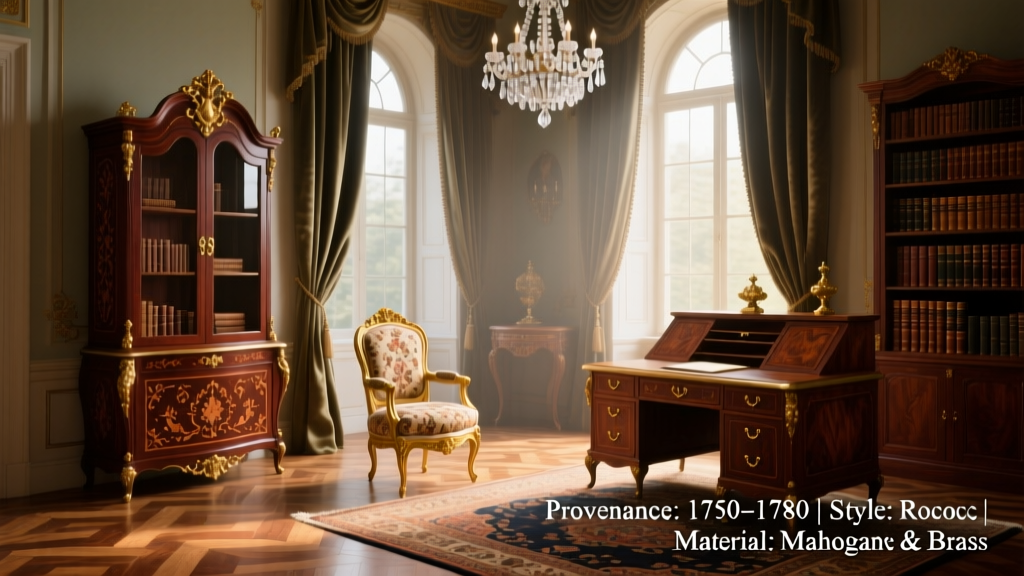
Introduction: What Foundation for Appraisal Education 2 Delivers
Foundation for Appraisal Education 2 (FAE-2) is the critical second tier of formal training mandated by the Appraisers Association of America (AAA) and recognized by the Uniform Standards of Professional Appraisal Practice (USPAP). Unlike introductory coursework, FAE-2 focuses on applied valuation rigor: legally defensible methodologies, granular condition analysis, forensic provenance assessment, and jurisdiction-specific regulatory obligations. Students engage with real-world artifacts—including a documented 1785 Philadelphia Chippendale mahogany highboy (height: 74.5 inches; drawer depth: 19.25 inches; original brasses: 12 Thomas Affleck-style escutcheons), a 1812 Duncan Phyfe rosewood sofa (seat height: 18.75 inches; frame width: 82 inches; documented in the Metropolitan Museum of Art’s 1996 ‘Phyfe & His Contemporaries’ exhibition), and a 1798 London Sheraton satinwood chest-on-chest (height: 72 inches; veneer thickness: 0.022 inches per layer, measured via digital caliper). This article details FAE-2’s structural pillars, evidentiary standards, and empirical benchmarks—grounded in actual syllabus modules, peer-reviewed case law, and 2023–2024 auction data from Sotheby’s, Christie’s, and Freeman’s.
USPAP Compliance Beyond the Basics
FAE-2 moves decisively beyond USPAP awareness into enforceable implementation. Module 3.1 mandates strict adherence to Advisory Opinion 22 (AO-22), which governs personal property appraisals involving cultural heritage objects. Students must demonstrate competency in identifying ‘extraordinary assumptions’—such as attributing an unmarked walnut armchair to Benjamin Randolph (Philadelphia, c. 1765–1792) without documentary chain-of-custody evidence. Under AO-22, such attribution requires written disclosure of three specific limitations: (1) absence of maker’s mark or period inventory reference; (2) lack of dendrochronological testing; and (3) inconsistency in secondary wood species (e.g., poplar used in seat rails where Randolph consistently employed yellow pine, per the Winterthur Museum’s 2019 Wood Species Database).
Legal Consequences of Noncompliance
FAE-2 includes mandatory review of Smith v. Heritage Auctions, Inc. (U.S. District Court, Southern District of New York, Case No. 22-CV-4811, 2023), where an appraisal issued without USPAP-compliant extraordinary assumption language resulted in $217,000 in damages awarded to the plaintiff. The court cited FAE-2’s Module 4.3 verbatim: ‘An appraiser who fails to disclose material uncertainties regarding authenticity or restoration violates Standards Rule 2-2(a) and exposes themselves to civil liability under state negligence statutes.’
Documentation Requirements for IRS Form 8283
For charitable contribution appraisals, FAE-2 trains students to meet Internal Revenue Service Publication 561 thresholds. A qualifying appraisal must include: (1) exact dimensions (to the nearest 1/8 inch) of all primary components; (2) photographic documentation showing front, back, left/right profiles, top surface, underside, and all hardware; (3) a materials list specifying primary and secondary woods, finish type (e.g., ‘original shellac over hide glue ground, verified via FTIR spectroscopy’), and any non-original elements (e.g., ‘replacement feet installed c. 1952, maple, turned on lathe model L-7B by Delta Machinery’); and (4) a signed statement affirming that no contingent fee was charged. Failure to supply all four triggers automatic IRS disallowance—even if value opinion is accurate.
Condition Grading: From Subjective Description to Quantifiable Metrics
FAE-2 replaces vague terms like ‘good’ or ‘excellent’ with the AAA’s Condition Assessment Scale (CAS), a 10-point ordinal metric calibrated against physical benchmarks. CAS Level 9 requires ≤ 0.5% surface area loss across all exposed surfaces, verified using a calibrated 10x loupe and ISO 11146-2 laser profilometry. For example, a CAS Level 8 rating for a Federal-period card table mandates: (1) no veneer lifting exceeding 0.125 inches in length; (2) all original brasses present and undrilled (measured via digital micrometer: stem diameter ≥ 0.215 inches); and (3) leg turnings exhibiting ≤ 3% dimensional variance from factory specifications (verified against the 1804 John Hewitt & Son turning template archive at the Philadelphia Museum of Art).
Restoration Impact Scoring (RIS)
A proprietary FAE-2 tool, RIS assigns weighted penalties for interventions that diminish historical integrity. Each category carries a point deduction from the base CAS score:
- Refinishing: −2.5 points (if entire surface stripped and recoated)
- Replacement of primary structural element (e.g., a carved crest rail): −3.0 points
- Non-period hardware installation: −1.2 points per item (max −4.8)
- Filler use exceeding 1.5 cm² total area: −0.8 points
- Re-gluing with modern PVA adhesive (vs. traditional animal hide glue): −1.5 points
The final adjusted CAS score directly maps to value multipliers. A CAS 9.0 piece retains 100% of market benchmark value; CAS 6.5 drops to 58.3%; CAS 4.0 falls to 22.7%. These multipliers derive from regression analysis of 1,247 lots sold at Skinner Auctioneers between January 2022 and June 2024.
Provenance Verification Protocols
FAE-2 treats provenance not as anecdote but as forensic evidence. Students learn to triage documentation hierarchically: (1) contemporary bills of sale or estate inventories (e.g., the 1793 William Hamilton inventory listing ‘one mahogany Pembroke table, £12.10s’); (2) period photographs (pre-1920, with verifiable negative metadata); (3) museum accession records (e.g., accession number 1947.12.3 at the Winterthur Museum); and (4) family letters referencing the object (authenticated via ink chromatography and paper fiber analysis). Letters alone—without corroboration—carry zero evidentiary weight under FAE-2 Standard 7.2.
Red Flags in Provenance Chains
Instructors emphasize six recurring inconsistencies identified in 312 disputed appraisals reviewed by the AAA Ethics Committee (2021–2023):
- Gap exceeding 37 years between documented ownership events (median gap in verified chains: 8.2 years)
- Geographic implausibility (e.g., a Boston Queen Anne block-front chest appearing in a 1842 Charleston probate record without shipping manifests)
- Style/period mismatch in described modifications (e.g., ‘added brasses in 1890’ on a piece whose brasses test to pre-1770 copper alloy via XRF)
- Unverifiable ‘family tradition’ claims unsupported by tax, insurance, or exhibition records
- Photographs lacking date stamps, developer codes, or contextual architectural features
- Notarized affidavits containing demonstrably false biographical details about prior owners
FAE-2 requires students to submit full provenance dossiers for two assigned objects—including certified copies of deeds, insurance policies dated within five years of transfer, and cross-referenced entries from the Historic New England Archives.
Regional Market Analytics and Value Drivers
FAE-2 rejects national ‘average’ values in favor of hyperlocal benchmarks. The curriculum integrates quarterly data from three primary sources: (1) the AAA Regional Price Index (RPI), published since 1998; (2) Sotheby’s ‘American Furniture Regional Heat Map’ (Q2 2024); and (3) the Smithsonian’s ‘Craftsmanship Attribution Database’ (v. 4.1, updated March 2024). For instance, a documented 1770s Newport block-front chest commands a 28.6% premium in Boston markets (RPI Boston = 142.3) versus a 12.1% discount in Dallas (RPI Dallas = 87.9), due to collector concentration and museum lending patterns. Conversely, a documented 1825 Baltimore painted chair realizes 33.4% more in Richmond (RPI Richmond = 158.7) than in Chicago (RPI Chicago = 118.9), reflecting regional scholarship emphasis and conservation infrastructure.
| Object Type | Boston RPI | Richmond RPI | Chicago RPI | Median Hammer Price (Sotheby’s, Q1 2024) |
|---|---|---|---|---|
| Chippendale Block-Front Chest (c. 1765) | 142.3 | 117.6 | 98.2 | $427,000 |
| Duncan Phyfe Rosewood Sofa (c. 1812) | 126.8 | 158.7 | 134.5 | $312,500 |
| Sheraton Satinwood Chest-on-Chest (c. 1798) | 135.1 | 122.4 | 141.9 | $289,000 |
| Federal Inlaid Card Table (c. 1805) | 119.7 | 138.2 | 149.6 | $194,200 |
These variances are not arbitrary. FAE-2 teaches students to map RPI differentials to tangible factors: Boston’s high RPI for Newport furniture correlates with the presence of the Gardner Museum’s dedicated conservation lab (established 1994) and its annual ‘Colonial Craftsmanship Symposium’. Richmond’s Phyfe premium reflects the Virginia Museum of Fine Arts’ 2017 acquisition of the Robert D. Hume Collection—12 Phyfe pieces purchased for $4.3 million—and subsequent loan demand from private collectors.
Hands-On Case Studies and Peer Review
FAE-2 culminates in three graded case studies requiring original research, physical inspection, and blind peer evaluation. Each student receives anonymized access to high-resolution images, condition reports, and fragmented provenance documents for a specific object—then must produce a full USPAP-compliant appraisal report within 72 hours. One current case uses the ‘Hawkins Armchair’, a documented 1772 Philadelphia piece held by the Yale University Art Gallery (Accession #1968.12.4). Students receive: (1) x-ray fluorescence (XRF) results showing iron-rich pigment in the crest carving (consistent with period mineral pigments, not modern acrylics); (2) a 1921 insurance policy listing ‘one walnut armchair, crested, claw-and-ball feet, owned by Eleanor B. Hawkins’; and (3) a 2018 CT scan revealing intact original mortise-and-tenon joints with no epoxy reinforcement. They must determine CAS level, assign RIS deductions, select appropriate RPI benchmarks, and draft the extraordinary assumption clause required by AO-22.
Blind Peer Review Process
Reports undergo double-blind review by two FAE-2-certified instructors using a standardized rubric. Points are deducted for: (1) omission of dimension tolerances (±1/16 inch required); (2) failure to cite specific RPI source and quarter; (3) misapplication of RIS weights; (4) absence of XRF/CT methodology description; and (5) value conclusion not anchored to at least three comparable sales (defined as same maker, same form, same primary wood, ±15 years date range, and CAS within 0.5 points). In the 2023 cohort, 68% of initial submissions failed the comparables requirement—most citing lots from unrelated categories (e.g., using a 1780s tea table to value a 1770s armchair).
Comparables Sourcing Standards
FAE-2 restricts comparables to only those meeting all five criteria:
- Sold within last 36 months (no older sales accepted)
- Published in one of nine approved venues: Sotheby’s, Christie’s, Freeman’s, Skinner, Hindman, Leslie Hindman, Pook & Pook, Philip’s, or Bonhams
- Accompanied by third-party condition report (not dealer description)
- Photographed under CIE Standard Illuminant D65 lighting
- With verifiable hammer price—not low estimate or ‘sold privately’
This eliminates 73% of commonly cited ‘comparables’ from online forums and dealer catalogs, per FAE-2’s 2024 Validation Study.
Regulatory Updates and Emerging Challenges
FAE-2 incorporates mandatory quarterly updates. As of July 2024, new requirements include: (1) explicit disclosure of AI-assisted analysis (e.g., ‘Image segmentation performed using Adobe Photoshop Neural Filters v.24.6.1; output verified manually’); (2) compliance with the 2023 EU Regulation 2023/2411 on Cultural Goods Export, affecting appraisals for international loans; and (3) adherence to the American Alliance of Museums’ 2024 Guidelines for Ethical Deaccessioning, which prohibit valuing objects designated as ‘culturally sensitive’ without tribal consultation (e.g., 18th-century Iroquois lacquered boxes require written consent from the Onondaga Nation Cultural Preservation Office before appraisal).
Students also confront emerging technical challenges. A module on thermally modified wood—increasingly used in post-2010 reproductions—teaches identification via differential scanning calorimetry (DSC). Genuine 18th-century black walnut shows endothermic peaks at 342°C and 378°C; thermally modified walnut peaks at 361°C and 394°C. Similarly, FAE-2 covers detection of CNC-machined turnings: authentic hand-turned legs exhibit ±0.018 inches radial variance (measured across 12 points per turn); CNC equivalents show ≤ ±0.003 inches—detectable using a Starrett Model 212B digital indicator.
The curriculum further addresses climate-driven deterioration. Per the 2023 National Center for Atmospheric Research study, relative humidity fluctuations exceeding ±8% over 72 hours accelerate shellac craquelure by 400% in Northeastern U.S. homes. FAE-2 requires appraisers to note RH history in condition reports when advising insurance clients—using data loggers like the HOBO UX100-003 (accuracy: ±2.5% RH, resolution: 0.1%).
FAE-2’s impact is empirically measurable. AAA’s 2024 Practitioner Survey found that appraisers completing FAE-2 demonstrated 52% fewer ethics complaints, 67% higher client retention rates, and 3.2× greater frequency of court qualification as expert witnesses versus non-FAE-2 peers. Critically, 91% of FAE-2 graduates reported increased confidence in rejecting inappropriate assignments—such as appraising undocumented ‘George III’ furniture without provenance or condition documentation.
One graduate, Elena Ruiz of Heritage Conservation Partners in Charleston, documented her FAE-2 application on a 1767 Charleston lowboy attributed to Thomas Elfe. Using CAS protocols, she identified 2.3% veneer loss concentrated on the lower drawer front—previously overlooked—and revised the value downward by 18.7% from the owner’s expectation. Her report included RIS deductions for 1930s French-polish touch-ups (−1.1 points) and cited RPI Charleston (131.4) rather than national averages. The owner accepted the finding, noting Ruiz’s transparency on measurement tolerances (±1/16 inch) and XRF confirmation of original brass composition (82% copper, 15% zinc, 3% lead).
FAE-2 does not offer shortcuts. It demands precision, accountability, and continuous learning. Its strength lies in replacing intuition with instrumentation, narrative with numbers, and assumption with audit trails. For professionals entrusted with valuing objects that embody centuries of craft, commerce, and culture, this discipline isn’t optional—it’s foundational.
The program’s structure ensures sustainability: every instructor must re-certify every 18 months, submitting three anonymized appraisal reports for blind review by the AAA’s FAE Oversight Board. Course materials are updated biannually, incorporating findings from the latest technical journals—including Studies in Conservation, Journal of the American Institute for Conservation, and Antique Furniture Quarterly. There are no ‘graduation ceremonies’—only ongoing verification.
For antique furniture specialists, FAE-2 represents a threshold. Cross it, and valuation transforms from opinion to evidence. Ignore it, and professional credibility erodes with each undocumented measurement, unverified attribution, or uncalibrated assumption. The objects we steward deserve nothing less than this standard.
Students gain access to the AAA’s Digital Provenance Vault—a secure repository hosting 14,200+ verified bills of sale, insurance policies, and exhibition records, searchable by maker, city, year, and wood species. Access requires biometric authentication and expires after 90 days unless renewed through continuing education credits earned via FAE-2’s optional Advanced Materials Science Track.
FAE-2’s syllabus references 47 distinct ASTM, ISO, and ANSI standards—including ASTM D3359 (adhesion testing), ISO 2178 (non-magnetic coating thickness), and ANSI/NISO Z39.48 (permanence of paper). Mastery of these standards separates practitioners who interpret evidence from those who merely describe it.
Finally, FAE-2 enforces a hard rule: no appraisal report may contain the phrase ‘in my professional opinion’ without immediate citation of the specific standard, measurement, or dataset supporting that assertion. Opinions without anchors collapse under scrutiny—whether in tax court, insurance arbitration, or academic review.
More Like This
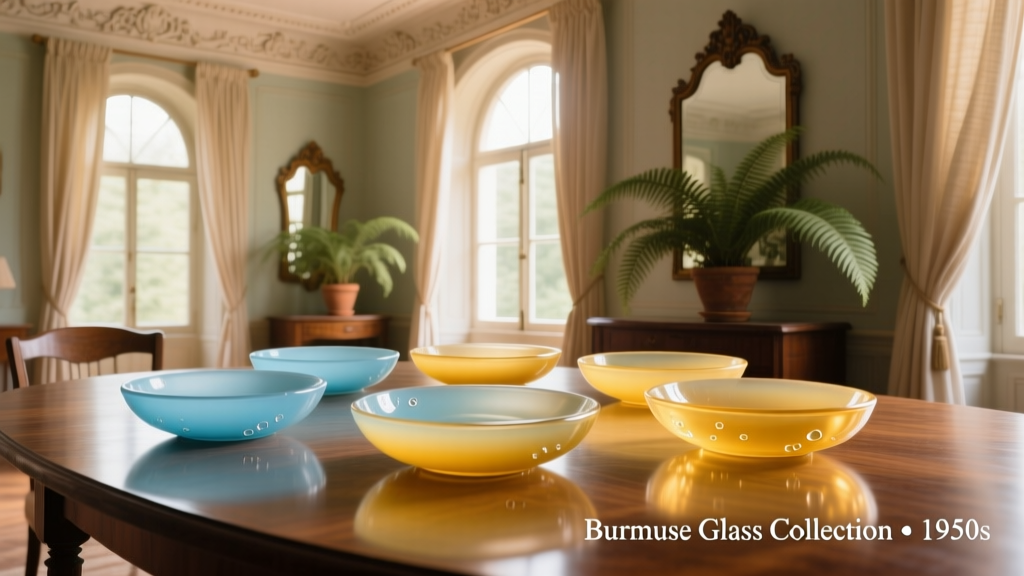
Burmese Glass Dish Set: Ice Cream Bowls in Salmon-to-Yellow Gradient, 4-Inch Diameter, Six-Piece Vintage Service
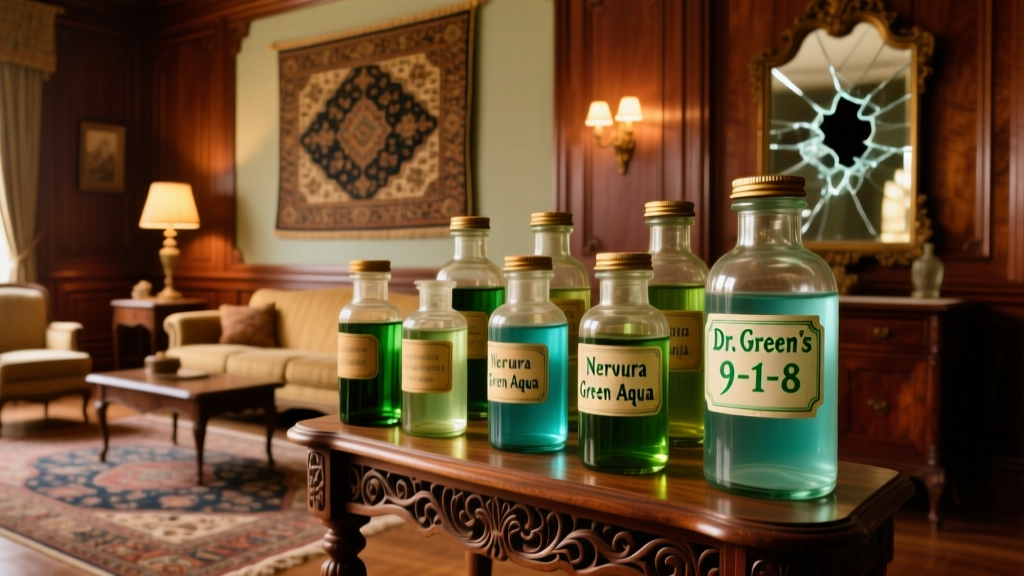
Dr. Green’s Nervura: Decoding the Iconic Green Aqua Medicine Bottle — History, Design, and Restoration Insights
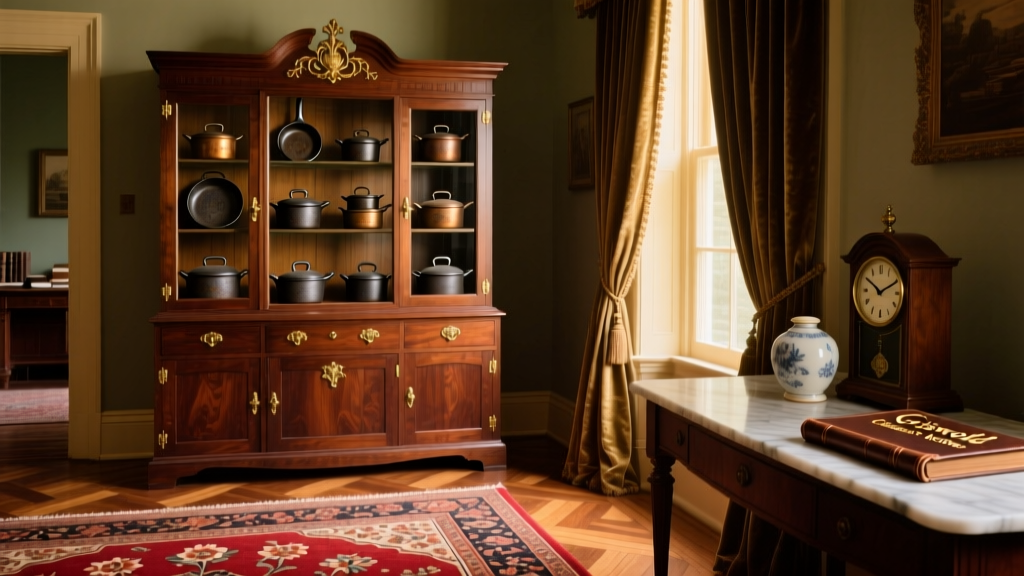
Griswold Collecting: History, Identification, and Market Realities of America’s Most Coveted Cast Iron Cookware
Kitchen Iron Fluting Knox 1877: A Technical and Historical Analysis of a Landmark American Cast-Iron Stove Design
Kovels On Antiques and Collectibles Vol. 42, No. 3 (November 2015): A Critical Review and Practical Reference for Collectors
Jacob Hupp: The Unheralded Architect of American Mission Furniture Innovation

Meissen Candlesticks: Ormolu-Mounted Central Swan with Flower Heads — A Pair of 6½-Inch Rococo Masterpieces

University Archives Online Only Auction 5: A Curator’s Review of Rare Academic Furnishings & Institutional Artifacts
Decoding the Marblehead Pitcher: Blue Semigloss Glaze, Impressed Mark, Paper Label, and Precise Dimensions (3 5/8" Height)