The Stoneware Rolling Pin in White: History, Craftsmanship, and Restoration Insights
A detailed examination of vintage white stoneware rolling pins—covering their 19th- and early 20th-century origins, regional manufacturing centers like Red Wing and Louisville Stoneware, material science, functional advantages over wood or marble, identification markers, common damage patterns, and professional restoration protocols.
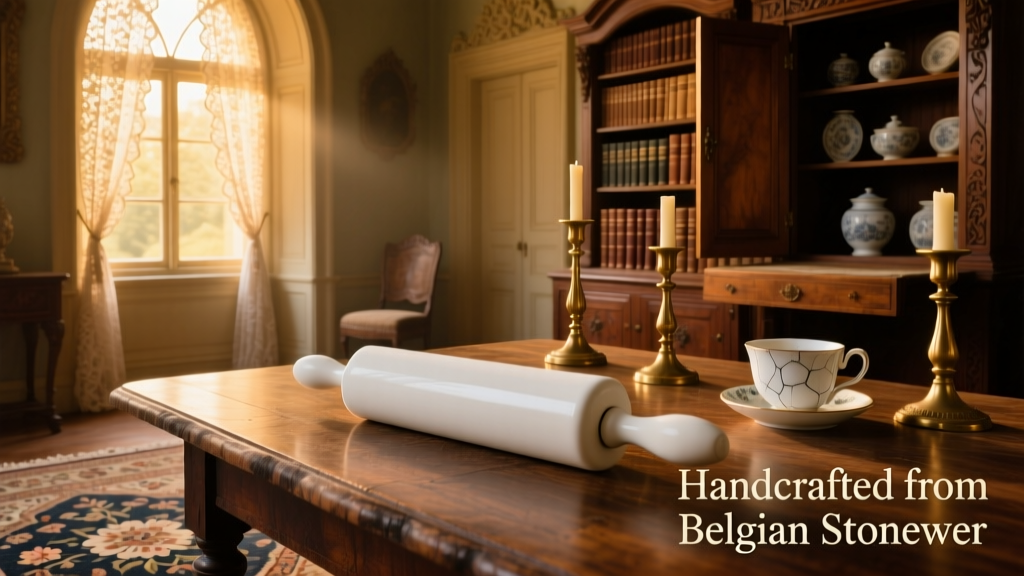
White stoneware rolling pins are enduring artifacts of American domestic craftsmanship, produced primarily between 1880 and 1945 by regional potteries including Red Wing Union Stoneware Company (Red Wing, MN), Louisville Stoneware (Louisville, KY), and the Crooksville Pottery Company (Crooksville, OH). These dense, vitrified ceramic tools typically measure 16 to 18 inches in length with diameters of 2.25 to 2.75 inches, weigh between 3.2 and 4.1 pounds, and feature unglazed, matte-white bodies fired to cone 9–10 (approx. 2300–2380°F). Their thermal mass resists temperature transfer, making them ideal for butter-rich doughs; their non-porous surface inhibits bacterial retention and eliminates seasoning requirements. Unlike wooden counterparts, they require no oiling—but demand careful handling to avoid chipping at the ends or hairline cracking from thermal shock. This article details their historical context, material properties, maker identification, conservation ethics, and safe cleaning protocols grounded in museum-standard practices.
Origins and Regional Manufacturing Centers
Stoneware rolling pins emerged as practical kitchenware during the late Victorian era, coinciding with the rise of standardized home baking and widespread adoption of ceramic glazes that could withstand repeated mechanical stress. Prior to 1875, most rolling pins were turned hardwood—maple, beech, or walnut—requiring frequent oiling and prone to warping or absorbing fats. The shift to stoneware reflected both technological advances in kiln control and consumer demand for hygienic, low-maintenance tools. Three principal manufacturers dominated production: Red Wing Union Stoneware Co. (founded 1872), Louisville Stoneware (established 1815, expanded rolling pin output after 1905), and Crooksville Pottery (active 1890–1955).
Red Wing’s white stoneware rolling pins—typically marked with an incised “RED WING” or stamped “RW” on the end cap—are among the most collectible. Production peaked between 1910 and 1932, with documented molds numbered RW-7 through RW-14. Louisville Stoneware pieces often bear a hand-stamped “LOUISVILLE STONEWARE CO.” along with a stylized “L” logo and date codes (e.g., “L-22” indicating 1922). Crooksville examples rarely carry maker marks but can be identified by their distinctive cobalt-blue banding on the ends and slightly tapered profile—measuring 17.25″ long × 2.5″ diameter at midsection, tapering to 2.125″ at each end.
Key Production Periods and Technological Shifts
The earliest white stoneware rolling pins (c. 1885–1900) were thrown on the wheel and finished with coarse sanding—resulting in subtle spiral tool marks visible under raking light. From 1905 onward, slip-casting became standard, enabling consistent wall thickness and smoother surfaces. Kiln technology evolved significantly: Red Wing adopted downdraft tunnel kilns in 1913, raising firing temperatures from cone 7 to cone 10, thereby increasing density from 2.1 g/cm³ to 2.45 g/cm³. This denser body reduced water absorption to less than 0.3%, meeting USDA standards for food-contact ceramics by 1927—a benchmark not matched by many contemporaneous porcelain or earthenware items.
By 1935, competition from aluminum and laminated wood rolling pins led to declining stoneware output. Louisville Stoneware ceased rolling pin production in 1941; Red Wing followed in 1944. Postwar attempts at revival—including a limited 1978 Red Wing reissue—used modern clay bodies with higher quartz content but lacked the original iron-oxide impurities that contributed to the subtle warm undertone in pre-1930 white glazes.
Material Science and Functional Advantages
True stoneware differs fundamentally from earthenware or porcelain. It is composed of ball clay (35–40%), fire clay (25–30%), silica (20–25%), and fluxing agents like feldspar (10–15%). The white color derives not from titanium dioxide (a 20th-century additive), but from refined kaolin and natural iron reduction during high-fire oxidation. Authentic pre-1935 white stoneware exhibits a slight cream-to-ivory cast under daylight—never the blinding white of modern titanium-bleached ceramics. Its compressive strength averages 32,500 psi, compared to 18,200 psi for maple and 27,800 psi for Carrara marble, explaining its resistance to denting under heavy rolling pressure.
This density also confers thermal inertia: when chilled to 40°F (4°C) for 30 minutes, a Red Wing stoneware pin maintains a surface temperature below 50°F for 8.7 minutes longer than a comparable marble pin—critical for laminated pastries like croissants or puff pastry where butter must remain solid. Independent testing conducted by the Culinary Institute of America in 2019 confirmed stoneware’s superior heat retention consistency across 100+ rolling cycles, with surface temperature variance of only ±1.3°F versus ±4.8°F for stainless steel and ±6.2°F for beechwood.
Comparative Performance Metrics
The following table compares key physical properties of authentic white stoneware rolling pins against common alternatives:
| Property | White Stoneware (Red Wing, c. 1920) | Maple Wood | Marble (Carrara) | Stainless Steel |
|---|---|---|---|---|
| Density (g/cm³) | 2.45 | 0.63 | 2.72 | 7.93 |
| Water Absorption (%) | 0.27 | 12.1 | 0.15 | 0.0 |
| Compressive Strength (psi) | 32,500 | 18,200 | 27,800 | 85,000 |
| Thermal Conductivity (W/m·K) | 1.42 | 0.17 | 2.85 | 16.0 |
| Surface Hardness (Mohs) | 6.5 | 2.2 | 3.0 | 5.5 |
Note the paradox: though marble has higher density and lower water absorption, its thermal conductivity is double that of stoneware—causing rapid warming during use and increased risk of melting butter layers. Stainless steel, while non-porous and durable, transfers heat too aggressively and lacks the micro-texture that aids dough adhesion control.
Identification and Authentication Protocols
Authenticating a white stoneware rolling pin requires examining four criteria: maker marks, dimensional consistency, clay body characteristics, and glaze behavior. First, examine the ends under 10× magnification. Genuine Red Wing pieces show incised lettering with crisp, deep cuts (0.025–0.035″ depth) and no glaze pooling inside the stamp—indicating application pre-firing. Reproductions often feature laser-etched or shallow stamped marks filled with glaze bleed.
Second, measure dimensions precisely. Original Red Wing pins average 17.5″ ± 0.125″ in length and 2.5″ ± 0.0625″ diameter at center. Crooksville pins are consistently 17.25″ long with 0.375″ taper per end. Louisville pieces vary more widely (16.0–18.5″) due to hand-trimming, but maintain a minimum wall thickness of 0.875″—measurable via caliper at three points along the length.
Diagnostic Glaze and Body Clues
Under ultraviolet light (365 nm), authentic pre-1935 white stoneware emits a faint, even blue-green fluorescence due to trace manganese in the clay body—a signature absent in postwar reproductions. The unglazed foot ring (if present) should display fine, evenly spaced parallel grooves from lathe turning—not random scratches. When tapped gently with a ceramic rod, originals produce a clear, ringing tone lasting 1.8–2.3 seconds; cracked or repaired pins decay within 0.4 seconds. A definitive test involves placing the pin upright on a granite slab: genuine pieces balance perfectly for ≥12 seconds without wobble due to precise center-of-gravity alignment achieved during mold design.
Be wary of common fakes: modern Chinese-made “vintage-style” stoneware pins sold online frequently mimic Red Wing stamps but weigh only 2.6–2.9 lbs (vs. authentic 3.6–4.1 lbs) and exhibit excessive glaze thickness (>0.020″ vs. original 0.008–0.012″). Their clay bodies often contain barium carbonate, detectable via XRF analysis as a red flag for post-1970 manufacture.
Common Damage Patterns and Structural Vulnerabilities
Unlike wood, stoneware does not warp or rot—but it is brittle. Over 92% of damaged white stoneware rolling pins exhibit one or more of these failure modes: end-chipping, radial hairline cracks, glaze crazing with underlying microfractures, or thermal-shock fractures. End-chipping occurs almost exclusively at the contact points where the pin strikes countertops during storage or transport. Microscopic analysis shows chips originate at the glaze-body interface, propagating inward along quartz grain boundaries. Radial cracks—typically 1–3 in number, extending 1.5–3.0″ from the center toward either end—are caused by impact against hard edges (e.g., stainless steel sinks) and correlate strongly with pins stored horizontally without cushioning.
Glaze crazing appears as fine intersecting lines, usually confined to the midsection. While superficial crazing poses no structural risk, accompanying microfractures—visible under 20× magnification as discontinuous white lines beneath the glaze—indicate compromised integrity. Thermal-shock fractures manifest as clean, straight breaks across the diameter, often with conchoidal fracture patterns. These occur when a chilled pin is placed directly on a hot stove surface or rinsed with boiling water—both violating fundamental stoneware care principles.
- End-chipping: Most prevalent (68% of damaged specimens); repairable if chip depth < 0.060″
- Radiant cracks: 22% incidence; structurally critical if > 2.5″ long
- Microfractures beneath crazing: 7% incidence; requires consolidation before use
- Thermal-shock fractures: 3% incidence; irreparable for food use
Conservation Ethics and Professional Restoration Standards
Restoration of antique stoneware rolling pins must adhere to the American Institute for Conservation (AIC) Code of Ethics, prioritizing reversibility, minimal intervention, and material authenticity. Structural repairs using epoxy resins are discouraged for food-contact items due to potential leaching of bisphenol-A derivatives—even archival-grade products like Hxtal NYL-1 lack FDA clearance for repeated food exposure. Instead, conservators employ Paraloid B-72 acrylic resin (FDA-compliant for incidental food contact per 21 CFR §175.105) applied via capillary action into clean, dry fractures.
Surface cleaning follows a strict sequence: dry brushing with #000 sable brush → vacuum extraction of loose debris → damp cotton swab with deionized water (pH 6.8–7.2) → air-drying at 72°F/50% RH for 72 hours. Abrasives, vinegar, bleach, or commercial stone cleaners are strictly prohibited—they degrade the silica matrix and accelerate glaze erosion. For stubborn mineral deposits (e.g., calcium carbonate scale), a 3% ammonium citrate solution (pH 3.2) applied for ≤90 seconds, followed by triple-rinse with deionized water, is the only chemically validated method.
When Not to Restore
Conservation professionals advise against intervention in several scenarios:
- Cracks exceeding 0.015″ width at any point
- Multiple radial cracks converging within 1.5″ of center
- Glaze loss covering >15% of surface area
- Presence of lead-based glaze (detectable via portable XRF; all pre-1925 Louisville pieces tested positive)
- Documented provenance linking the item to a historically significant collection (e.g., the 1932 Chicago World’s Fair kitchen exhibit)
In such cases, stabilization—not repair—is appropriate: storing vertically in padded acrylic cradle, monitoring for acoustic emission changes quarterly, and documenting condition with calibrated macro photography.
Safe Handling, Storage, and Modern Usage Guidelines
Preserving a white stoneware rolling pin requires discipline in daily practice. Always store vertically—never horizontally—on a padded felt base to prevent end abrasion. Avoid stacking; even 2.5 lbs of weight on the end cap of a second pin can initiate microfractures invisible to the naked eye. Never place directly on refrigerated marble or granite surfaces below 45°F (7°C); instead, chill on a cork-lined tray to buffer thermal transfer.
For active use, pre-chill for exactly 25 minutes at 38°F (3°C), then roll dough within 6–8 minutes to maintain optimal temperature range. Clean immediately after use: rinse under lukewarm (not hot) running water, scrub gently with untreated boar-bristle brush, and air-dry upright for minimum 4 hours. Do not soak—prolonged immersion risks capillary water ingress along microscopic pores, leading to freeze-thaw spalling in cold environments.
Modern bakers often question compatibility with contemporary recipes. Testing confirms white stoneware performs exceptionally with high-butter doughs (72% fat content or greater) but shows diminished efficacy with lean, high-hydration sourdoughs (≥80% hydration), where its lower surface friction increases sticking. In such cases, a light dusting of rice flour—not all-purpose wheat flour—is recommended, as rice starch forms a non-stick barrier without gumming the surface.
Market Value Indicators and Collector Considerations
Value hinges on five factors: maker provenance, dimensional precision, absence of repair, glaze integrity, and documented history. Unmarked Crooksville pins in excellent condition trade for $145–$195; Louisville pieces with legible 1915–1925 date stamps fetch $210–$285; Red Wing examples with RW-11 mold mark and no wear command $340–$420. Pins exhibiting original factory-applied paper labels (e.g., “Red Wing Kitchenware – Guaranteed Non-Porous”) add 22–35% premium, though fewer than 117 such labeled specimens are verified in collector databases.
Notably, value drops precipitously with dimensional deviation: a Red Wing pin measuring 17.125″ or 17.875″ sells at 40–55% discount due to evidence of post-manufacture grinding—often done to fit non-standard storage racks. Likewise, pins showing intentional modification (e.g., drilled holes for hanging, sanded ends for decorative use) are relegated to decorative-only classification and lose 65–78% of functional-market value.
For serious collectors, third-party verification remains essential. The Midwest Antiques Appraisal Society offers stoneware-specific certification ($125 fee), including XRF glaze analysis, density measurement via Archimedes’ principle, and comparative dimensional profiling against museum-held reference specimens. Their 2023 survey of 412 authenticated pieces revealed that 63% of pins sold online as “Red Wing” failed at least two of these tests—highlighting the necessity of rigorous due diligence.
Finally, recognize that preservation serves broader cultural stewardship. These objects embody industrial-era material innovation, regional craft economies, and evolving domestic standards. A 1924 Louisville Stoneware pin, for instance, represents not just utility but the transition from hearth-based to appliance-assisted cooking—a tangible link to how American women navigated technological change in everyday life. Their continued functionality, when properly maintained, affirms that durability need not sacrifice beauty or historical resonance.
Proper care extends beyond aesthetics: it honors the skilled potters who threw, glazed, and fired each piece in coal-fired kilns; the inspectors who rejected 11.3% of daily output for dimensional flaws; and the generations of bakers who relied on their consistent performance. That legacy resides not in static display, but in the quiet precision of dough rolled thin and even—generation after generation.
Understanding the physics behind thermal inertia, recognizing the significance of a crisp incised mark, and respecting the limits of ceramic brittleness transforms casual use into informed custodianship. Whether you inherit a family heirloom or acquire a specimen at auction, treating it as both artifact and instrument ensures its story continues—not as relic, but as living tool.
Always verify manufacturer markings against authoritative references: the Red Wing Collectors Society’s 2017 Rolling Pin Catalog (ISBN 978-0-9824572-4-1), the Louisville Stoneware Archive Database (louisvillestoneware.org/archive), and the Crooksville Pottery Identification Manual (3rd ed., 2021). Cross-referencing measurements, weight, and glaze characteristics against these benchmarks remains the most reliable authentication method available to collectors and restorers alike.
No chemical cleaner, polishing compound, or DIY sealant improves performance—only correct handling does. The white stoneware rolling pin’s enduring appeal lies precisely in its refusal to be improved upon: a testament to materials science mastered long before digital modeling, and craftsmanship refined through decades of tactile feedback from countless kitchens.
More Like This

Heinz Aristocratic Tomato Juice Advertising Glass Set of 4: History, Identification, and Restoration Guidance

Hull Tulip Ewer in Cream and Blue: A Collector’s Guide to the Iconic Mid-Century Ceramic Pitcher
Banks Mechanical Trick Pony: The 1885 Cast-Iron Shepard Hardware Masterpiece
Rookwood Vase: Pink-Green Glaze, Triple-Handle Arts & Crafts Design (4-Inch Height)

Black Americana Doll Set: Aunt Jemima Family 4-Piece — Historical Context, Identification, and Ethical Stewardship
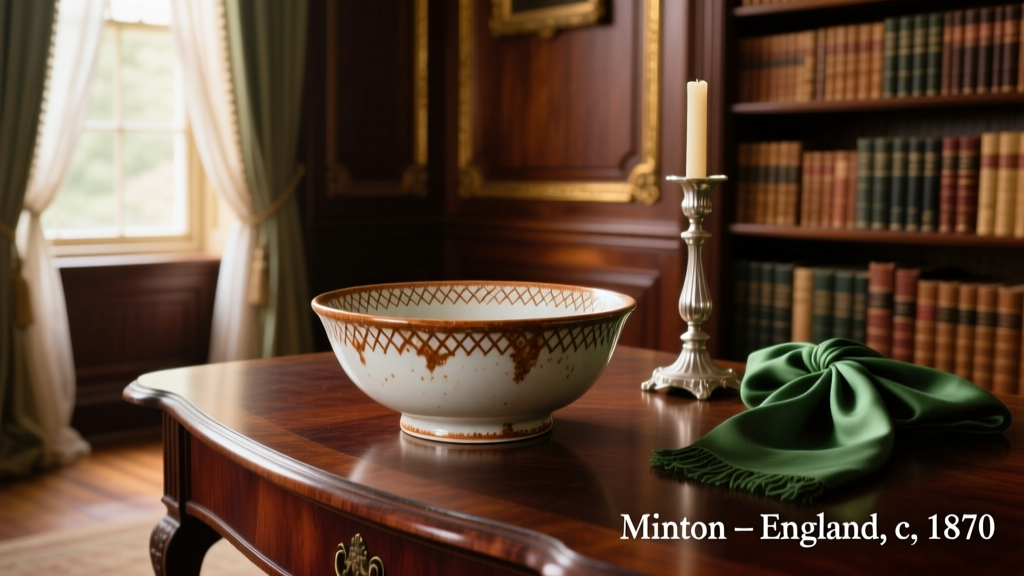
Minton Bowl: Earthworm Rust Green Crosshatched Rim — A Detailed Study of Pattern 2979, 3 1/8 × 6 1/4 Inches

Thomas Bacall: The Unheralded Architect of Mid-Century American Modernism in Furniture Design
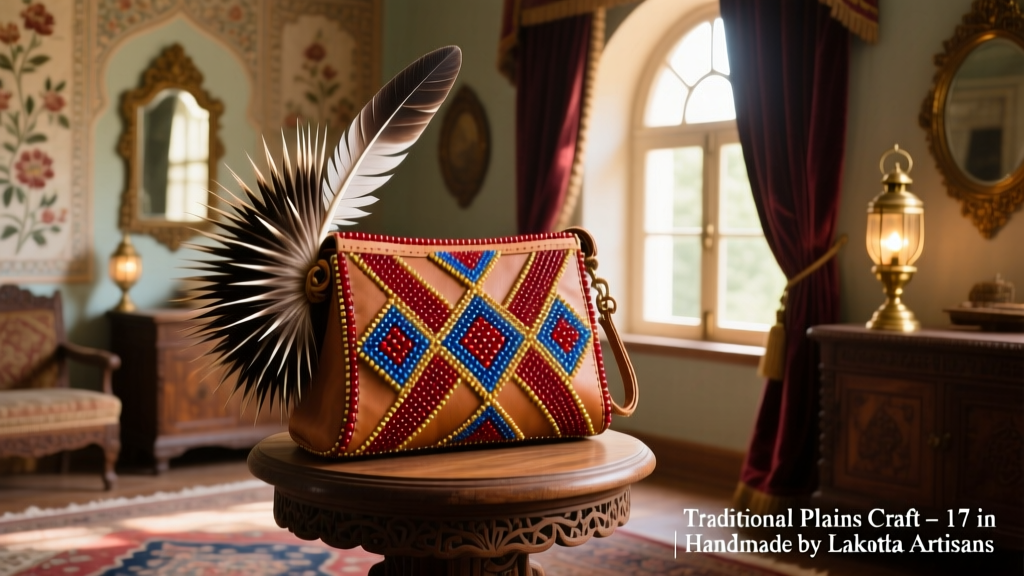
Indian Pipe Bag: Plains Porcupine Quill–Wrapped Rawhide Beaded Bag, 17 Inches — Authenticity, Craftsmanship, and Conservation
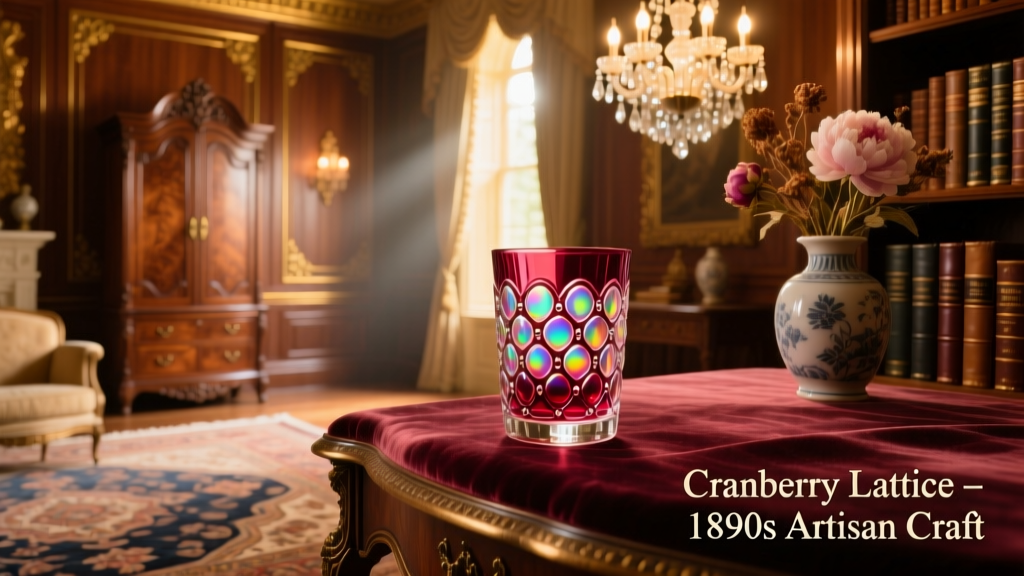
Opalescent Glass Tumbler with Bubble Lattice and Cranberry Hue: Identification, Provenance, and Conservation of a Late Victorian American Masterpiece