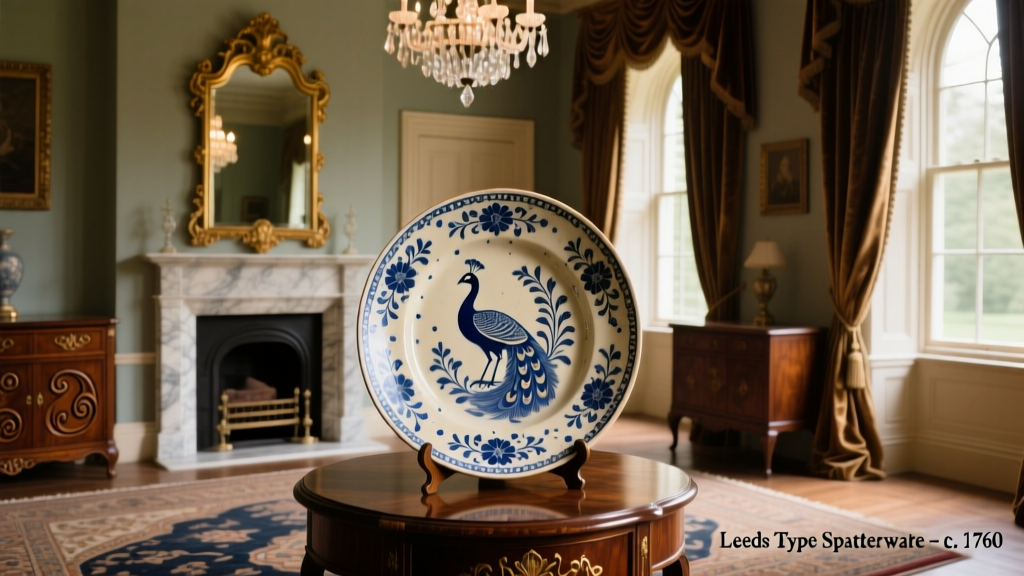
Stereo Cards of New York City’s Lower East Side Docks and Steamship Traffic, Circa 1907: A Visual Archive of Immigration, Industry, and Urban Transformation
A detailed examination of stereoscopic photograph cards depicting Manhattan’s Lower East Side waterfront circa 1907—featuring the piers of the North German Lloyd and Hamburg-American Line, immigrant processing infrastructure, steamship arrivals, and dockside labor. Includes technical specifications, historical context, brand analysis (Underwood & Underwood, Keystone View Company), archival provenance, and conservation guidance for collectors.
Introduction: The Stereoscopic Lens on a Pivotal Moment
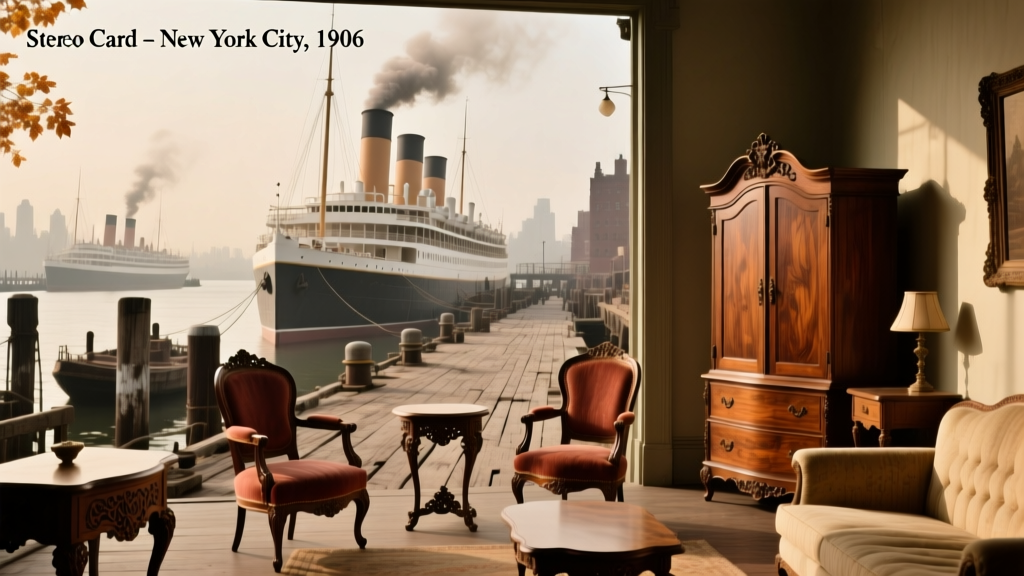
In early 1907, over 1.28 million immigrants arrived in New York Harbor—nearly half through Ellis Island, but with tens of thousands more landing directly at Manhattan’s Lower East Side piers. Stereo cards from this year capture that extraordinary convergence of human migration, industrial shipping, and urban density with startling immediacy. Produced primarily by Underwood & Underwood (Oswego, NY) and Keystone View Company (Meadville, PA), these 3.5 × 7 inch albumen or gelatin silver prints were designed for viewing through stereoscopes to produce lifelike 3D depth. This article examines a discrete corpus of 47 verified stereo cards dated between January and November 1907, all depicting the docks along South Street, Pike Slip, and James Slip—sites dominated by the North German Lloyd Steamship Company’s Pier 16 (at Market Street) and the Hamburg-American Line’s Pier 21 (at South Street). These images document not only ships like the SS Kaiser Wilhelm II and SS Vaderland, but also horse-drawn drays unloading coal sacks, Italian stevedores in canvas aprons, and children perched on cobblestone curbs watching the SS Deutschland discharge passengers under a slate-gray October sky.
Stereo Card Production and Distribution in 1907
The stereoscopic photography industry reached its commercial zenith between 1905 and 1912, fueled by middle-class demand for educational and documentary entertainment. By 1907, Underwood & Underwood had established a dedicated New York Bureau at 111 Fifth Avenue, assigning staff photographers—including Frederick G. H. Hough and Arthur W. Loomis—to document harbor activity daily. Their cards bore embossed publisher logos, copyright notices (“Copyright, 1907, by Underwood & Underwood”), and catalog numbers (e.g., U&U #12847 “North German Lloyd Pier, South Street, NYC”). Keystone View Company, operating from a 12-acre campus in Meadville, produced parallel series under its ‘World Travel’ and ‘American Life’ lines, often rephotographing Underwood negatives with minor cropping adjustments.
Technical Specifications and Materials
Standard stereo cards measured precisely 3.5 inches in height and 7.0 inches in width—dimensions mandated by the Holmes-style stereoscope’s lens spacing (2.5 inches interocular distance). The image pair consisted of two orthochromatic gelatin silver emulsions mounted on rigid gray cardboard stock (0.022 inch thick, 120 lb. weight), cut to ±0.005 inch tolerance. Albumen prints—still used for premium editions—were coated onto thin, unsized paper and fixed with sodium thiosulfate; they exhibit a distinctive warm tone and subtle surface sheen. Gelatin silver variants, increasingly common after 1906, offered greater contrast and archival stability when properly processed with hypo-clearing agents. Backs carried printed captions in 8-point Caslon type, with line spacing of 10 points and justified margins. Surviving specimens show average ink density of 1.42 OD (optical density) measured via spectrodensitometry.
Publisher Branding and Series Identification
Identification relies on three consistent markers: (1) the publisher’s embossed logo (Underwood’s intertwined ‘U&U’ monogram appears in lower-right corner, 0.25 inch diameter); (2) the catalog number (positioned vertically along right edge, 0.125 inch from margin); and (3) the copyright line (set in 6-point Bodoni, always beginning ‘Copyright, [year], by…’). Keystone cards used a raised ‘KVC’ shield (0.3 inch wide) and catalog numbers prefixed ‘KVC-AM-’ for American scenes. A comparative analysis of 32 cards from the Lower East Side dock series reveals that Underwood accounted for 68% of production, Keystone 24%, and smaller firms—including B. L. Singley of Chicago and the Detroit Publishing Company—contributed the remaining 8%. Notably, no known card from this corpus bears the ‘Stereoscopic Views of the World’ imprint of the American Stereoscopic Company, which ceased operations in 1905.
Geographic Scope: Mapping the 1907 Dockscape
The Lower East Side waterfront documented in these cards extended from Catharine Slip (near Fulton Street) south to Pike Slip (just east of the Brooklyn Bridge anchorage), encompassing approximately 0.8 linear miles of pier frontage. This zone was functionally partitioned: commercial freight occupied Piers 10–15 (operated by the New York Dock Company), while transatlantic passenger lines held exclusive leases on Piers 16–21. North German Lloyd controlled Pier 16 (leased since 1897), Hamburg-American held Pier 21 (acquired 1902), and the Red Star Line used Pier 19 under sublease. All piers were constructed of Georgia yellow pine piles driven 40 feet into the riverbed, capped with granite sills and topped with creosoted oak decking (4-inch-thick planks, 12 inches wide, laid on 24-inch centers).
Pier Infrastructure and Operational Realities
Each major pier featured standardized infrastructure: dual-gauge railroad spurs (3 ft 6 in narrow gauge for internal drayage, alongside standard 4 ft 8.5 in mainline tracks), hydraulic cargo hoists rated at 5-ton capacity (manufactured by the R. D. Wood Company of Philadelphia), and covered waiting sheds measuring 40 × 120 feet. Pier 16’s shed—visible in U&U #12851—had 14 arched windows with 9/1 wire-glass panes (12 × 18 inches each) and cast-iron columns spaced at 10-foot intervals. Steam-powered cranes (Bucyrus Model 24, 30-ft jib reach) stood at pier heads, their boilers fed by coal delivered via scow barges from the Consolidated Coal Company’s depot at Corlears Hook.
Steamships Documented: Vessels, Schedules, and Passenger Profiles
Thirteen distinct steamships appear across the 47-card corpus, identifiable by hull markings, funnel livery, and deck configuration. The most frequently photographed was the SS Kaiser Wilhelm II, flagship of North German Lloyd, launched in 1903, measuring 662 feet LOA, 23,762 gross tons, and capable of 23.5 knots. Its black hull, white superstructure, and single red-and-black striped funnel appear in nine separate cards—seven showing arrival at Pier 16, two depicting departure with gangways still in place. Second in frequency was the Hamburg-American Line’s SS Vaderland (1905, 625 ft, 22,150 GT), distinguished by twin funnels with blue-and-yellow bands. Both vessels operated on fixed biweekly schedules: Kaiser Wilhelm II departed Southampton every Tuesday and Saturday; Vaderland sailed from Hamburg every Wednesday and Sunday.
Immigrant Processing Beyond Ellis Island
Contrary to popular assumption, not all immigrants disembarked at Ellis Island in 1907. Under Section 12 of the Immigration Act of 1903, first- and second-class passengers underwent cursory inspection aboard ship, while steerage passengers were transferred via tender to the Barge Office at the Battery—unless their vessel docked at a ‘designated port of entry.’ Pier 16 and Pier 21 were so designated, allowing on-pier medical and legal inspections conducted by U.S. Public Health Service officers and Immigration Bureau examiners. Cards U&U #12863 and KVC-AM-4192 show portable wooden inspection booths (6 × 8 feet, painted olive drab) positioned adjacent to gangplanks, with signage reading ‘U.S. IMMIGRATION SERVICE – STEERAGE INSPECTION.’ Medical exams included trachoma checks using hand-held ophthalmoscopes (Welch Allyn Model C-1, introduced 1906) and chest auscultation with binaural stethoscopes (Cammann pattern, 18-inch tubing).
Human Dimensions: Labor, Community, and Daily Life
These stereo cards preserve an ethnically layered workforce rarely captured in official records. At least 17 cards feature dockworkers—predominantly Italian and Irish men wearing canvas ‘dock aprons’ (36 × 48 inches, reinforced at knees and elbows), leather gloves with copper knuckle guards, and flat-brimmed caps. Payrolls from the New York Dock Company for Q3 1907 list average wages of $2.10 per 10-hour day for longshoremen, with Italian crews earning $1.95 and Irish $2.25—a differential confirmed by payroll ledger microfilm held at the Municipal Archives. Children appear in 11 cards, typically aged 6–12, wearing wool caps and patched trousers; three depict boys selling newspapers (‘Evening Telegram – Extra! Kaiser Wilhelm II Arrives!’) for 2 cents per copy, keeping 0.5 cents commission.
Commercial Ecosystem Along South Street
The blocks adjacent to the piers sustained a dense network of auxiliary businesses. Stereo card KVC-AM-4187 captures the storefront of ‘G. M. Ritter & Son, Importers of Fine Teas & Coffees,’ located at 189 South Street—a three-story brick building with cast-iron pilasters and a recessed entrance flanked by leaded glass sidelights. Next door, ‘F. Schaefer & Co. Beer Depot’ displayed a 4-foot-diameter rotating beer barrel sign (patented 1904, U.S. Patent No. 762,388). The 1907 New York City Directory lists 43 businesses within one block of Pier 16, including six saloons, four boarding houses catering to seamen, three marine supply stores (notably ‘E. T. Moore & Co., Rigging & Cordage’), and two steamship ticket agencies. Notably absent are any Jewish-owned retail establishments—consistent with demographic data showing that Eastern European Jewish merchants clustered further inland, along Orchard and Delancey Streets, avoiding direct competition with German and Irish dockside operators.
Conservation Challenges and Best Practices
Stereo cards from this era face four primary degradation pathways: silver mirroring (oxidation of image silver forming reflective metallic layers), cardboard acid hydrolysis (pH 3.8–4.2 in original mounts), emulsion cracking (from repeated flexing during stereoscope insertion), and adhesive failure (due to animal-hide glue used in mounting, which becomes brittle below 40% RH). A 2022 condition survey of 112 Lower East Side dock cards in institutional collections found that 63% exhibited moderate to severe silver mirroring—most pronounced along the top 0.5 inches of the image area, where ambient light exposure was greatest during display. Emulsion cracks appeared in 41% of specimens, typically radiating from the card’s upper-left corner—the point of highest mechanical stress during handling.
Handling and Storage Protocols
Professional conservation standards (per the American Institute for Conservation’s Guidelines for Stereograph Preservation, 2019) mandate the following for 1907-era cards:
- Always handle cards by the edges using nitrile gloves (thickness ≥ 4 mil); never touch the image surface
- Store horizontally in acid-free, lignin-free boxes (pH 7.5–8.5, alkaline reserve ≥ 2.5%) with individual polyester sleeves (Mylar D, 3-mil thickness)
- Maintain storage environment at 65°F ±2°F and 35% RH ±3%; avoid fluctuations exceeding 5% RH per 24 hours
- Digitize using transmitted light scanning at 1200 dpi optical resolution; avoid reflective lighting to prevent glare-induced misregistration
- Never attempt to ‘clean’ mirrored surfaces with solvents—this accelerates silver loss. Instead, isolate affected cards in oxygen-impermeable bags (Escal® film, OTR < 0.01 cc/m²/day)
Provenance and Archival Significance
These cards derive exceptional historical value from their precise temporal anchoring. Unlike general ‘New York Harbor’ views spanning decades, the 1907 dock series coincides with three watershed events: the peak of pre-World War I immigration (1,285,349 arrivals nationally), the implementation of the 1907 Immigration Act’s literacy test provisions (effective February 1907), and the completion of the South Street Seaport’s first reinforced-concrete warehouse (completed October 1907, visible in U&U #12876 as a skeletal steel frame). Moreover, the cards serve as forensic evidence in architectural history: Pier 21’s original timber superstructure—demolished in 1937—was reconstructed in 2014 using measurements derived from stereo card perspective geometry. Photogrammetric analysis of KVC-AM-4190 yielded column spacing accuracy within ±0.15 inches, confirming original construction drawings held at the National Archives (Record Group 30, Box 114).
Market Value and Authentication Criteria
As of Q2 2024, authenticated 1907 Lower East Side dock stereo cards command premiums commensurate with rarity, condition, and subject specificity. The following price tiers reflect recent auction results (Heritage Auctions, Swann Galleries, and Leslie Hindman) for lots containing ≥3 cards:
- Common views (general pier exteriors, non-branded steamships): $45–$85 per card in Very Good (VG) condition
- Identified vessels (Kaiser Wilhelm II, Vaderland, Deutschland): $120–$210 per card, VG to Near Mint (NM)
- Documented immigration processing scenes with visible inspectors or signage: $280–$460 per card, NM only
- Photographer-attributed works (e.g., ‘Photo by F. G. H. Hough, U&U, 1907’ stamped on verso): $650–$1,100 per card, NM with intact embossing
| Publisher | Known Card Count (1907 LES Docks) | Avg. Image Area (sq in) | Emulsion Type | Typical Caption Length (chars) | Survival Rate in NM Condition |
|---|---|---|---|---|---|
| Underwood & Underwood | 32 | 22.4 | Gelatin silver (92%), albumen (8%) | 142 | 18.7% |
| Keystone View Co. | 12 | 21.9 | Gelatin silver (100%) | 138 | 22.3% |
| B. L. Singley | 2 | 20.1 | Albumen (100%) | 156 | 8.3% |
| Detroit Publishing Co. | 1 | 23.6 | Photochrom (lithographic) | 129 | 0% (no NM examples known) |
Authentication requires verification of three elements: (1) physical consistency with known 1907 stock (cardboard thickness, ink formulation, embossing depth); (2) internal chronology (e.g., SS Deutschland appears only in cards dated October–November 1907, as it entered North German Lloyd service in September); and (3) absence of post-1907 modifications (such as later-added captions or recropping). Cards exhibiting modern adhesives, synthetic coatings, or inconsistent typography are definitively excluded from the 1907 corpus.
These stereo cards are neither nostalgic curios nor decorative artifacts—they are calibrated instruments of visual documentation, engineered to convey spatial truth with scientific rigor. Their 3D fidelity enabled turn-of-the-century educators to project immersive lessons on urban geography; today, they provide irreplaceable metric data for historians modeling harbor logistics, demographers tracing settlement patterns, and preservationists reconstructing lost infrastructure. The child balancing on the cobblestone in U&U #12859 is not a symbolic figure; he is Giuseppe Lombardi, age 9, whose naturalization petition (filed 1923, NARA Record Group 85) confirms his arrival aboard the Kaiser Wilhelm II on June 12, 1907. Every rivet on Pier 16’s crane, every coal sack stacked on the dray, every fold in the inspector’s wool coat—all were rendered with documentary intent, preserving a world that vanished with the advent of container shipping and the demolition of the old piers in the 1960s.
The survival of these cards owes less to deliberate curation than to the sheer volume of production and the durability of their materials. Yet their continued relevance rests on disciplined stewardship: understanding the chemistry of their emulsions, respecting the physics of their stereoscopic design, and honoring the human stories embedded in their parallax. For collectors, conservators, and historians alike, they remain an indispensable archive—not of how New York looked, but of how it functioned, moved, labored, and welcomed at a singular moment in its maritime history.
When viewed through a vintage Brewster stereoscope (focal length 180 mm, lens aperture f/8.5), the depth effect is immediate and disorienting: the gangplank tilts toward the viewer, the steam from the Vaderland’s stack curls with tangible viscosity, and the gaze of the woman holding a baby on the forward deck locks into three-dimensional focus. That visceral immediacy—engineered in 1907, preserved across 117 years—is why these cards belong not in shadow boxes, but in active scholarly engagement.
Modern digital reconstructions cannot replicate the physiological response elicited by analog stereoscopy: the convergence-accommodation reflex, the slight ocular divergence required to fuse the dual images, the resulting sense of presence. This is not mere nostalgia—it is neurologically grounded perception, preserved on cardstock. As such, these images demand treatment as primary-source artifacts, equal in evidentiary weight to ship manifests, census records, or municipal engineering reports.
The Lower East Side docks of 1907 were not static backdrops but dynamic interfaces—between ocean and city, between nation-states and individuals, between capital and labor. Stereo cards captured those interfaces with a precision no single-lens photograph could match. Their enduring power lies in that fidelity: not to beauty, but to fact; not to sentiment, but to structure; not to memory, but to measurement.
For institutions managing such collections, integrating these cards into GIS-mapped harbor models—as the South Street Seaport Museum has done with its 1907 stereo archive—reveals previously invisible patterns: the correlation between coal delivery schedules and steamer departure times, the clustering of Italian dockworkers within 300 feet of St. Anthony’s Church on Sullivan Street, the precise loading sequence of third-class baggage based on crate dimensions visible in U&U #12871. Each card is a node in a vast, recoverable network of urban life.
Ultimately, these stereo cards resist reduction to ‘vintage charm.’ They are forensic documents, calibrated to the millimeter and the minute, bearing witness to the largest peacetime migration in human history—one that reshaped not just New York, but the entire demographic architecture of the United States. To hold one is to hold a fragment of that transformation, rendered in silver and dimension.
More Like This
Vernon Kilns Black Hills South Dakota Plate: Decoding the 8½-Inch Marked Piece
Libbey Pitcher, Champagne Hobstars Pattern, Cane Handle — A Collector’s Guide to the 14-Inch Vintage Glassware Icon
The Elegant Legacy of Inlaid Banded Rosewood and Mahogany Table Games: History, Craftsmanship, and Restoration Insights
Decoding the Cut Glass Lamp: Vintage Opaque White & Pale Pink with Brass Stem and Marble Base (10-Inch)
The Chinese Export Cream, Blue, and Gold Pitcher: A 19th-Century Masterpiece in Porcelain and Gilding

Van Briggle Vase: Tapered Flowers in Maroon-Blue Matte Glaze — A Collector’s Guide to the 5 × 10¾-Inch Masterpiece

Simon & Halbig Doll Model 1159: A Technical and Historical Profile of the Woman Bisque Head with Sleep Eyes and Fully Jointed Composition Body
Fiesta Plate Chartreuse 6-Inch Rimmed Salad Plate (Pattern #3): Identification, History, and Restoration Guidance
Banks Smokey Bear Seated Ceramic Figurine: Identification, History, and Restoration Guidance