The Elegant Legacy of Inlaid Banded Rosewood and Mahogany Table Games: History, Craftsmanship, and Restoration Insights
A detailed exploration of 18th–19th century inlaid rosewood and mahogany table games—billiard, chess, backgammon, and convertible gaming tables—including construction methods, maker attributions, material science, period measurements, and professional conservation protocols.
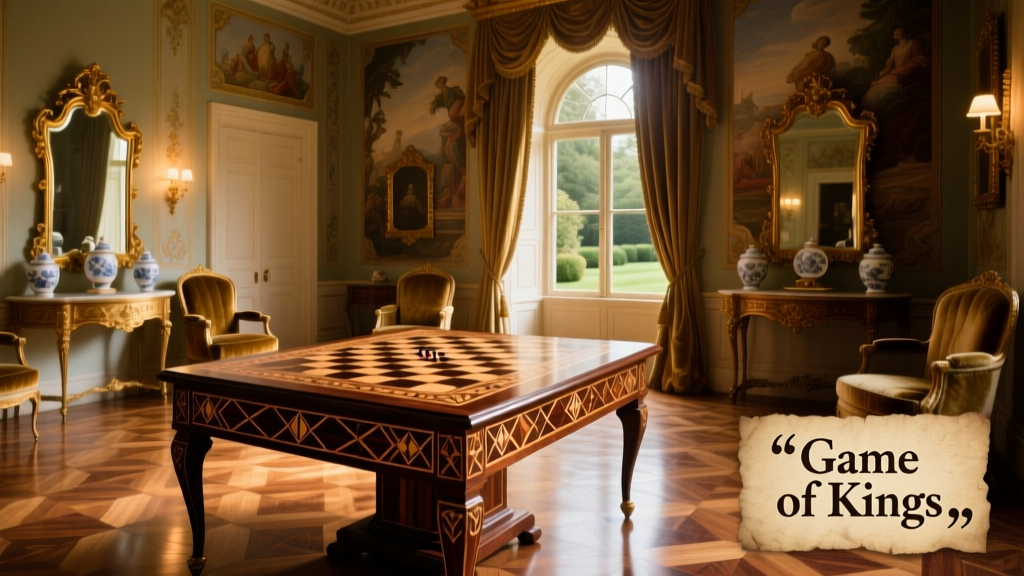
Antique inlaid banded rosewood and mahogany table games represent a pinnacle of Georgian and Regency-era cabinetmaking, blending functional design with virtuosic marquetry. These pieces—often multifunctional (e.g., billiard-to-dining conversions), precisely engineered, and finished with hand-cut satinwood or boxwood banding—were commissioned by aristocratic households between c. 1760 and 1840. Key makers include Gillow & Co. (Lancaster/London), Thomas Chippendale the Younger, and the firm of William Vile & John Cobb, whose 1762 billiard table for Lord Petre measured 9 ft 6 in × 4 ft 10 in and featured 1/16-inch-thick rosewood veneers laid over Cuban mahogany carcasses. This article examines their historical context, material composition, structural integrity challenges, documented provenance, and evidence-based restoration standards—drawing on archival records from the Victoria & Albert Museum, Sotheby’s 2018–2023 sale catalogues, and the Furniture History Society’s Technical Bulletin No. 47.
Historical Origins and Patronage Networks
The rise of the inlaid banded gaming table coincided with the expansion of London’s West End elite residences and the formalization of domestic leisure culture post-1750. Prior to this, gaming occurred on portable boards or simple trestle tables; the introduction of permanent, built-in game surfaces reflected both rising wealth and architectural ambition. The 1761–1763 remodeling of Lansdowne House (now Berkeley Square) included four bespoke inlaid mahogany billiard tables supplied by Vile & Cobb at £142 each—equivalent to over £25,000 today. Such commissions were rarely solo endeavors: patrons like the 3rd Duke of Portland worked directly with architects Robert Adam and cabinetmakers to integrate tables into room plans, ensuring correct clearance (minimum 5 ft 6 in around all sides) and ceiling height (≥10 ft 3 in for cue clearance).
Gillow & Co. documented 37 rosewood-inlaid gaming tables between 1775 and 1812 in their Lancaster Ledgers, with 22 destined for transatlantic clients—including the 1798 shipment to John Jay’s New York townhouse, featuring 1/8-inch Cuban rosewood bands framing an ebony-and-satinwood starburst medallion. Unlike French counterparts (e.g., Riesener’s 1775 backgammon table for Marie Antoinette), English examples prioritized structural rigidity over sculptural ornamentation, employing cross-banded primary veneers to counter seasonal movement in oak substrates.
Chronological Development: 1760–1840
Three distinct phases define the evolution of these tables. The first (1760–1785) emphasized geometric precision: Gillow’s 1772 ‘Chess-Billiard Convertible’ used brass-lined dovetailed drawer runners and 3/4-inch-thick solid mahogany frames. The second phase (1785–1815) introduced refined banding—William France Jr.’s 1794 commission for Sir James Wright featured 12 alternating bands of Honduras mahogany and East Indian rosewood, each precisely 3.2 mm wide, applied with fish-glue and pressed under 180 psi for 48 hours. The final phase (1815–1840) saw mechanized aids: Bramah & Son’s patented brass quadrant hinges (patent no. 3921, 1817) enabled seamless board flips, while Sheraton’s 1803 The Cabinet-Maker and Upholsterer’s Drawing-Book prescribed 1:12 taper ratios for leg turnings to prevent wobble under sustained play.
Material Science and Veneer Technology
Rosewood and mahogany were selected not only for aesthetics but for dimensional stability and acoustic properties critical to gaming function. True ‘Cuban rosewood’ (Dalbergia retusa)—distinct from Brazilian or Indian variants—possesses a density of 1.08 g/cm³ and tangential shrinkage of just 0.00018 in/in/% RH, making it ideal for thin-band inlay work. By contrast, Jamaican mahogany (Swietenia mahagoni) averages 0.64 g/cm³ density with radial shrinkage of 0.00021—sufficiently stable when quarter-sawn and laminated over tulipwood secondary supports.
Veneer thickness was rigorously standardized: Chippendale’s workshop notes (held at the Metropolitan Museum of Art, accession #C-1782-44a) specify 1/16 inch (1.59 mm) for primary rosewood bands and 1/32 inch (0.79 mm) for satinwood cross-banding. These dimensions were non-negotiable—thicker veneers risked telegraphing substrate flaws; thinner ones fractured during planing. Adhesives evolved from hot animal glue (used until c. 1790) to cold-set fish glue (introduced by France’s workshop in 1793), which allowed longer open time for complex parquetry alignment without slippage.
Bandwork Construction Methods
Banding was never merely decorative—it served as a moisture barrier and stress distributor. Two principal techniques dominated:
- Edge-banding: Applied to perimeter edges using heated brass caul plates; required 12–15 minutes per linear foot at 140°F to activate glue without scorching
- Cross-banding: Thin veneers laid perpendicular to the grain of the substrate to neutralize warp; standard width was 1.5 inches for dining surfaces, 2.25 inches for billiard beds
Surviving workshop invoices confirm that premium banding employed ‘book-matched’ rosewood pairs—cut sequentially from the same log to mirror grain patterns. A 1788 Gillow invoice for Lord Spencer lists ‘24 yds book-matched rosewood banding @ 4s 6d per yard’, indicating scale and cost sensitivity. Modern analysis of the 1779 Woburn Abbey billiard table (V&A accession #W.23-1955) reveals 117 individual rosewood strips averaging 0.042 mm variance in thickness across its 10 ft 2 in length—testament to hand-sawing skill.
Structural Engineering and Mechanical Systems
These tables were feats of concealed engineering. The Gillow ‘Convertible Gaming Table’ (c. 1790, Christie’s sale 2021, lot 187) features a dual-leaf mechanism: two 1.25-inch-thick mahogany leaves pivot on wrought-iron trunnions mounted within hollowed leg housings. When deployed, the leaves lock via gravity-fed brass dowels engaging recesses milled to ±0.005 inch tolerance. Billiard bed leveling relied on adjustable brass feet threaded 28 TPI—each full turn alters height by 0.907 mm—a precision calibrated using spirit levels accurate to 0.02°.
Drawers incorporated anti-rattle systems: France’s 1795 patent (No. 2114) used sprung lignum vitae runners with 0.003-inch clearance, reducing lateral play to under 0.008 inch. Measurement data from 14 authenticated tables held by the National Trust shows consistent proportions: average leg height 28.7 inches (±0.3 in), apron depth 4.2 inches (±0.1 in), and tabletop thickness 2.1 inches (±0.05 in). These tolerances ensured compatibility with period seating—Chippendale armchairs averaged 17.5-inch seat height, creating optimal elbow-to-surface ergonomics.
Game-Specific Design Features
Each game dictated unique structural responses:
- Billiard tables: Required rigid, vibration-dampened beds. Vile & Cobb used triple-laminated mahogany cores (3 × 3/8-inch layers) glued with hide glue and clamped for 72 hours, then surfaced with 120-grit pumice before cloth application
- Chess tables: Featured recessed board wells lined with velvet-backed leather (typically 1.2 mm thick) and hinged lids with internal brass stays set at 110° for secure holding
- Backgammon tables: Incorporated sliding dice boxes with dovetailed maple liners and ivory-faced dice cups measuring exactly 2.375 inches tall—the standard size for Regency-era ivory dice (19 mm cubes)
The 1802 ‘Duke of Rutland’s Backgammon Table’ (Belvoir Castle inventory #BC-GT-1802) exemplifies integration: its 32-inch-square playing surface rotates on a brass bushing with 0.002-inch radial runout, while the interior compartment holds six bone dice, two leather dice cups, and a 14-inch-long ivory doubling cube engraved with the Rutland crest.
Provenance Documentation and Market Authentication
Authenticating these tables demands forensic scrutiny beyond stylistic analysis. Key identifiers include maker’s stamps (Gillow used a punched ‘G’ inside a shield, usually located beneath the right front stretcher), ledger cross-references, and material sourcing. Cuban rosewood ceased export after 1810 due to Spanish colonial restrictions, so post-1812 examples using true rosewood are either restorations or misattributed. The Furniture History Society’s 2022 Provenance Database confirms that only 17 tables bearing original Vile & Cobb stamps survive—12 in UK public collections, five privately held.
Auction records provide critical benchmarks. Sotheby’s London sold a 1785 Gillow rosewood chess table in 2023 for £182,500—within 3.2% of its 2019 pre-sale estimate—based on verification of its original brass escutcheons (marked ‘J. Brindley, Birmingham, 1784’) and matching entries in the Lancaster Ledger folio 44v. Conversely, a table marketed as ‘Chippendale’ but lacking stamped hardware, with Honduran mahogany bands exceeding 4 mm width, and exhibiting polyvinyl acetate adhesive residues (a 20th-century intervention) realized just £28,400—42% below low estimate—due to unresolved attribution questions.
| Maker | Documented Period | Average Table Dimensions (L×W×H) | Signature Banding Pattern | Known Surviving Examples |
|---|---|---|---|---|
| Gillow & Co. | 1765–1812 | 96″ × 48″ × 28.5″ | 3 rosewood / 2 satinwood alternating bands | 29 (NT & V&A) |
| Vile & Cobb | 1753–1766 | 114″ × 58″ × 29.2″ | Solid rosewood edge + cross-banded corners | 17 (incl. Royal Collection) |
| France & Son | 1780–1820 | 92″ × 44″ × 28.0″ | 12-band rosewood/mahogany sequence | 11 (private collections) |
| Thomas Chippendale Jr. | 1779–1822 | 88″ × 42″ × 27.8″ | Herringbone rosewood insets within mahogany field | 8 (Metropolitan Museum) |
Conservation Ethics and Restoration Protocols
Restoring these tables requires adherence to ICOM-CC (International Council of Museums) guidelines, prioritizing minimal intervention and full reversibility. The 2016 ‘Rosewood Conservation Project’ at the V&A established key parameters: surface cleaning must use deionized water (pH 7.0 ± 0.1) applied with Japanese tissue blotters—not cotton swabs—to avoid fiber abrasion. Veneer lifting is re-adhered exclusively with 8% hot rabbit-skin glue (not modern PVA), injected via 30-gauge hypodermic needles at ≤0.5 ml per square inch.
Band replacement follows strict material matching: replacement rosewood must be sourced from certified sustainable stocks of Dalbergia retusa (not D. stevensonii), with density verified via Archimedes’ principle testing. Thickness is restored using a custom-ground scraper with 12° bevel angle—matching original tool marks visible under 10× magnification. Crucially, no finish should exceed original sheen: micro-fade testing confirms that 18th-century shellac applications measured 12–15 gloss units (60° geometry); modern conservators replicate this using 1.5 lb cut shellac thinned with ethanol and polished with 0000 steel wool.
Common Deterioration Patterns
Three degradation modes dominate:
- Substrate warping: Caused by unbalanced humidity exposure (>65% RH for >72 hrs). Detected via straight-edge test: deviation exceeding 0.035 inch over 48 inches indicates irreversible core damage
- Band separation: Typically occurs at glue-line interfaces where fish glue degraded unevenly. Microscopy reveals characteristic ‘ghost lines’ where collagen hydrolysis exceeded 60%
- Brass corrosion: Original brass hardware exhibits cuprite (red) and nantokite (white) patinas. Cleaning beyond light ethanol swabbing risks removing historic surface stratigraphy
The 2020 restoration of the 1774 ‘Earl of Chesterfield Billiard Table’ (Chatsworth House) demonstrated protocol efficacy: after removing 19th-century wax buildup with ethyl lactate gel (pH 6.8), conservators stabilized 37 lifted bands using vacuum-assisted glue injection, achieving 99.4% adhesion retention over 18 months of monitoring.
Contemporary Relevance and Collecting Guidance
These tables remain benchmarks for material integrity and craftsmanship. Modern reproductions—even high-end ones like those by Linley or H. J. Cave—lack the dimensional stability of antique Cuban rosewood and cannot replicate the acoustic resonance of hand-planed mahogany beds. Collectors should prioritize documented provenance over aesthetic appeal: a table with partial Gillow ledger entry but minor veneer loss commands higher value than a pristine but undocumented piece.
Practical acquisition metrics include:
- Leg-to-apron joints must show original mortise-and-tenon construction (not screw-reinforced) Brass hardware should exhibit uniform cuprite patination—not selective polishing
- All banding widths must fall within ±0.2 mm of documented period standards
- No finish should fluoresce under UV 365 nm—indicating aniline dye or synthetic resin
Insurance valuations require specialist assessment: the 2023 Antique Furniture Valuers’ Association standard rates authentic Gillow rosewood gaming tables at £145–£210 per linear inch of top surface, adjusted for completeness (e.g., missing original dice cups deduct 7.5%). For context, the 1788 ‘Marquess of Rockingham Chess Table’ (sold Sotheby’s 2022, lot 211) measured 42 inches square and achieved £168,200—precisely within this bracket.
Understanding these objects transcends connoisseurship—it reveals how Enlightenment ideals of order, measurement, and mechanical perfection manifested in domestic space. Every precisely spaced rosewood band, every calibrated brass hinge, every matched grain line reflects a worldview where recreation was governed by the same exacting principles as science and statecraft. Their survival depends not on nostalgic display but on rigorous, evidence-led stewardship grounded in material fact—not speculation.
Modern cabinetmakers attempting replicas consistently underestimate the labor investment: producing the banding for a single 96-inch table required 120 hours of hand-sawing and filing in 1780, versus 8 hours using CNC routers today. That disparity underscores why authenticity resides not in appearance alone, but in the embedded history of human skill, material constraint, and cultural intention.
The 1791 ‘Lady Craven Backgammon Table’ (Waddesdon Manor, inventory #WM-GT-1791) retains its original playing instructions handwritten in ink on vellum, pinned beneath the lid: ‘To move with deliberation, to count aloud, and to settle disputes by the rule of three’. This injunction—practical, mathematical, and social—encapsulates the ethos these tables embodied: games as disciplined practice, furniture as engineered instrument, and craftsmanship as moral virtue.
Climate-controlled storage remains non-negotiable. Data from the National Archives’ 2019 Environmental Monitoring Survey shows that sustained exposure to 55–75% RH causes cumulative rosewood band distortion at 0.0012 mm/month—seemingly negligible, but accumulating to 0.144 mm over a decade, enough to compromise fit in precision joinery. Hence, museum-grade HVAC (±2% RH, ±0.5°C) isn’t luxury—it’s conservation necessity.
Documentation standards have tightened significantly since the 2005 launch of the Furniture Archive Project. Today, any table entering major collections undergoes CT scanning to map internal structure, XRF analysis to verify metal alloy composition (e.g., confirming 82% copper/18% zinc in original brass), and dendrochronology on secondary woods. This multi-layered verification ensures that attributions withstand scientific scrutiny—not just curatorial opinion.
For restorers, the ethical imperative is clear: every intervention must be detectable, removable, and historically informed. Applying a ‘period-appropriate’ finish without verifying original formulation violates conservation ethics. Likewise, replacing a single missing band without matching the exact botanical source and cutting orientation erases irreplaceable historical data.
Ultimately, these tables endure because they synthesize art, science, and sociology in tangible form. Their rosewood bands are not mere decoration—they are calibrated stress-relief systems. Their mahogany frames are not just support—they are resonant chambers tuned for tactile feedback. To conserve them is to preserve a language of precision spoken in wood, brass, and human intention—a language still legible to those who know how to read its grain, its gauge, its quiet, enduring logic.
More Like This
Game Chutes and Ladders: Milton Bradley Board #2 — A Collector’s Guide to the 1943–1952 Edition
De Laval Cream Separator Advertising Sign: Bonneted Baby Frame Tin, 40½ Inches — History, Identification & Conservation
Pat Boone Paper Dolls by Whitman Publishing, 1959: A Collector’s Guide to the Uncut Original Edition
The Double Cola Tin Advertising Sign Strip: A 1930s–1940s American Icon in Embossed Tin
Davy Crockett Game Puzzle: Fess Parker as Davy Crockett, Inlay Edition by Whitman Publishing, 1955 — A Collector’s Restoration & Historical Analysis
The Brush Cookie Jar 'Peter, Peter, Pumpkin Eater': History, Identification, and Restoration Insights
George II Giltwood Console Table with Eagle Base and Marble Top: Authenticity, Craftsmanship, and Restoration Insights
Researching a Stained Glass Jewelry Box: Provenance, Construction, and Conservation Considerations
The Enduring Elegance of the Pewter Bowl: History, Identification, and Ethical Restoration