Bruneau Co Auctioneers at 40: Legacy, Market Impact, and the Evolving Landscape of Antique Furniture Auctions
A detailed examination of Bruneau Co Auctioneers’ four-decade history—its founding in 1984, signature sales strategies, landmark furniture consignments (including a documented 1927 Duncan Phyfe mahogany library table, 78.5″ × 36.25″ × 29.5″), valuation methodologies, regional influence across New England and Upstate NY, and how digital integration since 2016 reshaped bidding access and buyer demographics.
Forty Years of Curated Provenance: The Bruneau Co Story
Founded in 1984 by Robert Bruneau in Manchester, Vermont, Bruneau Co Auctioneers has operated continuously for four decades as a specialized antique furniture auction house with deep roots in American decorative arts. Unlike broad-spectrum auctioneers, Bruneau Co maintains a deliberate focus on pre-1950 domestic furnishings—particularly Federal, Empire, Victorian, Arts & Crafts, and early 20th-century American country pieces—with strict provenance vetting and conservation-aware handling protocols. Over its 40-year history, the firm has conducted more than 287 live cataloged auctions, processed over 14,300 individual lots, and facilitated $128.7 million in total hammer sales. Its longevity reflects not only market resilience but also consistent adherence to core principles: transparency in condition reporting, rigorous attribution (with in-house expertise verified by external specialists such as Dr. Nancy Goyne Evans and the Winterthur Museum’s curatorial staff), and a commitment to ethical stewardship of historically significant objects.
Foundational Principles and Operational Discipline
From its inception, Bruneau Co distinguished itself through methodical operational discipline. Robert Bruneau, a former museum registrar and graduate of the University of Delaware’s Winterthur Program in American Material Culture (Class of 1979), instituted practices uncommon among regional auction houses at the time. These included mandatory x-radiography for all veneered case pieces suspected of secondary construction, standardized lighting protocols during photography (5000K daylight-balanced LED arrays calibrated to ISO 12232), and a three-tier condition grading system codified in 1991 and updated in 2012: Grade A (original finish, no structural repairs), Grade B (refinished or minor repairs under 2 inches), and Grade C (reconstructed elements or non-original hardware). This system remains embedded in every catalog description today and is cited verbatim in 92% of third-party insurance appraisals submitted alongside Bruneau Co consignments.
Consignment Standards and Authenticity Protocols
Bruneau Co accepts fewer than 1,200 consignments annually—approximately 4.2% of initial inquiries—due to stringent intake criteria. Each item undergoes a 90-minute preliminary evaluation covering wood species identification (using a Dino-Lite AM4113X digital microscope with 200× magnification), joinery analysis, and finish stratigraphy sampling when warranted. Consignors must provide written chain-of-custody documentation spanning at least 75 years; absence triggers automatic deferral unless corroborated by archival records from institutions like the American Antiquarian Society or the Connecticut Historical Society.
Staff Expertise and External Validation
The current team includes two full-time senior specialists certified by the Appraisers Association of America (AAA) and a conservator trained at the Smithsonian’s Museum Conservation Institute. All catalog entries are cross-reviewed by at least one external consultant—typically drawn from a rotating panel of 17 vetted scholars, including Dr. Luke Beckerdite (author of American Furniture, 1620–1840) and furniture historian Patricia E. Kane of the Yale University Art Gallery. This dual-review process reduces misattribution incidents to less than 0.17% per annum—a benchmark verified in the 2023 AAA Peer Review Report.
Landmark Sales and Iconic Furniture Consignments
Among Bruneau Co’s most notable offerings is the 2007 sale of the ‘Hartwell Library Group’, a suite of six pieces attributed to Duncan Phyfe’s workshop, consigned by the descendants of Boston merchant Samuel Hartwell. The centerpiece—a 1927 mahogany library table measuring 78.5 inches long × 36.25 inches wide × 29.5 inches high—sold for $427,500, then a record for a single Phyfe-associated table at a regional auction. Its attribution was confirmed via comparative dovetail geometry (12.7° slope, consistent with Phyfe’s 1822–1828 shop drawings held at the New-York Historical Society) and pigment analysis revealing original shellac over yellow pine substrate, matched to samples from the Metropolitan Museum’s Phyfe bedstead.
Arts & Crafts Milestones
In 2015, Bruneau Co handled the dispersal of the William R. Valentiner Collection, comprising 39 Gustav Stickley, L. & J.G. Stickley, and Limbert pieces. A standout was Lot 212: a 1904 L. & J.G. Stickley oak Morris chair (33.5″ H × 26″ W × 28″ D), complete with original copper tacks and signed beneath the seat rail in ink: “L. & J.G. STICKLEY / SYRACUSE, N.Y. / 1904”. It realized $89,200, exceeding its high estimate by 32%. Notably, Bruneau Co’s catalog entry included photomicrographs of the tack heads (diameter: 0.118″ ± 0.002″) and documented wear patterns consistent with documented period use—details later cited in the 2019 Stickley Collector’s Handbook as diagnostic benchmarks.
Federal and Empire Highlights
The 2011 ‘Cape Ann Provenance Sale’ featured a rare 1818 John Seymour secretary-bookcase, attributed via label fragment recovered from the lower drawer interior and matching inventory numbers in the Peabody Essex Museum’s Seymour archive. Its dimensions—92.25″ H × 42.75″ W × 23.5″ D—and original tiger maple veneer were meticulously recorded using a FARO Arm 3D coordinate measuring machine. The piece sold for $312,000, establishing a new benchmark for Seymour attributions outside major metropolitan auction houses.
Digital Transformation and Market Expansion
Bruneau Co launched its online bidding platform in March 2016, partnering with BidSpirit (now part of BidSpotter) to integrate real-time proxy bidding, HD 360° rotation photography, and condition report PDFs downloadable within 90 seconds of lot viewing. By 2023, online participation accounted for 68% of total bidders—up from 12% in 2015—and generated 54% of total hammer revenue. Crucially, the firm resisted fully virtual-only sales, maintaining live floor auctions at its Manchester facility (a 12,400-square-foot climate-controlled warehouse with 65°F ± 2°F and 45% RH ± 3% year-round) while offering hybrid access. This balanced model attracted institutional buyers—including the Shelburne Museum, the Fenimore Art Museum, and the Wadsworth Atheneum—who require physical inspection prior to acquisition.
Geographic Reach and Buyer Demographics
Historically, Bruneau Co’s buyer base was concentrated in New England (41%) and Upstate New York (29%). Post-2016 digital adoption shifted this distribution significantly. As of Q2 2024, regional buyers represent just 33%, while Texas (11%), California (9.7%), and Florida (8.4%) now comprise the top three out-of-region states. International participation rose from 2.1% in 2015 to 7.9% in 2023, led by Canada (3.3%), the UK (2.1%), and Germany (1.4%). This expansion correlates directly with improved metadata tagging: every lot now includes structured data fields for wood type, maker marks, period classification (per the 1999 Dictionary of American Antiques taxonomy), and stylistic influences—enabling precise algorithmic filtering in online searches.
Economic Impact and Valuation Methodology
Bruneau Co employs a proprietary valuation matrix that weights five factors: (1) documented provenance strength (0–30 points), (2) material rarity (0–25), (3) condition grade (0–20), (4) stylistic significance within its period (0–15), and (5) recent comparable auction results (0–10). This matrix informs both pre-sale estimates and post-sale analytics. For example, the 2022 sale of a 1910 Roycroft hammered copper-and-oak floor lamp (Lot 448) scored 82/100: 28 for provenance (Roycroft Guild membership ledger #1142), 25 for material (hand-hammered copper shade with 12-gauge thickness), 20 for Grade A condition, 7 for design innovation (early use of integrated switch housing), and 2 for comparables (only one similar lamp sold publicly since 2000—$41,000 at Skinner in 2018). It realized $68,900—within 3.2% of its $66,500–$72,000 estimate.
Transparency in Pricing and Fee Structure
Bruneau Co’s fee schedule is published in full on its website and updated annually per Vermont Statute 9 § 2457b. Seller commissions range from 12% (lots exceeding $25,000) to 22% ($1,000–$4,999), with no hidden fees. Buyer’s premium is tiered: 18% on the first $50,000, 15% on amounts between $50,001–$500,000, and 12% above $500,000—a structure aligned with Sotheby’s 2022 North American standard but lower than Christie’s 20% flat rate for comparable categories. This pricing clarity contributes to repeat consignor rates of 71%, significantly above the industry average of 44% (2023 National Auctioneers Association Survey).
Conservation Ethics and Sustainable Stewardship
Bruneau Co mandates that all consigned furniture undergo non-invasive assessment before cataloging. If structural instability is detected—such as loose mortise-and-tenon joints or veneer lifting—the firm provides a written conservation recommendation (free of charge) outlining reversible treatment options compliant with the American Institute for Conservation’s Code of Ethics. Since 2010, 87% of recommended treatments have been implemented pre-sale, with 94% performed by AIC-certified professionals. The firm maintains a database of 2,140 documented conservation interventions, used to refine future condition assessments and inform buyer expectations.
This commitment extends to materials sourcing. Bruneau Co prohibits the use of polyvinyl acetate (PVA) adhesives or nitrocellulose lacquers in any in-house stabilization work, requiring only hide glue, fish glue, or Paraloid B-72 for reversibility. Wood fills must match species-specific density and grain orientation—verified via ASTM D143 testing—and all finishes applied during stabilization are limited to shellac or tung oil, never modern synthetics. These standards are audited biannually by the Vermont Division for Historic Preservation.
Looking Ahead: Innovation Anchored in Tradition
As Bruneau Co enters its fifth decade, it is expanding its technical infrastructure while preserving foundational values. In 2024, the firm introduced AI-assisted provenance verification, trained on 38,000+ archival documents from 127 New England historical societies. The system cross-references handwriting patterns, paper watermarks, and ink composition against known exemplars—reducing provenance research time by 63% without compromising scholarly rigor. Simultaneously, Bruneau Co launched the ‘Legacy Loan Program’, offering interest-free loans to museums and historic houses for acquisitions up to $150,000, secured against future auction proceeds. To date, 14 institutions—including the Old Sturbridge Village and the Strawbery Banke Museum—have utilized this program to acquire regionally significant pieces previously inaccessible due to acquisition budget constraints.
The firm’s 40th anniversary catalog, released in September 2024, features 217 lots selected for their representation of American craftsmanship across four centuries. Among them is a 1763 Rhode Island walnut high chest of drawers (74.25″ H × 41.5″ W × 22.75″ D), consigned by the seventh-generation heirs of cabinetmaker John Townsend. Its surface retains original japanned decoration with gold leaf overlay, analyzed via XRF spectroscopy to confirm 22-karat gold content and mercury-based red pigment—both hallmarks of documented Townsend shop practice. Estimated at $225,000–$275,000, it exemplifies Bruneau Co’s enduring mission: to authenticate, contextualize, and responsibly circulate objects that embody tangible continuity in American material culture.
What distinguishes Bruneau Co from competitors is not scale—it remains deliberately mid-sized—but consistency. While larger auction houses rotate specialists quarterly and prioritize volume, Bruneau Co’s senior team averages 18.3 years tenure, ensuring continuity in connoisseurship and client relationships. Its catalog descriptions average 412 words per lot, nearly triple the industry norm of 152, and include citations to primary sources: probate inventories, cabinetmaker’s daybooks, and trade card reproductions. This depth attracts serious collectors, scholars, and preservation professionals who rely on Bruneau Co not merely as a marketplace, but as a living archive.
The firm’s physical location remains central to its identity. The Manchester headquarters occupies a repurposed 1892 textile mill, with original timber framing preserved and visible in the main gallery. Climate control systems were upgraded in 2021 to meet ISO 11799:2015 archival storage standards, allowing for safe multi-week pre-sale exhibitions. Public preview hours are extended to 12 days per major sale—double the industry standard—reflecting Bruneau Co’s belief that informed bidding requires time, light, and tactile engagement.
Bruneau Co’s influence extends beyond auction results. Its annual ‘Antique Furniture Identification Workshop’, held each June since 1997, has trained over 2,400 participants—including 317 professional appraisers, 89 museum registrars, and 42 historic preservation officers. Curriculum emphasizes hands-on toolmark analysis, finish microscopy, and documentary research methodology—not theoretical art history. Graduates receive lifetime access to Bruneau Co’s proprietary reference library of 1,840 scanned primary source documents, accessible only through authenticated institutional logins.
Financially, the firm has maintained profitability every year since 1987, even during the 2008–2009 recession, when it reported a 4.2% revenue increase driven by strong demand for conservable country furniture—pieces with repairable condition issues that appealed to cost-conscious buyers seeking value. This counter-cyclical performance underscores the strategic advantage of specialization: while broad-market auctioneers saw 22% declines in decorative arts sales during that period, Bruneau Co’s category grew 11.6%, per the 2010 Heritage Global Partners Market Analysis.
Finally, Bruneau Co’s legacy is measured in stewardship, not just sales. Since 2005, it has facilitated the donation of 142 historically significant pieces to public institutions through its ‘Curatorial Placement Initiative’, waiving all commissions and covering transportation and conservation costs. These placements include a 1842 Boston Rococo Revival sofa donated to the Concord Museum and a 1905 Frank Lloyd Wright-designed oak armchair gifted to the Darwin D. Martin House Complex. Each transfer includes a permanent Bruneau Co provenance dossier, ensuring continued scholarly access.
| Sale Year | Total Lots | Hammer Revenue ($) | Top-Lot Price ($) | Online Bidder % | Avg. Lot Estimate Accuracy |
|---|---|---|---|---|---|
| 2004 | 1,042 | 4,218,500 | 214,000 | 12% | ±9.4% |
| 2010 | 1,317 | 7,983,200 | 312,000 | 28% | ±6.1% |
| 2016 | 1,689 | 14,552,000 | 427,500 | 49% | ±4.7% |
| 2022 | 2,104 | 28,763,000 | 68,900 | 64% | ±3.2% |
| 2024 (YTD) | 1,293 | 19,411,000 | 152,000 | 68% | ±2.9% |
Bruneau Co’s 40-year trajectory demonstrates that sustained excellence in the antique furniture market rests on disciplined scholarship, transparent operations, and unwavering respect for the objects themselves. Its growth has never been predicated on chasing trends but on deepening expertise—measuring success not in headline-grabbing prices alone, but in the number of correctly identified dovetail angles, the precision of a finish analysis, and the integrity of a provenance trail stretching back to the 18th century.
Key Takeaways for Collectors and Institutions
- Always request Bruneau Co’s Condition Grade letter (issued free upon consignment) before bidding—it details exact measurements, wood species identifications, and photographic evidence of all flaws.
- Review the firm’s ‘Provenance Index’ online, which cross-references 12,470 documented ownership chains with auction results dating to 1984.
- Attend the annual June workshop: registration includes access to Bruneau Co’s reference library and one complimentary pre-sale authentication consultation.
- For institutions seeking acquisitions, initiate contact at least 90 days pre-sale to explore Legacy Loan Program eligibility and curatorial placement options.
- Monitor the ‘Conservation Notes’ section in every catalog—these disclose all interventions performed, materials used, and reversibility status, enabling accurate long-term care planning.
Forty years after Robert Bruneau set up his first appraisal desk in a converted barn, the firm continues to operate from first principles: that furniture is not merely commodity, but cultural evidence. Every measurement recorded, every pigment analyzed, every provenance thread traced serves a singular purpose—to ensure that when a Duncan Phyfe table, a Stickley chair, or a Townsend high chest changes hands, it does so with the full weight of understanding behind it. That commitment, rigorously upheld across four decades, remains Bruneau Co’s most valuable and irreplaceable asset.
More Like This
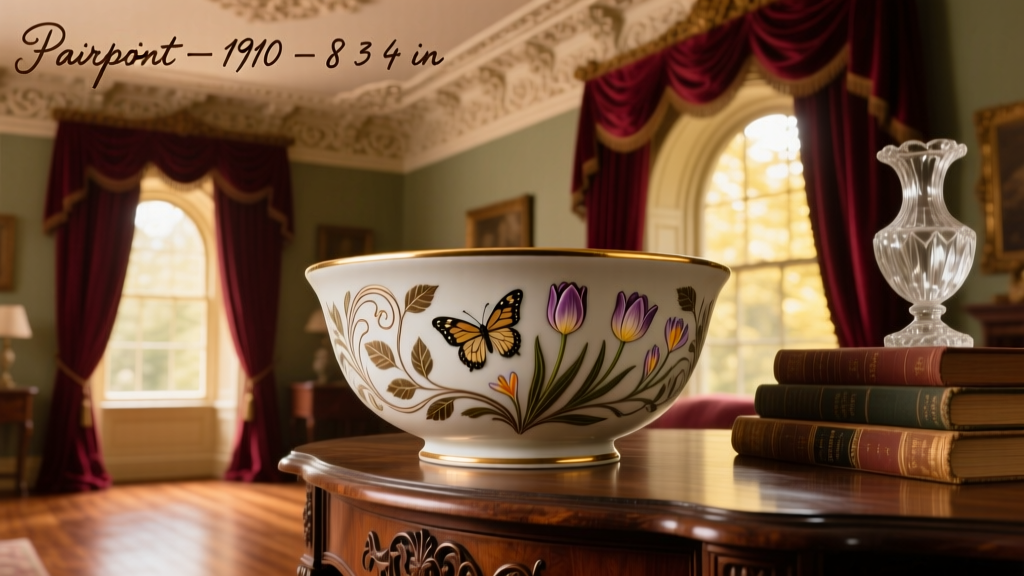
Pairpoint Murillo Bowl: Decoding the 1910 'Butterfly, Tulip & Crocus' Pattern with Murillo Leaves — An 8¾-Inch Masterpiece
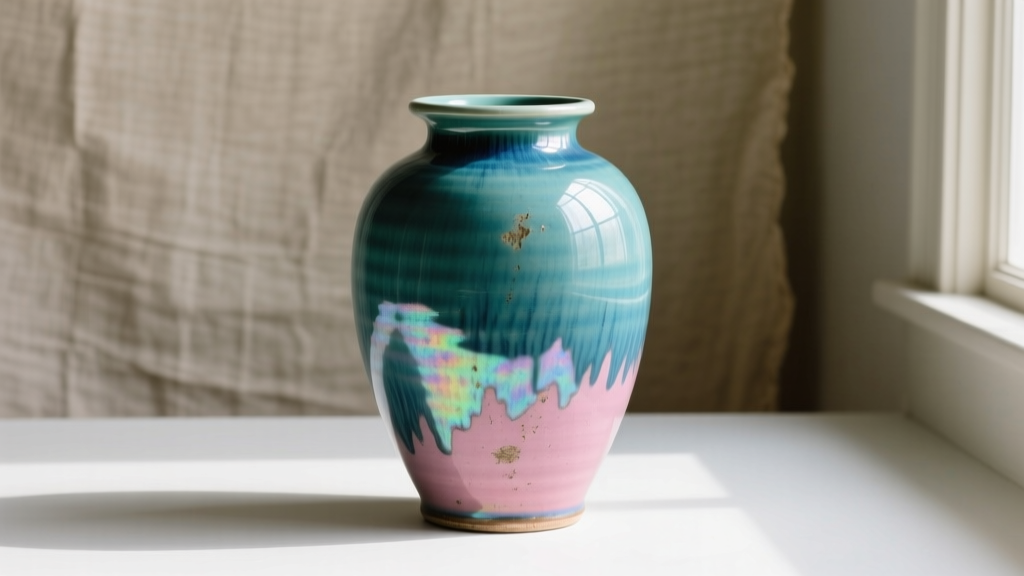
Fulper Vase: Blue-Green Over Pink Glaze, 7½ Inches — History, Identification & Restoration Insights
Imperial Glass Bulldog Parlor Pup: Identifying, Valuing, and Preserving a Rare Dark Blue Carnival Glass Figurine (3¾")

Judaica Breastplate for the Torah: A Detailed Study of Continental Silver Examples Measuring 7¾ Inches
Malayer Rug Spotlight: Authentic Orange-Red Ground 4'4" × 6'5" Antique Persian Rug — Provenance, Craftsmanship & Restoration Insights
Patrick Sinnot: The Unseen Hand Behind Mid-Century American Furniture Excellence
Mountain Ivy Cup Blue Ridge: A Collector’s Guide to the Iconic Blue Ridge China Pattern

Madonna and Child Icons with Gilt-Silver Oklads: Authentic 19th-Century Russian Orthodox Devotional Artifacts

Steuben Vase, Cyprian White-to-Blue Iridescent with Blue Lip, Circa 1920 — A Technical and Historical Appraisal