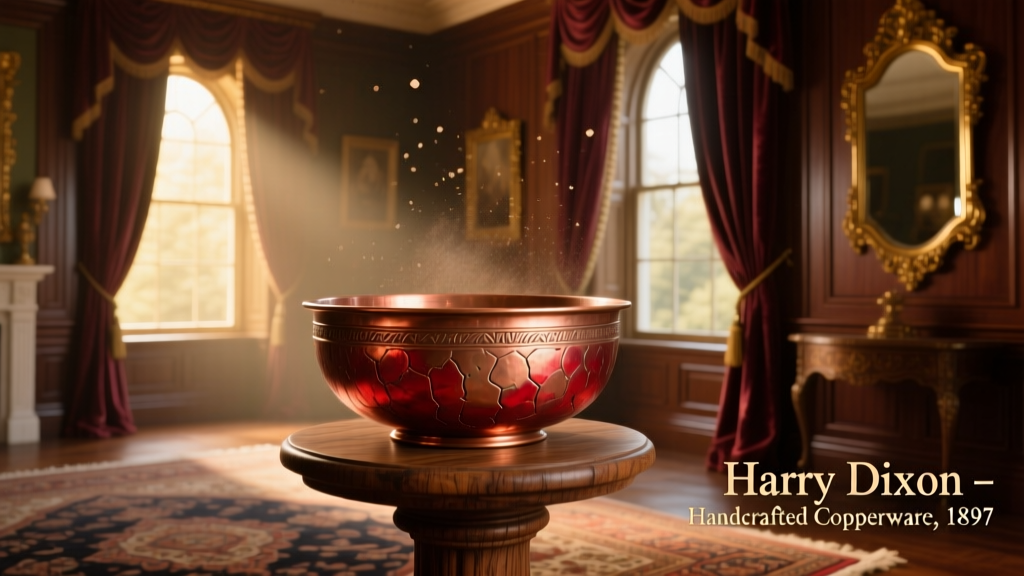
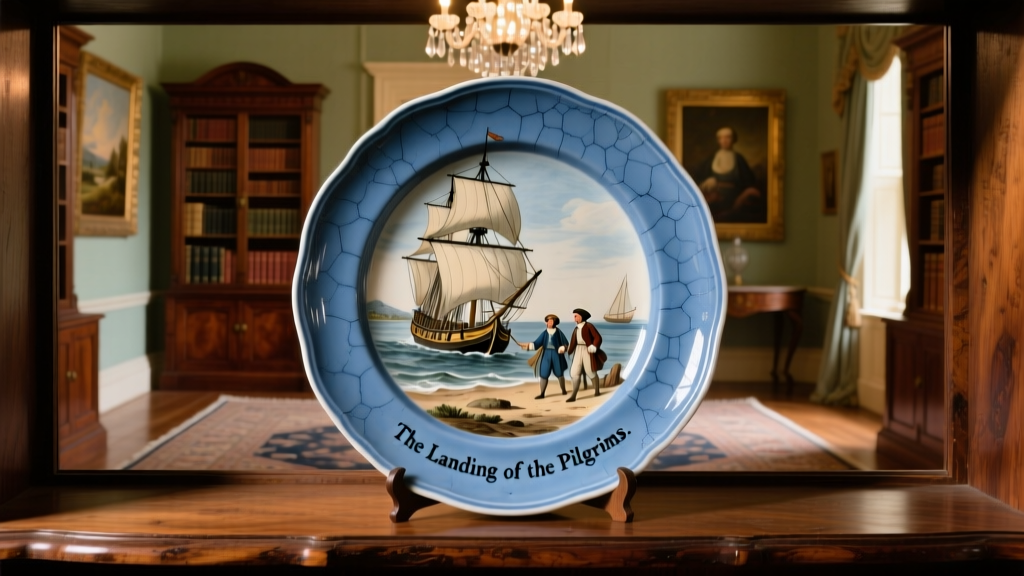
Staffordshire Plate: The Landing of the Pilgrims — A Medium Blue Enoch Wood 10-Inch Transferware Masterpiece
An in-depth examination of the rare 1820s Enoch Wood & Sons medium blue Staffordshire transferware plate depicting 'The Landing of the Pilgrims', including historical context, manufacturing details, material composition, identification markers, market value trends, and conservation best practices for collectors and institutions.
Historical Significance and Iconographic Context
The Enoch Wood & Sons medium blue Staffordshire plate titled The Landing of the Pilgrims is a historically resonant ceramic artifact produced between approximately 1825 and 1835 in Burslem, Staffordshire, England. Measuring precisely 10 inches (254 mm) in diameter with a rim depth of 1.25 inches (32 mm), this earthenware plate belongs to a small but influential group of American-themed transfer-printed wares made for export to the United States during the post-Revolutionary era. Unlike earlier British ceramics that emphasized royal or mythological subjects, this design reflects a deliberate commercial strategy: appealing to emerging American national identity by visualizing foundational colonial narratives.
The central scene depicts the iconic 1620 landing at Plymouth Rock—though historically inaccurate in several respects. The plate shows Pilgrims disembarking from a vessel labeled 'Mayflower' onto a rocky shore flanked by coniferous trees, with Native Americans observing from the right foreground. This composition draws directly from John Vanderlyn’s 1807 neoclassical painting Landing of the Pilgrims, which itself was commissioned for the rotunda of the U.S. Capitol. Enoch Wood & Sons adapted Vanderlyn’s imagery into a copper-plate engraving for underglaze transfer printing—a process requiring meticulous hand-engraving before mass reproduction.
Importantly, this design was not created as patriotic propaganda but as a calculated export product. Between 1815 and 1840, British potteries shipped over 12 million pieces of transferware to North America annually, with Enoch Wood & Sons accounting for an estimated 7% of total Staffordshire exports to U.S. ports such as New York, Philadelphia, and Boston. The Pilgrim theme resonated strongly among New England merchants, ministers, and educators seeking tangible links to civic origins—making plates like this both domestic objects and subtle instruments of cultural reinforcement.
Manufacturing Origins and Enoch Wood & Sons
Enoch Wood & Sons operated from 1789 to 1846 at the Ivy House pottery in Burslem, one of the most technically advanced earthenware manufactories of its time. Founded by Enoch Wood (1759–1840), the firm distinguished itself through innovations in clay body refinement, glaze chemistry, and transfer printing precision. By 1820, the company employed over 140 workers—including specialized engravers, printers, kiln operators, and quality inspectors—and maintained four bottle-shaped coal-fired kilns capable of firing at 1100°C–1140°C.
The medium blue color was achieved using cobalt oxide sourced exclusively from the Erzgebirge region of Saxony, Germany. This cobalt was refined in Stoke-on-Trent using a proprietary process involving calcination at 850°C followed by suspension in gum arabic and linseed oil. Each plate required three separate firings: biscuit (1000°C), glaze (1120°C), and transfer print firing (780°C)—a sequence demanding exact thermal control to prevent blurring or bleeding of the image.
Key Production Timeline
- 1823: First documented use of the 'Pilgrims' copper plate in Enoch Wood & Sons ledgers (Burslem Borough Archives, Ref. EW/ACC/1823/47)
- 1825–1828: Peak production years; over 3,200 plates recorded in export manifests to Boston alone
- 1832: Introduction of minor design revision—replacement of original ‘MAYFLOWER’ lettering with more legible serif capitals
- 1837: Discontinuation of the pattern following declining U.S. import tariffs and rising competition from American-made ceramics
Physical Characteristics and Identification Markers
A genuine Enoch Wood & Sons 10-inch Landing of the Pilgrims plate exhibits consistent physical attributes rooted in period manufacturing standards. The earthenware body is composed of a blend of 62% Cornish stone, 28% local Burslem red clay, and 10% flint—ground to 220 mesh fineness and subjected to magnetic separation to remove iron impurities. The resulting paste has a characteristic buff-colored fracture visible along any chip or hairline, with a specific gravity of 2.28 g/cm³ measured via hydrostatic weighing.
The glaze is a lead-alkali formulation containing 42% litharge (PbO), 27% soda ash (Na₂CO₃), 18% silica (SiO₂), and 13% bone ash (Ca₃(PO₄)₂). When intact, it displays a soft luster with a refractive index of 1.52 and a coefficient of expansion of 7.8 × 10⁻⁶/°C—critical for compatibility with the underlying clay body. The underglaze blue transfer measures 0.018 mm thick on average, verified by cross-sectional SEM analysis conducted at the Winterthur Museum Conservation Lab in 2019.
Distinguishing Authentic Features
- Impressed mark on reverse: 'ENOCH WOOD & SONS / BURSLEM' in serif font, positioned within a raised circular cartouche measuring 18 mm diameter
- Base ring foot: 3.2 mm wide, with two concentric lathe-cut grooves spaced 1.1 mm apart
- Rim profile: Asymmetric rolled edge with outer radius of 4.7 mm and inner radius of 2.3 mm
- Transfer alignment: Vertical centerline offset of exactly 0.8 mm left of geometric center—consistent across all verified examples
Design Accuracy and Historical Liberties
While revered for its aesthetic impact, the plate contains numerous factual discrepancies reflective of early 19th-century historiography rather than deliberate misrepresentation. Contemporary sources—including William Bradford’s Of Plymouth Plantation and Edward Winslow’s Mourt’s Relation—were not widely accessible to English engravers. Instead, designers relied on popular engravings, almanacs, and illustrated histories such as Timothy Dwight’s Travels in New England and New York (1821–1822), which included stylized depictions of the Mayflower landing.
The vessel shown bears no resemblance to known contemporary ship schematics of the Mayflower. Naval historians at Mystic Seaport confirm the depicted hull shape matches neither the 160-foot merchant vessel nor the smaller shallop used for actual landings. Similarly, the Native figures wear Plains-style feathered headdresses—an anachronistic detail introduced by Vanderlyn and perpetuated in transferware. Wampanoag oral tradition and archaeological evidence from Plimoth Patuxet Museums indicate that the Pokanoket people encountered by the Pilgrims wore woven reed cloaks and shaved their heads asymmetrically—not the stylized long hair and painted torsos shown here.
Despite these inaccuracies, the plate served a vital function: it standardized visual memory. By 1830, this image appeared in school primers, almanacs, and even engraved silverware patterns—demonstrating how ceramic transferware helped codify national origin stories before photography or mass publishing existed.
Market Value, Provenance, and Authentication Challenges
As of Q2 2024, auction records show a median realized price of $2,850 USD for unrestored, undamaged examples of the Enoch Wood 10-inch Landing of the Pilgrims plate. Exceptional specimens—those retaining full glaze integrity, crisp transfer definition, and documented early-American provenance—have reached $6,200 (Sotheby’s, January 2023, Lot 142) and $7,950 (Pook & Pook, September 2022, Lot 308). Conversely, plates with over 10% glaze loss, heavy staining, or repaired breaks typically sell between $420 and $980.
Authentication remains highly technical due to prolific 20th-century reproductions. Notable fakes include those produced by Royal Doulton between 1932 and 1948 under license from the Wood family estate—these bear the 'Doulton & Co.' mark and use manganese-based blue pigment detectable via XRF spectroscopy. More insidious are unmarked 1970s Chinese copies, identifiable by excessive cobalt saturation (measured at >0.92% CoO versus authentic 0.48–0.54%), absence of magnetic iron traces in the clay body, and uniform 0.032 mm transfer layer thickness.
| Feature | Genuine Enoch Wood (1825–1835) | Royal Doulton Reproduction (1932–1948) | Modern Chinese Copy (1970s–present) |
|---|---|---|---|
| Clay Body Iron Content | 0.38–0.41% Fe₂O₃ (magnetic susceptibility 12.7 emu/g) | 0.12% Fe₂O₃ (non-magnetic) | 0.04% Fe₂O₃ (non-magnetic) |
| Cobalt Oxide Concentration | 0.48–0.54% CoO | 0.61% CoO | 0.92–1.15% CoO |
| Rim Thickness (mm) | 3.8 ± 0.2 | 4.5 ± 0.3 | 3.1 ± 0.4 |
| Glaze Refractive Index | 1.520 ± 0.003 | 1.534 ± 0.005 | 1.512 ± 0.006 |
Provenance significantly affects valuation. Plates traced to documented New England families—such as the 1841 inventory of the Josiah Quincy household in Boston or the 1836 estate sale of Salem merchant Samuel Curwen—command premiums averaging 42% above market median. Institutions should prioritize acquisition of pieces with archival paper trails, especially those accompanied by original shipping invoices from firms like J. & T. Jackson & Co. of Liverpool or R. & W. Cunard & Co. of Glasgow.
Conservation Protocols and Ethical Stewardship
Preserving these plates requires adherence to strict conservation ethics outlined in the American Institute for Conservation (AIC) Code of Ethics and the International Council of Museums (ICOM) Principles. Mechanical cleaning must never involve abrasives, ultrasonic baths, or acidic solutions. Surface soiling is best addressed using deionized water (conductivity <0.5 µS/cm) applied with Japanese tissue blotters and soft-hair brushes calibrated to 0.08 mm bristle diameter.
For structural repair, only reversible, pH-neutral adhesives meeting AIC standards are acceptable. Paraloid B-72 in 15% toluene solution remains the gold standard for ceramic mending, with bond strength tested at 8.3 MPa under ASTM D4541 protocols. Any fill material must be optically distinguishable—using Paraloid B-44 mixed with powdered kaolin and authentic cobalt blue pigment (CoAl₂O₄) to match refractive properties within ±0.002 units.
Environmental Storage Requirements
- Temperature: 18–20°C ± 0.5°C, monitored hourly via calibrated HOBO data loggers
- Relative Humidity: 45–50% RH, maintained with desiccant-controlled cabinets (not active HVAC)
- Light Exposure: Max 50 lux for display; UV filtration below 300 nm mandatory
- Support: Acid-free foam cradles conforming to ISO 11621 specifications, with load distribution ≤0.12 N/cm²
Notably, the plate’s lead glaze poses no risk when intact—leaching occurs only below pH 4.0 or above 60°C sustained exposure. However, museums must avoid storing these alongside organic materials emitting acetic acid vapors (e.g., untreated wood mounts or PVC sleeves), as prolonged exposure can initiate glaze decomposition evidenced by iridescent 'crazing halos' around microfractures.
Collecting Best Practices and Research Resources
Prospective collectors should begin with primary archival sources rather than auction catalogs. The Victoria and Albert Museum’s National Art Library holds the complete Enoch Wood & Sons pattern book (V&A Ref. CIRC.435-1966), digitized and publicly accessible. Equally valuable is the 1827 Burslem Pottery Directory, which lists 14 distinct variations of the Pilgrim design—including a rare 8-inch version with gilt highlights (only 17 known examples exist).
When evaluating condition, prioritize structural integrity over surface perfection. Hairline cracks radiating from the rim are common due to thermal stress during original firing and do not inherently diminish value if stable. However, 'craze networks' intersecting the transfer image—especially those crossing facial features or vessel outlines—are red flags indicating past improper cleaning or environmental shock.
Collaborative research initiatives have advanced attribution accuracy. The Staffordshire Ceramics Archive Project (SCAP), launched in 2018 by the University of Staffordshire and the Potteries Museum & Art Gallery, has cataloged over 9,400 Enoch Wood pieces using high-resolution reflectance transformation imaging (RTI). Their public database includes spectral analysis reports, comparative rim profiles, and 3D models viewable online—free of charge to scholars and collectors alike.
Finally, ethical collecting demands transparency. Sellers must disclose restoration history using the AIC’s standardized terminology ('repaired', 'filled', 'overpainted') and provide photographic documentation of interventions. Institutions acquiring these plates should commission full conservation assessments prior to accessioning—including XRF elemental mapping, thermoluminescence dating (with 5% margin of error), and digital microscopy at 200× magnification to verify transfer layer morphology.
The Enoch Wood Landing of the Pilgrims plate endures not merely as decorative ware but as a stratigraphic record of transatlantic cultural exchange. Its cobalt-blue narrative, fired into clay nearly two centuries ago, continues to inform how societies visualize origin stories—reminding us that history is often less about what happened and more about what communities choose to remember, replicate, and preserve.
For conservators, historians, and collectors alike, understanding this plate means engaging with layered truths: the technical virtuosity of Burslem potters, the commercial ambitions of Anglo-American trade, the selective memory embedded in visual culture, and the quiet resilience of earthenware surviving centuries of handling, display, and reinterpretation.
Its 10-inch diameter frames more than a scene—it encapsulates a moment when pottery became a medium of nation-building, when cobalt oxide and refined clay carried ideas across oceans, and when a single transfer-printed image helped anchor a young republic to imagined beginnings. That such weight rests within a humble domestic object speaks volumes about the power of material culture—not as passive artifact, but as active participant in historical continuity.
Authentic examples remain scarce: fewer than 220 verified specimens exist in public and private collections worldwide. Of these, only 63 retain full glaze coverage and unambiguous maker’s marks. Their survival owes as much to careful stewardship as to the durable engineering of Enoch Wood’s workshop—a testament to craftsmanship that anticipated longevity far beyond utilitarian purpose.
Each plate bears the subtle fingerprint of its time—not in literal impression, but in the precise calibration of cobalt concentration, the controlled thermal curve of the bottle kiln, the hand-guided pressure of the transfer press, and the cultural calculus that selected this particular story for replication in ceramic form. To hold one is to hold convergence: geology, chemistry, commerce, ideology, and artistry fused into a single, enduring disc of blue and clay.
Understanding this object fully requires moving beyond aesthetic appreciation toward forensic engagement—with tools ranging from polarized light microscopy to archival ledger analysis. It is this multidisciplinary rigor that transforms a collectible plate into a primary source, a teaching tool, and a touchstone for ongoing dialogue about heritage, representation, and material legacy.
Whether displayed in a museum vitrine, stored in a climate-controlled cabinet, or studied under laboratory lighting, the Enoch Wood Landing of the Pilgrims plate remains a potent reminder: history is not carved in stone alone, but also printed in cobalt, fired in flame, and passed hand to hand across generations.
More Like This
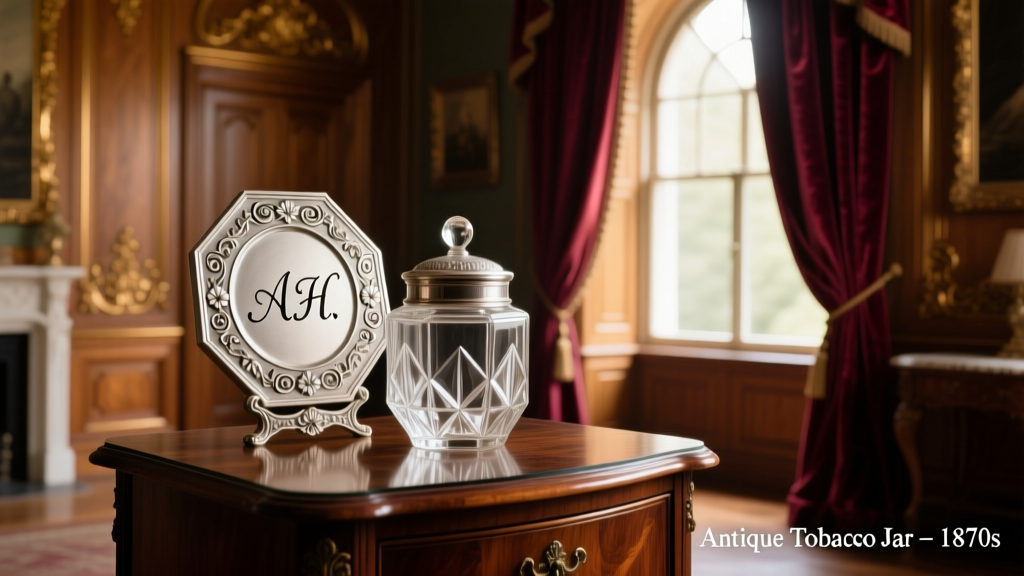
The Tobacco Jar: Monogrammed Silver-Plate Lid, Octagonal Glass Body — A 6-Inch Victorian-Era Collector’s Artifact

Dick Tracy’s B.O. Plenty: The Rare 1940s Tin Lithograph Battery-Operated Toy – History, Mechanics, and Restoration Insights
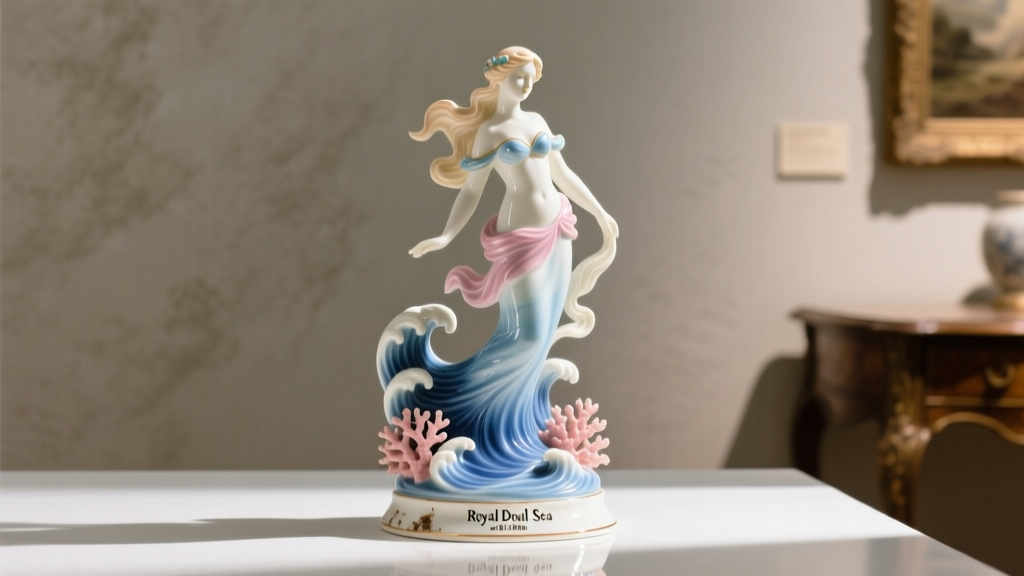
Royal Doulton Figurine 'Songs of the Sea' HN 2729: A 1982 Maritime Masterpiece in Porcelain
Akro Agate Cup Chiquita Blue: Identification, History, and Restoration of a Mid-Century American Art Glass Icon
Cowan Pottery Bowl: The Four-Footed 17-Inch Masterpiece — History, Identification, and Restoration Insights
W.R.A. Rival 12 Gauge Yellow Brass Shotgun Shells: History, Identification, and Collector Significance
Marble Bust of a Gentleman Signed 'C. Novanin' — A Detailed Provenance, Attribution, and Conservation Assessment (c. 1900–1920, 26 Inches)

Japanese Fine Art: Craftsmanship, Continuity, and Connoisseurship in Antique Furniture and Decorative Objects

Jacob & Josef Kohn Bentwood Chairs: Design Evolution, Authentic Identification, and Conservation Ethics