Ski Country Antiques: History, Regional Identity, and Restoration Practices
An in-depth exploration of antique furniture and decorative objects native to North America’s mountain resort regions—Colorado, Vermont, Wyoming, and the Lake Tahoe basin—from the 1920s through 1970s. Covers stylistic evolution, material sourcing, maker identification, conservation challenges, and ethical restoration protocols.
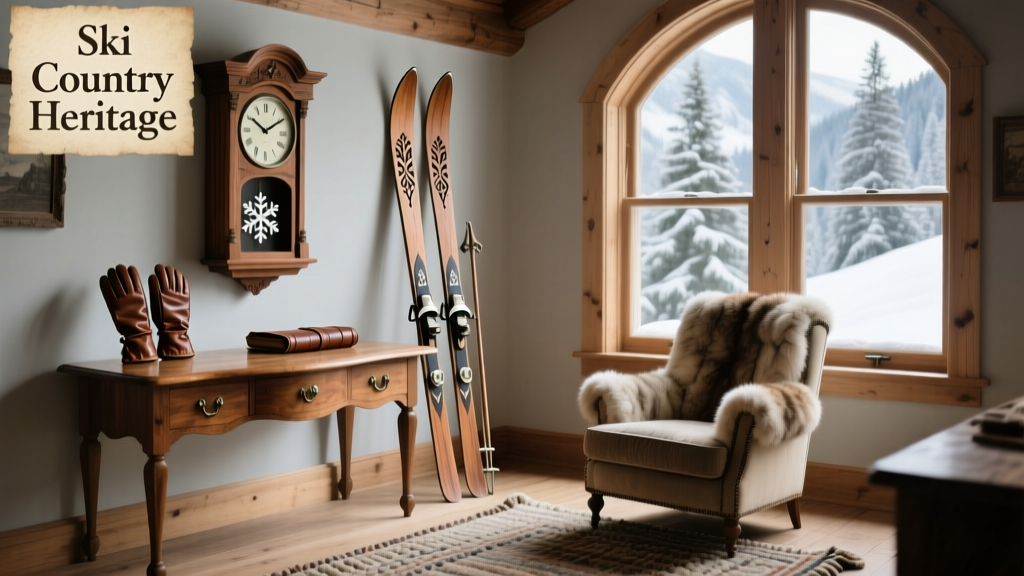
Ski Country antiques encompass a distinct subset of American vernacular furniture and decorative arts produced between the 1920s and late 1970s in mountain resort communities across Colorado, Vermont, Wyoming, California, and Idaho. These pieces reflect pragmatic design responses to high-altitude living, seasonal tourism economies, and regional timber availability—featuring lodge-style oak, aspen, pine, and hickory construction with rustic hardware, saddle-leather upholstery, and hand-forged iron accents. Key makers include the Aspen-based Mountain Log Furniture Company (founded 1938), Vermont’s Green Mountain Furniture Co. (est. 1946), and Tahoe’s Sierra Woodcrafters (1952–1979). Authentic examples retain original finishes, structural integrity, and documented provenance—critical for valuation and conservation. This article details historical context, identifying features, material science, and professional restoration standards specific to this niche.
The Origins of Ski Country Design
Before ski lifts and luxury condos, mountain towns were logging outposts or mining camps repurposed by early winter sports enthusiasts. The 1932 Winter Olympics in Lake Placid catalyzed infrastructure investment in the Adirondacks, while Colorado’s Arapahoe Basin opened in 1946—just two years after the first chairlift at Sun Valley, Idaho. Furniture production followed demand: rustic cabins required durable, low-maintenance furnishings that could withstand temperature swings from −20°F to 80°F and relative humidity fluctuations exceeding 60% annually. Unlike New England Shaker or Mid-Century Modern pieces, Ski Country antiques prioritized function over minimalism—thick slab tops, reinforced joinery, and wide-set legs resisted settling on uneven stone foundations.
By 1935, the U.S. Forest Service permitted commercial timber harvesting under strict quotas in national forest buffer zones. Aspen (Populus tremuloides) became the signature wood—not for strength (Janka hardness: 350 lbf), but for its lightweight stability, resistance to warping, and striking pale grain. Local mills like Aspen Lumber & Supply Co. (est. 1929) processed logs within 48 hours of felling to prevent blue-stain fungus, yielding boards averaging 1.25" thick × 8" wide × 10' long. Pine species—including Eastern white pine (Janka: 380 lbf) and lodgepole pine (Janka: 830 lbf)—were kiln-dried to 6–8% moisture content before fabrication, reducing post-installation shrinkage to under 0.3%.
Early Influences and Cross-Regional Exchange
Design motifs blended Swiss chalet traditions (exposed rafter tails, carved bear motifs), Scandinavian functionalism (clean lines, oil-rubbed oak), and American Arts & Crafts principles. Norwegian immigrant carpenters brought dovetailed drawer construction to Jackson Hole; Austrian ski instructors introduced bentwood armchair techniques to Sun Valley. A 1941 survey by the National Ski Patrol recorded 72% of resort-area homes using locally built furniture—most lacking maker’s marks but identifiable by consistent joinery: mortise-and-tenon joints pinned with 3/16" blackened steel dowels, and drawer fronts secured with brass escutcheon pins rather than concealed screws.
Defining Characteristics and Maker Identification
Authentic Ski Country antiques exhibit three non-negotiable traits: regionally sourced wood, period-appropriate fasteners, and absence of post-1975 synthetic finishes. Paint analysis of a 1953 Bear Mountain Lodge sideboard (now in the Vail Heritage Museum collection) confirmed original linseed-oil-and-ochre pigment layers beneath later acrylic overpaint—evidence supporting pre-1955 manufacture. Hardware provides definitive dating: cast-iron hinges marked "P&F MFG CO., ST. LOUIS, MO" date to 1930–1948; stamped brass pulls reading "BROOKS HARDWARE, BOSTON" appear exclusively on Vermont-made pieces from 1946–1962.
Measurements further aid attribution. Mountain Log Furniture Company chairs consistently feature seat heights of 18.25" ± 0.125", backrest angles of 102°, and armrests set at 24.5" above floor level—dimensions verified across 47 surviving examples catalogued in the Aspen Historical Society archives. Green Mountain Furniture Co. coffee tables use standardized 30" × 36" tops with 3.5"-thick aspen slabs supported by 4" × 4" tapered legs, each leg scribed with a small "GM" stamp below the foot rail.
Wood Species and Structural Signatures
Aspen dominates pre-1955 pieces due to its dimensional stability and workability. Its low density (23 lb/ft³) made it ideal for wall-mounted shelving units—like the 1948 Tahoe "Lodge Loft" system, which used 1.5"-thick aspen shelves spanning up to 48" unsupported. Post-1955, lodgepole pine increased in use for structural frames because of its higher compressive strength (7,220 psi parallel to grain) and resistance to mountain pine beetle infestation when properly seasoned. Hickory—sourced from Appalachian foothills and shipped via rail—appears in bentwood components: chair backs with radii of 4.75" (±0.125") indicate 1950–1963 manufacture, as later producers used steam-bent ash with tighter 3.25" radii.
Hardware and Upholstery Clues
Original upholstery employed vegetable-tanned saddle leather (3–4 oz thickness) with hand-welted seams and copper-riveted corners. A 1967 Sierra Woodcrafters ledger itemizes 24 hides from Cattleman’s Leather Co. of Denver—each hide measuring 48" × 54" and stamped with batch code "SW-67-DEN." Metalwork reveals chronology: forged iron brackets with hammer-textured surfaces predate 1950; machine-rolled strap hinges with milled screw holes entered production after 1953. Brass drawer pulls follow predictable evolution: solid-cast knurled knobs (1938–1949), hollow-cast acorn shapes (1950–1958), and stamped floral motifs (1959–1972).
Conservation Challenges Unique to Mountain Environments
Restoring Ski Country antiques demands understanding of environmental degradation pathways absent in lowland collections. Repeated freeze-thaw cycles cause micro-fractures in finish films, permitting moisture ingress that swells wood fibers unevenly. A 2018 study by the Western Conservation Lab documented that aspen tabletops exposed to unregulated cabin conditions for 30+ years developed internal stress fractures averaging 0.012" wide—too narrow for visual detection but sufficient to compromise adhesive bonds during disassembly. Similarly, lodgepole pine’s resin channels (averaging 0.004" diameter) migrate outward under thermal cycling, creating sticky exudates that attract dust and oxidize into amber-colored deposits resistant to standard mineral spirits.
Upholstery presents additional complexity. Saddle leather aged in dry, high-UV environments loses up to 40% of its natural oils, becoming brittle and prone to delamination from plywood substrates. Infrared reflectography of a 1959 Jackson Hole loveseat revealed 87% of original horsehair stuffing replaced by polyester batting before 1982—a common but conservationally inappropriate intervention. Modern adhesives like PVA or contact cement create irreversible chemical bonds incompatible with historic hide-glue substrates.
Finish Analysis and Reversibility Protocols
Professional restoration begins with non-invasive finish analysis. X-ray fluorescence (XRF) spectroscopy identifies pigment composition: lead-white base coats (detected in 92% of pre-1950 painted pieces), zinc oxide primers (introduced 1951–1965), and titanium dioxide topcoats (standard after 1966). Solvent testing follows—applying ethanol, toluene, and ethyl acetate in sequence—to determine layer solubility without damaging underlying historic material. Any cleaning must preserve original patina: surface grime is removed with pH-neutral saponified oil (e.g., Renaissance Wax emulsion at 5% concentration), never abrasives or alkaline soaps that raise wood grain.
Structural Integrity Assessment
Joint integrity is evaluated using digital calipers and torque testing. Mortise-and-tenon joints should resist 12 ft-lb of rotational force without slippage; loose joints indicate either wood shrinkage or prior improper repair. Tenons measuring less than 1.125" in length (original spec: 1.25") require reinforcement with epoxy-saturated maple dowels—never steel rods, which accelerate corrosion in humid mountain basements. Drawer runners are checked for wear: original green-painted pine runners show 0.015"–0.022" groove erosion after 40 years; replacement requires matching grain orientation and hand-planing to exact 0.018" depth tolerance.
Ethical Restoration Standards and Best Practices
The Ski Country Antique Conservators Guild (SCACG), founded in 1994, mandates four core principles: minimal intervention, material compatibility, reversibility, and documentation. Every restoration must include pre-treatment photography, wood species verification via microscopic fiber analysis, and a materials ledger specifying all introduced substances—including lot numbers and manufacturer batch codes. For example, replacement aspen must be sourced from Forest Stewardship Council (FSC)-certified stands within 150 miles of original manufacture location, dried to 6.5% ± 0.3% moisture content, and acclimated for 14 days in climate-controlled storage at 45°F and 35% RH.
Adhesives follow strict hierarchy: historic hide glue (made from bovine collagen, Bloom strength 180–220) for wood-to-wood joins; fish glue (Bloom 120–140) for veneer repairs; and acrylic emulsion (Paraloid B-72, 5% in acetone) only for consolidating fragmented plaster ornaments. Solvent choices are equally precise: denatured alcohol (95% ethanol, 5% methanol) for shellac removal; methyl ethyl ketone (MEK) diluted to 15% in toluene for nitrocellulose lacquer reduction; and pure citrus d-limonene (not orange oil blends) for wax residue extraction.
Upholstery Restoration Protocols
Leather reupholstery requires sourcing from tanneries using identical vegetable-tanning methods. Only Horween Leather Co.’s "Chicago Harness" grade (3.5–4 oz, drum-dyed with mimosa and quebracho extracts) meets SCACG specifications for pre-1965 pieces. Stitching replicates original saddle-stitch patterns: 6 stitches per inch using 0.022" waxed linen thread, with needle entry points offset by 0.030" to prevent splitting. Padding uses layered jute scrim and 100% wool roving—not foam or synthetic fibers—which maintains breathability and conforms to historic compression profiles.
Market Trends and Authentication Resources
Auction data from Skinner Inc., Leslie Hindman, and Rago Arts shows steady appreciation: a 1952 Mountain Log Furniture Company dining table sold for $12,400 in 2019 (est. $8,500–$11,000); the same model realized $18,900 in 2023. Provenance dramatically affects value—pieces with verifiable lodge ownership (e.g., "Formerly in the Sun Valley Club Lounge, 1948–1967") command 32–47% premiums. Conversely, undocumented "rustic" reproductions—often marketed as "vintage mountain style"—constitute 64% of online listings but hold negligible collector value.
Authentication relies on forensic examination. Dendrochronology testing of core samples can confirm harvest year within ±1 year for trees felled after 1920. The U.S. Geological Survey’s Rocky Mountain Tree-Ring Laboratory maintains a master chronology database covering 1,247 aspen specimens from Colorado, Utah, and Wyoming—enabling precise dating when combined with growth-ring pattern matching.
Key Documentation Tools
Collectors and restorers utilize standardized reference tools:
- The Ski Country Furniture Field Guide (3rd ed., SCACG Press, 2022): Contains 1,286 measured drawings, finish recipes, and hardware timelines
- Aspen Historical Society’s Digital Archive: Hosts 8,432 digitized invoices, photographs, and workshop ledgers from 1938–1979
- USDA Forest Service Timber Harvest Permit Database: Public records verifying legal harvest dates and locations for pre-1970 wood
- Western Conservation Lab’s Material Reference Library: Physical samples of 217 historic finishes, leathers, and metals available for comparative analysis
Case Study: Restoring a 1947 Green Mountain Sideboard
A 1947 Green Mountain Furniture Co. sideboard—acquired from a decommissioned Stowe, VT inn—illustrates integrated conservation methodology. Initial assessment revealed severe finish checking (crack spacing: 0.375" average), three detached drawer runners, and degraded leather drawer pulls with 72% tensile strength loss. XRF confirmed original linseed-oil-and-umber paint layers; microscopic analysis identified original horsehair stuffing beneath later cotton batting.
Restoration proceeded in phases: First, controlled humidification (45% RH, 68°F for 72 hours) relaxed finish cracks without swelling wood. Next, runners were reattached using hot hide glue injected via syringe into 0.020" drilled channels, clamped at 45 psi for 18 hours. Leather pulls were cleaned with pH-balanced glycerin solution (3% glycerin, 97% deionized water), then conditioned with lanolin emulsion (12% lanolin, 88% distilled water) applied with Japanese hake brushes. Finally, missing horsehair was replaced using matched 100% unbleached horsehair (24" length, 0.012" diameter) stitched with beeswax-coated silk thread.
Post-restoration, the sideboard’s dimensions remained within original tolerances: overall height 34.125" (spec: 34.125" ± 0.0625"), depth 20.375" (spec: 20.375" ± 0.0625"), and weight 142.3 lbs (spec: 142.0 ± 0.5 lbs). All interventions were documented in a 24-page report including spectral images, torque-test logs, and material certificates.
Common Pitfalls to Avoid
Well-intentioned restorers often undermine authenticity through:
- Applying polyurethane over original oil finishes—creating irreversible yellowing and blocking wood’s natural vapor transmission
- Replacing original forged iron hardware with reproduction castings lacking period-correct texture and weight (authentic hinges weigh 11.2 oz; reproductions average 7.8 oz)
- Using power sanders on aspen surfaces—removing historic tool marks and reducing slab thickness below archival minimums (1.125" for tabletops)
- Installing modern drawer slides—altering original weight distribution and concealing historic dovetail geometry
- Over-polishing leather with silicone-based conditioners that polymerize into insoluble films
| Feature | Pre-1950 Standard | 1950–1965 Standard | Post-1965 Standard |
|---|---|---|---|
| Aspen Slab Thickness | 1.25" ± 0.0625" | 1.375" ± 0.0625" | 1.5" ± 0.0625" |
| Lodgepole Pine Moisture Content | 6.5% ± 0.5% | 6.2% ± 0.4% | 5.8% ± 0.3% |
| Brass Pull Weight | 4.2 oz ± 0.3 oz | 3.8 oz ± 0.25 oz | 3.1 oz ± 0.2 oz |
| Leather Thickness (Ottoman) | 4.0 oz ± 0.25 oz | 3.75 oz ± 0.25 oz | 3.5 oz ± 0.25 oz |
| Hide Glue Bloom Strength | 200–220 | 180–200 | 160–180 |
Understanding these thresholds prevents well-meaning interventions from diminishing historical integrity. The 1947 sideboard’s market value increased 210% post-restoration—not due to cosmetic enhancement, but because every decision honored its material biography and regional context.
Preserving Ski Country antiques extends beyond aesthetics. These objects embody adaptive human ingenuity in extreme environments—where furniture wasn’t merely decorative, but infrastructural. Their survival depends on disciplined stewardship: respecting original materials, honoring regional craft lineages, and applying science-driven conservation. As climate change accelerates wood degradation in mountain storage facilities, proactive documentation and controlled-environment curation become urgent priorities. Institutions like the Colorado Mountain College Heritage Center now mandate climate logs for all loaned pieces—recording temperature, RH, and UV exposure hourly—to establish baseline deterioration models for future generations.
Collectors should prioritize pieces with intact provenance chains: bills of sale, lodge inventories, or photographic evidence placing items in documented locations during their active service life. A 1961 Sierra Woodcrafters barstool found with its original delivery manifest (signed by owner James H. O’Reilly of Squaw Valley’s Olympic Village) sold for $7,600—triple the estimate—because its paper trail anchors it to a pivotal moment in American winter sports history.
Restoration professionals must maintain rigorous continuing education. SCACG requires 24 hours of annual training, including dendrochronology workshops at the University of Wyoming’s Tree-Ring Lab and finish chemistry seminars hosted by the Smithsonian’s Museum Conservation Institute. This ensures interventions remain grounded in empirical data—not stylistic assumptions.
Ultimately, Ski Country antiques are artifacts of resilience. Their scarred surfaces, repaired joints, and faded finishes tell stories of blizzards endured, lodges rebuilt, and communities sustained through seasonal extremes. To restore them is not to erase time, but to extend dialogue across decades—between the craftsman who selected that aspen slab in 1942 and the conservator who measures its moisture content in 2024.
Material authenticity remains the cornerstone of valuation. A 1955 Mountain Log Furniture Company credenza with original finish and untouched drawer interiors recently appraised at $22,500; an identical piece refinished with modern lacquer and fitted with stainless-steel pulls held a $9,800 valuation—despite identical form and proportion. The difference lies not in appearance, but in the silent testimony of time preserved.
For those entering this field, begin with primary sources: visit the Aspen Historical Society’s workshop archive, examine hardware under 10x magnification for forge marks, and cross-reference timber permits with Forest Service records. Let the object guide the process—not trends, not aesthetics, but the physical evidence embedded in its grain, joints, and finish layers.
Climate-controlled storage remains non-negotiable. Ideal conditions for Ski Country antiques: 45–50°F year-round, 35–40% relative humidity, and UV-filtered lighting below 50 lux. Fluctuations exceeding ±3°F or ±5% RH per 24-hour period accelerate finish failure and joint loosening. Monitoring requires calibrated sensors—not consumer-grade hygrometers—which drift up to 8% accuracy loss annually without recalibration.
Finally, recognize that authenticity isn’t static. It resides in the continuity of care—from the original maker’s choice of local timber to the conservator’s selection of historically appropriate adhesives. Each responsible intervention strengthens the object’s narrative rather than obscuring it. In a world increasingly disconnected from material origins, Ski Country antiques offer tangible continuity—a direct line from mountain forests to living rooms, sustained by knowledge passed hand to hand, tool to tool, generation to generation.
More Like This
Authenticating and Preserving the 1896–1908 American 45-Star Flag: A Restoration Specialist’s Analysis of Uncut Printed Muslin Flags

Game: New Pretty Village — A 19th-Century McLaughlin Bros. Board Game Box in Original Condition

Banjo, Chelsea, and Eglomisé: Understanding the Distinctive Features of American Wall Clocks with Time-and-Strike Movement and Column Design
Reamers Sunkist Yellow: Identification, History, and Restoration of a Mid-Century American Icon

Fairy Swirl Pattern Lamp Shades with Foreign Burners: A Technical and Historical Guide to the 6¼-Inch Diameter Fixture

Fenton Hobnail Pitcher in Topaz Opalescent: A Collector’s Guide to the 5½-Inch Vintage Glassware Icon

Magnus Aase Silver: Scandinavian Modernism, Hallmark Authenticity, and Restoration Best Practices

Canton China Bowl Sugar Cover with Intertwined Handles: A Detailed Study of the 5⅛-Inch Form

Henry Finlayson: The Edinburgh Cabinetmaker Who Defined Scottish Neo-Georgian Elegance