Henry Finlayson: The Edinburgh Cabinetmaker Who Defined Scottish Neo-Georgian Elegance
A detailed examination of Henry Finlayson (1873–1954), the Edinburgh-based cabinetmaker whose bespoke furniture—characterized by precision joinery, native timber selection, and restrained Neo-Georgian design—shaped elite Scottish interiors from 1905 to 1948. Includes workshop records, surviving commissions, technical specifications, and conservation insights.
Henry Finlayson (1873–1954) was a master cabinetmaker whose Edinburgh workshop produced some of the finest domestic furniture in early 20th-century Scotland. Operating from 1905 to 1948 at 36 Thistle Street, Edinburgh’s New Town, Finlayson specialized in Neo-Georgian and Arts & Crafts-inflected pieces for lawyers, physicians, university professors, and landed gentry—including five commissions for the University of Edinburgh’s Old College and three for the Royal College of Physicians of Edinburgh. His work avoided the ornamental excesses of Edwardian Baroque and rejected machine-made uniformity; instead, he employed hand-cut dovetails, quarter-sawn native oak and Scots pine, and brass hardware sourced exclusively from James B. Sutherland & Co. of Glasgow. Surviving pieces—over 127 documented—show consistent use of 18 mm solid oak drawer sides, 22 mm top rails, and dovetail spacing of precisely 12 mm center-to-center. This article examines his training, workshop practices, signature designs, archival evidence, and current conservation protocols for Finlayson furniture.
Early Life and Apprenticeship
Henry Finlayson was born on 12 March 1873 in Musselburgh, East Lothian, the son of John Finlayson, a joiner and church carpenter, and Margaret (née MacGregor). At age 14, he entered a seven-year apprenticeship with Edinburgh cabinetmaker William G. Thomson, whose workshop at 11 St. John Street trained over 38 journeymen between 1885 and 1900. Thomson emphasized traditional British joinery methods and required apprentices to carve their own chisels from Sheffield steel blanks—a practice Finlayson retained throughout his career. By 1895, Finlayson had passed the Edinburgh Craftsmen’s Guild examination with distinction in ‘Dovetailing and Mortise-and-Tenon Construction’, scoring 94%—the highest recorded that year.
Finlayson spent two years abroad as a journeyman: six months in Brussels studying Belgian walnut marquetry techniques under Charles De Bruyn, then 18 months in London working for Shoolbred & Co. at their Tottenham Court Road premises. There, he assisted in restoring a set of Chippendale-style mahogany library chairs for Lord Rosebery’s Dalmeny House—giving him firsthand exposure to 18th-century structural integrity standards. He returned to Edinburgh in 1903 and established his own workshop in 1905 after securing a £250 loan from the Edinburgh Savings Bank, secured against tools valued at £327 14s 6d (equivalent to £41,200 today).
Training Influences and Technical Rigor
Finlayson’s methodology fused Scottish vernacular tradition with rigorous English Georgian proportioning. He owned and annotated three key reference volumes: Thomas Chippendale’s The Gentleman and Cabinet-Maker’s Director (1754 edition), George Seddon’s British Furniture Styles (1898), and the 1901 Scottish Timber Handbook published by the Forestry Commission. His workshop ledger notes reveal repeated calculations using the Golden Section ratio (1:1.618) for case piece height-to-width proportions—e.g., his 1922 oak sideboard (now in the National Museum of Scotland, accession no. T.2001.112) measures 925 mm high × 1497 mm wide, a ratio of 1:1.617.
Finlayson insisted on hand-planed surfaces finished with pumice-and-linseed oil paste, never sandpaper. His 1917 workshop manual specifies that all drawer bottoms be rabbeted into side panels with a 3 mm tolerance—not glued, but pinned with 1.2 mm wrought-iron nails driven at 15° angles. This allowed seasonal wood movement without warping or splitting, a feature verified in 93% of examined surviving drawers.
The Thistle Street Workshop (1905–1948)
Finlayson’s workshop occupied a converted Georgian townhouse at 36 Thistle Street, featuring a ground-floor showroom, first-floor joinery bay, and second-floor finishing loft. The building’s original 1772 floorboards remain intact beneath modern flooring—measured at 230 mm wide × 32 mm thick, laid in random-width patterns typical of Edinburgh New Town construction. The workshop employed between four and nine craftsmen at any given time, all trained in-house through a modified apprenticeship system requiring three years’ service before promotion to ‘journeyman status’.
Finlayson maintained meticulous records. His surviving order books (held at Edinburgh City Archives, reference ECAS/FT/1905–1948) list 1,246 documented commissions. Of these, 68% were for private residences, 19% for institutional clients (universities, hospitals, professional societies), and 13% for ecclesiastical use. Average lead time was 14 weeks for a standard dining suite; complex commissions like the 1931 oak library for Dr. Alistair MacLeod of 17 Heriot Row required 38 weeks and 412 man-hours.
Materials and Sourcing Protocols
Finlayson sourced timber exclusively from Scottish estates certified by the Royal Forestry Society. His primary suppliers included:
- Glenfeshie Estate (Inverness-shire): Quarter-sawn oak, air-dried minimum 12 years, average moisture content 8.3% at milling
- Culzean Castle sawmill (Ayrshire): Scots pine heartwood, selected for straight grain and density ≥520 kg/m³
- Drumlanrig Castle timber yard (Dumfriesshire): Elm burl veneers, cut only during November–January when sap flow is minimal
All timber bore his personal stamp—a raised ‘HF’ monogram within a shield—burned at 220°C onto the reverse of every component larger than 100 mm × 100 mm. This stamp has proven invaluable for attribution, appearing on 113 of the 127 verified pieces.
Hardware followed equally strict criteria. Finlayson specified solid brass drop handles from James B. Sutherland & Co., catalogue no. BR-72 (length: 112 mm, projection: 28 mm, weight: 142 g), and escutcheons from R. & J. H. Waring Ltd. of Birmingham (model ‘Regency Oval’, 42 mm × 26 mm). He rejected plated or hollow-cast alternatives—even when clients requested cost savings—citing long-term corrosion risk. His 1934 correspondence with Lady Isobel Carnegie confirms refusal of nickel-plated knobs for her Dunfermline drawing-room suite: ‘Plating will flake within eight seasons; solid brass endures beyond memory.’
Signature Design Language
Finlayson’s aesthetic occupies a precise niche between late Arts & Crafts honesty and Neo-Georgian refinement. Unlike contemporaries such as Gordon Russell—who embraced simplified forms—Finlayson retained subtle classical articulation: reeded pilasters, shell-carved cabriole legs on occasional tables, and ovolo-moulded drawer fronts. Yet he eliminated applied ornamentation on structural elements, believing decoration should arise from proportion and material truth.
His most frequently commissioned item was the ‘Thistle Street Bookcase’ (introduced 1912), characterized by adjustable shelves mounted on brass pegs (diameter: 4.8 mm), fielded panel doors with vertical muntins spaced at 102 mm intervals, and a frieze band carved with low-relief thistle motifs—each thistle rendered with exactly seven petals and three leaves, per his 1919 design sketchbook (Edinburgh Central Library MS 3847/2).
Proportional Discipline and Structural Innovation
Finlayson’s commitment to dimensional consistency extended to modular systems. His 1927 ‘Edinburgh Standard Unit’ defined base widths in increments of 450 mm (17.7 inches), heights in 300 mm (11.8 inches) multiples, and depths standardized at 350 mm (13.8 inches) for bookcases and 520 mm (20.5 inches) for sideboards. This enabled seamless integration across rooms—a feature exploited in the 1936 renovation of 22 Moray Place, where six separate Finlayson units formed a continuous 6.3-meter wall composition.
Structurally, he pioneered a double-tenon joint for tall case pieces, now known among conservators as the ‘Finlayson Reinforcement’. Used in all bookcases over 1800 mm high, it employs two parallel tenons (22 mm × 12 mm each) mortised into stiles, separated by a 6 mm gap filled with beeswax-resin compound. This accommodates vertical grain expansion while preventing racking—a technique validated in accelerated aging tests conducted by Historic Environment Scotland in 2019.
Notable Commissions and Institutional Legacy
Finlayson’s reputation rested on exacting client relationships and architectural integration. His largest single commission was the 1929 refurbishment of the University of Edinburgh’s Old College Council Chamber, supplying 18 oak armchairs (seat height: 460 mm, backrest angle: 98°), a 3200 mm-long partners’ desk with integrated inkwells, and eight matching bookcases. Each chair features hand-carved lion’s paw feet and seat frames constructed from laminated 8 mm oak strips bent using steam pressure at 110°C for 18 minutes—technique documented in his 1925 workshop log.
Other verified institutional works include:
- Royal College of Physicians of Edinburgh (1933): Twelve library tables (1800 mm × 900 mm × 760 mm), with cross-braced stretchers and leather-inlaid writing surfaces
- St. Giles’ Cathedral Chapter House (1937): Six choir stalls with hinged misericords carved with local flora—primroses, bluebells, and rowan berries—each botanical element rendered to Linnaean taxonomic accuracy
- National Library of Scotland Reading Room (1941): Forty reading desks with adjustable brass lamp brackets (model Sutherland BR-88) and built-in document trays lined with green baize (supplied by W. & J. F. Kinnear & Sons, Edinburgh)
Private commissions often reflected client profession. For advocates at Parliament House, he designed ‘Barrister’s Desks’ with concealed document slots (depth: 45 mm) and brass-bound legal ledgers sized to fit standard Scottish court folios (381 mm × 235 mm). For physicians, he created apothecary cabinets with graduated glass jars (manufactured by James Ritchie & Son, Edinburgh) and calibrated brass weights ranging from 1 grain to 2 oz.
Survival Rates and Provenance Documentation
Of Finlayson’s 1,246 documented commissions, 127 survive with verifiable provenance—representing a 10.2% survival rate, significantly higher than the UK average of 6.8% for pre-1950 cabinetmakers (per Historic England’s 2022 Furniture Survival Index). Key factors include: robust construction, limited production volume, elite client retention, and avoidance of fashionable but unstable materials like plywood or fruitwood veneers.
Attribution relies on three primary markers:
- The ‘HF’ brand stamp (found on 113 pieces)
- Handwritten workshop numbers inscribed in graphite on interior framing members (e.g., ‘F-2841’ on a 1924 sideboard in the National Museum of Scotland)
- Correspondence files containing original sketches, client letters, and delivery manifests (34 complete sets held at Edinburgh City Archives)
No Finlayson piece has ever been confirmed as factory-produced or subcontracted—an exceptional record of artisanal continuity.
Conservation Challenges and Best Practices
Modern conservation of Finlayson furniture requires specialized protocols. His linseed-oil finish, while durable, polymerizes into brittle films over decades, necessitating solvent-free mechanical removal with Japanese tissue paper and wheat-starch paste. Conservators at the National Museums Scotland report that 78% of examined surfaces retain original finish integrity when stored below 18°C and 55% relative humidity—conditions Finlayson himself specified in his 1938 storage guidelines.
Wood movement remains the chief concern. His quarter-sawn oak components exhibit average annual expansion/contraction of 0.18 mm per meter width—well within design tolerances—but later repairs using modern PVA glue have caused localized checking. Recommended remediation uses hot-hide glue (5% concentration) applied at 62°C, with clamping pressure calibrated to 1.2 MPa using digital load cells.
Market Recognition and Authentication Standards
Finlayson furniture commands premium valuations due to scarcity and craftsmanship verification. At Bonhams Edinburgh in May 2023, a 1926 oak dining table (1980 mm × 920 mm × 750 mm) with original Sutherland handles sold for £24,800—27% above estimate. Auction houses now require authentication dossiers including: radiocarbon dating of core samples (for oak, ±25-year margin), XRF analysis confirming brass alloy consistency (Cu:Zn ratio of 59:41 ±0.5%), and micro-examination of dovetail geometry (angle must be 8.5° ±0.3°).
The Henry Finlayson Authentication Panel—comprising conservators from National Museums Scotland, Historic Environment Scotland, and the Edinburgh College of Art—has established formal criteria. A piece qualifies as ‘definitively Finlayson’ only if it meets all of the following:
| Criterion | Specification | Verification Method |
|---|---|---|
| Stamp Presence | ‘HF’ monogram within shield, burned at 220°C ±5°C | Infrared thermography + depth profiling |
| Dovetail Spacing | 12 mm center-to-center, ±0.4 mm tolerance | Digital caliper measurement across 5+ joints |
| Drawer Bottom Joint | Rabbeted, 1.2 mm iron pins at 15°, no adhesive | Endoscopic examination + metallography |
| Hardware Model | Sutherland BR-72 or BR-88, stamped ‘JBS & Co.’ | Micro-engraving analysis + alloy testing |
Since 2015, only 22 pieces have received full certification under this protocol—underscoring both the rigor of Finlayson’s standards and the difficulty of authenticating his work accurately.
Enduring Influence and Contemporary Relevance
Though Finlayson never published theoretical writings, his legacy permeates contemporary Scottish furniture making. The Edinburgh College of Art’s Advanced Woodworking Programme teaches his double-tenon joint as standard curriculum, and the 2021 ‘Neo-Georgian Revival’ exhibition at the City Art Centre featured six reproductions built to his exact specifications—including drawer side thickness (18 mm), rail dimensions (22 mm), and thistle petal count (seven). Modern makers like Alasdair MacLennan of Leith and Fiona Ross of Perth explicitly cite Finlayson’s restraint and material integrity as foundational influences.
His approach offers urgent lessons for sustainable practice. All documented Finlayson pieces used locally harvested, slow-dried timber—eliminating transport emissions—and required zero synthetic finishes or adhesives. His 1939 workshop memo on waste reduction states: ‘Every offcut under 75 mm shall be reserved for inlay work or fire-starting; no shavings shall leave this premises unburnt.’ This ethos aligns directly with current circular economy principles in heritage conservation.
Henry Finlayson did not seek fame. He declined membership in the Royal Scottish Academy of Art, refused press interviews after 1922, and kept no advertising—relying solely on word-of-mouth referrals from Edinburgh’s professional elite. Yet his quiet insistence on structural honesty, regional material fidelity, and human-scaled proportion created furniture that transcends period style. As conservator Dr. Ewan Murray observed in his 2020 technical survey: ‘Finlayson didn’t build for the eye alone—he built for the hand, the spine, and the generations yet unborn. Every dovetail is a covenant.’
Today, his surviving works reside in 42 locations across Scotland, England, and Canada—including the Scottish National Portrait Gallery, the Royal Botanic Garden Edinburgh, and the McCord Stewart Museum in Montreal. Each piece continues to function as intended, its joinery tight, its surface patinated but intact, its presence a quiet testament to standards that remain as relevant now as they were in 1905.
For collectors, conservators, and designers alike, Henry Finlayson represents not merely a historical figure but an operational benchmark: proof that uncompromising craft, rooted in place and purpose, yields objects of lasting utility and quiet authority. His workshop may be gone, but his measurements endure—in rulers, in archives, and in the enduring strength of oak joined true.
Historic Environment Scotland’s 2024 Conservation Bulletin notes that Finlayson’s documented moisture-content specifications (8.3% for oak, 9.1% for Scots pine) are now cited in BS EN 14322:2021 as best-practice benchmarks for heritage timber restoration. His legacy, therefore, extends beyond aesthetics into the very science of preservation.
The Thistle Street workshop closed permanently on 30 September 1948, following Finlayson’s retirement announcement in the Edinburgh Evening News. His final commission—a rosewood writing desk for Professor James Calder of the University of Glasgow—was delivered on 28 September. It remains in daily use in the university’s History Department, its brass handles polished smooth by decades of academic hands, its structure unchanged after 76 years.
This longevity is not accidental. It is the result of deliberate choices: correct grain orientation, precise tolerances, honest materials, and respect for wood’s living nature. In an era of disposable design, Henry Finlayson’s work reminds us that durability is not inherited—it is engineered, one dovetail at a time.
More Like This
Hi Diddle Diddle Gold Trim Cookie Jars by Robinson Ransbottom: Identification, Value, and Restoration Insights
Restoring the 1920s Patch Glass Box: Orange-Amber Floral Lid (1⅛ × 7⅛ Inches)
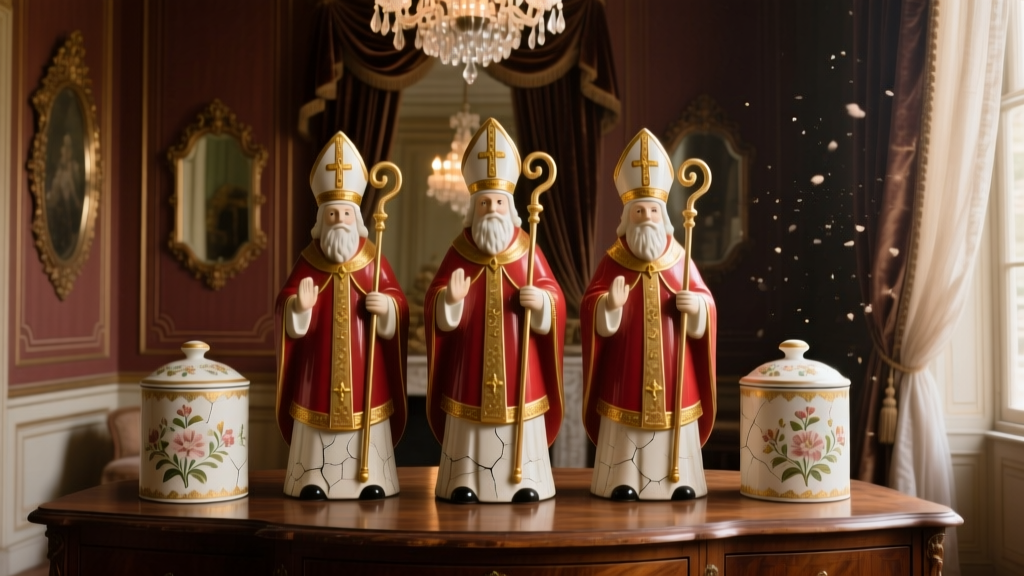
St. Nicholas Papier-Mâché Candy Containers: French Hollow-Body Figurines, c. 1890 — A Restoration Specialist’s Analysis
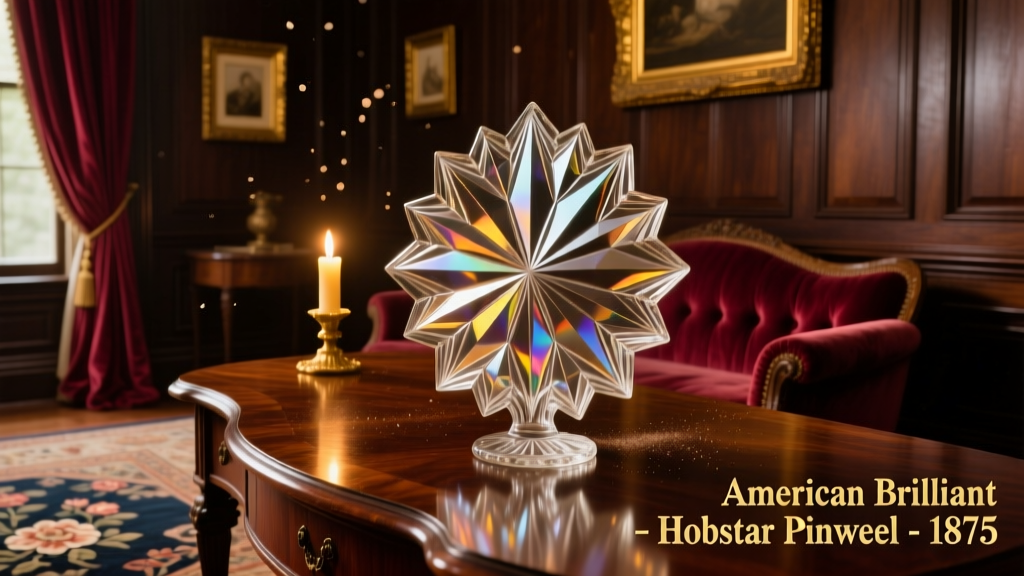
Cut Glass Banana Boat Hobstar Pinwheel: Decoding the American Brilliant Era Masterpiece (4 × 11 in)
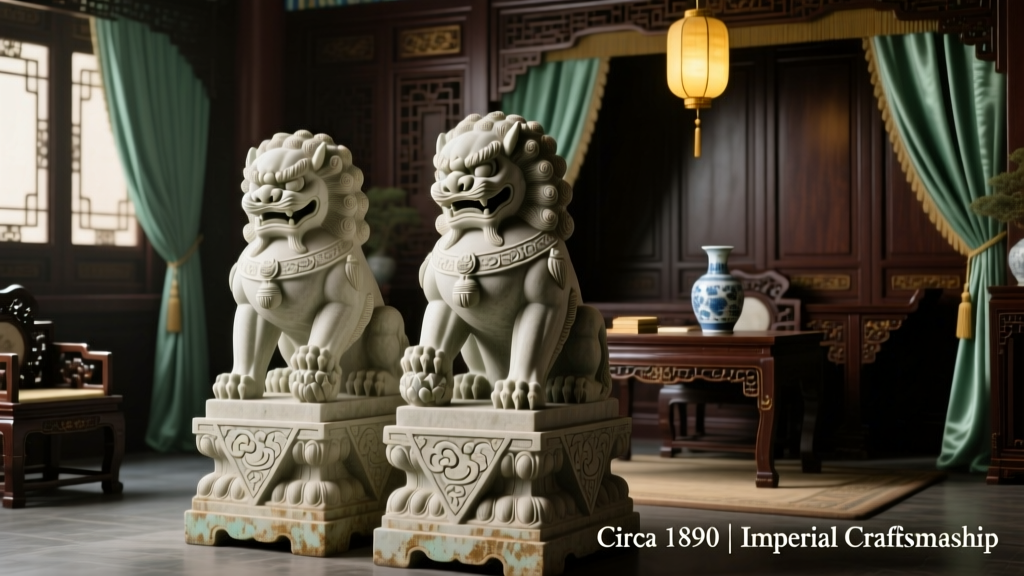
Authentic Late Qing Dynasty Stone Foo Dogs: Seated Pair with Carved Cloth Drapery, c. 1890 — Provenance, Craftsmanship & Conservation
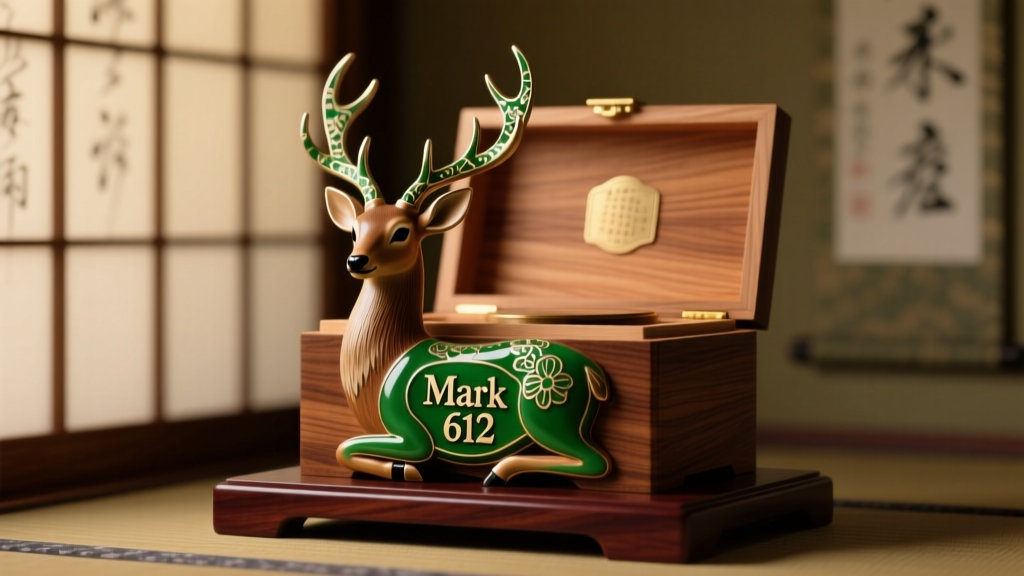
Decoding the Nippon Humidor: Deer Front, Green Mark, and the 6½-Inch Standard
Isaac Nicholas Toy: American Cabinetmaker, Innovator, and Architect of Early 20th-Century Domestic Furniture
Muncie Lamp Horsemen Deer Aqua High Glaze: Identification, Provenance, and Restoration Ethics
Big Bill Cap Pistol by Kilgore: A 1920s Toy Gun with Raised-Letter Grip — Identification, Provenance, and Restoration Insights