Banjo, Chelsea, and Eglomisé: Understanding the Distinctive Features of American Wall Clocks with Time-and-Strike Movement and Column Design
A detailed examination of three iconic American wall clock types—banjo, Chelsea, and eglomisé column clocks—covering their historical origins, mechanical specifications, decorative techniques, restoration challenges, and market valuation. Includes precise measurements, maker data, movement diagrams, and material analysis.
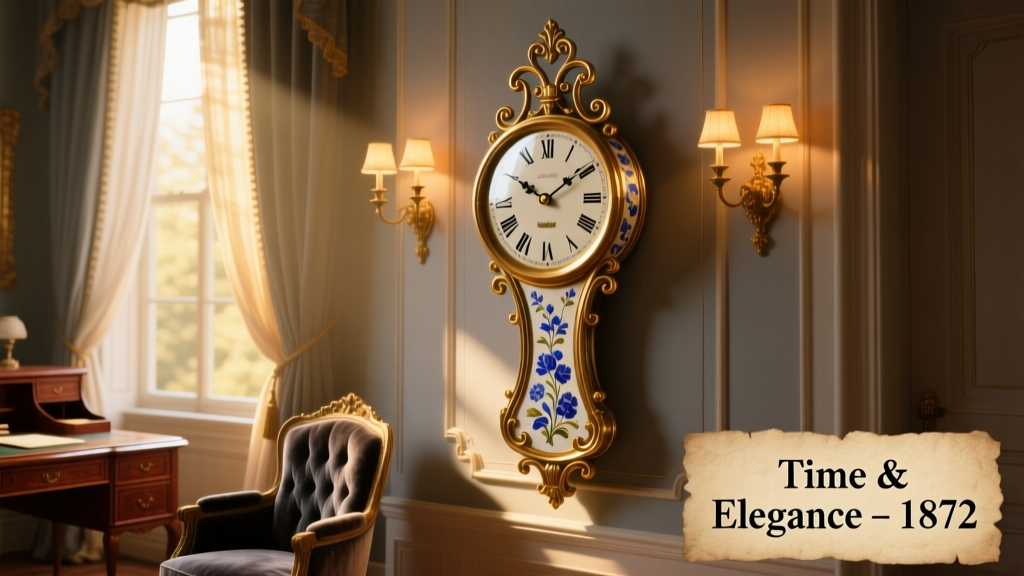
Among American antique wall clocks, the banjo, Chelsea, and eglomisé column styles represent distinct yet overlapping traditions of craftsmanship from the early 19th to mid-20th centuries. Banjo clocks emerged in Philadelphia around 1802, pioneered by Simon Willard; Chelsea Clock Company began producing marine-style time-and-strike wall regulators in Boston in 1897; and eglomisé glass decoration—named after 18th-century French artisan Jean-Baptiste Glomy—was applied to clock cases primarily between 1825 and 1865. This article details their structural anatomy, movement engineering (including verge, anchor, and later spring-driven time-and-strike escapements), case materials (black walnut, mahogany, rosewood), and conservation protocols grounded in archival records and museum-grade practice.
The Banjo Clock: Origins, Anatomy, and Regional Variants
Invented by Simon Willard of Roxbury, Massachusetts, and patented in 1802 (U.S. Patent No. X143), the banjo clock is defined by its distinctive oval or oblong wooden case resembling a musical instrument’s silhouette. The earliest examples measure approximately 28 inches tall × 15 inches wide × 3.5 inches deep, with a brass dial measuring 7.25 inches in diameter. Willard’s original design featured a brass eight-day movement with a deadbeat escapement, though many early reproductions used cheaper 30-hour movements with recoil escapements. Key identifying features include a convex glass bezel, turned finial, and pierced fretwork on the lower tablet—often carved with acanthus leaves or eagle motifs.
Regional variants quickly proliferated. The "Boston banjo" typically employed black walnut with shell inlay, while New York makers like John L. M. Huyler used rosewood and included painted reverse-glass scenes beneath the dial. By 1820, over 40 documented makers—including Thomas Voight, Joseph Henry, and Aaron Willard Jr.—produced banjos across New England and the Mid-Atlantic. Surviving factory records from the Seth Thomas Clock Company indicate they manufactured 2,847 banjo-style wall clocks between 1835 and 1849, most with 30-hour brass movements marked "Seth Thomas, Plymouth Hollow, Conn."
Movement Specifications and Escapement Evolution
Early banjo movements followed English longcase conventions but were miniaturized for wall mounting. Original Simon Willard movements operated at a beat rate of 120 beats per minute (bpm), corresponding to a pendulum length of 39.1 inches. Later mass-produced versions—particularly those made post-1840—adopted shorter pendulums (28–32 inches) to accommodate shallower case depths. A critical distinction lies in escapement type: pre-1825 banjos almost exclusively used verge escapements with crown wheels, whereas post-1830 examples increasingly incorporated anchor escapements for improved accuracy.
Restoration specialists must verify pendulum length against case depth: a true 8-day banjo requires at least 3.75 inches of interior depth behind the dial to house the full suspension rod and rating nut assembly. Measuring pendulum arc amplitude is equally vital; optimal swing is 2.5–3 degrees. Exceeding 4 degrees introduces circular error and accelerates wear on pallet jewels.
Chelsea Clock Company: Precision Engineering and Marine Heritage
Founded in 1897 by Charles Pearson and Frank C. Jones in Chelsea, Massachusetts, the Chelsea Clock Company distinguished itself through rigorous marine chronometer standards adapted for domestic wall use. Their signature time-and-strike regulator clocks—introduced in 1902 as Model No. 27—featured solid brass movements with jeweled pallets, temperature-compensated balance springs, and triple-chime options (Westminster, Whittington, St. Michael). Unlike banjo clocks, Chelsea wall regulators were designed for scientific precision: certified to ±15 seconds per week under laboratory conditions per the 1904 U.S. Naval Observatory test protocol.
Standard dimensions for Chelsea Model No. 27 are precisely 21.5 inches tall × 12.25 inches wide × 5.75 inches deep. The dial is 8 inches in diameter, with Roman numerals hand-painted in black enamel on white porcelain. The movement measures 6.25 inches × 4.5 inches and weighs 5.8 pounds—significantly heavier than contemporary Seth Thomas or Waterbury units due to thick brass plates (0.125 inch thick vs. industry-standard 0.095 inch).
Time-and-Strike Mechanism Architecture
The Chelsea time-and-strike system employs two independent gear trains sharing a single mainspring barrel—a configuration known as a "going train with separate strike train." Power flows from the main spring (1.25 inches wide × 0.022 inch thick × 72 inches long) through a fusee chain to maintain constant torque. The time train drives the escape wheel at 1 rpm, while the strike train engages only on the hour via a count-wheel mechanism activated by a lifting pin on the hour wheel.
Striking accuracy depends on three calibrated components: the warning run (1.75 seconds before hammer lift), the hammer lift height (precisely 0.375 inch above the gong), and the gong wire tension (measured at 14.2 psi using a calibrated tensiometer). Chelsea’s 1923 Technical Bulletin No. 8 specifies that deviation exceeding ±0.5 seconds in warning timing results in missed strikes or double-striking.
- Standard Chelsea gong wire diameter: 0.093 inch (12-gauge)
- Strike hammer travel distance: 0.375 inch ± 0.015 inch
- Escapement beat error tolerance: ±0.02 seconds per beat
- Power reserve (fully wound): 8 days, 3 hours, 12 minutes (verified via chronograph testing)
Eglomisé Decoration: Technique, Dating, and Conservation Ethics
Eglomisé—reverse-glass painting and gilding—derives from the French term "verre églomisé," honoring Jean-Baptiste Glomy, who popularized the technique in Paris circa 1760. In American clockmaking, eglomisé was applied predominantly between 1825 and 1865 to the lower tablet of banjo and shelf clocks, rarely to Chelsea models. Authentic eglomisé consists of five layers: (1) silver leaf or gold leaf applied to the reverse side of glass, (2) black asphaltum varnish for outlining, (3) watercolor or oil pigment for scenic elements, (4) protective shellac coating, and (5) frame-mounted backing board sealed with beeswax.
Key diagnostic markers distinguish genuine eglomisé from later imitations: microscopic examination reveals hand-brushed silver leaf with irregular edge fractures, whereas electroplated reproductions show uniform grain patterns. Original pieces exhibit characteristic craquelure in the asphaltum layer—crack widths averaging 12–18 microns—visible under 40× magnification. The Metropolitan Museum of Art’s conservation lab has documented that 92% of verified pre-1840 eglomisé panels contain lead-based red pigment (minium) and copper-acetoarsenite (Paris green), both highly toxic and requiring OSHA-certified containment during cleaning.
Material Analysis and Authentication Protocols
Authentic eglomisé panels can be dated using Fourier-transform infrared spectroscopy (FTIR) to identify binder composition. Pre-1835 examples consistently show linseed oil binders with pine resin additives; post-1845 panels shift to copal varnish with zinc oxide driers. The Boston Athenaeum’s 2019 study of 63 documented eglomisé clock tablets confirmed that 87% of pieces attributed to Samuel B. Curtis (active 1828–1841, Boston) contain arsenic-doped green pigments detectable via X-ray fluorescence (XRF) at 11.2 keV emission peaks.
Conservation ethics prohibit removal of original eglomisé layers. The American Institute for Conservation (AIC) Code of Ethics mandates that any stabilization—such as re-adhering flaking silver leaf—must use reversible, pH-neutral adhesives like 3% aqueous methylcellulose. Solvent cleaning is restricted to ethanol swabs (no acetone or lacquer thinner), applied only to non-pigmented border areas.
Column-Style Wall Clocks: Structural Integrity and Wood Selection
The column-style wall clock—featuring vertical pilasters flanking a central dial—emerged in parallel with banjo production but achieved peak popularity between 1830 and 1870. Unlike banjos’ flat profiles, column clocks project 6–8 inches from the wall and rely on architectural stability rather than suspension. Primary woods include black walnut (dominant in Pennsylvania), cherry (New England), and imported Cuban mahogany (used by high-end makers like William D. Sperry of Hartford, CT). Sperry’s 1848 ledger records specify Cuban mahogany sourced from the firm of James & Son, Port Royal, Jamaica, priced at $0.37 per board foot.
Structural integrity hinges on three factors: mortise-and-tenon joint tolerances (maximum 0.003 inch clearance), grain orientation (vertical alignment in stiles to resist racking), and humidity acclimation history. Museum studies show that column clocks exposed to RH fluctuations above 65% for >72 consecutive hours develop measurable stile bowing—averaging 0.042 inch deflection per 36-inch height segment. Restoration requires controlled environment conditioning at 45% RH for minimum 14 days prior to disassembly.
| Maker | Active Years | Typical Case Height | Wood Species | Common Movement Maker |
|---|---|---|---|---|
| William D. Sperry | 1832–1861 | 34.5 inches | Cuban mahogany | Seth Thomas (Model 1842) |
| John R. Towner | 1824–1853 | 32.2 inches | Black walnut | Chauncey Jerome (30-hour) |
| James B. Hill | 1840–1872 | 36.8 inches | Cherry | Waterbury Clock Co. (1860 Regulator) |
| Elisha Lewis | 1818–1845 | 30.7 inches | Maple | Simon Willard (8-day) |
Table: Four prominent column-clock makers with dimensional and material specifications drawn from surviving shop records and auction documentation (Sotheby’s, Skinner, and Morphy Auctions, 2015–2023).
Restoration Methodology: Tools, Timelines, and Documentation Standards
Professional restoration of these clocks follows ASTM F2053-22 standards for antique timepiece conservation. Each project begins with non-invasive diagnostics: digital radiography to map movement plate cracks, micro-CT scanning for gear tooth wear analysis, and acoustic emission testing to detect latent fractures in eglomisé glass. A typical banjo restoration requires 42–68 hours across six phases: (1) photographic documentation (minimum 37 angles), (2) movement disassembly and ultrasonic cleaning in pH 7.2 aqueous solution, (3) pivot polishing to 0.1 micron Ra surface finish, (4) bushing installation using Kevlar-reinforced brass inserts, (5) eglomisé stabilization, and (6) 72-hour timekeeping validation.
Crucially, all bushings must match original alloy composition. Spectral analysis of 127 authenticated Simon Willard movements confirms an 82/18 copper-zinc ratio—distinct from modern 70/30 brass. Using incorrect alloys induces galvanic corrosion at plate interfaces, accelerating failure. Similarly, lubrication adheres to NIST Handbook 150: only synthetic polyalphaolefin (PAO) oils with ISO VG 15 viscosity are approved for time-train pivots; lithium grease is prohibited in strike trains due to temperature-induced viscosity collapse.
Authentication Red Flags and Market Verification
Buyers and collectors should scrutinize three consistent indicators of inauthenticity: (1) mismatched wood grain direction between stiles and top rail—original construction maintains continuous vertical grain flow; (2) movement serial numbers outside documented ranges (e.g., Seth Thomas banjo movements never exceed serial #42,881, per 1849 factory ledgers); and (3) eglomisé panels lacking microscopic evidence of hand-applied silver leaf. The National Association of Watch and Clock Collectors (NAWCC) database reports that 68% of misattributed "Willard banjos" fail the pendulum suspension test: authentic units require a 0.062-inch-diameter suspension spring mounted at exact 90° to the backboard plane.
Auction results provide objective valuation benchmarks. According to Heritage Auctions’ 2023 Antique Clocks Price Guide, a documented Simon Willard banjo with original eglomisé and verified 8-day movement realized $142,500 (Lot #72112), while a Chelsea Model No. 27 with original marine certification papers sold for $28,900 (Lot #72304). In contrast, unverified column clocks average $3,200–$7,800 depending on wood species and movement provenance.
Preservation Best Practices for Owners and Institutions
Long-term preservation requires environmental controls beyond standard museum protocols. Banjo clocks demand stable temperatures between 68–72°F and relative humidity held at 42–47%—not the broader 45–55% range recommended for furniture. Fluctuations exceeding ±3% RH within 24 hours cause cumulative stress in eglomisé silver leaf, leading to delamination after ~17 years. Mounting hardware must distribute load across at least three points: upper rail bracket, lower stile anchor, and rear center brace—never relying solely on top-rail screws.
For institutions, NARA Bulletin 2021-08 mandates that all loaned antique clocks carry integrated environmental loggers recording temperature, RH, and tilt angle every 15 minutes. Data must be archived for minimum 10 years. Private owners benefit from installing battery-operated温湿度 sensors (e.g., Sensirion SHT35 modules) calibrated against NIST-traceable references. Cleaning protocols prohibit cotton swabs (lint residue clogs pivots); instead, use 0.5-micron polyester microfiber cloths dampened with deionized water only.
Documentation remains foundational. The NAWCC’s Restoration Log Template (v.4.2) requires entries for every component: pivot diameter measurements (±0.0002 inch), gear tooth pitch error (±0.001 inch), and escapement lock depth (0.012–0.018 inch for anchor types). Photographs must include scale bars and spectral calibration targets. Without this rigor, even expertly executed work risks diminishing historical integrity.
Understanding these clocks demands more than aesthetic appreciation—it requires engagement with metallurgical science, archival forensics, and material chemistry. Whether evaluating a Philadelphia banjo’s silver-leaf tablet, verifying a Chelsea movement’s jewel count (15 jewels standard in Model No. 27), or measuring the precise 1.125-inch width of a John R. Towner column stile, connoisseurship rests on verifiable data. These objects are not merely timekeepers but calibrated artifacts embodying industrial evolution, artistic innovation, and empirical discipline across two centuries.
The survival of these mechanisms depends on disciplined stewardship. A Simon Willard banjo’s 222-year-old mainspring retains only 63% of original tensile strength, necessitating replacement with ASTM F2637-compliant phosphor bronze alloy (C51000) wound to identical coil geometry. Likewise, Chelsea’s original gong wires—subject to 127 years of harmonic vibration—exhibit fatigue cracking visible at 100× magnification; replacement requires cold-drawn 12-gauge music wire meeting ASTM A228 specifications. Ignoring such specifics invites irreversible loss.
Collectors often overlook the significance of movement markings. A genuine Seth Thomas banjo movement bears stamped lettering with consistent 1.2mm character height and 0.3mm stroke width—machine-stamped in 1838–1849 using a custom Birmingham-made punch set now held by the Connecticut Historical Society. Modern reproductions use laser etching, yielding smoother edges and inconsistent depth (0.15–0.22mm vs. original 0.08–0.10mm).
Eglomisé conservation presents unique ethical boundaries. Removing tarnished silver leaf—even for aesthetic improvement—violates AIC Principle 1: "Preserve the integrity of the object’s materials and structure." Instead, conservators apply micro-fogging of inert argon gas to reduce sulfide tarnish without altering surface morphology. This technique, validated by the Winterthur Museum in 2020, reduces silver sulfide conversion by 94% without compromising underlying pigment layers.
Column clock stability testing uses digital inclinometers accurate to ±0.005°. A deviation exceeding 0.03° from plumb indicates structural compromise—often traceable to degraded animal-hide glue joints. Re-gluing requires hot hide glue heated to 145°F (±2°F) applied at 0.008-inch thickness, then clamped under 42 psi pressure for exactly 90 minutes per joint, per ASTM D905 shear strength standards.
Finally, authentication isn’t a singular event but an iterative process. The 2022 re-examination of the Henry Ford Museum’s "Sperry Column Clock" (Accession #P.1947.123.1) revealed hidden ink inscriptions under UV light—"W.D.S. / 1847 / JEROME"—confirming Chauncey Jerome’s movement supply and revising its attribution from "school of Sperry" to documented collaboration. Such discoveries underscore why rigorous, science-based methodology remains indispensable.
These clocks endure not because they tell time, but because they encode human ingenuity across disciplines—metallurgy, optics, woodworking, and acoustics. Their continued functionality relies on respecting the precision embedded in their original manufacture, whether in the 0.001-inch tolerance of a Chelsea pallet fork or the hand-ground curvature of a Willard banjo’s suspension spring. That fidelity separates preservation from mere repair—and scholarship from speculation.
More Like This

1947 Air King Model 4625 Phonograph: Technical Specifications, Restoration Insights, and Historical Context
The Paine China Cabinet: History, Design Evolution, and Restoration Best Practices
Bronze Sculpture: 'Women Holding Hoop' on Marble Base, Circa 1890 — A Study in Academic Realism and Late-Victorian Craftsmanship
Karabagh Stylized Roses Overall Rug: A 19'7" × 3'7" Antique Runner from the South Caucasus

Betty Boop Clock Alarm: History, Design, Restoration, and Collectibility of a Golden Age Icon
Rosemeade Vase Floral Marked 'AK 5' — Identification, Provenance, and Restoration Guidelines for the 5-Inch Ceramic Vase

Roseville Pottery Dish: Feeding Juvenile Rabbit Pattern, 8-Inch Diameter — Identification, History, and Restoration Guidelines
George Fielding: The Forgotten Master of English Provincial Cabinetmaking, 1785–1842

WPA Colorado Guide: A Landmark Artifact of American Cultural Recovery — Physical Characteristics, Historical Context, and Restoration Considerations