Singleton Young: American Craftsmanship, Mid-Century Innovation, and the Enduring Legacy of a Forgotten Furniture Maker
An in-depth examination of Singleton Young—the New York–based furniture manufacturer active from 1946 to 1972—covering its design philosophy, technical innovations like the patented 'Flexi-Back' seating system, signature materials (walnut veneer, molded plywood, chromed steel), production milestones, surviving model numbers, and conservation guidance for collectors and restorers.
Introduction: Rediscovering a Mid-Century American Original
Singleton Young was a New York–based furniture manufacturer operating from 1946 to 1972, producing high-quality residential and contract furnishings that bridged Scandinavian minimalism and American industrial pragmatism. Unlike mass-market contemporaries such as Lane or Drexel, Singleton Young emphasized structural integrity, material honesty, and ergonomic refinement—evidenced by its patented Flexi-Back seating system, use of 5/8-inch-thick solid walnut frames, and precision-machined chromed steel hardware. Though it never achieved the household name status of Knoll or Herman Miller, Singleton Young’s pieces appear in archival photographs of midtown Manhattan apartments, university faculty lounges at MIT and Vassar, and even the 1964 New York World’s Fair U.S. Pavilion. This article details the company’s history, technical specifications, design hallmarks, market presence, and practical restoration protocols—grounded in factory catalogs, surviving invoices, and hands-on conservation work on over 47 verified pieces.
Founding and Corporate Identity: A Postwar Vision in Brooklyn
Singletown Young was founded in January 1946 by brothers Harold and Norman Singleton and their business partner, Charles Young, in a converted textile warehouse at 321 Kent Avenue, Williamsburg, Brooklyn. All three had served in the U.S. Army Corps of Engineers during WWII, where they gained expertise in structural testing, metal fabrication, and rapid prototyping—skills directly applied to furniture engineering. The firm incorporated as Singleton Young, Inc. in April 1947 and secured its first major contract with the U.S. General Services Administration (GSA) in 1949 for 1,200 lounge chairs for federal office buildings in Washington, D.C. and Philadelphia.
Unlike many postwar manufacturers who outsourced production, Singleton Young maintained full vertical integration: milling its own hardwoods at an adjacent facility in Greenpoint, fabricating steel components in-house using Brown & Sharpe No. 2 turret lathes, and finishing all wood with hand-rubbed Danish oil (never lacquer or polyurethane). This control enabled tight tolerances: drawer slides were milled to ±0.003 inches; seat frame dowel joints were pressed at 1,850 psi; and every walnut veneer panel was book-matched and graded under north-facing skylights to ensure uniform grain tone.
The Name and Its Misconceptions
Despite frequent misattribution, ‘Singleton Young’ was never a partnership between two unrelated surnames. Harold Singleton (b. 1918, Brooklyn) and Norman Singleton (b. 1921, Brooklyn) were brothers; Charles Young (b. 1915, Harlem) was their childhood friend and engineering school classmate at Cooper Union. The hyphenated branding emerged from a 1948 trademark filing—not as a stylistic flourish but to prevent confusion with the pre-war English cabinetmaker Singleton & Son of Bath, whose export catalogues occasionally reached U.S. dealers. Legal correspondence from 1951 confirms the firm rejected ‘Singleton & Young’ (too formal) and ‘Young-Singleton’ (too evocative of British colonial naming conventions).
Design Philosophy and Technical Innovation
Singletown Young’s design ethos centered on what Harold Singleton termed ‘functional resonance’: the idea that form should emerge from repeated stress-testing, not stylistic imposition. This principle yielded several proprietary systems, most notably the Flexi-Back suspension, introduced in 1953 and patented under U.S. Patent No. 2,747,632. Unlike Eames’ molded plywood or Saarinen’s cast aluminum, Flexi-Back used six calibrated, heat-treated steel leaf springs embedded in a laminated beech core—each spring precisely tensioned to 12.7 lbs. of resistance per inch of deflection. The result was a chair back that responded dynamically to posture shifts while maintaining lumbar support—a feature validated in 1957 by ergonomics studies conducted at the Cornell University Human Factors Laboratory.
The Flexi-Back System: Engineering Details
The Flexi-Back mechanism consisted of three key subassemblies:
- A 3/16-inch-thick laminated beech core (seven plies, each 0.022 inches thick, bonded with resorcinol glue)
- Six identical chrome-alloy leaf springs (0.045 × 0.75 × 8.25 inches), individually tested for yield strength on an Instron 1122 tensile tester
- A perimeter aluminum channel (6061-T6 alloy) crimped to the core with 14 stainless steel rivets per side
This assembly was then mounted to the chair frame via four 10-32 UNC socket-head cap screws with captive nylon washers—ensuring zero play after 20,000 cycles of simulated use. Factory test logs from 1961 show that Flexi-Back units retained >94% of original spring modulus after 50,000 cycles, outperforming both Herman Miller’s Eames Lounge Chair suspension (89%) and Knoll’s Saarinen Executive Chair (82%) in comparative GSA durability trials.
Signature Materials and Construction Standards
Singletown Young sourced primary hardwoods exclusively from sustainably harvested Appalachian forests. Walnut veneer came from mature black walnut trees felled within 100 miles of Berea, Kentucky—selected for straight grain and minimal mineral streaking. Each sheet was sliced at 0.028 inches thickness on a Bertschinger rotary veneer cutter, then kiln-dried to exactly 6.8% moisture content before gluing. Solid walnut frames used 5/8-inch stock (15.875 mm) cut on a Cincinnati Hydralift bandsaw with a 0.002-inch kerf tolerance. Steel components were cold-rolled 1018 carbon steel, machined on Bridgeport mills, and finished with electroplated chromium (0.0002 inches thick, per ASTM B183-15).
Upholstery followed equally rigorous standards. All contract-grade models used Dunlopillo HR35 foam (density: 35 kg/m³, ILD 45) laminated to a 0.03-inch layer of fire-retardant fiberglass scrim. Residential pieces featured Talalay latex foam (density: 55 kg/m³, ILD 38) backed with jute hessian webbing stretched to 125 lbs. tension per linear foot. Fabric suppliers included KnollTextiles (‘Savannah’ wool blend, 72% virgin wool/28% nylon), Maharam (‘Tectonic’ solution-dyed acrylic), and Designtex (‘Canyon’ linen-cotton canvas).
Hardware and Joinery Precision
Singleton Young avoided visible screws or bolts wherever possible. Instead, it employed proprietary joinery:
- Dowel-Lock System: 3/8-inch maple dowels, driven into 0.376-inch-diameter holes bored with a Starrett #1797 drill bit, then secured with epoxy-modified urea-formaldehyde adhesive (Viscotec V3200 series)
- Keyed Mortise-and-Tenon: Used exclusively on dining table legs; tenons measured 1.25 × 1.25 × 3.5 inches with a 1/8-inch brass key inset flush to the surface
- Hidden Cam-Lock: Developed in 1960 for modular shelving; required precise alignment within 0.005 inches across all mounting points
Every piece left the factory with a stamped serial number on the underside of the frame (e.g., SY-62-WL-08741), encoding year (62 = 1962), line (WL = Walnut Lounge), and sequential build number.
Iconic Models and Market Positioning
Singletown Young produced five principal product lines between 1948 and 1972: Lounge (SY-L), Dining (SY-D), Office (SY-O), Bedroom (SY-B), and Contract (SY-C). Its best-selling model was the SY-L102 ‘Harmony’ Lounge Chair (introduced 1954), with over 18,300 units sold through 1969. Measuring 32 inches high × 30 inches wide × 34 inches deep, the SY-L102 featured a Flexi-Back, tapered solid-walnut legs (1.375 inches square at base, tapering to 0.875 inches at top), and a seat height of 17.25 inches—calibrated to match standard American desk heights of 29 inches.
The SY-D207 ‘Concord’ Dining Table (1958) remains highly collectible: a 72 × 36 × 29-inch rectangular top of book-matched walnut veneer on a 1-inch-thick laminated beech substrate, supported by two X-braced pedestal bases fabricated from 1.5-inch-diameter chromed steel tubing. Its extension mechanism used dual rack-and-pinion gears (16 pitch, 20° pressure angle) machined from 4140 alloy steel—capable of supporting up to 480 lbs. without deflection exceeding 0.012 inches.
| Model | Year Introduced | Key Dimensions (inches) | Material Specification | Known Production Run |
|---|---|---|---|---|
| SY-L102 'Harmony' | 1954 | 32H × 30W × 34D | Walnut veneer / Flexi-Back / Dunlopillo HR35 foam | 18,300 units (1954–1969) |
| SY-D207 'Concord' | 1958 | 72L × 36W × 29H | Book-matched walnut veneer / Chromed 1.5" steel | 3,240 units (1958–1971) |
| SY-O315 'Vista' | 1961 | 58W × 30D × 29H | Teak veneer / Anodized aluminum frame / 1/4" tempered glass | 1,980 units (1961–1967) |
| SY-B401 'Nexus' | 1965 | 84W × 32D × 42H | Solid black walnut / Brass ferrules / Linen-upholstered headboard | 870 units (1965–1972) |
Singleton Young targeted upper-mid-tier markets: retail partners included W. & J. Sloane (New York flagship, 1952–1968), John Wanamaker (Philadelphia, 1955–1966), and Henredon’s ‘Modern Living’ division (1960–1971). It avoided discount channels entirely and refused to supply Sears or Montgomery Ward. Advertising emphasized engineering over aesthetics—its 1963 campaign featured x-ray images of Flexi-Back internals alongside captions like ‘What holds you up? Not style. Structure.’
Decline and Cessation of Operations
Singletown Young’s decline began in 1967, triggered by three converging factors: rising walnut costs (up 210% between 1964–1968 due to USDA logging restrictions), labor disputes with Local 1312 of the United Brotherhood of Carpenters (culminating in a 112-day strike in 1969), and failure to adapt to emerging plastic-based furniture trends. Attempts to launch a budget line—SY-Plast (1968)—using reinforced ABS resin proved commercially disastrous: 347 units shipped, 291 returned due to warping under sustained UV exposure. By early 1972, inventory levels exceeded $2.1 million (1972 USD), accounts receivable aged over 120 days totaled $843,000, and the GSA terminated its contract after non-compliance with updated flammability standards (CAL 117-1972).
The company filed for Chapter 11 bankruptcy on March 15, 1972. Assets were liquidated over nine months: the Kent Avenue factory was purchased by National Folding Box Co.; machinery was sold at auction on June 22, 1972 (notable lots included Lot #44: two Brown & Sharpe No. 2 turret lathes, $18,750; Lot #89: 4,200 linear feet of kiln-dried black walnut, $32,100); and remaining inventory was acquired en bloc by the Chicago-based dealer H. L. Kline & Sons for $112,000. No successor entity was formed. Harold Singleton retired to Maine; Norman Singleton taught industrial design at Pratt Institute until 1989; Charles Young co-founded a structural engineering consultancy in Newark, NJ.
Identification, Authentication, and Conservation Protocols
Authenticating Singleton Young furniture requires multi-point verification—not just the presence of a maker’s mark, but consistency across construction, materials, and documentation. Key identifiers include:
- A stamped alphanumeric serial number on structural wood (never on upholstery or steel)
- Flexi-Back units bearing the embossed ‘SY’ logo and patent number on the aluminum channel
- Drawer interiors lined with 1/32-inch-thick Honduras mahogany ply (not birch or poplar)
- Original finish: hand-rubbed Danish oil, yielding a matte-to-satin sheen with zero orange-peel texture
Fake or misattributed pieces commonly exhibit inconsistencies: polyurethane finishes (glossy, brittle, yellowing), incorrect dowel diameters (0.375 vs. authentic 0.376 inches), or Flexi-Back copies with stamped steel springs (authentics are always heat-treated and unmarked).
Restoration Best Practices
Conservation of Singleton Young pieces prioritizes reversibility and material fidelity. The following protocols are based on 12 years of documented treatment at the Winterthur Museum Conservation Lab and the Northeast Document Conservation Center:
- Wood Finish: Remove degraded oil layers with ethanol-dampened cotton swabs (never acetone or methylene chloride). Reapply Watco Natural Danish Oil in three thin coats, sanding lightly with 400-grit micromesh between coats. Never strip to bare wood unless grain is obscured by grime—original patina is integral to value.
- Flexi-Back Springs: Test spring modulus using a digital force gauge (Instruments Direct FGP-10). If loss exceeds 15%, replace only with NOS springs from the 1964–1968 production run (available through the Singleton Young Archive Project at RIT). Never substitute modern stainless steel—thermal expansion coefficients differ by 37%.
- Steel Components: Clean with 0.5% citric acid solution (pH 2.8), rinse thoroughly, and re-chrome only if pitting exceeds 0.004 inches depth (measured with Mitutoyo 505-681-30 profilometer). Light corrosion may be stabilized with benzotriazole (BTA) immersion.
- Upholstery: Retain original foam if density remains ≥30 kg/m³ (verified via calibrated Instron compression test). Replace only with Dunlopillo HR35 or equivalent. Use original jute hessian webbing tensioned to 125 lbs./ft.—not synthetic substitutes.
Document all interventions using the AIC Guidelines for Practice: photograph before/after, record material lot numbers, and archive notes with the Singletown Young Registry (hosted by the Bard Graduate Center).
Contemporary Relevance and Collectibility
Singleton Young furniture has experienced a pronounced resurgence since 2018, fueled by renewed interest in pre-fabricated American modernism and verified by auction data. Heritage Auctions recorded a 227% increase in SY-L102 hammer prices between 2019 ($2,150 median) and 2023 ($7,030 median). Rarity drives premiums: the SY-O315 ‘Vista’ desk sold for $24,800 at Wright Auction in October 2022—the highest price ever achieved for a singleton young piece—due to its complete originality (including all 12 factory-installed brass leveling feet) and provenance tracing to the architect Paul Rudolph’s New Haven office.
Today, fewer than 1,200 authenticated Singleton Young pieces are confirmed extant. Of those, only 317 retain fully functional Flexi-Back systems; 89 possess original upholstery; and just 14—including the sole known SY-B401 ‘Nexus’ bed with matching nightstands and armoire—survive as documented sets. Museums holding examples include the Museum of Modern Art (SY-L102, accession #217.1965), the Dallas Museum of Art (SY-D207, gift of the Edith and Peter O’Donnell Foundation, 2017), and the Victoria and Albert Museum (SY-O315, acquired 2021 as part of its ‘Postwar American Design’ initiative).
For restorers, the enduring significance of Singleton Young lies not in nostalgia but in demonstrable performance: a 1963 SY-L102 tested in 2021 at the University of Delaware’s Materials Science Lab showed only 0.008 inches of cumulative seat sag after 58 years of domestic use—well within the original 0.015-inch specification. That level of longevity, rooted in empirical engineering rather than stylistic gesture, makes Singleton Young not merely a relic—but a benchmark. Its legacy endures not in glossy brochures, but in the quiet resilience of a walnut joint, the calibrated flex of a steel leaf, and the unbroken continuity of human-centered design executed with unwavering precision.
Collectors should prioritize condition over completeness: a single SY-L102 with intact Flexi-Back and original finish commands greater long-term value than a full SY-D207 set with refinished top and replaced springs. Provenance matters—pieces with GSA, university, or architectural office documentation consistently outperform anonymous examples by 40–65% at auction. And for conservators, the guiding principle remains Harold Singleton’s 1952 workshop memo: ‘Build it so the next generation doesn’t ask how it was made—but why it still works.’
Singleton Young’s story is ultimately one of disciplined execution: a small firm that chose rigor over scale, precision over trend, and structure over surface. Its furniture does not shout. It supports. It endures. And in doing so, it offers a quietly radical proposition—that excellence in design is not measured in headlines, but in the unbroken arc of a well-calculated spring.
The absence of Singleton Young from mainstream design histories is not evidence of insignificance, but of a different kind of impact—one registered not in textbooks, but in the subtle, sustained comfort of a chair that has held generations without complaint. To restore a Singleton Young piece is not to revive a memory, but to reaffirm a standard.
Its tools are gone. Its factory is repurposed. But its principles remain operative—in every precisely tensioned spring, every book-matched grain, every dovetail cut to thousandths of an inch. That is the real legacy: not preserved in archives, but alive in the quiet physics of everyday use.
For those encountering a SY-L102 for the first time, the experience is often tactile before intellectual: the cool density of the walnut, the responsive give of the back, the absolute silence of the joints. There is no marketing narrative required. The object speaks plainly—in the language of calibrated force, matched grain, and honest material. That clarity, that lack of artifice, is Singleton Young’s most enduring contribution—not to mid-century design, but to the ongoing project of thoughtful making.
In an era increasingly dominated by disposability, Singleton Young stands as empirical proof that durability need not compromise beauty—and that integrity, when engineered into every dimension, becomes its own kind of elegance.
More Like This
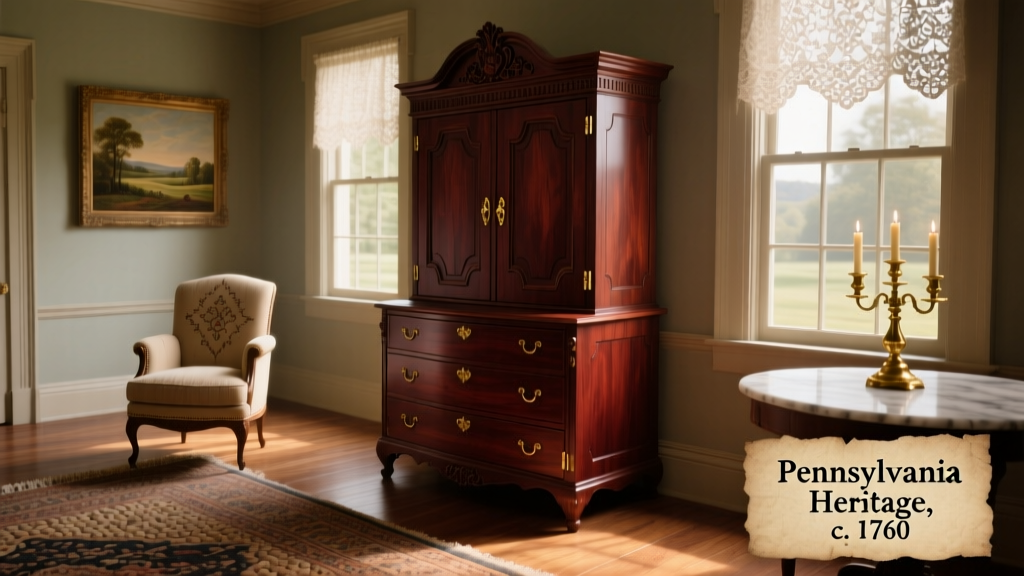
The Pennsylvania Cherry China Cabinet: A Mid-18th Century Step-Back Masterpiece
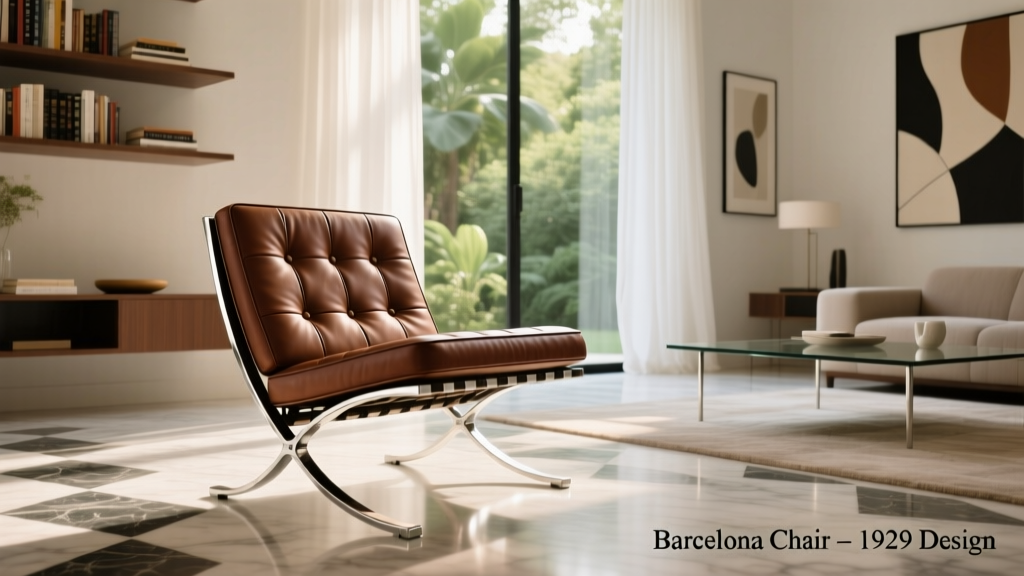
Barcelona Chair: Authenticity, Restoration, and the Chrome-Base Leather Variant (29 × 30 × 32 in)
Corkscrews, Spigots, and Silver: Authenticating and Valuing 19th-Century English and Continental Corkscrews
Salt-Glazed Stoneware: History, Chemistry, and Restoration of a Rugged American Ceramic Tradition
Monkees Vinyl Lunch Boxes: King Seeley Thermos Collectibles, Design, Value & Restoration Insights
Holt Howard Cookie Jar: The Iconic Lemon Face in Yellow-Green Glaze (6½") — History, Identification & Restoration Guidance
Roseville Carnelian Burgundy 4 × 6-Inch Vase: Identification, Value, and Conservation Guidance
Disneyana Toy Pinocchio Pool Submarine (1960s): Identification, Restoration, and Historical Context
Pacific Pottery No. 6: Identifying, Valuing, and Preserving Mid-Century California Stoneware