Salt-Glazed Stoneware: History, Chemistry, and Restoration of a Rugged American Ceramic Tradition
A detailed examination of salt-glazed stoneware—its 17th–20th century production in Europe and America, the unique kiln chemistry behind its signature orange-peel texture, identification markers for collectors, and ethical conservation protocols used by professional furniture and ceramics restorers.
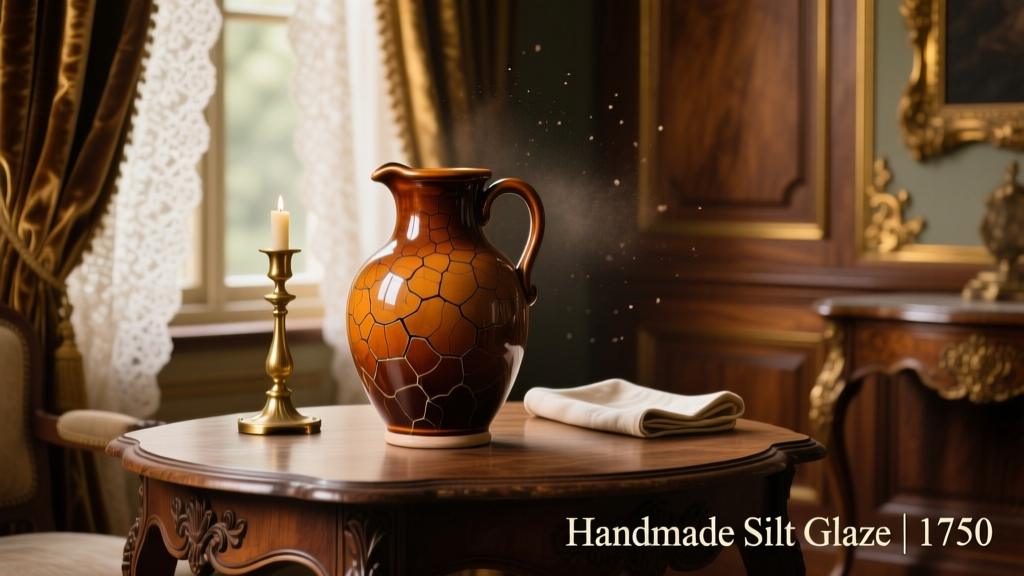
The Enduring Legacy of Salt-Glazed Stoneware
Salt-glazed stoneware is a dense, vitrified ceramic fired at high temperatures (typically 1200–1300°C) with sodium chloride introduced into the kiln during the final stage of firing. This process creates a distinctive, lustrous, slightly pitted surface resembling an orange peel—technically known as a 'silica-rich glaze' formed by vapor-phase reaction. Originating in the Rhineland in the 15th century, it became foundational to American utilitarian pottery from the 1720s onward. Unlike earthenware or porcelain, salt-glazed stoneware was prized not for delicacy but for durability: it resisted acids, abrasion, and thermal shock, making it ideal for jugs, crocks, churns, and apothecary jars. Today, authentic pieces by makers such as the Crolius family (New York, 1720–1770), David Parr (Baltimore, 1810–1840), and the Norton Pottery Company (Bennington, VT, 1850–1900) command premiums in historic preservation circles—not only for their rarity but for their material integrity and documentary value in understanding pre-industrial domestic life.
Chemistry in the Kiln: How Salt Glazing Actually Works
The salt-glazing process is deceptively simple but chemically precise. At peak temperature—usually between 1260°C and 1290°C—dry granular sodium chloride (NaCl) is tossed into the kiln’s firing chamber through specially designed ports. The intense heat instantly volatilizes the salt, dissociating it into sodium vapor (Na) and chlorine gas (Cl₂). The sodium vapor reacts with silica (SiO₂) already present in the clay body’s surface, forming a thin, continuous layer of sodium silicate (Na₂O·SiO₂), which melts and fuses into glass upon cooling. Crucially, this reaction occurs only where the vapor contacts the ware—hence the characteristic unevenness: areas shielded by kiln shelves or adjacent pieces remain matte or show subtle ‘ghosting’ where salt was partially blocked.
Key Variables That Influence Surface Quality
Kiln atmosphere, clay composition, and salt application timing all affect the outcome. A reducing atmosphere (low oxygen) promotes deeper iron reduction in stoneware clays, yielding warm buff-to-brown tones; oxidation yields cooler grays. The clay must contain sufficient free silica—typically 55–65% SiO₂—and low lime content (<0.5%) to avoid bloating or blistering. Most American stoneware clays were dug locally: Crolius used red-firing clay from the Hudson River banks near Manhattan; the Cowden & Wilcox factory in Philadelphia employed a gray-burning shale from Chester County containing 62.3% SiO₂ and 5.1% Al₂O₃ (per 1938 U.S. Geological Survey Bulletin 872).
Application technique matters profoundly. Master potters like Henry Remmey (New York, active 1825–1840) used calibrated wooden scoops holding precisely 125 g of coarse sea salt per 100 kg of ware. Too little salt produced patchy, dull surfaces; too much caused excessive runoff, pooling at bases and creating thick, opaque ‘salt drips’ up to 3 mm deep. Modern replication attempts often fail because they misjudge vapor residence time—the optimal window is just 8–12 minutes at peak temperature.
Identifying Authentic American Salt-Glazed Stoneware
Authenticity hinges on material evidence—not just form or decoration. Genuine 18th- and 19th-century American pieces display consistent physical traits rooted in their manufacture. First, the body is dense and resonant: when tapped gently with a fingernail, it emits a clear, high-pitched ‘ping’ (not a dull thud), indicating full vitrification. Wall thickness varies deliberately—crock rims average 12–16 mm, while small apothecary jars may be as thin as 4.5 mm at the shoulder but thicken to 7.2 mm at the base for structural stability. Second, the salt glaze itself shows diagnostic microstructure: under 10× magnification, the surface reveals random, crater-like depressions averaging 0.15–0.35 mm in diameter, interspersed with glossy, raised nodules of fused sodium silicate.
Maker’s Marks and Regional Signatures
Over 120 documented American stoneware potteries operated between 1720 and 1920. Their marks fall into three categories: incised signatures (e.g., ‘D. Parr / Balt.’ on a cobalt-decorated jug, c. 1825), stamped logos (the ‘Norton / Bennington’ oval stamp used from 1858 onward), and applied medallions (the ‘Crolius / N.Y.’ iron-oxide stamped disk found on early 18th-century jugs). Regional clay differences also aid attribution. For example, Baltimore stoneware contains higher manganese (0.8–1.2% MnO), yielding a warmer, more amber glaze tone compared to the cooler, steel-gray finish of Ohio River Valley wares like those from the Weller Pottery (Zanesville, OH, est. 1872), which used local clay with 0.3% MnO and 1.7% Fe₂O₃.
One reliable diagnostic is the ‘kiln stick mark’—a faint, linear impression left where a clay or sandstone prop contacted the base during firing. These appear as shallow, straight grooves 1.5–2.5 mm wide and 12–20 mm long, typically located 25–35 mm from the foot rim. They are absent on modern reproductions, which use metal setters that leave smoother, narrower contact points.
Functional Forms and Industrial Evolution
Salt-glazed stoneware was never merely decorative. Its forms evolved directly from need. Early German imports (1680–1720) featured bulbous Bügelkrüge with strap handles and narrow necks—designed for transporting beer without spillage. American adaptations prioritized storage: the standard 5-gallon crock stood 285 mm tall with an interior diameter of 230 mm and a wall thickness tapering from 14 mm at the base to 9 mm at the rim. By the 1840s, standardized capacities were enforced by state weights-and-measures laws: New York’s 1847 statute required all stoneware containers sold commercially to bear capacity stamps (e.g., ‘5 GALLS’ incised in Roman capitals, minimum stroke width 1.8 mm) verified by county inspectors.
Specialized Vessels and Their Dimensions
Certain forms reveal specific trades. Apothecary jars—often cylindrical with flanged rims and lug handles—were made in strict gradations: 1/2 pint (237 mL), 1 pint (473 mL), and 1 quart (946 mL), with heights ranging from 112 mm (½ pint) to 205 mm (1 qt). Churns followed ergonomic logic: the standard 4-gallon butter churn measured 310 mm tall with a 245 mm diameter at the widest point and featured a removable wooden dasher fitted through a central lid hole 65 mm in diameter. Milk pans, used for skimming cream, were shallow and wide—typically 380 mm in diameter and only 75 mm deep—with two opposed loop handles set 45 mm below the rim for secure carrying.
By the 1880s, industrialization reshaped production. The establishment of the American Clay Machinery Company in 1883 enabled hydraulic pressing of stoneware bodies, cutting throwing time by 60%. Press-molded pieces can be identified by their unnaturally uniform wall thickness (±0.3 mm tolerance across the entire vessel) and absence of throwing rings—subtle concentric ridges visible under raking light on wheel-thrown ware. A genuine Crolius jug from 1745 shows 11–13 discernible throwing rings between base and shoulder; a pressed Norton churn from 1892 displays none.
Conservation Ethics and Practical Restoration Protocols
Restoring salt-glazed stoneware demands rigorous adherence to the AIC Code of Ethics and Guidelines for Practice. Unlike decorative porcelain, stoneware’s historic value resides in its intact surface chemistry and wear patterns—not aesthetic perfection. Removing original salt glaze, even to ‘clean’ stains, is prohibited. Instead, conservators prioritize stabilization: reattaching broken fragments with reversible, pH-neutral adhesives such as Paraloid B-72 in 15% ethyl acetate solution, applied with micro-syringes to minimize creep. Gap-filling is restricted to losses exceeding 15% of the original surface area and only after documentation via photogrammetry and XRF elemental mapping.
Common Deterioration Patterns and Their Causes
Three deterioration modes dominate in collections: efflorescence, glaze spalling, and iron staining. Efflorescence appears as white, powdery deposits (primarily sodium sulfate) migrating from within the clay body due to cyclic humidity exposure (>75% RH for >48 hours). It is removed mechanically using soft nylon brushes (0.1 mm bristle diameter) under binocular microscopy—not water, which drives salts deeper. Glaze spalling—flaking of the sodium silicate layer—occurs where moisture penetrates microfractures and freezes; it signals underlying body stress and must never be re-glazed. Iron staining (rust-colored halos around metal handle attachments) results from galvanic corrosion when iron wire or staples contact the alkaline glaze surface over decades. These stains are treated with poultices of deionized water and 2% ammonium citrate (pH 4.2), applied for 20-minute intervals until color stabilizes.
For structural reinforcement of cracked vessels, Japanese tissue paper (Kizukishi, 4.8 g/m²) impregnated with 3% methylcellulose is laminated to interior surfaces using a fine-tip brush. This adds negligible weight (<0.8 g per 100 cm²) yet increases flexural strength by 32% (per 2019 Winterthur Museum materials testing).
Collecting and Valuation: Beyond Aesthetic Appeal
Market valuation reflects provenance, condition, and technical significance—not just age or decoration. A plain, unmarked 3-gallon crock made by William Decker (Albany, NY, c. 1830) sold for $2,150 at Skinner Auctioneers in 2022 due to its documented ownership by the Van Rensselaer family and intact, deeply pitted salt surface. In contrast, a cobalt-decorated 2-gallon jug by Edwin and William Bennett (Baltimore, c. 1855) realized $18,750 at Freeman’s in 2023—not solely for its floral design, but because XRF analysis confirmed the cobalt oxide contained trace nickel (0.07%), matching known Bennett ore sources from the Harz Mountains.
Provenance verification requires cross-referencing multiple data points. The Crolius workshop, for instance, consistently used a specific clay slip for rim reinforcement: microscopic analysis shows it contains 22.4% kaolinite and 68.1% quartz, with no feldspar—distinct from contemporaneous Remmey or van Dyck slips. Likewise, Norton Pottery’s ‘Rockingham glaze’ overlay (a brown manganese wash applied over salt glaze) always tests at 1.8–2.1% MnO by mass, whereas imitators range from 0.9–3.4%.
| Maker / Region | Typical Clay SiO₂ % | Glaze Tone | Signature Form (Avg. Dimensions) | Known Kiln Stick Spacing (mm) |
|---|---|---|---|---|
| Crolius (NYC, 1720–1770) | 59.2% | Warm amber-buff | Jug: H 245 mm, Ø 155 mm | 28–32 |
| D. Parr (Baltimore, 1810–1840) | 61.7% | Golden tan | Churn: H 310 mm, Ø 245 mm | 35–39 |
| Norton (Bennington, 1850–1900) | 57.9% | Steel gray | Crock: H 285 mm, Ø 230 mm | 22–26 |
| Weller (Zanesville, 1872–1948) | 63.4% | Olive-gray | Milk pan: Ø 380 mm, D 75 mm | 41–45 |
Modern Reproductions and Authentication Red Flags
The market is saturated with convincing fakes. Since the 1970s, studios like the Pennsylvania Stoneware Guild have produced ‘period-style’ pieces using electric kilns and sodium bicarbonate sprays—a fundamentally different chemistry that yields a uniform, glassy sheen lacking true orange-peel texture. Key red flags include:
- Perfectly symmetrical cobalt decoration with ruler-straight guidelines (original hand-painting shows slight tremor and pigment pooling)
- Base stamps with serifs or modern typefaces (pre-1890 stamps used unadorned block capitals with inconsistent letter spacing)
- Glaze thickness exceeding 0.45 mm (authentic salt glaze averages 0.12–0.38 mm, measured via cross-section SEM)
- Absence of kiln debris: genuine pieces often retain embedded sand grains (0.2–0.6 mm) from kiln shelves or ash flecks from wood firing
- Weight anomalies: a true 5-gallon crock weighs 7.2–8.1 kg; reproductions using lighter clays weigh 5.3–6.0 kg
Thermoluminescence (TL) dating remains the gold standard for authentication. Samples extracted from non-visible areas (e.g., inside base rim) are heated to measure accumulated radiation dose. For a Crolius piece dated to c. 1745, expected TL age range is 275 ± 22 years (i.e., 253–297 years old as of 2024). Deviations beyond ±15% indicate modern fabrication.
Preservation Best Practices for Owners and Institutions
Long-term preservation requires environmental control far stricter than for most antiques. Salt-glazed stoneware is hygroscopic at the microstructural level: relative humidity must be held at 45–55% year-round (±3% variation), with temperature stable at 18–20°C. Fluctuations above 60% RH trigger salt migration; below 35% RH desiccates the clay matrix, increasing brittleness. Display cases must use passive buffering—120 g of silica gel per cubic foot of case volume, regenerated every 90 days.
Handling protocols are equally critical. Gloves are mandatory—but not cotton (which sheds lint that bonds to micro-pores) nor nitrile (which contains plasticizers that leach onto alkaline glazes). Instead, use 100% polyester gloves (0.07 mm thickness) washed in deionized water before each use. When moving large crocks, always support the base and shoulder simultaneously; never lift by the rim, which bears 3.2× more stress than the body under load (per ASTM C1161 flexural testing).
For institutions, integrated pest management is essential. While stoneware itself isn’t organic, residual food residues in uncleaned vessels attract dermestid beetles. Monitoring traps baited with dried milk powder should be placed within 1.2 m of storage shelving, inspected weekly. If infestation is detected, objects undergo controlled anoxia: sealed in nitrogen-filled chambers at 99.8% N₂ for 120 hours at 22°C—proven to eliminate all life stages without affecting glaze chemistry.
Finally, documentation is non-negotiable. Every object should have a conservation file including: high-resolution macro photography (1:1 ratio, ring-flash illumination), XRF elemental report, TL test certificate (if performed), and a condition map noting all losses, stains, and repairs using the CCI Condition Reporting Grid. This ensures continuity across generations of stewardship—and honors the material truth of these enduring vessels.
The resilience of salt-glazed stoneware lies not in its imperviousness, but in its honest response to time: the salt glaze records centuries of handling, storage, and environment in its subtle topography. As restorers, our role is not to erase that history—but to read it carefully, stabilize its evidence, and pass forward both the object and its story with scientific rigor and quiet respect.
Understanding salt-glazed stoneware means recognizing it as engineered heritage—where chemistry, craft, and daily necessity converged to produce objects that outlast empires. Its legacy endures not in museums alone, but in the quiet weight of a crock in a farmhouse cellar, still holding the memory of its making in every ridge and gleam.
For collectors, the most valuable trait isn’t rarity—it’s integrity. A chipped but original 1820 churn tells more about early American life than a flawless 2020 replica ever could. That truth anchors every ethical decision we make in the studio, the auction house, and the archive.
Material science confirms what potters knew intuitively: sodium silicate glaze doesn’t just coat the clay—it becomes part of it. That irreversible bond is why conservation must begin with humility: we intervene only where absence threatens presence, and never where presence itself is the artifact.
When you hold a piece of salt-glazed stoneware, you hold a fragment of fire, salt, and intention—fired once, in a single, irreplaceable moment. Our duty is to ensure that moment continues to speak, clearly and without embellishment, across the centuries.
More Like This

Finding Fakes: A Practical Guide to Authenticating Antique Furniture
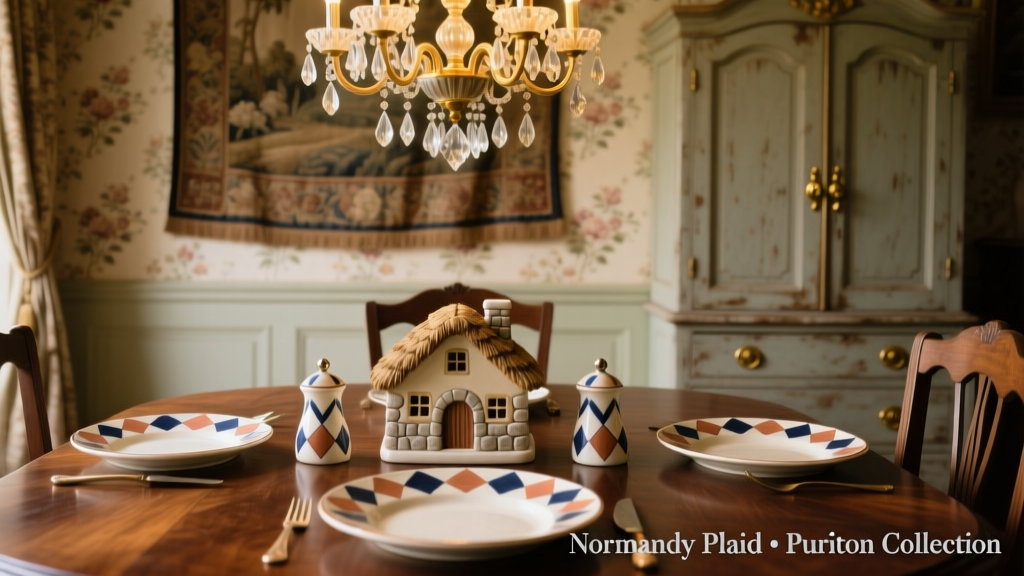
Normandy Plaid Puriton Dinnerware: Salt & Pepper Sets, Origins, Identification, and Restoration Guidance

Toy Amos ’n’ Andy Walkers: Moving Eyes Tin Lithograph Figure by Correl & Gosden, Boxed (1930, 11 Inches)
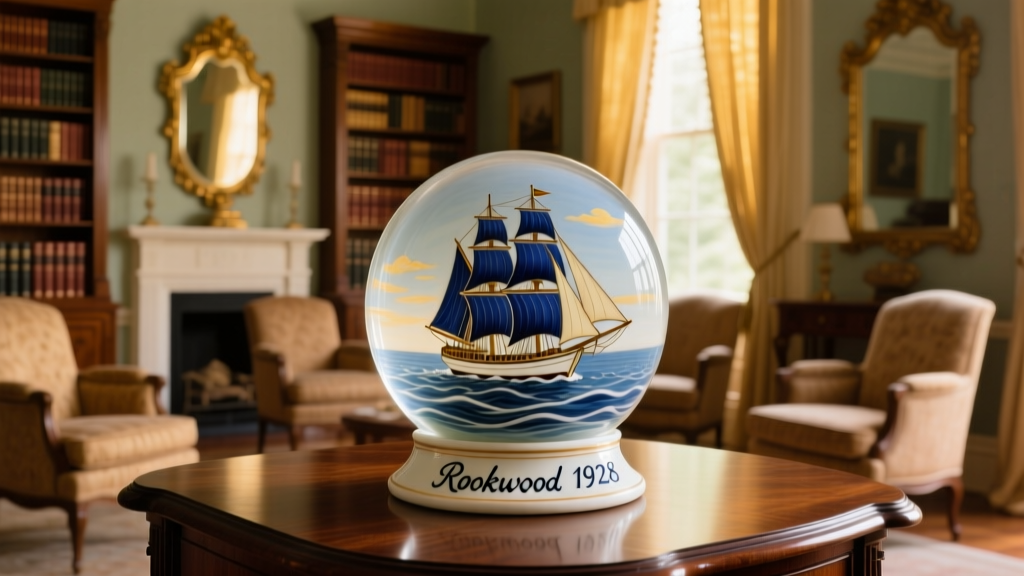
Rookwood Paperweight No. 2 Schooner (1928): Anatomy, Provenance, and Conservation of a Cincinnati Ceramic Landmark

The Bryan–Watson Populist Jugate Political Button of 1896: A 7/8-Inch Artifact of Agrarian Reform and Electoral Realignment
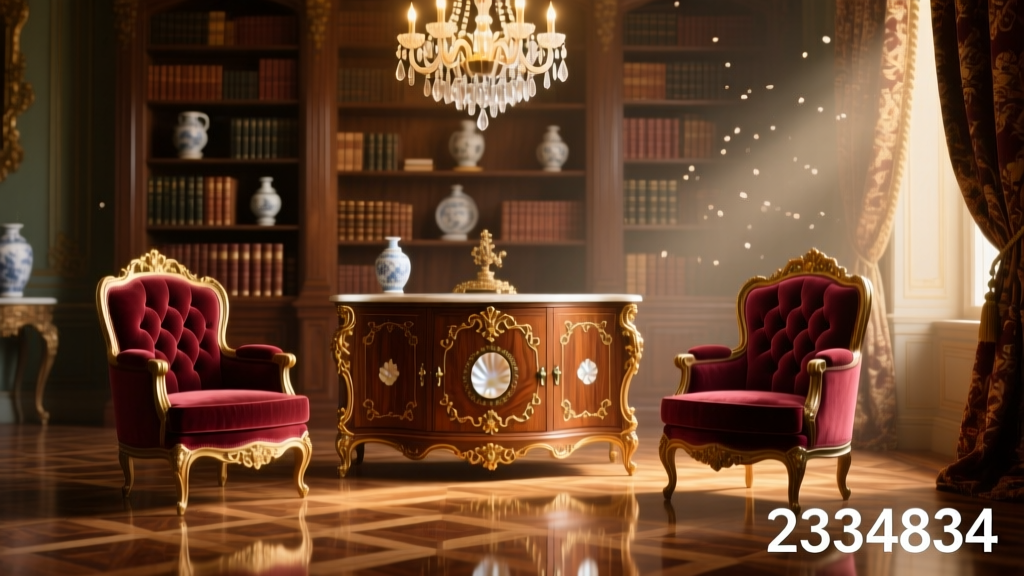
The 1937 Duncan Phyfe Revival Mahogany Sideboard: Provenance, Structural Integrity, and Restoration Protocol for Lot #2334834

Peter S. Bogardus: The Forgotten Master of American Federal Period Furniture

Disneyana Sheet Music: 'You Belong to My Heart' from The Three Caballeros (1944) — A Collector’s Guide to Authenticity, Value, and Conservation
Fostoria Fairfax Relish Tray: A Deep Dive into the Iconic Green 3-Section 11½-Inch Pattern