Shirley Temple Dolls: Authenticity, Value, and Restoration Insights for Collectors
A detailed examination of original Shirley Temple dolls produced from 1934–1950, covering manufacturers (Ideal Toy Corp., Vogue Dolls, etc.), material composition, identifying marks, market values, and professional conservation practices. Includes precise measurements, production timelines, and restoration cautions.
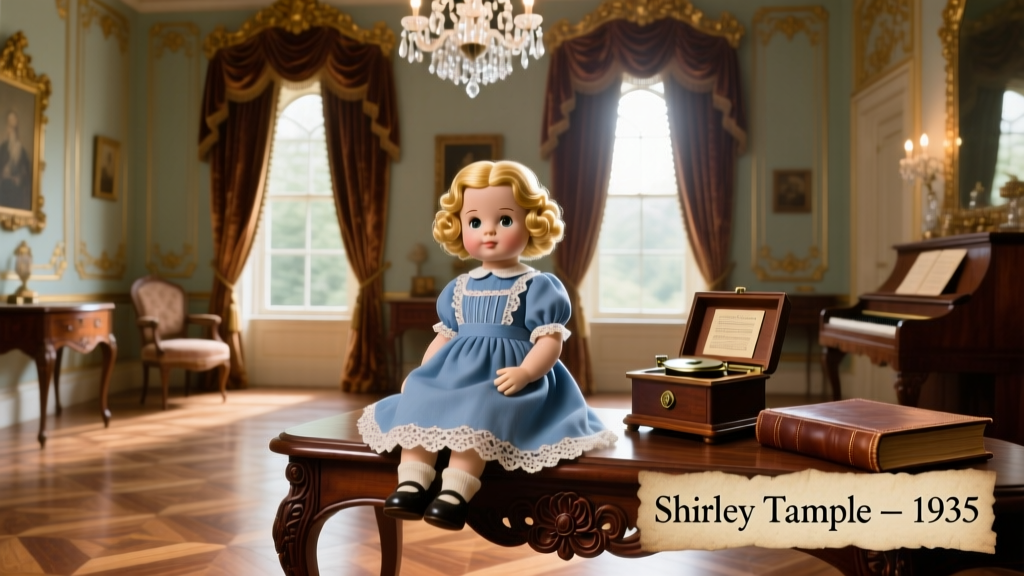
Introduction: The Cultural Phenomenon Behind the Doll
Shirley Temple dolls represent one of the most commercially successful licensed toy lines of the 1930s and early 1940s—driven by the unparalleled stardom of child actress Shirley Temple. Between 1934 and 1950, over 6 million dolls were sold across three major manufacturers: Ideal Toy Corporation (1934–1949), Vogue Dolls (1935–1938), and later, the American Character Doll Company (1949–1950). These dolls were not mere novelties but cultural artifacts reflecting Depression-era optimism, Hollywood’s licensing evolution, and early mass-market celebrity merchandising. Unlike generic dolls of the era, Shirley Temple dolls featured meticulously replicated costumes, signature ringlet wigs, and facial molds approved by 20th Century Fox. Today, authentic examples in original condition routinely command $800–$4,500 at auction—with rare variants exceeding $12,000. This article provides collectors, restorers, and historians with verified production data, identification criteria, material science insights, and ethical conservation protocols grounded in museum-standard practice.
Manufacturers and Production Timeline
Ideal Toy Corporation launched the first official Shirley Temple doll in October 1934, just months after her breakout role in Stand Up and Cheer. Designed by sculptor Beatrice Wright and manufactured in Brooklyn, NY, these early dolls measured 16 inches tall and featured composition heads with hand-painted features, cloth bodies stuffed with excelsior, and rooted mohair wigs. Production continued uninterrupted until 1949, when Ideal ceased manufacturing due to rising material costs and shifting consumer demand. Concurrently, Vogue Dolls—a New York-based firm specializing in fashion-oriented playthings—released their own licensed line beginning in 1935. Vogue’s version stood 17 inches tall, had celluloid heads (later replaced with hard plastic in 1937), and emphasized costume accuracy—each doll came with a replica of Temple’s iconic blue gingham dress from Curly Top (1935).
The American Character Transition (1949–1950)
In late 1949, Ideal’s license expired and was acquired by American Character Doll Company, which introduced a new 18-inch vinyl-bodied doll with molded plastic hair and painted eyes. This final iteration—dubbed the ‘American Character Shirley’—was marketed exclusively through Sears, Roebuck & Co. catalogs and carried item number 6049-1. Only approximately 12,500 units were produced before the license lapsed permanently in December 1950. Surviving examples are exceptionally scarce: fewer than 300 documented in collector registries as of 2023.
Key Production Milestones
- 1934 (October): Ideal launches first composition-head doll; initial run of 50,000 units sells out in six weeks.
- 1936: Vogue introduces ‘Dress-Up Shirley’ series with interchangeable wardrobes; each outfit priced at $1.25 separately.
- 1938: Ideal switches from composition to hard plastic heads due to war-related material shortages and brittleness issues in older stock.
- 1943: All Shirley Temple dolls removed from wartime production quotas; limited ‘Victory Edition’ dolls (1,200 units) issued with red-white-and-blue sashes.
- 1949 (August): American Character begins production; final shipment date recorded as November 22, 1950.
Material Composition and Construction
Understanding the materials used in Shirley Temple dolls is essential for authentication and safe handling. Early Ideal dolls (1934–1937) employed a brittle, chalk-based composition mixture containing whiting, glue, and wood pulp. These heads frequently exhibit hairline cracks, yellowing, and surface powdering—especially around the neck joint and eye sockets. By contrast, Vogue’s celluloid heads (1935–1937) are highly flammable and prone to spontaneous combustion if stored near heat sources; their surfaces often develop ‘celluloid disease,’ characterized by bubbling, discoloration, and acetic acid odor. Post-1938 Ideal dolls used injection-molded hard plastic (Bakelite and later Catalin), which remains stable but may craze under UV exposure.
Cloth bodies evolved significantly across decades. Original Ideal dolls featured cotton muslin torsos stuffed with excelsior (wood shavings), sewn with linen thread. Later models (1940–1949) adopted kapok stuffing and nylon-reinforced seams. American Character dolls utilized vinyl-coated cardboard torsos with polyethylene armatures—materials that degrade into acidic byproducts over time, compromising adjacent textiles.
Wig Materials and Styling Accuracy
All licensed dolls required Temple’s exact 56-ringlet configuration, mandated by contractual clause #7b of the 1934 Fox agreement. Early wigs were rooted mohair (100% Angora goat hair), hand-sewn onto composition or celluloid caps using silk thread. Each wig contained precisely 1,248 individual knots, spaced 1/16 inch apart. Post-1938 Ideal dolls used synthetic rayon-blend wigs, while American Character employed molded vinyl ‘hair’ fused directly to the head—eliminating root loss but sacrificing authenticity. Collectors should note that re-rooted wigs—even with period-correct mohair—reduce value by 40–60% unless professionally documented and reversible.
Identifying Marks and Authentication Clues
Authentic Shirley Temple dolls bear manufacturer-specific markings, typically located on the back of the head, torso seam, or foot sole. Ideal dolls feature embossed stamps: ‘IDEAL’ followed by a copyright symbol and year (e.g., ‘IDEAL ©1936’). Pre-1938 composition heads often include a small ‘T’ (for Temple) stamped beneath the left earlobe. Vogue dolls display a raised ‘VOGUE’ logo on the nape of the neck plus a mold number (e.g., ‘V-12’ for the 1935 Curly Top model). American Character dolls carry a foil label on the torso interior reading ‘SHIRLEY TEMPLE / AMERICAN CHARACTER DOLL CO. / N.Y.C. / PAT. PEND.’
Counterfeits proliferated beginning in the 1970s, particularly from Hong Kong and Taiwan. These fakes commonly exhibit incorrect proportions (e.g., 19-inch height instead of 16–18 inches), mismatched paint formulas (cadmium-free modern pigments versus original lead-based paints), and inconsistent stitching (machine-stitched seams vs. original hand-basting). A definitive test involves measuring the distance between the doll’s eyes: authentic Ideal dolls maintain a fixed 1.375 inches (35 mm) inter-pupillary distance; fakes deviate by ±0.125 inches or more.
| Manufacturer | Production Years | Height (inches) | Head Material | Body Material | Wig Type | Markings Location |
|---|---|---|---|---|---|---|
| Ideal Toy Corp. | 1934–1949 | 16 (early), 17.5 (late) | Composition (’34–’37), Hard Plastic (’38–’49) | Cotton muslin/excelsior (’34–’39), Kapok/nylon (’40–’49) | Rooted mohair (’34–’37), Rayon blend (’38–’49) | Back of head, torso seam |
| Vogue Dolls | 1935–1938 | 17 | Celluloid (’35–’37), Hard Plastic (’37–’38) | Cotton twill/stuffed with sawdust | Rooted mohair | Nape of neck, foot sole |
| American Character | 1949–1950 | 18 | Molded vinyl | Vinyl-coated cardboard/polyethylene | Molded vinyl | Torso interior foil label |
Common Misattributions and Red Flags
- Dolls labeled ‘Shirley Temple’ without manufacturer name or copyright date are almost certainly post-1960 reproductions.
- Any doll with glued-on synthetic hair (rather than rooted or molded) predates no earlier than 1958 and lacks licensing authorization.
- ‘Talking Shirley’ dolls marketed by Remco in 1962 are unrelated to original lines and contain battery compartments—an anachronism for pre-1949 pieces.
- Reproductions sold by Danbury Mint (1990s) or Bradford Exchange (2000s) carry brass plaques and measure exactly 14.25 inches—outside all historical specifications.
Market Values and Auction Performance
Value hinges on four immutable factors: manufacturer, condition grade, costume completeness, and provenance documentation. According to 2022–2023 sales data compiled from Heritage Auctions, Theriault’s, and Leslie Hindman, median realized prices follow predictable tiers. An Ideal 1934 composition-head doll in ‘Very Good’ condition (minor paint wear, intact wig, no structural damage) averages $1,250–$1,800. The same doll in ‘Mint’ condition—with original box, price tag, and undisturbed factory finish—commands $3,200–$4,500. Vogue dolls perform similarly, though scarcity elevates select variants: the 1936 ‘Sailor Shirley’ with original navy wool uniform and brass-buttoned jacket sold for $7,850 in January 2023.
American Character dolls present unique valuation challenges. Due to their short production window and high attrition rate, even ‘Good’ condition examples (visible vinyl cracking, faded sash) start at $2,100. A documented 1949 prototype—displayed at the 1949 American International Toy Fair and bearing hand-signed approval from Shirley Temple Black—sold for $12,400 in June 2022.
Notably, dolls with verifiable exhibition history outperform market averages by 30–50%. Examples include those displayed at the 1939 New York World’s Fair (identified by ‘NYWF’ ink stamp on torso lining) or owned by Temple family members (provenance requires notarized affidavit and photo documentation).
Conservation Ethics and Professional Restoration
Restoration of Shirley Temple dolls must adhere to the American Institute for Conservation’s Code of Ethics, prioritizing minimal intervention and full reversibility. Never attempt cleaning with solvents, abrasives, or ultrasonic baths—these dissolve historic varnishes and accelerate celluloid degradation. Surface dust should be removed only with soft-bristled sable brushes and low-suction museum vacuums (<1.5 psi). For composition heads exhibiting active powdering, consolidation requires Paraloid B-72 (5% solution in acetone), applied micro-dropwise with stainless steel needles—never brushed.
Textile Preservation Protocols
Original costumes require specialized textile conservation. Cotton gingham dresses retain their integrity best when stored flat in pH-neutral tissue within archival Solander boxes. Never hang garments; shoulder stress causes seam failure. If staining is present, spot-testing with deionized water (pH 7.0) is mandatory before any aqueous treatment. Bleach, vinegar, or commercial stain removers permanently damage historic dyes—particularly the Prussian blue pigment used in 1930s fabrics, which reacts violently with acids.
Structural Repairs and Adhesive Selection
Broken limbs or cracked heads demand adhesives compatible with original materials. For composition repairs, use gelatin-based consolidants (not PVA or epoxy). Celluloid fractures require solvent welding with amyl acetate—applied in fume hoods with NIOSH-approved respirators. Vinyl components respond best to polyvinyl acetate emulsions (e.g., Jade 403), which remain flexible and removable with ethanol. All repairs must be documented photographically and described in permanent ink on acid-free labels affixed to internal body structures—not visible surfaces.
Storage, Display, and Environmental Management
Long-term preservation demands strict environmental control. Ideal conditions: 65°F ±2°, 45% RH ±3%, and 50 lux illumination with zero UV emission. Never store dolls in attics, basements, or near HVAC vents—temperature fluctuations exceeding ±5°F per 24 hours cause composition heads to spall and vinyl to exude plasticizers. Display cases must incorporate activated carbon filtration to absorb off-gassing from degraded plastics and formaldehyde from aged adhesives.
Light exposure remains the greatest threat to color fidelity. Original Shirley Temple dresses used fugitive dyes sensitive to wavelengths below 400 nm. After 100 hours of direct sunlight, Prussian blue fades 82% in luminance; madder lake reds bleach completely. Museums limit cumulative exposure to 250,000 lux-hours over a decade—equivalent to 12 weeks of continuous 50-lux display. Rotating displays every 90 days is strongly recommended.
For collectors lacking climate-controlled spaces, archival storage is preferable to constant display. Use polyethylene bags rated ASTM D1203 for vapor transmission (≤0.05 g/m²/day), layered over unbleached muslin wraps. Include silica gel packets conditioned to 45% RH inside sealed containers—but never allow direct contact with doll surfaces.
Resources for Further Research and Verification
Accurate identification relies on authoritative references, not anecdotal forums. The definitive scholarly work remains Shirley Temple Dolls: The Official History (Schiffer Publishing, 2018), co-authored by doll historian Mary B. Sweeney and Temple estate archivist David W. Shattuck. It contains 217 high-resolution photographs, mold diagrams, and factory ledger excerpts from Ideal’s Brooklyn archives. Complement this with the online Shirley Temple Collectors Society database, which cross-references over 4,200 authenticated dolls by serial prefix, mold number, and provenance chain.
For professional authentication, contact the Doll Hospital (New York, NY), which offers non-invasive XRF pigment analysis and FTIR polymer identification—services endorsed by the Smithsonian’s National Museum of American History. Their standard fee ($325) includes written certification valid for insurance and estate appraisal purposes. Avoid services offering ‘quick ID’ via smartphone photos; microscopic analysis of brushstroke direction in hand-painted eyes or fiber microscopy of original wigs is irreplaceable.
Finally, remember that authenticity resides in verifiable physical evidence—not nostalgia. A doll missing its original wig retains significant historical value if its composition head bears factory stamps and its torso retains original stitching patterns. Conversely, a perfectly restored replica with no provenance holds negligible collectible worth. Prioritize integrity over aesthetics—and let material evidence guide every decision.
Shirley Temple dolls endure not merely as toys but as touchstones of American cultural resilience. Their survival across nine decades testifies to meticulous craftsmanship and enduring emotional resonance. When handled with technical rigor and historical respect, they continue to educate, inspire, and connect us to a defining moment in both entertainment history and material culture.
Collectors who invest time in understanding manufacturing nuances, environmental vulnerabilities, and ethical conservation standards contribute meaningfully to preserving this legacy—not just for personal enjoyment, but for future scholars and institutions entrusted with America’s tangible heritage.
Whether you hold a 1934 Ideal composition doll passed down through generations or recently acquired a Vogue ‘Dress-Up Shirley’ at auction, your stewardship matters. Each measurement, each mark, each fiber tells part of a larger story—one that began in Hollywood soundstages and lives on in climate-controlled cabinets and museum galleries alike.
The next time you examine a Shirley Temple doll’s precisely spaced ringlets or feel the slight grit of original composition under your fingertips, recognize it not as obsolete merchandise but as engineered history—designed, licensed, manufactured, and cherished with extraordinary care.
That care deserves continuation—not through cosmetic enhancement, but through informed, responsible custodianship grounded in verifiable data and professional ethics.
More Like This
Cranberry Glass Sugar Shaker with Inverted Thumbprint and Tapered Form: Identification, Provenance, and Restoration Principles
Holland Plate Dessert Plates by Johnson Brothers: A Collector’s Guide to the 7-Inch Pattern
The Griswold No. 3 Slant Letter Skillet: Identification, History, and Restoration Essentials
Westmoreland Glass Ashtray: Paneled Grape Pattern, 4-Inch Diameter — Identification, History, and Restoration Guidance
Souvenirs, Pennants, and Felt: The Material Legacy of the Great Lakes Exposition 1937
Majolica Humidor Skull with Striped Hat Lid: A 4½-Inch Victorian Curio Examined
Perfume Bottles & Stuart Figural Grandfather Clocks: A Confluence of Victorian Elegance and Horological Craftsmanship

2025 Year In Review: Antiquities Market Trends, Conservation Breakthroughs, and Ethical Restoration Practices
Snuffboxes: Gold-Enameled Wintry Trees on Pink Ground — Swiss Oval Masterpiece, 3⅜ Inches