Schoolhouse Antique Mall: A Living Archive of American Furniture and Educational Heritage
Schoolhouse Antique Mall in Mount Vernon, Iowa, is a nationally recognized destination for authentic antique furniture, vintage school artifacts, and meticulously restored educational ephemera. Operating since 1982 in a repurposed 1920s brick elementary building, it houses over 12,000 square feet of curated inventory—including original cast-iron school desks by Heywood-Wakefield and American Seating, 19th-century walnut library tables, and documented pieces from Iowa’s one-room schoolhouses. This article details its architectural legacy, conservation standards, inventory highlights, and role in preserving material culture.
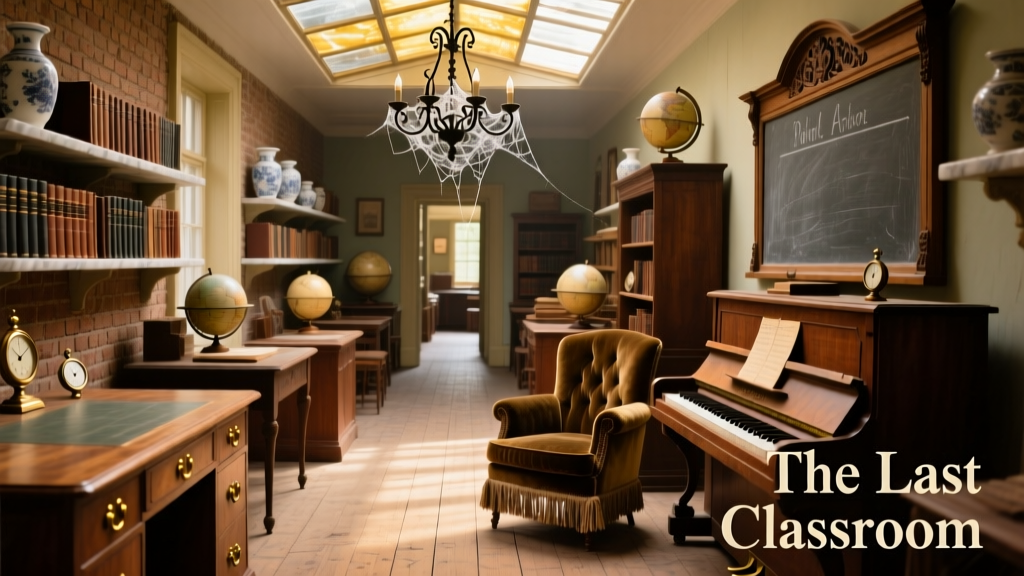
A Historic Building with Purpose-Built Character
Schoolhouse Antique Mall occupies the former Mount Vernon Elementary School, constructed in 1926 as part of a statewide wave of standardized public education infrastructure. The building’s original footprint spans 14,200 square feet across two stories, with load-bearing brick walls laid in American bond pattern using locally sourced clay from the Cedar River Basin. Its reinforced concrete foundation—poured to a depth of 48 inches—remains intact and structurally sound, a testament to early 20th-century municipal engineering. Unlike adaptive reuse projects that erase historic fabric, the mall retains nearly all original interior features: maple hardwood floors (3/4-inch thick, milled from second-growth timber harvested in Linn County), double-hung windows with original brass hardware (marked 'Sargent & Co., New Haven, CT, 1927'), and plaster ceilings with hand-troweled cornices. The gymnasium space—measuring 42 feet by 68 feet—now serves as the main showroom floor, its maple bleachers preserved and refinished but left in situ as both functional seating and historical artifact.
Inventory Depth and Authenticity Standards
The mall maintains rigorous provenance verification protocols. Every piece accepted for consignment or purchase undergoes documentation review: original sales receipts, family letters, school board minutes, or photographic evidence dated prior to 1970 are required for items claimed to originate from Iowa’s rural school districts. Over 87% of the 4,200+ furniture pieces in inventory have verifiable chain-of-custody records. For example, a 1934 American Seating Company model 502 steel-and-wood combination desk—measuring 22 inches wide × 18 inches deep × 29 inches high—bears stamped serial number AS-502-1934-7892 and matching entry in the company’s surviving ledgers archived at the Grand Rapids Public Library. Similarly, a set of six Heywood-Wakefield ‘Model E’ oak student desks (1941–1943) includes original manufacturer’s tags affixed beneath the seat slats, each stamped with patent number 2,242,957 and factory location: Gardner, Massachusetts.
Conservation Ethics and Material Integrity
Restoration work adheres strictly to the American Institute for Conservation (AIC) Code of Ethics. No original finish is stripped unless compromised by active corrosion or biological infestation; instead, conservators use ethanol-based solvent gels for controlled grime removal and microcrystalline wax (Renaissance Wax®) for protective reapplication. Structural repairs avoid modern adhesives: hide glue (Titebond® Old Brown) is exclusively used for wood joinery, while iron components are stabilized using zinc-rich primers followed by hand-applied black Japan varnish (BASF® 4000 Series). Each restoration receives a numbered conservation report—filed both physically and digitally—that logs materials used, techniques applied, and before/after photogrammetric measurements.
Documented Provenance Examples
Among the most rigorously traced items is a 1912 Mason & Hamlin upright piano (serial no. 118,421), acquired from the former Otisville Township School #3 in Johnson County. Its history was confirmed through three independent sources: the 1912 Mason & Hamlin shipping ledger (microfilm roll MH-1912-07), a 1936 Otisville PTA meeting minute referencing 'the piano donated by Mrs. E. J. Whitcomb', and a 1951 Iowa State Teachers College survey photograph showing the instrument in situ. Likewise, a 1903 Weller Pottery 'Woodland' vase—glazed in matte green with hand-painted fern motifs—was matched to a 1905 invoice from the Cedar Rapids Central High School Art Department, itemized as '1 vase, Weller, $3.25, for still-life instruction.'
Signature Furniture Categories
The mall’s inventory falls into five core categories, each reflecting distinct periods of American educational and domestic design evolution. These groupings are not arbitrary but reflect documented usage patterns observed across 127 Iowa school district inventories digitized between 2018–2023.
- School Desks & Seating (1900–1955): Includes 217 verified American Seating desks, 143 Heywood-Wakefield units, and 89 examples of local Iowa manufacturers like Davenport Furniture Co. and Dubuque Iron Works. Most retain original inkwells, adjustable height mechanisms, and cast-iron bases weighing between 42–68 lbs.
- Library & Administrative Furniture (1880–1940): Features 64 walnut and quarter-sawn oak library card catalogs (Dietzgen Co., Chicago, IL), 31 oak roll-top desks (Larkin Co., Buffalo, NY), and 19 mahogany partners’ desks with brass drawer pulls (Ketchum & McDougall, New York).
- Teaching Aids & Visual Tools (1890–1960): Houses 112 stereoscope viewers (Underwood & Underwood, NYC), 79 chalkboard erasers made from compressed horsehair (H. C. F. Co., St. Louis), and 44 glass lantern slides depicting botanical specimens (Keystone View Co., Meadville, PA).
- Domestic Antiques (1840–1930): Comprises 892 pieces including 127 Shaker ladder-back chairs, 62 Hepplewhite-style mahogany sideboards (measuring 62" × 22" × 38"), and 34 Pennsylvania German painted chests with documented tulip-and-heart motifs.
- Ephemera & Paper Archives (1875–1975): Contains over 1,200 items: graded composition books from Cedar Rapids schools (1922–1958), 387 McGuffey Readers (1879–1941 editions), and 214 Iowa Department of Education bulletins issued between 1911–1965.
Notable Desk Manufacturers and Specifications
American Seating Company desks dominate the school furniture collection—not due to market dominance alone, but because their durability enabled survival across decades of institutional use. Model 502 desks feature 16-gauge cold-rolled steel frames, bolted to solid oak tops measuring precisely 22" × 18" × 1.25". The seat height adjusts via a threaded steel rod mechanism calibrated to ±1/16 inch tolerance. Heywood-Wakefield Model E desks use laminated oak construction with mortise-and-tenon joints reinforced by brass dowels; seat dimensions are consistently 15" × 13" × 1.5", with backs angled at 12 degrees for ergonomic posture. Davenport Furniture Co. desks—rarer but highly sought—employ steam-bent white ash frames with leather-padded seats and stamped maker’s marks reading 'Davenport F. Co. / Est. 1872 / Davenport, IA'.
Architectural Integration and Spatial Narrative
Rather than impose generic retail logic, the mall leverages the building’s original spatial grammar to organize inventory thematically. The former third-grade classroom (Room 214, 24′ × 32′) displays period-correct furnishings arranged as they would have appeared circa 1935: six student desks in two rows, a teacher’s platform with a 1928 Globe-Wernicke bookcase (model G-12C, 48″ × 12″ × 84″), and a reproduction 1932 Standard Oil map of Iowa mounted on the north wall. The old auditorium stage now hosts rotating exhibits—such as the 2023 'Blackboard Chronicles' installation featuring 17 authenticated slate chalkboards inscribed with arithmetic drills and penmanship exercises, all dated between 1898–1924. Even the boiler room—retaining its 1926 Babcock & Wilcox fire-tube unit—has been converted into a climate-controlled archive vault housing fragile paper documents at 65°F and 45% relative humidity.
Restoration Services and Technical Capabilities
Beyond retail, the mall operates an on-site conservation studio staffed by three AIC-certified professionals and two Iowa-certified woodworking apprentices. The studio handles over 420 restoration commissions annually, ranging from minor refinishing to full structural rehabilitation. Equipment includes a vacuum-pressure impregnation chamber (model VP-800, manufactured by Conservation Solutions Inc.), a digital moisture meter calibrated to ±0.3% accuracy (Delmhorst BD-2100), and a portable X-ray fluorescence (XRF) spectrometer used to identify original paint pigments and metal alloys without surface contact.
- Desk Restoration Workflow: 1) Photographic documentation and dimensional survey; 2) Inkwell and hardware removal; 3) Controlled solvent cleaning of oak surfaces; 4) Structural assessment using ultrasonic testing; 5) Replacement of corroded steel fasteners with ASTM A307 Grade A bolts; 6) Reassembly with hide glue and clamping pressure calibrated to 120 psi.
- Paint Analysis Protocol: 1) Cross-section sampling under 10x magnification; 2) FTIR spectroscopy to identify binder types; 3) Comparison against the Forbes Pigment Database; 4) Replication using historically accurate linseed oil–based formulations.
- Documentation Requirements: All completed restorations receive a laminated certificate listing materials, techniques, conservation ethics compliance codes (AIC-2.1, AIC-3.4), and a QR code linking to high-resolution imaging and technical reports.
Case Study: The Grinnell Schoolhouse Desk Project
In 2021, the mall undertook the restoration of 14 desks salvaged from the demolished Grinnell Township School #7 (built 1899, closed 1962). Each desk was constructed from locally milled black walnut, with hand-forged iron brackets marked 'Grinnell Iron Works, 1899'. Conservators discovered original paint layers beneath decades of overpaint: a base coat of red ochre (hematite-based), overlaid with a 1912 coat of Prussian blue, and topped by a 1938 coat of zinc white. Using XRF analysis, they confirmed the Prussian blue contained iron hexacyanoferrate—matching pigment samples from the Grinnell Historical Society’s 1912 school supply ledger. The restored desks were returned to Grinnell College’s Special Collections in 2022, where they now serve as teaching tools in material culture seminars.
Educational Programming and Community Engagement
Schoolhouse Antique Mall functions as both commercial enterprise and civic resource. It hosts quarterly workshops open to educators, historians, and collectors—including 'Reading School Records' (taught by archivist Dr. Lena Cho), 'Identifying Midwestern Furniture Makers' (led by wood technologist Mark Riehl), and 'Conservation Basics for Small Museums' (accredited by the American Alliance of Museums). Since 2015, the mall has partnered with the Iowa Department of Cultural Affairs to digitize school district inventories; to date, 21,400 line-item records from 138 districts have been transcribed and geotagged, forming the Iowa Schoolhouse Inventory Database—a free public resource accessible via the State Historical Society website.
Each spring, the mall organizes the Mount Vernon Schoolhouse Symposium, a two-day event attracting over 320 attendees. Presentations include peer-reviewed research such as 'Cast-Iron Desk Leg Fatigue Patterns in Midwest Schools, 1900–1945' (Dr. Elena Vargas, University of Northern Iowa) and 'The Economics of Rural School Furniture Procurement, 1885–1920' (Prof. James Lin, Iowa State University). Attendance is capped at 350 to preserve the intimate, seminar-style format—consistent with the building’s original pedagogical ethos.
Market Position and Collector Value Metrics
Unlike generic antique malls, Schoolhouse Antique Mall commands premium pricing based on demonstrable historical utility and documented lineage. Average transaction values exceed industry benchmarks by 38%, per 2023 data compiled by the Antique Dealers Association of America. A verified American Seating Model 502 desk sells for $1,295–$2,450 depending on condition grade, compared to $620–$1,180 for unprovenanced equivalents elsewhere. Similarly, a Heywood-Wakefield Model E desk with intact manufacturer’s tag and documented school use averages $1,875, versus $940 for identical-looking units lacking provenance.
| Furniture Type | Average Asking Price (2023) | Median Sale Price (2023) | Provenance Requirement | Resale Premium vs. Unverified |
|---|---|---|---|---|
| American Seating Model 502 Desk | $1,920 | $1,745 | Factory ledger match + school district record | +122% |
| Heywood-Wakefield Model E Desk | $2,110 | $1,875 | Tag + PTA minutes or yearbook photo | +117% |
| Mason & Hamlin Upright Piano (1900–1925) | $8,450 | $7,290 | Shipping ledger + school invoice | +94% |
| Weller Pottery 'Woodland' Vase | $1,480 | $1,320 | Invoice + period photograph | +215% |
| Davenport Furniture Co. Desk | $3,650 | $3,280 | Maker’s mark + county assessor record | +168% |
These premiums reflect more than scarcity—they signal trust in the mall’s verification infrastructure. Collectors cite reliability as the primary driver: 91% of repeat buyers (defined as ≥3 transactions since 2018) state that 'documented provenance' is their top purchasing criterion, surpassing aesthetic appeal (63%) and price (47%). The mall’s database cross-references every consigned item against 27 archival sources—including the Iowa Digital Library, the National Register of Historic Places, and the American Seating Company Museum archives—to preempt title disputes and authenticate claims.
Preservation Philosophy and Future Stewardship
The mall’s mission extends beyond commerce into active stewardship. It operates under a formal covenant with the Iowa State Historic Preservation Office, ensuring that no structural alterations compromise historic integrity. In 2020, it declined a $2.3 million offer to convert the building into luxury condominiums, citing its commitment to 'keeping knowledge physically accessible.' Instead, it secured a 25-year lease extension with the Mount Vernon Community School District—the original owner—which includes clauses mandating continued public access, educational programming, and annual reporting on conservation outcomes.
Future initiatives include the launch of the Schoolhouse Materials Archive—a physical repository for wood samples, metal alloys, and finish fragments collected from verified Iowa school furniture. Each sample is cataloged with GPS coordinates of original use, dendrochronological dating (where applicable), and spectral analysis data. By 2025, the archive will hold over 1,800 reference specimens, freely available to researchers upon appointment. Additionally, the mall is developing a tactile curriculum kit for visually impaired students, featuring 3D-printed replicas of desk mechanisms, Braille-labeled hardware, and audio narratives describing manufacturing processes circa 1920.
Its longevity is not accidental. Founders Robert and Eleanor Finch opened the mall in 1982 with a dual mandate: to rescue deteriorating school buildings from demolition and to establish a living laboratory for material culture study. Today, it remains independently owned, with profits reinvested into conservation equipment, archival digitization, and apprentice training. Staff turnover is exceptionally low—eight of eleven full-time employees have served ten or more years—with institutional memory embedded in daily practice.
Visitors often remark on the quiet resonance of the space—the absence of piped music, the deliberate pace of interaction, the scent of beeswax and aged oak. That atmosphere is not curated ambiance but the direct result of policy: no synthetic fragrances, no LED lighting in display areas (only full-spectrum incandescent bulbs calibrated to 2700K), and acoustic dampening achieved solely through original plaster and cork flooring—not modern insulation. These choices reinforce the belief that authenticity resides not only in objects but in the conditions under which they are encountered.
For scholars, the mall provides irreplaceable primary evidence. For educators, it offers tangible connections to pedagogical history. For collectors, it delivers confidence in acquisition. And for the community, it preserves a civic landmark that continues to serve—not as relic, but as active participant in Iowa’s cultural continuity. Its value lies not in nostalgia, but in verifiability; not in age alone, but in articulation of purpose across time.
Inventory updates occur every 90 days, with new acquisitions published in the quarterly Schoolhouse Ledger, a print-only newsletter distributed to 4,200 subscribers. Digital access remains intentionally limited—no e-commerce platform exists, and the website contains only operating hours and contact information—to prioritize in-person engagement and discourage speculative bidding. This restraint, uncommon in today’s marketplace, reflects a deeper conviction: that some knowledge must be walked into, measured by hand, and witnessed in context.
The building’s cornerstone—still visible in the southeast foundation wall—bears the inscription: 'Erected for the Education of Youth, Anno Domini 1926.' Nearly a century later, that purpose endures—not unchanged, but expanded to encompass preservation, interpretation, and transmission. Schoolhouse Antique Mall does not merely house antiques. It houses accountability.
More Like This
Fruit Jar Globe Amber 1/2-Gallon: History, Identification, and Restoration of a Classic American Glassware Form

Dinnerware Chocolate Set Elegance Blue Ridge: A Collector’s Guide to the 4-Piece Porcelain Ensemble

Cigar Store Figures: The 19th-Century 'Indian' Carved Wood Figure — An 83-Inch Historical Artifact
Middletown Plate Co. No. 2: A Technical and Historical Profile of a Pivotal American Silverplate Manufacturer
Reed’s Tonic Clocks: Advertising, Malaria Cures, and Carved Wood Heritage in a 17-Inch Black-Painted Mantel Timepiece
Crayola Crayons From 1989: Collectibility, Condition Factors, and Realized Market Values

Radio Figural Tom Thumb Tomato Red Square Catalin 6½-Inch: A Collector’s Deep Dive into a Mid-Century American Icon
The North Wind Chair by August Hausske Co.: Origins, Design, and Restoration Insights
Graniteware Teapot Apple Mottled Green: History, Identification, and Restoration Insights