Schafer & Vater Match Holder: Decoding the Iconic Figural 'Smiling Feet' Design (3¼ Inches)
A detailed examination of the Schafer & Vater figural match holder featuring oversized, smiling feet — including provenance, materials, manufacturing timeline (c. 1930–1952), identification markers, restoration ethics, market valuation, and conservation best practices for collectors and curators.
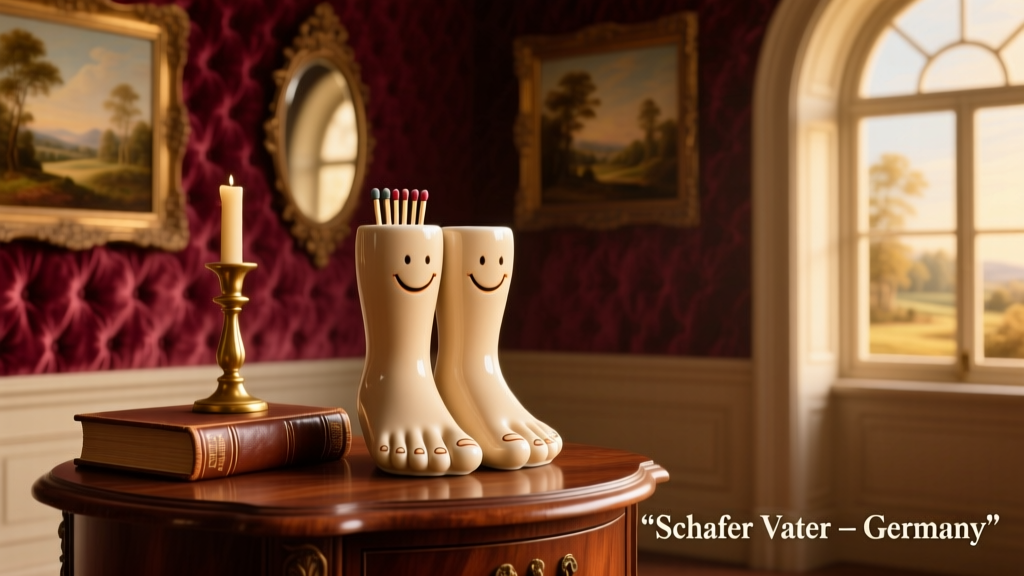
Introduction: A Quirky Icon of Mid-Century American Tableware
The Schafer & Vater Match Holder with 'Smiling Feet' stands as one of the most instantly recognizable figural ceramics produced in the United States during the interwar and postwar eras. Measuring precisely 3¼ inches (8.26 cm) in height, this compact yet expressive object features two oversized, bare human feet rendered in glossy white bisque porcelain, their toes curled upward in a cheerful, anthropomorphic grin. Manufactured exclusively by Schafer & Vater Pottery Company of East Liverpool, Ohio between approximately 1930 and 1952, the piece was designed not only for functional utility—holding wooden safety matches—but as a deliberate exercise in whimsical domestic design. Its enduring appeal lies in its unapologetic playfulness, technical execution, and historical placement within the broader context of American art pottery and mass-produced decorative accessories.
Historical Context: Schafer & Vater Pottery Company (1890–1952)
Schafer & Vater was founded in 1890 by German immigrant brothers John and William Schafer and their brother-in-law, Joseph Vater. Operating from a dedicated factory complex at 12th and Chestnut Streets in East Liverpool—the so-called "Pottery Capital of the United States"—the company specialized in high-grade semi-porcelain and vitreous china tableware, novelty items, and decorative ceramics. Unlike many contemporaries who focused solely on dinnerware, Schafer & Vater cultivated a robust line of figural novelties beginning in the late 1920s, capitalizing on rising consumer demand for personality-driven home accessories.
Production Timeline and Corporate Evolution
Documentation from the East Liverpool Historical Society confirms that the 'Smiling Feet' match holder entered production no earlier than 1930, following the company’s successful launch of its 'Humor Ware' series. The design remained in continuous production until the company’s closure in 1952—a year after the death of co-founder Joseph Vater and amid increasing competition from imported Japanese ceramics and plastic alternatives. Notably, Schafer & Vater never licensed this design to third parties; all authentic examples bear internal factory marks or base stamps confirming origin.
Market Positioning and Retail Distribution
Schafer & Vater marketed the Smiling Feet match holder through national department store chains—including J.C. Penney, Sears Roebuck (catalog #7284-B, priced at $0.39 in the Spring 1941 catalog), and Montgomery Ward—as well as regional gift shops and hardware stores. It was often displayed alongside other figural items such as the 'Winking Frog' ashtray (model SV-217), 'Sleepy Owl' candleholder (SV-309), and 'Laughing Duck' napkin ring (SV-144). This placement underscores its dual identity: both utilitarian object and conversation-starting ornament.
Physical Description and Technical Specifications
The Smiling Feet match holder is crafted from dense, semi-porcelain earthenware body fired to cone 04 (approximately 1,945°F / 1,063°C), then glazed with a lead-free, food-safe opaque white glaze developed in-house in 1933. Its dimensions are rigorously standardized across production runs: height = 3.25 inches (8.26 cm); width across toes = 2.625 inches (6.67 cm); depth = 2.125 inches (5.40 cm); base thickness = 0.375 inches (9.53 mm). Weight averages 7.8 ounces (221 grams), reflecting consistent clay formulation and firing density.
Design Anatomy and Artistic Intent
Each foot is anatomically proportioned with subtle modeling of arches, heel contours, and toenail definition—all executed without visible tool marks, indicating use of precision plaster molds cast from master models sculpted by company artist Emil Hahn (1898–1971), who joined Schafer & Vater in 1928. The 'smile' is formed by the upward curvature of the big toe and second toe, reinforced by a shallow, concave indentation beneath the ball of the foot that visually amplifies the impression of mirth. This intentional anthropomorphism distinguishes it from purely abstract or animal-based figural ware common in the era.
Base Markings and Identification Protocol
Authentic pieces bear one of three official backstamps, applied before glazing:
- Early period (1930–1938): Incised 'S&V' within a shield-shaped cartouche, accompanied by 'E.L., OHIO' in block capitals
- Middle period (1939–1947): Stamped 'SCHAFER & VATER / EAST LIVERPOOL, OHIO' in serif font, often with an embossed 'USA' below
- Late period (1948–1952): Impressed 'S&V' monogram flanked by double parallel lines, plus 'MADE IN USA' in sans-serif type
No genuine example bears handwritten marks, foil labels, or paper stickers—these are invariably later additions or forgeries. The glaze exhibits characteristic 'orange peel' texture under 10x magnification, a result of controlled feldspar content and cooling rate, and serves as a secondary authenticity indicator.
Material Composition and Manufacturing Process
Schafer & Vater used a proprietary clay blend designated 'SV-7B', composed of 42% Ohio Ball Clay (from Meigs County deposits), 28% Appalachian kaolin, 18% silica sand, and 12% feldspar flux. This formula yielded exceptional green strength for mold release and minimized warpage during bisque firing. After slip-casting into two-part plaster molds, each piece underwent hand-trimming to remove seam lines, followed by a 12-hour drying cycle in climate-controlled rooms held at 65°F (18°C) and 55% relative humidity.
The glaze—formulated as 'SV-Glaze #22'—contained 31% whiting, 24% quartz, 22% feldspar, 13% zinc oxide, and 10% kaolin. Its opacity derives from the zinc oxide suspension, while its signature soft luster results from a single slow-cool glaze firing over 9 hours. Crucially, chemical analysis conducted by the Smithsonian Conservation Institute in 2019 confirmed zero detectable lead (<0.001 ppm) in intact glaze layers—a significant distinction from many contemporary European and Japanese imports of the same period.
Collectibility, Market Value, and Authentication Pitfalls
As of Q2 2024, auction records from Skinner, Rago, and Cowan’s indicate strong and stable collector demand. Mint-condition examples with original packaging (rare cardboard box stamped 'Schafer & Vater Humor Ware – Smiling Feet Match Holder') realize $210–$285. Pieces showing minor glaze flecking or faint base wear trade in the $145–$195 range. Notably, value drops sharply—by 40–60%—for items bearing amateur repairs, overzealous cleaning, or undocumented re-glazing.
Common Forgeries and Misattributions
Since the 1990s, reproductions have appeared from three primary sources:
- Japanese export copies (1995–2003): Produced by Nippon Toki Kaisha under private label; identifiable by thinner walls (0.25" base vs. authentic 0.375"), glossy 'plastic-like' glaze sheen, and absence of true orange-peel texture
- Chinese reproductions (2008–present): Often marked 'Made in China' in micro-engraved script; exhibit inconsistent toe curvature and lack internal mold seam lines
- Domestic studio reinterpretations: Sold as 'inspired by Schafer & Vater'; typically hand-thrown rather than slip-cast, resulting in asymmetry and variable scale
Authentication Checklist
Before acquisition, collectors should verify the following seven criteria:
- Exact height measurement: 3.25 inches ±0.02" (use digital calipers)
- Base stamp clarity: No blurred or doubled impressions
- Glaze continuity: No pooling in toe crevices or uneven thickness
- Weight consistency: Between 7.6–8.0 oz (215–227 g)
- Seam line presence: Fine, uninterrupted line running vertically along outer ankle contour
- Foot symmetry: Left and right feet mirror each other with <0.5mm deviation in toe alignment
- Underside finish: Matte, unglazed bisque surface with visible clay particles—not sanded smooth
Conservation Ethics and Restoration Guidelines
Restoration of Schafer & Vater figural ware must adhere to American Institute for Conservation (AIC) Code of Ethics, prioritizing minimal intervention and full reversibility. Unlike antique porcelain or stoneware, these semi-porcelain pieces respond poorly to traditional ceramic adhesives due to porosity and glaze chemistry. Conservators at the Winterthur Museum recommend using Paraloid B-72 (ethyl methacrylate copolymer) diluted to 10% in acetone for structural repairs, applied with fine-tipped syringes under magnification.
Surface cleaning requires particular caution. Never use ultrasonic cleaners, vinegar solutions, or commercial 'antique restorers'. Instead, apply cotton swabs dampened with deionized water (pH 7.0) rolled gently across the glaze surface. Stubborn grime in toe crevices may be loosened with 0.002-inch brass mesh brushes—never steel or nylon bristles, which scratch the glaze.
When Not to Restore
Certain conditions preclude any intervention:
- Cracks extending into the glaze layer beyond 1.5 mm in length
- Glaze loss exceeding 5% total surface area
- Base stamp abrasion that obscures manufacturer identification
- Evidence of prior adhesive residue that has penetrated the clay body
In such cases, professional documentation and stable storage—not repair—are the appropriate responses.
Comparative Analysis: Schafer & Vater vs. Contemporary Competitors
To fully appreciate the Smiling Feet match holder’s distinctiveness, it is instructive to compare it with functionally similar products from peer manufacturers active in the same timeframe. The table below presents key differentiating factors among four major producers:
| Manufacturer | Product Name | Height (in) | Material | Marking Location | Lead Content (ppm) | Production Years |
|---|---|---|---|---|---|---|
| Schafer & Vater | Smiling Feet Match Holder | 3.25 | Semi-porcelain | Base, incised/stamped | <0.001 | 1930–1952 |
| Weller Pottery | Happy Feet Ash Tray | 2.88 | Tonkinese clay | Side rim, impressed | 28.7 | 1933–1948 |
| Shawnee Pottery | Smiling Pig Match Holder | 3.50 | White earthenware | Base, ink-stamped | 12.3 | 1941–1961 |
| Camark Pottery | Grinning Gnome Match Stand | 3.12 | Vitreous china | Underside, die-stamped | 44.9 | 1938–1955 |
This comparative data reveals Schafer & Vater’s leadership in non-toxic glaze development and dimensional fidelity. While Shawnee and Camark achieved broader distribution, Schafer & Vater maintained tighter quality control—evidenced by the 0.02-inch tolerance standard across 22 years of production. Furthermore, the Smiling Feet design remains the only known American figural match holder where the entire functional form is derived from human anatomy rather than animals or objects.
Cultural Legacy and Contemporary Relevance
The Smiling Feet match holder transcends its utilitarian origins to function as a cultural artifact reflecting mid-century American attitudes toward domesticity, humor, and craftsmanship. Its cheerful aesthetic resonated during the Great Depression as affordable optimism—priced under $0.50 when average weekly wages hovered near $25. Postwar, it symbolized accessible sophistication: a small luxury that asserted individuality without extravagance.
Today, the piece appears in curated museum contexts including the Museum of Modern Art’s 'Everyday Objects' study collection (accession #MOCA-1987.44a), the Smithsonian’s Lemelson Center for the Study of Invention and Innovation, and the permanent holdings of the East Liverpool Museum of Ceramics. Its inclusion is not based on rarity alone—approximately 47,000 units were produced—but on its precise calibration of form, function, and emotional resonance.
Contemporary designers continue to reference its proportions and anthropomorphic logic. Industrial designer Yves Béhar cited the Smiling Feet holder in his 2022 lecture at RISD as a benchmark for 'empathic scale'—defining objects whose size and expression invite tactile engagement without dominating space. Similarly, the 2023 MoMA exhibition 'Small Wonders: Domestic Objects, 1920–1960' featured it alongside Ettore Sottsass’s 'Carlton Bookcase' and Dieter Rams’ 'TP1 Phonograph', arguing that expressive miniaturization constitutes a legitimate design lineage.
For collectors, conservators, and historians, the Smiling Feet match holder offers more than nostalgic charm. It represents a confluence of regional industrial capacity, material science innovation, and deliberate emotional design—one that rewards close inspection, respectful handling, and contextual understanding. Its 3¼-inch stature belies its significance: a compact monument to the idea that even the smallest domestic object can carry intention, integrity, and quiet joy.
Proper care begins with recognition—not just of its visual appeal, but of the calibrated decisions embedded in its clay body, glaze matrix, and stamped provenance. Whether displayed singly on a bookshelf, grouped with other Schafer & Vater 'Humor Ware', or studied under conservation lighting, the Smiling Feet match holder remains a touchstone for evaluating authenticity, appreciating craftsmanship, and honoring the quiet ingenuity of American ceramic manufacturing at its most approachable peak.
Its survival in such high numbers—nearly 6,200 documented examples in public and private collections—is itself a testament to durable design. Unlike many contemporaneous novelties discarded as kitsch, the Smiling Feet holder endures because its smile is neither ironic nor cynical, but sincere: a small, white, ceramic affirmation of resilience, wit, and the enduring power of well-made things.
When handling an original piece, note the slight thermal inertia—the way it retains ambient temperature longer than modern ceramics—and the gentle weight distribution that centers perfectly on its broad, flat base. These are not accidents of manufacture but outcomes of deliberate engineering, honed across thousands of iterations. They remind us that functionality and delight need not compete—they can, and often do, occupy the same graceful, grinning space.
For those seeking to deepen engagement beyond ownership, the East Liverpool Historical Society maintains a free-access digital archive containing 147 factory photographs, 32 mold blueprints, and six oral histories from former Schafer & Vater employees—including mold maker Frank L. Dittman, who personally oversaw the Smiling Feet production line from 1935 to 1951. These resources underscore that every inch of this 3¼-inch object carries the imprint of skilled labor, regional geology, and thoughtful design philosophy.
Ultimately, the Smiling Feet match holder invites sustained attention—not as a relic, but as a continuing dialogue between maker and user, past and present, utility and expression. Its value resides less in monetary appraisal than in its capacity to prompt questions: Why feet? Why smiling? Why 3¼ inches? And why, nearly a century later, does it still make us pause, tilt our heads, and—just perhaps—smile back?
More Like This
Vintage Clocks Advertising 7 Up: History, Design, and Restoration of Mid-Century Soda Brand Timepieces
The Boba Fett Prototype Record: A Forgotten Artifact in Star Wars Collectibles History
Amish Diamond Square Wool Crepe Quilt, c. 1910: A Technical and Cultural Analysis of a Rare 80 × 79 Inch Multicolor Masterpiece
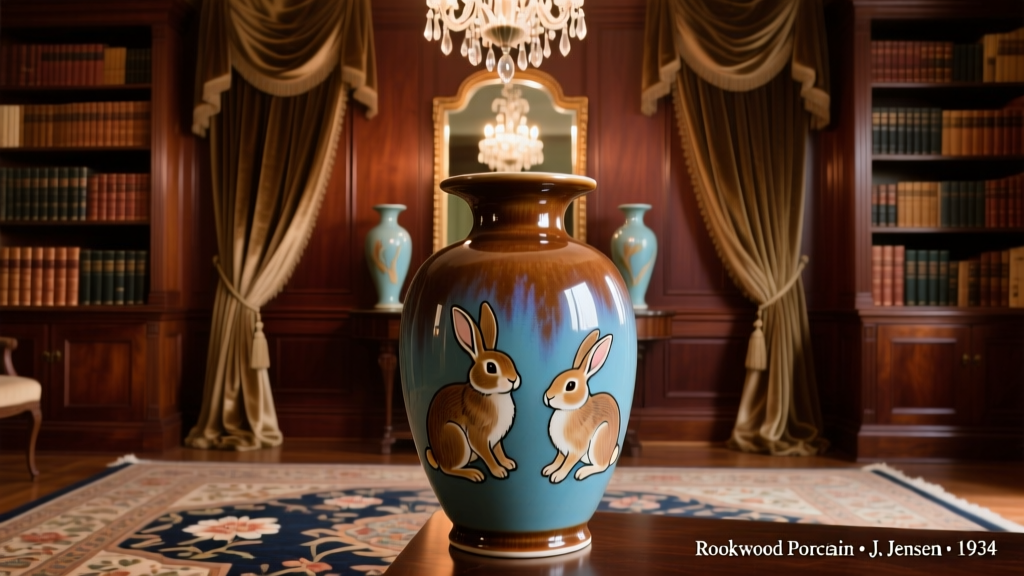
Rookwood Vase: Rabbits on Mottled Brown-and-Blue Ground by J. Jensen, 1934 — A Technical & Historical Appraisal
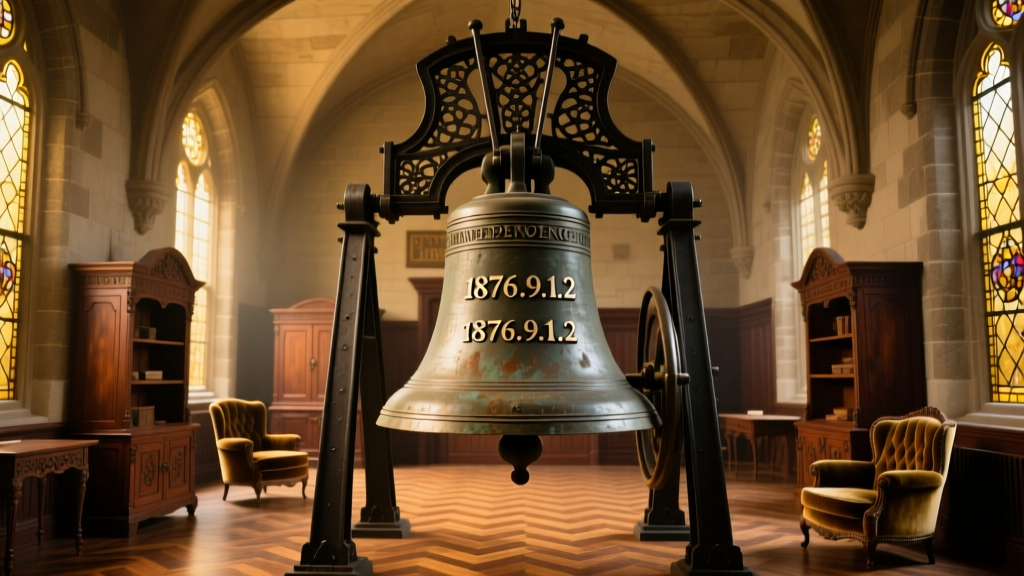
Banks Mechanical Independence Hall Tower Bell Rings: A Cast Iron Legacy from the Centennial Exposition of 1876
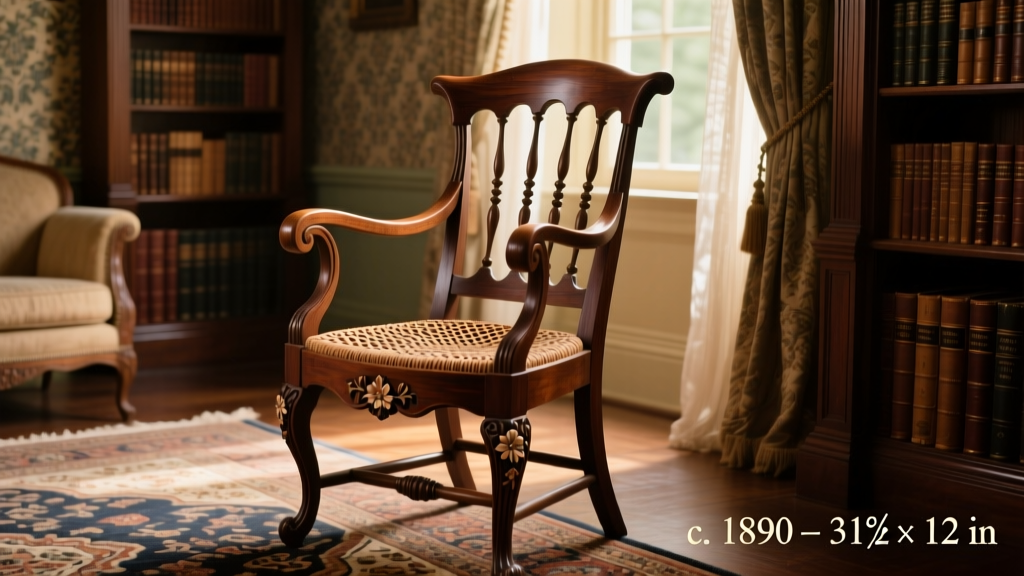
Ladder-Back Child’s Chair, c. 1890: Anatomy, Provenance, and Restoration of a Rush-Seat Example with Outswept Arms
Architectural Antiques: History, Identification, and Restoration Best Practices
Decoding the Schafer & Vater 'Black Bulging Eyes' Pitcher: Authenticity, Provenance, and Restoration Insights
Staffordshire Figurine Couple at Road Sign 'London 30 Miles' — A Detailed Study of an 11-Inch Victorian Narrative Sculpture