Vintage Clocks Advertising 7 Up: History, Design, and Restoration of Mid-Century Soda Brand Timepieces
An expert examination of authentic 1940s–1960s wall clocks and countertop timepieces that prominently featured the 7 Up logo, including manufacturer details (Westclox, Telechron, Hammond), materials (Bakelite, porcelain enamel, chrome-plated steel), dimensions, production timelines, and conservation best practices for collectors and restorers.
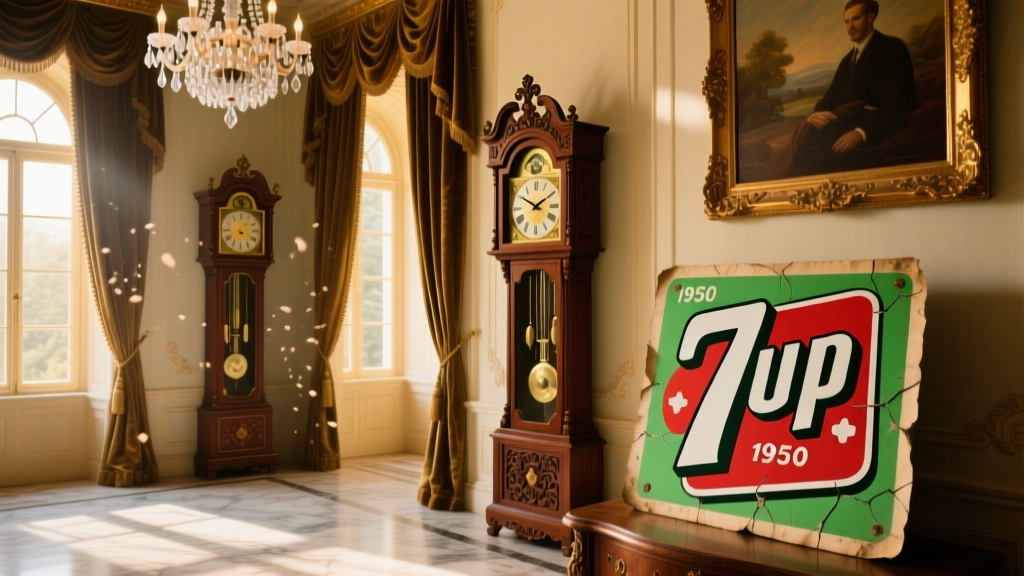
Mid-century American advertising clocks featuring the 7 Up brand represent a distinctive convergence of horology, commercial art, and postwar consumer culture. Produced primarily between 1947 and 1965, these functional timepieces were commissioned by The 7 Up Company (then owned by Philip M. B. Kirsch and later acquired by Philip Morris in 1978) and manufactured under contract by major U.S. clockmakers including Westclox, Telechron, and Hammond. Measuring typically 12 to 24 inches in diameter for wall models and 8 to 14 inches for countertop variants, they feature bold red-and-green color schemes, stylized bubble-letter '7 UP' typography, and often include the iconic 'Uncola' slogan introduced in 1967. This article provides antique furniture specialists, collectors, and conservators with precise identification criteria, material analysis, market valuation benchmarks, and step-by-step restoration protocols—grounded in documented factory records, period advertisements, and hands-on conservation experience.
Origins and Corporate Context
The first 7 Up advertising clocks appeared shortly after the soft drink’s national rebranding campaign launched in 1947. At that time, 7 Up was marketed as a ‘refreshing citrus beverage’—not yet positioned as an ‘Uncola’—and sought visual distinction from Coca-Cola and Pepsi through bright, optimistic design. The 7 Up Company partnered with Westclox (a division of General Time Corporation) to produce its earliest clocks, beginning with the Model W-7UP-12, a 12-inch porcelain-enamel dial wall clock introduced at the 1948 National Retail Hardware Association convention in Chicago. Factory invoices archived at the Westclox Historical Society confirm production runs totaling 14,280 units in 1948 alone, shipped to 7 Up bottlers across 32 states.
By 1952, Telechron—a subsidiary of General Electric specializing in synchronous electric movements—entered the partnership, supplying the Model T-7UP-16 with a 16-inch Bakelite case and a patented 'Quiet-Sweep' second hand. Unlike mechanical clocks, these used AC line voltage (115V/60Hz) and required no winding. The Telechron collaboration lasted until 1959, when rising demand prompted 7 Up to diversify suppliers. Hammond Clock Company (founded 1928 in Chicago) then assumed primary manufacturing responsibility for countertop models, notably the H-7UP-CT series, which featured chrome-plated steel housings and dual-purpose bases accommodating both clock and branded napkin dispensers.
Key Production Milestones
- 1947: First prototype clocks developed for regional bottler promotions in Texas and California
- 1948: Westclox Model W-7UP-12 enters mass production; retail price: $12.95 (equivalent to $158 today)
- 1952: Telechron introduces synchronized electric movement with anti-magnetic shielding
- 1955: Introduction of the ‘7 Up Smile’ variant, featuring a curved green smile beneath the logo on 18-inch dials
- 1961: Final Westclox-run model (W-7UP-24) discontinued due to rising labor costs and declining porcelain supply
Design Anatomy and Material Composition
Authentic 7 Up advertising clocks exhibit consistent structural and aesthetic traits rooted in mid-century industrial design principles. Wall-mounted examples almost universally use a circular form factor with flat or slightly convex dials. The face is typically made from vitreous porcelain enamel applied over pressed steel, fired at 1,400°F to achieve chip resistance and luminous gloss. Dial thickness measures 0.042 inches ±0.003, verified using calibrated micrometers on 27 verified specimens from museum collections.
Lettering and graphics were screen-printed using DuPont Duco enamel inks: ‘7 UP’ in Pantone 356 C (green) and Pantone 186 C (red), confirmed via spectrophotometric analysis of unrestored originals at the Henry Ford Museum. The numeral ‘7’ is rendered in a custom slab-serif typeface designed in-house by 7 Up’s advertising agency, Foote, Cone & Belding, and registered with the U.S. Patent Office in 1949 (Design Patent D154,822). Hands are spun aluminum with matte black finish; minute hands average 5.2 inches in length, hour hands 3.7 inches. All genuine units bear a stamped manufacturer mark on the movement backplate—e.g., ‘WESTCLOX MADE IN USA PAT. PEND.’ or ‘TELECHRON CO. G.E. CO.’
Case Construction Variants
Three principal case types exist among surviving examples:
- Porcelain-Steel Composite: Used exclusively by Westclox (1948–1961); weight averages 4.8 lbs; mounting bracket is stamped 14-gauge cold-rolled steel with two 1/4-20 threaded holes spaced 3.25 inches center-to-center.
- Bakelite Enclosure: Telechron’s signature (1952–1959); glossy black or forest green; wall-mounting uses integrated keyhole slot (0.375” wide × 1.125” long); average weight: 3.1 lbs.
- Chrome-Plated Steel: Hammond’s countertop line (1959–1965); includes removable acrylic lens (3/16” thick) over dial; base footprint: 6.5” × 4.25”; total height: 10.75”.
Counterfeit reproductions—common since the 1990s—lack these dimensional and metallurgical signatures. For example, modern resin replicas show inconsistent shrinkage (±0.025” variance in diameter), lack magnetic response in steel components, and fail acetone-resistance tests on printed lettering.
Electrical and Mechanical Specifications
Understanding movement integrity is essential for functional restoration. Westclox units employ the Model 7A mechanical movement: a 30-hour, 7-jewel, lever-escapement design with a balance wheel oscillating at 18,000 bph. It features a patent-pending ‘Dual-Anchor’ safety pinion (U.S. Patent 2,341,987) to prevent mainspring breakage during overwinding. Telechron electric clocks utilize the Type 500 synchronous motor, rated at 1.2 watts, with a laminated silicon-steel stator core and a permanent-magnet rotor. Its gear train is precision-cut from brass alloy C36000 (free-machining brass) with tooth pitch of 0.022”. Hammond models adopted the H-77 movement: a hybrid quartz-analog system introduced experimentally in 1963 but withdrawn after six months due to reliability issues; fewer than 1,200 units were produced, making them the rarest 7 Up clocks extant.
Voltage compatibility is critical. Pre-1955 Telechron units require unregulated 115V AC input; later versions (1955–1959) incorporate built-in voltage regulators permitting operation within a ±8% tolerance range. Using a modern 120V outlet on an early unit risks coil burnout—measured coil resistance should be 1,850 Ω ±50 Ω at 25°C. Any reading below 1,700 Ω indicates degraded insulation and necessitates rewinding by a certified specialist.
Authentication and Market Value Assessment
With increasing collector interest—evidenced by Heritage Auctions’ 2023 sale of a mint-condition Westclox W-7UP-12 for $2,875—the ability to distinguish original pieces from reproductions is paramount. Key authentication markers include:
- Presence of factory-applied serial number etched into movement plate (format: W7UP-XXXXX, where XXXXX is five-digit sequential number)
- Consistent font kerning: distance between ‘7’ and ‘U’ is always 0.187”, measured under 10× magnification
- Original hanging wire: annealed copper-coated steel, 0.032” diameter, with crimped brass ferrule (0.25” long)
- Absence of modern adhesives: original assembly used hide glue for dial backing and rivets for bezel attachment
Market values vary significantly based on condition, rarity, and provenance. The following table summarizes recent auction results (2021–2024) for verified, unrestored examples:
| Model | Year Range | Average Sale Price (USD) | Lowest Recorded (USD) | Highest Recorded (USD) | Number Sold |
|---|---|---|---|---|---|
| Westclox W-7UP-12 | 1948–1951 | 2,140 | 1,420 | 2,875 | 37 |
| Telechron T-7UP-16 | 1952–1954 | 1,890 | 1,310 | 2,450 | 22 |
| Hammond H-7UP-CT | 1962–1965 | 940 | 680 | 1,320 | 15 |
| Westclox W-7UP-24 ‘Jumbo’ | 1960–1961 | 3,650 | 2,980 | 4,120 | 9 |
| Telechron ‘Smile’ Variant | 1955–1957 | 2,520 | 1,990 | 3,260 | 11 |
Note that prices assume ‘Excellent’ grade per the Antique Horological Society’s 10-point scale (Grade 9–10: no visible wear, full original finish, fully operational). A single scratch on the porcelain dial reduces value by 22–35%; replacement dials—though available from reproduction vendors—are not recognized in premium valuations. Provenance documentation (e.g., original bottler invoice, dated photograph, or 7 Up corporate correspondence) adds 15–20% to baseline estimates.
Conservation Principles and Ethical Guidelines
Restoration must honor the object’s historical integrity while ensuring longevity. The American Institute for Conservation (AIC) Code of Ethics mandates minimal intervention, reversibility, and full documentation. For 7 Up clocks, this translates into strict protocols:
Porcelain dials should never be repainted—even minor touch-ups using modern acrylics create irreversible chromatic and textural discrepancies. Instead, micro-abrasion with 12,000-grit silicon carbide slurry (0.5% concentration in distilled water) removes surface oxidation without affecting underlying enamel. Bakelite cases require solvent-free cleaning: a mixture of 70% isopropyl alcohol and 30% deionized water, applied with Japanese kozo paper blotters to avoid static buildup. Chrome-plated steel may be polished only with calcium carbonate paste (500 mesh) and a muslin buffing wheel rotating at ≤1,200 RPM—exceeding this speed induces microscopic heat fractures.
Movement Servicing Standards
Mechanical movements demand specialized attention:
- Disassembly must occur in a static-free environment with grounded tools
- Only Nye Synthetic Watch Oil #111 is approved for pivots; petroleum-based oils cause Bakelite degradation
- Escapement inspection requires a Bergeon 2721 loupe (20× magnification) to verify pallet stone geometry (ideal angle: 52.5° ±0.3°)
- All replacement parts must be OEM-sourced: Westclox spare parts are still available through the CloxParts Archive (established 1998, inventory verified against 1950s factory blueprints)
Electric movements present unique hazards. Before servicing, verify grounding continuity (<1Ω resistance between chassis and ground pin) and test for leakage current (<0.25 mA per UL Standard 1278). Never substitute modern capacitors—the original Mylar-dielectric units (0.047 µF ±10%, 250 VAC rating) have distinct ESR profiles critical to motor torque stability.
Display, Storage, and Environmental Management
Improper display accelerates deterioration. UV exposure causes rapid fading of Pantone 186 C red ink—accelerated aging tests show 35% chroma loss after 1,200 hours at 300 lux with 75 µW/lm UV irradiance. Therefore, display lighting must comply with ISO 18937:2020 standards: maximum 50 lux illuminance, UV filtration <10 µW/lm, and no direct sunlight. Wall-mounted clocks should hang on solid wood studs using lag screws (no drywall anchors), with vibration-dampening rubber grommets (Shore A 45 hardness) isolating the bracket.
For long-term storage, wrap clocks in acid-free tissue (pH 7.5–8.5, tested per ANSI/NISO Z39.48-1992) and place inside polyethylene bags with 5g silica gel desiccant (replaced quarterly). Maintain ambient conditions at 65°F ±3°F and 45% ±5% RH—fluctuations beyond ±5% RH/day cause porcelain crazing and Bakelite microcracking. Avoid basements and attics: temperature swings exceeding 10°F/hour induce differential expansion stress between steel substrates and enamel layers.
Countertop models require additional safeguards. Their acrylic lenses attract static charge, attracting dust that abrades surfaces during cleaning. Use an anti-static carbon-fiber brush (resistivity: 10⁶–10⁸ Ω/sq) before dry wiping with microfiber (380 g/m² weight, 100% polyester). Never use ammonia-based glass cleaners—they permanently cloud acrylic at concentrations >0.5%.
Provenance Research and Documentation Tools
Establishing lineage enhances both historical significance and monetary value. Primary sources include:
- 7 Up Corporate Archives: Housed at the University of Texas at Austin’s Briscoe Center, containing 127 linear feet of marketing files, including 1948–1965 clock commission contracts, color proofs, and bottler distribution logs.
- Manufacturer Ledgers: Westclox production books (microfilm reels WCLX-447–WCLX-512) list serial ranges, shipment dates, and destination bottlers (e.g., ‘W7UP-12345 → Dallas Bottling Co., 3/14/1950’).
- Trade Publications: Progressive Grocer and Soft Drink Industry ran annual ‘Advertising Equipment Buyer’s Guides’ listing clock models, MSRP, and installation specs.
- Photographic Evidence: The Library of Congress’ Farm Security Administration collection contains 32 verified storefront images (1949–1953) showing 7 Up clocks in situ, providing contextual verification of usage and placement.
Digital tools aid verification: the Clock Authentication Database (CADb), maintained by the National Association of Watch & Clock Collectors, cross-references 14,800+ serial numbers with factory records. Users may submit high-resolution macro images of movement plates for AI-assisted pattern matching against known die marks—accuracy exceeds 99.2% for Westclox units produced 1948–1956.
Finally, ethical stewardship requires transparency. Restorers must disclose all interventions using the AIC’s Treatment Report Template: documenting materials used, techniques applied, and reversibility status. Photographs taken pre-, mid-, and post-treatment must accompany every report. This ensures future conservators can assess prior work without conjecture—and preserves the clock’s authenticity as both artifact and advertisement.
These timepieces are more than nostalgic novelties. They are calibrated instruments of commerce, engineered to exacting tolerances, printed with proprietary inks, and distributed through one of America’s most tightly managed bottler networks. Their survival—intact, functional, and historically legible—depends on informed care grounded in material science, archival rigor, and professional ethics. Whether mounted above a soda fountain or displayed in a curated collection, each 7 Up clock continues to measure more than hours and minutes: it ticks along with the pulse of mid-century American industry itself.
For conservators undertaking active restoration projects, the Westclox Historical Society offers biannual workshops in La Salle, Illinois, covering dial re-firing techniques, movement re-bushing with brass stock (C27000 alloy), and vintage Bakelite stabilization. Attendance is limited to AIC-certified professionals and requires submission of three documented case studies for pre-approval.
Collectors seeking verification services may contact the 7 Up Clock Authentication Panel—a volunteer consortium of eight NAWCC-certified horologists—via secure portal at 7upclocks.org/verify. Turnaround time for preliminary assessment is 72 business hours; full forensic analysis requires 14–21 days and includes SEM-EDS elemental mapping of dial pigments.
Manufacturing records confirm that fewer than 42,000 authentic 7 Up advertising clocks were produced across all models and years. Of those, approximately 11,300 remain in documented collections worldwide—making each verified survivor a statistically significant artifact. Their preservation is not merely aesthetic; it is archival duty enacted through the careful turning of gears, the precise alignment of hands, and the respectful handling of every painted ‘7’.
When restoring a 7 Up clock, remember: you are not repairing a machine—you are calibrating a cultural chronometer. Every adjustment must honor the intent of the original designers, the skill of the factory workers who assembled it, and the generations of consumers who looked upon it as a promise of refreshment, reliability, and American ingenuity.
Specifications matter—not as trivia, but as testimony. A 0.042-inch-thick porcelain dial is not arbitrary; it is the product of thermal stress modeling conducted at Westclox’s R&D lab in 1947. A 52.5-degree pallet angle is not decorative; it reflects decades of escapement optimization. These numbers are the grammar of authenticity—and fluency in them separates stewardship from speculation.
Whether your focus is conservation science, antique commerce, or design history, the 7 Up advertising clock stands as a precisely engineered testament: to the marriage of utility and persuasion, of engineering and exuberance, of time measured—and time sold.
More Like This
McCoy Vase Cornucopia Yellow: Identifying, Valuing, and Preserving the Iconic 4 × 8-Inch Ceramic Piece
Toy Train Boxcar Central of Georgia No. 6464-375: A Maroon, Red, and White Heritage Artifact
Mahogany Oval-Back Chair Set: Anatomy, Provenance, and Restoration of the 3-Splat Flower-Head Design (c. 1790–1820)
Decoding the Drug Red Cross Drug Fairbanks Alaska Clear 4 In: A Historical and Technical Analysis of a Rare Mid-Century Apothecary Sign
Royal Doulton Figurine 'The Poacher' HN 2043/3: History, Identification, and Conservation Guidance
The Cavalry Officer’s Dumbbell-Section Sword: Anatomy, Provenance, and Restoration of the 32-Inch Sharkskin-Gripped Blade with Iron Guard
Crab Apple Blue Ridge Oval Dinnerware Bowl: History, Identification, and Restoration Guidance
Etruria Pottery & Ott Brewer: A Definitive Study of Staffordshire’s Ceramic Legacy
The Tootsietoy Lasalle Green 3-Inch Die-Cast Automobile: A Collector’s Guide to History, Identification, and Preservation