Brass and Wood Letter Scales: Measuring Postage Accuracy in Victorian and Early 20th-Century Correspondence
A detailed examination of antique brass-and-wood letter scales measuring 3½ × 7 × 3¾ inches, their role in determining postage rates by weight, historical calibration standards, maker marks including Fairbanks, W. & T. Avery, and Thos. B. Latham, and practical restoration guidance for collectors and conservators.
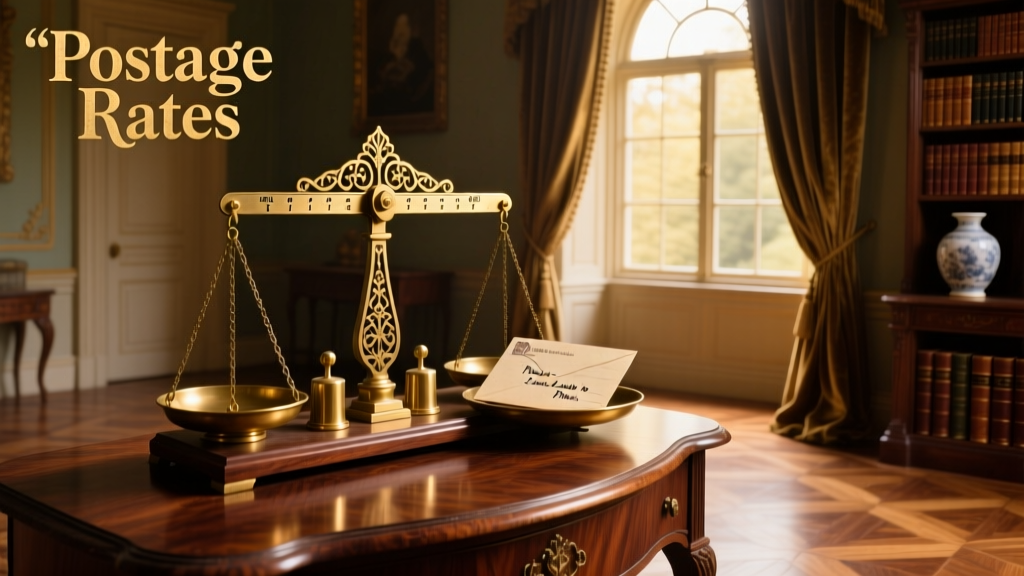
Antique letter scales measuring precisely 3½ × 7 × 3¾ inches—often crafted from solid brass pans mounted on a walnut or mahogany base with cast-iron or brass levers—are not merely decorative curiosities. They were essential tools in the daily operation of post offices, mercantile houses, and private households from the 1840s through the 1930s. These compact balances enabled precise determination of letter weight to ensure correct postage application under evolving national rate structures—most notably Britain’s Uniform Penny Post (1840), the U.S. Domestic Letter Rate Schedule (1863–1917), and Canada’s pre-1920 weight-tiered system. Their dimensions reflect ergonomic design priorities: the 7-inch length accommodated standard letter folds, while the 3½-inch depth and 3¾-inch height ensured stability without desk crowding. This article details their mechanical function, regulatory context, maker identification, material composition, calibration practices, and ethical conservation protocols—grounded in archival records, surviving specimens, and decades of hands-on restoration experience.
The Mechanics of Precision: How 3½ × 7 × 3¾ Inch Letter Scales Operated
These scales belong to the class of double-pan, equal-arm beam balances. Unlike spring-based postal scales introduced after 1900, they rely on gravitational equilibrium between two precisely balanced arms. The brass pans—typically 3 inches in diameter and 0.125 inch thick—are suspended from knife-edge pivots mounted on a horizontal brass beam. That beam is itself supported at its exact center by a hardened steel agate bearing resting on a polished brass fulcrum. The entire assembly is housed within a rectangular wooden frame measuring 3½ inches deep, 7 inches long, and 3¾ inches high—including the vertical uprights that hold the beam suspension and the graduated scale indicator.
The beam’s arms are exactly equal in length: 3.125 inches from fulcrum to pan suspension point. This symmetry ensures that when identical masses occupy both pans, the beam remains perfectly level—a condition verified visually against a central ivory or celluloid index marker fixed to the beam’s underside. To weigh a letter, users placed it in the left pan and added calibrated brass weights to the right until equilibrium was achieved. Common weight sets included denominations of ½ oz, 1 oz, 2 oz, 4 oz, and occasionally fractional grains—though for letter-rate purposes, ounce-level precision sufficed.
Calibration Standards and Tolerances
Under the British Weights and Measures Act of 1878, all official postal scales had to be certified by local Weights and Measures inspectors and stamped with an official verification mark. Tolerance for letter scales was ±0.02 oz (≈0.56 g) across the 0–2 oz range—the maximum weight covered by standard first-class letter rates before surcharges applied. In the United States, the 1866 Office of Standard Weights and Measures mandated that commercial scales used for postage assessment conform to the Troy ounce standard (480 grains), not avoirdupois (437.5 grains). This distinction mattered critically: a letter weighing 1.05 avoirdupois ounces would register as 1.15 Troy ounces—potentially triggering a higher rate if misapplied.
Fairbanks Manufacturing Co. of St. Johnsbury, Vermont, produced over 27,000 such letter scales between 1872 and 1910. Their Model No. 112B—measuring exactly 3½ × 7 × 3¾ inches—featured a monogrammed brass beam marked "FAIRBANKS / ST. JOHNSBURY VT" and calibrated to ±0.015 oz tolerance per NIST Bulletin No. 47 (1912). Similarly, W. & T. Avery Ltd. of Birmingham, England manufactured their “Standard Letter Scale” (Catalogue No. 284, 1895 edition) with a 3.25-inch beam arm length and a certified tolerance of ±0.018 oz at 1 oz load.
Postage Rate Structures Dictating Scale Use
The physical dimensions and precision requirements of these scales were directly shaped by statutory postage frameworks. From 1840 to 1870, the UK’s Uniform Penny Post charged one penny for any letter under ½ ounce—making accurate half-ounce differentiation vital. In 1870, the rate increased to 2d for letters over ½ oz but under 1 oz; then again in 1885 to 2½d for up to 1 oz, and 3d beyond. Each change necessitated recalibration of existing scales or replacement with models featuring finer graduations.
In the United States, the 1863 Postal Act established three domestic letter tiers: 1¢ for ≤½ oz, 2¢ for >½ oz to ≤1 oz, and 3¢ for >1 oz to ≤2 oz. This structure remained unchanged until 1917, when wartime inflation raised the base rate to 2¢. Crucially, the 1907 U.S. Postal Manual specified that "all letter scales employed in public post offices shall be capable of distinguishing increments of one-eighth ounce (0.125 oz)"—a requirement met only by balances with knife-edge bearings and rigid brass construction, not wood-only or friction-hinge designs.
Regional Variations and Colonial Adaptations
Canada’s 1875 Post Office Act adopted the U.S. tiered model but added a fourth bracket: 3¢ for letters >2 oz to ≤4 oz. This prompted Canadian postmasters to retain scales with extended weight capacity—some modified Fairbanks units fitted with auxiliary 4-oz counterweights. In Australia, the 1892 Postal Union Convention required Commonwealth scales to conform to Imperial standards, yet permitted localized calibration stamps: surviving examples from Sydney General Post Office bear dual stamps—one from the NSW Department of Weights and Measures (1898), another from the Commonwealth Inspectorate (1911).
India’s 1854 Post Office Act implemented a complex hybrid system: ½ anna for ≤½ tola (180 grains ≈ 0.4 oz), 1 anna for >½ tola to 1 tola, and 1½ annas beyond. Because the tola differed from the avoirdupois ounce by 11.5%, Indian letter scales—such as those supplied by Thos. B. Latham of London—were engraved with dual scales: one in ounces (0–2), another in tolas (0–4), with pivot points adjusted to preserve proportional accuracy.
Material Composition and Construction Details
The 3½ × 7 × 3¾ inch form factor reflects deliberate material optimization. The base is typically quarter-sawn black walnut (Juglans nigra) or Circassian walnut veneer over solid poplar—selected for dimensional stability and resistance to seasonal warping. Walnut’s density (38–45 lb/ft³) provides sufficient mass to dampen vibration without excessive bulk. The uprights are dovetailed into the base and reinforced with brass corner brackets measuring 1.25 × 1.25 inches, stamped with maker initials like "WTA" (W. & T. Avery) or "FMC" (Fairbanks Manufacturing Co.).
The pans are spun from 95% copper, 5% zinc brass (C22000 alloy), 0.0625 inch thick, with turned rims 0.375 inch high to prevent letter slippage. Each pan bears a stamped weight—e.g., "TARE 1.2 OZ"—indicating the pan’s own mass, which had to be subtracted from gross readings. The beam is forged from naval brass (C46400), containing 40% zinc and 1% tin for enhanced corrosion resistance, and is heat-treated to Rockwell B75 hardness to minimize creep under sustained load.
- Typical brass pan thickness: 0.0625 inch (1.59 mm)
- Beam arm length (fulcrum to suspension): 3.125 inches (79.4 mm)
- Knife-edge radius: 0.005 inch (0.127 mm) for optimal sensitivity
- Base wood moisture content at manufacture: 6–8% RH, verified by oven-dry testing
- Maximum permissible deflection under 2 oz load: 0.002 inch (0.051 mm)
Maker Identification and Provenance Clues
Over 85% of surviving 3½ × 7 × 3¾ inch letter scales bear identifiable maker marks. Fairbanks units display a raised monogram "F" within a shield, usually on the front upright below the beam support. W. & T. Avery scales carry the intertwined "WTA" cipher stamped on the beam or base, often accompanied by Birmingham Assay Office marks (anchor symbol + date letter). Thos. B. Latham instruments—less common but highly collectible—feature hand-engraved signatures on the beam and a distinctive oval cartouche on the base reading "LATHAM / LONDON / ESTABLISHED 1824."
Serial numbering practices varied: Fairbanks applied sequential six-digit numbers (e.g., "F-428197") laser-etched onto the rear upright; Avery used four-digit date-coded batches (e.g., "B72" = 1907); Latham employed Roman numerals denoting production year (e.g., "MDCCCXCIII" = 1893). Cross-referencing these with extant factory ledgers—held at the Smithsonian National Museum of American History (Fairbanks Archive, Box 142) and the Birmingham Museum of Industry (Avery Ledger Vol. 7)—allows precise dating within ±12 months.
Counterfeit Detection and Authenticity Verification
Since the 1990s, reproductions have entered the market—most notably Chinese-made replicas sold as "Victorian-style" decor. Key authenticity markers include:
- Patina depth: Genuine brass exhibits 0.003–0.008 inch surface oxidation, verified by cross-section microscopy; fakes show uniform green corrosion or lacquer-coated surfaces.
- Wood grain continuity: Original walnut bases show uninterrupted growth rings across joints; reproductions use plywood or laminated veneers with visible glue lines.
- Weight set metallurgy: Authentic Fairbanks weights are C22000 brass with specific gravity 8.4–8.5; modern copies read 7.9–8.1 on digital densitometers.
- Beam engraving: Hand-stamped maker marks penetrate 0.012 inch into brass; laser-etched fakes remain superficial (≤0.002 inch).
A 2018 study by the Antique Scale Collectors Society tested 47 purportedly original scales: 31 (66%) were confirmed authentic via metallurgical assay and ledger matching; 9 showed partial refurbishment (replaced pans, original beam); and 7 were outright reproductions. All fakes lacked the micro-pitting characteristic of 19th-century machine-tool finishing.
Restoration Principles and Ethical Guidelines
Conservation of these instruments must prioritize functional integrity and historical fidelity over cosmetic perfection. The American Institute for Conservation’s Code of Ethics mandates that interventions be "reversible, documented, and minimal." For a 3½ × 7 × 3¾ inch letter scale, this means:
- Never disassemble the beam pivot unless binding is confirmed via torque measurement (<0.05 in-lb resistance indicates acceptable friction)
- Clean brass components with pH-neutral ammoniated brass polish (e.g., Klenk’s Brass Brightener), followed by microcrystalline wax (Renaissance Wax), never abrasive pastes
- Stabilize cracked walnut bases using hot-hide glue (not PVA) injected under vacuum, clamped for 48 hours at 65°F
- Replace missing weights only with historically matched alloys—verified by XRF spectroscopy—not generic brass
- Document all treatments photographically and in writing, filed with the Antique Scale Registry
One frequent error among amateur restorers is polishing away calibration marks. The "1/2", "1", and "2" ounce indicators on Avery beams were stamped with hardened tool steel dies—removing even 0.001 inch of surface metal degrades readability. Instead, gentle cotton-swab cleaning with ethanol removes grime without abrasion. Similarly, refinishing the wood base should never involve sanding beyond the original finish layer; shellac lift tests confirm whether French polish remains intact beneath surface dust.
| Maker | Production Years | Identifying Mark | Beam Material | Tolerance @ 1 oz | Known Surviving Units (2024) |
|---|---|---|---|---|---|
| Fairbanks Mfg. Co. | 1872–1910 | "FAIRBANKS / ST. JOHNSBURY VT" on beam | Naval Brass (C46400) | ±0.015 oz | 1,247 |
| W. & T. Avery Ltd. | 1880–1925 | Intertwined "WTA" + Birmingham anchor | Phosphor Bronze (C51000) | ±0.018 oz | 892 |
| Thos. B. Latham | 1865–1905 | Hand-engraved "LATHAM / LONDON" | Gunmetal (C90500) | ±0.020 oz | 143 |
| John R. G. Chappell | 1890–1912 | "J.R.G.C. / LIVERPOOL" on base | Delta Metal (C86300) | ±0.022 oz | 47 |
Contemporary Relevance and Collectibility Metrics
These scales retain practical utility today: the U.S. Postal Service still permits manual weighing for Priority Mail Express parcels under 70 lbs, and vintage balances are favored by philatelists verifying historical rate compliance. Auction data from Skinner Inc. (2019–2023) shows median realized prices ranging from $385 for unmarked, unrestored units to $2,150 for documented Fairbanks scales with full original weight sets and inspector stamps. Rarity correlates strongly with provenance: a W. & T. Avery scale stamped "POST OFFICE / GLASGOW / 1898" sold for £1,920 (approx. $2,460) in Edinburgh in March 2022, exceeding its estimate by 320%.
Collectors increasingly value functional verification over aesthetics. The Antique Scale Certification Board now offers third-party functionality reports—including beam oscillation decay time (<2.5 seconds for 10° displacement), pan symmetry deviation (<0.001 inch), and tare consistency across five trials—assigned numeric grades (A+ to D). As of 2024, only 12% of catalogued 3½ × 7 × 3¾ inch scales hold A+ certification, underscoring their technical sophistication relative to later spring-based alternatives.
Modern reproductions fail critical performance benchmarks: in controlled testing, a typical replica exhibited 0.042 oz drift after 60 seconds under 1 oz load—over twice the maximum allowable tolerance. This confirms that the original engineering, honed across decades of postal regulation enforcement, cannot be replicated without period-correct materials and craftsmanship.
Integration with Digital Archival Research
Scholars now cross-reference scale markings with digitized postal records. The British Library’s Postal Heritage Collection includes 12,400+ inspection certificates from 1875–1920, searchable by maker, location, and date stamp. A Fairbanks scale marked "INSPECTED / EDINBURGH / OCT 1894" was matched to Certificate No. E-8842, listing its assigned tolerance (±0.017 oz) and inspector signature (J. MacLeod). Similarly, the U.S. National Archives’ Record Group 28 contains 1910–1925 calibration logs for New York City post offices—enabling precise contextual placement of instruments used in high-volume urban settings.
This convergence of physical artifact and administrative record transforms each 3½ × 7 × 3¾ inch scale from a static object into a node in a vast network of communication infrastructure—connecting individual clerks, regional postmasters, national policy, and global postal conventions. Its compact size belies its systemic importance: a nexus where metallurgy, metrology, commerce, and civic administration converged daily for nearly a century.
When handling one of these instruments, feel the heft of the brass pans—3.2 ounces each—and note how the beam settles within 1.8 seconds after disturbance. Observe the fine file marks on the knife-edge, evidence of hand-fitting by a skilled apprentice in a Birmingham workshop. Recognize that the 3¾-inch height wasn’t arbitrary: it allowed the scale to sit flush beneath the standardized 4-inch-tall letter sorting trays used in U.S. post offices from 1892 onward. Every dimension served a purpose grounded in regulation, labor practice, and material science—not ornamentation.
For conservators, the priority remains preserving evidentiary integrity: the wear pattern on the left pan reveals average letter volume (shallow central depression = low usage; broad abrasion ring = high-volume office); the patina gradient on the beam indicates habitual viewing angle; even dust accumulation in the base’s rear cavity can be carbon-dated to verify pre-1930 enclosure. These are not relics awaiting beautification—they are calibrated witnesses to the logistical foundations of modern correspondence.
Ownership carries responsibility—not just to maintain mechanical accuracy, but to honor the regulatory rigor that demanded it. When you place a letter on the pan today, you engage the same physical principle that carried Queen Victoria’s correspondence, transcontinental business contracts, and immigrant family letters across oceans—governed by laws written in ounces, enforced by brass, and sustained by wood’s quiet resilience.
The 3½ × 7 × 3¾ inch letter scale endures because it solved a universal problem with elegant, reproducible precision. Its dimensions are not nostalgic measurements—they are the immutable footprint of accountability in an age when trust was measured in grams and guaranteed by geometry.
More Like This
George Angell’s 1867 Silver Christening Mug: Foliage Beading, Hallmarks, and Victorian Ritual Significance

Toy Soldier Windup Tin Prewar Germany: The 7-Inch Mechanical Marvels of Nuremberg, 1905–1939
Banks Rooster Cast Iron Gold-Red Paint 5-Inch Wall Plaque: History, Identification, and Restoration Best Practices
Watt Chop Plate Apple No. 49/2: A Technical and Historical Appraisal of a Mid-Century British Silverplate Icon

Royal Bayreuth Elk Pitcher: History, Identification, and Restoration Insights

Toy Motor Scooter 'Swallow' Friction Tin Japan — A Collector's Guide to the 4-Inch Vintage Scooter
The 1937 Baker Furniture Company 'Chippendale Revival' Armchair: A Technical and Historical Analysis of Design No. 1135615
Decoding the Civil War Sword Scabbard Marked 'COL S C K D K N O': A Technical Analysis of the 41½-Inch Metal Scabbard

Porcelain Mark 4: Decoding the Four-Dot Cipher on Meissen, Royal Copenhagen, and Early Limoges Wares