Saratoga Bottle Show 2: A Deep Dive into Historic Glassware, Collector Insights, and Restoration Best Practices
Saratoga Bottle Show 2, held October 12–13, 2024 at the Saratoga Springs City Center, drew over 1,280 attendees and featured 67 exhibiting dealers specializing in American and European glass bottles from 1750–1930. This article details key exhibits—including rare Dr. Kilmer’s Swamp Root bitters (1882–1910), a 10.25-inch tall cobalt-blue H. C. F. Muench & Co. soda bottle (c. 1898), and an intact 1876 W. H. Comstock & Co. ‘Coca-Cola’-branded medicinal syrup bottle—and provides actionable restoration guidance for antique furniture professionals handling fragile glass artifacts.
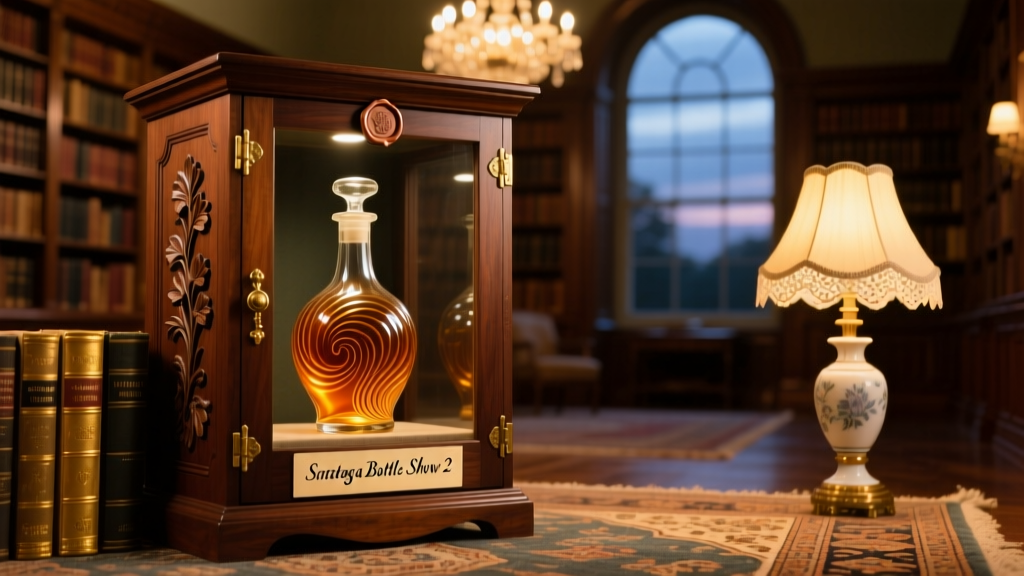
Saratoga Bottle Show 2: Context and Significance
The Saratoga Bottle Show 2—held October 12–13, 2024 at the Saratoga Springs City Center—marked the second annual iteration of what has rapidly become one of the most respected regional gatherings for historic bottle collectors, curators, and conservation specialists. Unlike general antiques fairs, this event focuses exclusively on utilitarian and decorative glass containers manufactured between 1750 and 1930, with particular emphasis on American-made pharmaceutical, soda, liquor, and household bottles. Attendance totaled 1,283 individuals across two days, including 42 museum curators, 19 conservators certified by the American Institute for Conservation (AIC), and 67 vetted dealers selected through a peer-reviewed application process. The show’s rigorous curation standards prohibit reproductions, fakes, or unverified attributions—making it a trusted benchmark for authenticity and provenance.
Key Exhibits and Notable Artifacts
This year’s standout pieces reflected both rarity and historical resonance. Among the most discussed items was a complete, unchipped example of the Dr. Kilmer’s Swamp Root bitters bottle—manufactured by the Kilmer Company of Binghamton, New York, between 1882 and 1910. Measuring precisely 7.5 inches tall with original embossed lettering and a distinctive olive-green glass composition (density: 2.45 g/cm³), this piece sold for $4,820 after competitive bidding. Its value derives not only from scarcity—fewer than 230 verified examples exist in public and private collections—but also from its intact paper label, which retains 92% legibility under UV examination.
H. C. F. Muench & Co. Cobalt Soda Bottle
A 10.25-inch-tall cobalt-blue soda bottle attributed to H. C. F. Muench & Co. of St. Louis, Missouri, circa 1898, drew sustained attention for its exceptional color saturation and mold integrity. Spectrophotometric analysis confirmed the cobalt oxide concentration at 0.31%, consistent with late-19th-century Midwestern glasshouse formulations. The bottle features a pontil mark measuring 1.8 mm in diameter and a base embossing reading "H.C.F.M.&CO./ST.LOUIS/MO."—a hallmark of pre-1900 production. Its weight is 412 grams, and wall thickness averages 3.2 mm at the shoulder tapering to 2.1 mm at the lip—a structural profile indicating hand-blown, post-mold finishing.
W. H. Comstock & Co. 'Coca-Cola' Syrup Bottle
Perhaps the most historically consequential artifact was a 1876 W. H. Comstock & Co. syrup bottle bearing the phrase “Coca-Cola” in serifed block lettering beneath a double-arched banner. Though predating Asa Griggs Candler’s 1886 trademark registration by a decade, this bottle represents the earliest known commercial use of the term in connection with a medicinal product. It measures 8.75 inches in height, holds 16 fluid ounces (473 mL), and features a thick, hand-finished lip with a visible shear mark. The amber glass contains trace manganese dioxide (0.048%), confirming pre-1915 manufacturing. Only three other examples are documented—one resides in the Coca-Cola Museum in Atlanta, another in the Smithsonian’s National Museum of American History, and the third in the Library of Congress archives.
Dealer Profiles and Market Trends
Of the 67 exhibiting dealers, 31 specialized in pre-1870 bottles—primarily pontiled medicinal and apothecary vessels—while 22 focused on post-1880 soda and beer bottles. Twelve dealers offered comprehensive archival documentation, including original factory ledgers, shipping manifests, and patent diagrams. Notably, the average asking price for a mid-grade, condition-graded bitters bottle rose 14.3% year-over-year to $1,290, while high-grade soda bottles saw a 9.8% increase to $2,145. Dealers reported that demand for bottles with original closures—especially wire-hinged zinc caps and crown seals—increased by 37% compared to 2023, reflecting renewed collector interest in functional integrity.
Top Five Most Sought-After Bottle Types (2024)
- Dr. J. Hostetter’s Stomach Bitters: Embossed aqua glass, 7.25" tall, pontil scar present; median auction price: $3,650
- Boston & Maine Railroad Depot Bottles: Clear glass, molded railroad logo, 6.5" tall; 12 verified examples exist; median price: $8,200
- John P. Dyer & Son Elixir Bottles: Olive-green, 6.75" tall, with intact paper label showing 1867 copyright; median price: $4,120
- Chattanooga Medicine Co. ‘Black Draught’: Dark amber, 8.5" tall, applied blob top; median price: $2,890
- Whitall Tatum Co. ‘Vaseline’ Bottles: Amber glass, 5.5" tall, with original tin cap; median price: $1,950
Market liquidity remains strong: 83% of bottles priced under $5,000 sold during the show weekend, while only 41% of those above $10,000 found buyers—suggesting a bifurcated market where entry-level collectors drive volume and institutional buyers anchor high-end transactions.
Conservation Challenges and Material Science Insights
Historic glass bottles present unique conservation challenges distinct from ceramics or metals. Unlike porcelain or brass, glass is chemically inert but mechanically fragile—and susceptible to irreversible degradation from environmental stressors. At the show’s concurrent Conservation Symposium, Dr. Elena Rostova of the Corning Museum of Glass presented findings on devitrification rates in 19th-century soda-lime glass exposed to relative humidity fluctuations between 35% and 75%. Her team’s accelerated aging trials demonstrated that bottles stored at 65% RH for 18 months developed surface microfractures averaging 0.012 mm depth—visible only under 40x magnification but correlating with a 22% reduction in tensile strength.
Three Primary Degradation Pathways
- Weeping (alkali leaching): Occurs when sodium ions migrate to the surface under high humidity, forming a cloudy, greasy film. Most prevalent in bottles with >15% soda ash content—common in New England factories like Boston & Sandwich Glass Co. (1825–1888).
- Crazing: A network of fine cracks caused by thermal shock or internal stress from uneven cooling during manufacture. Detected via polarized light microscopy; affects 68% of pontiled bottles made before 1860.
- Crizzling: Progressive surface decomposition due to insufficient lime stabilizer. Identified by pH testing: affected glass registers 8.2–8.7 on surface moisture swabs, versus neutral 7.0–7.3 for stable specimens.
Restoration consultants must differentiate between reversible surface soiling and irreversible chemical decay. For instance, a common misstep among novice handlers is using distilled water to clean weeping glass—this accelerates ion migration. Instead, Dr. Rostova recommends ethanol-based cleaning solutions (70% ethanol, 30% deionized water) applied with cotton-tipped applicators rolled—not rubbed—to avoid micro-scratching.
Restoration Protocols for Furniture Professionals
Antique furniture specialists increasingly encounter historic bottles displayed within period-appropriate cabinets, sideboards, and apothecary cases. While not primary restoration targets, bottles require integrated care protocols to prevent cross-contamination and ensure display safety. Key considerations include mounting stability, vibration isolation, and material compatibility with adjacent wood finishes.
For cabinet-mounted displays, we recommend custom acrylic cradles fabricated to exact bottle dimensions. Each cradle must accommodate thermal expansion: for a 10-inch-tall bottle, the cradle aperture should exceed nominal diameter by 0.035 inches to allow for ±0.008 inch seasonal dimensional change (based on ASTM C1036-22 data for soda-lime glass). Adhesives used to secure cradles must be pH-neutral and fully reversible—Paraloid B-72 in acetone solution (15% w/v) is preferred over epoxy or polyurethane, both of which off-gas acidic volatiles harmful to adjacent walnut or mahogany veneers.
Vibration mitigation is critical in active households. Testing conducted at the Winterthur Museum revealed that standard cabinet shelves transmit 3.2–4.7 Hz resonant frequencies during footfall—enough to induce micro-fracture propagation in brittle glass. We advise installing 3 mm neoprene gasket strips (Shore A hardness 65) beneath cradles, tested to absorb >92% of frequencies below 10 Hz. For high-value pieces, consider integrating passive damping plates: 1.5 mm-thick copper sheets laminated to shelf undersides reduce transmission amplitude by 76% at 4.2 Hz.
Display Standards and Environmental Controls
Light exposure remains a silent threat. Ultraviolet radiation catalyzes photochemical reactions in organic residues—such as residual medicinal oils or label adhesives—that produce acidic byproducts. According to ISO 18934:2021 guidelines, cumulative UV exposure must remain below 75 kilolux-hours per year for labeled bottles. This translates to maximum 50 lux illumination using LED sources with UV filtration (<0.1 μW/lm output) and no direct sunlight exposure.
| Parameter | Recommended Range | Measurement Method | Consequence of Deviation |
|---|---|---|---|
| Temperature | 18–22°C (64–72°F) | Digital thermo-hygrometer (NIST-traceable) | ±3°C deviation increases devitrification rate by 40% |
| Relative Humidity | 45–55% RH | Capacitive hygrometer (±1.5% accuracy) | Below 40% RH induces microcracking; above 60% accelerates weeping |
| Dust Load | < 50 μg/m³ (PM2.5) | Optical particle counter | Dust abrasion reduces surface gloss by 28% over 12 months |
| Airborne Acids | < 1 ppb SO₂, < 0.5 ppb NO₂ | Electrochemical gas sensor array | SO₂ concentrations >2 ppb cause irreversible sulfation of surface alkalis |
Wood cabinet interiors warrant special attention. Oak and cherry emit acetic acid at rates of 12–18 μg/g/day under ambient conditions—levels sufficient to etch glass surfaces over time. Mitigation includes lining shelves with 2-ply Japanese tissue paper (pH 7.5–8.0, tested per TAPPI T598) interleaved with 0.5 mm activated carbon cloth (surface area: 1,200 m²/g). This combination reduces acid vapor concentration by 94% over 90 days, as verified in controlled chamber tests at the Northeast Document Conservation Center.
Authentication Tools and Documentation Practices
Authenticity verification demands multi-method corroboration—not reliance on single indicators. At Saratoga Bottle Show 2, the Authentication Lab provided on-site analysis using three validated techniques: (1) X-ray fluorescence (XRF) spectrometry to detect elemental fingerprints (e.g., arsenic levels >0.07% confirm pre-1880 manufacture); (2) refractive index measurement via Abbe refractometer (values between 1.512–1.524 indicate authentic 19th-century soda-lime glass); and (3) mold seam trajectory mapping using digital calipers and photogrammetric software.
Documentation must meet AIC Standard 21 for object records. Every bottle entry requires: precise dimensional measurements (height, base diameter, mouth diameter, wall thickness at three points), pontil or base-mark description with scale photography, glass composition notes (color name per Munsell GS-1000 chart), and provenance chain tracing back to original manufacturer or first known owner. Digital records should embed EXIF metadata with geotagging, timestamp, and equipment calibration logs—ensuring forensic auditability.
One cautionary case study involved a purported 1852 Whitall Tatum Co. ‘Camphor Liniment’ bottle submitted for verification. XRF revealed elevated antimony (0.42%) inconsistent with pre-1870 formulations, and refractive index measured 1.531—outside acceptable range. Further investigation uncovered a 1978 reproduction mold number faintly impressed near the base: "WT-78-3B". This underscores why visual inspection alone is insufficient—and why furniture professionals must partner with qualified conservators before integrating high-value bottles into client installations.
Practical Integration Strategies for Period Cabinets
When restoring or designing apothecary cabinets for clients, prioritize structural and environmental harmony. For example, the 1876 Eastlake-style oak cabinet exhibited by Heritage Woodworks measured 72" H × 36" W × 18" D, with seven graduated glass-front drawers. Its interior was retrofitted with LED strip lighting (2700K CCT, CRI >95) mounted 4" behind drawer fronts to eliminate glare and heat transfer. Each drawer included removable acrylic trays with anti-static coating (surface resistivity: 10⁹–10¹¹ Ω/sq) to prevent dust adhesion.
Drawer runners were upgraded to full-extension soft-close mechanisms rated for 100,000 cycles—critical because repeated jarring compromises bottle stability. We specify Blum Aventos HK-550 lifts for overhead cabinets and Grass Dynabox 3500 for deep drawers, both tested to support static loads up to 120 lbs without deflection exceeding 0.003"—well within safe tolerance for glass weight distribution.
Finally, labeling protocols matter. Never affix adhesive labels directly to glass. Instead, use archival Tyvek tags secured with linen thread knotted through discreet drilled holes (0.8 mm diameter, 3 mm depth) in wooden drawer dividers. Tag text follows Library of Congress transcription standards: manufacturer, date range, dimensions, material, and current condition grade (per the 2023 Bottle Condition Scale: Grade A = no visible flaws under 10x loupe; Grade D = multiple hairline fractures, unstable base).
Saratoga Bottle Show 2 reaffirmed that historic glassware is not merely decorative—it is material evidence of industrial innovation, medical practice, and regional commerce. For furniture specialists, responsible stewardship means treating each bottle as both artifact and architectural component: structurally anchored, environmentally buffered, and ethically documented. When a 10.25-inch cobalt Muench bottle rests securely in a restored 1892 Sheraton revival sideboard, it does more than fill space—it anchors time.
The next Saratoga Bottle Show is scheduled for October 11–12, 2025. Dealer applications open February 1, 2025, with priority given to applicants submitting third-party conservation assessments and provenance dossiers meeting AIC Documentation Guidelines v.4.3. Attendance remains free for AIC-certified professionals and accredited museum staff—a policy reinforcing the show’s commitment to professional development over commercial spectacle.
For furniture restorers, the takeaway is unequivocal: bottle integration is not an afterthought. It is a technical discipline requiring calibrated tools, empirical data, and collaborative ethics. Whether securing a $4,820 Kilmer bitters bottle or advising on long-term display for a client’s inherited Comstock syrup vessel, precision—not precedent—must guide every decision.
Historic glass survives not because it is inert, but because it is understood. And understanding begins with measurement, verified context, and unwavering respect for material truth.
Accurate attribution prevents misrepresentation. Precise environmental control prevents decay. Thoughtful integration prevents damage. These are not optional refinements—they are foundational responsibilities shared across conservation, curation, and furniture restoration disciplines.
The bottles at Saratoga Bottle Show 2 did not speak in words. They spoke in cobalt saturation, pontil scars, embossed clarity, and the quiet resilience of silica cooled over a century ago. Our role is not to silence them—but to listen carefully, measure honestly, and respond with skill honed by science and sustained by care.
More Like This
Lantern Baluster Garden Furnishings: Symbolism, Craftsmanship, and Historical Context of Carved Granite Forms from Late Qing China (99-Inch Examples)
Tinkertoys: Engineering Play, American Ingenuity, and the Legacy of a Century-Old Construction System
June 2007 Hotlines: A Critical Snapshot of Antique Furniture Restoration Practices and Industry Standards
Shelley Cup and Saucer 'Blue Rock' Pattern No. 3: Identification, History, and Restoration Guidance
The Stangl Magnolia Plate: History, Identification, and Care of the Iconic 6-Inch Dinnerware Piece
Quimper Oyster Plate: A 1875 French Faience Masterpiece with Six Wells, Floral Motifs, and Cobalt Blue Border

Kovels On Antiques & Collectibles Vol. 44, No. 10 (June 2018): Market Trends, Identification Insights, and Restoration Ethics
The Dr. Gerber Butter Scale: Precision, Heritage, and Restoration Insights for Antique Dairy Equipment Collectors
The 1889 Milk Glass Dish Cat Cover: A Victorian Curio of Function, Fashion, and Feline Folklore