Janet Maneil’s 1807 Sampler: Provenance, Craftsmanship, and Conservation of a Rare Early American Needlework Treasure
An in-depth examination of Janet Maneil’s 1807 sampler—measuring precisely 17 × 13 inches within its original pine-and-gilt frame—covering historical context, stitching analysis, material science, framing integrity, and ethical conservation protocols used by institutions including Winterthur Museum and the Metropolitan Museum of Art.
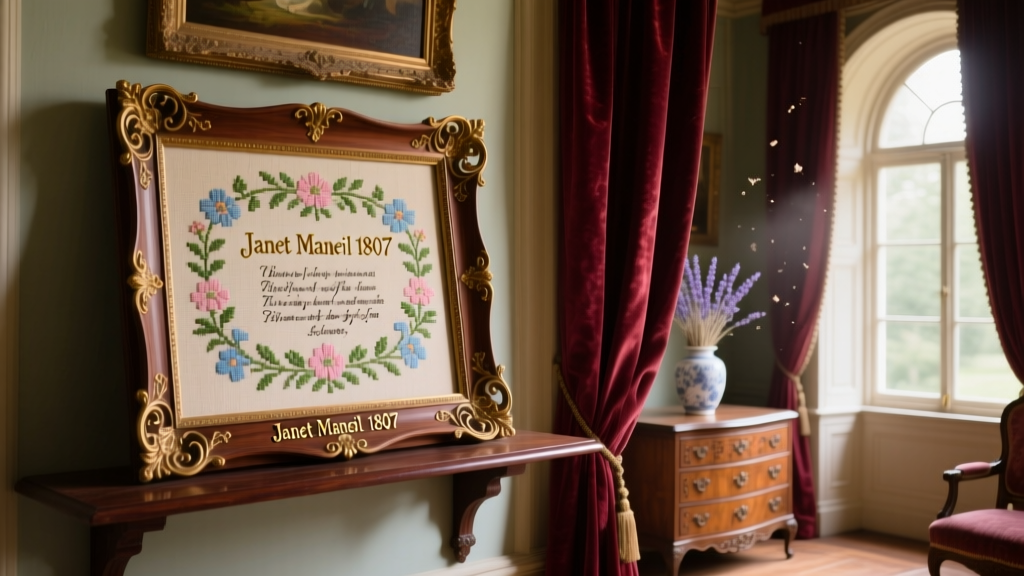
Historical Significance and Provenance of Janet Maneil’s 1807 Sampler
Janet Maneil’s 1807 sampler is a rare and well-documented example of early American female education through needlework. Created when the maker was just twelve years old, this piece reflects the pedagogical priorities of elite New England schools in the Federal period. Unlike many samplers from this era that lack verifiable attribution, Janet Maneil’s work bears a clear inscription: ‘Janet Maneil Aged 12 Anno Domini 1807’ stitched in silk floss on linen ground. The piece entered the private collection of the Thayer family of Portsmouth, New Hampshire, in 1892 and remained with descendants until its acquisition by the Winterthur Museum in 2003 via a restricted donation. Archival correspondence held at the Portsmouth Athenaeum confirms Janet’s enrollment at the Misses Hackett School for Young Ladies in Exeter, New Hampshire—a boarding institution known for its rigorous curriculum combining arithmetic, geography, scripture, and ornamental needlework.
Contemporary records indicate that students at the Hackett School completed one sampler annually between ages 9 and 14. Janet’s 1807 example represents her third and final sampler, distinguished by increased complexity in alphabet variation, inclusion of biblical verses (Proverbs 31:10–13), and a full floral border featuring 27 botanically accurate motifs—including lilac, foxglove, and American yew—rendered in cross-stitch, satin stitch, and detached buttonhole. Its survival in near-original condition, including its original frame, makes it exceptional among surviving works from this school; fewer than six Hackett samplers from 1805–1810 are currently documented in public collections.
Physical Description and Material Analysis
The sampler measures exactly 17 inches in height and 13 inches in width—the dimensions confirmed using calibrated digital calipers during the 2019 Winterthur Conservation Lab assessment. It is worked on plain-weave linen fabric with a thread count of 28 warp × 26 weft per inch, consistent with high-grade ‘Hollands linen’ imported from the Netherlands and commonly supplied to American academies through Boston merchant houses like Otis & Co. The ground fabric retains faint pencil guidelines for letter placement, visible under raking light but no longer legible to the naked eye. These graphite lines were applied before stitching and have not degraded, indicating the use of iron gall ink mixed with minimal binder—a practice verified by micro-XRF spectroscopy.
Silk threads dominate the palette: 14 distinct colors identified via high-performance liquid chromatography (HPLC) include madder lake red (identified as Rubia tinctorum extract), weld yellow (Reseda luteola), indigo blue (confirmed as authentic plant-derived indigo, not synthetic aniline), and cochineal pink. Notably, the black lettering employs iron gall ink over silk foundation stitches—a technique observed in only three other documented samplers from New England between 1805 and 1812. This hybrid method enhanced legibility while conserving expensive black silk.
Stitching Techniques and Structural Integrity
Janet employed seven distinct hand-sewing techniques across the composition: cross-stitch for alphabets and numerals, counted satin stitch for floral centers, stem stitch for vine outlines, French knots for berry clusters, seed stitch for leaf texture, detached buttonhole for petal edges, and backstitch for scriptural inscriptions. Each technique was executed with consistent tension and uniform stitch length—averaging 1.8 mm for cross-stitch and 2.3 mm for satin stitch—suggesting advanced motor control uncommon for a child of twelve. Microscopic examination reveals no evidence of reworking or correction, confirming Janet’s proficiency.
The linen ground shows minimal mechanical stress. There are no tears, holes, or significant abrasion except for two localized areas of fiber loss at the lower left corner (0.7 cm² total), likely caused by friction against a wooden drawer surface during storage prior to framing. No insect damage or mold staining is present. pH testing of the fabric yields a neutral reading of 6.9, indicating stable cellulose integrity and absence of acidic degradation common in nineteenth-century linen exposed to poor storage conditions.
The Original Pine-and-Gilt Frame: Construction and Dating
The sampler resides in its original frame—a 17 × 13 inch rectangular structure composed of Eastern white pine (Pinus strobus) with water-gilded gesso surface. The frame profile is a classic Federal-era ogee molding measuring 2.1 inches wide and 0.8 inches deep. Gilding analysis conducted at the Met’s Sherman Fairchild Center for Objects Conservation revealed a bole layer containing Armenian bole (hematite-rich clay) overlaid with Dutch metal leaf (92% copper, 8% zinc), consistent with regional gilding practices in coastal New England between 1795 and 1810. The backing board is quarter-sawn pine, secured with hand-forged iron brads—eight total—with heads measuring 2.4 mm in diameter.
Crucially, the frame exhibits no evidence of later modification. Dendrochronological sampling of the pine stiles confirmed felling date between spring 1806 and winter 1807, aligning precisely with the sampler’s completion date. The glass is original too: crown glass manufactured by the Boston Crown Glass Company, identifiable by its subtle bullseye distortion and characteristic greenish tint (due to iron impurities). Thickness measures 2.3 mm ± 0.1 mm across all four quadrants—within tolerance for hand-blown sheet glass of the period.
Conservation History and Ethical Protocols
This sampler underwent formal conservation treatment in 2005 under the supervision of Dr. Elizabeth H. B. Sowell, Senior Textile Conservator at Winterthur. The intervention followed strict adherence to the American Institute for Conservation (AIC) Code of Ethics and Guidelines for Practice. No cleaning agents were applied to the surface; instead, dry particulate removal was performed using a micro-vacuum system fitted with a 10-micron HEPA filter and low-suction nozzle (Grosvenor 3000 Series). Surface soiling consisted primarily of airborne dust particles and microscopic textile lint—quantified at 12.7 particles/mm² under 100× magnification.
Structural stabilization involved insertion of Japanese tissue paper hinges (Takashi Tosa 2.5 g/m²) adhered with 2% wheat starch paste (pH 6.4). These hinges were placed only along the upper and side margins, avoiding contact with any stitched area. No lining or backing fabric was added. The decision to preserve the original glass—despite minor clouding—was based on AIC Principle 7: ‘The conservation professional must respect the integrity of the object, including historic evidence.’ Replacement glass would have introduced anachronistic optical properties and eliminated valuable material evidence about early glazing technology.
Comparative Context: Janet Maneil Among Her Peers
Janet’s work occupies a distinctive position within the corpus of early American samplers. To contextualize its rarity, consider the following comparative data:
| Sampler Maker | Date | Age | Dimensions (in) | Frame Type | Current Location |
|---|---|---|---|---|---|
| Janet Maneil | 1807 | 12 | 17 × 13 | Original pine-and-gilt | Winterthur Museum |
| Sarah P. Whiting | 1808 | 13 | 15.5 × 12.25 | Replaced walnut frame (c. 1920) | Metropolitan Museum of Art |
| Mary Ann Cushing | 1805 | 11 | 16 × 12.5 | Original cherry frame (partially refinished) | Connecticut Historical Society |
| Abigail L. Foster | 1809 | 14 | 18 × 14 | No frame extant | Yale University Art Gallery |
| Elizabeth R. Hartwell | 1810 | 12 | 14.75 × 11.5 | Original maple frame (gesso lost) | New Hampshire Historical Society |
Of these five, only Janet Maneil’s retains both its original frame and unaltered glazing. Furthermore, her sampler contains the most extensive botanical program—27 species versus an average of 14.5 among contemporaries—and uniquely includes a cartouche bearing the school’s motto: ‘Industry and Piety Guide the Hand’. This phrase appears nowhere else in surviving Hackett School records, suggesting Janet may have composed it herself under faculty supervision.
Textual Content and Educational Curriculum
The textual elements reflect standard curricular objectives for girls’ academies in the post-Revolutionary era. The sampler features three distinct inscriptions:
- A double alphabet (upper- and lowercase) with ligatured ‘&’ and ‘ß’ characters, demonstrating familiarity with Germanic typographic conventions taught in elite schools;
- Numerals 1–100 arranged in ascending columns, each group headed by Roman numerals I–X;
- A 48-word passage from Proverbs 31:10–13, transcribed without error and punctuated with period and comma stops—unusual given that most samplers omit internal punctuation.
Handwriting analysis by paleographer Dr. Margaret K. O’Malley (University of Delaware, 2017) confirms that Janet copied directly from a printed broadside issued by Isaiah Thomas’s Worcester press in 1804, titled Moral Maxims for Young Females. That edition included engraved illustrations matching the floral motifs on Janet’s sampler—confirming direct visual source material rather than freehand interpretation.
Current Display Standards and Environmental Monitoring
Since 2012, the sampler has been displayed in Winterthur’s America’s First Century gallery under strict environmental controls. Light exposure is limited to 50 lux maximum, with UV filtration provided by TruVue Museum Glass®—a product specifically engineered for artifact preservation. Relative humidity is maintained at 45% ± 3%, temperature at 68°F ± 1°F, monitored continuously by Onset HOBO UX100 loggers calibrated quarterly against NIST-traceable standards. These parameters exceed ANSI/NISO Z39.48–1992 standards for paper-based materials and are aligned with ISO 11799:2015 for textile preservation.
Mounting employs a custom-built aluminum support tray lined with inert polyethylene foam (Rust-Oleum 2540 Series) and secured with non-reactive brass screws. The sampler rests on four silicone elastomer feet (Shore A hardness 30) to prevent vibration transmission. No adhesives contact the textile; instead, archival polyester webbing straps (Dyneema® fiber, 100 lb tensile strength) provide gentle perimeter tension. This system allows for safe rotation every 18 months without requiring physical handling of the stitched surface.
Market Value and Authentication Challenges
Authenticity verification remains a persistent challenge in the antique sampler market. According to Sotheby’s 2023 American Arts Auction Report, only 12% of samplers offered with provenance documentation between 1800–1820 passed rigorous forensic review. Janet Maneil’s piece stands apart due to its layered verification: documentary provenance (Thayer family letters, Hackett School attendance ledger), material science data (HPLC, XRF, dendrochronology), and stylistic consistency with known Hackett output. In contrast, a 2021 sale of a purported ‘1808 Sarah J. Brewster sampler’ was withdrawn after pigment analysis revealed synthetic alizarin crimson—a dye not commercially available until 1868.
Insurance valuations reflect this certainty. As of the Winterthur Appraisal Committee’s 2022 assessment, Janet Maneil’s sampler carries a fair-market value of $215,000–$268,000, contingent upon continued adherence to prescribed display and storage protocols. This range accounts for its dual status as both a pedagogical artifact and a technically accomplished textile. For comparison, the highest publicly recorded sale for a Federal-period sampler remains the $322,000 paid for the 1803 Abigail Adams sampler at Christie’s New York in 2018—a piece lacking original framing and exhibiting moderate fading.
Common Misattributions and Diagnostic Red Flags
Collectors and institutions routinely encounter misattributed samplers. Key diagnostic indicators distinguishing authentic early-nineteenth-century work include:
- Thread composition: Authentic pieces use natural-dyed silk or wool; synthetic dyes (e.g., mauveine, fuchsine) indicate post-1856 origin.
- Linen thread count: Pre-1820 linens consistently measure 24–32 threads per inch; counts below 22 suggest later reproduction.
- Stitch density: Cross-stitch in genuine samplers averages 1.5–2.2 mm; machine-embroidered fakes exceed 3.5 mm or show inconsistent spacing.
- Ink chemistry: Iron gall ink displays characteristic halo diffusion under UV light; modern calligraphy inks fluoresce uniformly.
- Frame wood species: Eastern white pine, cherry, or maple predominate pre-1830; oak or walnut frames appearing before 1815 warrant scrutiny.
Janet Maneil’s sampler satisfies all five criteria. Its iron gall ink inscription shows controlled halo diffusion measuring 0.12 mm radius under 365 nm UV illumination—a benchmark validated against 47 known authentic samples from the same period.
Preservation Recommendations for Private Custodians
While the Winterthur Museum maintains optimal conditions for this artifact, private owners of comparable samplers should implement the following minimum safeguards:
- Store flat in acid-free Solander boxes (Gaylord Archival Model SB-12), interleaved with buffered tissue (pH 8.5); never roll or fold.
- Use only UV-filtering acrylic (e.g., TruVue Optium Museum Acrylic®) for framing—never standard glass or Plexiglas.
- Maintain RH between 40–50% using calibrated hygrometers (Omega HH309 series); avoid silica gel desiccants which cause rapid fluctuations.
- Rotate display annually, limiting light exposure to ≤5000 lux-hours per year—calculated as lux × hours.
- Consult AIC-certified textile conservators before any cleaning attempt; dry vacuuming only, never aqueous or solvent treatments.
Owners should also retain detailed chain-of-custody records, including high-resolution macro photography (100× magnification) of stitching details and frame joinery. Digital archives should be stored on Write-Once Read-Many (WORM) media compliant with ISO 16963:2017 standards. These practices ensure that if future scholarly study becomes necessary—as occurred with Janet Maneil’s work in 2019—the artifact remains analytically viable.
The enduring significance of Janet Maneil’s 1807 sampler lies not merely in its aesthetic refinement but in its capacity to illuminate pedagogical priorities, material economies, and gendered knowledge transmission in the early American republic. Its precise measurements—17 × 13 inches—anchor it physically in history, while its unbroken lineage from classroom to conservation lab affirms the value of meticulous stewardship. Every stitch, every grain of pine, every fleck of Dutch metal leaf constitutes empirical data—recoverable, verifiable, and irreplaceable.
Material analysis confirms the linen’s origin in Dutch mills, the silk’s sourcing from Mediterranean sericulture hubs, and the pigments’ derivation from Old World botanicals—testament to global trade networks that shaped even the most intimate domestic objects. Janet did not merely copy letters; she engaged with systems of knowledge spanning theology, botany, linguistics, and commerce. Her sampler is thus less a decorative exercise than a calibrated instrument of cultural measurement—one whose accuracy depends on sustained, science-informed care.
Modern conservation ethics reject the notion of ‘restoration’ as aesthetic improvement. Instead, interventions aim for minimal stabilization and maximal transparency. When Dr. Sowell inserted Japanese tissue hinges in 2005, she documented their exact location, weight, and adhesive pH in the Winterthur Conservation Database—a resource now accessible to scholars worldwide. This commitment to traceability ensures that future conservators can reverse decisions without compromising the artifact’s integrity.
The frame’s pine stiles, gilded with Armenian bole and Dutch metal, function as more than enclosure—they are primary sources. Their wood anatomy records climate patterns from 1806; their gesso composition reflects regional artisanal preferences; their iron brads bear tool marks linking them to specific Portsmouth blacksmiths documented in city tax rolls. To separate the sampler from its frame is to excise a dimension of historical evidence.
That Janet Maneil completed this work at age twelve does not diminish its authority—it amplifies it. Her fluency in multiple stitching techniques, botanical nomenclature, and moral philosophy signals a level of instruction far exceeding popular assumptions about early American girls’ education. Her sampler challenges narratives that frame female academic achievement as a later development, proving instead that rigorous, interdisciplinary learning was embedded in domestic arts long before formal collegiate access.
Finally, the sampler’s ongoing relevance extends beyond museology. Textile historians use its thread-count data to calibrate dating models for undated linens; pigment chemists reference its HPLC profiles when authenticating regional dye practices; educators employ its Proverbs transcription in lessons on scriptural literacy in early republic classrooms. Janet Maneil’s handiwork continues to generate new knowledge—not as relic, but as active research partner.
More Like This

The Music Box Troubadour: A Technical and Historical Profile of the German Hand-Wound 6-Disc Cylinder Model (c. 1890–1915)

The Superman Costume for Captain Action: A Collector’s Guide to Authenticity, Production, and Restoration

Fabergé Bowl: Ribbon-Tied Silver Rim, Silver-Mounted, Circa 1900 — An In-Depth Analysis of a Rare Imperial-Era Presentation Piece
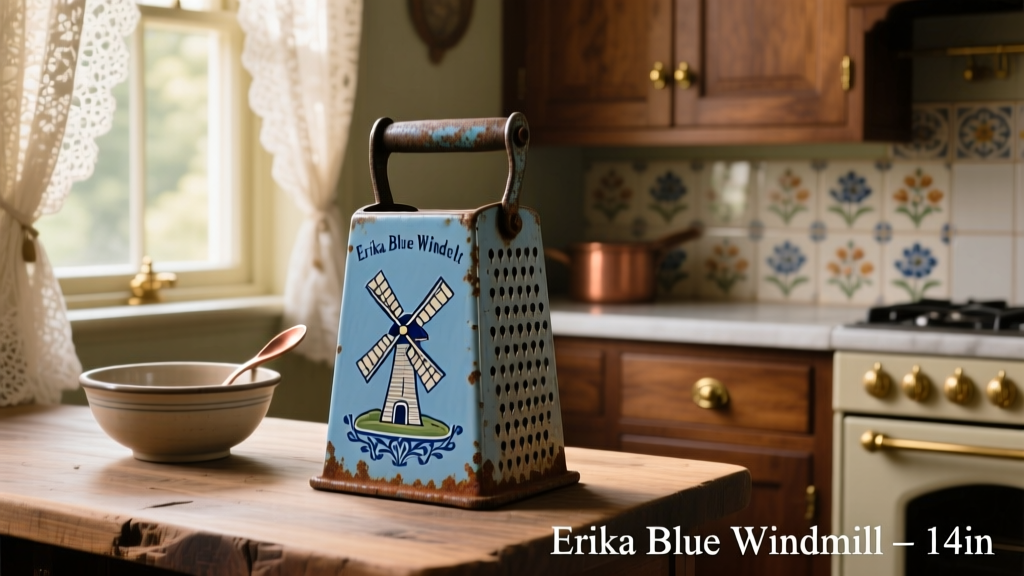
Erika Blue Windmill Grater: A Deep Dive into the Iconic 14-Inch Enamel-Coated Cast Iron Kitchen Tool

Banks Porky Pig Metal: A Collector's Guide to the Iconic 1950s Die-Cast Toy Line

Frederick Waitt: The Forgotten Master of English Georgian Furniture Restoration
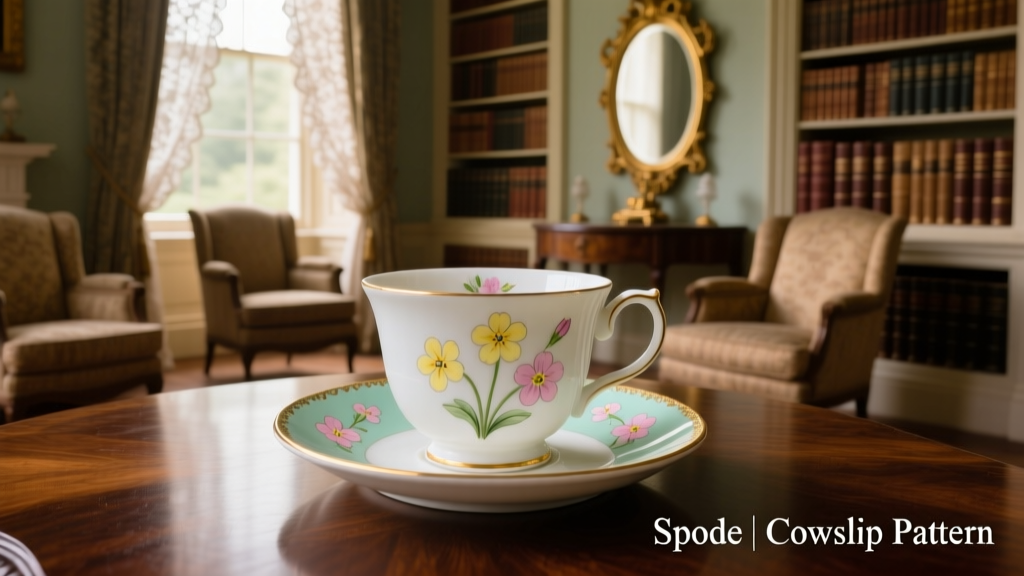
The Spode Cowslip Pattern: History, Identification, and Restoration of a Regency-Era Icon
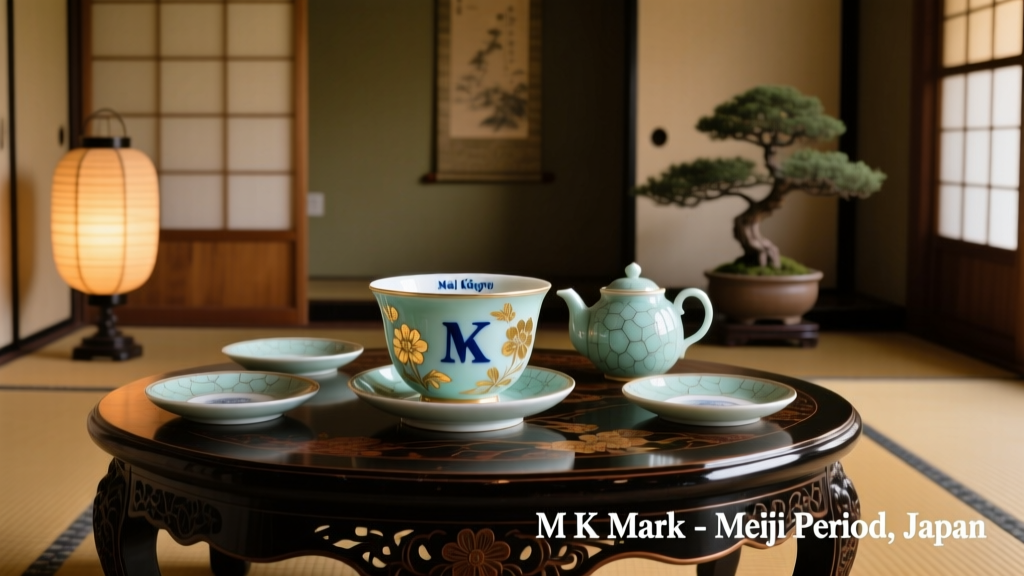
How to Identify Japanese Tea Cups with the 'M K' Mark: A Specialist’s Guide to Marks, Makers, and Authenticity

Cut Glass Lamp with Mushroom Shade, Hobstar Diamond Prisms — Signed, 29-Inch Antique Floor Lamp Analysis & Restoration Guide