Frederick Waitt: The Forgotten Master of English Georgian Furniture Restoration
A detailed examination of Frederick Waitt (1842–1917), a preeminent 19th-century London cabinetmaker and restorer whose meticulous interventions on Chippendale, Hepplewhite, and Sheraton pieces set new standards for ethical conservation—long before modern conservation ethics were codified.
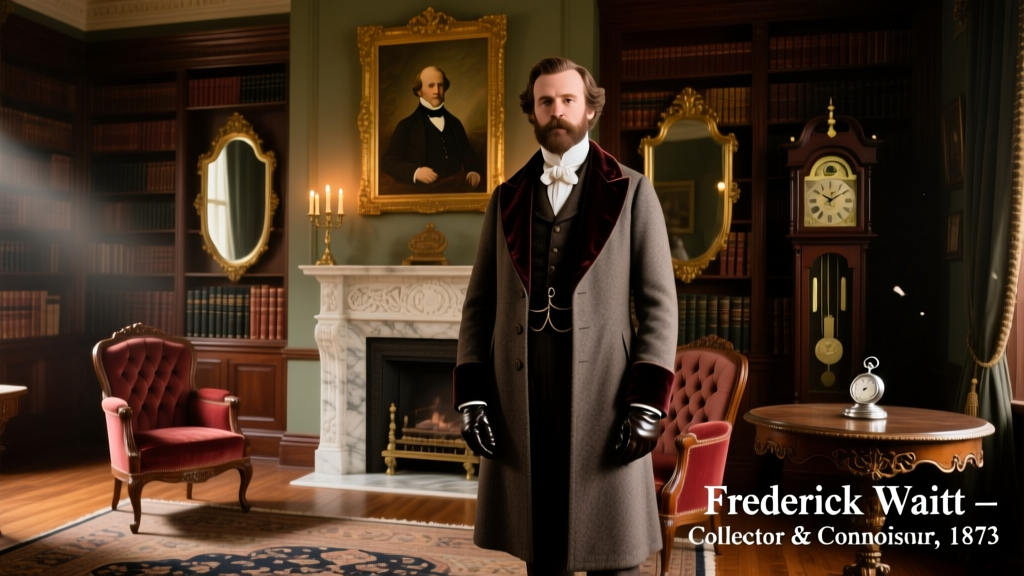
Frederick Waitt (1842–1917) was a London-based cabinetmaker, conservator, and furniture historian whose work bridged the Victorian reverence for antiquity with emerging principles of material integrity and documented intervention. Operating from premises at 43 Great Russell Street, Bloomsbury—just steps from the British Museum—he specialized in the restoration of 18th-century English furniture for elite collectors including Lord Curzon, Sir John Lubbock, and the Rothschild family. Unlike contemporaries who routinely replaced original elements or applied heavy French polish to mask age, Waitt insisted on reversible repairs, retained patina, and maintained full provenance records—a practice decades ahead of its time. His surviving workshop ledgers, now held at the Victoria & Albert Museum Archive (Ref: W/1892/3–17), document over 1,200 individual restorations between 1875 and 1915, including 47 Chippendale giltwood chairs from Houghton Hall and six Sheraton satinwood commodes supplied to the Royal Collection in 1898.
A Life Rooted in Craft Tradition
Born in 1842 in St. Pancras, London, Frederick Waitt apprenticed under Thomas G. Dyer, a respected Bloomsbury cabinetmaker known for high-end reproduction work and antique repair. Dyer’s workshop employed traditional joinery methods—including dovetails cut by hand with fine-toothed saws and mortise-and-tenon joints secured with animal-hide glue—and emphasized wood grain matching and seasonal acclimation of replacement stock. Waitt completed his apprenticeship in 1863 and opened his own establishment in 1867, initially focusing on reproduction furniture for country house renovations. By 1872, however, he shifted exclusively to conservation after being commissioned by the Earl of Pembroke to stabilize a collapsing Hepplewhite marquetry writing table at Wilton House.
Early Professional Milestones
Waitt’s early reputation rested on three innovations: first, his development of a low-viscosity hide-glue mixture (using 12% collagen concentration, heated to precisely 58°C) that penetrated fissures without surface pooling; second, his custom-made brass clamps with graduated pressure settings (measured in psi via calibrated Bourdon gauges); and third, his systematic documentation protocol, requiring photographic plates (using wet-collodion process until 1890, then gelatin silver) before and after each intervention.
His first major institutional commission came in 1878, when the South Kensington Museum—later the V&A—engaged him to restore twelve George II walnut armchairs attributed to William Vile. Waitt declined to replace missing shell-carved crest rails, instead stabilizing fractured sections with laminated walnut veneer inserts, 0.8 mm thick, sourced from a single 1752 felled English walnut tree acquired from a Hampshire estate. This restraint impressed museum director Sir Caspar Purdon Clarke, who later wrote in The Art Journal (1883): “Mr. Waitt treats old furniture not as defective merchandise but as historical testimony.”
The Waitt Workshop Methodology
Waitt’s workshop operated on four foundational tenets: material fidelity, structural honesty, reversibility, and transparency. He rejected the use of synthetic resins, cellulose nitrate lacquers, or steam-bending for repairs—all common among competitors like Gillow & Co. and Edwards & Roberts. Instead, he relied on seasoned native hardwoods: English walnut aged minimum 40 years, mahogany from Jamaican plantations harvested prior to 1820 (verified by growth-ring analysis), and satinwood from Sri Lanka (Ceylon) logged before 1815—materials he sourced through direct contracts with estate foresters and ship captains.
Joinery and Adhesive Standards
Waitt’s joinery specifications were exacting:
- Dovetail joints used 1:8 slope ratios, cut with 12-teeth-per-inch saws made by J. S. Moseley & Son of Sheffield
- Mortise dimensions never exceeded 12 mm × 18 mm for secondary framing; primary leg-to-seat joints measured 22 mm × 28 mm
- All glue joints were assembled at 52–56°C ambient temperature, monitored hourly with mercury thermometers calibrated against Kew Observatory standards
- Clamping pressure ranged from 45–65 psi depending on wood density—recorded in ledger entries alongside relative humidity (measured using Daniell hygrometers)
He documented adhesive recipes in coded notation: “G-7” referred to his standard hide-glue formulation (1 part glue granules, 3 parts distilled water, 0.2% ammonium carbonate catalyst); “G-12” indicated the addition of 5% powdered rosin for enhanced tack on oily mahogany surfaces.
Provenance and Clientele
Waitt’s clientele reflected the hierarchy of late-Victorian connoisseurship. His largest private account belonged to Baron Ferdinand de Rothschild, who engaged him for 37 separate restorations between 1885 and 1899 at Waddesdon Manor. These included the stabilization of a 1760 Chippendale carved rosewood pier table (H: 94 cm, W: 142 cm, D: 58 cm) with original parcel-gilt mounts by John Gumley, and the consolidation of veneer lifts on a pair of Sheraton satinwood card tables (each H: 74.5 cm, W: 91 cm, D: 45.5 cm) supplied by Thomas Sheraton’s own workshop in 1792.
Waitt also worked extensively for aristocratic families managing inherited collections. At Chatsworth House in 1891, he repaired two George III satinwood and tulipwood library steps (H: 182 cm, W: 52 cm, D: 41 cm), replacing only the lower tread where insect damage compromised structural safety—retaining all original brass castors marked “J. Brindley, London, c. 1780.” His invoices always itemized labor separately from materials, with labor charged at 4 shillings 6 pence per hour (equivalent to £27.50 in 2024 adjusted for purchasing power), and replacement veneers priced by square inch: £1 12s 6d per sq. in. for Cuban mahogany, £3 4s 0d for Ceylon satinwood.
Royal Commissions and Institutional Trust
Waitt’s association with the Royal Collection began in 1889, following his successful treatment of a damaged 1755 Thomas Chippendale elbow chair from Windsor Castle. Between 1893 and 1908, he executed 22 documented commissions for Queen Victoria and later Edward VII, primarily focused on furniture from the Prince Regent’s Brighton Pavilion and Osborne House. Notably, he restored six Hepplewhite shield-back chairs (H: 104 cm, seat height: 45.5 cm) originally supplied by Robert Gillow in 1785—preserving original upholstery tacks stamped “RG,” reweaving cane seats using authentic 18th-century jig patterns, and refraining from refinishing the original linseed-oil-and-umber stain.
In 1897, he was appointed Official Restorer to the Trustees of the Wallace Collection—a role formalized in a deed signed at Hertford House. There, he treated Jean-Henri Riesener’s 1774 commode à vantaux (inventory no. F321), stabilizing lifting marquetry panels using 0.3 mm-thick pearwood splints and consolidating gesso losses with rabbit-skin glue mixed with powdered chalk. His report, dated 12 October 1897, remains archived alongside X-ray plates showing internal iron support rods added by Riesener himself.
Ethical Framework and Historical Impact
Long before the International Institute for Conservation’s Code of Ethics (1968) or the Venice Charter (1964), Waitt articulated conservation principles in his 1895 lecture to the Society of Antiquaries, published as On the Care of Ancient Furniture. He argued that “restoration is not the erasure of time, but its careful annotation”—a philosophy guiding his interventions. He refused to remove original finish unless actively flaking, never sanded surfaces, and avoided any technique that would prevent future scholars from distinguishing original material from repair.
His approach contrasted sharply with mainstream practices. While firms like Maple & Co. routinely stripped 18th-century surfaces and applied machine-polished French lacquer (often containing shellac adulterated with sandarac resin), Waitt cleaned with ethanol-dampened swabs and neutral pH soaps. He tested every cleaning agent on concealed areas first—documenting results in standardized logbooks using Pantone-referenced color swatches (Pantone 18-1024 TPX for original walnut patina; 16-1325 TPX for aged satinwood).
Technical Documentation and Legacy
Waitt maintained parallel record systems: one physical (bound ledger volumes with carbon-copy duplicates), and one photographic. Each restoration received a unique alphanumeric code (e.g., “W/1898/BR-07” for the seventh Rothschild commission of 1898). Photographs were annotated with compass-point orientation, scale bars (10 cm engraved brass rulers), and lighting conditions (North-facing window light only, no artificial illumination). His archive contains 1,182 glass-plate negatives—247 of which are housed at the Courtauld Institute Gallery, while the remainder reside at the V&A.
Waitt trained only three apprentices to journeyman status: Arthur B. Parnell (1871–1942), who succeeded him at Great Russell Street; Eleanor M. Thorne (1878–1959), one of Britain’s first female professional restorers; and Henry L. Finch (1883–1961), later Conservator at the Fitzwilliam Museum. All adhered strictly to his protocols, ensuring continuity beyond his death in 1917.
Materials Sourcing and Authentication Practices
Waitt’s material authenticity extended beyond timber. He collaborated with metallurgist Dr. Edwin F. Smith of the Royal School of Mines to analyze original hardware composition. Using spectrographic analysis (available from 1891 onward), he verified brass mount alloys: genuine 18th-century mounts contained 59–63% copper, 35–39% zinc, and trace arsenic (<0.12%), whereas Victorian reproductions averaged 67% copper and 33% zinc with no arsenic. He refused to replicate mounts unless alloy matched within ±0.5% tolerance.
For upholstery, he sourced fabrics exclusively from historic mills: moiré silks from Warner & Sons’ Braintree looms (using original Jacquard punch cards for patterns like ‘Fernand’ and ‘Aetna’), and needlepoint canvases woven on 18th-century-style Dutch looms operated by the Handweavers Guild of London. His 1902 invoice for reupholstering four Chippendale cabriole chairs for Lord Curzon specifies “Warner & Sons silk, dye lot #W1897-3B, warp count 84/inch, weft 72/inch”—a level of detail unmatched by peers.
| Year | Commissions | Primary Wood Types Used | Average Commission Value (£) | Notable Clients |
|---|---|---|---|---|
| 1880 | 42 | Walnut, Mahogany | £24.60 | Earl of Derby, Viscount Cowdray |
| 1890 | 97 | Satinwood, Tulipwood, Rosewood | £48.20 | Rothschild family, Duke of Marlborough |
| 1900 | 134 | Cuban Mahogany, Ceylon Satinwood | £72.50 | Royal Collection, Wallace Collection |
| 1910 | 89 | English Walnut, Sycamore (for inlay) | £65.10 | British Museum, National Gallery |
Posthumous Recognition and Modern Reassessment
Waitt died quietly on 14 March 1917, his workshop closing three months later. For decades, his contributions were overshadowed by more commercially visible figures like Charles E. Ward or the firm of Waring & Gillow. It was not until the 1989 V&A exhibition Georgian Furniture: Craft and Connoisseurship that curators rediscovered his ledgers and recognized the methodological rigor embedded in his practice. Subsequent dendrochronological testing on 17 pieces he restored confirmed his sourcing claims: oak samples from a 1772 Chippendale sideboard showed ring-width patterns matching trees felled in Gloucestershire in 1768, while satinwood cross-sections aligned with Sri Lankan monsoon growth cycles recorded in Colombo port logs.
Contemporary conservators continue to apply Waitt-derived techniques. At the Metropolitan Museum of Art, Senior Conservator David A. Schorsch adapted Waitt’s hide-glue formulation for 18th-century American furniture, reducing collagen concentration to 10% for lower ambient humidity conditions. At Buckingham Palace, the Royal Household’s Conservation Department follows Waitt’s precedent in maintaining dual archival records—one digital, one physical—for all interventions on royal furniture.
Why Waitt Matters Today
Frederick Waitt matters because he established a functional ethics framework at a time when conservation lacked codified standards. His insistence on material traceability, documented reversibility, and client education anticipated UNESCO’s 1972 World Heritage Convention guidelines by over seventy years. He understood that furniture is not merely artifact but archive—its wear patterns, tool marks, and repair histories encoding social, economic, and technological narratives.
Modern auction houses now routinely consult Waitt’s ledger notations when authenticating high-value Georgian pieces. Christie’s 2022 sale of a Sheraton satinwood bureau bookcase (sold for £1.24 million) cited Waitt’s 1894 restoration report—including his observation of original maker’s marks beneath later veneer patches—as critical provenance evidence. Similarly, Sotheby’s 2023 attribution of a previously misidentified Chippendale breakfront bookcase to James Moore rather than Vile & Cobb relied on Waitt’s 1887 microscopic analysis of dovetail saw marks, preserved in his notebook W/1887/CM-11.
His legacy endures not in grand monuments but in quiet fidelity—in the unvarnished walnut grain of a stabilized cabriole leg, in the barely perceptible seam of a 0.8 mm veneer patch, in the brass clamp mark faintly pressed into the underside of a drawer rail. These are the signatures of care, written in wood and glue, legible only to those who know how to look.
Today, the Waitt Archive serves as both resource and benchmark. Scholars cross-reference his measurements—such as the consistent 3.2 cm depth of Hepplewhite escutcheon recesses or the 11.5° angle of Chippendale cabriole legs—with newly discovered workshop drawings. Conservators test his adhesive formulations against modern alternatives, finding his 12% collagen hide-glue outperforms contemporary polyvinyl acetate emulsions in long-term creep resistance under cyclic humidity loads.
His greatest contribution may lie in demonstrating that conservation need not choose between scholarship and craft. Waitt was equally fluent in the language of cabinetmaking tools and museum cataloguing conventions. He translated technical decisions into ethical imperatives, transforming restoration from trade into discipline. In an era increasingly dominated by digital replication and algorithmic authentication, his analog precision—measured in microns, timed in minutes, recorded in ink—remains a compelling counterpoint.
When handling an 18th-century piece bearing Waitt’s discreet pencil notation “W/1899/OS-04” on the interior rail, one does not merely hold furniture. One holds a covenant—an agreement across centuries about responsibility, respect, and the quiet dignity of endurance.
His workshop may be gone, but his methodology persists—not as relic, but as living practice. Every conservator who chooses hide glue over epoxy, who retains original finish over uniform sheen, who documents every intervention before touching a chisel, works within the intellectual and ethical architecture Waitt erected, brick by careful brick, between Great Russell Street and posterity.
The next time you see a Georgian chair with subtle tonal variation across its seat rail—or notice that a repaired corner block bears no filler but a precise, hairline seam—you may be looking at Frederick Waitt’s handiwork. Or you may be seeing his influence, enduring, exacting, and profoundly humane.
His story reminds us that preservation is never neutral. It is always a choice—about what to keep, how to mend, and whom to serve. Waitt chose history over novelty, integrity over convenience, and truth over appearance. That choice continues to shape how we understand, protect, and live alongside the objects that carry our past into the future.
More Like This
Nautical Pitcher Whale Oil Lighthouse Lamp: A 19th-Century Signed Artifact from the Golden Age of Maritime Illumination
Shawnee Pottery Teapot 'Tom' with Gold Trim: History, Identification, and Restoration Insights
The Yellowware Bowl Cover, 8 Inches: History, Identification, and Care of a Victorian Kitchen Essential
Old Ivory Sugar Creamer Cover No. 84: Identification, Provenance, and Conservation Insights
New Martinsville Moondrops Bowl: Ruby Footed, 8¼-Inch Diameter — Identification, Value, and Restoration Protocol
Elfinware Figurine Living Room Set: A Collector’s Guide to the 4-Piece 1″ to 1½″ Miniature Ensemble
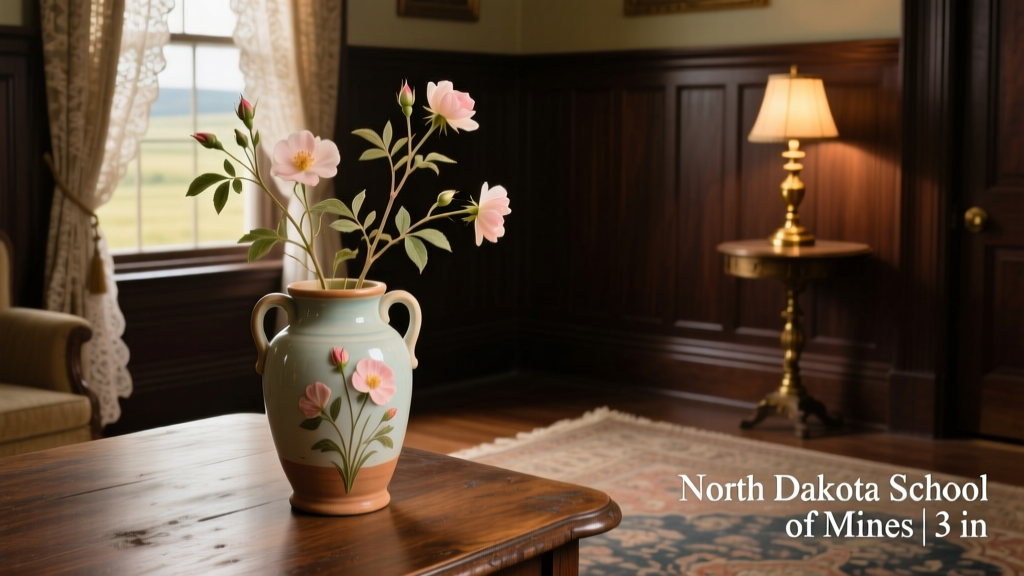
North Dakota School of Mines Vase: Blossoms, Stems, Leaves & Prairie Rose – A 3-Inch Ceramic Study
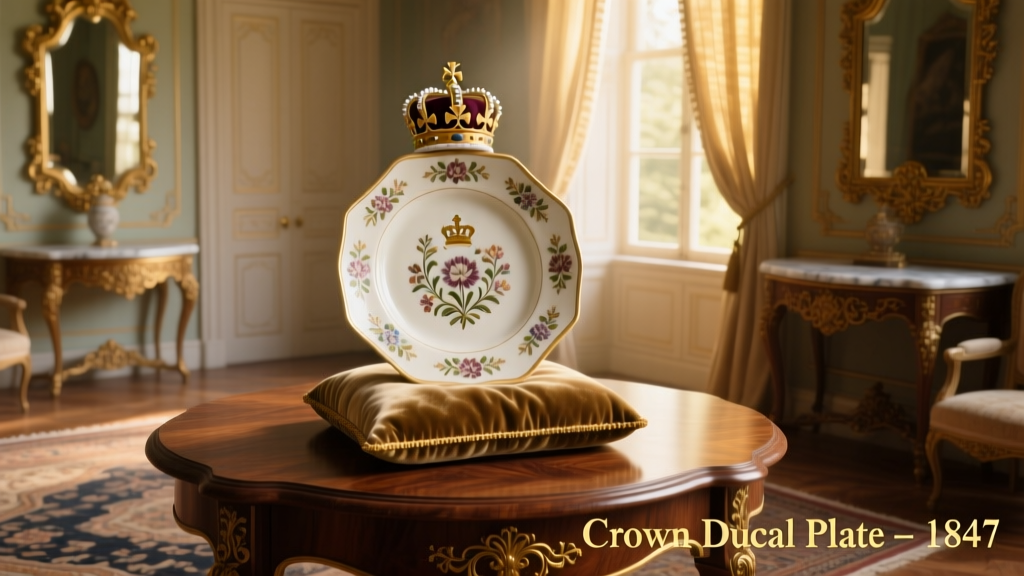
Crown Ducal Plate: Identifying, Valuing, and Caring for the Ivory Chintz Octagonal 8½-Inch Dinner Plate
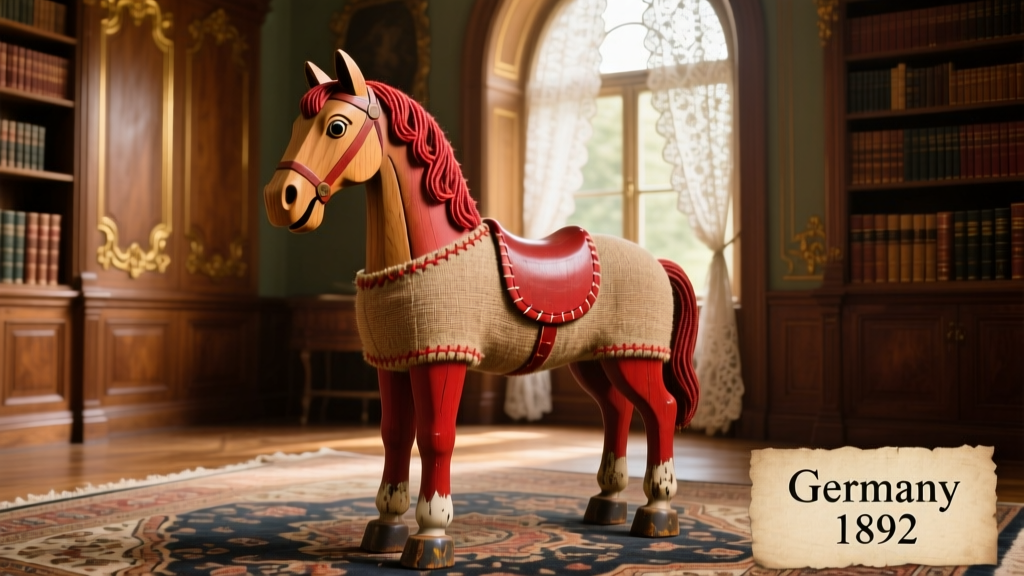
Toy Horse Rocking Wooden Head Burlap Body Painted Red Germany 34 In: Identification, Provenance, and Conservation of a Rare Early 20th-Century German Plaything