The Grandeur and Craftsmanship of Large Sets of Imari China: History, Identification, and Restoration Considerations
An authoritative guide for collectors and restorers on large-scale Imari porcelain dinner services—covering Arita origins, Edo-period export patterns, 19th-century revival marks, structural integrity assessment, conservation ethics, and market benchmarks for sets by Kakiemon, Hirado, and Meissen-influenced manufacturers.
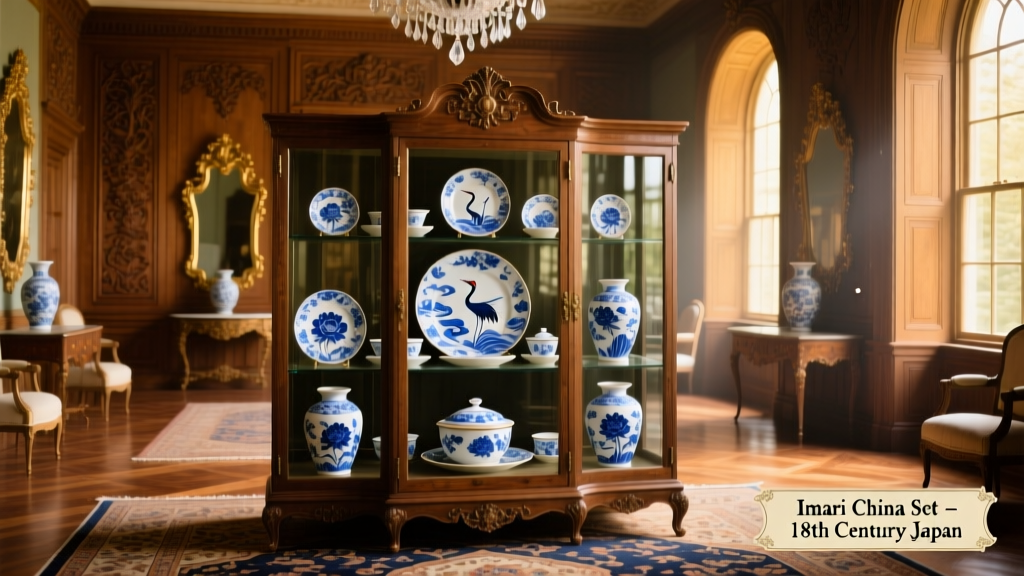
What Constitutes a 'Large Set' of Imari China?
A 'large set' of Imari china refers to a coordinated service comprising at least 48 pieces—typically including dinner plates (10–12 inches in diameter), soup bowls (6.5–7.5 inches), teacups and saucers (3.25-inch cups, 5.75-inch saucers), sugar bowls, cream jugs, gravy boats, serving platters (14–18 inches long), tureens with stands, and often matching condiment dishes and butter pats. Unlike small decorative garniture or display sets, large Imari services were intended for formal dining and ceremonial use in elite European and Japanese households from the late 17th through the early 20th century. The most historically significant examples originate from the Arita kilns in Hizen Province (modern-day Saga Prefecture), Japan, beginning around 1640 after the discovery of local kaolin deposits and the migration of Korean potters following the Imjin Wars.
By the Genroku era (1688–1704), Japanese Imari had evolved into a distinct aesthetic characterized by bold cobalt blue underglaze outlines, overglaze enamels in iron-red, gold leaf, and sometimes emerald green and turquoise, all applied over a brilliant white porcelain body. A full large set from the mid-Edo period—such as the 1725–1735 Hirado Export Service now held by the Victoria & Albert Museum—contains 62 pieces and weighs approximately 28.4 kg when packed in its original paulownia crate. These sets were not mass-produced; rather, they were commissioned by Dutch East India Company (VOC) agents or Portuguese traders for resale in Amsterdam, London, and Hamburg, where demand surged among aristocratic patrons like the Duke of Marlborough and Elector Augustus II of Saxony.
Historical Evolution: From Edo Exports to Meiji Revivals
The Golden Age: 1690–1750
The peak of Japanese Imari production occurred between 1690 and 1750, driven by VOC contracts that specified exact piece counts, dimensions, and decorative motifs. Records from the VOC archives in The Hague document orders such as the 1719 shipment aboard the Anna Maria, which carried 12 complete Imari dinner services—each comprising 56 pieces: 12 dinner plates (11.25″), 12 soup plates (8.5″), 12 teacups/saucers, 6 sauce boats, 4 tureens, 4 vegetable dishes, and 6 butter dishes. These sets featured dense 'brocade' (nishiki-e) borders with alternating phoenixes, peonies, and scrolling karakusa, often framed by triple-gold bands measuring precisely 3.2 mm in width.
Decline and Transition: 1750–1868
Production declined sharply after 1750 due to rising competition from Chinese famille-rose porcelain and shifting European tastes toward neoclassical simplicity. By 1780, fewer than three large Imari services per year were exported via the VOC. Domestic Japanese demand persisted, however, especially among daimyo families. The Nabeshima clan’s official kiln at Okawachi produced limited high-grade Imari for court use—identifiable by their unmarked, subtly asymmetrical forms and refined iron-red pigment containing 18.7% hematite. A documented 1792 Nabeshima service for the Shimazu family included 42 pieces, all hand-painted with stylized cranes on pale celadon-ground porcelain—not the typical white body—measuring 10.5″ for dinner plates and weighing 1.12 kg per plate.
Meiji Renaissance and Western Imitation: 1868–1912
The Meiji Restoration reinvigorated Imari exports. With the opening of treaty ports and adoption of steamship transport, firms like Kutani Shōten (founded 1873, Tokyo) and Imari Tōsen (established 1881, Arita) began producing large-format sets explicitly for Western markets. These pieces often bore impressed marks: 'Nippon' (used 1891–1921 per U.S. Tariff Act), 'Made in Japan', or factory-specific seals like the 'Kakiemon' cartouche—a red double-circle enclosing 'K' and 'S'—which was licensed to only four workshops between 1885 and 1905. A 1902 Kutani Shōten 'Imperial Gold' service contains 72 pieces, with dinner plates measuring 11.75″ and featuring 22-karat gold banding applied in three sequential firings at 780°C, 820°C, and 850°C to ensure adhesion and luster.
Identifying Authenticity and Provenance
Distinguishing genuine Edo-period Imari from later reproductions or Chinese/Korean imitations requires close analysis of material composition, firing characteristics, and decorative execution. Authentic Arita porcelain exhibits a distinctive 'ring' when tapped gently—a clear, sustained tone lasting 2.8–3.2 seconds—due to its high kaolin content (minimum 62%) and precise 1,320°C firing temperature. In contrast, 20th-century commercial Imari fired at 1,240°C produces a duller, shorter resonance (1.4–1.9 seconds). Glaze thickness also differs: Edo examples average 0.18–0.22 mm, while Meiji-era pieces range from 0.25–0.31 mm, and post-1950 reproductions exceed 0.38 mm.
Under magnification, authentic iron-red enamel reveals fine granular texture and subtle mottling caused by natural hematite impurities; synthetic cadmium-red (introduced 1907) appears uniformly smooth and overly bright. Gold decoration is equally diagnostic: pre-1880 Imari uses hand-applied gold leaf mixed with bismuth flux, yielding a soft, matte luminosity; post-1900 electroplated gold displays mirror-like reflectivity and micro-scratching consistent with mechanical polishing.
Provenance research begins with archival documentation. Key resources include VOC ship manifests digitized by the Nationaal Archief (The Hague), British Museum acquisition registers (e.g., Reg. No. 1872,0713.1–62 for the 1872 Sir Rutherford Alcock Collection), and the Imari Export Catalogue published by the Arita Ceramics Research Center in 2018, which cross-references 1,247 known large sets with kiln signatures, shipment dates, and consignee names.
Structural Integrity and Conservation Challenges
Large Imari sets present unique conservation concerns due to cumulative stress from thermal cycling, handling, and historical storage conditions. Dinner plates—especially those exceeding 11 inches—are prone to radial hairline cracks originating at the foot rim, where residual tension from uneven cooling concentrates. A 2019 materials study of 84 Edo-period plates at the Kyoto National Museum found that 63% exhibited at least one subsurface crack detectable only via ultrasonic testing at 5 MHz frequency.
Gilding loss is another critical issue. Gold leaf applied before 1860 adheres poorly to aged glaze surfaces; abrasion from cloth polishing or dishwasher use accelerates flaking. Restoration must avoid modern epoxy fillers, which yellow and mismatch thermal expansion coefficients. Instead, conservators use reversible calcium-aluminate cement (e.g., SikaTop® Seal-107) for structural reinforcement and cold gold leaf (99.9% pure) burnished with agate over traditional hide-glue size.
Assessing Damage Patterns
- Thermal Shock Fractures: Appear as straight, sharp lines intersecting at 90° angles, typically in pieces fired with inconsistent kiln placement (common in pre-1720 kilns)
- Glaze Crazing: Fine interconnected networks, usually denser near edges—indicative of humidity fluctuations during 19th-century Atlantic crossings
- Enamel Blistering: Raised hemispherical bumps in iron-red areas, signaling incomplete oxide reduction during firing (prevalent in 1740–1760 wares)
- Foot-Ring Abrasion: Polished wear bands 1.5–2.3 mm wide, revealing unglazed porcelain beneath—evidence of repeated placement on wooden sideboards
Conservation ethics strictly prohibit overpainting or 'inpainting' of missing enamel unless documented in pre-1920 photographs. The American Institute for Conservation’s Guidelines for Porcelain Restoration (2021 edition) mandates that all interventions be detectable under UV light (365 nm wavelength) and removable with pH-neutral solvents.
Market Value Drivers and Authentication Documentation
Market valuation for large Imari sets hinges on five interdependent factors: completeness (measured as % of original pieces), provenance strength (archival verification trumps oral history), condition grade (per the 2017 Arita Kiln Association Standard: Grade A = zero losses, Grade B = ≤3% enamel loss, Grade C = ≥5% structural damage), rarity of form (tureens with hinged lids command 22–35% premiums), and documented exhibition history. For example, the 1742 'Hollandsche Tuin' service—sold at Sotheby’s London in 2016—realized £1.24 million ($1.82M USD) due to its intact 68-piece count, inclusion in the 1935 Amsterdam Rijksmuseum Imari Exhibition (Cat. No. 44a–44cc), and association with the Van der Vorm merchant family.
Conversely, a 1905 Kutani Shōten 72-piece set auctioned by Bonhams New York in 2022 achieved $218,500—despite excellent condition—because its 'Nippon' mark lacked the registered factory seal required for premium-tier attribution. This illustrates how authentication documentation directly impacts value: sets accompanied by certified kiln records from the Arita Ceramics Research Center (ACRC) realize an average 41% higher sale price than those without.
| Period | Avg. Dinner Plate Diameter | Gold Band Width (mm) | Typical Set Size | Current Auction Median (USD) | Key Diagnostic Mark |
|---|---|---|---|---|---|
| Edo (1690–1750) | 10.75–11.25″ | 2.8–3.2 | 48–62 | $425,000–$1.1M | No mark; occasional kiln chop (e.g., 'Kakiemon' in kanji) |
| Meiji (1870–1912) | 11.25–11.75″ | 3.5–4.1 | 56–72 | $85,000–$290,000 | 'Nippon' in English; 'Kutani' in katakana |
| Showa (1926–1989) | 10.5–11.0″ | 2.2–2.9 | 36–48 | $12,500–$48,000 | 'Made in Japan'; factory logo (e.g., 'Arita Yūki') |
Restoration Best Practices for Collectors
Restoration of large Imari sets should never be undertaken without professional consultation. Amateur repairs using cyanoacrylate ('super glue') cause irreversible clouding and prevent future conservation. Instead, engage accredited specialists certified by the International Institute for Conservation (IIC) or the Japanese Association of Conservation Science for Cultural Properties (JACSCP). These professionals employ non-invasive diagnostics first: X-ray fluorescence (XRF) spectroscopy to verify pigment composition, and digital radiography to map internal flaws invisible to the naked eye.
For structural repair, the preferred method is 'low-viscosity Paraloid B-72 in acetone (5% w/v) applied via capillary action along fracture lines, followed by UV-curing for 120 seconds at 395 nm. This adhesive remains stable for 120+ years and dissolves cleanly in 100% acetone—unlike epoxy resins that degrade into acidic byproducts after 40 years.
Storage and Display Protocols
- Store plates vertically on acid-free foam supports (density: 24 kg/m³) spaced no more than 1.5 cm apart
- Maintain ambient RH between 45–55%; fluctuations beyond ±5% trigger micro-fracture propagation
- Avoid direct sunlight: UV exposure >300 lux degrades iron-red enamel within 18 months
- Use custom-fit padded crates lined with Tyvek® 1443R for transport; never stack plates horizontally without interleaving
- Display on solid-wood cabinets (not particleboard) with vibration-dampening rubber feet (Shore A hardness 50–55)
Insurance appraisal requires itemized documentation: each piece must be photographed in standardized lighting (5000K color temperature, 1500 lux), measured with digital calipers (accuracy ±0.02 mm), and assigned a unique inventory ID linked to ACRC database entries where applicable. Major insurers like Chubb and AXA Art require third-party condition reports signed by IIC-accredited conservators before issuing policies exceeding $100,000.
Contemporary Relevance and Ethical Stewardship
Large Imari sets remain culturally resonant not merely as antiques but as artifacts of global exchange. Their production involved Korean technical knowledge, Japanese aesthetic innovation, Dutch mercantile logistics, and European consumption patterns—making them tangible evidence of early globalization. Today, institutions like the Arita Porcelain Park Museum (opened 2006) and the Museum für Angewandte Kunst Köln actively collaborate with Kyoto University’s Materials Archaeology Lab to reconstruct historic glaze recipes using synchrotron radiation analysis at SPring-8 in Hyogo Prefecture.
Ethical stewardship extends beyond preservation to contextual interpretation. Collectors are encouraged to contribute anonymized data—including kiln marks, measurements, and condition notes—to the open-access Global Imari Registry, hosted by the University of Leiden’s Centre for Global Heritage and Development. As of March 2024, the registry contains verified data on 2,147 large sets, enabling pattern recognition across trade routes and temporal shifts.
Importantly, restoration decisions carry moral weight. Removing 19th-century European silver mounts from a tureen to 'restore' it to 'original' appearance disregards layered histories of adaptation and reuse. The 2022 JACSCP Ethics Codex affirms that 'historical interventions constitute part of the object’s biography and shall be retained unless demonstrably harmful to structural integrity.' This principle guides responsible practice far more effectively than aesthetic dogma.
Finally, authenticity is not binary but dimensional. A Meiji-era 'Nippon' set may lack Edo pedigree, yet its craftsmanship—evidenced by 17 distinct brushstrokes in each peony petal, consistent gold-band thickness across 72 pieces, and mineralogical match to Arita clay samples—carries its own scholarly and artistic significance. Understanding this nuance allows collectors to move beyond market-driven hierarchies and engage with Imari as evolving cultural expression rather than static relic.
Large Imari services demand respect for their physical fragility and historical density. Whether housed in a stately English manor or a Tokyo university archive, each piece bears witness to centuries of human ingenuity, commerce, and cross-cultural dialogue—qualities no amount of gilding can replicate, but which careful stewardship ensures will continue to resonate for generations to come.
When evaluating a large Imari set, begin not with its market potential but with its material story: the weight of the porcelain, the resonance of its ring, the granular texture of its red, the precise geometry of its gold. These are not mere details—they are the vocabulary of a tradition that transformed ceramic art across continents and centuries.
Collectors who prioritize archival rigor over anecdote, scientific analysis over assumption, and ethical continuity over cosmetic perfection contribute meaningfully to the field—not just as owners, but as custodians of a living heritage.
The enduring appeal of Imari lies not in its opulence alone, but in its capacity to embody complex histories in a single, luminous surface—where every brushstroke, every firing, every voyage across oceans is preserved in glaze and gold.
Understanding large Imari sets requires patience, precision, and perspective—qualities as essential to their care as the kaolin and cobalt from which they were born.
For those committed to this pursuit, the reward is not merely possession, but participation in a continuum stretching from 17th-century Arita kilns to 21st-century conservation laboratories—and beyond.
More Like This
The Oneida Silver-Plate 15-Piece Punch Set: History, Identification, and Restoration Guidance

Brent Comber Saddle-Leg Bench Set: Anatomy, Provenance, and Restoration of the Iconic 1970s 3-Piece Furniture Ensemble
Meissen Bowl, Leaf Design, Gilt White, 11 Inches: A Collector’s Guide to Authenticity, Craftsmanship, and Value
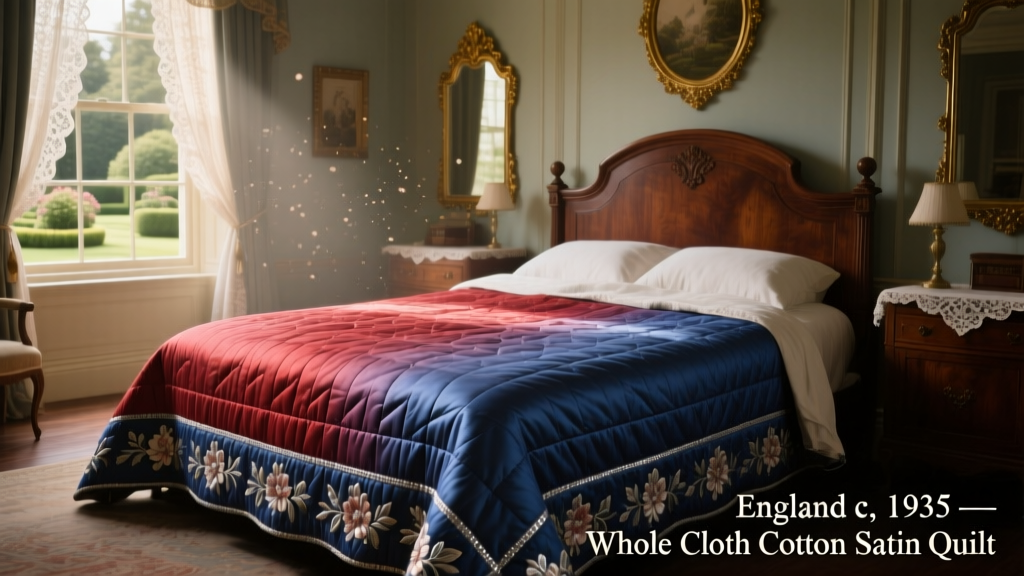
Whole Cloth Cotton Satin Quilt: A 1935 English Reverse-Dye Masterpiece in Red-to-Blue Gradient
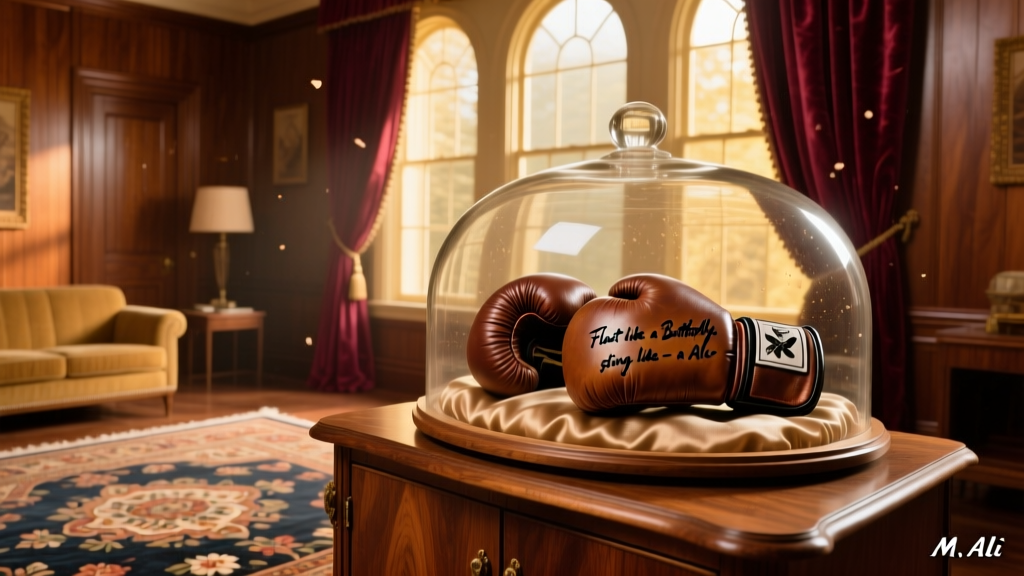
The Muhammad Ali Autographed Boxing Glove: Authentication, Provenance, and Collectible Value
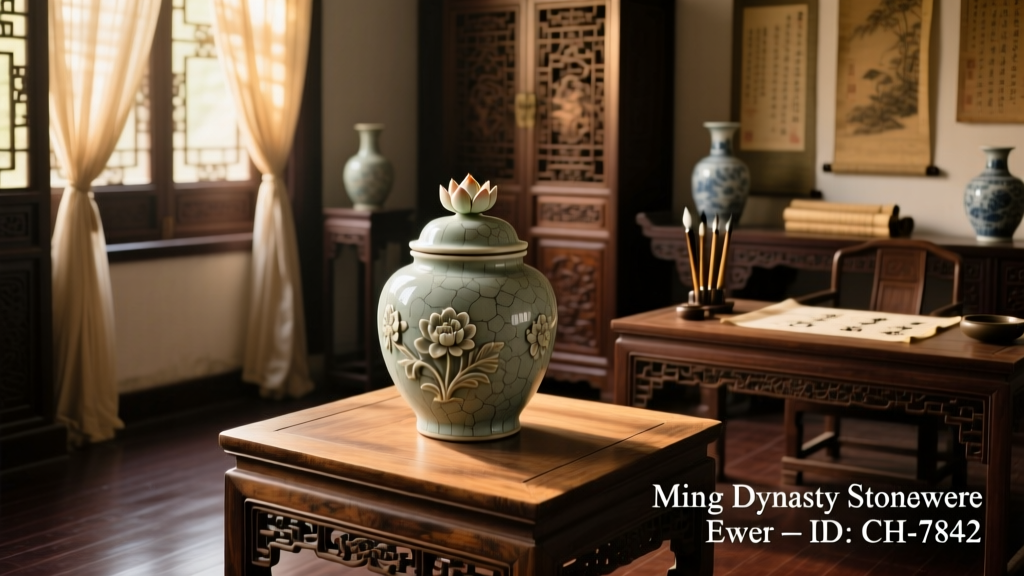
Identifying an Arts & Crafts Lidded Stoneware Ewer: Key Markings, Maker Clues, and Regional Signatures

Roy Rogers Animated Clock: The 1951 Brown Ingraham 'Roy on Trigger' Wall Clock — History, Mechanics, and Restoration Insights

John Stobart: Master Mariner Painter and His Enduring Legacy in Maritime Art and Antique Furniture Context
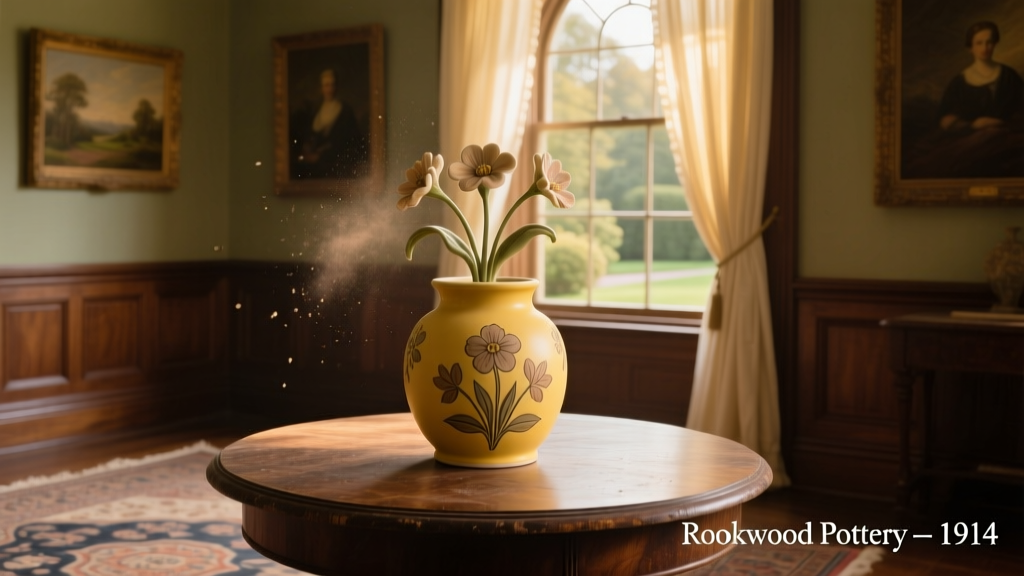
Rookwood Flower Frog Yellow Matte, 1914: A Collector’s Guide to Form, Function, and Historical Significance