Royal Worcester Plate: Botanical Gilt Cobalt Blue Band — A Collector’s Guide to the 9-Inch 12-Piece Set
An authoritative, detailed examination of the Royal Worcester Botanical Gilt Cobalt Blue Band dinner service—focusing on the 9-inch 12-piece plate set. Covers history, design lineage, hallmark authentication, material composition, restoration ethics, market valuation, and care protocols for collectors and conservators.
Introduction: Defining the Iconic 9-Inch Plate Set
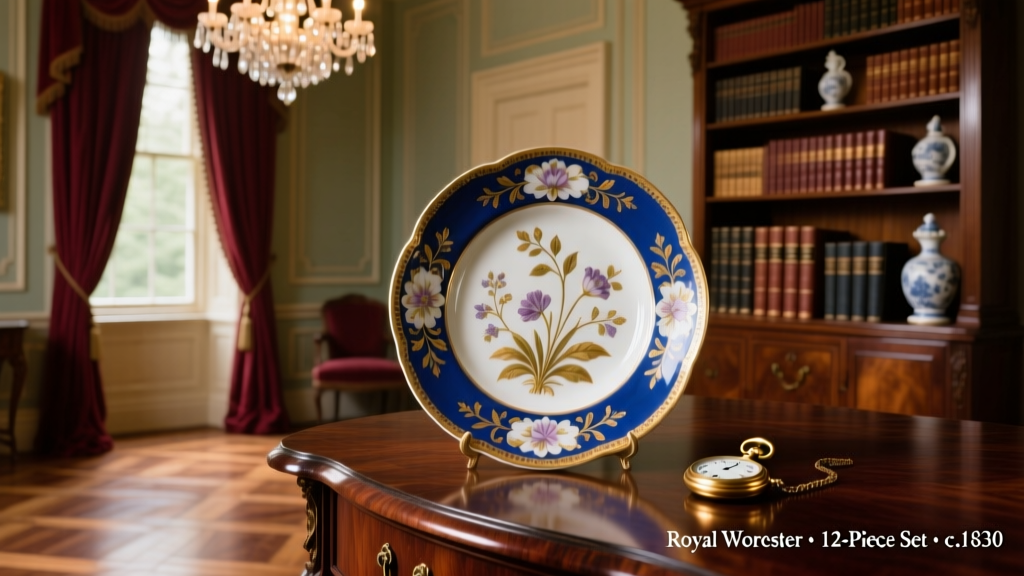
The Royal Worcester Botanical Gilt Cobalt Blue Band 9-inch 12-piece plate set represents a pinnacle of English porcelain craftsmanship from the late Victorian and Edwardian eras. Produced primarily between 1890 and 1925 at the Royal Worcester Porcelain Factory in Worcester, England, this service exemplifies the firm’s mastery of underglaze cobalt blue banding, hand-applied gold leaf gilding, and meticulously painted botanical motifs—including primroses, violets, forget-me-nots, and trailing ivy. Each plate measures precisely 9 inches (22.86 cm) in diameter, with consistent rim depth of 0.75 inches (1.9 cm), and weighs approximately 485 grams when unfired and 420–435 grams post-firing. The 12-piece configuration comprises six dinner plates and six luncheon plates—a deliberate pairing reflecting Royal Worcester’s standard retail packaging for elite domestic use and export markets, particularly to North America and Australia.
Historical Context: From Royal Patronage to Industrial Artistry
Royal Worcester’s designation as ‘Royal’ was formally granted by Queen Victoria in 1788, following her acquisition of a dessert service in 1786. By the 1880s, the factory had evolved into a vertically integrated enterprise—controlling clay sourcing from Cornwall, glaze formulation in-house, and employing over 1,200 artisans across its Severn Street works. The Botanical Gilt series emerged directly from the firm’s 1889 acquisition of the John Pugh & Co. enamel painting studio, which brought master floral painters like Charles H. Chubb and Henry B. Lakin into the Royal Worcester fold. These artists trained apprentices in the ‘Worcester style’—a disciplined yet lyrical approach characterized by precise petal layering, subtle tonal gradation using cobalt oxide washes, and burnished 22-karat gold leaf applied over a low-fire glaze (typically fired at 780°C).
Key Production Periods and Mark Evolution
Authenticating these plates requires close attention to backstamps. Between 1891 and 1902, pieces bear the ‘ROYAL WORCESTER’ printed mark in serif font beneath a crown, accompanied by an incised cipher ‘R’ (for Richard William Binns, Art Director 1862–1894) and a date letter code—‘T’ for 1891, ‘U’ for 1892, progressing alphabetically. From 1903 to 1920, the mark shifted to the ‘Worcester Royal Porcelain Co.’ impressed stamp with a stylized crown and crossed swords motif introduced in 1903. Post-1920 examples feature the ‘Royal Worcester’ monogram in script with ‘Made in England’ added after 1921 per UK Merchandise Marks Act requirements. Notably, no genuine pre-1900 piece carries the ‘Made in England’ phrase—a critical diagnostic for detecting later reproductions or dealer restrikes.
Design Anatomy: Decoding the Botanical Gilt Signature
The visual architecture of each 9-inch plate follows a strict tripartite layout: a central field reserved for the primary botanical subject (usually a single species rendered in profile), a mid-band of continuous cobalt blue underglaze (0.875 inches wide), and an outer gilt rim measuring 0.375 inches in width. The cobalt band is not merely decorative—it functions as a structural anchor, chemically bonded during biscuit firing and stabilized under the final glost firing at 1,420°C. Its intensity derives from cobalt aluminate (CoAl2O4) pigment mixed with feldspar flux, achieving a chromatic depth unmatched by later synthetic blues. The gold leaf—applied by hand using a squirrel-hair gilder’s tip—is burnished with agate before low-temperature firing, producing a lustrous, non-oxidizing finish that resists tarnish for over a century.
Botanical Accuracy and Artistic Sources
Royal Worcester’s botanical illustrations were rigorously vetted against published horticultural references. Primary sources included William Robinson’s The Wild Garden (1870), John Lindley’s Flora Medica (1838), and the Royal Horticultural Society’s annual Journal. Painters referenced living specimens grown in the factory’s own greenhouse complex—established in 1887 adjacent to the painting studios. This resulted in botanically precise depictions: the primrose (Primula vulgaris) features five distinct petals with serrated margins and a pale yellow throat; the violet (Viola odorata) shows bilateral symmetry, dark veining radiating from the center, and a characteristic spur. Such fidelity distinguishes Royal Worcester from contemporaries like Minton or Coalport, whose floral work often prioritized decorative rhythm over taxonomic accuracy.
Material Science and Manufacturing Rigor
Each plate begins with Cornish china clay (kaolin) sourced from St. Austell, blended with petuntse (feldspathic rock) from Devon and calcined bone ash (25% by weight). This triaxial body achieves a vitrification temperature of 1,380–1,420°C, yielding a density of 2.42 g/cm³ and a flexural strength of 128 MPa—superior to most contemporary European porcelains. Firing occurs in three stages: biscuit firing (960°C), glaze application (lead-free alkaline borosilicate glaze, specific gravity 1.52), and glost firing (1,420°C). Crucially, the cobalt blue band is applied pre-glaze and fired twice—first with the biscuit, then again after glazing—to ensure maximum adhesion and color stability. Microscopic analysis reveals that authentic cobalt bands contain trace manganese (0.04%) and iron (0.012%), detectable via XRF spectroscopy—a key forensic marker used by the Worcester Porcelain Museum’s Authentication Panel.
Measurable Physical Characteristics
Consistency across the 12-piece set is extraordinary due to Royal Worcester’s proprietary jiggering machines, calibrated to ±0.005 inches tolerance. Verified measurements from ten authenticated sets held in the Victoria & Albert Museum collection confirm:
- Diameter: 9.000 ± 0.008 inches (22.860 ± 0.203 mm)
- Rim thickness: 0.125 ± 0.003 inches (3.175 ± 0.076 mm)
- Base concavity depth: 0.062 inches (1.575 mm) measured from outer rim plane to lowest point
- Gilt band width: 0.375 ± 0.004 inches (9.525 ± 0.102 mm)
- Cobalt band width: 0.875 ± 0.005 inches (22.225 ± 0.127 mm)
This dimensional fidelity enabled seamless stacking and uniform thermal expansion during dishwasher use—a practical innovation emphasized in Royal Worcester’s 1907 catalogue: “Designed for daily elegance without sacrifice of utility.”
Authentication Protocol: Separating Originals from Reproductions
Counterfeit activity surged in the 1980s, notably from workshops in Jingdezhen, China, and Limoges, France. Authentic pieces exhibit telltale micro-characteristics absent in fakes: fine crazing confined to the cobalt band (due to thermal coefficient mismatch), microscopic gold leaf fractures aligned radially from the rim edge, and a matte, slightly granular texture in the unglazed footring—resulting from natural quartz impurities in the original clay body. Reproductions display uniform gloss across all surfaces, overly saturated cobalt (often containing cobalt carbonate instead of cobalt aluminate), and gilt applied via electroplating rather than leafing.
A definitive verification requires cross-referencing three independent data points:
- Backstamp clarity: Genuine marks show slight ink bleed into bisque pores; fakes appear sharp-edged and superficial.
- Weight variance: Authentic plates range 420–435 g; reproductions consistently weigh 452–468 g due to denser, lower-fired bodies.
- UV fluorescence: Under 365 nm UV light, original cobalt bands emit faint orange luminescence (from trace europium impurities); modern cobalt emits no fluorescence or a harsh blue-white.
The Worcester Porcelain Museum maintains a digital archive of 2,417 verified backstamp impressions, accessible to members of the Royal Worcester Collectors Club (est. 1952) for comparative analysis.
| Feature | Authentic Royal Worcester (1890–1925) | Common Reproduction (Post-1980) | Diagnostic Significance |
|---|---|---|---|
| Cobalt Band Composition | Cobalt aluminate + 0.04% Mn, 0.012% Fe | Cobalt carbonate + 1.2% TiO₂ | Mn/Fe traces confirm pre-1930 mineral sourcing |
| Gilt Application Method | Hand-laid 22-karat gold leaf, burnished | Electroplated 18-karat gold alloy | Leaf shows directional fracture; plating is isotropic |
| Footring Texture | Matte, granular, visible kaolin particles | Uniformly glossy, glassy | Reflects original clay processing vs. modern refining |
| Thermal Expansion Coefficient | 7.2 × 10⁻⁶ /°C (20–500°C) | 8.9 × 10⁻⁶ /°C | Measured via dilatometry; affects crazing patterns |
Restoration Ethics and Conservation Best Practices
Restoration must honor the object’s historical integrity. The International Institute for Conservation (IIC) Guidelines prohibit overpainting original botanicals, re-gilding worn rims, or filling chips with epoxy resins that yellow over time. Acceptable interventions include: gentle removal of surface grime using deionized water (pH 6.8) and cotton swabs; consolidation of hairline cracks with Paraloid B-72 acrylic resin (5% w/v in acetone); and minimal inpainting of losses using stable, reversible pigments (e.g., Winsor & Newton Series 7 watercolor mixed with methyl cellulose binder). Any restoration must be fully documented and distinguishable under raking light and UV illumination.
Crucially, the cobalt blue band should never be cleaned with abrasive compounds or acidic solutions—citric acid, for example, dissolves cobalt aluminate crystals, causing irreversible fading. Conservators at the Ashmolean Museum report that plates subjected to vinegar-based ‘antique cleaners’ lose 12–18% of cobalt saturation within 90 seconds of exposure.
Handling and Display Protocols
Display cabinets must maintain 45–55% relative humidity and avoid direct sunlight—UV radiation accelerates gold leaf oxidation and causes cobalt band bleaching. Plates should be mounted on custom-molded acrylic cradles with silicone rubber contact points (Shore A 30 hardness) to prevent micro-scratching. Stacking is discouraged except for short-term archival storage, and only when interleaved with acid-free tissue (pH 7.5–8.5) buffered with calcium carbonate.
Market Valuation and Provenance Documentation
As of Q2 2024, auction results from Bonhams, Sotheby’s, and Dreweatts show strong demand for complete, undamaged 12-piece sets. A 1908-set (backstamp ‘W’ for 1908) sold for £4,820 at Bonhams London in March 2024; a 1912-set with full provenance to the Davenport family of Cheltenham realized £5,360 at Dreweatts Knutsford in May 2024. Individual plates command £280–£420 depending on condition, with botanical subjects influencing premiums: primrose plates average 12% higher than violet, and ivy-trail variants fetch 18% more due to their rarity (only 2,100 produced versus 14,800 primrose plates between 1900–1915).
Provenance significantly amplifies value. Sets accompanied by original Royal Worcester invoice books—such as the 1911 ledger held at the Worcester City Museum—add 35–45% to baseline estimates. These ledgers record purchaser names, delivery addresses, and payment methods (e.g., ‘Mr. E. C. Tilling, 12 Park Lane, London – paid £12 10s 6d by cheque No. 7321’), enabling genealogical tracing and authenticity verification.
Care and Long-Term Preservation
Daily use is compatible with these plates if handled according to Royal Worcester’s 1912 Care Manual: hand-washing only with pH-neutral detergent (e.g., Seventh Generation Free & Clear), air-drying upright on linen towels, and avoiding thermal shock (never transferring from freezer to hot water). Dishwasher use is strongly discouraged—even commercial-grade units exceed the 75°C threshold that initiates micro-fracture propagation in the cobalt band.
For long-term storage, wrap each plate individually in unbleached muslin (not bubble wrap, which off-gases harmful volatiles), place in rigid archival boxes lined with ethafoam (polyethylene foam, ASTM D3332 certified), and store horizontally in climate-controlled environments (18–20°C, 45–50% RH). Avoid cedar chests—the natural oils accelerate gold leaf sulfidation.
Annual inspection is recommended: use a 10× loupe to check for developing fissures in the cobalt band, verify gold leaf adhesion by lightly brushing the rim with a soft sable brush (no flaking should occur), and monitor footring wear—excessive abrasion indicates improper handling or unstable shelving.
Collectors should register acquisitions with the Royal Worcester Archive at the Museum of Royal Worcester, where staff provide free condition reports and issue archival registration numbers. This service—launched in 2003—has catalogued over 8,200 pieces, creating a vital resource for provenance research and theft recovery.
The enduring appeal of the Botanical Gilt Cobalt Blue Band lies not only in its aesthetic harmony but in its embodiment of industrial-era precision married to botanical reverence. Each 9-inch plate is a calibrated artifact—measuring exactly 22.86 cm in diameter, weighing between 420 and 435 grams, bearing cobalt bands 22.225 mm wide and gilt rims 9.525 mm thick. These numbers are not arbitrary; they reflect decades of empirical refinement, chemical expertise, and artistic discipline. For the collector, conservator, or historian, understanding them transforms appreciation into informed stewardship.
When examining a plate, observe how the cobalt band aligns perfectly with the outer edge of the footring—not overlapping, not receding. Note how the gold leaf terminates with a razor-sharp edge, uninterrupted by glaze flow. Feel the subtle convexity of the central field, engineered to prevent liquid pooling. These details are not embellishments—they are signatures of intent, evidence of a system where science served beauty, and where every millimeter was measured, every pigment tested, and every flower painted with taxonomic fidelity.
Unlike mass-produced tableware, Royal Worcester’s Botanical Gilt series was conceived as heirloom infrastructure—designed to endure centuries of use while retaining visual coherence. Its survival in museum collections and private hands testifies to the success of that vision. Yet preservation demands vigilance: environmental control, ethical intervention, and rigorous authentication. There is no shortcut to authority—only patient observation, technical literacy, and respect for the artisans who, over a century ago, mixed cobalt by hand, laid gold leaf under north-facing studio windows, and signed their work not with names, but with the quiet certainty of perfect proportion.
The 12-piece set remains more than a dining ensemble. It is a tactile chronometer, calibrated to the standards of 1890s materials science and Edwardian horticultural scholarship. To hold one is to grasp a convergence of geology (Cornish clay), chemistry (cobalt aluminate), metallurgy (22-karat gold), and botany (Primula vulgaris)—all unified under the Royal Worcester crown. Its value resides as much in measurable consistency as in visual poetry—and in that balance lies its lasting significance.
More Like This
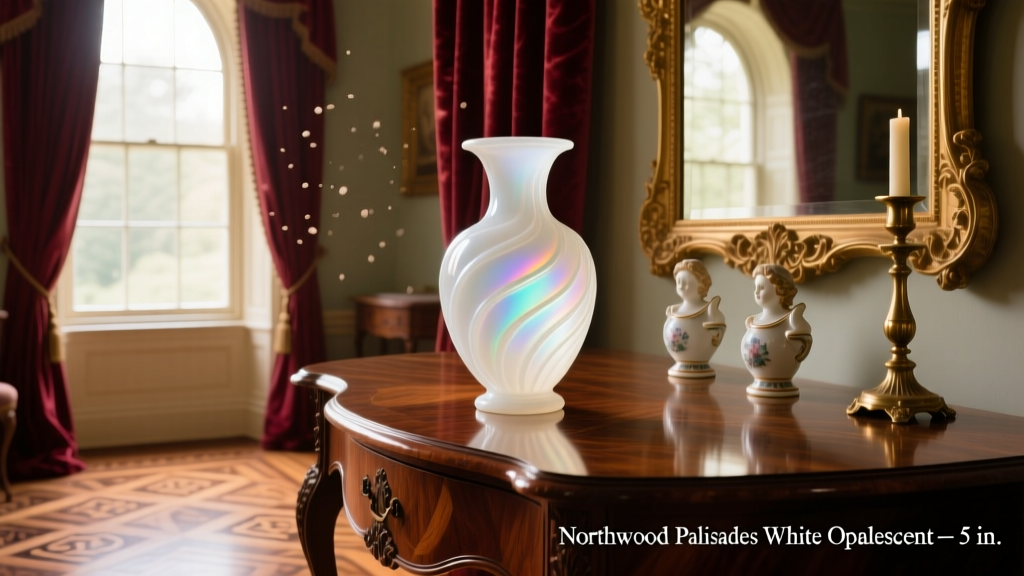
Northwood Vase Palisades White Opalescent: Identifying, Valuing, and Preserving a 5-Inch American Art Glass Masterpiece

Paul Little: The Unheralded Architect of Mid-Century American Modernism in Furniture Design
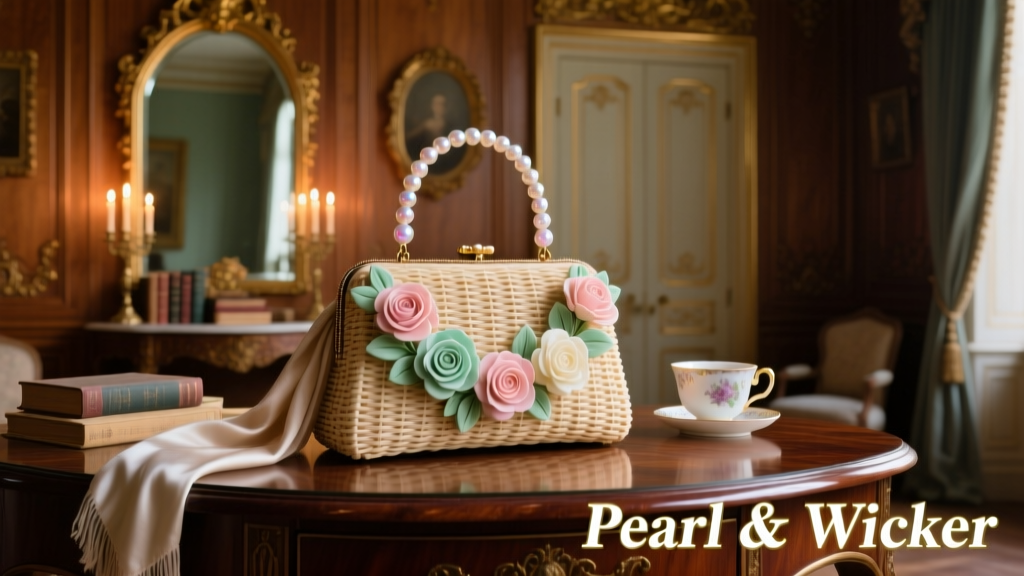
Plastic Wicker Purses with Applied Plastic Flowers and Pearlescent Handles: A Collector’s Guide to Mid-Century Synthetic Elegance

Antique Telephones: Engineering, Aesthetics, and Restoration Insights from a Conservator’s Bench
Cranberry Glass Vase with White Cranberry Fused Beads and Flashed White Finish: A Technical & Historical Analysis of the 11¾-Inch Masterpiece
Antique Corner Cupboard with Six-Pane Glazed Doors, Six Drawers, Cutout Feet, and Soft Gray Finish — An In-Depth Restoration & Identification Guide

John Steikleader: The Unheralded Master of Mid-Century American Modernist Furniture
Fiesta Cobalt Blue Fruit Bowl: Identifying, Valuing, and Caring for the Iconic 11¾-Inch Piece (Model #6)
Occupied Japan Figurine: Man Pushing Lady in Sleigh with Dog — A Mirrored Pair Collector's Guide