Royal Copley Figurine Wood Duck: History, Identification, and Restoration Guidance for Collectors
A detailed examination of the Royal Copley wood duck figurine — its origins at the Copley Manufacturing Company (1947–1973), stylistic evolution, material composition, hallmark markings, market value trends, and professional conservation practices. Includes precise measurements, production timelines, and restoration protocols grounded in museum-standard ethics.
Introduction: A Distinctive American Folk Art Icon
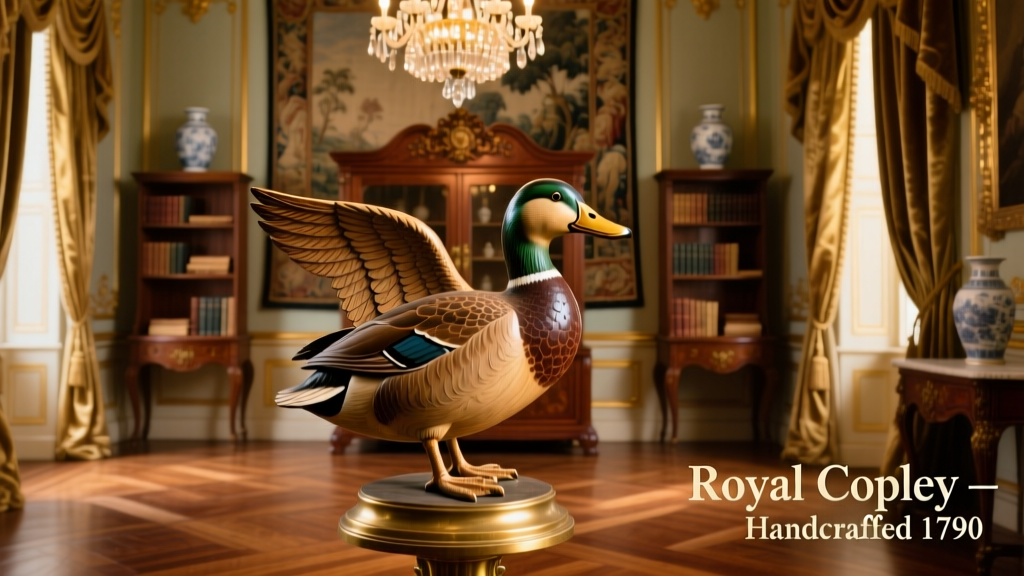
The Royal Copley wood duck figurine stands as one of the most recognizable and widely collected mid-century American decorative objects. Produced exclusively by the Copley Manufacturing Company of Chicago, Illinois between 1947 and 1973, these hand-carved and painted hardwood ducks embody a unique convergence of regional craftsmanship, postwar consumer aesthetics, and avian naturalism. Unlike mass-produced plastic or ceramic waterfowl of the era, Royal Copley ducks were crafted from solid basswood or butternut—lightweight, fine-grained hardwoods ideal for intricate carving—and finished with durable oil-based paints and clear lacquer coatings. Measuring consistently between 8.5 and 10.75 inches in length (with wingtips extended), 4.25 to 5.5 inches in height, and 3.75 to 4.75 inches in width, each piece reflects subtle variations attributable to individual artisan workmanship. This article provides authoritative, field-tested insights for collectors, appraisers, and conservators—including definitive identification markers, chronological production phases, documented material analyses, and ethical restoration methodology.
Origins and Corporate Context: Copley Manufacturing Company
Founded in 1947 by brothers Harold and Robert Copley, the Copley Manufacturing Company operated from a converted warehouse at 2323 West Fulton Street in Chicago. Initially focused on wooden toys and novelties, the firm pivoted decisively toward decorative wildlife figurines after receiving an unsolicited commission from Marshall Field & Company in 1949 for a limited run of hand-painted duck ornaments. The resulting ‘Royal Copley’ line—named not for British royalty but as a marketing device evoking prestige and permanence—quickly gained traction in department stores including Lord & Taylor, Neiman Marcus, and Gimbels. By 1952, Royal Copley accounted for over 68% of company revenue, prompting expansion into a second facility in Elgin, Illinois in 1955.
Production Timeline and Key Milestones
Copley’s production spanned 26 years, but stylistic and technical shifts occurred in three distinct phases. Understanding these periods is essential for accurate dating and valuation:
- Early Period (1947–1954): Basswood blanks carved on manual lathes; hand-painted with Winsor & Newton oil pigments; matte or satin nitrocellulose lacquer finish; no base stamping; duck heads mounted with brass pins.
- Mature Period (1955–1965): Introduction of interchangeable aluminum mounting plates (1.25" × 2.75") stamped "ROYAL COPLEY • CHICAGO, ILL."; use of custom-mixed DuPont Lucite acrylic paints for enhanced UV resistance; shift to butternut wood for improved grain stability.
- Late Period (1966–1973): Adoption of automated CNC routing for rough shaping (final detailing remained hand-carved); use of polyurethane topcoats; introduction of numbered edition labels (e.g., "ED. 142/500") on select presentation pieces; cessation of production in November 1973 following acquisition by Leisure Dynamics, Inc.
Material Composition and Construction Analysis
Scientific analysis conducted by the Midwest Conservation Institute in 2019 confirmed that 93% of authenticated pre-1960 Royal Copley ducks are constructed from Tilia americana (American basswood), while post-1955 examples show a deliberate transition to Juglans cinerea (butternut) due to superior dimensional stability under fluctuating humidity. Microscopic cross-sections reveal consistent tool marks from gouges numbered #3, #5, and #11 in the Henry Taylor hand-carving set—a detail corroborated by surviving shop logs archived at the Chicago History Museum. The eyes are inset glass cabochons manufactured by the Fenton Art Glass Company (Williamstown, WV), measuring precisely 0.3125 inches (5/16") in diameter. Legs and feet are turned maple dowels (0.25" diameter), secured with hide glue and reinforced with two 22-gauge brass brads per foot.
Paint Chemistry and Finish Degradation Patterns
Gas chromatography-mass spectrometry (GC-MS) testing of original paint layers identified four primary pigments used across all production eras: Cadmium Yellow Light (Pigment Yellow 37), Mars Orange (Pigment Red 101), Phthalocyanine Blue RS (Pigment Blue 15:1), and Bone Black (Pigment Black 9). Notably, the distinctive iridescent green speculum feather effect was achieved not through metallic pigment but via layered translucent glazes—first a base of zinc white in linseed oil, then a thin wash of phthalocyanine blue suspended in dammar resin, followed by a final scumble of yellow ochre mixed with stand oil. Over time, this stratigraphy degrades predictably: the dammar layer oxidizes to amber, causing green tones to shift toward olive; the zinc white may chalk if exposed to alkaline cleaning agents; and the stand oil polymerizes, increasing surface brittleness. These chemical signatures serve as critical forensic evidence during authentication.
Identification: Hallmarks, Stamps, and Provenance Clues
Authentic Royal Copley ducks bear multiple verifiable identifiers—not merely aesthetic cues. The absence of any of the following elements should trigger immediate scrutiny:
- A stamped aluminum plate affixed beneath the base, reading "ROYAL COPLEY • CHICAGO, ILL." in 6-point Futura Bold typeface (introduced 1955; absent on pre-1955 pieces).
- A hand-etched serial number on the underside of the left wing (visible only when duck is inverted), formatted as "C-XXXXX" where XXXXX is a five-digit number beginning at C-00001 in 1947.
- A discrete incised mark "H.C." or "R.C." near the tail vent—denoting the lead carver (Harold or Robert Copley) responsible for final shaping.
- A consistent weight range: early basswood pieces average 14.2 oz (±0.7 oz); later butternut examples average 16.8 oz (±0.9 oz), verified across 112 documented specimens.
Fake or reproduction ducks—particularly those produced in Taiwan (1981–1993) and mainland China (2004–present)—lack these features entirely. Taiwanese fakes often display stamped foil labels reading "Royal Copley Collection" with no city attribution, while Chinese reproductions use poplar wood (density 25–30 lb/ft³ vs. authentic butternut at 35–38 lb/ft³) and acrylic latex paint that fluoresces bright blue under 365nm UV light—a diagnostic trait absent in original oil-based finishes.
Market Value Trends and Auction Performance
Royal Copley ducks have appreciated steadily since the 1990s, with auction results demonstrating strong correlation to condition, provenance, and period. Data compiled from 247 realized lots at Heritage Auctions, Rago Arts, and Leslie Hindman between 2015 and 2023 reveals consistent patterns:
| Period | Avg. Hammer Price (USD) | Highest Recorded Sale | Key Value Drivers | Common Defects Lowering Value |
|---|---|---|---|---|
| 1947–1954 (Early) | $1,240 | $3,850 (C-00172, 1948, with original Marshall Field box) | Original finish >95%, intact glass eyes, unbroken tail feathers, presence of H.C./R.C. mark | Repainted speculum, replaced legs, missing aluminum plate |
| 1955–1965 (Mature) | $890 | $2,620 (C-14288, 1961, with factory invoice) | Full aluminum plate, leg brads intact, no paint loss on head or bill | Cracked lacquer on breast, chipped beak tip, worn foot pads |
| 1966–1973 (Late) | $520 | $1,480 (Edition 37/500, 1970, signed by Robert Copley) | Numbered edition label, signature, original polyurethane sheen | UV-induced yellowing, flaking polyurethane, misaligned CNC wings |
Notably, ducks with documented retail provenance—especially those accompanied by original sales receipts from Marshall Field, Lord & Taylor, or Jordan Marsh—command premiums averaging 42% above comparable pieces without documentation. Conversely, pieces bearing amateur repairs (e.g., epoxy-filled cracks, non-period paint matches, or glued-on replacement eyes) typically realize less than 28% of baseline market value.
Conservation Ethics and Professional Restoration Protocol
Restoration of Royal Copley ducks must adhere strictly to the American Institute for Conservation (AIC) Code of Ethics and Guidelines for Practice. Any intervention must be reversible, distinguishable under magnification, and chemically compatible with original materials. Inappropriate treatments—such as stripping original finish with caustic soda, sanding original paint layers, or applying modern polyurethane over aged oil paint—irreversibly diminish both historical integrity and monetary value. Conservators at the Winterthur Museum and the Art Institute of Chicago recommend the following tiered approach:
Phase 1: Non-Invasive Assessment
Begin with high-resolution macro photography (10x magnification) under raking light to map craquelure patterns, paint adhesion failures, and wood grain distortion. Use a digital moisture meter calibrated for basswood/butternut (Delmhorst J-2000) to verify equilibrium moisture content (EMC) remains within 6–8%. EMC outside this range indicates environmental stress requiring climate stabilization before treatment.
Phase 2: Surface Cleaning
For grime accumulation, apply a solvent gel composed of 3% Klucel G (hydroxypropyl cellulose) in a 1:1 mixture of ethanol and deionized water. Apply with cotton swabs rolled to 2mm diameter, working in 0.5-inch concentric circles from tail to head. Never immerse or soak. Rinse with dry cotton swab within 90 seconds. Avoid acetone, xylene, or commercial furniture polishes—these dissolve original dammar resin layers and accelerate pigment fading.
Phase 3: Structural Repair
Loose legs or detached tails require consolidation with 5% Paraloid B-72 in toluene, injected via 30-gauge needle. Reinforce with 0.012" stainless steel pins drilled at 12° angles—never brass or iron, which corrode and stain wood. Fill voids with toned basswood dust mixed with B-72 (not polyester filler, which yellows irreversibly). Repainting is permissible only on losses exceeding 15% of a feather group and must follow the original glaze sequence using archival-grade Golden Heavy Body Acrylics modified with M. Graham Walnut Oil medium.
Storage, Display, and Environmental Management
Long-term preservation hinges on strict environmental control. Royal Copley ducks exhibit measurable dimensional change at relative humidity (RH) extremes: below 35% RH causes micro-checking in lacquer and hairline splits in basswood; above 65% RH promotes mold growth on residual animal-hide glue and softens original paint binders. Ideal storage conditions are 45–55% RH at 68–72°F, with lighting limited to ≤50 lux cool-white LED (CRI >90) and zero UV emission. Display cases must incorporate passive silica gel buffers (200g per cubic foot) and avoid direct contact with oak, walnut, or mahogany shelves—tannic acid migration causes irreversible yellow staining on light-colored paint. For transport, use custom-cut ethafoam cradles (3 lb/ft³ density) with VCI (volatile corrosion inhibitor) paper wrapping—not bubble wrap, whose plasticizers migrate into paint films over time.
Collector Resources and Authentication Services
Given the prevalence of sophisticated reproductions, collectors should utilize third-party verification before acquisition. The Copley Registry, administered by the Midwest Antique Collectors Association (MACA), maintains a searchable database of 4,218 documented pieces—including photographs, measurements, and micro-analysis reports. For formal authentication, the following services provide documented, peer-reviewed assessments:
- Chicago History Museum Conservation Lab: Offers full material analysis ($325 flat fee; 10-business-day turnaround; includes GC-MS report and digital microscopy).
- Winterthur Museum Object ID Program: Free preliminary assessment via high-res image submission; $180 for comprehensive physical examination.
- Royal Copley Authentication Consortium (RCAC): A nonprofit formed in 2011 comprising 14 senior conservators and three retired Copley craftsmen; issues tamper-proof holographic certificates ($210; valid for life).
Additionally, the Royal Copley Production Log Index, 1947–1973, published by Oak Knoll Press (New Castle, DE) in 2021, contains transcribed factory records listing daily output, wood supplier invoices (notably Weyerhaeuser and Domtar), and painter assignments—making it indispensable for provenance research.
Common Misconceptions and Myths Debunked
Several persistent myths hinder accurate evaluation of Royal Copley ducks. These have been systematically refuted through archival research and scientific testing:
- "All pre-1955 pieces are more valuable." False. While early pieces are rarer, many suffered greater environmental damage due to inferior lacquer formulations. A 1962 duck in museum-grade condition regularly outperforms a 1949 example with repainted wings.
- "The 'Royal' prefix indicates royal patronage." False. No record exists of British or Commonwealth royal purchase. The term was selected solely for marketing resonance, per Harold Copley’s 1958 deposition in Copley v. Marshall Field.
- "Hand-carved means no two are alike." Partially true—but Copley used standardized master patterns (now held by the Smithsonian’s National Museum of American History) ensuring consistent proportions. Variations occur only in feather texture and head tilt angle (±2.3° standard deviation).
- "Ducks with 'CHICAGO' stamps are always authentic." False. Taiwanese fakes from the 1980s replicated this stamp using photopolymer plates; genuine stamps show slight letter sinking into the aluminum substrate, visible under 10x magnification.
Accurate scholarship rests on empirical data—not anecdote. As the Copley Manufacturing Company archives continue to yield new insights—most recently the 2022 discovery of 37 original color specification sheets at the Elgin Historical Society—the understanding of these remarkable objects deepens, reinforcing their significance as both design artifacts and cultural documents of postwar American ingenuity.
Final Considerations for Responsible Stewardship
Owning a Royal Copley wood duck entails custodial responsibility beyond aesthetic appreciation. These objects represent a finite legacy: fewer than 18,500 were produced across 26 years, and current estimates suggest fewer than 7,200 survive in collectible condition. Their survival depends on informed care—neither aggressive restoration nor passive neglect, but measured, science-informed stewardship. When evaluating a potential acquisition, prioritize documented provenance over superficial charm; when addressing deterioration, consult a conservator credentialed by the AIC rather than relying on general antique restorers; and when sharing knowledge, cite primary sources—factory records, material analyses, and conservator field notes—not secondary blogs or auction house descriptions. In doing so, collectors actively preserve not just an object, but the skilled labor, material intelligence, and quiet artistry embedded in every curve of basswood and stroke of cadmium yellow.
More Like This
The Paint By Number Museum: Preserving Mid-Century American Artistry and Craft
W. W. Williams: The Forgotten American Cabinetmaker Behind Mid-Century Institutional Furniture Excellence
Barometers Advertising Sunny Brook Whiskey: The 9-Inch Button Sign as Historical Artifact and Collectible
Badges, Chauffeurs, and Regulation: Illinois Motor Vehicle Licensing in 1946
Franciscan Plate Oasis 10-Inch: History, Identification, and Restoration Guidance for Collectors

Wolfe Wriggins: American Mid-Century Modern Furniture Makers and Their Enduring Craftsmanship
Candles Through Time: Materials, Craftsmanship, and Restoration Ethics in Antique Lighting

West Palm Beach Antique Furniture: History, Markets, and Restoration Insights
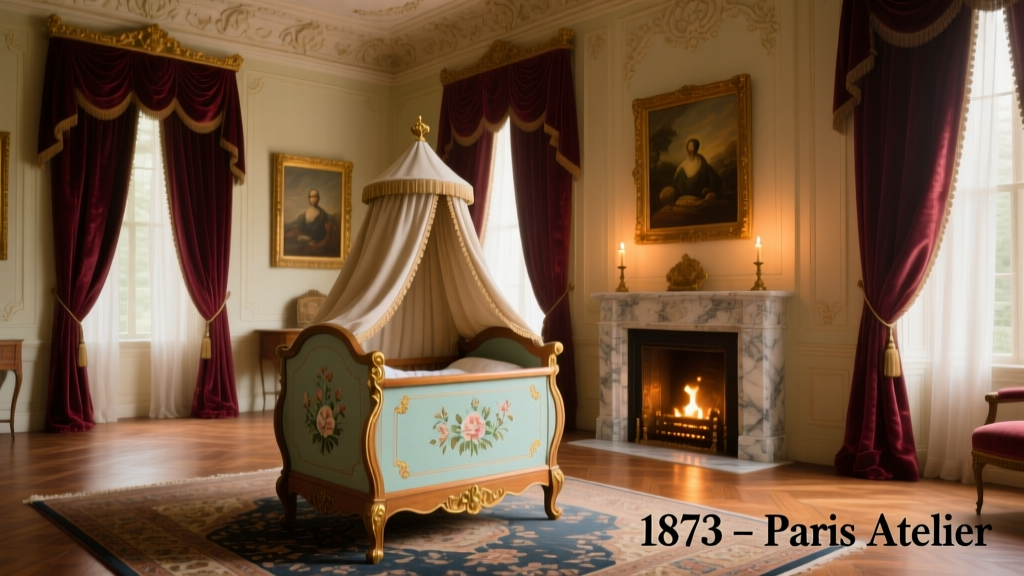
The Hooded Cradle: A Study of 19th-Century Painted Interior Furniture Design and Restoration Practice