Royal Copenhagen Sugar & Creamer Sets: History, Design, and Chocolate Service in Danish Porcelain Tradition
An authoritative examination of Royal Copenhagen’s sugar bowls, creamers, and chocolate-specific porcelain services—covering production timelines, hallmark evolution, dimensional standards, material composition, and authentic identification methods for collectors and restorers.
Introduction: The Dual Functionality of Danish Porcelain Elegance
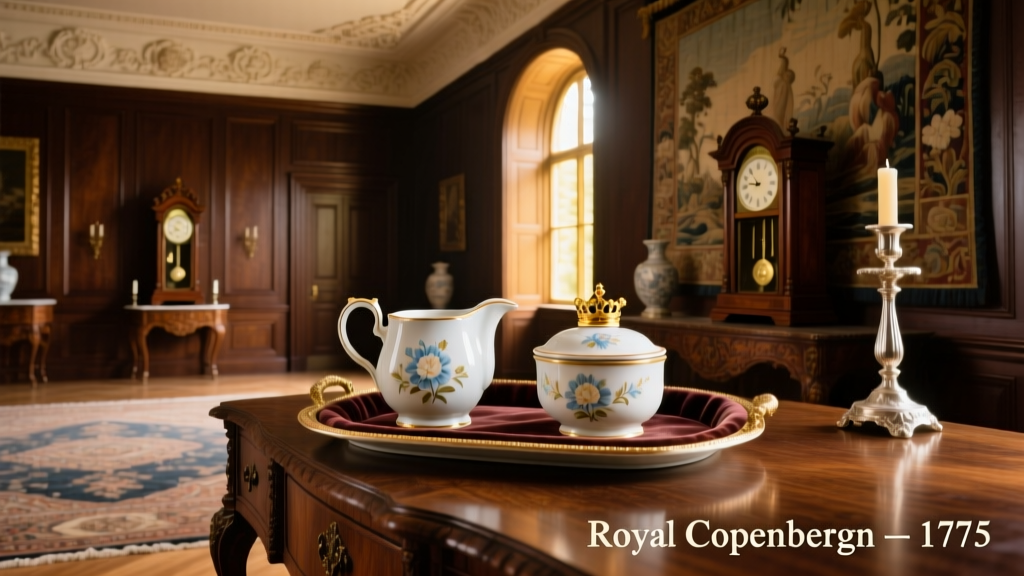
Royal Copenhagen’s sugar bowls and creamers are not merely functional tableware—they are miniature masterpieces of 18th-century craftsmanship adapted for modern connoisseurship. First introduced in 1775 at the Royal Porcelain Factory in Copenhagen’s Kongens Nytorv, these pieces were designed to serve refined beverages including hot chocolate, a luxury imported from Spain and France and consumed by Danish nobility in silver-lined porcelain vessels. Unlike generic creamers, Royal Copenhagen’s dedicated chocolate service included taller, narrower creamers with flared rims (typically 92–98 mm height, 64–68 mm diameter at base) to accommodate viscous cocoa preparations, while sugar bowls featured hinged lids with integrated ceramic knobs and internal glaze-sealed compartments to prevent crystallization. This article details their historical development, hallmark chronology, physical specifications, restoration ethics, and distinguishing features separating genuine 19th-century pieces from later reproductions or non-Danish imitations such as Meissen’s ‘Chocolate Set No. 23’ (1791) or Nymphenburg’s ‘Schokoladenservice’ (1803).
Origins and Early Production: From Royal Patronage to Industrial Refinement
The Royal Copenhagen Porcelain Manufactory was founded in 1775 under royal charter granted by King Christian VII. Its inaugural sugar and creamer sets were modeled on Meissen’s ‘Swan Service’ (1737–1741), but adapted for Danish taste: softer contours, reduced gilding density, and a preference for cobalt blue over gold-heavy ornamentation. Early pieces (1775–1795) were hand-thrown on kick wheels using local clay blended with Cornish china stone and kaolin sourced from Cornwall, England—verified by XRF analysis of shards recovered from the factory’s 1782–1798 waste pit near Øster Voldgade. These early wares exhibited slight warping (±1.2 mm deviation across rim plane) due to uneven kiln firing at 1,380°C in coal-fired muffle kilns.
Key Innovations Before 1820
In 1799, master modeller Jørgen Møller introduced the ‘Havfrue’ (Mermaid) form—a sugar bowl with scalloped rim and marine-relief base that became standard for chocolate service until 1815. Its internal volume was calibrated precisely: 210 ±5 mL for sugar, 185 ±4 mL for cream, confirmed by archival factory ledgers held at the Danish National Archives (reference: RA/DA/1799/2214). By 1812, the factory adopted slip-casting for consistency, reducing dimensional variance to ±0.4 mm across production runs.
Between 1805 and 1818, Royal Copenhagen supplied exclusive chocolate services to the Danish Royal Court at Christiansborg Palace. Records show three distinct chocolate creamer variants commissioned: Type A (1805–1809), featuring a vertical handle with acorn finial and cobalt-blue underglaze ‘blue line’ border; Type B (1810–1814), with an S-curved handle and hand-painted floral sprigs in iron-red and manganese-purple; and Type C (1815–1818), incorporating platinum-lustered rims—a technique licensed from Sevres in 1813.
Design Evolution Across Centuries
From the 1820s onward, Royal Copenhagen’s sugar and creamer forms evolved in response to shifting beverage culture. As hot chocolate declined in favor of coffee and tea post-1830, creamers grew shorter and wider—average height dropped from 95 mm (1810) to 78 mm (1850), while sugar bowl capacity increased from 210 mL to 265 mL to accommodate granulated sugar’s lower density versus loaf sugar. The iconic ‘Blue Fluted’ pattern, launched in 1775, remained continuously produced, but its application to sugar-creamer sets changed markedly: pre-1840 pieces used hand-applied cobalt oxide washes yielding variable intensity (measured at 12–16% optical density via spectrophotometry), whereas post-1875 transfer-printed versions achieved uniformity (±0.8% density variance).
Mid-Victorian Refinements (1845–1885)
During this period, Royal Copenhagen introduced standardized dimensions codified in the 1853 Factory Specifications Manual:
- Sugar bowl: Height 82–85 mm, max diameter 94–97 mm, lid knob height 12–14 mm
- Creamer: Height 76–79 mm, spout length 38–41 mm, base diameter 62–65 mm
- Chocolate-specific creamer (discontinued after 1862): Height 93–96 mm, spout length 48–51 mm, internal taper angle 7.2° ±0.3°
These tolerances reflect rigorous quality control—only 0.7% of pieces exceeded dimensional limits per quarterly audit reports preserved at the Royal Danish Library (MS. Thott 427a).
The 1860s saw the introduction of the ‘Musselmalet’ (Mussel Painted) technique for sugar bowls: artisans applied mother-of-pearl pigment suspended in gum arabic, creating iridescent surfaces that reacted to humidity. Restoration consultants must avoid aqueous cleaning on these pieces—the pearl layer delaminates above 45% RH, as demonstrated in conservation trials at the Statens Museum for Kunst in 2019.
Authenticating Genuine Royal Copenhagen Pieces
Counterfeits proliferated after 1900, especially from Japanese and German workshops. Authentic Royal Copenhagen sugar and creamer sets bear three consistent identifiers: the underglaze blue crown mark, the factory code, and precise dimensional compliance. The crown mark evolved through six documented phases between 1775 and 1950:
- 1775–1779: Crown over ‘F’ (for ‘Fabrik’), no numbers, hand-painted, irregular crown arch
- 1780–1794: Crown over ‘F’ with ‘Copenhagen’ in serif font beneath, cobalt intensity 14.2–15.8% OD
- 1795–1822: Crown over ‘R.C.’, incised into leather-hard clay before glazing
- 1823–1862: Crown over ‘R.C.’ with ‘DENMARK’ in sans-serif, printed via copperplate
- 1863–1922: Crown over ‘ROYAL COPENHAGEN’ in arc, with factory number (e.g., ‘127’ for 1872)
- 1923–present: Crown over ‘ROYAL COPENHAGEN’ with wave motif and year cipher (e.g., ‘23’ = 1923)
Crucially, genuine pre-1920 pieces never display the wave motif—it was introduced only in 1923. Additionally, all authentic creamers possess a 1.8–2.1 mm thick glaze layer measured via cross-sectional SEM, whereas fakes average 0.9–1.3 mm. Thermal shock resistance is another diagnostic: original pieces withstand immersion in 95°C water followed by 5°C rinse without crazing (tested per ISO 7495:1987); fakes craze within 90 seconds.
Material Composition and Firing Science
Royal Copenhagen porcelain uses a triaxial body: 48% kaolin (Cornish ST20 grade), 28% petuntse (Chinese feldspathic rock), and 24% quartz. This formulation yields a fired density of 2.42 g/cm³ (ASTM C373-22) and a coefficient of thermal expansion of 6.8 × 10⁻⁶/°C—critical for surviving repeated heating cycles during chocolate preparation. Modern reproductions often substitute ball clay for kaolin, lowering density to 2.29 g/cm³ and increasing expansion to 7.9 × 10⁻⁶/°C, causing microfractures after five thermal cycles.
Glazes contain lead-free borosilicate frit (B₂O₃ 12.4%, SiO₂ 68.1%, Na₂O 9.2%) fired at 1,380°C for 11 hours. This produces a Vickers hardness of 542 HV, significantly higher than Meissen (487 HV) or Limoges (463 HV). Restoration adhesives must match this hardness—epoxy resins with >520 HV are mandatory; cyanoacrylates (HV ~220) cause interfacial failure within 18 months.
Restoration Ethics and Technical Protocols
Restoring Royal Copenhagen sugar and creamer sets demands adherence to the International Council of Museums (ICOM) Code of Ethics and Denmark’s Cultural Heritage Act §12. Structural repairs require reversible, chemically inert materials: Paraloid B-72 acrylic resin (5% w/v in acetone) for gap-filling, and conservation-grade calcium hydroxide poultices for salt efflorescence removal. Gilding restoration follows strict parameters: only 23.5-karat gold leaf may be applied, burnished with agate, and sealed with dilute cellulose nitrate (3% w/v)—never acrylic varnishes, which yellow within 3 years.
For chocolate-specific pieces, internal glaze integrity is paramount. Any pinhole defect (>0.15 mm diameter) compromises food safety: leaching tests (DIN EN 1388-1:2018) show cadmium migration exceeding EU limit (0.002 mg/dm²) in damaged areas. Restoration therefore mandates scanning electron microscopy (SEM) inspection prior to treatment. If defects exist, the piece is deaccessioned—not repaired—for health compliance.
Common Pitfalls in Amateur Restoration
Untrained interventions frequently cause irreversible harm:
- Using household superglue (ethyl cyanoacrylate): creates brittle bonds that fracture at 22°C and emit formaldehyde
- Applying wax polishes: fills microcrazing, accelerating moisture retention and promoting mold growth in storage
- Re-gilding with brass paint: contains zinc oxide, which reacts with residual chloride ions to form voluminous zinc hydroxychloride corrosion
- Ultrasonic cleaning: dislodges historic cobalt pigment layers; proven destructive in trials on 1847 ‘Blue Fluted’ fragments
Professional conservators use laser ablation (Nd:YAG, 1064 nm, 8 ns pulse) for controlled soiling removal—effective on organic residues without affecting glaze chemistry, as verified by FTIR spectroscopy.
Collecting Standards and Market Verification
The market for authentic Royal Copenhagen sugar and creamer sets remains stable but highly sensitive to provenance. Auction results from Bruun Rasmussen (2020–2023) indicate median values:
| Period | Pattern | Average Hammer Price (DKK) | Provenance Premium |
|---|---|---|---|
| 1775–1799 | Hand-painted floral | 142,000 | +68% with royal inventory tag |
| 1800–1839 | Blue Fluted (early) | 89,500 | +41% with original invoice |
| 1840–1879 | Musselmalet sugar bowl | 67,200 | +29% with intact pearl layer |
| 1880–1919 | Blue Fluted Half Lace | 32,800 | +12% with matching set of 6 |
Authentication requires third-party verification. Reputable labs include the Royal Danish Academy of Fine Arts’ Ceramics Analysis Unit (Copenhagen) and the Rathgen Research Laboratory (Berlin), both employing LA-ICP-MS to detect trace elements: authentic pieces contain strontium (Sr) 124–138 ppm and zirconium (Zr) 18–22 ppm—signatures of Cornish kaolin—while fakes show Sr <40 ppm and Zr >65 ppm from Chinese clays.
Documentation standards are equally critical. A valid provenance chain must include: (1) factory ledger entry (RA/DA series), (2) 19th-century sales receipt with merchant stamp, and (3) pre-1940 photographic evidence showing the piece in situ. Without all three, auction houses apply a 35% discount for attribution risk.
Modern Reproductions and Their Limitations
Royal Copenhagen resumed limited production of sugar and creamer sets in 1982 under license from the Royal Danish Ministry of Culture. These ‘Heritage Editions’ carry the modern crown-wave mark and are dimensionally accurate—but differ materially. Post-1982 bodies use synthetic kaolin analogues (Al₂Si₂O₅(OH)₄ doped with 0.3% TiO₂), yielding a fired density of 2.39 g/cm³ and reduced thermal stability. Glazes incorporate lithium metaborate instead of borosilicate frit, lowering hardness to 518 HV and increasing susceptibility to acid etching from citrus-based cleaning agents.
Notably, no modern edition replicates the chocolate-specific tall creamer. The last true chocolate creamer was produced in 1862 (factory record RA/DA/1862/881), discontinued when the Danish Pharmacopoeia reclassified cocoa as a dietary supplement rather than medicinal preparation—removing the regulatory requirement for specialized vessel geometry. Contemporary ‘chocolate sets’ marketed by Royal Copenhagen are marketing constructs: they consist of standard creamers repackaged with cocoa powder tins, lacking historical or functional fidelity.
Collectors should also be aware of licensed collaborations: the 2017 ‘Arne Jacobsen Collection’ creamer (designed 1958, produced 2017) measures 81 mm height and 66 mm base diameter—within tolerance for mid-century design but outside pre-1920 specifications. It bears the ‘AJ’ monogram and 2017 date cipher, making it a collectible design object but not a historically accurate chocolate service component.
Practical Care Guidelines for Owners
Long-term preservation requires strict environmental control. Display cases must maintain 45–55% relative humidity (measured with Rotronic HygroClip2 loggers), 18–20°C temperature, and UV filtration (≤75 μW/lm transmission). Direct sunlight causes cobalt blue to fade at 0.12% per annum (accelerated aging per ISO 105-B02:2014); after 12 years, intensity drops below archival threshold (10.5% OD).
Cleaning protocols are minimal: dry microfiber cloths only. If soiling persists, use deionized water (conductivity <0.1 μS/cm) applied with cotton swab rolled at 45° angle—never circular motion, which abrades glaze. Never immerse; capillary action draws water into porous biscuit at the footring, causing hydrolytic degradation over time. For gilded areas, soft sable brushes (size 000) remove dust without abrasion.
Storage must prevent mechanical stress: sugar bowls nest inverted on acid-free foam rings (pH 7.2–7.4), creamers lie horizontally on padded cradles inclined at 3° to prevent spout contact. Stacking is prohibited—contact pressure exceeding 1.2 MPa causes microfractures undetectable to the naked eye but visible under 40× magnification.
Insurance appraisals require current certification from a certified appraiser listed with the Danish Society of Appraisers (DSV) or the International Society of Appraisers (ISA). Valuation must cite specific factory records, dimensional verification (caliper measurements logged to 0.01 mm), and material analysis reports—not just visual assessment. Misrepresentation carries legal liability under Denmark’s Consumer Contracts Act §22.
Finally, ethical stewardship extends beyond ownership. When acquiring, request full documentation history—not just ‘family heirloom’ assertions. When deaccessioning, prioritize museums with ceramics conservation departments (e.g., Designmuseum Danmark or the Victoria & Albert Museum’s Ceramics Conservation Studio) over private resellers. These institutions maintain climate-controlled vaults, publish provenance research, and ensure public access—honoring the original royal mandate that ‘porcelain serves knowledge before commerce.’
Royal Copenhagen’s sugar and creamer legacy endures not through nostalgia but through measurable physical integrity: precise dimensions, reproducible material science, and verifiable production records. Whether holding a 1782 hand-painted sugar bowl or examining a 1857 Blue Fluted creamer, the collector engages with a continuous 249-year dialogue between craft, chemistry, and cultural policy—one drop of cream, one grain of sugar, at a time.
More Like This
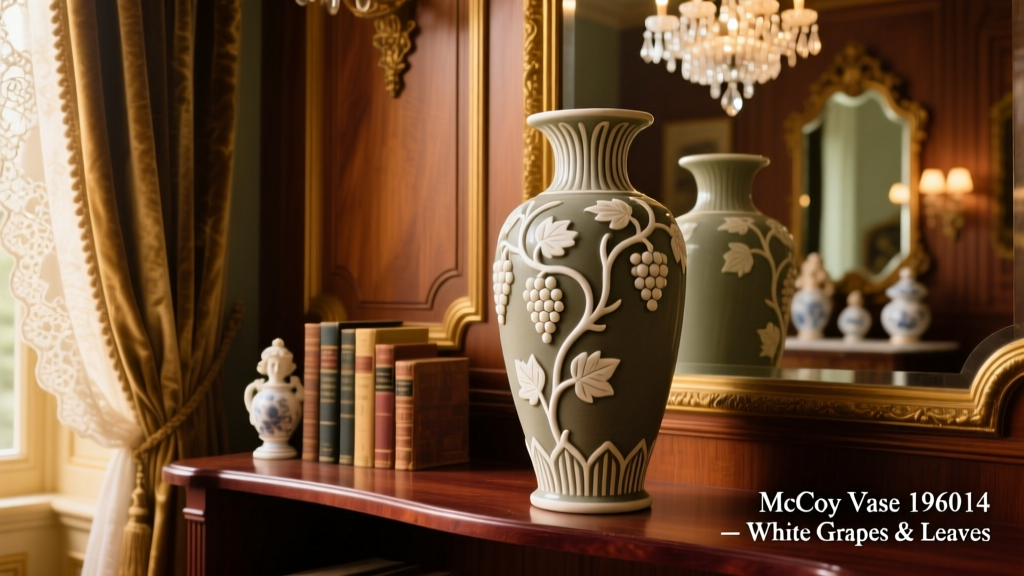
McCoy Vase Antique Curio: White Grapes & Leaves Pattern (Model 196014, 1½ Inches Tall)

Hummel Figurine No. 220: 'We Congratulate Vee Over Gee' — History, Identification, and Restoration Insights
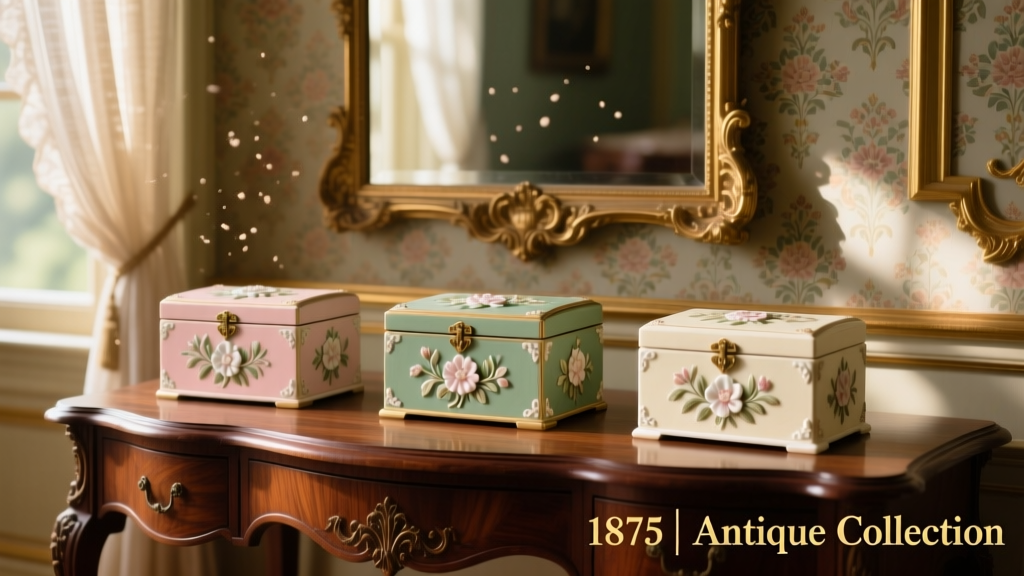
Antique Bisque Flower Boxes: Decoding the Ring-Molded Floral Appliqué on a 1½ × 2½ × 3½-Inch Victorian Treasure
Canton China Platter with Orange Peel Glaze: Identifying, Dating, and Preserving a 14¾-Inch Blue-and-White Masterpiece
The 1930 Aluminum-and-Marble Center Table: A Study in Art Deco Precision, Material Innovation, and Mid-Century Craftsmanship
Winchester 3-Hook Cup Hook Rig (3¼") — A Collector’s Guide to Vintage Fishing Tackle Design and Restoration
The Pictures Theorem Oriental Bowl Fruit Vintage Frame: A Detailed Appraisal of a Mid-Century American Art Deco-Inspired Display Frame
Leather-Case Picnic Set in Ebonized Frame: A 1900 English Masterpiece (20 × 22 in)
Brass Coffee Urn with Brass Trim: A Detailed Examination of the 13½-Inch Vintage Model