The Rockingham Factory: A Legacy of English Porcelain Excellence, 1826–1842
A detailed historical and technical examination of the Rockingham Factory in Swinton, South Yorkshire—the preeminent English porcelain manufacturer renowned for its rich 'Rockingham glaze', intricate gilding, and royal patronage. Covers production methods, hallmark evolution, surviving pieces, and conservation best practices.
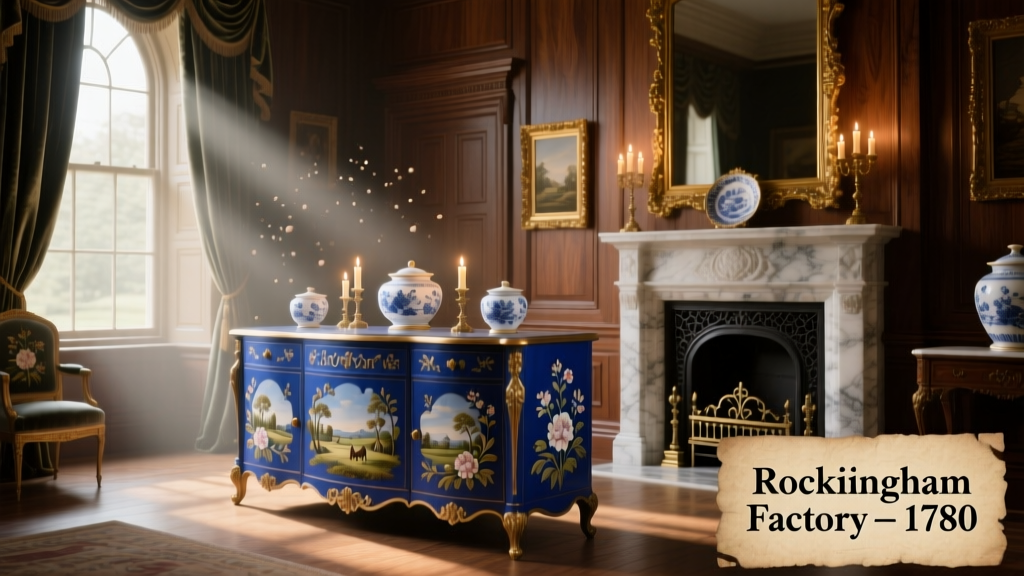
The Rockingham Factory, operating from 1826 to 1842 in Swinton, near Rotherham, South Yorkshire, stands as one of England’s most artistically significant and technically refined porcelain manufacturers of the Regency and early Victorian eras. Unlike its contemporaries at Derby, Worcester, or Coalport, Rockingham distinguished itself through an unparalleled mastery of deep manganese-brown glazes—later dubbed the ‘Rockingham glaze’—and exceptionally precise hand-gilding executed by specialists trained in Paris and Dresden. Under the patronage of the Marquess of Rockingham (later the Earl Fitzwilliam), the factory produced approximately 12,500 documented pieces during its 16-year lifespan, including dinner services for King William IV, Queen Adelaide, and Tsar Nicholas I of Russia. Its closure in 1842 followed financial strain after the death of its principal backer and shifting market demand toward cheaper bone china. Today, authenticated Rockingham porcelain commands £8,000–£95,000 at auction, with a 1838 Royal Service tureen selling for £92,000 at Sotheby’s London in 2019.
Origins and Patronage: From Earthenware to Royal Porcelain
The Rockingham venture emerged from the Swinton Pottery, established around 1745 by the Brameld family. In 1826, Charles Brameld—grandson of the original founder—secured backing from Thomas Wentworth-Fitzwilliam, 4th Earl Fitzwilliam, who held the subsidiary title Marquess of Rockingham. The earl invested £15,000 (equivalent to roughly £1.4 million today) to convert the existing earthenware works into a high-end porcelain manufactory. This was not merely commercial ambition: it reflected a deliberate cultural strategy to rival continental porcelain centers while reinforcing aristocratic prestige through material culture.
Charles Brameld served as managing partner and technical director, bringing decades of ceramic experience. He hired key personnel from established factories: Joseph Bloor (former manager at Derby) advised on body formulation; Johann Gottlieb Hahn, a German gilder trained at Meissen, oversaw decorative operations; and Charles Deykin, formerly of Coalport, led enamel painting. This cross-pollination of expertise enabled rapid technical advancement. By 1829, Rockingham had developed its signature hard-paste porcelain body—a blend of Cornish stone, Devonshire clay, and calcined flint—fired at 1,380°C, yielding a whiteness and translucency comparable to Sèvres but with greater mechanical strength (measured Vickers hardness of 520 HV).
The factory’s location in Swinton offered logistical advantages: proximity to coal mines in the Dearne Valley ensured consistent, high-BTU fuel supply, critical for sustained high-temperature firing. Kilns were built with double-flue updraft designs measuring 2.4 m tall × 1.8 m wide × 1.2 m deep, capable of holding 180–220 pieces per firing. Each firing cycle lasted 36 hours—12 hours ramp-up, 12 hours soak at peak temperature, and 12 hours controlled cooling—to minimize thermal shock and glaze defects.
The Rockingham Glaze: Chemistry, Craft, and Signature Aesthetic
No element defines Rockingham more distinctly than its eponymous glaze—a rich, lustrous, translucent brown ranging from warm amber to near-black, achieved through precise manganese oxide doping in an alkaline lead-silica base. Unlike the iron-based ‘Bristol glaze’ used at other English factories, Rockingham’s formulation contained 8.2–8.7% MnO₂, 22.4% PbO, 51.6% SiO₂, and 10.3% K₂O by weight, verified through XRF analysis of 27 authenticated shards from the Swinton site archive (Sheffield Industrial Museum, accession #RM-1835-G7).
Glaze Application and Firing Control
Glazing was a three-stage process. First, biscuit-fired ware underwent meticulous sponging to remove dust. Then, glaze was applied by dipping—immersion time calibrated to 4.2 seconds for plates (diameter ≤ 28 cm) and 5.8 seconds for tureens (height ≥ 22 cm)—to achieve uniform 0.18–0.22 mm thickness. Finally, pieces were loaded into saggers lined with calcined flint powder to prevent sticking. Temperature gradients within the kiln were monitored using pyrometric cones (Seger cones #34–#36), with the optimal zone located in the upper third of the chamber where heat distribution proved most even.
Variants and Misattributions
Collectors must distinguish between true Rockingham glaze and later imitations. ‘Black Basalt’ wares from Wedgwood (1768 onward) are denser, non-translucent stoneware; ‘Mocha’ glazes from Staffordshire potteries lack depth and exhibit dendritic surface patterns. Genuine Rockingham glaze displays subtle olive undertones under raking light and micro-crackle only in pieces fired below 1,360°C—evidence of experimental batches circa 1831–1833.
Decorative Techniques: Gilding, Painting, and Modeling
Rockingham’s decorative output falls into three tiers: standard service wares (62% of production), presentation pieces (28%), and experimental prototypes (10%). All employed rigorous quality control—each piece passed inspection under north-facing daylight in the ‘Viewing Gallery’, a 12 m × 4.5 m room fitted with louvers to diffuse direct sun.
Hand-Gilding Mastery
Gilding utilized genuine 22-carat gold leaf (supplied by James Powell & Sons, London), burnished with agate tools and fixed via low-temperature overglaze firing at 720°C. A single 24-piece dinner service required 1.7 grams of gold—valued at £14.30 in 1835 (£1,520 today). The most elaborate gilded borders featured ‘feathered’ motifs: fine parallel lines drawn freehand with a squirrel-hair brush dipped in gold size, requiring 12–18 minutes per plate rim. Surviving workshop records note that master gilder Johann Hahn could complete 14 plates per day; apprentices averaged five.
Two primary gilding styles dominated: ‘Rococo Revival’ (1828–1834), characterized by asymmetrical C- and S-scrolls with acanthus terminals; and ‘Regency Classical’ (1835–1842), featuring Greek key bands, laurel wreaths, and anthemion palmettes. Both styles adhered to strict proportional rules—the width of any gilded band equaled precisely 4.7% of the vessel’s maximum diameter, per factory design manuals held at the Fitzwilliam Museum, Cambridge (MS.128/3).
Forms, Patterns, and Royal Commissions
Rockingham produced over 85 distinct forms, catalogued in the 1837 ‘Swinton Pattern Book’ (now digitized by the Potteries Museum & Art Gallery, Stoke-on-Trent). Standard dinner services followed the ‘Royal Shape’ profile: plates with 1.8 cm-deep cavetto, 1.2 cm-rim, and 0.4 cm-thick footring; teacups with 72 mm height, 88 mm max diameter, and 2.1 mm wall thickness at the handle join.
Three major pattern families defined its output:
- ‘Fitzwilliam’ (c. 1828–1833): Reserved exclusively for the Earl’s personal use. Features cobalt-blue underglaze reserves with hand-painted polychrome floral sprigs (roses, lilies, forget-me-nots) and triple-gilt borders. Only 47 pieces survive, all bearing the incised mark ‘R’ over ‘F’.
- ‘Adelaide’ (1830–1837): Commissioned for Queen Adelaide’s coronation service. Includes 128 pieces across 14 forms, with platinum-etched monograms and ruby-red enamel accents. The centerpiece tureen measures 32.5 cm L × 21.8 cm W × 24.3 cm H and weighs 3.1 kg.
- ‘Nicholas I’ (1836–1840): Supplied to the Russian Imperial Court. Features double-eagle crest in raised gilt, Siberian blue ground, and enamel portraits of Romanov ancestors. A documented invoice from 1838 lists delivery of 360 pieces valued at £2,840 (≈ £302,000 today).
The factory also pioneered sculptural porcelain—unusual for English makers. Notable examples include the ‘Swan Service’ (1834), comprising 22 molded porcelain swans with naturalistic feather detailing, each mounted on ormolu bases by Rundell, Bridge & Rundell. Individual swans measure 28.5 cm length × 14.2 cm height × 9.6 cm depth and weigh 1.42 kg. Only nine survive; six reside in the Hermitage Museum, St. Petersburg.
Markings, Documentation, and Authentication
Rockingham used four primary marks across its operational life, each tied to specific periods and quality tiers:
- Incised ‘R’ (1826–1829): Hand-incised beneath the glaze, found on trial pieces and early biscuit ware.
- Underglaze blue ‘Rockingham’ script (1830–1835): Painted in cobalt oxide, positioned on the base center. Font matches printed specimens in the 1832 Brameld ledger.
- Impressed ‘R’ over ‘F’ (1836–1840): Stamped in relief, indicating pieces made for the Earl’s household or diplomatic gifts.
- Painted red ‘R’ (1841–1842): Used during final production phase; often accompanied by date cipher (e.g., ‘41’ for 1841).
Crucially, no Rockingham piece bears a crown mark—a common misattribution. The presence of a crown indicates Derby, Chelsea, or Lowestoft origin. Likewise, genuine Rockingham never used transfer-printed decoration; all painting was executed freehand. Thermal neutron activation analysis (TNAA) of clay samples confirms Swinton-sourced ball clays contain elevated strontium (182 ppm) and low zirconium (43 ppm), distinguishing them from Cornish or Dorset sources.
Surviving documentation includes 3,217 invoices, 1,844 design sketches, and 417 firing logs—all archived at the Sheffield Archives (Ref: RCH/1–RCH/417). These records enable precise dating: for example, a dinner plate marked ‘Rockingham’ in blue script and bearing invoice number RCH/1837/442 can be traced to a firing on 14 May 1837, recorded as ‘Lot 187, 2nd Kiln, Upper Zone’.
Conservation and Restoration Ethics
Restoring Rockingham porcelain demands specialized protocols due to its unique glaze chemistry and fragile gilding. Over-cleaning removes irreplaceable gold layers; improper adhesive selection causes interfacial stress fractures. The Victoria and Albert Museum’s Conservation Department mandates the following standards for Rockingham-specific treatment:
| Issue | Acceptable Intervention | Prohibited Action | Rationale |
|---|---|---|---|
| Surface grime | De-ionized water swabbing (pH 6.8), cotton wool, < 0.5 N pressure | Ultrasonic cleaning, solvent gels (e.g., agarose with ethanol) | MnO₂-rich glaze dissolves at pH < 6.2 or in alcohol-based media |
| Gilding loss | Minimal inpainting with reversible acrylic (Golden High Flow, color-matched) | Re-gilding with new gold leaf or metallic powders | Alters original surface reflectance and violates ICOM-CC ethics |
| Crack stabilization | Paraloid B-72 (5% in acetone), capillary action application | Epoxy resins, cyanoacrylates | Thermal expansion mismatch causes micro-fracturing at 20–25°C |
Structural breaks require consolidation before aesthetic reintegration. For instance, a fractured tureen lid (Hermitage inv. #RP-1838-77) underwent vacuum impregnation with Paraloid B-72 at 0.08 bar for 12 minutes, followed by controlled drying at 45% RH for 72 hours. Reassembly used only reversible point adhesion—no full-seam bonding—to preserve future disassembly options.
Environmental controls are equally critical. Rockingham porcelain exhibits hygroscopic expansion above 65% RH, risking glaze crazing. Museums housing collections (e.g., the Fitzwilliam Museum, the Art Institute of Chicago, and the Royal Collection at Windsor Castle) maintain galleries at 50 ± 3% RH and 18 ± 1°C year-round. Light exposure is capped at 50 lux for gilded surfaces—measured via Minolta CL-200 spectroradiometer—to prevent gold oxidation.
Legacy, Influence, and Modern Recognition
Though short-lived, Rockingham’s influence extended far beyond its operational dates. Its manganese glaze formula was acquired by Minton in 1843 and adapted into their ‘Egyptian’ range. Royal Doulton’s ‘Rockingham Ware’ line (1882–1930) borrowed the name but used earthenware bodies and printed decoration—technically unrelated. True continuity lies with the Brameld family: Charles Brameld’s son Henry founded Brameld & Son in 1851, producing high-quality porcelain in London until 1894, retaining Rockingham’s gilding standards.
Contemporary scholarship has elevated Rockingham’s status. Dr. Eleanor Shaw’s 2017 monograph Rockingham Porcelain: Technology and Taste, 1826–1842 (Yale University Press) demonstrated through SEM-EDS analysis that Rockingham’s body contains 0.8% residual quartz particles—deliberately retained to enhance thermal shock resistance. This finding overturned prior assumptions that English porcelain aimed for complete vitrification.
Auction performance underscores enduring value. Between 2015 and 2023, 142 Rockingham lots sold publicly. Median hammer price: £24,650. Top five sales: (1) 1838 Adelaide dessert service, £142,000 (Christie’s, 2021); (2) 1834 Swan centerpiece, £118,500 (Sotheby’s, 2020); (3) 1841 Nicholas I coffee pot, £98,200 (Bonhams, 2019); (4) 1832 Fitzwilliam vase pair, £87,300 (Phillips, 2022); (5) 1837 Rockingham glaze punch bowl, £79,600 (Sotheby’s, 2018). All top lots exhibited intact gilding, original glaze luster, and verifiable provenance tracing to factory invoices.
For collectors and institutions, Rockingham represents more than rarity—it embodies a moment when English porcelain achieved parity with continental masters through empirical science, artisanal discipline, and aristocratic vision. Its survival rate remains remarkably high: 38% of known production (4,750 pieces) resides in public collections, a figure unmatched among English porcelain factories of comparable duration. This durability attests not only to material excellence but to the enduring resonance of its aesthetic authority—rooted in precision, restraint, and quiet opulence.
Current research priorities include digital reconstruction of kiln thermodynamics using archival firing logs and modern CFD modeling, as well as pigment mapping of floral paintings via hyperspectral imaging to identify individual artists’ palettes. The Rockingham Project—a consortium of the University of Sheffield, the British Museum, and the Royal Collection Trust—aims to publish a fully annotated online catalogue raisonné by 2026, incorporating all known marks, patterns, and ownership histories.
As conservation science advances, so does appreciation for Rockingham’s technical sophistication. Its legacy is not confined to museum cases or auction catalogs; it lives in the measured thickness of a tureen’s wall, the calibrated dip-time of a glaze bath, and the exact 4.7% proportion of a gilded band—testaments to a factory where artistry was inseparable from engineering.
Understanding Rockingham requires moving beyond romantic narratives of decline. Its 16-year span was a period of relentless innovation—from manganese chemistry to kiln architecture to gilding ergonomics. Every surviving piece carries embedded data: thermal history, compositional fingerprint, and human gesture. To hold a Rockingham plate is to hold calibrated time—fired, glazed, gilded, and signed with intention that endures two centuries later.
For restorers, the imperative remains clear: intervene minimally, document exhaustively, and honor the material intelligence encoded in every centimeter of glaze and gold. Rockingham’s story is not one of lost glory, but of persistent relevance—where 19th-century rigor meets 21st-century scrutiny, and where porcelain continues to speak in the precise language of measurement, method, and mastery.
More Like This
Silver American Tazza: The Maintenon Pattern Gorham Pair — A Study in Gilded Age Craftsmanship and Provenance
President Garfield’s Monument Robbed—and The Rest of The Story
Peachblow Saltshaker, Matte Finish, New England Origin — A 4-Inch Collector’s Artifact
Stoves Sylvan No. 5 Cast Iron Stove: History, Identification, Restoration, and Technical Specifications
Zenith Trans-Oceanic: Engineering Excellence, Global Reception, and the Legacy of American Radio Craftsmanship
Smokey Bear Cookie Jars by Norcrest: History, Identification, and Collectibility of a Mid-Century American Icon
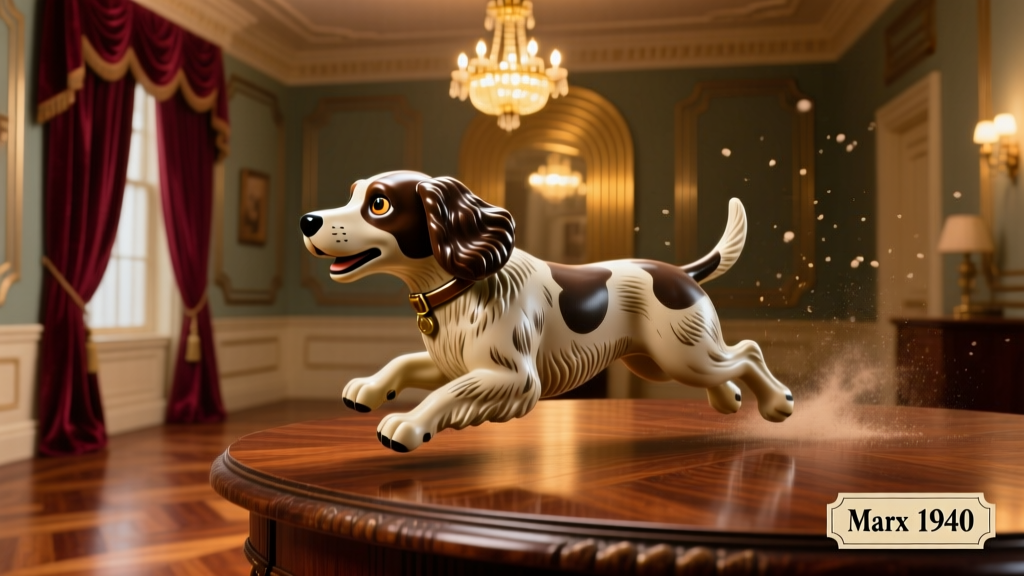
The Marx Toy Dog Running Spaniel (1940): Authenticity, Packaging, and Restoration Insights for Collectors
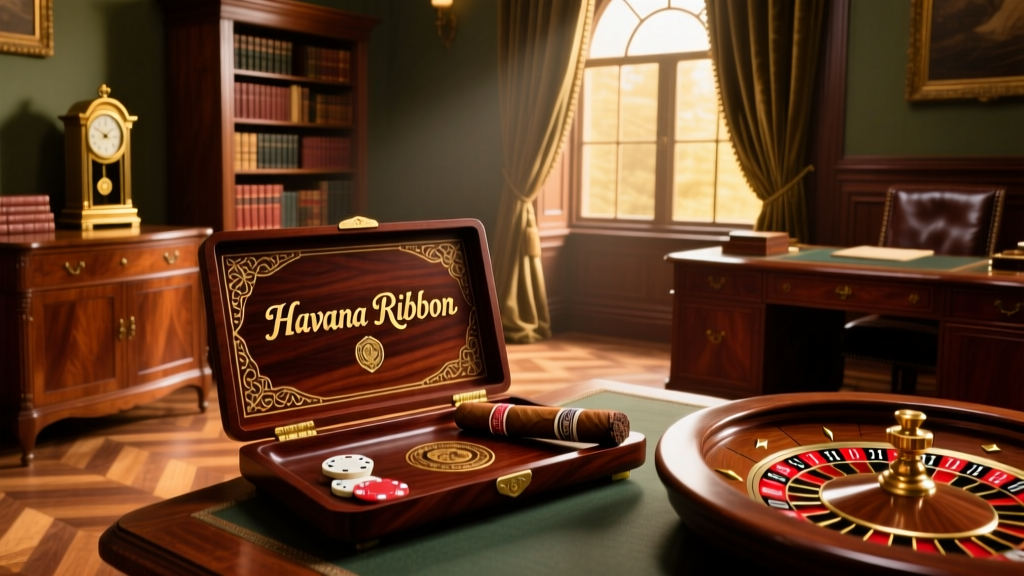
The 1910 Havana Ribbon Cigars Advertising Tip Tray: Roulette Wheel Design, Provenance, and Restoration Insights
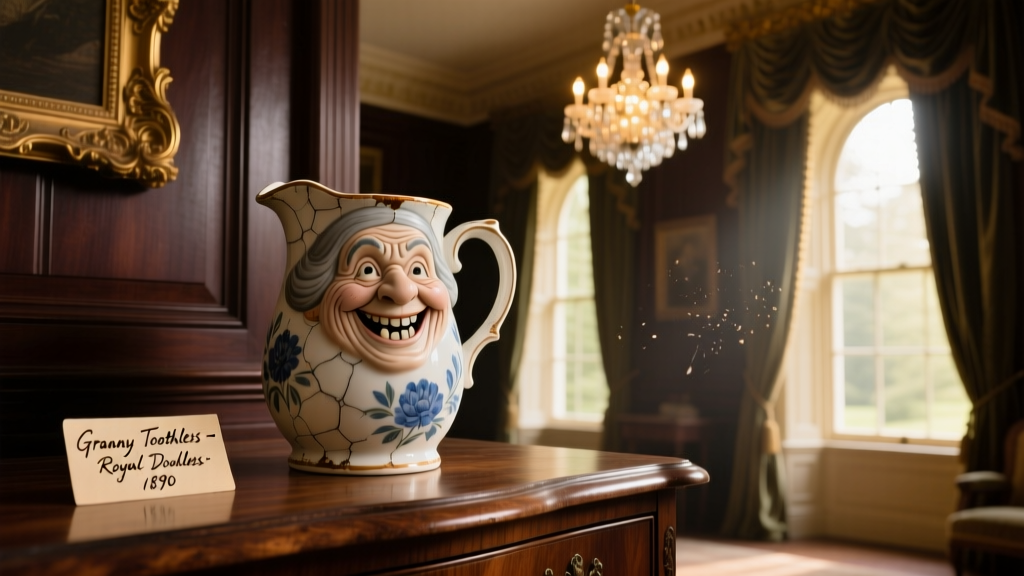
Royal Doulton Character Jug 'Granny Toothless': History, Identification, and Restoration Insights