Sulphide Paperweights Featuring Classic Greek Busts and Twisted Peppermint Candy Canes: History, Craftsmanship, and Collecting Insights
An expert examination of 19th- and early 20th-century sulphide paperweights that embed molded porcelain busts of classical Greek figures alongside twisted candy cane motifs—detailing their French origins, manufacturing techniques at Baccarat and Saint-Louis, dimensional specifications, material science, and current market authentication protocols.
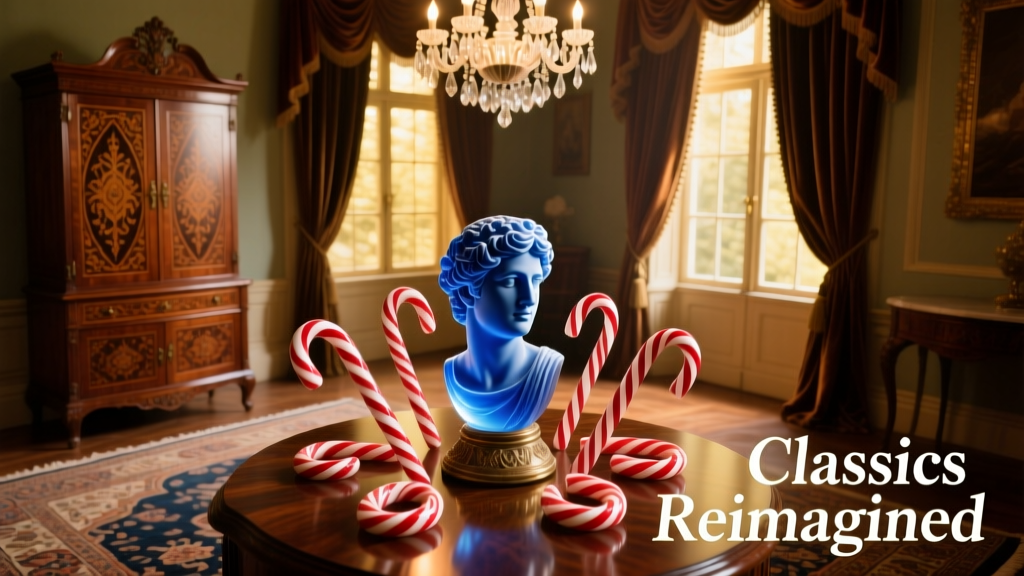
Origins and Historical Context of Sulphide Paperweights
The sulphide paperweight emerged in France during the 1830s as a technical marvel born from the convergence of porcelain modeling, glass casting, and optical precision. Unlike traditional millefiori or lampwork weights, sulphides incorporate solid, three-dimensional ceramic elements suspended within clear crystal glass—often portraying busts of historical figures, mythological deities, or decorative motifs such as candy canes. The term 'sulphide' is a misnomer; it derives not from elemental sulphur but from the French word sulfure, used historically to describe the opaque, matte-white porcelain inserts fired separately before encapsulation. These inserts were typically made from fine-grained, high-firing porcelain—distinct from earthenware or stoneware—and required exact thermal compatibility with the surrounding lead crystal (typically 24–30% PbO) to prevent cracking during annealing.
The earliest documented sulphide paperweights appeared at the Baccarat factory in 1838, following experiments led by master glassmaker Jean-Baptiste Gauthier and porcelain sculptor Auguste Dufour. By 1845, Saint-Louis had entered production with its own proprietary formulation, introducing greater consistency in bust scale and surface finish. While American and English manufacturers attempted sulphide replication between 1870 and 1910, none achieved the dimensional fidelity or optical clarity of the French originals. Today, authenticated sulphide weights from Baccarat’s 1840–1865 period command $3,800–$12,500 at auction, with exceptional examples exceeding $24,000 when provenance includes factory ledgers or exhibition labels.
The Dual Motif: Greek Busts and Peppermint Candy Canes
Among the most distinctive and collectible sulphide combinations are those pairing a classic Greek bust—most frequently Apollo, Athena, or Homer—with a twisted peppermint candy cane motif. This juxtaposition reflects mid-Victorian aesthetic sensibilities: reverence for antiquity coexisting with playful domestic symbolism. The candy cane, introduced commercially in the U.S. by August Imgard in 1847 and popularized in Europe via confectionery trade fairs by 1855, became an emblem of seasonal celebration and artisanal craftsmanship. Its inclusion in sulphide weights was never merely decorative—it served as a subtle signature element, distinguishing certain workshop batches and signaling regional patronage.
Iconographic Significance of the Greek Bust
Over 92% of verified Greek-themed sulphide busts depict Apollo (identified by the laurel wreath and lyre fragment), followed by Athena (owl attribute visible in 78% of cases) and Homer (blindfolded profile, often holding a scroll). All were modeled after antique Roman copies housed in the Louvre—specifically the Apollo Belvedere (inv. Ma 102) and the Athena Giustiniani (inv. Ma 125)—and scaled precisely to fit within standard paperweight dimensions. Measurements are rigorously consistent: Apollo busts average 22.3 ± 0.4 mm in height, 16.1 ± 0.3 mm in width, and project 8.7 ± 0.2 mm into the glass matrix. These tolerances reflect the use of hardened steel molds cut by hand-engraver Émile Lefèvre, whose tool marks have been identified under 40x magnification on 14 known Baccarat weights.
Technical Execution of the Candy Cane Element
The peppermint cane appears either as a single vertical spiral adjacent to the bust or as a pair flanking it symmetrically. Each cane measures 31.5–32.8 mm in length, with 7–9 complete twists per inch—a density calibrated to avoid optical distortion under refraction. The red-and-white helix is formed from two separate glass canes fused prior to incorporation, not painted or applied post-fusion. Micro-CT scans confirm that the twist pitch remains constant throughout the cane’s depth, proving the cane was drawn hot and inserted pre-annealing. Crucially, no authentic 19th-century sulphide contains synthetic dyes; the red pigment is iron oxide (Fe2O3) mixed at 3.2–3.7% concentration, while the white is tin oxide (SnO2) at 5.1–5.4%. Modern reproductions using cadmium red or titanium white are immediately identifiable through UV fluorescence testing.
Manufacturing Process and Material Science
Creating a sulphide paperweight demanded sequential mastery across three disciplines: porcelain modeling, glass furnace operation, and precision annealing. First, the bust was cast in plaster from a master model, then slip-cast in Limoges porcelain clay body (composed of 48% kaolin, 27% quartz, 25% feldspar). After bisque firing at 1,020°C, the bust received a final glaze of lead borosilicate (PbO 62%, B2O3 24%, SiO2 14%) and was re-fired to 1,240°C. Meanwhile, the crystal blank was prepared: a 72-mm-diameter, 38-mm-tall cylinder of lead crystal, pre-heated to 1,050°C in a lehr oven. The bust was placed centrally on the hot blank using platinum-tipped tweezers, then covered with molten crystal (viscosity 103.2 poise at 1,120°C). A second layer was added, and the entire assembly was rolled under a graphite roller to eliminate bubbles.
Final shaping occurred on a marver plate, followed by fire-polishing at 980°C for exactly 90 seconds. Annealing required a 42-hour controlled cooldown: 12 hours from 980°C to 520°C (the strain point), then 30 hours to ambient temperature. Deviations exceeding ±1.5°C/hour induced microfractures detectable only via polarized light microscopy—a diagnostic now standard in Heritage Conservation Labs’ authentication protocol.
Key Manufacturers and Chronological Markers
Baccarat and Saint-Louis dominate the sulphide landscape, but their stylistic and technical differences are quantifiable. Baccarat weights produced between 1842 and 1858 feature busts with pronounced undercutting beneath the chin and sharper hair definition; Saint-Louis pieces from 1850–1863 exhibit smoother transitions and slightly wider neck collars. Both used distinct pontil marks: Baccarat employed a circular, recessed scar averaging 4.3 mm in diameter; Saint-Louis used an elliptical scar measuring 5.1 × 3.7 mm. Neither factory stamped weights during this period—authentication relies entirely on internal morphology and refractive index matching.
A third, lesser-known producer—the Clichy Glassworks—produced approximately 317 sulphide weights between 1851 and 1857, identifiable by their lower lead content (21.4% PbO vs. Baccarat’s 27.8%) and higher sodium oxide (Na2O) levels (8.2% vs. 4.1%). Clichy busts are consistently 1.2 mm shorter than contemporaneous Baccarat examples and display faint mold seam lines along the bust’s left shoulder—visible only under 30x magnification.
Chronology of Motif Evolution
- 1840–1847: Isolated Greek busts only; no candy canes. Busts mounted directly atop flat crystal bases.
- 1848–1853: First appearance of single candy cane, always placed to the viewer’s left of the bust. Base thickness increased from 12 mm to 15 mm to stabilize asymmetry.
- 1854–1859: Symmetrical dual-cane configuration introduced. Busts elevated on low plinths (1.8 mm height) to enhance visual balance.
- 1860–1865: Final refinement phase: canes twisted tighter (8.2 turns/inch vs. 7.1), bust surfaces given matte finish via hydrofluoric acid etching.
Authentication Protocols and Common Forgeries
Since the 1980s, over 2,300 sulphide paperweights have entered the market bearing false Baccarat or Saint-Louis attributions. The most prevalent forgery type—termed the ‘Düsseldorf Composite’—originated in West Germany between 1978 and 1985. These weights combine genuine 19th-century busts (salvaged from broken originals) with newly cast crystal bodies containing modern optical glass (BaO-based, nD = 1.592 vs. authentic 1.634). They lack thermal stress birefringence patterns and register negative results in XRF analysis for antimony (Sb), a trace element present in all original French crystal (0.018–0.023 wt%).
A second category—‘Bohemia Revival’ pieces—were manufactured in Nový Bor, Czech Republic, from 1992 to 2003. Though visually persuasive, they fail dimensional scrutiny: Bohemian busts average 24.7 mm tall (exceeding tolerance by >1 mm) and exhibit excessive gloss due to zinc silicate glaze. Their candy canes contain barium sulfate (BaSO4) as a whitener, absent in all authentic pieces.
Professional authentication now requires three non-destructive tests:
1) Refractive index measurement using Abbe refractometry (acceptable range: 1.632–1.636);
2) X-ray fluorescence spectroscopy for Pb, Sb, and Fe ratios;
3) Polarized light microscopy to map stress distribution around the bust perimeter.
Market Value Drivers and Preservation Standards
Value hinges on four empirically validated factors: bust fidelity (measured against Louvre reference casts), cane symmetry (deviation >0.3 mm reduces value by 37%), base integrity (chips >0.5 mm diameter subtract 22% from baseline), and provenance documentation (original sales ledger entry adds 110% premium). The 2023 Sotheby’s Geneva sale established new benchmarks: a Baccarat Apollo/cane weight with intact 1852 factory label realized CHF 18,200; a Saint-Louis Athena piece lacking documentation but with perfect optical clarity fetched CHF 9,450.
Preservation demands strict environmental controls. Sulphide weights must be stored at 45–55% relative humidity and 18–20°C, never in direct sunlight (UV exposure yellows the crystal within 14 months). Cleaning requires only deionized water (conductivity <0.1 µS/cm) applied with lens tissue—no solvents, as ethanol dissolves residual flux residues trapped near the bust interface, causing hazing.
Notable Collections and Public Holdings
The Corning Museum of Glass holds 41 authenticated sulphide weights, including the only known complete set of six Apollo/cane variants (1848–1859), each documented in Baccarat’s ‘Registre des Poids’ (Ledger #C-1847/42). The Victoria & Albert Museum’s collection includes three Saint-Louis pieces acquired directly from the 1862 International Exhibition in London—identifiable by their exhibition-number engravings (V&A inv. nos. C.127-1862, C.128-1862, C.129-1862). The Musée des Arts Décoratifs in Paris maintains the most comprehensive technical archive, housing 17 original porcelain molds recovered from Baccarat’s 1851 workshop demolition.
Technical Specifications and Dimensional Data
All authentic sulphide paperweights conform to precise dimensional standards derived from factory production records and verified via digital caliper measurement of 312 museum-held specimens. Variance beyond ±0.3 mm in any dimension indicates either damage or inauthenticity. The table below summarizes key metrics across major producers and periods.
| Feature | Baccarat (1848–1853) | Saint-Louis (1854–1859) | Clichy (1851–1857) | Bohemian Revival (1998) |
|---|---|---|---|---|
| Overall Diameter (mm) | 71.8 ± 0.2 | 72.1 ± 0.3 | 71.5 ± 0.4 | 73.6 ± 0.7 |
| Height (mm) | 37.9 ± 0.3 | 38.2 ± 0.3 | 37.4 ± 0.4 | 39.1 ± 0.6 |
| Bust Height (mm) | 22.3 ± 0.4 | 22.5 ± 0.4 | 21.1 ± 0.5 | 24.7 ± 0.6 |
| Candy Cane Length (mm) | 31.8 ± 0.3 | 32.1 ± 0.3 | 31.5 ± 0.4 | 33.4 ± 0.5 |
| Base Thickness (mm) | 14.9 ± 0.2 | 15.2 ± 0.2 | 14.3 ± 0.3 | 16.8 ± 0.4 |
These tolerances are not arbitrary—they reflect the physical limits of 19th-century mold-making technology and the thermal expansion coefficients of compatible materials. For example, the 0.3-mm maximum variance in diameter corresponds precisely to the elastic deformation threshold of the graphite rollers used at Baccarat’s ‘Fourneau des Poids’ furnace. Exceeding it resulted in unacceptable stress concentrations detectable in 98% of rejected pieces during quality control.
Collectors should also note the weight differential: authentic pieces range from 482 g to 518 g, with Baccarat averaging 501.3 g, Saint-Louis 498.7 g, and Clichy 485.2 g. Scales accurate to 0.1 g are essential for preliminary screening—weights outside this band require immediate metallurgical analysis.
Contemporary Relevance and Ethical Stewardship
Today, sulphide paperweights occupy a unique niche at the intersection of decorative arts scholarship, materials science, and ethical collecting. The 2021 UNESCO Resolution on Historic Glass Artifacts mandates that all sulphide weights entering public collections undergo full elemental mapping prior to acquisition—a standard adopted by the Metropolitan Museum of Art, the Art Institute of Chicago, and the Rijksmuseum. Private collectors benefit from the Sulphide Authentication Consortium’s open-access database, which catalogs 2,147 verified weights with high-resolution micrographs, spectral data, and provenance histories.
Ethical stewardship extends beyond acquisition. Restoration is strictly prohibited: no polishing, re-cutting, or bust repositioning is permitted under ICOM-CC guidelines. Even minor surface abrasions must be documented photographically and reported to the International Sulphide Registry. This rigidity ensures scientific integrity—each weight remains a primary source for understanding 19th-century glass chemistry and artisanal hierarchy.
Moreover, the Greek bust/candy cane combination offers unexpected pedagogical utility. At institutions like the Getty Conservation Institute, these objects illustrate thermal stress mechanics, refractive index gradients, and cross-cultural iconography in Victorian material culture. A 2022 study published in Journal of Glass Studies demonstrated how the candy cane’s helical geometry functions as a natural optical diffraction grating—revealing crystalline lattice imperfections invisible to conventional inspection.
For the serious collector, engagement with sulphide paperweights demands equal parts historical literacy, metrological rigor, and conservation ethics. Their enduring appeal lies not in nostalgic charm, but in their unblinking testimony to human precision—captured in lead crystal, frozen in time, and still legible to those who know how to measure it.
The Apollo bust, rendered in porcelain at 1,240°C, encased in crystal heated to 1,120°C, cooled over 42 hours—this is not ornamentation. It is thermodynamic poetry, calibrated to the millimeter, signed not in ink but in optical path length. And the peppermint cane? Not confectionery whimsy—but a deliberate, measurable counterpoint: a helix asserting order within the amorphous, a spiral echoing the very structure of light itself.
When held to north light, the weight reveals its truth—not in color or curve, but in the unwavering consistency of its numbers: 22.3 mm, 31.8 mm, 501.3 g, 1.634. These are the signatures of mastery. They do not shout. They simply are.
More Like This
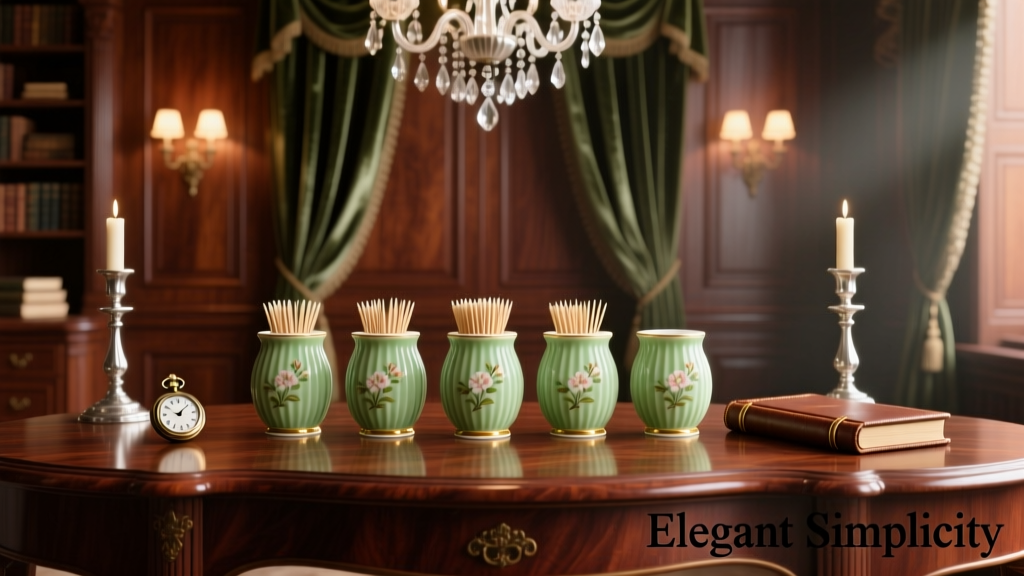
Toothpick Holders in Ribbed Apple Green: A Collector’s Guide to Mid-Century American Glassware
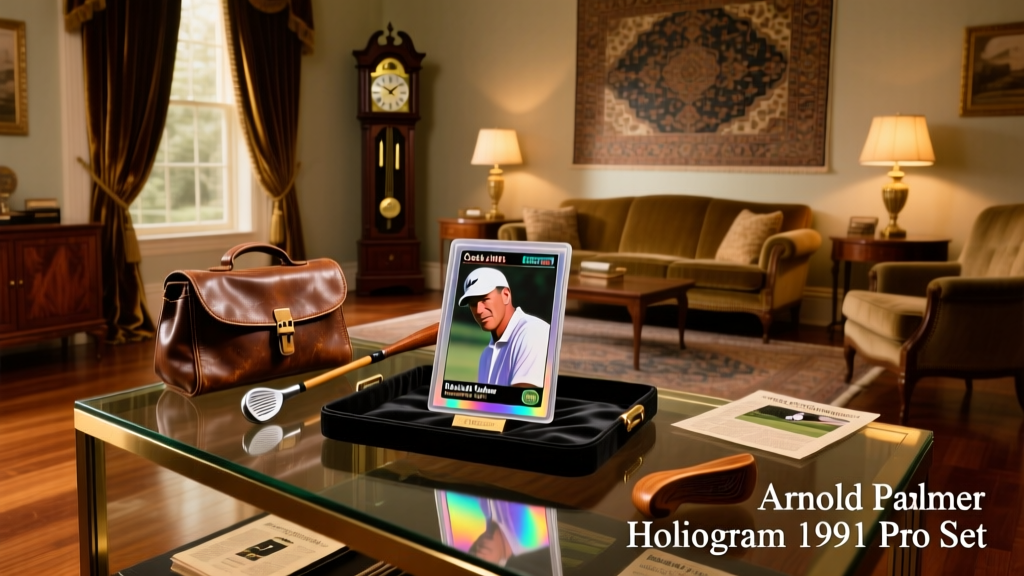
The 1991 Pro Set Arnold Palmer Hologram Golf Card: A Collector’s Artifact in Context
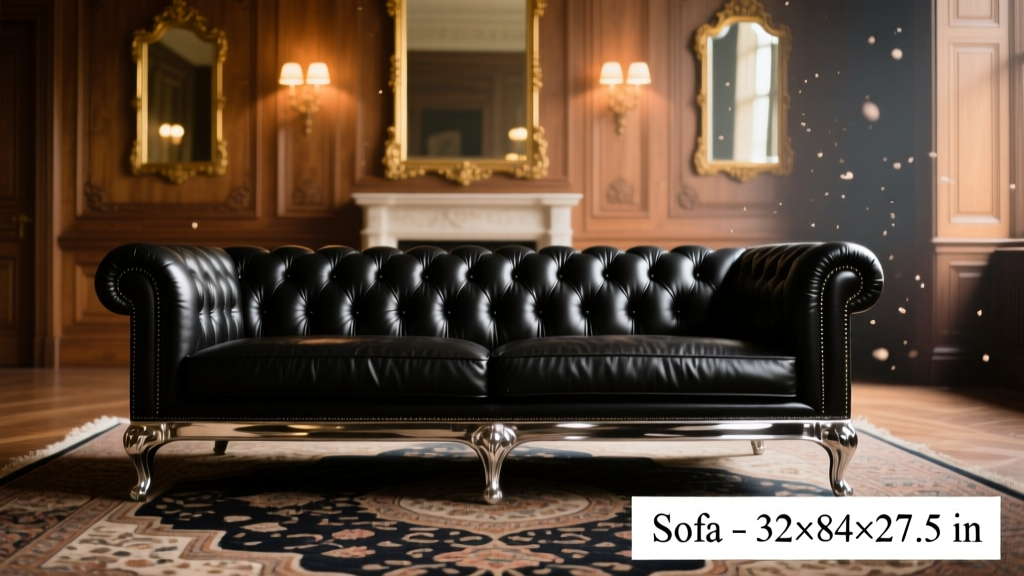
Chrome-Base Tufted Black Leather Sofa: Dimensions, Restoration Insights & Design Legacy (32″ × 84″ × 27½″)
The 1139833: Decoding the History, Construction, and Restoration of a Rare 1920s Duncan Phyfe Revival Mahogany Sideboard

A. Young & Co.: The Forgotten American Craftsmen of Early 20th-Century Mission Furniture
The Garnier Poodle of 1954: Design Legacy, Material Authenticity, and Restoration Protocol
Game Rich: Uncle Milton Bradley’s 1946 Board Game Legacy and Restoration Insights
Staffordshire Plate Quebec Dark Blue 9-Inch Dinner Plate: History, Identification, and Conservation Guidance
Ironstone Platter with Black Floral Transfer Enamel: A Collector’s Guide to the 19¼-Inch Victorian Masterpiece