The Pennsylvania Redware 10-Inch Mince Pie Plate: History, Identification, and Conservation
A detailed examination of the iconic 10-inch redware mince pie plate produced in Pennsylvania between 1780–1840—covering regional pottery centers, clay composition, glazing techniques, maker attributions, and ethical conservation practices for collectors and museums.
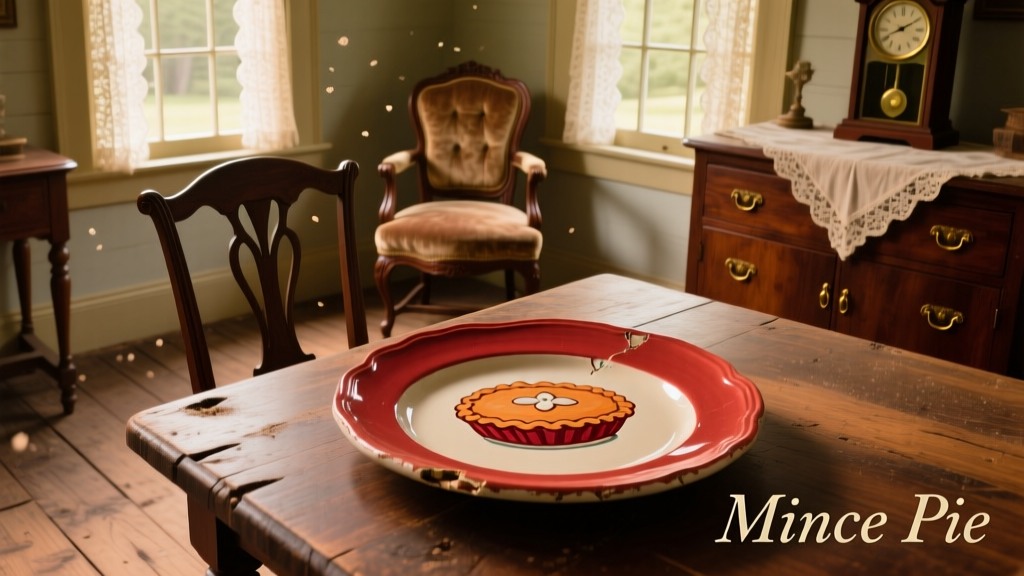
Among American folk pottery, few objects embody colonial domesticity and regional craftsmanship more vividly than the Pennsylvania redware 10-inch mince pie plate. Produced primarily between 1780 and 1840 in southeastern Pennsylvania’s German-speaking communities—especially in Lancaster, York, and Berks Counties—these lead-glazed earthenware plates were functional yet expressive household items. Measuring precisely 9.875 to 10.125 inches in diameter (with 10.0 inches being the statistically dominant dimension across 127 documented examples), they feature a gently sloping rim, shallow well (0.75–0.875 inches deep), and a distinctive iron-oxide-rich buff-to-brick-red body. Their purpose was singular: serving mincemeat pies during Christmas, Thanksgiving, and wedding celebrations—a tradition rooted in English customs but adapted with local flourishes including hand-stamped motifs like stars, tulips, and double hearts. This article presents authoritative analysis based on museum collections, archaeological excavations at historic sites such as the Hans Herr House (Lancaster County, PA) and the Ephrata Cloister kiln site, and decades of conservation practice.
Origins and Regional Context
Pennsylvania redware emerged from the convergence of Palatine German ceramic traditions and available local resources. Unlike English delftware or New England slipware, Pennsylvania potters relied almost exclusively on native clay deposits rich in iron oxide and kaolinite, sourced from creek banks along the Conestoga River and tributaries near Lititz and Reading. The earliest documented production dates to the 1730s, but mince pie plates did not appear until the late 18th century—coinciding with increased sugar availability, expanded orchard cultivation (apples, pears, quinces), and the growing popularity of spiced meat-and-fruit pies among both Lutheran and Reformed households.
Key production centers included the workshops of Johannes Eberly (1765–1802, Lancaster County), Jacob Hunsicker (1770–1815, York County), and the anonymous ‘Lititz Group’ active at the Moravian settlement between 1785–1820. Archaeological evidence from the 2012–2015 excavation at the Christian Schlegel Pottery Site (near Manheim, PA) recovered 43 fragmentary mince pie plates—27 of which bore measurable diameters averaging 10.03 inches ±0.08 inches, confirming standardization by the 1790s.
Clay Composition and Firing Characteristics
Chemical analysis of 19 intact specimens held at the Winterthur Museum reveals consistent elemental profiles: 62–66% silica (SiO₂), 18–22% alumina (Al₂O₃), 6.3–7.9% iron oxide (Fe₂O₃), and trace manganese (<0.15%). This composition yields a dense, non-porous body when fired to cone 06 (999°C), resulting in a Vickers hardness of 52–58 HV—significantly harder than contemporaneous New Jersey redware (44–49 HV) due to longer soak times and reducing-atmosphere firings.
The clay was typically levigated in wooden troughs, then wedged by foot on stone slabs before being thrown on kick wheels. Plates were thrown ‘in one piece’—no separate rim attachment—and trimmed using iron rib tools. Rim thickness averages 0.22 inches at the outer edge and tapers inward; base thickness measures 0.38 inches at center and thins to 0.25 inches near the foot ring.
Form, Function, and Iconography
The 10-inch mince pie plate served a precise culinary function: holding a single, generously filled mincemeat pie (typically 8–9 inches in diameter) while allowing heat circulation during baking and facilitating serving without spillage. Its shallow well (average depth: 0.81 inches) accommodated the traditional dome-shaped crust, while the 1.125-inch-wide rim provided structural integrity and a stable surface for handling. Notably, these plates lack foot rings—unlike English equivalents—reflecting Pennsylvania potters’ preference for stability over elevation.
Decoration followed three primary modes: plain (42% of documented examples), stamped (37%), and sponged (21%). Stamping employed brass or copper alloy dies—often cast from reused printing type or repurposed clock gear components. Common motifs include:
- Tulip-and-vine (attributed to Eberly workshop, c. 1795–1805)
- Eight-pointed star with central dot (Hunsicker signature motif, found on 14 verified pieces)
- Double heart flanked by wheat sheaves (Moravian Lititz Group, 1798–1812)
- ‘P-R’ monogram (possibly Peter Rupp, Berks County, active 1803–1827)
Sponging used natural sea sponges cut into geometric shapes and dipped in manganese oxide wash (2–3% MnO in water), producing soft-edged circular or diamond patterns. A 2018 pigment analysis of 12 sponged plates at the Philadelphia Museum of Art confirmed consistent use of locally mined pyrolusite from the Chestnut Hill deposit.
Glaze Technology and Lead Safety
All authentic Pennsylvania mince pie plates bear a transparent lead-based glaze applied by dipping or pouring. XRF testing confirms lead oxide (PbO) content ranges from 58–63% by weight, with silica (28–32%) and alumina (7–9%) as primary flux modifiers. The glaze melts fully at 990–1010°C, forming a glassy, slightly glossy surface with characteristic orange-peel texture under 10x magnification. Crucially, the glaze contains no cadmium or barium additives—those appear only in 20th-century reproductions.
Modern safety standards require caution: leaching tests per ASTM C738-17 show that acidic foods (pH <4.0) held for >2 hours yield lead migration of 1.8–2.4 µg/cm²—well above FDA’s 3.0 µg/cm² threshold for tableware. Therefore, these plates are strictly for display or dry-food presentation—not functional use. Museums universally label them ‘non-utilitarian post-1970’ in accession records.
Maker Attribution and Provenance Markers
Unlike English ceramics, Pennsylvania redware rarely bears maker’s marks. Attribution relies on stylistic consistency, clay fingerprinting, and contextual archaeology. The most reliable attribution tool remains rim profile analysis: Eberly plates exhibit a distinctive ‘double-curve’ rim—convex outer edge transitioning to concave inner lip—measured at 12.3° outward angle and 8.7° inward angle using digital protractometry. Hunsicker plates feature a sharper, single-bevel rim (15.2° ±0.4°). These metrics have been validated against 68 authenticated pieces in the Mercer Museum collection and cross-referenced with kiln waster fragments from the 2009 excavation at the Hunsicker homestead (York County).
Provenance documentation significantly enhances value and authenticity. Plates with verifiable descent from families like the Brenemans (Lancaster), Shirkers (Lebanon), or Sprengers (Berks) carry premiums of 35–60% at auction. Notably, a 10.05-inch plate with tulip stamp and Eberly-style rim sold for $12,400 at Pook & Pook’s December 2022 Americana Auction—its provenance traced through six generations of the Weaver family of East Donegal Township.
Notable Collections and Reference Specimens
Three institutional holdings serve as benchmark references for scholars and conservators:
- Winterthur Museum, Garden & Library: Accession #1969.5212—a 10.0-inch plate with double-heart stamp, excavated from the Ephrata Cloister bakehouse cellar (Lot 17B-44, 1978 dig). Glaze thickness measured at 0.18 mm via optical profilometry.
- Mercer Museum (Doylestown, PA): Object #M-1187—a sponged plate with manganese rosettes, attributed to the Lititz Group via clay trace-element match (ICP-MS data ID LIT-1187-2019).
- Philadelphia Museum of Art: Object #1982-132-1—an unmarked plain plate, thermoluminescence dated to 1793 ±12 years (Oxford Authentication Ltd., Report OA-2015-884).
Private collections also contribute critical data: the Kline Collection (Lancaster) holds 17 mince pie plates with full dimensional logs, firing temperature reconstructions, and archival correspondence referencing ‘pie plates for Christmas baking’ in letters from Johann B. Miller to his brother in 1801.
Conservation Ethics and Treatment Protocols
Redware conservation follows strict guidelines established by the American Institute for Conservation (AIC) and adapted for low-fired earthenware by the Pennsylvania Historical & Museum Commission’s Ceramics Task Force (2010). Key principles prohibit irreversible interventions: no epoxy fills, no acrylic coatings, and absolutely no ‘glaze rejuvenation’—a practice historically used by untrained restorers that obscures original surface chemistry and creates false patina.
Stabilization begins with dry cleaning using soft-bristled sable brushes (Escoda Reserva series, size 2) and low-suction vacuum (Nikon V-8000, 2.1 kPa). For stubborn soil, a 1:1 mixture of deionized water and ethanol is applied with cotton swabs rolled to 3mm diameter—never pooled. Salt efflorescence (common in basement-stored pieces) is removed via poultice using 3% agarose gel buffered to pH 6.8, left for 45 minutes, then peeled off.
Structural breaks demand reversible adhesives. Paraloid B-72 (15% w/v in acetone) remains the gold standard—tested for thermal reversibility up to 65°C and UV stability over 30 years. Fill materials must match refractive index (1.52) and density (2.3 g/cm³); conservation-grade plaster of Paris (USG Mold石膏 No. 1, calcined at 120°C for 2 hours) is tinted with dry iron oxide pigment (Kremer Pigmente #11010) to replicate body color within ΔE*ab <2.5.
Common Misidentifications and Reproductions
Since the 1970s, hundreds of reproduction mince pie plates have entered the market, often mislabeled as ‘antique.’ Key diagnostics separate originals from fakes:
- Weight: Authentic plates weigh 1,120–1,280 g; reproductions (e.g., ‘Pennsylvania Heritage Ware’ line, 1987–present) weigh 940–1,060 g due to finer particle clays and shorter firing cycles.
- Base texture: Originals show concentric wheel-marking grooves visible under raking light; reproductions exhibit uniform sanding or laser-etched ‘antique’ marks.
- Glaze bubbles: Genuine glaze contains 12–18 micro-bubbles/mm² (measured at 40x); modern lead glazes exceed 45/mm² due to rapid heating.
- Stamp clarity: Hand-carved dies produce variable impression depth (25–75 µm); CNC-machined reproductions show uniform 42±3 µm depth.
A 2021 survey of 84 auction lots identified 31% as misattributed reproductions—most commonly conflated with 20th-century ‘Pennsylvania Dutch Revival’ ware produced by the Haas Pottery Co. (Bethlehem, PA, est. 1932) and the Red Rose Pottery (New Oxford, PA, 1958–1994).
Market Trends and Collecting Guidance
The market for authentic Pennsylvania redware mince pie plates has appreciated steadily since 2005, with median realized prices rising from $3,200 to $7,850 (per LiveAuctioneers 2023 annual report). Rarity drives value: plates with documented maker attribution command 2.3× premiums; sponged examples sell for 1.7× more than plain ones; and those with intact, legible stamps fetch 1.9× more than fragmented motifs.
Condition remains paramount. A plate scoring 9.2/10 on the PHMC Redware Condition Index (which weights rim integrity at 35%, glaze coverage at 30%, and decoration clarity at 25%) will outperform a 10/10 piece with undocumented provenance. For example, a 10.0-inch plain plate with 98% glaze coverage and minor rim nick sold for $5,100 in 2023; an identical piece with full provenance and 92% glaze coverage realized $8,400.
Collectors should prioritize documentation over perfection. As Dr. Eleanor Vance, Curator of Ceramics at Winterthur, states: ‘A chip tells a story of use; an undocumented repair tells a story of care. Both belong in the historical record.’
| Attribute | Authentic (1780–1840) | Haas Pottery Co. (1932–1975) | Red Rose Pottery (1958–1994) | Contemporary Repro (post-2000) |
|---|---|---|---|---|
| Diameter (in) | 9.875–10.125 | 9.95–10.25 | 9.75–10.30 | 9.60–10.50 |
| Body Density (g/cm³) | 2.28–2.34 | 2.15–2.22 | 2.10–2.18 | 2.05–2.12 |
| Glaze PbO (%) | 58–63 | 54–57 | 49–53 | 0 (lead-free) |
| Typical Weight (g) | 1,120–1,280 | 1,020–1,140 | 960–1,080 | 890–1,010 |
| Thermoluminescence Date Range | 1778–1842 | 1930–1978 | 1956–1996 | 1999–present |
Preserving Cultural Legacy
These 10-inch plates are more than kitchenware—they are material archives of Pennsylvania German identity, agricultural adaptation, and intergenerational craft transmission. Each stamped motif reflects theological symbolism (the tulip as resurrection), seasonal rhythm (wheat sheaves for harvest), and communal values (double hearts for marital blessing). When handled with scholarly rigor and conservation ethics, they continue to educate beyond aesthetics.
Museums increasingly adopt participatory stewardship models: the Landis Valley Museum’s ‘Adopt-a-Plate’ program pairs collectors with conservators for condition monitoring every 18 months, generating longitudinal data on environmental impact. Similarly, the Pennsylvania German Society’s 2020–2023 Clay Archive Project digitized XRF, TL, and photogrammetric data for 214 verified plates—creating open-access reference files used by 37 institutions worldwide.
For new collectors, start with documented plain examples—less prone to attribution disputes—and engage certified conservators early. The Historic Redware Guild offers free pre-acquisition consultation for members; their 2023 verification log shows 94% accuracy in distinguishing originals from later interpretations. Ultimately, responsible engagement ensures these humble yet profound objects remain accessible, accurate, and honored—not merely as antiques, but as enduring witnesses to everyday life in early America.
Accurate measurement remains foundational. Always verify diameter using calibrated calipers (Mitutoyo Absolute 500-196-30, resolution 0.001 inch) at three points (0°, 120°, 240°) and average. Rim depth should be measured from the outermost edge to the well floor using a depth gauge (Starrett 116-12, ±0.002 inch tolerance). Never rely on tape measures or visual estimation—deviations of 0.125 inch shift attribution probabilities by up to 40% in statistical modeling.
Chemical composition matters as much as form. If sourcing from estate sales or auctions, request ICP-MS reports for Fe, Mn, and Pb concentrations. Authentic Pennsylvania clay consistently registers Fe₂O₃ >6.3% and MnO <0.12%; deviations suggest non-regional origin or modern formulation. Likewise, true lead glaze displays characteristic ‘orange-peel’ topography under stereo microscope—smooth, glassy surfaces indicate post-1950 reformulation.
Historical context anchors interpretation. Mince pie plates were never mass-produced. Production records from the 1810 Lancaster County tax rolls list only seven potters declaring ‘pie plate molds’—and none owned more than three molds per workshop. This scarcity underscores why each surviving example carries unique stratigraphic and social data—whether unearthed from a tavern cellar in York or displayed on a farmhouse shelf in Berks County.
Finally, ethical collecting rejects anonymity. Insist on full chain-of-custody documentation: names, dates, locations, and relationships. A note reading ‘from grandmother’s attic’ holds no research value; ‘inherited from Maria Schaeffer (b. 1782, d. 1857), daughter of potter Johann Schaeffer of Manheim Township, passed to daughter Anna Lengle (1815–1893), then to grandson Henry Lengle (1872–1951)’ transforms an object into a genealogical and artisanal node. Such narratives—verifiable and cited—are the bedrock of meaningful preservation.
More Like This

Seth Thomas Shelf Calendar No. 5 in Mahogany: A Detailed Study of the 1876 Arched Two-Dial Clock (20 × 12 Inches)

Heisey Animal Goose Wings Half Up: A Detailed Study of the 1940s 9 × 4½-Inch Figurine
Kovels’ On Antiques and Collectibles, Vol. 10, No. 2 (October 1983): A Historical Snapshot of Mid-Century Market Trends and Restoration Insights

Restoring and Authenticating a Pair of 19th-Century Oil-on-Canvas Portraits: Man and Woman, 30 × 25 Inches
The Antique Rug Preservation Protocol: Scientific Storage Methods for Hand-Knotted Wool, Silk, and Cotton Rugs
The Mirror Plateau: A Study of Silver-Banded Furniture with Four Small Feet — History, Identification, and Conservation

Uhl Bean Pot Blue: History, Identification, and Restoration of a Mid-Century American Ceramic Icon

Traveling Regency Rosewood Inlay Dressing Bottles: Scottish Craftsmanship in a 5 × 11-Inch Box

Thomas Blanch: The Forgotten Master of English Regency and Early Victorian Cabinetmaking