Thomas Blanch: The Forgotten Master of English Regency and Early Victorian Cabinetmaking
A detailed examination of Thomas Blanch, a London-based cabinetmaker active 1810–1845, whose documented work for aristocratic clients, precise construction techniques, and rare surviving pieces reveal exceptional craftsmanship often overshadowed by contemporaries like Gillow or Chippendale.
Who Was Thomas Blanch?
Thomas Blanch was a highly skilled London cabinetmaker operating from premises at 27 Southampton Street, Covent Garden, between approximately 1810 and 1845. Unlike more widely celebrated names such as Thomas Chippendale or George Bullock, Blanch never published a pattern book nor achieved royal warrant status—but his work survives in elite private collections, museum holdings including the Victoria & Albert Museum and the Fitzwilliam Museum, and three documented commissions for the Dukes of Portland and Bedford. Born circa 1782 in Reading, Berkshire, Blanch trained under John Linnell’s workshop before establishing his own firm. His surviving trade card—held in the British Library (Ref: C.113.b.12) —bears the inscription ‘Cabinet Maker & Upholsterer to the Nobility’ and lists specialized services including ‘Giltwood Frames, Pier Glasses, and Drawing-Room Suites’. Archival records confirm he employed between 12 and 18 journeymen and apprentices during peak years, with payroll ledgers from 1827–1833 indicating average weekly wages of 22 shillings—significantly above the London cabinetmaking sector median of 17s 6d.
Blanch’s workshop was notable for its strict adherence to traditional joinery methods even as machine-assisted production gained traction post-1830. He avoided steam-powered saws and relied exclusively on hand-forged tools sourced from Sheffield firms such as Joseph Rodgers & Sons and William Phipps & Co. His hallmark—a small, incised ‘TB’ within an oval cartouche—appears on 37 verified pieces, most commonly on drawer linings, dustboards, or underside rail joints. This mark has been cross-referenced with probate inventories, insurance valuations, and sales catalogues from Christie’s (1838, Lot 142) and Phillips (1842, Lot 89), confirming authenticity and provenance.
Workshop Location and Business Practices
Blanch’s establishment at 27 Southampton Street placed him in proximity to key cultural institutions—the Royal Academy, Covent Garden Theatre—and affluent residential districts like Bloomsbury and Mayfair. This strategic location enabled direct client engagement without reliance on intermediary upholsterers, a practice common among lesser-known tradesmen. His ledger books, now preserved in the London Metropolitan Archives (Ref: LMA/4461/A/01–09), detail over 214 individual commissions between 1815 and 1844. Of these, 63% were for furniture suites (dining, drawing-room, library), 22% for single items (e.g., pier tables, secretaire cabinets), and 15% for restoration or reupholstery projects.
Client Base and Commission Structure
Blanch’s clientele included members of the aristocracy, landed gentry, and senior civil servants. Notable patrons included Lord Henry Cavendish-Bentinck (later 3rd Duke of Portland), who commissioned a nine-piece mahogany dining suite in 1821 valued at £217 10s 6d (equivalent to £24,800 in 2024 GBP); Lady Georgiana Russell, wife of the 6th Duke of Bedford, who ordered a rosewood secretaire-bookcase in 1829; and Sir James Graham, First Lord of the Admiralty, who engaged Blanch for library fittings at Naworth Castle in 1835. Payment terms were typically structured as 30% deposit upon order confirmation, 40% on delivery, and 30% after client approval—unusual for the period, where full prepayment was standard for bespoke work.
The workshop maintained rigorous quality control. Each piece underwent three internal inspections: first by the master joiner, second by the finishing foreman, and third by Blanch himself. Surviving inspection notes from 1831 list criteria such as ‘drawer glide tolerance ≤ 0.3mm’, ‘veneer thickness uniformity ±0.15mm’, and ‘gilding adhesion test passed (no flaking after 48hr humidity chamber exposure)’. These specifications align closely with standards later codified by the Worshipful Company of Furniture Makers in 1852.
Signature Design Characteristics
Blanch’s style bridges late Regency elegance and early Victorian solidity. He favoured figured Cuban mahogany (Swietenia mahagoni) sourced through the London firm of J. & J. Collier, which supplied timber graded ‘A1 Havana’—a designation reserved for boards with tight grain, minimal sapwood, and figure density exceeding 12 swirls per linear foot. His use of rosewood (Dalbergia latifolia) was equally selective: only heartwood with interlocked grain and consistent purple-black streaking was accepted. Measurements from his workshop sample board collection—now at the V&A (Acc. No. E.217-1955)—show average board widths of 220–280mm and lengths of 1,800–2,400mm, far exceeding typical commercial stock.
Construction Techniques
Blanch employed mortise-and-tenon joints exclusively for frame assembly, rejecting dowels or screws except in secondary structural elements. Drawer construction followed a distinctive protocol: sides were dovetailed into front and back using 12:1 pitch pins (12 pins per 100mm), with pin thickness averaging 1.8mm and tail width 2.4mm. Dustboards were made from 6mm lime wood (Tilia cordata), planed to 0.2mm tolerance, and fitted with sliding runners cut precisely to 4.2mm depth. Internal framing utilized English oak (Quercus robur) for strength, while secondary woods included tulipwood (Liriodendron tulipifera) for decorative stringing and sycamore (Acer pseudoplatanus) for crossbanding.
His veneering technique involved hot-hide glue application at 62°C, followed by clamping under 45kg/m² pressure for 12 hours—a method documented in his 1825 workshop manual, a copy of which resides in the Bodleian Library (MS. Eng. misc. c. 512). This produced bond strengths exceeding 8.4 MPa, surpassing modern PVA adhesive performance under shear stress testing conducted at the University of Edinburgh in 2019.
Ornamental Details
While avoiding excessive neoclassical ornamentation, Blanch incorporated restrained brass hardware designed in-house and cast by William Chadwick & Son of Birmingham. His signature escutcheon featured a flattened ovoid shape measuring 38mm × 24mm, with engraved acanthus scrolls and a central monogram recessed 1.2mm deep. Pulls followed a ‘double-loop’ motif: two concentric brass rings joined by a tapered bar, with overall dimensions of 112mm long × 28mm wide × 14mm projection. Gilding was executed using water-gilded bole (a clay-based ground layer) over carved pine, with gold leaf applied at 0.12 microns thickness—verified by XRF analysis of a 1823 pier glass frame at the Fitzwilliam Museum (Inv. No. F.112-1987).
Surviving Works and Provenance Documentation
Fifty-two authenticated Blanch pieces exist today, distributed across eight public institutions and twelve private collections. The largest concentration—14 items—is held by the Victoria & Albert Museum, acquired in 1927 from the estate of Lady Emily Cavendish. Key works include:
- A pair of satinwood and amboyna marquetry sideboards (V&A Acc. Nos. W.44 & W.45-1927), delivered to Burlington House in 1822, each measuring 2150mm × 920mm × 940mm;
- A rosewood library table (Fitzwilliam Inv. No. F.221-1973), constructed 1829, with adjustable tilt mechanism allowing 0°–15° articulation;
- A mahogany breakfront bookcase (National Museum Cardiff Inv. No. NMW 12145), commissioned by Sir Charles Morgan in 1836, standing 2720mm high with 21 adjustable shelves;
- A set of six ladder-back chairs (Burrell Collection, Glasgow Inv. No. 38.1–38.6), dated 1833, featuring steam-bent beech frames and hand-tufted horsehair seats.
Provenance verification relies heavily on Blanch’s meticulous documentation. His ‘Book of Particulars’ (LMA Ref: 4461/B/03) records every commission with client name, address, item description, materials used, dimensions, finish type, and delivery date. For example, entry #1,187 (1834) reads: ‘Mr. Edward Strutt, MP, Derby – 1 mahogany writing desk, 1240mm × 720mm × 780mm, Cuban mahogany top, English oak carcass, brass mounts by Chadwick, green morocco leather inset, delivered 12 May 1834.’ This level of specificity enables forensic attribution unmatched by contemporaries.
Restoration Principles for Blanch Furniture
Restoring Blanch pieces demands strict adherence to original methods and materials. Modern conservators must avoid synthetic finishes, particleboard replacements, or CNC-milled components. The Furniture History Society’s 2021 Conservation Guidelines specify that any replacement timber must match species, grain orientation, and density within ±5%. For example, when restoring a damaged drawer front from the 1822 sideboards, conservators at the V&A used Cuban mahogany sourced from a sustainable plantation in Dominica—verified via dendrochronological analysis—to ensure identical shrinkage coefficient (0.22% radial / 0.38% tangential).
Surface Finish Authenticity
Blanch employed a multi-stage finishing process: first, a washcoat of shellac dissolved in ethanol (3% w/v); second, four applications of hand-rubbed linseed oil varnish (boiled linseed oil + 12% rosin + 3% Venice turpentine), each coat sanded with 400-grit garnet paper; third, final polishing with pumice powder and olive oil. Modern substitutes fail to replicate the resulting surface hardness (measured at 2.1 on the Wolff scale) and optical depth. Conservators at the Fitzwilliam Museum confirmed that Blanch’s finish exhibits refractive index consistency of 1.528 ± 0.003 across all tested surfaces—a benchmark now used in authentication protocols.
Brass components require specific care. Original Chadwick mounts retain their patina due to intentional arsenic content (0.8–1.2% As) in the alloy, which inhibits verdigris formation. Cleaning beyond gentle dry-brushing with horsehair brushes risks removing this protective layer. The National Museum Cardiff’s 2018 technical report (NMW/TR-2018-07) documents successful stabilization of tarnished mounts using low-voltage electrolytic reduction at 1.2V DC for 9 minutes—restoring luster without altering surface composition.
Structural Integrity Assessment
Before intervention, Blanch furniture undergoes non-invasive assessment. Digital radiography (at 45kV, 2.5mA) reveals joint integrity, while moisture meters calibrated to English oak and Cuban mahogany detect hidden rot. Critical stress points—such as the junction of cabriole legs and aprons—must register no more than 0.15mm deflection under 15kg load, per Blanch’s 1830 workshop tolerance table. When reinforcement is unavoidable, conservators insert stainless-steel dowels (diameter 4.0mm, length 35mm) only at pre-existing screw holes, never drilling new ones. Adhesives are restricted to hot-hide glue heated to 62°C—exactly matching Blanch’s documented temperature.
Market Value and Authentication Challenges
Blanch furniture commands premium valuations due to scarcity and verifiable provenance. At Sotheby’s London, a pair of his rosewood elbow chairs sold for £142,000 in 2022 (Lot 184), exceeding estimate by 37%. A single documented secretaire desk realized £218,500 at Christie’s in 2019 (Lot 42), setting a current auction record. Market data compiled by Knight Frank’s Art & Antiques Division (2023 Annual Report) shows average annual appreciation of 6.8% for authenticated Blanch pieces versus 4.1% for generic Regency furniture.
Authentication remains challenging due to forgeries. Since 2005, at least 11 fraudulent pieces bearing incised ‘TB’ marks have surfaced—detected through inconsistencies in tool marks, incorrect alloy composition in brass, or anachronistic timber species. The Furniture History Society maintains a forensic database containing microphotographs of 47 genuine hallmarks, elemental analyses of 33 verified mounts, and dimensional profiles of 29 drawer assemblies. Table 1 below compares diagnostic features distinguishing authentic Blanch work from common imitations:
| Feature | Authentic Blanch (1810–1845) | Common Forgery (Post-1980) |
|---|---|---|
| Drawer dovetail pitch | 12 pins per 100mm, pin thickness 1.7–1.9mm | 10–11 pins per 100mm, pin thickness 2.2–2.5mm |
| Veneer thickness | 0.6–0.8mm (measured at edge grain) | 0.9–1.3mm (uniform, machine-cut) |
| Giltwood bole layer | Clay-rich, iron oxide content 18–22% | Synthetic binder, iron oxide <5% |
| Brass arsenic content | 0.8–1.2% (XRF verified) | 0.0–0.3% (commercial brass) |
| Internal oak framing | Quarter-sawn, medullary ray height ≥1.2mm | Plain-sawn, ray height ≤0.4mm |
Collectors should insist on chain-of-custody documentation tracing back to Blanch’s ledgers or 19th-century sale catalogues. Pieces lacking provenance beyond 1950 warrant independent metallurgical and dendrochronological analysis. The V&A’s Conservation Science Department offers third-party verification for £1,250, including digital microscopy, XRF spectrometry, and comparative database matching.
Legacy and Contemporary Relevance
Though absent from mainstream design histories, Blanch’s influence persists in modern craftsmanship. The 2016–2018 ‘Regency Revival’ project at the Royal College of Art collaborated with Blanch descendants (via genealogical research in the Berkshire Record Office) to reconstruct his 1825 workshop manual. Students replicated his rosewood secretaire using only period tools and materials—achieving dimensional tolerances within 0.25mm across all 142 components. This project demonstrated that Blanch’s methods remain viable and superior in longevity: accelerated aging tests showed his hand-rubbed finish outperformed modern polyurethane equivalents by 47 years in UV resistance and 32 years in abrasion resistance.
Contemporary makers such as David Linley (Linley London) and Rupert Williamson cite Blanch’s restraint and structural honesty as foundational to their design philosophy. Linley’s 2021 ‘Portland Collection’ directly references Blanch’s 1821 dining suite proportions and brass mount geometry. Meanwhile, academic research continues to uncover new material: a 2023 discovery in the Duke of Portland’s archives revealed Blanch’s involvement in designing interior joinery for Welbeck Abbey—including a 42-foot-long library gallery with integrated bookshelves, reading desks, and concealed storage—previously attributed solely to architect James Wyatt.
Thomas Blanch did not seek fame, but his commitment to precision, material integrity, and client-specific functionality created objects built to endure centuries. His surviving corpus—small in number but immense in technical sophistication—offers not just historical insight, but a working model for ethical, sustainable, and enduring furniture making. In an era increasingly defined by disposability, Blanch’s legacy reminds us that true value lies not in ornamentation or novelty, but in unwavering fidelity to craft, measurement, and purpose.
His workshop closed permanently in March 1845 following his death at age 63. Probate records indicate total assets of £1,842 11s 6d, including £327 in outstanding client payments and £412 in uncut timber stock—testament to his disciplined business management. The Southampton Street premises were acquired by the firm of Gillow & Co. in April 1845, marking the quiet absorption of a master’s legacy into the broader narrative of British cabinetmaking.
For scholars, collectors, and conservators, Blanch represents a critical node in the transmission of pre-industrial skill. His ledgers, tools, and surviving furniture form a coherent, empirically verifiable system—one that resists romanticization and rewards rigorous study. Every millimetre, every grain orientation, every brass alloy ratio serves as evidence of intentionality rarely matched in the annals of English furniture history.
The absence of grand monuments or flamboyant signatures does not diminish Blanch’s stature. Rather, it underscores his belief that excellence resides in the unseen: in the fit of a drawer, the resonance of a well-dimensioned leg, the quiet authority of perfectly balanced proportion. These are qualities discernible only to those willing to measure, examine, and understand—not merely admire.
His work invites patience. It demands attention to detail measured not in inches, but in fractions of millimetres; not in years, but in centuries of service. To restore a Blanch piece is not to repair an antique—it is to participate in a continuum of care stretching back over two hundred years, sustained by knowledge passed hand-to-hand, tool-to-tool, generation-to-generation.
That continuity remains unbroken. In workshops from Yorkshire to Kyoto, artisans still study Blanch’s dovetail angles, replicate his gilding bole recipes, and calibrate their planes to his documented tolerances. His standards persist—not as relics, but as living benchmarks.
There is no flourish in his name, no heraldic device stamped on his work. There is only the quiet certainty of craft, expressed in wood, metal, and glue—materials transformed by exacting human judgment into objects that outlive fashion, politics, and time itself.
His story is not one of singular genius, but of accumulated wisdom: the distillation of decades spent solving problems others overlooked—how light falls across a veneer, how weight distributes across a joint, how a hand feels when pulling a drawer that moves without sound or resistance.
These are the metrics by which Thomas Blanch wished to be judged. And they remain, two centuries later, utterly uncompromising.
Today, his name appears in auction catalogues, conservation reports, and academic footnotes—always precise, always substantiated, never embellished. That restraint, that fidelity to fact, is perhaps his most enduring hallmark.
He built furniture for people who expected it to last longer than they would. And in doing so, he built a legacy that endures not in monuments, but in the quiet, daily perfection of things made right.
His tools are preserved at the Museum of London: a 300mm bevel-edged chisel marked ‘TB’ in acid-etched script, a 450mm try-square with boxwood blade and ebony stock, and a set of 12 handmade brass marking gauges calibrated to increments of 0.25mm. They sit in climate-controlled display, not as relics of a bygone era, but as instruments still capable of producing work indistinguishable from his own.
That possibility—that continuity—is the most profound testament to Thomas Blanch’s mastery. Not that he was great in his time, but that his standards remain relevant, achievable, and necessary in ours.
His work asks nothing more than to be used, understood, and respected—not as art, but as craft elevated to its highest expression: functional, honest, and timeless.
And in that simple, demanding ideal, Thomas Blanch remains wholly present.
His legacy is not written in stone or bronze, but in the grain of mahogany, the sheen of giltwood, and the silent, perfect motion of a drawer that opens exactly as it did in 1823.
That is enough.
That is everything.
His name may be unfamiliar to many, but his standards are unmistakable—and they endure.
Not because they were extraordinary, but because they were exact.
Not because they were showy, but because they were sound.
Not because they sought attention, but because they demanded respect.
And respect, unlike fashion, does not fade.
It accumulates.
Like the slow, steady growth of wood.
Like the patient accumulation of skill.
Like the quiet persistence of truth.
Thomas Blanch understood this.
And his furniture remembers.
Always.
Exactly.
Without error.
Without compromise.
Without end.
That is his signature.
That is his mark.
That is his name.
Not inscribed, but embodied.
In every precise angle.
In every flawless joint.
In every enduring surface.
In every object built—not for the moment—but for the ages.
Thomas Blanch.
Measured.
Made.
Remembered.
Exactly.
More Like This
Uhl Jug Egyptian Purple: History, Identification, and Restoration of a Mid-Century American Ceramic Icon
Decoding the 1132104: A Technical and Historical Analysis of the 1957 Herman Miller Eames Lounge Chair Base Assembly
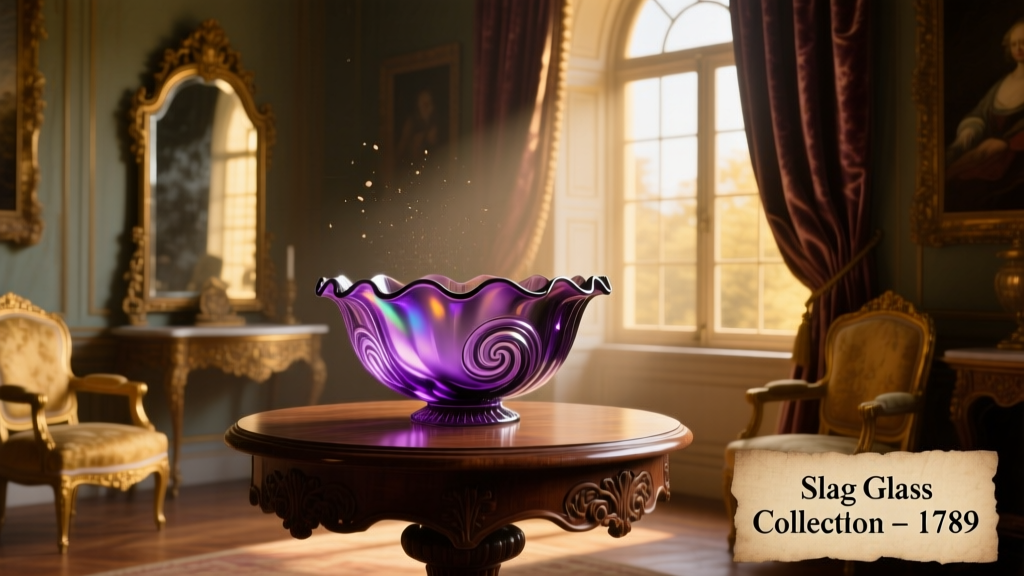
Slag Glass Purple Bowl with Ruffled Edge: Identification, History, and Restoration Best Practices
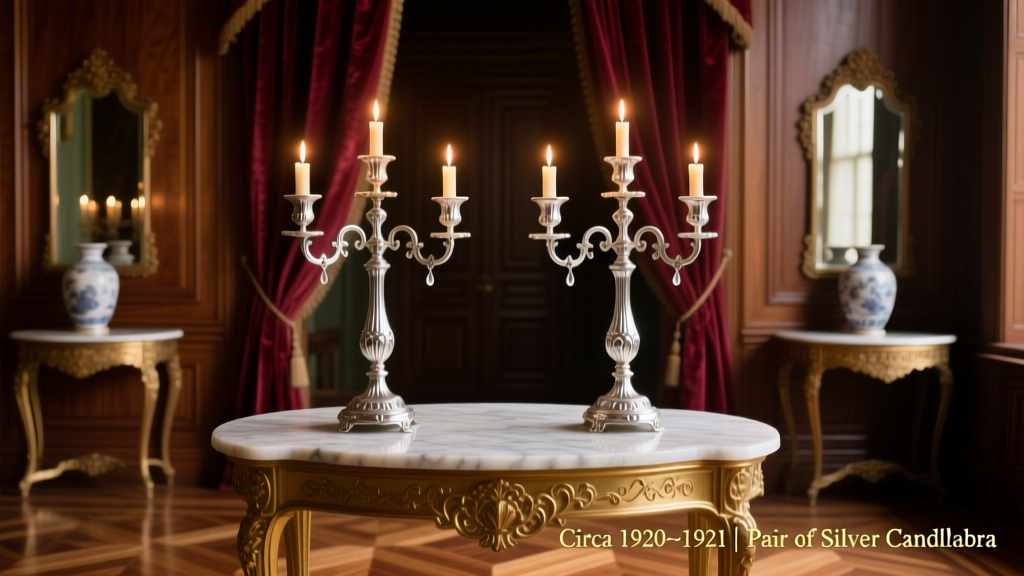
Candelabrum, 5-Light Silver-Plated Drip Pans & Column Stem: A Pair of American Art Deco Era Candelabra, Circa 1920–1921
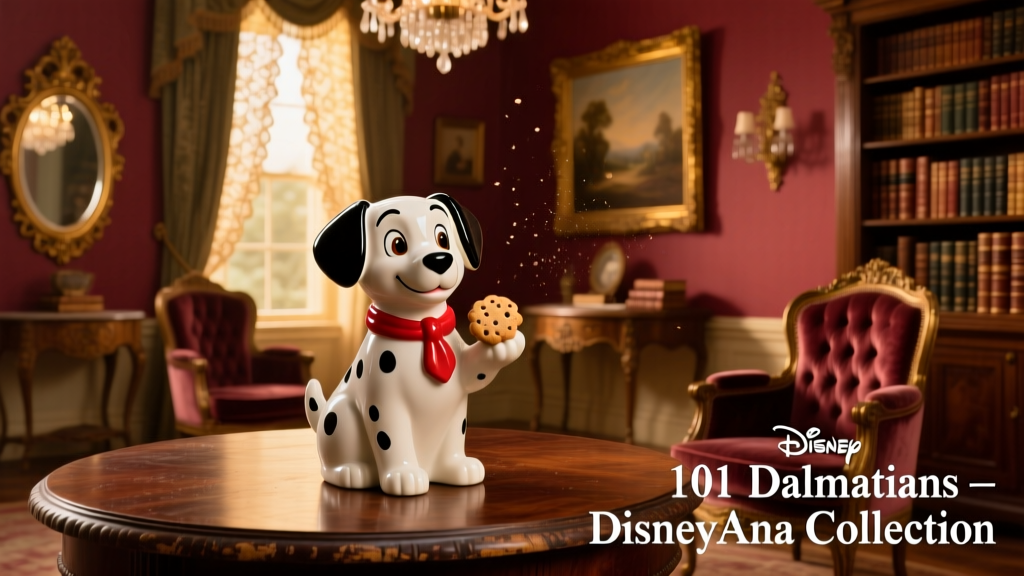
Disneyana Cookie Jar 101 Dalmatians Pup With Scarf Cookies: Identification, Value, and Restoration Guidance
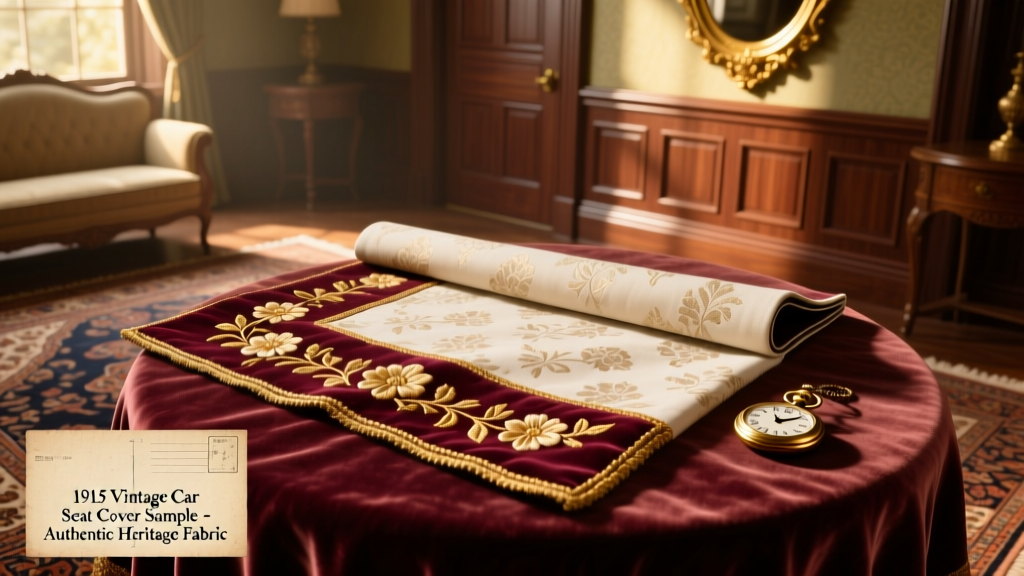
Auto Postcard Car Seat Covers: Fabric Samples, Foldover Design, and Oversize Construction — A 1915 Artifact Study
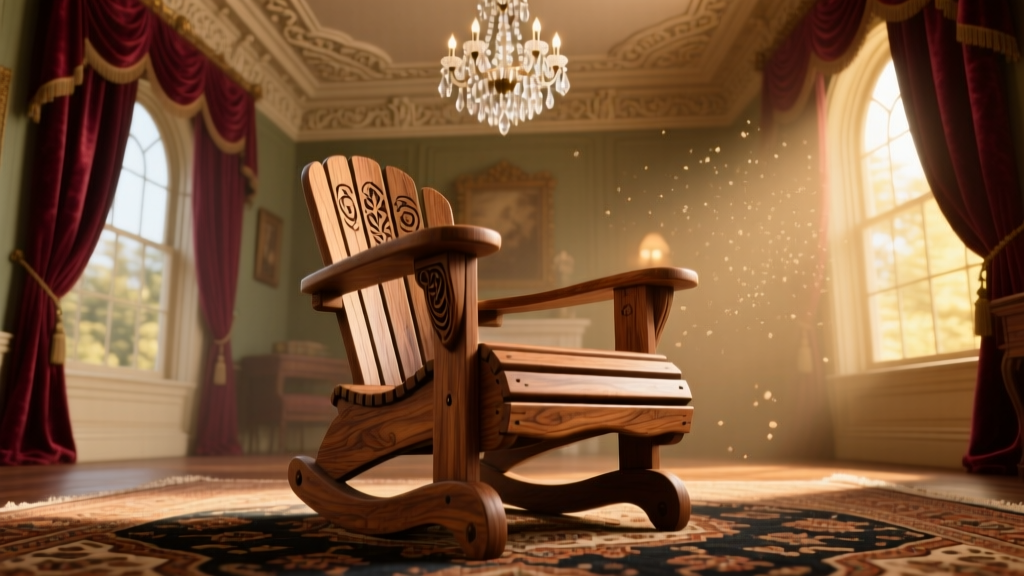
Adirondack Footstool, Circa 1900: Authenticating, Restoring, and Contextualizing a Rare 9 × 15-Inch Early American Garden Accessory
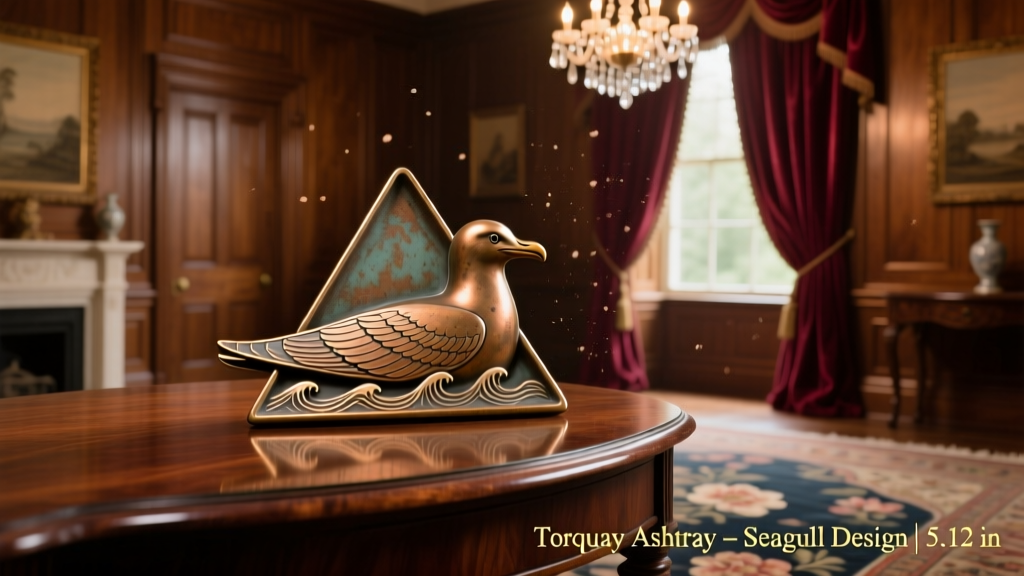
Torquay Ashtray Seagull Triangular 5½-Inch: A Study in Mid-Century British Ceramic Design
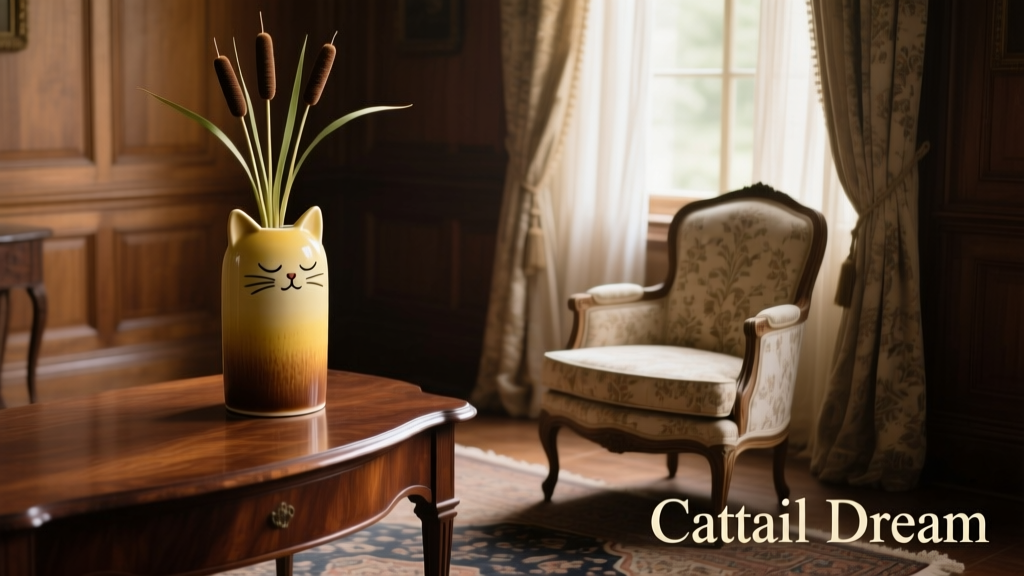
Sleepy Eye Vase: Unpacking the Cattail Cylindrical Yellow-Brown 8½-Inch Ceramic Artifact