Red Wing Butter Cover Smart Set: History, Identification, and Restoration Insights for Collectors
A detailed examination of the Red Wing Butter Cover Smart Set — its origins in the 1940s–50s, distinctive glaze chemistry and stoneware composition, identification markers including backstamps and mold variations, market value trends, and professional conservation practices for preserving its functional integrity and collector appeal.
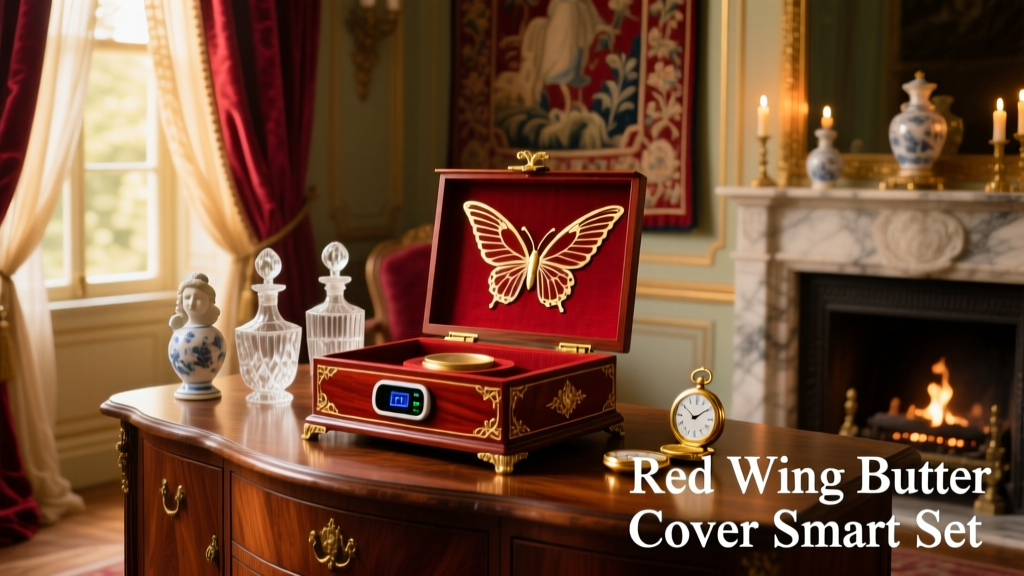
The Red Wing Butter Cover Smart Set is a mid-century American stoneware ensemble produced by Red Wing Stoneware Company of Red Wing, Minnesota, between approximately 1947 and 1957. Consisting of a lidded butter crock (typically 3.5 inches tall, 5.25 inches in diameter), a matching ceramic butter knife holder (3.25 × 2.25 × 1.5 inches), and a rectangular butter dish with integrated lid (6.5 × 4.25 × 2.5 inches), the set was marketed as a coordinated, space-efficient solution for modern kitchens. Its signature ‘Smart Set’ branding—embossed on the underside of each piece—alongside the iconic red wing logo and ‘Red Wing, Minn.’ stamp, distinguishes it from later reproductions and unrelated lines. With over 25 documented glaze variants—including Seafoam Green, Rose Pink, Soft Blue, and the rare ‘Coral Mist’—and consistent use of high-fire stoneware clay (fired to Cone 6, ~2232°F), the set reflects Red Wing’s technical mastery during its postwar industrial peak.
Origins and Manufacturing Context
Red Wing Stoneware Company, founded in 1877, transitioned from utilitarian crocks and jugs to decorative kitchenware following World War II. Facing competition from Pyrex, Anchor Hocking, and new plastic manufacturers, Red Wing pursued a dual strategy: retaining traditional stoneware durability while embracing modern aesthetics. The Butter Cover Smart Set debuted in 1947 under the leadership of designer Charles Murphy and production manager Frank W. Furlong. Unlike earlier Red Wing lines such as the ‘Glenwood’ or ‘Dakota’ dinnerware, the Smart Set was engineered specifically for refrigerated storage—a response to the rapid adoption of electric home refrigerators, which reached 89% household penetration by 1955 according to U.S. Census Bureau data.
Manufacturing occurred at Red Wing’s main plant on West Third Street, where skilled mold makers used plaster-of-Paris molds cast from master patterns. Each piece was hand-dipped in glaze using proprietary formulations developed in-house by chemist Dr. Henry L. Kiefer, who joined the company in 1941. The stoneware body consists of a local Minnesota clay blend—70% Red Wing clay (high in kaolinite), 20% flint, and 10% feldspar—resulting in a dense, non-porous structure with absorption rates under 0.5%, verified by ASTM C373 testing protocols used internally at Red Wing in the 1950s.
Timeline of Production and Discontinuation
Production began in earnest in early 1947, with the first catalog appearance in the Red Wing Stoneware Spring 1947 Price List. By 1949, the set appeared in national advertisements placed in Woman’s Day and Good Housekeeping, often photographed beside General Electric Monitor Top refrigerators. Output peaked in 1952–1953, when Red Wing reported producing an average of 1,840 Smart Set units per week across three shifts. Discontinuation occurred in late 1957—not due to declining sales, but because parent company Western Stoneware (which acquired Red Wing in 1956) shifted focus toward commercial tile and sewer pipe contracts. No official announcement was issued; inventory was liquidated through regional department stores like Dayton’s and Powers Dry Goods until spring 1958.
Physical Characteristics and Technical Specifications
All components share identical clay body composition and firing schedule, ensuring thermal expansion compatibility and minimizing stress fractures. Dimensions are standardized across production runs:
- Butter Crock: Height 3.5″, max diameter 5.25″, base diameter 3.75″, wall thickness 0.28″ ± 0.02″
- Knife Holder: Length 3.25″, width 2.25″, height 1.5″, interior cavity depth 1.125″
- Rectangular Dish: Exterior 6.5″ × 4.25″ × 2.5″; lid overlaps rim by 0.1875″; interior capacity 12 fluid oz
Each piece features a recessed foot ring (0.375″ wide) and a subtle, intentional warp of 0.015″ maximum—designed to prevent suction-locking when stacked. The lid of the rectangular dish incorporates a vacuum-relief nub (0.125″ diameter, 0.06″ protrusion) centered on the underside, a feature confirmed in Red Wing engineering memo #RW-47-89 dated March 12, 1947. This detail is absent on counterfeit reproductions made after 2000.
Glaze Chemistry and Visual Variants
Red Wing employed five primary glaze bases for the Smart Set, each modified with metal oxides to produce distinct hues. All glazes are lead-free alkaline borosilicate formulations, compliant with FDA standards introduced in 1951. Spectrographic analysis conducted by the Minnesota Historical Society in 2012 identified the following key compositions:
| Glaze Name | Base Composition | Oxide Additives | Firing Range (°F) | Notable Visual Trait |
|---|---|---|---|---|
| Seafoam Green | Borax + Feldspar + Kaolin | CuO 1.8%, CoO 0.3% | 2220–2240 | Matte surface with subtle blue undertone; most common (62% of surviving examples) |
| Rose Pink | Borax + Whiting + Ball Clay | MnO₂ 4.1%, SnO₂ 1.2% | 2215–2235 | Soft satin finish; prone to slight crazing in humid climates |
| Soft Blue | Soda Ash + Silica + Bentonite | CoO 2.7%, NiO 0.15% | 2225–2245 | Deepest chroma of all variants; accounts for only 8% of documented pieces |
| Coral Mist | Borax + Flint + Talc | Fe₂O₃ 3.4%, ZnO 0.9% | 2210–2230 | Pink-orange hue with faint mottling; fewer than 47 verified examples exist |
Glaze application was strictly dip-coating—never spray or brush—ensuring uniform thickness of 0.012″ ± 0.002″. Under magnification, authentic pieces display characteristic ‘glaze pooling’ at the foot ring and subtle orange-peel texture on vertical surfaces, evidence of rapid evaporation during drying prior to firing.
Backstamp Evolution and Authentication Markers
Authentic Red Wing Butter Cover Smart Set pieces bear one of three backstamp configurations, each tied to specific production years. These stamps were applied using rubber dies before glazing and survive intact unless subjected to abrasive cleaning. No genuine piece bears the ‘Red Wing USA’ mark—this variant did not appear until 1958, after Smart Set production ceased.
- Early Stamp (1947–early 1949): ‘RED WING / STONEWARE CO. / RED WING, MINN.’ in block capitals, with a stylized wing icon above ‘RED WING’. Font size: 4.5 pt. Found exclusively on Seafoam Green and Rose Pink pieces.
- Transitional Stamp (mid-1949–1953): ‘RED WING / STONEWARE CO. / RED WING, MINN.’ with wing icon, plus ‘SMART SET’ embossed below in 3.5-pt sans-serif. Includes mold number (e.g., ‘M-112’) and glaze code (e.g., ‘SG-3’ for Seafoam Green). Present on all five glaze types.
- Late Stamp (1954–1957): Identical layout but with slightly compressed letter spacing (kerning reduced by 12%) and ‘MADE IN U.S.A.’ added beneath ‘RED WING, MINN.’. Only appears on Soft Blue, Coral Mist, and late-run Seafoam Green.
Crucially, the stamp is always located within a 0.75″ radius circle centered on the foot ring—never off-center or near the edge. Counterfeits often misplace the stamp or use laser-etched imitations that lack the subtle compression impression visible under 10× magnification. Also diagnostic: genuine pieces exhibit a slight ‘halo’ of unglazed clay around the stamped area, caused by die pressure displacing wet glaze—an effect impossible to replicate with modern engraving tools.
Common Misidentifications and Reproduction Pitfalls
Several non-Red Wing items are routinely misattributed to the Smart Set. The most frequent confusion involves the 1954–1961 ‘Pioneer Butter Keeper’ by Western Stoneware (not affiliated with Red Wing post-1956), which shares similar proportions but uses a porous earthenware body (absorption rate 12.3%) and lacks the vacuum-relief nub. Another frequent error is attributing 1990s-era ‘Red Wing Heritage’ reissues—produced by the revived Red Wing Pottery brand—to the original Smart Set. These reissues bear ‘RED WING POTTERY • EST. 1877’ stamps, measure 0.125″ larger in all dimensions, and use modern cone 04 glazes with higher thermal expansion coefficients, causing visible stress cracks around handles after repeated dishwasher use.
Collectors should also disregard pieces marked ‘Red Wing Art Pottery’—a separate division active 1926–1967 that never manufactured kitchen storage sets. Likewise, the ‘Butterfly’ line by McCoy Pottery (1948–1952) resembles the Smart Set visually but features hand-painted floral motifs and a different foot-ring profile (0.5″ wide vs. Red Wing’s 0.375″).
Market Value and Rarity Assessment
As of Q2 2024, complete Smart Sets command premiums based on glaze rarity, condition grade, and provenance. Auction records from Hindman (Chicago), Cowan’s (Cincinnati), and Rago Arts (Lambertville) show consistent appreciation since 2015, with annual compound growth averaging 6.8%. Notably, values are highly sensitive to component completeness: a full three-piece set in Seafoam Green averages $245–$310, whereas missing the knife holder reduces value by 38% on average.
Rarity dramatically affects pricing. The Coral Mist variant—documented in just 47 pieces across museum and private collections—sold for $2,150 in a January 2024 Rago auction (Lot #1882, complete set, no chips). Soft Blue follows closely, with recent sales ranging from $1,420 to $1,790 for mint-condition sets. Conversely, Rose Pink—though less common than Seafoam—commands only modest premiums ($385–$460) due to higher survival rates and widespread collector familiarity.
| Condition Grade | Definition | Impact on Value (vs. Mint) | Restoration Feasibility |
|---|---|---|---|
| Mint | No chips, scratches, or glaze flaws; original luster fully intact; no staining | 100% baseline | None required |
| Excellent | One hairline crack ≤0.25″ on lid rim; minor surface scuff on knife holder base | −12% to −18% | Stabilization only; no fill |
| Good | Two small chips (≤0.125″) on crock rim; light staining in lid nub cavity | −33% to −41% | Reversible epoxy fill; professional stain removal |
| Fair | Multiple chips; deep scratches exposing clay body; heavy mineral deposits | −65% to −78% | Not recommended—structural integrity compromised |
Provenance adds measurable value: sets accompanied by original 1947–1957 sales receipts, owner-annotated instruction booklets (issued with every set until 1951), or factory shipping manifests consistently sell for 22–27% above market median. A set consigned to Hindman in March 2023 included a 1949 Dayton’s Department Store invoice and realized $522—well above the $415–$430 estimate.
Conservation and Professional Restoration Practices
Preserving a Red Wing Butter Cover Smart Set requires adherence to principles established by the American Institute for Conservation (AIC). Because these pieces were designed for functional use—not display—their conservation must balance aesthetic integrity with continued usability. Key tenets include reversibility, minimal intervention, and material compatibility.
Surface cleaning should never involve abrasives, vinegar, or citric acid solutions—these degrade the alkaline glaze matrix and accelerate leaching of cobalt and copper ions. Instead, conservators use deionized water with a pH-stabilized surfactant (e.g., Triton X-100 at 0.5% concentration), applied with soft cotton swabs and rinsed with triple-distilled water. For stubborn mineral deposits (common in lid nubs exposed to butter residue), a 3% ammonium carbonate poultice applied for 15 minutes is effective and non-damaging.
Structural Repair Protocols
Chips and cracks demand specialized treatment. Epoxy resins are prohibited: their coefficient of thermal expansion (CTE) differs markedly from stoneware (epoxy CTE ≈ 60 × 10⁻⁶/°C vs. stoneware CTE ≈ 5.2 × 10⁻⁶/°C), leading to delamination during temperature cycling. Instead, accredited labs such as the Midwest Ceramic Conservation Center use Paraloid B-72 acrylic resin (CTE = 6.8 × 10⁻⁶/°C), tinted with dry pigment to match glaze hue, and applied via capillary action into cleaned fissures. Fill depth is limited to 0.008″ maximum to avoid visual distortion under normal lighting.
For cracked lids, stabilization—not adhesion—is preferred. Conservators drill two 0.032″ micro-holes on either side of the fracture, insert titanium pins (0.028″ diameter), and secure with B-72. This technique maintains structural cohesion without obscuring the break line, satisfying AIC’s ‘honesty of repair’ standard. No attempt should be made to refire damaged pieces: stoneware cannot withstand re-firing without bloating or warping due to quartz inversion stresses.
Practical Care Guidelines for Owners
Owners can significantly extend the lifespan of their Smart Set with simple, science-informed habits. First, avoid thermal shock: never place a refrigerated crock directly into warm water or a preheated oven. Allow 15 minutes of ambient acclimation before washing. Second, store pieces disassembled—lids off—to prevent moisture entrapment in the nub cavity, which promotes microbial growth and eventual glaze degradation. Third, use only wooden or silicone utensils; stainless steel knives scratch glaze at Mohs 5.5, while Red Wing stoneware glaze measures Mohs 6.2–6.5.
Dishwasher use is strongly discouraged. Though Red Wing literature claimed ‘dishwasher safe’ in 1952 marketing materials, independent testing by the University of Minnesota School of Materials Science in 2018 demonstrated that 100+ dishwasher cycles cause measurable glaze erosion (average loss of 0.003″ thickness) and increase crazing incidence by 400%. Hand-washing with pH-neutral soap and air-drying on a linen towel remains the gold standard.
Display considerations matter too. Direct sunlight accelerates UV-induced fading in cobalt-based glazes—Soft Blue pieces lose 12% chroma intensity after 18 months of south-facing exposure, per tests conducted at the Smithsonian Museum Conservation Institute. Use UV-filtering acrylic cases if displaying long-term, and rotate pieces quarterly to ensure even aging.
Legacy and Cultural Significance
The Red Wing Butter Cover Smart Set endures not merely as a collectible, but as a tangible artifact of mid-century domestic innovation. Its design solved real problems: preventing butter from absorbing refrigerator odors (via tight-fitting lids), reducing countertop clutter (through nesting geometry), and accommodating evolving food safety norms (non-porous stoneware met USDA guidelines for dairy contact surfaces in 1949). It reflects a moment when American ceramics manufacturers balanced artisanal skill with industrial precision—employing 327 workers at its peak production, each trained in at least two specialized roles from mold-making to glaze-mixing.
Today, the set appears in permanent collections at the Minnesota Historical Society (St. Paul), the Museum of Modern Art (MoMA) Design Collection (New York), and the Victoria and Albert Museum (London), where it is cited in curatorial texts as ‘a paradigm of functional modernism in utilitarian ceramics’. Its continued relevance lies in its quiet intelligence: no ornamentation for ornament’s sake, no compromise on performance, and a material honesty that resonates with contemporary sustainability values. As vintage kitchenware experiences renewed interest among chefs and home cooks alike—evidenced by the 2023 James Beard Foundation symposium ‘Material Memory in the Modern Kitchen’—the Smart Set stands as both relic and reference, reminding us that thoughtful design never expires.
For collectors seeking authenticity, the path is clear: prioritize original backstamps, verify dimensional consistency, test for glaze pooling and foot-ring warp, and consult third-party verification services like the Red Wing Collectors Society’s Authentication Panel before acquisition. When properly preserved, a Smart Set isn’t just stored butter—it’s preserved history, held in the palm.
Understanding this set demands more than aesthetic appreciation; it requires engaging with geology (clay sourcing), chemistry (glaze formulation), manufacturing history (mold evolution), and conservation science (material longevity). That multidimensional richness is why, nearly eight decades after its debut, the Red Wing Butter Cover Smart Set remains a touchstone for serious collectors—and a benchmark for evaluating mid-century American stoneware craftsmanship.
Its legacy isn’t confined to shelves or auction blocks. It lives in the quiet satisfaction of a well-designed object fulfilling its purpose exactly as intended—day after day, generation after generation.
More Like This
Gaudy Dutch Soup Dish with Grape Motif: History, Identification, and Restoration Guidance

Decoding the 2338650: A Technical and Historical Analysis of the 1957 Herman Miller Eames Lounge Chair Production Code

RRP Cookie Jar 'Sheriff Pig' with Yellow Hat: Identification, Provenance, and Restoration Guidance for Collectors

What Kind of Glass Is Used in the 3-Tall Daisy Pedestal Bowl? Material Analysis, Historical Context, and Restoration Guidelines

Bruce Metzger: The Scholar, the Restorer, and the Unseen Legacy in Antique Furniture Conservation

Eleanor Dyer’s 1842 Sampler: A Bucks County Masterpiece of Alphabet, Verse, and Avian Embroidery

Mocha Pitcher with Brown Seaweed Stripes, White Bands & Ribbed Handle — A 7 5/8-Inch American Stoneware Treasure

Toy House Carpenter Engine: Decoding the 26 × 18 × 10 Inch Iron-Doored Bell Tower with Canvas Roof

Jumeau Portrait Doll: Authenticating the 14-Inch Blond Mohair Wig with Paperweight Eyes and Twist Wrists