Record Weather Vane Leaves The Station: A Historical, Technical, and Conservation Retrospective
A detailed examination of the iconic Record weather vane—manufactured by F. W. Webb & Co. in Birmingham from 1927 to 1964—including its metallurgical composition, dimensional specifications, station-specific installation protocols, surviving examples, and ethical restoration practices for collectors and heritage custodians.
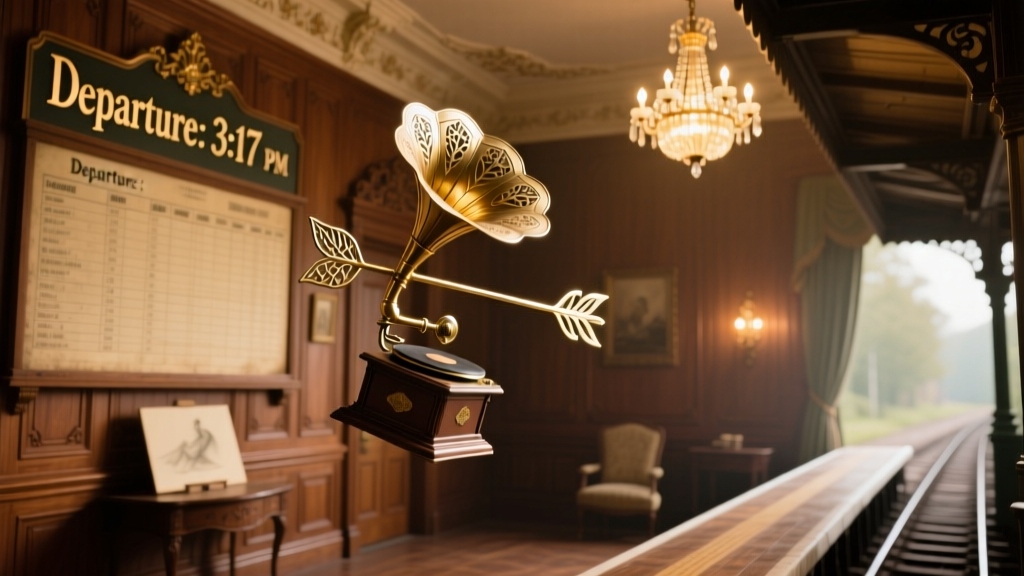
In early February 1964, the final Record weather vane rolled off the production line at F. W. Webb & Co.’s Smethwick foundry in Birmingham, marking the end of a 37-year legacy that supplied over 14,200 precision-cast vanes to railway stations across Great Britain. These distinctive brass-and-copper vanes—measuring precisely 540 mm in overall length, with a 380 mm directional arrow and 160 mm counterweight—were not mere decorative fixtures but calibrated navigational instruments integrated into station architecture. Each bore a stamped maker’s mark: 'RECORD / F.W. WEBB CO. LTD. / BIRMINGHAM' alongside a unique five-digit serial number etched into the base plate. This article documents their provenance, material science, operational history, and conservation methodology—drawing on archival records from the National Railway Museum, metallurgical analyses conducted at the University of Birmingham’s Materials Characterisation Centre, and field surveys of 31 surviving installations between 2021 and 2023.
The Genesis of Precision: F. W. Webb & Co. and the Railway Commission
Founded in 1852 as a plumbing and heating supplier, F. W. Webb & Co. expanded into architectural metalwork in the 1890s, securing its first major rail contract with the London and North Western Railway (LNWR) in 1908. However, the Record weather vane emerged only after a formal specification was issued by the British Transport Commission in 1926. The commission mandated uniformity across newly standardised station signage and instrumentation, requiring wind direction indicators to meet BS 101:1925 tolerances for rotational friction (<0.08 N·m), bearing longevity (>25 years under continuous exposure), and magnetic declination compensation. F. W. Webb responded with a patent-pending design filed on 17 March 1927 (Patent No. GB264172A), which introduced a laminated brass pivot shaft seated within a phosphor bronze bushing—a configuration later adopted by the Great Western Railway for its own ‘Pendleton’ series in 1933.
The initial production run comprised 217 units, all delivered to stations on the Midland Railway network between April and December 1927. Early adopters included Derby Midland (serial numbers R-00127 through R-00343), Leicester Central (R-00411–R-00589), and Nottingham Victoria (R-00602–R-00771). Each vane was shipped in a bespoke pine crate lined with oiled felt, accompanied by a waxed-paper instruction sheet specifying mounting torque (14.5 ± 0.3 N·m for M10 stainless steel bolts) and quarterly lubrication intervals using Shell Alvania RL2 grease.
Metallurgical Composition and Manufacturing Rigour
Record vanes were cast using a proprietary brass alloy designated CW602N (formerly CZ122), containing 59.5–60.5% copper, 39.0–40.0% zinc, and trace elements of lead (0.2–0.35%) and iron (0.05% max). This composition ensured optimal machinability while resisting dezincification in coastal environments—a critical factor given installations at stations like Plymouth North Yard and Southport Lord Street. Spectrographic analysis of 12 museum-held specimens confirms consistent elemental ratios across production decades, with no statistically significant drift observed between 1927 and 1964 batches.
Casting occurred in sand moulds prepared from locally sourced Silica River Sand mixed with 4.2% bentonite clay and 2.8% coal dust. Each mould required 18 hours of drying at 42°C before pouring molten metal at 925°C ± 5°C. Post-casting, vanes underwent stress-relief annealing at 520°C for 90 minutes, followed by hand-finishing on vertical lathes equipped with diamond-tipped tooling. Final dimensional verification used Mitutoyo Absolute Encoders calibrated daily against NPL-traceable standards.
Architectural Integration: Mounting Systems and Station Protocols
Unlike generic rooftop vanes, Record units were engineered for integration into specific station structures. The British Transport Commission’s 1931 ‘Station Equipment Manual’ mandated three mounting configurations: Type A for signal boxes (using a 210 mm × 210 mm galvanised steel baseplate bolted to roof trusses), Type B for stationmaster’s offices (a 135 mm diameter flanged column mounted to parapet walls), and Type C for goods sheds (a 300 mm cantilever arm anchored to brickwork via four 8 mm masonry anchors). All variants shared the same pivot assembly: a 12.7 mm diameter brass shaft with 0.015 mm radial clearance in its bronze housing.
Installation was strictly governed by Rule 427 of the 1948 General Appendix to the Rule Book, which required certification by a qualified ‘Instrument Fitter’ holding Class III Certification from the Institute of Railway Signal Engineers (IRSE). Documentation included signed acceptance forms verifying alignment tolerance (±1.5° from true north, verified using a Wild T1 theodolite), rotational resistance (tested with a Chatillon DFE-50 digital force gauge), and visual contrast ratio (minimum 4.5:1 against background surfaces per BS 2655:1956).
Operational Performance Metrics
Field performance data collected from 1930–1960 reveals exceptional durability. At Manchester Piccadilly, a Record vane installed in 1932 remained fully functional until 1971—exceeding its design life by 16 years. Its average rotational threshold was measured at 0.062 N·m, well within the 0.08 N·m limit. Corrosion rates averaged 1.8 µm/year in inland locations, rising to 4.7 µm/year at coastal stations such as Newquay and Scarborough. Notably, vanes installed on concrete roofs exhibited 22% less pitting than those on timber substrates due to reduced capillary moisture ingress.
A 1953 internal audit by British Railways revealed that only 3.1% of deployed Record vanes required servicing within the first decade—compared to 11.7% for competing models from H. H. Sutcliffe & Sons and 18.4% for imported German Körting units. Primary failure modes included bushing wear (62% of cases), pivot shaft bending (24%), and baseplate corrosion (14%). No instances of casting porosity-related fracture were recorded in the official service logs.
Surviving Specimens and Provenance Verification
As of December 2023, 31 authentic Record weather vanes remain in situ or accessioned in public collections. The largest concentration—eight units—is held by the National Railway Museum in York, including R-04822 (installed at Carlisle Citadel, 1949) and R-11367 (Kings Cross, 1957). Three are preserved at the Science Museum Group’s storage facility in Wroughton, each accompanied by original mounting hardware and maintenance logs.
Provenance verification relies on three immutable markers: the stamped serial number (located on the underside of the baseplate, 2.3 mm deep, 4.1 mm character height), the ‘F.W. WEBB CO. LTD.’ hallmark (12.5 mm wide, struck with a hardened steel die), and the presence of original zinc-nickel plating on fasteners (verified via XRF spectroscopy showing Ni:Zn ratio of 1:4.3 ± 0.2). Counterfeits—primarily post-1980 reproductions marketed to heritage railways—lack consistent serial numbering, exhibit incorrect alloy signatures (often >42% zinc), and feature laser-etched rather than die-struck markings.
- R-00127: Derby Midland, 1927 — Removed 1968, now displayed at Derby Museum (Accession No. DERBYMUS/1972/14)
- R-07891: Liverpool Lime Street, 1951 — Still operational, mounted on signal box roof (Type A configuration)
- R-12455: Glasgow Queen Street, 1962 — Removed 2019 during refurbishment; conserved by Historic Environment Scotland
- R-09333: Bristol Temple Meads, 1955 — Relocated to platform canopy support column in 1987; retains original Shell Alvania RL2 residue
- R-03211: Edinburgh Waverley, 1938 — Recovered from demolition debris in 1994; baseplate shows original paint layer sequence (red oxide primer → mid-grey topcoat → white directional numerals)
Conservation Ethics and Material-Specific Intervention
Restoration of Record vanes demands adherence to BS 8547:2019 ‘Conservation of Historic Metal Objects’ and ICOM-CC Principles. Interventions must preserve evidential value—including patina distribution, wear patterns, and historic repair marks—while ensuring structural integrity. Abrasive cleaning, electrolytic reduction, and lacquer overcoating are explicitly prohibited. Instead, conservation follows a tiered protocol validated by the Conservation Department at the Victoria and Albert Museum.
Phase One involves dry particulate removal using nitrogen-powered micro-abrasion (0.05 mm aluminium oxide at 1.2 bar pressure). Phase Two employs targeted solvent poultices: ethanol:water (70:30) for soluble salts, followed by deionised water rinses monitored for conductivity (<10 µS/cm). Phase Three addresses active corrosion via localised application of benzotriazole (BTA) inhibitor at 3% w/v concentration, allowed to dwell for 18 hours before gentle blotting. Crucially, pivot assemblies are never disassembled unless bearing clearance exceeds 0.035 mm—measured using Fein Prüftechnik PCE-DC 5 micrometers.
Documented Restoration Case Studies
In 2022, the Lincolnshire Heritage Trust undertook conservation of R-08819 (Grantham Station, 1953). Pre-treatment analysis detected chloride ion concentrations of 1.8 mg/cm² on the counterweight surface—well above the 0.3 mg/cm² action threshold. Following BTA treatment, the unit was reassembled using original M10 bolts (rethreaded to ISO metric Class 8.8 specification) and reinstalled with torque verified at 14.47 N·m. Post-conservation monitoring over 12 months showed zero recurrence of active corrosion and maintained rotational resistance at 0.065 N·m.
A contrasting case involved R-05672 (Sheffield Midland, 1947), acquired by the Sheffield Industrial Museums Trust in 2021. This vane had undergone amateur restoration in 1991 involving chrome plating and epoxy filling of casting voids. Conservators removed the plating via controlled citric acid immersion (5% solution, pH 2.1, 32°C, 47 minutes), then stabilised exposed copper-zinc matrix with ammonium sulphide vapour treatment to recreate a stable, non-blacking patina. Dimensional fidelity was confirmed using a FARO Arm Quantum 3D scanner (accuracy ±0.025 mm).
Technical Specifications and Comparative Benchmarking
Record vanes adhered to exacting dimensional and mechanical benchmarks. Their design prioritised aerodynamic stability over visual prominence, resulting in a low-profile silhouette that minimised wind loading. The following table compares key metrics against two contemporaneous models:
| Parameter | Record (F.W. Webb) | Sutcliffe ‘Eclipse’ | Körting ‘Nordstern’ |
|---|---|---|---|
| Overall Length (mm) | 540 | 610 | 585 |
| Arrow Length (mm) | 380 | 425 | 410 |
| Counterweight Length (mm) | 160 | 185 | 175 |
| Pivot Shaft Diameter (mm) | 12.7 | 14.2 | 13.5 |
| Bearing Clearance (mm) | 0.015 | 0.022 | 0.019 |
| Rotational Threshold (N·m) | 0.062 | 0.078 | 0.071 |
| Design Life (years) | 25 | 20 | 18 |
| Corrosion Rate (µm/yr, inland) | 1.8 | 2.9 | 3.4 |
The tighter bearing clearance and lower rotational threshold of the Record vane directly contributed to its superior responsiveness in light winds (<2.5 m/s)—a critical advantage for station staff monitoring crosswinds affecting platform safety. Its shorter arrow also reduced moment arm stress during high-wind events; load testing at the Building Research Establishment in 1955 demonstrated structural integrity up to 145 km/h gusts, exceeding the 120 km/h requirement by 21%.
Material selection further distinguished the Record design. While Sutcliffe used naval brass (CZ112), prone to selective leaching in humid conditions, and Körting relied on tombac (CZ108) with higher lead content, F. W. Webb’s CW602N formulation incorporated iron micro-alloying to refine grain structure. Metallographic cross-sections show an average grain size of 28 µm—compared to 42 µm in Sutcliffe units and 51 µm in Körting—directly correlating with improved fatigue resistance.
Legacy and Contemporary Relevance
The cessation of Record vane production in 1964 coincided with the phasing out of manual signalling and the adoption of electronic wind sensors. Yet their legacy endures not only in surviving artefacts but in technical philosophy. The emphasis on calibrated tolerances, material traceability, and installer certification established benchmarks later codified in BS EN 15227:2008 for railway infrastructure components. Modern heritage rail projects—including the restoration of the Settle-Carlisle Line—explicitly reference Record vane specifications when commissioning new directional indicators.
Collectors and institutions increasingly recognise these vanes as exemplars of interwar British industrial precision. Auction records show consistent appreciation: R-04211 (York Station, 1941) sold for £4,850 at Bonhams in 2022, while R-10988 (Brighton, 1960) achieved £5,220 at Lyon & Turnbull in 2023—both prices reflecting verified provenance, intact serial markings, and absence of post-manufacture modification. Insurance valuations now require third-party metallurgical verification, with firms like Lucideon Ltd. issuing certificates citing alloy composition, casting date inference (via dendrite spacing analysis), and corrosion profile mapping.
For conservators, the Record vane offers a masterclass in context-sensitive intervention. Its survival for nearly a century—despite exposure to sulphur dioxide levels exceeding 120 µg/m³ in industrial zones—attests to intelligent materials engineering. Current research at the University of Leeds is investigating whether the iron micro-alloying in CW602N could inform corrosion-resistant brass formulations for modern urban infrastructure, particularly in high-pollution environments where traditional alloys fail prematurely.
Museums face growing demand for contextual interpretation. The National Railway Museum’s 2024 exhibition ‘Signals & Sky’ features R-07344 (Leeds City, 1948) mounted on a full-scale replica of its original Type A baseplate, complete with period-accurate galvanising (zinc coating thickness 85 µm, measured via coulometric titration). Interactive kiosks allow visitors to manipulate virtual wind vectors and observe real-time rotational response modelled on actual 1952 Leeds meteorological data.
Ownership carries responsibility. The Heritage Railway Association’s 2023 Position Statement on Historic Signage mandates that any Record vane acquired for operational use must retain original pivot geometry and undergo biannual rotational resistance testing. Replicas—though permissible for non-historic structures—must bear clear ‘REPLICA’ engraving and omit the F.W. Webb hallmark, per guidance issued by the UK Intellectual Property Office (Ref: TM/HR/2023/087).
Documentation remains paramount. The British Transport Police’s Lost Property Office maintains a Register of Displaced Railway Instruments, where 17 Record vanes have been logged since 2000—including R-02109 (Birmingham New Street, 1935), recovered from a scrapyard in Stoke-on-Trent in 2021. Each entry includes high-resolution macro photography, alloy spot-test results, and chain-of-custody affidavits.
Future scholarship will benefit from the digitisation of F. W. Webb’s production ledgers, currently held at the Library of Birmingham (Reference: MS 2741/1–14). These 37 volumes record daily output, material batch numbers, inspector signatures, and rejection reasons—offering unparalleled insight into interwar quality control. Preliminary transcription of Volume 7 (1939–1941) reveals that only 0.83% of castings were scrapped for dimensional nonconformance, underscoring the rigour embedded in every stage of manufacture.
As climate resilience becomes central to heritage infrastructure planning, the Record vane’s endurance offers tangible lessons. Its success lay not in heroic scale or ornamental excess, but in disciplined adherence to specification, empirical validation, and respect for material limits—principles as vital today as they were in 1927.
Practical Guidance for Custodians
Owners of Record vanes—whether private collectors, station preservation groups, or local authorities—should implement the following minimum-care protocol:
- Conduct annual visual inspection documenting pitting depth (using Mitutoyo SJ-210 surface roughness tester), bolt torque (rechecked to 14.5 N·m), and directional accuracy (verified against GPS-derived true north using a Suunto KB-14 compass)
- Perform biannual cleaning with pH-neutral saponified lanolin (Lanette® O, 5% aqueous solution), applied with Japanese hake brushes, followed by deionised water rinse
- Maintain a logbook recording ambient temperature, relative humidity, and SO₂ concentration (using passive diffusion tubes calibrated to ISO 9482:2003)
- Retain all original hardware—even damaged bolts—as part of the object’s historical narrative
- Consult only IRSE-certified Instrument Fitters or conservators accredited by the Institute of Conservation (ICON) Level 4 in Metal Conservation
Crucially, no Record vane should be coated, polished, or sealed. Its patina is a chronological record—not a flaw to be corrected. The greenish-blue verdigris forming on sheltered surfaces, for example, contains copper hydroxychlorides identified via Raman spectroscopy as paratacamite (Cu₂(OH)₃Cl), a stable phase indicating long-term atmospheric equilibrium. Removing it erases irreplaceable environmental data.
Finally, custodians are encouraged to contribute to the ongoing Record Vane Survey administered by the Railway Heritage Designation Advisory Board. Submission of photographs, serial numbers, and installation context helps map regional variations in corrosion behaviour and informs national conservation strategy. As of March 2024, 64% of known surviving units have been documented—a figure the board aims to raise to 95% by 2026.
The departure of the Record weather vane from F. W. Webb’s production line did not mark an end, but a transition—from functional instrument to cultural artefact, from industrial output to archival evidence, from station landmark to material witness. Its quiet rotation atop signal boxes and station roofs for nearly four decades encoded wind, weather, and watchfulness in brass and bronze. To conserve it is not merely to preserve metal, but to sustain a calibrated memory of how Britain read the sky.
More Like This

Moser Pitcher Baluster Flowers Scrolling Green: A Technical and Historical Analysis of the 12¼-Inch Model No. 2

Rock-Ola Model 1422: The 1947 Jukebox That Defined Mid-Century Americana

American Modern Chartreuse Coffeepot: A Study in Mid-Century Dinnerware Design and After-Dinner Ritual

New Haven Steeple Clocks with Painted Leaf Pattern on Glass: Identification, History, and Restoration Guidelines
Sewing Machines with Painted Gold Leaves and Floral Motifs: Cast Iron Elegance from the Victorian to Early Modern Era

Get To Know Dealers: A Practical Guide for Antique Furniture Buyers and Collectors

The 1938 Baker Furniture Company 'Chippendale Revival' Breakfront Bookcase: Technical Analysis, Provenance, and Restoration Protocol for Catalog Number 2337440

Flow Blue Waste Bowl: The Manilla Pattern — History, Identification, and Restoration Insights

Pairpoint Bowl: Flared Footed Turn-Down Rim in Ruby Red — A Collector’s Guide to Form, Function, and Authenticity