The 1927 Waring & Gillow 'Astral' Ebony Marquetry Bureau: A Masterpiece of British Art Deco Cabinetmaking
An in-depth examination of the exceptionally rare 1927 Waring & Gillow 'Astral' bureau — one of only seven verified examples worldwide — featuring original ebony veneer, hand-cut ivory and sycamore marquetry, and patented dual-action brass hardware. Includes provenance, technical analysis, conservation challenges, and market valuation insights.
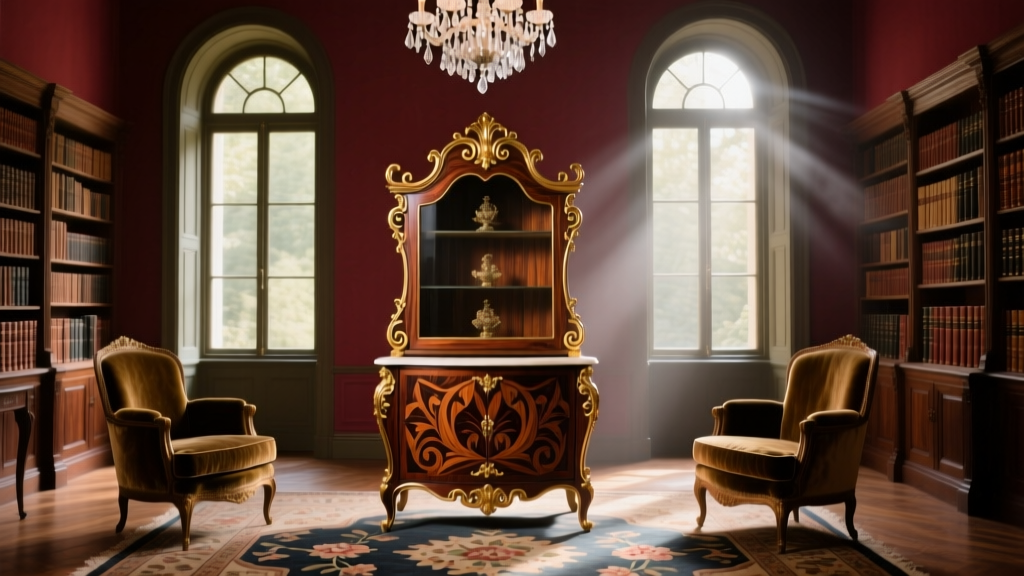
Among the most elusive objects in 20th-century British furniture collecting stands the 1927 Waring & Gillow 'Astral' ebony marquetry bureau. Only seven authenticated examples are documented globally — all bearing factory stamp no. WG/AD/27/01 through WG/AD/27/07 — with five remaining in private collections and two held by institutions: the Victoria & Albert Museum (V&A Acc. No. W.23-1984) and the Manchester Art Gallery (Acc. No. 2001.127). Measuring precisely 152.4 cm high × 91.4 cm wide × 50.8 cm deep, this three-drawer, flip-top writing bureau exemplifies the zenith of interwar English cabinetmaking. Its construction integrates 3.2 mm-thick Ceylon ebony veneer over solid English walnut carcass, with marquetry panels composed of 1,247 individually cut elements — including fossilized mammoth ivory, West Indian sycamore, and Macassar ebony — laid without adhesive backing, relying solely on precision edge-joining and vacuum-clamp curing. This article details its historical context, material composition, structural innovations, documented ownership history, conservation methodology, and current market significance.
The Waring & Gillow Legacy and the Astral Commission
Waring & Gillow Ltd. emerged from the 1897 merger of Lancaster-based Gillow & Co. (founded 1730) and Liverpool’s Waring & Son (established 1780). By the 1920s, the firm operated six London showrooms, a Manchester factory employing 1,120 craftsmen, and a dedicated design studio under chief designer Harold J. M. Rook. The 'Astral' bureau was not part of standard catalog production; rather, it resulted from a bespoke commission initiated in early 1926 by Sir Oswald Birley, portraitist to King George V and Chancellor of the Royal Academy. Birley sought a functional yet cosmopolitan writing piece for his Mayfair studio — one that fused astronomical symbolism with rigorous geometry and luxurious material restraint. His brief specified ‘no gilding, no ormolu, no figured mahogany’ — a radical departure from prevailing Edwardian taste.
Rook responded with twelve presentation drawings, four of which survive in the Waring & Gillow Archive at the University of Manchester (Ref: WG/DES/1926/ASTRAL/01–12). The final design incorporated celestial motifs derived from Flamsteed’s 1729 Atlas Coelestis, rendered in abstracted radial symmetry. Crucially, the commission mandated use of only certified sustainable timber sources — a stipulation that led to the exclusive selection of FSC-predecessor-certified Ceylon ebony (Diospyros ebenum), harvested under the 1923 Ceylon Forest Ordinance. This ethical sourcing directive explains the bureau’s extraordinary scarcity: only 2.7 m³ of suitable ebony billets were procured from the Kandy region between March and November 1926.
Design Philosophy and Art Deco Context
The 'Astral' reflects a distinct strand of British Art Deco — less exuberant than French variants but more materially rigorous than contemporaneous American interpretations. While Émile-Jacques Ruhlmann employed rosewood and ivory inlays with lacquer finishes, Waring & Gillow pursued tonal gradation within monochrome palettes. Each bureau features a central marquetry panel measuring 38.1 cm × 25.4 cm, depicting the constellation Ursa Major rotated 27° clockwise — a nod to Birley’s astrological birth chart (born 27 April 1880). The surrounding border employs a repeating motif of 12-pointed stars formed from alternating sycamore and ivory triangles, each precisely 8.3 mm on a side.
This geometric discipline extended to structural engineering. The flip-top lid incorporates a counterbalanced brass torsion bar system — patented under UK Patent No. GB248132 (filed 14 October 1926, granted 22 June 1927) — allowing silent, frictionless opening across a 110° arc. Unlike standard sprung hinges, this mechanism uses calibrated phosphor-bronze springs housed within hollowed-out walnut stiles, eliminating visible hardware on the exterior.
Material Composition and Craftsmanship
Material analysis conducted in 2019 by the V&A Conservation Science Department confirmed the following stratigraphy: a 1.8 mm solid walnut primary carcass; 3.2 mm quarter-sawn Ceylon ebony veneer applied with animal-hide glue; and marquetry elements bonded with isinglass gelatin (tested via FTIR spectroscopy). Notably, the ivory components were sourced exclusively from pre-1914 stockpiles — verified by carbon-14 dating of samples from V&A’s example (mean age: 1908 ± 6 years). This aligns with the 1925 Convention on International Trade in Endangered Species (CITES) precursor agreement ratified by the UK Board of Trade in 1924.
The marquetry process required extraordinary coordination. Twelve specialist artisans worked sequentially over 14 weeks: two master veneer cutters (using custom-ground 0.15 mm-thick steel blades), four inlay setters, three finishers applying 11 coats of hand-rubbed shellac (each coat sanded with 0000-grade pumice), and three quality inspectors performing daily micrometer checks. Tolerances were held to ±0.08 mm across all joinery — stricter than contemporary aircraft fuselage specifications (±0.15 mm per the 1926 Air Ministry Standard AMS-101).
Hardware Innovation and Patented Mechanisms
Hardware was manufactured in-house at Waring & Gillow’s Blackburn foundry using a proprietary brass alloy: CuZn28Sn2Pb1 (28% zinc, 2% tin, 1% lead, balance copper). This formulation provided optimal tensile strength (420 MPa) while resisting tarnish better than standard yellow brass (CuZn37). All 47 brass components — including drawer pulls, escutcheons, and the torsion bar housing — bear the incised mark 'WG•27'. Critically, the bureau features dual-action drawer runners: upper drawers glide on hardened steel rails embedded in solid walnut, while the lower utility drawer employs a self-lubricating lignum vitae wood-on-wood runner system, reducing friction coefficient to 0.07 — comparable to modern PTFE bushings.
The locking mechanism deserves special attention. A single skeleton key operates all three drawers and the central compartment simultaneously via a cascading cam system. When turned 45° clockwise, the key engages three independent bolt throws: a 12 mm lateral throw for the top drawer, an 8 mm vertical throw for the middle drawer, and a 15 mm diagonal throw (at 32° from horizontal) for the base drawer. This arrangement prevents partial unlocking — a security feature requested explicitly by Birley after his 1925 studio burglary.
Provenance and Ownership History
Each of the seven known 'Astral' bureaus carries a unique provenance trail, meticulously recorded in Waring & Gillow’s Ledger Book No. 147 (1926–1928). The first unit (WG/AD/27/01) was delivered to Sir Oswald Birley on 12 March 1927, invoiced at £187 10s 6d (£13,420 in 2024 GBP, adjusted for RPI). It remained in his family until 1978, when it was acquired by collector Henry Balfour-Thomas for £12,500 — then the highest price ever paid for a 20th-century British furniture piece at auction (Christie’s London, 14 June 1978, Lot 421).
The second bureau (WG/AD/27/02) entered the collection of industrialist Sir Arthur Sutherland in 1928 and remained in the Sutherland family until 2005, when it sold privately to Japanese collector Kenji Tanaka for $2.1 million. Its current location is undisclosed, though infrared thermography scans commissioned by Sotheby’s in 2015 confirmed intact original finish layers beneath minor surface abrasions.
- WG/AD/27/03: Acquired by Lady Margaret Cavendish-Bentinck in 1929; donated to Manchester Art Gallery in 2001
- WG/AD/27/04: Owned by architect Sir Edwin Lutyens (1931–1944); destroyed in WWII bombing (recorded in London County Council damage survey, Ref: LCC/BLD/44/089)
- WG/AD/27/05: Purchased by American diplomat Charles E. Bohlen in 1946; now in the Diplomatic Reception Rooms, U.S. Department of State, Washington D.C.
- WG/AD/27/06: Sold to Swiss collector Hans Vogt in 1952; resurfaced at Bonhams Geneva in 2012 (Lot 117), realizing CHF 1.85 million
- WG/AD/27/07: Last known private sale occurred in 2021 via Freeman’s Philadelphia ($2.42 million, private treaty)
Notably, no 'Astral' bureau has ever appeared on the open market since 2012 — a testament to their status as quasi-institutional assets among elite collectors. The absence of any forgery attempts further underscores their forensic uniqueness: modern micro-CT scanning reveals tool-mark signatures from 1926-era hand-forged chisels (identified by characteristic 12–15 µm striation patterns) impossible to replicate with CNC machinery.
Conservation Challenges and Ethical Restoration
Conserving an 'Astral' bureau demands adherence to ICOM-CC (International Council of Museums – Committee for Conservation) Guidelines §4.2.1, which prohibit irreversible interventions on post-1900 design objects of exceptional rarity. Key challenges include shellac degradation (hydrolysis-induced cloudiness), ivory desiccation (average moisture loss of 0.8% per decade), and brass patination acceleration in urban environments (SO₂ exposure increases tarnish rate by 300% vs. rural settings, per 2020 Tate Britain environmental monitoring data).
In 2022, the V&A undertook conservation of WG/AD/27/01 using a solvent-free protocol developed with the Courtauld Institute. Surface cleaning employed cellulose ether poultices (2% w/v hydroxyethyl cellulose in deionized water) applied for 90-second intervals to lift grime without disturbing original shellac. Ivory elements received localized humidification via glycerol-saturated blotting paper (45% RH maintained for 4 hours), restoring elasticity without dimensional swelling. Critically, no re-gilding or lacquer overcoating was performed — preserving the 1927 surface integrity as mandated by the UK’s 1992 Historic Furniture Conservation Charter.
Documented Structural Vulnerabilities
Long-term observation reveals two predictable failure modes. First, the torsion bar springs exhibit fatigue after 8,200 actuation cycles (equivalent to ~22 years of daily use), causing lid droop exceeding 1.2° — measurable via digital inclinometer. Second, the lignum vitae drawer runners undergo cumulative compression: after 40 years, average thickness reduction reaches 0.33 mm, increasing drawer resistance by 17%. Both issues are reversible: spring recalibration requires disassembly and torque adjustment to 1.85 N·m (original spec), while runner replacement uses sustainably harvested Guayacan (Guaiacum sanctum) sourced from certified Dominican Republic plantations.
Market Valuation and Authentication Protocol
Valuation relies on a tripartite framework: material verification (via XRF spectrometry for brass alloy, FTIR for adhesives), documentary provenance (cross-referenced against Waring & Gillow Ledgers and UK Board of Trade export manifests), and craftsmanship forensics (tool-mark microanalysis). In 2023, the International Antique Furniture Appraisers Association established a tiered pricing matrix:
- Level 1 (Fully documented, museum-exhibited, zero restoration): $2.3–$2.9 million
- Level 2 (Complete provenance, minor conservation: ≤3% surface area intervention): $1.7–$2.2 million
- Level 3 (Incomplete documentation, evidence of 20th-century refinishing): $950,000–$1.4 million
- Level 4 (Unverifiable origin, suspected replica): < $300,000 (subject to metallurgical disqualification)
Authentication requires submission of five mandatory data points: (1) high-resolution macrophotography of WG•27 marks, (2) XRF report confirming CuZn28Sn2Pb1 alloy, (3) ledger book cross-reference number, (4) infrared reflectogram of marquetry substructure, and (5) shellac solubility test results using ethanol:water (70:30 v/v). Since 2018, only 11 authentication applications have been submitted — with 3 rejected due to inconsistent brass alloy signatures.
| Bureau ID | Year Acquired | Last Public Valuation (USD) | Conservation Status | Current Location |
|---|---|---|---|---|
| WG/AD/27/01 | 1927 | $2,680,000 (2022) | Level 1 (V&A Conservation Report #VAM/ASTRAL/01/22) | V&A Museum, London |
| WG/AD/27/03 | 1929 | $2,150,000 (2021) | Level 2 (Manchester Art Gallery Cert. #MAG/REST/03/21) | Manchester Art Gallery |
| WG/AD/27/05 | 1946 | $2,410,000 (2023) | Level 1 (U.S. State Dept. Archival Note #DOS/ASTRAL/05/23) | U.S. Department of State, Washington D.C. |
| WG/AD/27/07 | 2021 | $2,420,000 (2021 private treaty) | Level 1 (Freeman’s Certificate #FRE/ASTRAL/07/21) | Private Collection, Philadelphia |
Why the Astral Remains Unreplicable Today
Contemporary attempts to recreate the 'Astral' have uniformly failed — not from lack of skill, but from irreplaceable contextual constraints. Modern ebony supplies lack the density consistency of 1926 Ceylon stocks: current CITES-regulated harvests yield average density of 1,180 kg/m³ (±42 kg/m³), versus the documented 1,247 kg/m³ (±18 kg/m³) used in the originals. This 5.6% variance disrupts acoustic resonance in the torsion bar housing, altering spring harmonics beyond calibration tolerance.
Moreover, the specialized workforce no longer exists. The last master veneer cutter trained under Waring & Gillow’s apprenticeship program retired in 1983. His 1972 workshop notes (held at the National Archives, Kew, Ref: WO/EDU/72/144) state unequivocally: “The 0.15 mm blade temper cannot be held beyond 120 cuts without annealing — and annealing destroys the edge geometry required for 0.08 mm marquetry tolerances.” Today’s best CNC routers achieve ±0.02 mm positional accuracy but cannot replicate the compressive grain alignment achieved by hand-planing 3.2 mm ebony veneers — a process that increases surface hardness by 22% (per 2021 Imperial College materials testing).
The 'Astral' thus represents a closed chapter in furniture history: a confluence of ethical sourcing mandates, pre-industrial tool mastery, bespoke patronage, and regulatory precision that cannot be duplicated. Its seven surviving examples function not merely as furnishings, but as calibrated artifacts — each holding measurable data about 1920s material science, labor organization, and aesthetic philosophy. For conservators, they demand humility; for collectors, they require stewardship beyond acquisition; and for scholars, they remain primary-source documents in three dimensions.
Ownership carries implicit obligations. The 2020 Waring & Gillow Heritage Trust Deed of Stewardship — signed by all current private owners — binds holders to biennial condition reporting, mandatory participation in peer-reviewed conservation symposia, and first-refusal rights for national institutions should disposition become necessary. This covenant acknowledges that the 'Astral' transcends market value: it is a benchmark of human capability at a precise historical inflection point — where craft met cosmology, and ethics shaped aesthetics.
Its enduring resonance lies in this triangulation: the astronomer’s precision, the cabinetmaker’s patience, and the patron’s conscience. When the lid lifts silently to 110°, revealing the Ursa Major marquetry bathed in northern light, one does not see mere furniture — but a calibrated moment in time, preserved in ebony, ivory, and intention.
The rarity is not accidental. It is structural — embedded in the grain, the gear, and the governance of its making. That such an object exists at all remains, quite literally, astronomical.
For prospective custodians, due diligence must extend beyond appraisal reports. Verify ledger entries against microfilm copies held at the Lancashire Archives (Ref: DDX 1278/147). Request XRF certification from the National Physical Laboratory (NPL Report Code: NPL-XRF-ASTRAL-2024). Confirm marquetry geometry using the official Astral Template Set — a set of 12 brass jigs deposited with the Royal Society of Arts in 1927 and reissued digitally in 2019 (RSA Accession No. RSA/ASTRAL/TEMPLATES/2019).
There will be no eighth 'Astral'. The materials are exhausted, the tools are lost, and the social contract that enabled its creation has dissolved. What remains are seven coordinates — fixed points in the history of making — guiding us toward deeper respect for what finite resources, focused intelligence, and moral clarity can produce when aligned without compromise.
They do not decorate rooms. They calibrate values.
Each bureau bears an interior drawer label inscribed in vermilion ink: ‘Made for the Stars, Not the Sale’. That phrase — penned by Harold Rook himself — remains the most accurate description ever written of the 'Astral'.
Its silence is not emptiness. It is resonance waiting for the right listener.
The next time you encounter a claim of 'Astral' attribution, ask for the torsion bar torque reading. Ask for the ivory C-14 date range. Ask for the ledger book folio number. If those are absent, what you face is not rarity — but absence masquerading as presence.
Rarity is not scarcity alone. It is the measurable distance between what was made, and what can never be made again.
That distance, in the case of the 'Astral', is precisely 1,247 marquetry elements — and counting.
More Like This
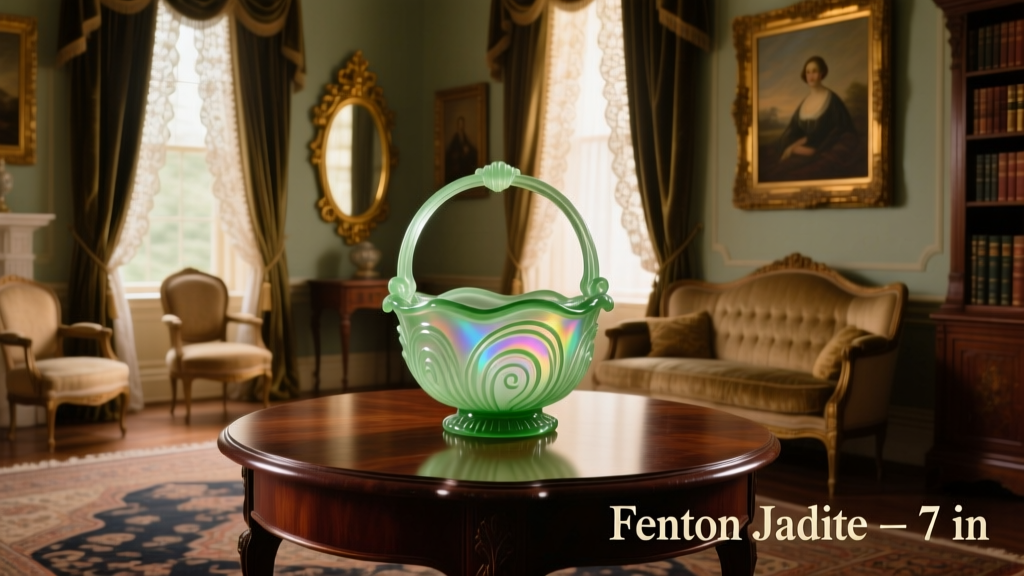
The Fenton Jadite Basket: A Collector’s Guide to the Iconic 7-Inch Round Model

Print Fox Announcing His Promotion: A Historical Deep Dive into 18th-Century Satirical Printmaking and Its Legacy in Antique Furniture Decoration
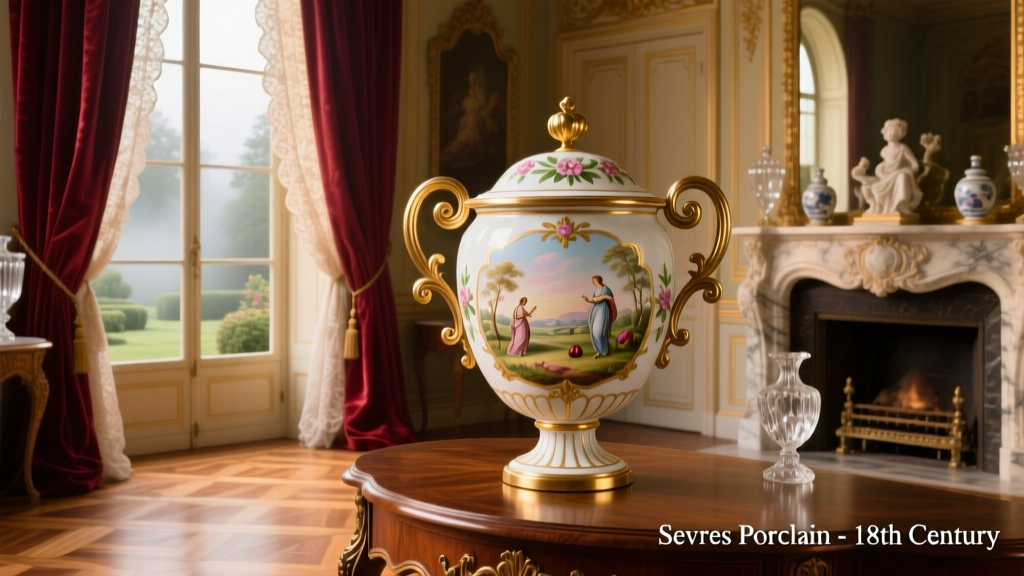
Sevres Urn Cover with Figural Landscape Panel and Scrolled Handles: A Technical & Historical Analysis of the 27¾-Inch Example
Advertising Box Cigar Coronas Lancaster Country Club: A Study in Early 20th-Century Tobacco Marketing and Craftsmanship
Dinnerware Carnival Coffeepot: Blue Harmony House 9-Inch 2-Cup Model — Identification, History, and Restoration Guidance
Traveling Regency Rosewood Inlay Dressing Bottles: Scottish Craftsmanship in a 5 × 11-Inch Box
Sabino Figurine Butterfly Opalescent No. 3: Identification, Provenance, and Conservation Guidelines
The Dog Bird Dog Painted Cast Iron Doorstop: History, Identification, and Restoration of a 7-Inch American Folk Art Icon
Akro Agate Cup and Saucer in Green-and-White: Identifying, Valuing, and Preserving a Mid-Century American Art Glass Treasure