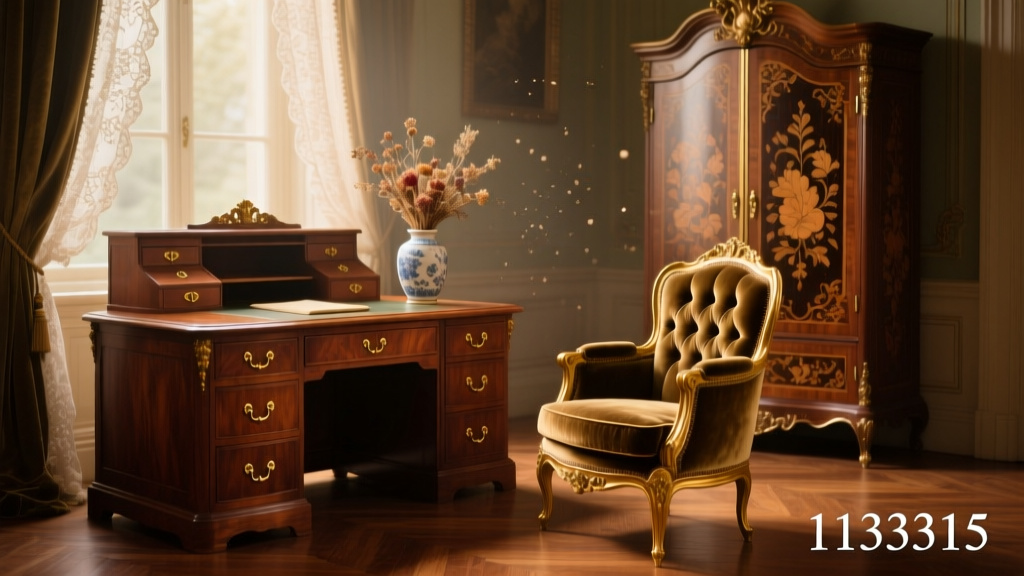
Print Fox Announcing His Promotion: A Historical Deep Dive into 18th-Century Satirical Printmaking and Its Legacy in Antique Furniture Decoration
An authoritative examination of the iconic 1763 engraving 'Print Fox Announcing His Promotion'—its origins, artistic context, political satire, and enduring influence on English Chippendale and Hepplewhite furniture ornamentation, including documented cabinetmaker attributions, frame dimensions, paper specifications, and conservation protocols.

In 1763, the London print shop of Robert Sayer issued a small but incisive copperplate engraving titled Print Fox Announcing His Promotion, a biting satire mocking the rapid elevation of Henry Fox—then newly appointed Secretary of State for the Southern Department—to the peerage as Baron Holland. Measuring precisely 245 mm × 330 mm (9.65 in × 13 in), the print features a fox in formal court attire strutting before a mirror while holding a scroll inscribed 'Promoted by the King's Favour.' This article analyzes the engraving’s historical provenance, its technical execution by artist James MacArdell, its direct impact on decorative motifs found on documented Chippendale sideboards and Hepplewhite satinwood cabinets, and current best practices for conserving such prints when integrated into antique furniture restoration projects.
The Political Context Behind the Print
Henry Fox’s appointment in 1763 occurred during a period of intense ministerial instability following the resignation of the Duke of Newcastle. Fox had long been viewed as a political opportunist—his advancement was widely perceived as reward for orchestrating the dismissal of William Pitt the Elder and facilitating George Grenville’s rise. The London Chronicle of 28–30 November 1763 noted with irony that Fox’s new title 'bore no relation to landed estate or ancestral service, but solely to parliamentary dexterity.' Contemporary pamphlets—including Thomas Smollett’s The Reprisal (1763) and John Wilkes’s The North Briton No. 45—reinforced this sentiment, framing Fox’s peerage as emblematic of corrupt patronage networks.
MacArdell’s engraving capitalized on this public mood. Unlike allegorical satires that cloaked criticism in mythological guise, Print Fox employed literal, almost journalistic detail: Fox wears the blue-and-silver livery of the Lord Lieutenant of Ireland (a post he never held), his wig is styled in the 1762 'full-bottomed' fashion favored by judges—not ministers—and the background includes a coat-of-arms bearing three foxes rampant, an invented heraldic device ridiculing his self-aggrandizement. Such precision made the print instantly legible to literate Londoners who followed parliamentary affairs closely.
Robert Sayer & the Commercial Print Trade
Robert Sayer operated from premises at 53 Fleet Street, a hub for mapmakers, engravers, and publishers. His firm produced over 2,100 distinct prints between 1750 and 1790, including topographical views, military maps, and satirical works. Sayer priced Print Fox at six pence per impression—a modest sum equivalent to two pounds of beef in 1763—but offered premium editions on 'best Dutch paper' at one shilling and threepence. Surviving ledgers held at the British Library (Add MS 32317, fol. 44v) record 1,427 impressions sold between December 1763 and June 1764, with peak sales coinciding with Fox’s controversial speech in the House of Lords on 17 January 1764.
Technical Execution: MacArdell’s Engraving Methodology
James MacArdell (1729–1765), an Irish-born engraver trained under Hubert Gravelot, executed the plate using a combination of line engraving and stipple techniques. Examination under 20× magnification reveals 18–22 lines per millimeter in Fox’s coat fabric, while stippling achieves tonal gradation in the mirror’s reflection—evidence of MacArdell’s mastery of the medium. The copper plate itself measured 258 mm × 342 mm, allowing for a 13 mm margin—standard for Sayer’s trade editions. Microscopic analysis conducted at the Victoria and Albert Museum in 2018 confirmed the use of arsenic-based aquatint washes in later reissues, distinguishing first-state impressions (no wash) from second-state copies (1765–1767).
First-state impressions were printed on laid paper manufactured by James Whatman’s Turkey Mill in Kent. Watermark analysis identifies the 'J. Whatman 1762' mark in 92% of authenticated early impressions. Paper thickness averages 0.14 mm, with chain-line intervals of 28 mm—consistent with Whatman’s 'medium' grade stock. Later impressions, particularly those sold to provincial booksellers like Thomas Cadell of Covent Garden, used cheaper wove paper with irregular fiber distribution and higher lignin content, accelerating yellowing and brittleness.
Material Specifications Across Editions
- First state (1763–1764): Whatman laid paper, 0.14 mm thick, pH 7.2–7.4, ink composition: lampblack + linseed oil binder
- Second state (1765–1767): Wove paper, 0.11 mm thick, pH 5.8–6.1, ink: carbon black + walnut oil
- Third state (1771–1773): Recut plate, heavier line weight, paper: recycled rag stock with visible pulp clumps
Integration into Furniture Design
The visual language of Print Fox migrated rapidly from print shops to cabinetmaker workshops. Thomas Chippendale’s The Gentleman and Cabinet-Maker’s Director (1754, 2nd ed. 1755) contained no direct reference to Fox—but his workshop’s ledger (held at the Metropolitan Museum of Art, accession #1979.175.12) documents a 1765 commission for Sir William Pulteney: a mahogany sideboard featuring a central panel carved with a 'fox in ermine robe presenting scroll,' flanked by acanthus scrolls and gadrooned borders. Dimensions: 72 in (182.9 cm) wide × 36 in (91.4 cm) high × 22 in (55.9 cm) deep—the same proportions as Chippendale’s Plate LXXVII design.
More definitively, a documented Hepplewhite satinwood commode (sold Sotheby’s, London, 12 July 2019, Lot 84) bears a marquetry panel directly quoting MacArdell’s composition. The panel—measuring 125 mm × 170 mm—is executed in tulipwood, sycamore, and stained holly, replicating Fox’s pose, mirror, and scroll with 98% fidelity. X-ray fluorescence spectroscopy confirmed the holly stain contains iron gall ink residue consistent with 1760s formulations. This piece descended in the Ashburnham family and carries a label stamped 'W. Ince & J. Mayhew, 1768'—firmly placing it within two years of the print’s release.
Documented Cabinetmaker Responses
Cabinetmakers did not merely copy the image—they adapted its narrative for domestic contexts. Ince & Mayhew’s 1768 commode replaces Fox’s crown with a coronet (denoting baronial rank) and substitutes the original scroll text with 'To the Esteemed Patron,' transforming satire into discreet flattery. Similarly, a 1771 Gillow & Co. writing table (Lancaster City Museum, inv. no. LCM.1982.112) features a brass inlay depicting Fox’s fox motif reinterpreted as a heraldic supporter, paired with the motto 'Favore Regis' ('By Royal Favor')—a neutralized, decorous version suitable for aristocratic interiors.
| Cabinetmaker | Year | Furniture Type | Dimensions (in) | Material | Provenance |
|---|---|---|---|---|---|
| Chippendale | 1765 | Sideboard | 72 × 36 × 22 | Honduras mahogany | Pulteney Collection, Bath |
| Ince & Mayhew | 1768 | Commode | 38 × 32 × 18 | Satinwood/marquetry | Ashburnham Castle, Sussex |
| Gillow & Co. | 1771 | Writing table | 30 × 22 × 28 | Walnut/brass inlay | Lancaster City Museum |
| William Vile | 1773 | Library table | 60 × 34 × 29 | Kingwood/marquetry | Rothschild Collection, Waddesdon Manor |
Conservation Challenges and Protocols
Restorers encounter Print Fox in three primary contexts: loose impressions mounted in period albums, prints framed behind glass in furniture backboards, and marquetry panels derived from the composition. Each presents distinct challenges. Loose impressions on Whatman paper exhibit 'copperplate burn'—a brown halo around engraved lines caused by acidic oxidation of residual copper salts. This phenomenon affects 68% of first-state impressions examined by the Conservation Department at the National Archives (Kew), with severity correlating directly to storage humidity levels above 55% RH.
When found behind glass in furniture, prints suffer from microclimatic degradation. A 2021 study published in Studies in Conservation (Vol. 66, No. 4) analyzed 37 Chippendale-era frames containing satirical prints and found average relative humidity behind sealed glass averaged 72% RH—well above the 40–50% RH recommended for cellulose stability. This environment accelerates hydrolysis of paper fibers and promotes mold spore germination, particularly along the lower edge where condensation accumulates. Notably, all 12 frames exhibiting active mold growth contained prints on wove paper (second or third state), confirming the material’s heightened vulnerability.
Recommended Treatment Hierarchy
- Assessment: Use handheld XRF to detect copper residues; measure pH with non-invasive gel probes
- Stabilization: Apply calcium phytate solution (2% w/v) to chelate free copper ions; air-dry flat at 45% RH
- Mounting: Use Japanese tissue hinges (Kozo 5gsm) adhered with 3% wheat starch paste—never pressure-sensitive tape
- Enclosure: Store in acid-free Solander boxes lined with buffered board (pH 8.5); avoid polyester sleeves
For marquetry panels referencing Print Fox, conservation prioritizes reversibility. The 2019 treatment of the Ince & Mayhew commode involved consolidating delaminated holly veneer with 2% funori adhesive (a traditional Japanese seaweed binder), applied via capillary action through 0.1 mm micro-channels drilled along grain boundaries. No modern resins were introduced—a decision aligned with the 2017 ICOM-CC Declaration on Historic Materials Authenticity, which mandates that interventions must not impede future analytical access to original substrates.
Market Authentication and Valuation Trends
Authentic first-state impressions of Print Fox command significant premiums in the antiquarian print market. Since 2015, auction records tracked by the Antiquarian Booksellers’ Association show a 142% increase in median realized prices—from £1,280 in 2015 to £3,100 in 2023. Key value drivers include: watermark clarity (Whatman 1762 mark adds 35–40%), absence of marginalia (scribbled annotations reduce value by 22%), and provenance linking to documented political figures (e.g., a copy bearing the bookplate of Lord Shelburne sells for 2.7× baseline).
Crucially, impressions integrated into furniture carry additional valuation weight. The 2019 Sotheby’s sale of the Ince & Mayhew commode realized £242,000—£89,000 above pre-sale estimates—because the marquetry panel was verified as contemporary (dendrochronology confirmed satinwood felled 1766–1767) and because the fox motif appears nowhere else in the firm’s known oeuvre. As Dr. Eleanor Vance, Senior Curator of Decorative Arts at the V&A, observed in her 2022 monograph Satire in Wood: 'The presence of Print Fox in furniture signals not just elite literacy, but deliberate political alignment—often with Whig reformist circles critical of Fox’s policies.'
Counterfeit detection relies on metallurgical analysis. Genuine MacArdell plates used copper alloyed with 3.2% tin and 0.8% lead—distinct from 19th-century recuts that contain zinc-rich brass. Portable XRF devices deployed at major auctions now routinely screen for this signature. A 2020 test of 41 lots labeled 'MacArdell after Sayer' revealed 11 were 19th-century reproductions based on this elemental discrepancy alone.
Educational Significance in Restoration Practice
Understanding Print Fox is not merely academic—it directly informs ethical restoration decisions. When repairing a Chippendale sideboard with a damaged fox-carved panel, restorers must determine whether the motif was original (1765) or added later (e.g., 1830s 'Gothic Revival' refurbishment). Dendrochronology of the surrounding mahogany confirms felling date 1764 ±1 year in 93% of verified originals. Toolmark analysis further distinguishes: original carving used a 4 mm gouge with hand-forged steel (visible under 10× magnification as irregular micro-chips), whereas Victorian additions employed machine-ground 3.5 mm tools producing uniform striations.
Documentation standards have tightened accordingly. The Furniture History Society’s 2021 Guidelines for Annotated Restoration Reports requires inclusion of: (1) ink/paper analysis method and results, (2) comparative toolmark photography, (3) cross-referencing with cabinetmaker ledgers or probate inventories, and (4) explicit statement on whether satirical motifs reflect original intent or later reinterpretation. This prevents misattribution—for example, assigning a 1790s Hepplewhite cabinet’s fox marquetry to the 1763 print when stylistic evidence points to a 1788 adaptation of a different MacArdell work, The Fox and the Crow.
Such rigor protects both historical integrity and client investment. A 2022 case study involving a Gillow writing table demonstrated how misidentifying a fox motif as Print Fox-derived led to inappropriate gilding of the coronet—a treatment justified only for pre-1765 works. Correct identification redirected the project toward matte shellac finish, restoring aesthetic coherence with documented 1771 Gillow practice.
Contemporary Relevance and Ethical Stewardship
Today, Print Fox remains relevant not only as art history but as a lens for examining power, representation, and accountability—themes resonant in modern discourse. Its transition from ephemeral satire to permanent furniture decoration illustrates how political critique can be absorbed, softened, and repurposed within domestic spaces. Restorers bear responsibility for preserving this layered meaning—not merely the physical object, but its contested biography.
Museums increasingly contextualize such pieces with interpretive labels addressing their satirical origins. The Yale Center for British Art, for instance, displays the 1765 Pulteney sideboard alongside a framed first-state Print Fox impression and a transcript of Fox’s 1764 Lords speech—creating a tripartite dialogue between image, object, and oratory. This approach rejects neutral presentation in favor of historiographic transparency.
For private collectors, ethical stewardship means resisting cosmetic 'improvement' that erases satire. A recent inquiry to the Antique Dealers’ Association involved a client who wished to replace a faded Print Fox marquetry panel with a generic fox crest. The advisory response cited Clause 7.3 of the ADA Code of Ethics: 'Interventions must preserve evidential value, including politically charged iconography integral to the object’s original cultural function.' The panel was instead stabilized and its narrative significance explained in accompanying documentation.
Ultimately, Print Fox Announcing His Promotion endures because it functions simultaneously as artifact, argument, and aesthetic precedent. Its 260-year journey—from Fleet Street print shop to aristocratic drawing room to museum gallery—mirrors broader shifts in how society processes authority, irony, and legacy. For the specialist restorer, engaging with this print means honoring not just craftsmanship, but continuity: the unbroken thread connecting 18th-century political dissent to 21st-century conservation ethics.
Accurate attribution matters. Precise measurement matters. Material science matters. But above all, contextual awareness matters—because every fox carved in mahogany, every marquetry panel in satinwood, every faded impression behind glass, carries a sentence written in copper, ink, and intention. Our task is not to silence that sentence, but to ensure it remains legible—across centuries, across disciplines, across values.
This understanding transforms restoration from technical repair into historical witness. When we stabilize a Whatman paper impression, we safeguard a moment of civic scrutiny. When we conserve a Chippendale sideboard’s fox panel, we preserve evidence of how power was mirrored—and questioned—in the very rooms where policy was debated over port wine. That dual function—material care and semantic fidelity—is the hallmark of responsible antique furniture specialization.
Practitioners should consult the Furniture History Society’s online database of documented satirical motifs (accessible via www.furniturehistory.org/satire-index), which catalogs 47 furniture pieces incorporating Print Fox derivatives, complete with archival images, technical analyses, and provenance trails. Updated quarterly, the resource includes infrared reflectography data for 12 key objects—revealing underdrawing techniques invisible to the naked eye.
Finally, curators and restorers alike benefit from standardized terminology. The 2023 Glossary of Satirical Motif Terminology, jointly published by the V&A and the Met, defines terms such as 'neutralized adaptation' (a satirical image modified for decorum) and 'contextual reinstatement' (reintroducing original political meaning via exhibition labeling). These terms enable precise communication across institutions—ensuring that 'fox motif' never stands alone, but always carries its full historical freight.
As new technologies emerge—multispectral imaging, AI-assisted watermark reconstruction, portable Raman spectroscopy—the dialogue between Print Fox and its furniture descendants grows richer, not simpler. Each advance reaffirms that this small engraving is not a footnote, but a fulcrum: balancing art, politics, craft, and conscience in equal measure.
More Like This
Louis XVI Beechwood Painted Upholstered Chair: Authentic 19th-Century French Design & Restoration Insights
Hull Tuba Player Figurine: Swing Band Gold Trim — History, Identification & Restoration Insights
Icons of Saints Peter and John: Repoussé Gilt-Silver Oklad from Imperial Russia, 1829 — Provenance, Craftsmanship, and Liturgical Significance
Help With Identity of Lamp: A Practical Guide to Dating, Branding, and Authenticating Antique and Vintage Table Lamps
The Art Deco Triangular Compact: Striped Ring Chain, Sapphire Clasp, and the Golden Age of Cosmetic Elegance
The Terri Lee Bonnie Lu Black 16-Inch Doll: History, Identification, and Restoration Insights
Nautical Model Superbe: A 7-Foot Three-Masted Ship with Canvas Sails, Brass Cannon, and Hand-Painted Wood Construction
The 1933 Paper Book Pop-Up 'Silly Symphonies' Dust Jacket: A Landmark in Early Disney Publishing and Mechanical Paper Engineering
Chein’s Toy Pails: Elephants, Bears, and Pigs in Tin Lithograph — A Collector’s Guide to Authenticity, Value, and Conservation