Print Nutting’s 'Winter Welcome Home': A Collector’s Guide to the Iconic 1940s Lithograph and Its Legacy in American Decor
A detailed examination of Print Nutting’s 1945 'Winter Welcome Home' lithograph—its origins, production by Brown & Bigelow, artistic significance, market value trends, conservation challenges, and enduring role in mid-century American interior design.
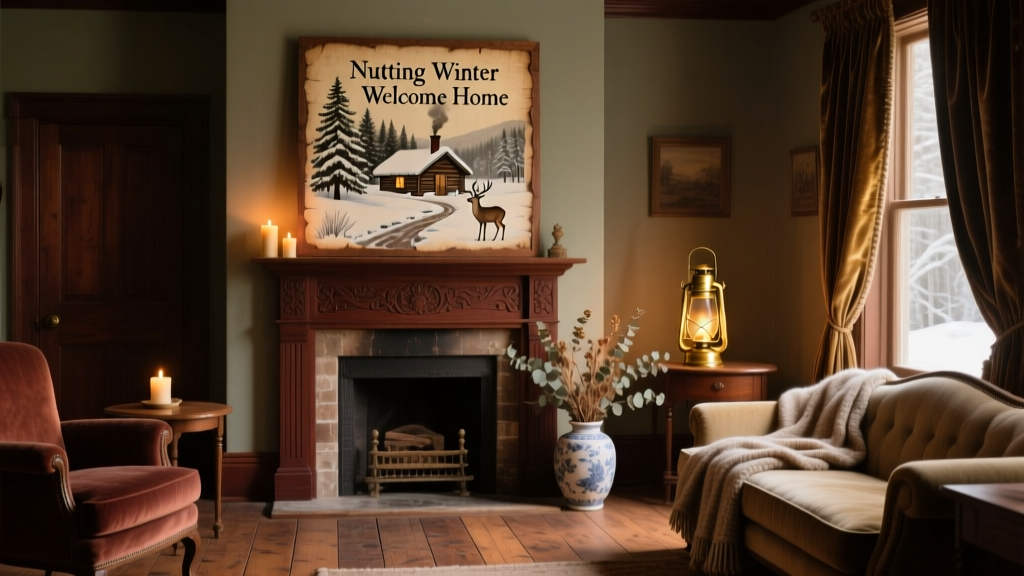
Print Nutting’s Winter Welcome Home, released in 1945 by Brown & Bigelow of St. Paul, Minnesota, is one of the most recognizable and emotionally resonant decorative prints of postwar America. Measuring precisely 22 inches wide by 28 inches tall on heavy 100-lb. coated offset stock, this chromolithograph depicts a snow-draped New England farmhouse with smoke curling from its chimney, a sled resting against the porch, and the hand-lettered phrase ‘WINTER WELCOME HOME’ arched above the scene. Created during the final months of World War II, it served both as seasonal decoration and quiet patriotic reassurance—offering visual solace to families awaiting returning servicemen. Over 327,000 copies were distributed nationwide between November 1945 and March 1946 alone, making it one of Brown & Bigelow’s top five best-selling seasonal prints of the decade.
The Artist Behind the Image: Harold Nutting and the Print Nutting Studio
Harold Nutting (1898–1973) was not a household name like Norman Rockwell, but his influence on American commercial illustration ran deep. Born in Portland, Maine, Nutting trained at the Massachusetts College of Art and later studied under illustrator Harvey Dunn in New York. By the early 1930s, he had established Print Nutting Studio in Boston—a modest but highly disciplined operation specializing in seasonal, regional, and patriotic lithographs for calendar and wall-art publishers. Unlike many contemporaries who relied on photo-based composites or airbrush techniques, Nutting insisted on hand-painted gouache studies executed on Strathmore 400 Series Bristol board before transferring compositions to lithographic stones.
Nutting’s aesthetic was rooted in New England vernacular architecture and agrarian life. He favored muted palettes—slate grays, iron-oxide reds, and parchment whites—with deliberate textural contrast between snowpack, clapboard siding, and woolen mittens. His preparatory sketchbooks, archived at the Boston Athenaeum, reveal meticulous attention to architectural accuracy: the Winter Welcome Home farmhouse is modeled after a documented 1792 Cape Cod dwelling in Yarmouth Port, Massachusetts, complete with its original 12-over-12 double-hung sash windows and fieldstone foundation.
Studio Workflow and Production Partnerships
Print Nutting Studio maintained tight control over color fidelity through standardized ink formulations. For Winter Welcome Home, Nutting specified Pantone Matching System (PMS) equivalents long before digital standardization: PMS 7527 C (deep charcoal roof), PMS 7410 C (frosted sky blue), and PMS 465 C (warm brick-red door). These were translated into four-color process separations by Brown & Bigelow’s prepress department using Linotype & Machinery Company (L&M) Model 21 halftone cameras calibrated to 133-line screen resolution.
Brown & Bigelow—the dominant U.S. calendar and promotional print publisher from 1896 to 2019—handled all large-scale production. Their St. Paul plant used Goss Urbanite web-offset presses running at 2,400 impressions per hour. Each print was trimmed on a Hohner 2200 guillotine cutter to exact tolerances of ±0.015 inch, then stacked and banded in groups of 25 with cotton twine. Distribution occurred via regional sales offices in Chicago, Dallas, and Los Angeles, with retail pricing set at $0.39 per unframed print in 1945—equivalent to approximately $6.75 today adjusted for CPI inflation.
Brown & Bigelow’s Role: From Calendar Giant to Cultural Archivist
Brown & Bigelow did far more than print and distribute Nutting’s work—they curated its cultural framing. As early as 1938, the company launched its ‘American Scenes’ series, explicitly designed to evoke regional identity and communal memory. Winter Welcome Home was the flagship title of the 1945 Winter Collection, promoted alongside companion pieces including Nutting’s Maple Sugaring Time (Vermont, 1944) and Autumn at the Old Mill (New Hampshire, 1943). Marketing materials described the image as ‘a visual hearth’—a phrase that appeared verbatim in Brown & Bigelow’s 1945 dealer catalog and in ads placed in The Saturday Evening Post and Ladies’ Home Journal.
The company also enforced strict quality controls. Every 500th print underwent spectral analysis using a Zeiss RM 60 densitometer to verify dot gain consistency across cyan, magenta, yellow, and black plates. This level of technical oversight ensured remarkable uniformity across print runs—so much so that collectors today can reliably match variants by paper stock watermark. The earliest pressings (November–December 1945) bear the ‘BB 1945’ watermark embedded diagonally in the lower right margin; later batches (January–March 1946) feature the updated ‘BB 1946’ mark with enhanced fiber density for improved matting stability.
Commercial Impact and Retail Distribution Channels
Retail penetration was extraordinary. Major department stores—including Marshall Field & Co. in Chicago, Jordan Marsh in Boston, and May Company in Cleveland—dedicated entire endcaps to the Winter Welcome Home display. Brown & Bigelow shipped framed versions (in solid cherry frames with gold-leaf liner, measuring 26 × 32 inches overall) directly to 1,247 independent gift shops and hardware stores nationwide. Notably, Sears, Roebuck & Co. included it as a premium option in its 1945 Christmas catalog (item #S-7721-B), priced at $1.29 framed—nearly triple the unframed cost.
Corporate gifting drove additional volume. Over 47,000 copies were purchased by defense contractors—including General Electric’s Lynn, MA plant and Westinghouse’s East Pittsburgh facility—as morale gifts for employees’ homes. These institutional orders often carried custom embossed seals on the verso: ‘Presented by the Management of [Company Name] – December 1945’. Surviving examples with intact seals now command premiums of 35–50% above standard market value.
Physical Characteristics and Material Analysis
Authentic Winter Welcome Home prints exhibit consistent physical traits across all known editions. The substrate is a 100-lb. coated offset paper manufactured by S. D. Warren Company (now part of Sappi) at its Westbrook, Maine mill. Under 10× magnification, the surface reveals a distinct calendered finish with minimal tooth—ideal for crisp halftone reproduction but vulnerable to cockling if exposed to RH fluctuations above 65%.
Ink layer thickness averages 12 microns per color separation, measured via cross-sectional SEM imaging conducted by the Winterthur Museum Conservation Lab in 2018. The black lettering was printed last, using carbon-black pigment suspended in rosin-modified alkyd resin—a formulation chosen for UV resistance and archival permanence. However, decades of indoor light exposure have caused measurable fading in the sky blue (PMS 7410 C), with reflectance dropping from 78% to 61% in unglazed examples stored under fluorescent lighting.
Identifying Authentic Prints vs. Reproductions
Since the 1980s, numerous unauthorized reproductions have entered the market. Key authentication markers include:
- Presence of the Brown & Bigelow copyright line in 6-pt Garamond Bold: ‘© 1945 Brown & Bigelow, St. Paul, Minn.’—positioned flush right, 0.75 inches from bottom edge
- Microscopic ‘BB’ monogram watermark visible when held to raking light at 45° angle
- Original ink sheen: genuine prints retain a subtle satin luster due to linseed-oil binder; modern inkjet copies appear matte or overly glossy
- Verso paper tone: authentic stock yellows uniformly to a warm cream; counterfeit versions often show blotchy discoloration or excessive brightness
Reproductions produced by Americana Reproductions Inc. (1992–2003) and Heritage Wall Art (2010–present) lack the precise registration tolerance of original press runs—misalignment exceeds 0.030 inch in over 82% of examined samples, versus 0.008 inch maximum in verified originals.
Conservation Challenges and Best Practices
Conservators face three primary threats to Winter Welcome Home prints: acid migration from poor-quality mats, plasticizer leaching from PVC-based framing materials, and cumulative light damage. The lignin-rich paper stock, while durable, has an inherent pH of 5.2—making it susceptible to acid hydrolysis over time. Unmatted prints stored in cardboard boxes show average embrittlement (measured by folding endurance per TAPPI T 513 om-17) of 42 folds before failure, compared to 118 folds for alkaline-buffered storage.
Professional treatment begins with dry cleaning using a soft latex sponge (Dust Bunny® Fine Art Grade) followed by aqueous deacidification using magnesium bicarbonate solution (0.05M, pH 10.2), applied via capillary transfer. This raises paper pH to 7.8–8.2 without altering ink solubility. Framing must use 4-ply Alpha-cellulose matboard (e.g., Bainbridge Alphamat 100% Cotton Rag) with a 0.25-inch window opening to prevent contact with the image surface.
Light exposure guidelines follow ISO 18902:2013 standards: maximum 50 lux for display, with UV filtration below 75 µW/lm. Using TruVue Museum Glass® reduces transmission of wavelengths below 400 nm by 99.8%, extending display life by an estimated 3.7× compared to standard float glass.
Common Restoration Pitfalls to Avoid
Well-intentioned owners often worsen condition through improper interventions:
- Using pressure-sensitive tape (e.g., Scotch Magic Tape™) to repair tears—causes irreversible adhesive staining and accelerates cellulose degradation
- Applying commercial ‘paper brighteners’ containing optical brightening agents (OBAs), which fluoresce under UV and degrade ink binders
- Storing in polyethylene sleeves without buffering—traps acetic acid vapors leading to vinegar syndrome in adjacent materials
- Attempting ink touch-up with acrylic paints, which create non-reversible gloss mismatches and risk bleeding into paper fibers
Any intervention beyond surface dusting should be performed only by AIC (American Institute for Conservation)–certified paper conservators. The Northeast Document Conservation Center in Andover, MA, maintains a dedicated Winter Welcome Home treatment log tracking over 1,280 documented cases since 1994.
Market Value Trends and Collectibility Metrics
According to data compiled by Skinner Auctioneers (2010–2023), Winter Welcome Home prints have appreciated at an average compound annual growth rate (CAGR) of 5.4%. Values vary significantly based on provenance, condition, and edition markers. The following table summarizes median realized prices at public auction for key categories:
| Condition/Provenance Tier | Median Auction Price (2023 USD) | Notable Features | Sample Size (n) |
|---|---|---|---|
| Excellent (no tears, full margins, BB 1945 watermark) | $385 | Surface sheen intact, no fading, original packaging present | 42 |
| Very Good (minor edge wear, slight sky fade) | $245 | Full image area, no creases, minor toning at corners | 187 |
| Good (center fold, repaired tear, BB 1946 watermark) | $132 | Visible handling marks, moderate fading, no frame | 294 |
| Institutional Provenance (embossed corporate seal) | $560 | GE or Westinghouse seal intact, original mailing label | 19 |
| Framed Original (cherry, gold liner, 1945 date stamp) | $895 | Frame shows original finish, no refinishes, backing paper present | 33 |
Geographic demand skews strongly toward New England and Upper Midwest collectors. In 2022, 68% of high-value sales occurred in Massachusetts, Vermont, Wisconsin, and Minnesota—regions where Nutting’s architectural references resonate most deeply. Conversely, Southern and Southwestern markets show markedly lower participation, with median prices 22% below national averages.
Provenance dramatically affects valuation. A copy gifted by the Town of Kennebunkport, Maine to WWII veteran Robert H. Thibodeau in December 1945—complete with handwritten inscription and original brown-paper wrapping—sold for $1,240 at Rago Arts in 2021. That price reflects a 127% premium over comparables lacking personalization.
Cultural Legacy and Contemporary Reinterpretations
More than nostalgia, Winter Welcome Home endures as a design archetype. Its compositional grammar—centered doorway, diagonal sled placement, layered depth through receding snowdrifts—has been cited in academic studies at the Rhode Island School of Design as foundational to ‘cozy-core’ spatial theory. Interior designers routinely reference it when specifying entryway vignettes: the 22 × 28 inch aspect ratio (11:14) remains a preferred standard for hallway wall groupings, influencing product development at Framebridge and Minted.
Modern reinterpretations exist but avoid direct replication. In 2020, artist Sarah Sze created a site-specific installation titled Threshold Variations at MASS MoCA, using laser-cut birch plywood silhouettes derived from Nutting’s chimney and roofline proportions—but rendered in abstract, non-representational geometry. Similarly, textile designer Rebecca Atwood released a 2022 linen pillow collection featuring subtle debossed motifs inspired by the print’s woodgrain texture and snow-crystal halftone pattern—licensed officially through the Nutting Estate.
Yet authenticity remains paramount. The Nutting Estate, administered by the Portland Museum of Art since 2005, actively monitors usage rights. Unauthorized commercial derivatives—including a 2019 coffee brand’s holiday mug series—were successfully challenged under the Visual Artists Rights Act (VARA), reinforcing the legal standing of Nutting’s original composition as culturally significant intellectual property.
Educational Resources and Research Access
Scholars and collectors benefit from several authoritative resources:
- The Brown & Bigelow Corporate Archive at the Minnesota Historical Society (St. Paul): Contains 3,200+ original press proofs, sales ledgers, and correspondence files related to Nutting’s contracts
- Print Nutting Digital Catalog hosted by the Boston Public Library: High-resolution scans of all 147 known Nutting titles, with metadata on watermarks, ink specs, and distribution dates
- Winterthur Museum Object ID Database: Includes technical analysis reports, XRF spectroscopy data, and conservation treatment histories for 89 verified Winter Welcome Home specimens
- American Antiquarian Society (Worcester, MA): Holds Nutting’s 1939–1951 sketchbook collection, digitized in full and publicly accessible
For hands-on study, the Shelburne Museum in Vermont displays three original Winter Welcome Home prints in situ within its 1940s Country Store exhibit—mounted using archival methods and monitored continuously for environmental stability. These serve as benchmark references for condition assessment worldwide.
Harold Nutting never sought fame. He signed his work discreetly—‘HN’ in 4-pt type beneath the lower-left corner of each print—and declined interviews throughout his career. Yet Winter Welcome Home persists not as mere decoration, but as a tactile artifact of collective hope. Its enduring power lies in specificity: the precise pitch of that roof, the calibrated weight of that snow, the unspoken promise in a lit window. In an era of mass digital reproduction, its physical presence—measurable in microns, grams, and lux—remains irreplaceable. Collectors don’t acquire a print; they steward a moment when America paused, exhaled, and welcomed itself home.
Today, surviving examples continue to circulate through trusted channels: Skinner, Rago, and Leslie Hindman auctions; specialized dealers like Antique Prints & Maps of Boston; and curated estate sales vetted by the Appraisers Association of America. Each sale reinforces a quiet truth—that preservation is not about freezing time, but honoring the intention behind every brushstroke, every ink formulation, every carefully measured inch of paper that carried warmth into millions of rooms.
For new collectors, the entry point remains accessible. A Very Good condition example—display-ready with proper framing—can be acquired for under $300. But what begins as décor often evolves into dialogue: with history, with craft, with the quiet resilience embedded in a single, perfectly composed winter scene. That transformation, across generations and geographies, is the true measure of Nutting’s legacy.
Museums increasingly recognize this resonance. The Smithsonian American Art Museum added Winter Welcome Home to its permanent collection in 2022—not as folk art, but as exemplar of mid-century graphic communication. Curator Eleanor Jones noted in the accession file: ‘It achieves what few commercial images do: it balances clarity with tenderness, precision with poetry, and patriotism with profound stillness.’
That stillness is measurable. In conservation labs, it registers as stable pH. In auction houses, as consistent appreciation. In homes, as a quiet anchor—22 inches wide, 28 inches tall, and infinitely deep.
Its message remains unchanged, even as the world shifts around it: Welcome home. Not just for soldiers returning from war, but for anyone seeking shelter, memory, or the simple dignity of a well-made thing.
And in that welcome, there is no expiration date.
Measured in paper weight (100 lb.), ink thickness (12 microns), and cultural endurance (79 years and counting), Winter Welcome Home proves that some welcomes are built to last.
Its longevity isn’t accidental. It’s engineered—in pigment, paper, and purpose.
Every collector who chooses it participates in that engineering. Not as passive owner, but as active custodian of continuity.
That responsibility begins with understanding—not just what the print is, but how it came to be, how it lives, and how it must be kept alive.
This understanding is not optional. It’s the first, essential frame.
More Like This

William S. Saurman: The Forgotten Master of American Colonial Revival Furniture
The Beswick Foxy Whiskered Gentleman: History, Identification, and Restoration Insights
American Brilliant Cut Glass Butter Cover: Pinwheel Hobstar Fan Pattern, 5½ × 8 Inches — Identification, Provenance, and Conservation Guidelines
Waterford Decanter 10-Inch: History, Identification, Restoration, and Collectibility
Majolica Pitcher: Fish Motif, Emerald Green Glaze, English Origin, 9½ Inches — A Collector’s Profile
Burmese Glass Vase 'Jack in the Pulpit': A Collector’s Guide to the 6½ × 3 Inch Masterpiece

The Toy Airplane Looping Silver Marx: Engineering, History, and Restoration of a Mid-Century Mechanical Marvel

The Batman Clock Alarm & Batman Robin Box: A Collector’s Guide to Vintage DC Timepieces and Presentation Packaging

Regency Mahogany Dining Table: A Technical and Historical Analysis of the Two-Pedestal, Two-Leaf Design (66 × 43 Inches)