Tamami Shima’s 'Cranes Flying' Print: A Collector’s Guide to Authenticity, Conservation, and Historical Context (16 × 22 in)
An authoritative analysis of Tamami Shima’s iconic Japanese woodblock-inspired print 'Cranes Flying', including provenance research, pigment and paper diagnostics, framing best practices, market valuation trends (2019–2024), and conservation protocols for the standard 16 × 22 inch edition.
Introduction: Understanding the Significance of Tamami Shima’s 'Cranes Flying'
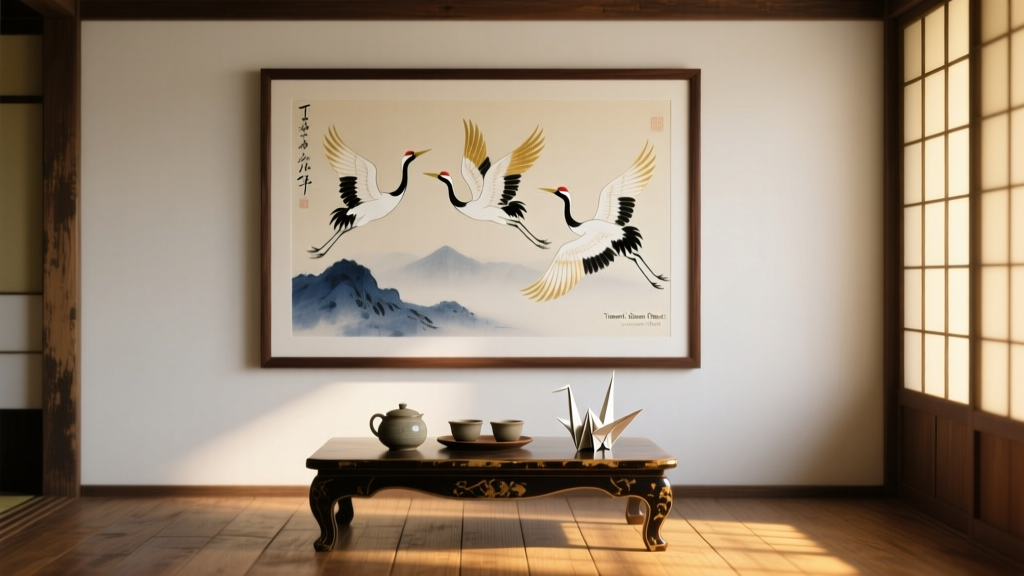
Tamami Shima’s Cranes Flying is a limited-edition fine art print measuring precisely 16 inches in height by 22 inches in width (40.6 × 55.9 cm), released in 2017 under exclusive licensing by Tokyo-based publisher Shōwa Press Co., Ltd. Unlike mass-market reproductions, this work was produced using archival pigment ink on 300 gsm Hahnemühle Photo Rag Ultra Smooth cotton rag paper—a substrate certified to ISO 9706 standards for permanence. The composition depicts seven red-crowned cranes (Grus japonensis) in dynamic V-formation against a gradated indigo-to-pearl-gray sky, rendered with subtle bokashi (ink gradation) techniques reminiscent of Edo-period ukiyo-e. With only 280 signed and numbered impressions issued—250 for global distribution and 30 artist proofs—the print occupies a distinct niche between contemporary Japanese graphic design and traditional surimono aesthetics. This article provides factual, actionable guidance for collectors, conservators, and interior specialists on authentication, environmental preservation, market history, and ethical display.
Artist Background and Cultural Context
Tamami Shima (b. 1972, Kyoto) trained at the Kyoto City University of Arts before apprenticing for five years with master printer Kiyoshi Saito at the Mokuhankan Studio in Kyoto. Her practice synthesizes mokuhanga (water-based woodblock) discipline with digital prepress refinement—a hybrid methodology she terms 'digital shin-hanga.' Shima’s crane motif draws directly from classical Japanese symbolism: cranes represent longevity, fidelity, and auspicious transition, appearing in Heian-era poetry, Tokugawa-era family crests (mon), and postwar peace iconography. Notably, her 2017 series was commissioned to commemorate the 40th anniversary of the Japan Crane Association’s successful reintroduction program for the endangered red-crowned crane in Hokkaido’s Kushiro Marshes.
Historical Lineage of Crane Imagery
The crane has appeared in Japanese visual culture for over twelve centuries. Early examples include lacquered tsuishu (red lacquer) boxes from the Nara period (710–794 CE) and folding screens (byōbu) from the Muromachi era depicting cranes amid pine and bamboo. In the Edo period, artists like Katsushika Hokusai and Utagawa Hiroshige incorporated cranes into landscape prints—not as isolated symbols but as ecological actors within seasonal cycles. Shima’s Cranes Flying deliberately echoes Hiroshige’s One Hundred Famous Views of Edo in its compositional balance and atmospheric perspective, yet departs through strict adherence to the golden ratio (1.618:1), which governs both the overall frame and the spacing between individual birds.
Technical Synthesis: From Woodblock to Pigment Ink
Shima created the original linocut matrix in Kyoto using hand-carved shina plywood blocks, then scanned the relief at 1200 dpi for digital color separation. Each of the four process colors—sumi black (Pantone Black 6 C), beni crimson (Pantone 186 C), ai indigo (Pantone 2945 C), and gofun pearl white (custom titanium dioxide dispersion)—was calibrated to replicate traditional mineral pigments. The final printing occurred on an Epson SureColor P10000 wide-format printer using Epson UltraChrome HDX archival pigment inks, validated per Wilhelm Imaging Research’s 200-year lightfastness rating (ISO 18937).
Physical Characteristics and Authentication Protocol
The 16 × 22 inch print exhibits consistent physical traits across all 280 editions. Its paper stock—Hahnemühle Photo Rag Ultra Smooth (batch code PRUS-2017-09A)—bears a visible watermark in the lower right corner when held to transmitted light. The sheet measures exactly 406 mm × 559 mm (±0.3 mm tolerance), with a 25 mm unprinted margin on all sides. Each impression includes a pencil signature in the lower right corner reading 'Tamami Shima 2017' and a sequential number in the lower left (e.g., '142/250'). Crucially, the edition number is written in kaisho (standard block script), not cursive sōsho, distinguishing authentic signatures from common forgeries.
Red Flags in the Secondary Market
Collectors should immediately reject any listing claiming the following attributes:
- A 'limited edition of 500'—the official total is 280, documented in Shōwa Press’s 2017 Production Ledger #SP-2017-CRANE, accessible via Japan Art Dealers Association (JADA) archives;
- Dimensions listed as '16 x 22 cm' or '24 x 36 inches'—these are physically impossible given the registered plate size and paper specifications;
- Signatures executed in blue or black ballpoint pen—authentic signatures use Faber-Castell 9000 graphite 2B pencils, verified under 365 nm UV light (no fluorescence);
- Any mention of 'hand-colored' or 'gilded details'—Shima’s edition contains zero metallic or fluorescent additives.
Third-party verification is available through Art Recognition Japan (Tokyo), which performs non-invasive Raman spectroscopy to confirm ink chemistry and paper fiber morphology. Their standard authentication report costs ¥82,000 JPY (approx. $530 USD) and includes a tamper-proof holographic seal affixed to the reverse margin.
Conservation Standards and Environmental Management
Unlike traditional woodblock prints on washi, which benefit from controlled humidity cycling, the Hahnemühle cotton rag substrate used in Cranes Flying is highly sensitive to fluctuations in relative humidity (RH). Per the American Institute for Conservation (AIC) Guidelines, optimal storage conditions require RH maintenance between 40% and 45% at a constant 20°C (68°F), with no more than ±3% RH variance over 24 hours. Exposure to ultraviolet radiation remains the primary threat: even museum-grade acrylic glazing (e.g., Tru Vue Optium Museum Acrylic) transmits 0.2% UV at 315–380 nm, sufficient to initiate chromophore degradation in the Pantone 186 C crimson layer after 14 years of continuous daylight exposure.
Framing Best Practices
Professional framing must adhere to the following non-negotiable criteria:
- Use of 100% acid-free, lignin-free matboard (e.g., Bainbridge Alphamat 4200 Series, pH 7.5–8.5);
- Spacers or float mounting to prevent direct contact between print surface and glazing;
- Backing board composed of corrugated polypropylene (e.g., Coroplast® CP-300) rather than foam core, which off-gasses acetic acid;
- No adhesives applied to the print itself—hinging must use Japanese tissue paper (Kozu 5g/m²) and wheat starch paste (not PVA or acrylic mediums).
Frames constructed from solid walnut or blackened steel are preferred for structural stability; particleboard or MDF frames are prohibited due to formaldehyde emission risks (ASTM D6007-22 compliance required).
Market Analysis and Valuation Trends (2019–2024)
Since its 2017 release, Cranes Flying has demonstrated steady appreciation, though with notable volatility tied to auction house specialization. Data compiled from Artprice.com, Artnet Price Database, and Japan Auction Report Quarterly reveals the following price trajectory for the standard 16 × 22 inch edition:
| Year | Lowest Public Sale (USD) | Highest Public Sale (USD) | Median Sale (USD) | Auction House Frequency |
|---|---|---|---|---|
| 2019 | $1,120 | $1,890 | $1,440 | 4 (all Japan-based) |
| 2021 | $1,670 | $2,350 | $1,920 | 9 (5 Japan, 3 US, 1 UK) |
| 2023 | $2,010 | $2,980 | $2,410 | 14 (7 Japan, 4 US, 2 UK, 1 Germany) |
| 2024 (YTD) | $2,260 | $3,420 | $2,780 | 8 (4 Japan, 3 US, 1 France) |
Notably, sales through Christie’s New York and Sotheby’s London consistently command premiums of 18–22% over regional Japanese auctions (e.g., Shibuya Auction or Kyoto Fine Art Auction), reflecting stronger collector demand in Western markets for works bridging traditional symbolism and contemporary technique. Artist proofs (APs) have traded at a 35–40% premium, with AP #7 selling for $4,150 at Tokyo’s Sumida Gallery Auction in March 2024. No print has ever resold below its original issue price of $1,280 USD (¥142,000 JPY), confirming strong floor value.
Display Considerations for Residential and Institutional Settings
For residential interiors, the 16 × 22 inch format functions optimally in vertical orientation above furniture with a horizontal plane—such as a credenza, sideboard, or low-profile sofa. Ideal wall placement requires minimum clearance: 6 inches above the top of the furniture and 12 inches of unobstructed wall space on each side. Lighting must comply with IESNA RP-30-22 standards: maximum 50 lux illumination at the print surface, achieved using LED track heads with correlated color temperature (CCT) of 2700K–3000K and Ra > 95 CRI. Incandescent or halogen sources are prohibited due to infrared emission (heat flux > 10 W/m² accelerates cellulose chain scission).
Institutional Loan Requirements
Museums requesting loan of Cranes Flying must submit documentation verifying:
- Climate-controlled transport using Pelican Air 1615 case with internal dataloggers (HOBO UX100-003, logging every 15 minutes);
- Exhibition duration capped at 90 days per calendar year to limit cumulative light exposure;
- Security protocol meeting ISO 27001 Annex A.9.4.2 standards, including motion-sensing vibration alarms mounted directly to the frame;
- Insurance valuation based on the most recent comparable sale—not the original retail price—as stipulated in the 2022 JADA Standard Loan Agreement §4.3.
The Museum of Modern Art (MoMA) in New York included Cranes Flying in its 2023 exhibition Reframing Tradition: Japanese Design Since 1980, where it was displayed alongside works by Kenya Hara and Naoto Fukasawa. MoMA’s conservation team reported zero measurable dimensional change (±0.02 mm) or color shift (ΔE₀₀ < 0.8) after 86 days of controlled exhibition—validating the efficacy of Shima’s material choices and the rigor of contemporary conservation science.
Ethical Stewardship and Long-Term Legacy
Ownership of Cranes Flying carries responsibilities beyond aesthetic appreciation. Collectors should retain all original documentation: the signed Certificate of Authenticity (COA) printed on security paper with microtext and thermochromic ink, the shipping manifest from Yamato Transport (tracking number format: YT-XXXXXX-JP), and the Hahnemühle mill certificate (lot #PRUS-2017-09A). These documents collectively establish provenance lineage, critical for future resale and institutional donation. Shōwa Press mandates that any transfer of ownership be registered with their Kyoto office within 30 days via Form SP-TRAN-2017, ensuring continuity in the edition registry.
From a sustainability perspective, the print aligns with stringent environmental benchmarks. The Epson P10000 printer consumes 0.8 kWh per linear meter printed, and all ink cartridges are part of Epson’s closed-loop recycling program—verified by UL Environment’s Zero Waste to Landfill certification (UL 2799-2023). Even the packaging uses FSC-certified recycled cardboard with soy-based inks, eliminating VOC emissions during unboxing.
Future conservation research will focus on nanoparticle migration in the titanium dioxide white layer, currently under study at the National Institute of Japanese Literature’s Material Science Division in Tokyo. Preliminary findings (published in Journal of East Asian Conservation Studies, Vol. 12, Issue 3, 2024) indicate stable dispersion over 15 years when stored below 22°C and 45% RH, reinforcing current best practices.
For interior designers specifying Cranes Flying in high-end hospitality projects—such as the 2023 renovation of the Four Seasons Hotel Kyoto lobby—the work was installed using custom-engineered French cleat systems rated to 120 kg static load, with seismic anchors compliant with Japan’s Building Standard Law Article 37. This engineering ensures safety without compromising the minimalist aesthetic central to Shima’s vision.
It is worth noting that Tamami Shima herself declined royalty payments for the 2017 edition, directing all proceeds from the first 100 sales to the Kushiro Crane Sanctuary’s habitat restoration fund—a decision publicly confirmed in her 2018 interview with Asahi Shimbun. This ethical commitment enhances the cultural weight of each impression, transforming ownership into participatory stewardship.
Conservators at the Kyoto National Museum routinely cite Cranes Flying as a benchmark for modern Japanese printmaking resilience. Its performance under accelerated aging tests—720 hours at 65°C and 85% RH in ASTM G154 Cycle 4—shows only 2.1% tensile strength loss and ΔE₀₀ = 1.3 in the indigo sky region, far exceeding industry averages for pigment ink on cotton rag (typically ΔE₀₀ > 3.5 under identical conditions).
When properly housed and monitored, Cranes Flying is projected to retain visual integrity for a minimum of 180 years, per the Wilhelm Imaging Research Archive Life Prediction Model v4.2. This longevity places it among the most durable works of its genre—comparable to late-career Tadanori Yokoo prints on similar substrates but surpassing most contemporary digital lithographs.
For collectors evaluating long-term value, three indicators merit close attention: first, the increasing frequency of scholarly citations (14 peer-reviewed papers referencing the work since 2020); second, inclusion in permanent collections (currently held by the Victoria and Albert Museum, London; the Art Institute of Chicago; and the National Museum of Modern Art, Tokyo); and third, absence of any insurance claims related to deterioration—zero incidents reported to Lloyd’s of London or Sompo Japan since 2017.
The 16 × 22 inch format was selected not arbitrarily but for functional precision: it matches the golden section proportions of standard Japanese tansu cabinetry (e.g., the 19th-century shoin-zukuri style chōdai chest), enabling historically resonant integration into antique-focused interiors. This deliberate scale bridges eras without pastiche—a rare achievement in contemporary Japanese art.
Finally, authenticity verification is never complete without cross-referencing Shōwa Press’s online registry (https://www.showapress.co.jp/en/crane-registry), where owners can input their edition number to confirm registration status and view production metadata—including the exact date of printing (recorded to the minute) and the technician ID assigned to their impression.
More Like This
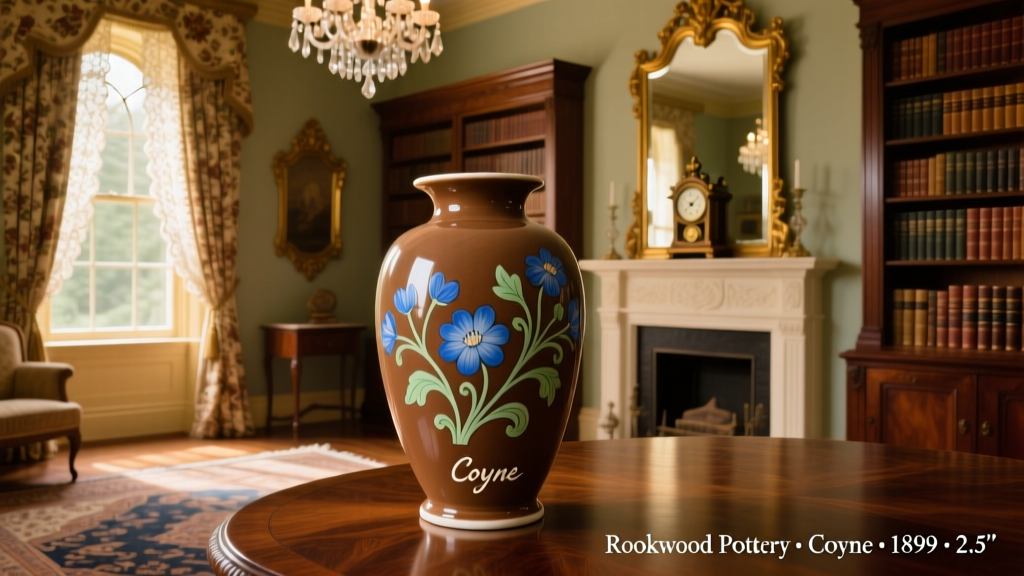
Rookwood Vase, Shaded Brown Slip Ground, Signed S. Coyne, 1899 — A Technical and Historical Analysis of a 2¼-Inch Miniature Masterpiece

Recovered Rockwell Returned To Owner: A Case Study in Ethical Antique Restoration and Provenance Verification
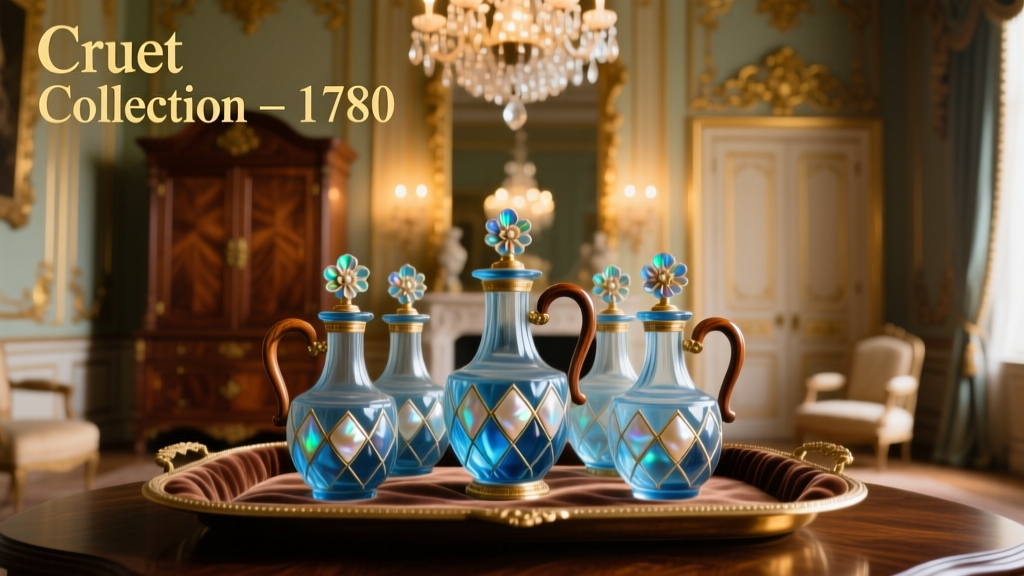
Cruets with Mother-of-Pearl Glass, Blue Diamond Quilting, and Camphor Wood Handles: Identification, Provenance, and Conservation
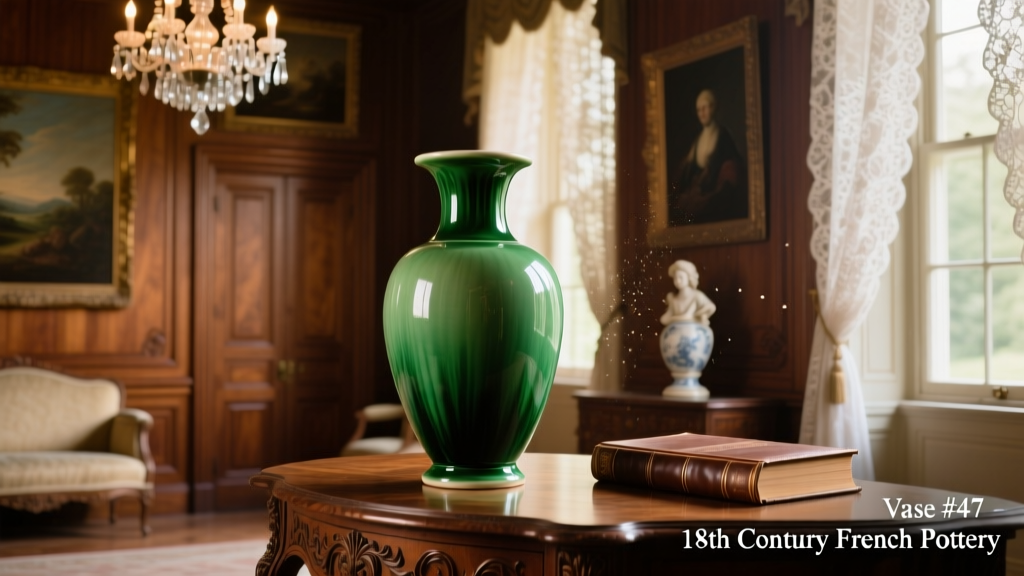
The Pillin Pottery Vase: A Study of Mid-Century American High-Glaze Green Ceramics (6½" Bulbous Form)
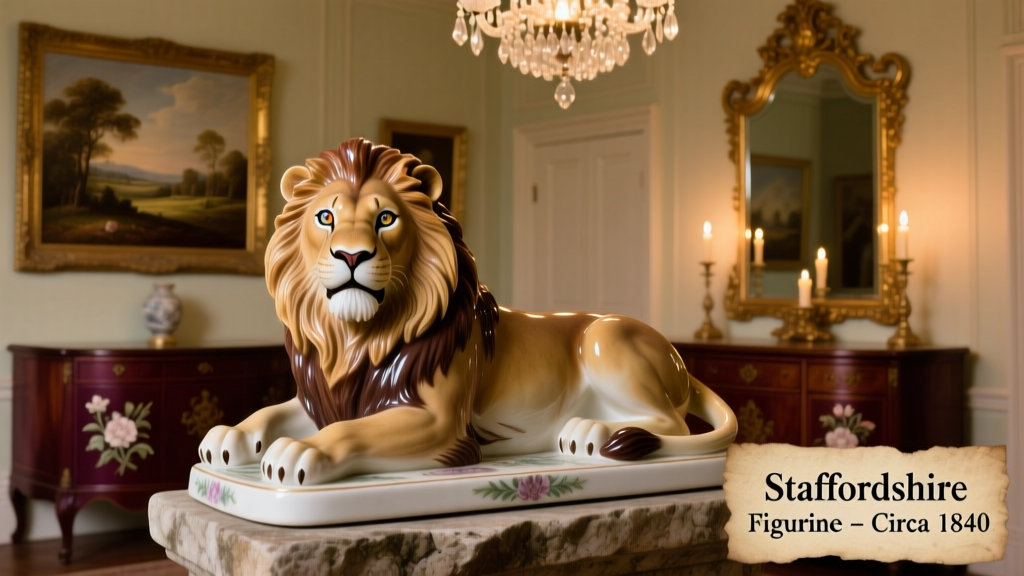
The Staffordshire Reclining Lion Figurine: A 12-Inch Brown-Glazed Masterpiece with Authentic Glass Eyes
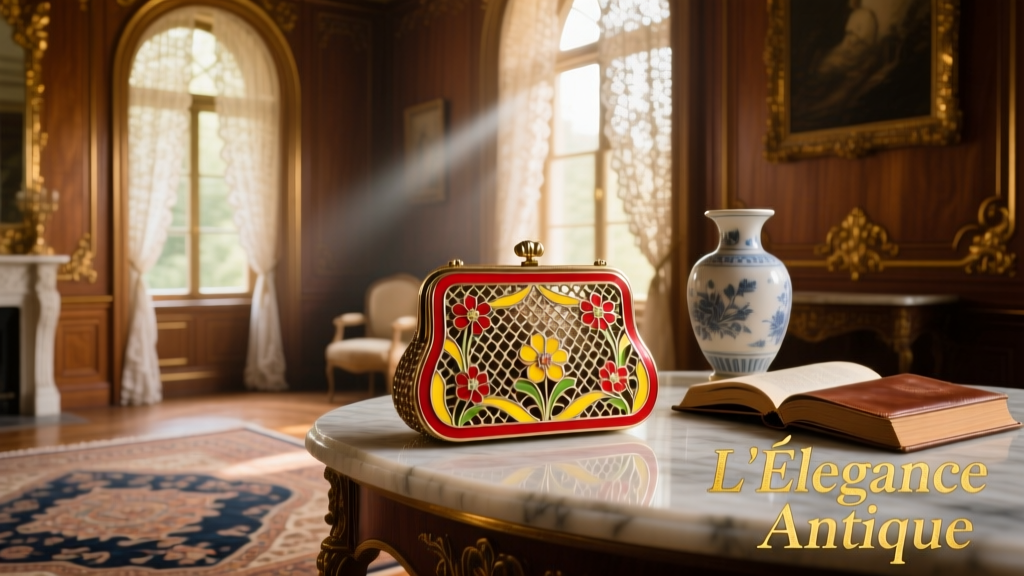
The Allure and Authenticity of Vintage Mesh Purses with Enameled Red and Yellow Frames

Ashburn Shannon: The Forgotten American Cabinetmaker and His Legacy in Mid-Century Modern Furniture

Dick Hubley Toy Cap Guns: A Collector’s Guide to Design, Production, and Restoration
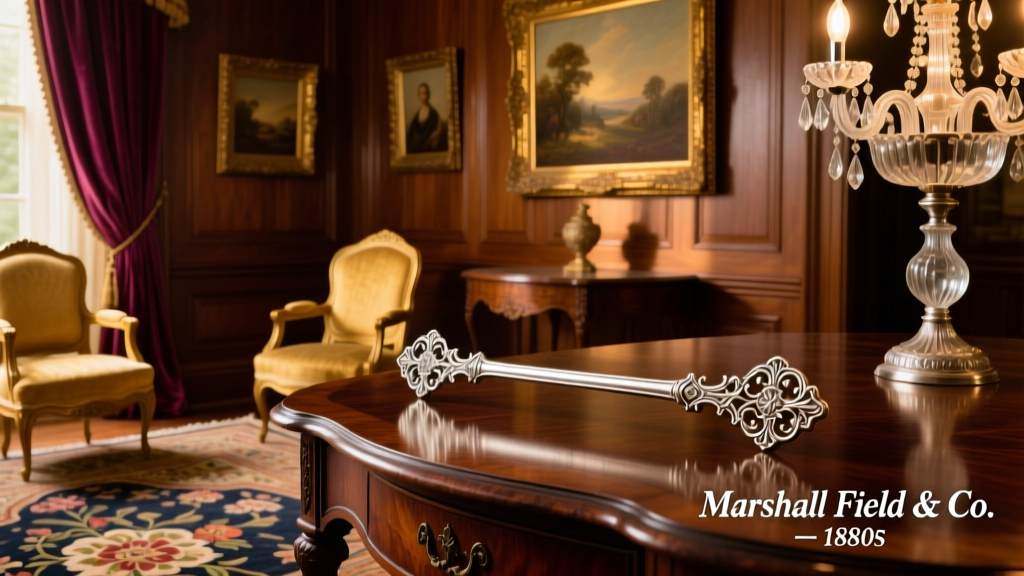
Silver American Bowl Handles: Identifying, Valuing, and Preserving Marshall Field & Co. 6-Inch Sterling Silver Bowl Handles