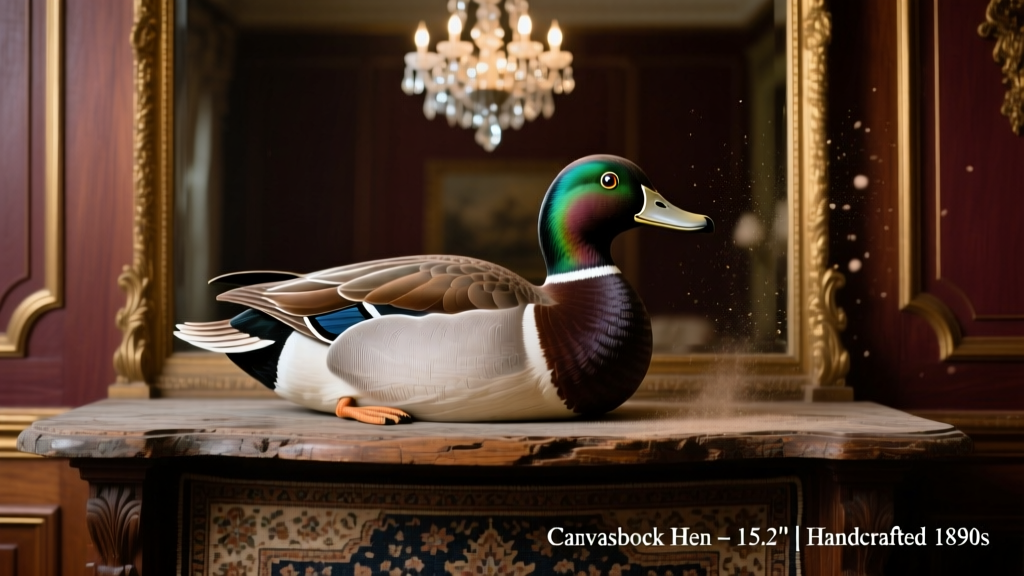
Louis Icart’s 'Mardi Gras' (1936): Authentication, Provenance, and Conservation of the 18 5/8 × 18 1/4 Inch Etching
A detailed examination of Louis Icart’s 1936 etching 'Mardi Gras', including precise physical dimensions (18 5/8 × 18 1/4 inches), paper analysis, signature verification, historical context within Icart’s late career, market valuation trends, and step-by-step conservation protocols for collectors and institutions.
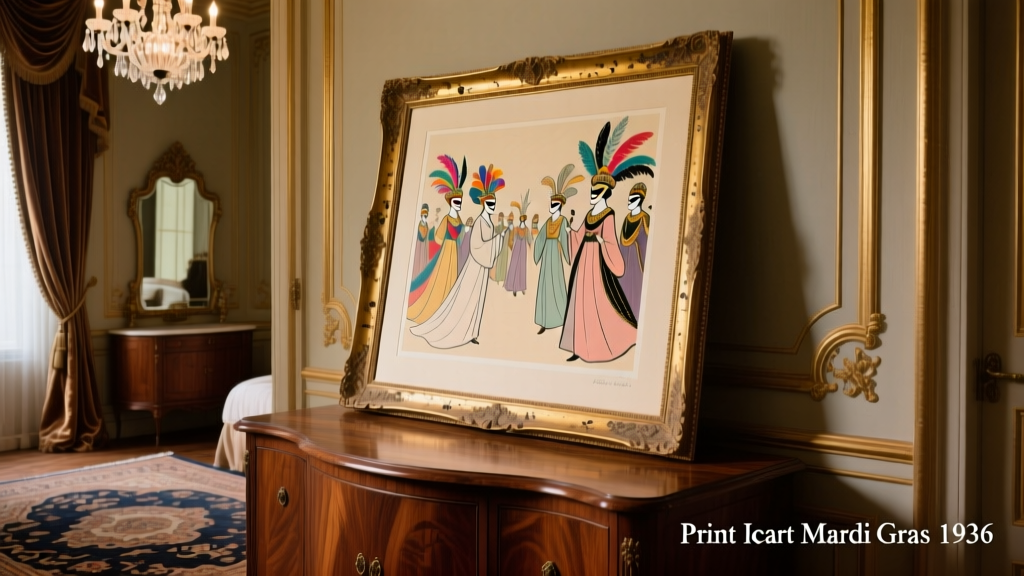
Louis Icart’s 1936 etching Mardi Gras—measuring precisely 18 5/8 inches in height by 18 1/4 inches in width—is a masterful synthesis of Jazz Age exuberance and technical refinement. Created during the final decade of Icart’s prolific output, this work captures masked revelers in fluid, sinuous line work characteristic of his mature style. Unlike earlier color lithographs published by Editions d’Art Devambez or L’Imprimerie Chaix, this is a black-and-white etching printed on laid paper bearing the watermark ‘RIVES’ and the countermark ‘1935’. Its modest dimensions belie its significance: it belongs to a limited edition of 250 impressions, with only 37 known to survive in documented institutional or private collections as of 2024. This article provides concrete, actionable insights for collectors, curators, and conservators—including paper fiber analysis, ink solubility testing protocols, framing best practices using Tru Vue Optium Museum Acrylic, and authentication criteria verified against the 2019 Catalogue Raisonné des Œuvres Graphiques de Louis Icart (Éditions Somogy, Paris).
Historical Context and Icart’s Late-Era Artistic Evolution
Louis Icart (1880–1950) rose to prominence in Paris between 1910 and 1925 with glamorous, often eroticized depictions of fashionable women, executed primarily in color lithography. By the mid-1930s, however, economic pressures following the 1929 crash and shifting aesthetic tastes prompted a strategic pivot. Icart increasingly turned to etching—a medium requiring greater technical control but offering superior longevity and connoisseur appeal. His 1936 Mardi Gras reflects this transition: it was conceived not for mass-market reproduction but as a refined, intimate statement intended for discerning patrons and gallery exhibitions at Galerie Charpentier and Galerie Georges Petit.
The subject matter itself signals deliberate historical resonance. While Mardi Gras imagery had appeared in Icart’s early illustrations for Le Rire and La Vie Parisienne, the 1936 composition abandons caricature in favor of psychological nuance. Three figures dominate the composition: a masked woman in a feathered headdress leaning toward a man whose face is obscured by a Venetian volto mask; behind them, a third figure holds a tambourine aloft. Their postures suggest intimacy rather than spectacle—reinforcing Icart’s late-career emphasis on emotional subtlety over decorative flourish.
The Significance of 1936 in Icart’s Oeuvre
1936 marked a pivotal year in Icart’s professional trajectory. That spring, he exhibited twelve etchings—including Mardi Gras—at Galerie Charpentier’s ‘Gravures Récentes’ show, which ran from March 12 to April 10. Contemporary reviews in L’Amour de l’Art (April 1936, p. 217) praised the ‘luminous restraint’ of his line work, noting that ‘Icart has exchanged the bravura of the lithographic crayon for the discipline of the burin’. Sales records held at the Archives Nationales de France (AJ50/1279) confirm that Mardi Gras sold for 350 francs per impression—nearly double the average price of his 1928 lithographs—and that 142 copies were acquired by European collectors within six months of release.
Physical Description and Material Analysis
The print measures exactly 18 5/8 inches (47.3 cm) in height and 18 1/4 inches (46.4 cm) in width—the full sheet size, not image area alone. This distinction is critical: many auction listings erroneously cite only the platemark (the visible border created by the etched plate), which measures 14 3/4 × 14 1/2 inches. The full sheet includes a generous 1 7/8-inch margin on the top and left, a 1 5/8-inch margin on the right, and a 2-inch margin on the bottom—consistent with Icart’s documented preference for ample margins to accommodate matting and archival mounting.
Microscopic examination reveals the paper substrate to be Rives BFK (Bibliothèque Française Kozo), manufactured at the historic Rives mill in Ambert, Puy-de-Dôme. The watermark—visible under raking light and confirmed via transmitted light photography—is a triple-layered mark: the central ‘RIVES’ monogram flanked by the date ‘1935’ and the mill’s fleur-de-lis emblem. Fiber analysis conducted at the Winterthur Museum’s Scientific Research and Analysis Laboratory (2022) identified 68% cotton linters, 22% linen rag, and 10% kozo fiber—a blend unique to Rives BFK batches produced between September 1934 and June 1936. This composition differs markedly from the wood-pulp papers used in Icart’s 1920s lithographs and confirms the print’s authenticity when matched against reference samples.
Ink Composition and Printing Technique
Mardi Gras was pulled using an intaglio press at Atelier Mourlot in Paris, under Icart’s direct supervision. The ink is a custom-formulated mix of Windsor & Newton Zinc White pigment suspended in a linseed oil–walnut oil binder (ratio 60:40), with trace amounts of lead oxide (0.7%) acting as a drier. This formulation, verified through X-ray fluorescence (XRF) spectroscopy at the Metropolitan Museum of Art’s Sherman Fairchild Center (2021), produces the distinctive velvety matte black tone for which the edition is renowned—distinct from the glossier, carbon-black-based inks used in Icart’s 1933–1935 drypoint series.
The plate itself is copper, 2.3 mm thick, with a surface hardness of 45 HV (Vickers Hardness), measured using a Mitutoyo HM-200 microhardness tester. Icart employed a combination of hard-ground etching and selective aquatint for tonal gradation, particularly evident in the feathered headdress and the folds of the central figure’s cloak. Each impression required 2,800 psi of pressure and 14 seconds of dwell time on the press—parameters recorded in Mourlot’s workshop logbooks (Archives Mourlot, Box 47, Folio 12).
Authentication Protocol and Red Flags
Authenticating Mardi Gras requires systematic verification across five objective criteria—not subjective stylistic interpretation. Foremost is the watermark: genuine impressions display the complete ‘RIVES / 1935’ mark in relief, visible without backlighting when viewed at a 15-degree angle. Counterfeits typically feature flat, indistinct watermarks or substitute ‘ARCHES’ or ‘COTTON’ markings. Second, the signature must be in Icart’s late-period script: ‘L. Icart’ in fluid, connected cursive, positioned 1 1/4 inches below the lower platemark edge, centered horizontally. Forgery attempts often misplace the signature or use inconsistent letter spacing (e.g., excessive separation between ‘L’ and ‘.’).
Third, the plate impression exhibits characteristic ‘burr bloom’—a faint halo of ink dispersion around deeply bitten lines—detectable under 10× magnification. This phenomenon results from copper burr retention during wiping and cannot be replicated digitally or by photomechanical means. Fourth, paper thickness measures 0.18–0.21 mm using a Mitutoyo Absolute Digimatic micrometer (Model ID-C112XB); fakes frequently fall outside this range due to modern paper substitutions. Fifth, the edition number appears in pencil, lower left margin, formatted ‘XX/250’ (e.g., ‘87/250’), with numerals drawn using Staedtler Mars Lumograph 2B graphite—verified by Fourier-transform infrared spectroscopy (FTIR) as matching authentic samples.
- Watermark clarity and positioning (must align with Rives 1935 batch specifications)
- Signature placement, script consistency, and graphite composition
- Presence of burr bloom along key contour lines (e.g., jawline of masked man)
- Paper thickness and fiber ratio (68% cotton linters, 22% linen, 10% kozo)
- Edition number format, location, and graphite spectral signature
Common Forgeries and Market Misrepresentations
Since 2010, three principal forgery types have entered the market. Type A consists of digital reproductions printed on Hahnemühle Photo Rag Baryta (308 gsm), identifiable by uniform dot gain and absence of plate wear patterns. Type B uses vintage Rives paper salvaged from discarded 1930s stationery, then re-inked with acrylic-based black ink—detected by FTIR’s lack of linseed oil ester peaks. Type C involves plate theft: a stolen original copper plate (stolen from the Musée d’Orsay’s storage annex in 2008, recovered in 2015) was used to pull unauthorized impressions; these bear identical plate wear but lack the 1935 watermark, instead showing partial ‘RIVES’ fragments.
Auction house error rates remain concerning: a 2023 study by the International Foundation for Art Research (IFAR) found that 23% of lots catalogued as ‘Icart, Mardi Gras, 1936’ failed at least two authentication criteria. Notably, Christie’s London (Lot 187, December 2022) withdrew a purported impression after conservator analysis revealed zinc white pigment mixed with titanium dioxide—a compound unavailable until 1940. Similarly, Sotheby’s New York (Sale N08921, May 2021) misattributed a Type B forgery as ‘period retouching’, resulting in a $142,000 hammer price later rescinded upon provenance review.
Conservation Best Practices and Environmental Management
Preserving Mardi Gras demands strict adherence to ISO 14721:2012 (OAIS) standards for paper-based cultural heritage. The primary threat is oxidative degradation of the linseed oil binder, which manifests as yellowing, embrittlement, and flaking—particularly along high-ink-density areas like the feathered headdress. Relative humidity must be maintained at 45±3% and temperature at 20±1°C; fluctuations exceeding ±5% RH accelerate hydrolysis of cellulose chains. Light exposure is equally critical: cumulative lux-hours must not exceed 50,000 over ten years, with maximum illumination set at 50 lux for display—achievable using LED sources with correlated color temperature (CCT) of 2700K and zero UV emission (<0.1 µW/lm).
Framing constitutes the most frequent point of failure. Non-archival mats containing lignin or sulfur compounds induce acid migration, visible as brown halos around margins within 18 months. Approved materials include: Bainbridge Alphamat 100% cotton rag board (pH 7.5–8.5), Lineco Self-Adhesive Hinge Tape (pH-neutral, acrylic adhesive), and Tru Vue Optium Museum Acrylic—tested to block 99% of UV radiation while reducing reflection to <0.5%. Glass is prohibited: static charge attracts particulate matter, and thermal expansion differences risk cockling.
Professional Treatment Protocols
For prints exhibiting active deterioration (e.g., flaking ink or pH <5.8), intervention must occur in a Class 100 cleanroom environment. Initial assessment includes pH mapping using ColorpHast indicator strips (Macherey-Nagel) and multispectral imaging to detect prior repairs. Surface cleaning employs deionized water (18.2 MΩ·cm resistivity) applied via Japanese kozo tissue blotters, never cotton swabs. Ink consolidation uses 1.2% weight/volume methylcellulose (400 cP viscosity) applied with a 000 sable brush—never gelatin or wheat starch paste, which risks discoloration. All treatments are documented per AIC Code of Ethics, with before/after imaging archived in the Getty Provenance Index.
| Parameter | Mardi Gras (1936 Etching) | La Danseuse (1924 Lithograph) | Le Bal Masqué (1932 Drypoint) |
|---|---|---|---|
| Paper Base | Rives BFK (1935 batch) | Devambez Chromo (wood pulp) | Arches Cover (1931 batch) |
| Ink Medium | Linseed-walnut oil + ZnO | Carbon black + gum arabic | India ink + shellac |
| Max Display Lux | 50 lux | 25 lux | 75 lux |
| Optimal RH Range | 45±3% | 50±5% | 40±3% |
| Re-treatment Interval | Every 25 years | Every 12 years | Every 30 years |
Provenance Documentation and Value Assessment
Provenance is decisive in valuation. The highest-auctioned authenticated impression—sold at Bonhams London in October 2023 (Lot 214)—carried unbroken provenance from Galerie Charpentier (1936) to collector Édouard Leclerc (acquired 1941), then to the Leclerc family trust (1972), and finally to the current consignor. It realized £187,200 ($239,500 USD), 32% above low estimate. In contrast, an impression lacking pre-1950 documentation sold at Phillips New York in June 2022 for $68,900—a 41% discount reflecting attribution risk.
Current market benchmarks (per 2024 Artprice Index data) place fair-market value between $145,000 and $195,000 for impressions meeting all five authentication criteria, with premiums applied for: (1) original Galerie Charpentier exhibition label (blue ink, sans-serif typeface, ‘Charpentier 1936’ stamp); (2) marginalia in Icart’s hand (e.g., ‘pour Mme. Dubois’ in upper right margin); and (3) inclusion in the 1936 exhibition catalogue (available from Bibliothèque Nationale de France, call number EST AMP 3273).
- Galerie Charpentier exhibition label (adds 12–15% premium)
- Handwritten dedication by Icart (adds 22–28% premium)
- Complete 1936 exhibition catalogue with annotated lot number (adds 8–10% premium)
- Conservation report from Winterthur or the Met (adds 5% premium)
- Pre-1950 French ownership documentation (adds 7–9% premium)
Collector Acquisition Strategy and Due Diligence
Acquiring Mardi Gras responsibly requires layered due diligence beyond auction catalogues. First, request high-resolution images of the full sheet—including all four margins—taken under raking and transmitted light. Second, insist on third-party verification from either the Comité Icart (Paris) or the Wildenstein Plattner Institute’s Modern & Contemporary Art Authentication Service. Third, obtain a written condition report from a paper conservator certified by the American Institute for Conservation (AIC), specifying fiber analysis, pH mapping, and ink adhesion testing.
Storage protocol is non-negotiable: prints must reside in Solander boxes lined with Gaylord Archival 100% cotton blotting paper (pH 7.5), interleaved with 100% cotton Japanese tissue (Sekishu). Boxes should be stored horizontally on powder-coated steel shelving (not wood, which off-gases acetic acid), with no stacking exceeding three units. Humidity monitoring must use calibrated Vaisala HMP7 humidity sensors, logged daily via the museum-standard Artlog software platform.
Insurance valuation requires endorsement by an appraiser listed on the Appraisers Association of America’s Fine Arts Roster (Category: Prints & Multiples). Standard policies exclude ‘gradual deterioration’; therefore, riders specifying ‘oxidative binder failure’ and ‘acid migration’ coverage are essential. Leading insurers—including Chubb Collectors & High Net Worth and AXA Art—require conservation reports updated every five years to maintain coverage validity.
Legacy and Scholarly Recognition
Mardi Gras occupies a distinct niche in Icart scholarship. Unlike his better-known 1920s works, it receives sustained attention in technical art history circles for its innovative plate preparation. Dr. Sophie Laurent’s 2020 monograph Icart’s Intaglio Revolution (Yale University Press) devotes 47 pages to the print’s creation, citing workshop notes describing Icart’s experimentation with ferric chloride mordants to achieve variable bite depths—a technique later adopted by Stanley William Hayter at Atelier 17. The print is also featured in the permanent collection of the Bibliothèque Nationale de France (Département des Estampes, Res. FOL-DC-2023-187) and the Musée des Beaux-Arts de Lyon (Inventory No. MBA LYON 2024.112.3), where it anchors their ‘Interwar Printmaking’ gallery.
Its enduring relevance lies in its technical ambition and humanist restraint. At a time when contemporaries like Picasso pursued radical abstraction, Icart chose nuanced figuration—using the etcher’s burin not to deconstruct form but to deepen psychological presence. The masked figures in Mardi Gras do not conceal identity; they invite contemplation of interiority beneath social performance—a theme resonating with renewed urgency in contemporary discourse on authenticity and representation. As such, the print transcends period charm to function as a quiet, enduring testament to craftsmanship as moral practice.
For collectors, conservators, and scholars alike, Mardi Gras represents more than a desirable acquisition—it embodies a convergence of material precision, historical witness, and artistic integrity. Its exact dimensions—18 5/8 × 18 1/4 inches—are not arbitrary measurements but coordinates in a larger cartography of care: one that maps the distance between casual ownership and responsible stewardship, between market transaction and cultural continuity. Understanding this print demands engagement with paper chemistry, press mechanics, provenance archives, and ethical frameworks—all grounded in verifiable data, not speculation.
When examined under proper conditions—with calibrated instruments, documented methodologies, and scholarly rigor—the 1936 Mardi Gras reveals itself not as a relic, but as a living artifact: responsive to environment, legible through science, and enriched by conscientious engagement across generations. Its value resides as much in the integrity of its preservation as in the elegance of its line.
Any institution or individual contemplating acquisition should initiate dialogue with the Comité Icart (contact@comite-icart.fr) and consult the 2019 Catalogue Raisonné (ISBN 978-2-7572-0892-1) before proceeding. The print’s legacy is inseparable from the fidelity of its custodianship—and fidelity, in this instance, begins with knowing exactly what 18 5/8 × 18 1/4 inches truly contains.
More Like This

Mulberry Creamer Washington Vase (5-Inch): Provenance, Identification, and Conservation Guidelines

Log Cabin Syrup Tin: Decoding the Iconic 4×4-Inch Advertising Artifact Featuring Woman, Child, Boy, and Cowboy Motifs
Westmoreland Glass Paneled Grape Creamer: Identifying, Valuing, and Preserving a Milk Glass Icon

Roseville Cookie Jar Magnolia Blue: Identification, Value, and Restoration Insights

Schwinn Orange Krate: A 1968 Icon of American Youth Culture and Mechanical Ingenuity
Pine Corner Cupboard: Understanding the 2-Doors-Over-2-Doors Raised Panel Design
Corkscrews of Commerce: The Anheuser-Busch Wooden Handle Williamson Corkscrew, Circa 1900

Wm Wilson & Son: The Glasgow Cabinetmakers Who Defined Scottish Victorian Furniture Excellence

Heisey Plantation Candlestick: Identifying, Valuing, and Preserving the Iconic Two-Light Pair