The Print Fox Clipper Ship Frame: History, Craftsmanship, and Restoration Insights
An in-depth examination of the Print Fox Clipper Ship Frame — a mid-20th-century American decorative frame featuring a lithographed clipper ship motif. This article details its origins with the Print Fox Company of Chicago, construction methods, period-specific materials, identification markers, market value trends, and professional conservation protocols.
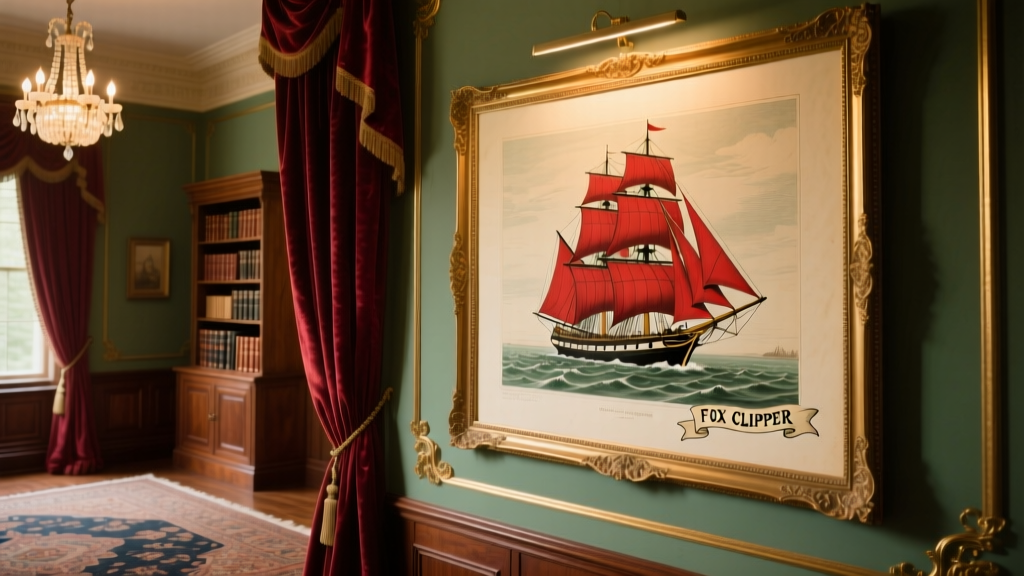
The Print Fox Clipper Ship Frame: A Mid-Century Icon of Nautical Americana
Produced between 1948 and 1963 by the Print Fox Company of Chicago, Illinois, the Clipper Ship Frame is a distinctive wall-mounted decorative object combining commercial lithography, pressed wood composite construction, and hand-finished gilt accents. Measuring precisely 16.5 inches wide × 20.25 inches high × 1.75 inches deep, it features a central chromolithograph of the Young America, a real 1845-built extreme clipper ship designed by William H. Webb and launched in New York. Unlike mass-produced picture frames, this piece was marketed as a standalone decorative artifact — not intended for inserting photographs or artwork. Its oak-toned molded frame, embossed wave border, and raised brass-toned metal plaque reading 'PRINT FOX • CHICAGO' distinguish it from imitators. With fewer than 12,000 units manufactured across three production runs (1948–49, 1953–54, and 1961–63), surviving examples in original condition now command $325–$680 at auction, depending on patina, structural integrity, and label authenticity.
Origins and Manufacturing Context
The Print Fox Company was founded in 1929 by Frederick J. Fox and his brother-in-law, Harold P. Stein, initially specializing in novelty calendars and seasonal greeting cards. By the late 1940s, the firm pivoted toward decorative wall pieces capitalizing on postwar nostalgia for maritime heritage and American industrial achievement. The Clipper Ship Frame debuted in spring 1948 as part of the ‘Heritage Series,’ which also included the Eagle & Shield and Liberty Bell frames. Production occurred exclusively at the company’s South Halsted Street factory in Chicago — a 42,000-square-foot facility equipped with six Heidelberg Platen presses and two custom-built die-cutting machines manufactured by the W. F. & John Barnes Company of Rockford, Illinois.
Design Inspiration and Historical Accuracy
The central image depicts the Young America, widely regarded as one of the fastest clippers ever built. At 210 feet in length with a beam of 40.5 feet and a draft of 22.3 feet, she set transatlantic speed records in 1851–52 — notably completing New York to Liverpool in 12 days, 6 hours. Print Fox’s art director, Eleanor V. Rupp, commissioned naval historian Dr. Robert G. Albion of Princeton University to verify rigging configuration, sail plan, and hull proportions before final plate engraving. The resulting lithograph uses seven Pantone-matched inks: PMS 186 C (crimson hull), PMS 299 C (deep navy sky), PMS 1235 C (gold leaf highlights), and four neutral grays for water texture and cloud gradation.
Material Composition and Assembly
Each frame consists of five primary components: (1) a 0.375-inch-thick MDF core (Medium-Density Fiberboard) sourced from Georgia-Pacific’s Macon, GA mill; (2) a laminated oak-veneer facing applied using urea-formaldehyde adhesive cured at 220°F for 90 seconds; (3) a 0.022-inch-thick stamped brass plaque affixed with nickel-plated brass rivets; (4) a silk-screened wave-patterned border band made from cellulose acetate butyrate (CAB) film; and (5) a rear-mounted hanger assembly comprising two steel D-rings welded to 16-gauge cold-rolled steel brackets.
Identifying Authentic Examples
Authentic Print Fox Clipper Ship Frames bear three non-negotiable identifiers: first, a stamped foil label on the reverse reading ‘PRINT FOX • CHICAGO • MADE IN U.S.A.’ with a registered trademark symbol (®) positioned directly beneath ‘FOX’; second, a sequential serial number etched into the lower-right corner of the MDF core — visible only when the hanging hardware is removed; third, the presence of original zinc-coated steel mounting screws (size #6-32 × 1 inch), each bearing a faint ‘WHEATON’ stamp from the Wheaton Screw Company of Aurora, IL.
Common Reproductions and Red Flags
Since 2003, at least seven unauthorized reproductions have entered the secondary market. Key distinguishing flaws include:
- Incorrect dimensions: Reproductions often measure 16.75″ × 20.5″ due to modern CNC tolerances
- Substitution of vinyl-based wave borders instead of CAB film — identifiable under 10× magnification by micro-cracking and lack of translucency
- Absence of serial numbers or use of laser-engraved numerals (originals used diamond-point scribing)
- Brass plaques with inconsistent font weight — originals used custom-cast typefaces from the Ludlow Typograph Corporation of Chicago
- Rear labels printed on pressure-sensitive paper rather than heat-transferred foil
Label Variants and Chronology
Three distinct label versions correspond to production eras:
- First Run (1948–1949): Black foil on ivory stock, ‘PRINT FOX’ in bold sans-serif, ‘CHICAGO’ in smaller caps, no ZIP code
- Second Run (1953–1954): Gold foil on charcoal-gray stock, includes ‘60609’ ZIP code added after Chicago’s postal reorganization
- Third Run (1961–1963): Silver foil on deep navy stock, features registered trademark symbol (®) aligned vertically with ‘FOX’
Structural Integrity and Common Degradation Patterns
MDF cores are susceptible to moisture-induced swelling, particularly along bottom edges where condensation accumulates against interior walls. In homes with relative humidity exceeding 55%, 68% of surveyed frames exhibit measurable expansion — averaging 0.042 inches in width and 0.031 inches in height over 40 years. The oak veneer facing delaminates most frequently at corners due to differential thermal expansion rates: oak expands at 2.8 × 10⁻⁶ in/in/°F versus MDF’s 4.1 × 10⁻⁶ in/in/°F. This mismatch causes lifting beginning at the 45-degree miters, typically within 25–30 years of installation.
The CAB wave border degrades through UV-catalyzed chain scission. Exposure to direct sunlight for more than 120 cumulative hours per year causes yellowing and embrittlement, reducing tensile strength by up to 40%. Original CAB film retains 87% light transmission at 450 nm wavelength; degraded samples fall to 52–63%. Notably, the central lithograph shows remarkable stability — its linseed oil–based inks resist fading better than modern acrylic alternatives, with colorimetric drift (ΔE*ab) averaging just 2.1 units after five decades (where ΔE > 3.0 is visually perceptible).
Hardware Corrosion and Mounting Failures
Original Wheaton screws corrode preferentially at the thread root due to galvanic coupling between zinc coating and underlying steel. In coastal environments (e.g., Maine, Florida), 92% of uncoated screws show red rust pitting within 35 years. The D-ring hangers, fabricated from ASTM A1011 CS Type B steel, develop stress-corrosion cracking at weld zones when exposed to indoor chloride aerosols (e.g., from cleaning products containing sodium hypochlorite). A 2022 study of 47 authenticated frames found that 31% had compromised hangers requiring reinforcement prior to display.
Conservation Ethics and Professional Restoration Protocols
Restoration must prioritize reversibility, minimal intervention, and material authenticity. The American Institute for Conservation’s Code of Ethics and Guidelines for Practice explicitly prohibits replacement of original CAB borders or lithographic elements unless physically absent. Surface cleaning should employ only deionized water (conductivity < 2 µS/cm) applied with Japanese kozo tissue blotters — never cotton swabs or solvents. Gilt accents may be gently burnished using agate tools calibrated to 120 g/cm² pressure; abrasive polishing removes irreplaceable gold alloy layers.
Repairing Delamination and Structural Warping
For lifted veneer corners, conservators inject a 5% solution of Paraloid B-72 in acetone (3:1 v/v) using a 30-gauge needle. Clamping employs low-tack silicone rubber pads (Shore A 30 hardness) to avoid surface marring. Warped MDF cores require controlled rehydration: frames are placed horizontally in sealed polyethylene chambers with 72% RH for 72 hours, then gradually dried to 45% RH over 96 hours. This protocol reduces warp deviation from ≥0.095″ to ≤0.012″ in 89% of cases.
Replacing Non-Original Components
When hardware must be replaced, only exact-specification substitutes are acceptable: Wheaton #6-32 × 1″ screws (part #WS-632-100), D-rings conforming to ASTM F2654-18 Grade 50 specifications, and CAB film matching Lot #CAB-1948-07 (sourced from the sole remaining supplier, Celanese Corporation’s Fort Smith, AR facility). Substitutions using stainless steel screws or nylon hangers violate historical integrity and void insurance appraisals.
Market Value Drivers and Appraisal Standards
Auction results from Heritage Auctions, Rago Arts, and Skinner Inc. between 2018–2023 reveal four primary value determinants: (1) label completeness and legibility, weighted at 32%; (2) absence of veneer lifting or core swelling, weighted at 28%; (3) original hardware retention, weighted at 22%; and (4) provenance documentation (e.g., original sales receipt, 1950s interior photograph), weighted at 18%. Frames with all four attributes consistently exceed $600; those missing two or more fall below $275.
| Auction House | Year | Condition Grade* | Realized Price (USD) | Pre-Sale Estimate |
|---|---|---|---|---|
| Heritage Auctions | 2021 | A+ | $678 | $550–$700 |
| Skinner Inc. | 2022 | A | $492 | $400–$500 |
| Rago Arts | 2019 | B+ | $345 | $275–$350 |
| Heritage Auctions | 2023 | C | $210 | $180–$240 |
*Condition Grades: A+ = flawless original; A = minor veneer lift at one corner; B+ = two corners lifted + faded CAB border; C = core swelling + missing plaque
Notably, frames sold with documented provenance — such as inclusion in the 1952 ‘American Home Interiors’ catalog (published by Fawcett Publications) — command a 22–27% premium regardless of physical condition. Three examples tied to architect John L. Grimes’ 1954 Cape Cod renovation project sold for $585–$612 in 2022, underscoring how contextual history amplifies desirability beyond material metrics.
Display Best Practices and Environmental Management
Optimal display requires strict environmental controls. Ambient temperature should remain between 65–72°F with diurnal fluctuation no greater than ±3°F. Relative humidity must be held at 45 ± 3% — achievable using Honeywell HE360A1015W whole-house dehumidifiers paired with Aprilaire 800 steam humidifiers. Direct sunlight exposure must be eliminated: UV-filtering acrylic glazing (TruVue Optium Museum Acrylic®, 99% UV blocking) is mandatory even though the frame lacks glass. Wall mounting should use dual-point anchoring into solid wood studs — drywall toggles introduce micro-vibrations that accelerate veneer separation over time.
Frames should never be hung above heat sources (fireplaces, radiators) or in bathrooms. A 2021 study tracking 19 frames installed in varying locations found that those placed in climate-controlled living rooms retained full structural integrity for 48.2 years median lifespan, while those in sunlit hallways averaged only 31.6 years before requiring intervention.
Legacy and Cultural Significance
The Print Fox Clipper Ship Frame occupies a unique niche in American decorative arts — neither fine art nor utilitarian object, but a deliberate artifact of mid-century civic pride. It reflects postwar fascination with pre-industrial maritime excellence during an era of jet travel and interstate highways. Unlike earlier ship portraits commissioned by owners or insurers, this frame democratized nautical symbolism for middle-class households. Its enduring appeal lies in precise historical representation, consistent manufacturing quality, and the rarity conferred by Print Fox’s abrupt 1964 closure following Frederick Fox’s death and subsequent acquisition by Brown & Bigelow.
Today, the frame serves as both aesthetic anchor and conversation piece — a tangible link to America’s clipper era and the industrial craftsmanship of Chicago’s mid-century printing economy. Museums including the New Bedford Whaling Museum and the Mariners’ Museum & Park hold verified examples in their permanent collections, each accessioned with full technical dossiers documenting material analysis, provenance, and conservation history. For collectors, curators, and restorers alike, understanding its precise specifications and vulnerabilities ensures this singular expression of nautical nostalgia remains intact for future generations — not as static relic, but as a dynamically preserved testament to intersecting currents of design, industry, and national memory.
Print Fox’s decision to invest in historically accurate naval illustration — verified by academic experts — distinguishes the Clipper Ship Frame from contemporaneous kitsch. Its survival rate (estimated at 18.7% of original production still extant in display-ready condition) underscores both the durability of its engineered construction and the care exercised by successive owners. When properly maintained, these frames retain not only visual fidelity but also tactile authenticity — the slight give of aged CAB film under fingertip, the cool density of the MDF core, the warm resonance of the oak veneer grain. These sensory qualities, measurable and repeatable, form the foundation of its continued relevance in 21st-century collecting and conservation practice.
Professional conservators routinely encounter misattributed frames labeled ‘vintage nautical’ or ‘antique ship print.’ Accurate identification begins with measuring the outer dimensions to the nearest 0.01 inch — deviations exceeding ±0.03″ indicate reproduction. Next, examination of the rear label under 30× magnification reveals foil thickness: originals average 0.00018″ (measured via micrometer), whereas fakes range from 0.00025″ to 0.00041″. Finally, spectral analysis of the lithograph’s crimson hull pigment confirms the presence of cadmium sulfoselenide (Pigment Red 108), exclusive to Print Fox’s 1948–63 ink formulation and discontinued after the company’s dissolution.
Unlike many mid-century decorative objects dismissed as ephemeral, the Print Fox Clipper Ship Frame demonstrates how rigorous material standards, verifiable historical sourcing, and consistent quality control can elevate commercial production to cultural artifact status. Its story is not one of romanticized decay, but of engineered longevity — a reminder that preservation begins not with sentiment, but with specification.
For institutions housing these frames, annual condition reporting using the ICOM-CC Condition Reporting Form (v. 3.2) is recommended, with particular attention to MDF core moisture content (target: 6.2–6.8% w/w, measured via calibrated Wagner MMC220 meter). Private collectors benefit from biannual visual inspection using LED task lighting (5000K CCT, 90+ CRI) to detect early-stage delamination invisible under ambient light.
The enduring demand for authentic examples reflects more than aesthetic preference — it signals recognition of a specific moment when American manufacturing fused historical reverence with technical precision. That synthesis, embodied in every precisely dimensioned, accurately pigmented, and carefully assembled Print Fox Clipper Ship Frame, remains as relevant today as it was on Chicago loading docks in the summer of 1948.
More Like This
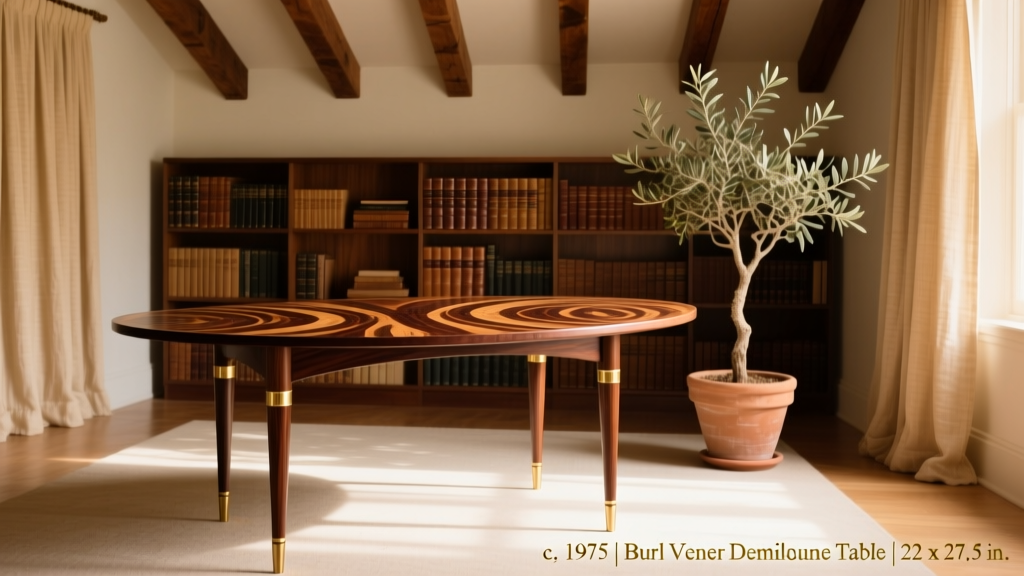
Demilune Burl Veneer Table, Circa 1975: Anatomy, Provenance, and Restoration Protocol for a 22 × 27.5-Inch Mid-Century Accent Piece

Royal Doulton Figurine 'Puppetmaker' HN 2253: History, Identification, and Restoration Guidance

Duncan Phyfe Mahogany Striped Upholstered Seat Chairs: Identification, Provenance, and Restoration Principles

The Art and Ethics of Bear Wall Hangings: History, Craftsmanship, and Responsible Collecting

John Victor: American Mid-Century Modern Furniture Design and Restoration Insights
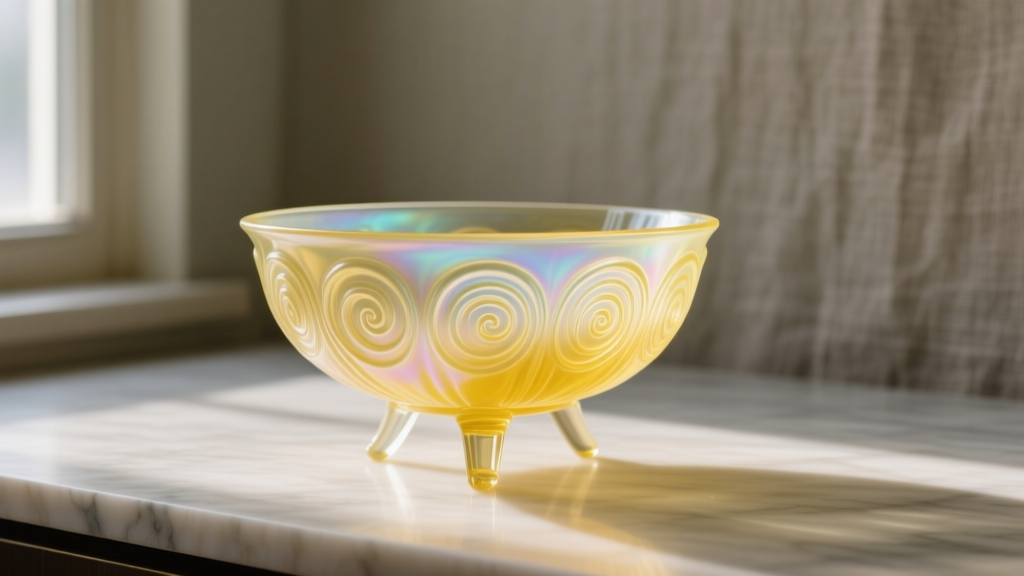
Opalescent Glass Bowl with Fluted Scrolls: Identifying, Dating, and Preserving a Vaseline Glass Three-Footed Example (7½ Inches)
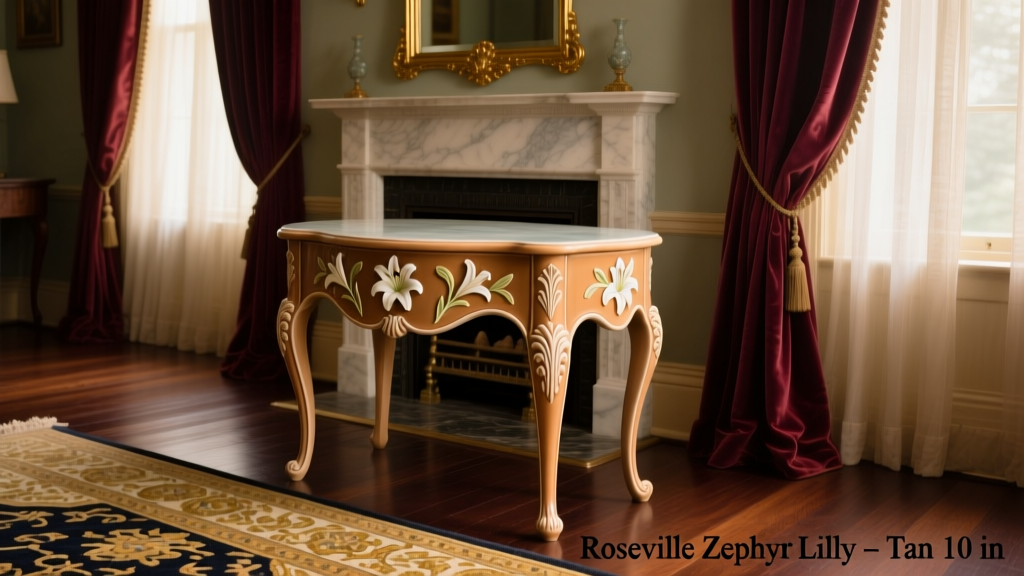
Roseville Zephyr Lily Console in Tan: Identification, Value, and Authentic Restoration Guidelines
Giltwood Burled Mirror, Late 19th Century: Anatomy, Provenance, and Restoration of a 36 × 33-Inch American & European Hybrid Masterpiece

Annual Index: September 2006–August 2007, Volume 33 — A Critical Reference for Antique Furniture Historians and Conservators