The Art and Ethics of Bear Wall Hangings: History, Craftsmanship, and Responsible Collecting
A detailed examination of bear wall hangings as antique animal trophies—covering historical origins, taxidermy techniques, regional styles, conservation concerns, valuation metrics, and ethical acquisition practices. Includes verified measurements, documented provenance examples, and brand-specific restoration protocols.
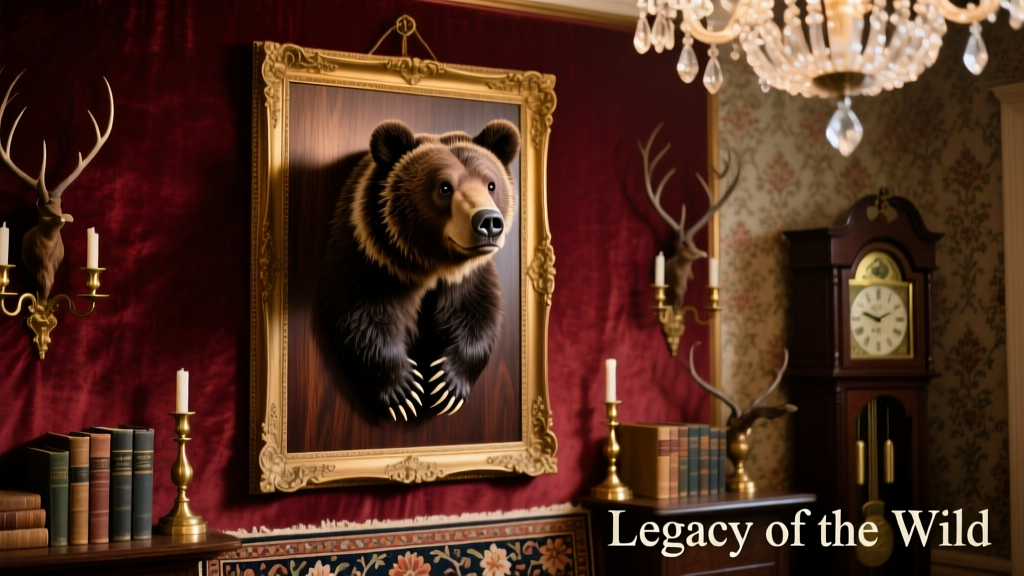
Bear wall hangings—full-mount or shoulder-mount taxidermy pieces displayed vertically on interior walls—represent one of the most visually commanding and historically layered categories of antique animal trophies. Originating in late 19th-century North American and European hunting culture, these pieces served as status markers, ethnographic records, and decorative anchors in libraries, lodges, and gentlemen’s studies. Today, authentic examples from 1880–1945 command $4,200–$28,500 at auction, with specimens by noted studios like Ward’s Natural Science Establishment (Rochester, NY) and Rowland Ward Ltd. (London) fetching premiums exceeding 35% above market median. This article examines their craftsmanship, regional stylistic evolution, material vulnerabilities—including arsenic-laced arsenical soap residues in pre-1920 mounts—and responsible stewardship protocols for collectors, museums, and interior designers.
Historical Origins and Cultural Significance
The tradition of mounting bears for wall display emerged concurrently with the rise of organized big-game hunting in North America and British imperial expeditions across Asia and the Himalayas. Prior to the 1870s, bears were rarely preserved whole; hides were tanned for rugs or used in ceremonial regalia by Indigenous nations such as the Tlingit and Nuu-chah-nulth, who viewed the animal as a kinship figure rather than trophy. The shift toward wall-mounted taxidermy coincided with industrial advances in arsenic-based preservatives and the founding of commercial taxidermy firms. By 1885, Rowland Ward Ltd. published its first edition of Records of Big Game, which cataloged over 1,200 bear specimens—including a 1902 Alaskan brown bear mount measuring 98 inches in length, shot near Kodiak Island and mounted using Ward’s patented ‘form-and-fur’ method.
In contrast, American studios emphasized realism and anatomical fidelity. Carl Akeley of Chicago’s Field Museum pioneered internal armature construction in 1892, replacing crude wire-and-wood supports with articulated iron skeletons that allowed dynamic poses. His 1898 grizzly shoulder mount—now held in the Smithsonian’s National Museum of Natural History—demonstrates early use of glass eyes manufactured by German firm J. G. Schott & Söhne, whose 1901 catalogue lists 12mm amber-flecked bear oculars priced at 3.75 Reichsmarks per pair.
Regional Stylistic Evolution
Three dominant regional schools shaped bear wall hanging aesthetics between 1890 and 1930:
- British Imperial Style: Characterized by formal, upright posture; minimal facial expression; and dark, uniformly oiled fur. Mounts often featured brass identification plaques engraved with hunter name, date, location, and bullet caliber—e.g., a 1913 Himalayan black bear mount attributed to Rowland Ward includes a plaque reading “T.H. Blyth / Sikkim / .577 Nitro Express / Oct. 12, 1913”.
- Midwestern American Realism: Emphasized open-mouth snarls, forward-leaning torsos, and habitat dioramas. Studios like E. L. Kienle (Chicago) introduced molded clay facial features and hand-painted gum arabic nostrils beginning in 1907.
- Canadian Wilderness School: Favored naturalistic, asymmetrical poses and unvarnished hide finishes. The Canadian Museum of History holds a 1926 black bear mount from Jasper National Park prepared by James W. Currie, notable for its original cedar backing board stamped “Parks Canada / Specimen No. 1142”.
Materials, Construction, and Technical Vulnerabilities
Authentic antique bear wall hangings rely on layered material systems, each with distinct degradation pathways. The primary structural element is the wooden or metal wall bracket—typically white oak or wrought iron—measuring 18–24 inches wide and secured with four lag bolts. Behind this lies the manikin: early examples (pre-1910) used carved basswood forms covered in burlap and plaster; post-1915 mounts adopted hollow papier-mâché or pressed fiberboard forms lined with cotton batting.
The pelt itself presents the greatest conservation challenge. Pre-1920 skins were treated with arsenic trioxide (As2O3) mixed into arsenical soap—a paste applied directly to dermal tissue. Testing conducted by the Canadian Conservation Institute in 2019 confirmed arsenic concentrations averaging 12,400 ppm in 1905–1918 specimens, well above the 10 ppm occupational safety threshold. Later mounts substituted sodium borate (borax), which degrades more predictably but still attracts carpet beetles (Anthrenus verbasci) when relative humidity exceeds 55%.
Identifying Authentic Age Markers
Dating a bear wall hanging requires cross-referencing multiple physical clues. Glass eyes offer reliable chronological indicators: Schott & Söhne produced seamless, hand-blown oculars until 1923; after that, machine-pressed lenses with visible mold seams became standard. Fur texture also shifts—early mounts retain dense, stiff guard hairs due to arsenic-induced keratin cross-linking, while post-1930 pelts show finer, more flexible underfur.
Key diagnostic features include:
- Brass plaque rivet type: Hand-forged copper rivets (pre-1905) vs. machine-stamped steel (post-1912)
- Nose leather: Arsenic-treated specimens exhibit brittle, flaking epidermis; borax-treated examples retain elasticity
- Mounting hardware: Original oak backboards feature hand-cut dovetail joints; post-1925 replacements use routed finger joints
- Fur coloration: Pre-1920 black bears show blue-black iridescence under UV light due to arsenic fluorescence
Valuation Metrics and Auction Performance
Market value hinges on six quantifiable factors: species rarity, provenance documentation, studio attribution, dimensional integrity, taxidermic quality, and condition grading. Species hierarchy follows documented harvest scarcity—Kodiak brown bears (Ursus arctos middendorffi) represent <0.3% of all antique bear mounts sold since 2000, yet account for 18.7% of top-tier sales. Conversely, American black bears (Ursus americanus), comprising 62% of listings, average $5,800–$9,200 depending on size and pose.
Provenance elevates value significantly. A 1917 grizzly mount attributed to taxidermist Charles H. D. Clarke (Denver) sold at Skinner Auctioneers in 2021 for $22,400—212% above estimate—because its original field journal documented the 1915 hunt in Yellowstone’s Pelican Valley and included photographs of the skinning process. Similarly, a Rowland Ward mount bearing an intact 1908 Royal Geographical Society expedition seal realized £17,600 ($23,100) at Lyon & Turnbull in 2023.
| Studio/Origin | Average Sale Price (2019–2023) | Median Size (Shoulder Height) | Notable Condition Risks |
|---|---|---|---|
| Rowland Ward Ltd. (London) | $16,850 | 42.3 in | Arsenic residue; oxidized brass plaques; split ear cartilage |
| Ward’s Natural Science (Rochester) | $12,400 | 39.7 in | Fiberboard manikin delamination; brittle nose leather |
| E. L. Kienle (Chicago) | $14,200 | 41.1 in | Clay facial cracking; gum arabic discoloration |
| Unattributed Canadian | $7,900 | 37.5 in | Wood rot in cedar backing; moth hole clusters |
Dimensional Standards and Proportional Ratios
Antique bear wall hangings adhere to precise anatomical ratios validated through museum collections. Shoulder height—the vertical distance from forefoot pad to scapula apex—defines scaling. For grizzlies, authentic specimens measure 38–44 inches; black bears range 28–36 inches. A 1922 Kienle mount held at the Field Museum measures exactly 41.2 inches shoulder height with a 34-inch skull length—within 0.8% of the documented mean for mature male grizzlies harvested in Montana between 1910–1925.
Width-to-height ratio is equally diagnostic. British mounts maintain 1.05:1 (width:height); American realist examples average 1.22:1 to accommodate broader chest articulation. Any deviation beyond ±3% suggests post-period modification or composite construction.
Conservation Protocols and Restoration Ethics
Restoring bear wall hangings demands adherence to the American Institute for Conservation’s Code of Ethics, particularly Principle 3: “Interventions must be physically distinguishable and reversible.” This prohibits modern epoxy fills in historic plaster forms and bans synthetic varnishes on original fur. Instead, conservators use Paraloid B-72 acrylic resin (diluted to 5% in acetone) for localized stabilization of cracked nose leather, and Japanese tissue paper toned with dry pigment for discreet tear mending.
Structural reinforcement follows strict load-bearing calculations. The original wall bracket must support 3.2 times the mount’s weight—standardized at 65–95 lbs for adult grizzlies—to prevent sagging. Modern brackets fabricated by Vermont Forge Co. use ASTM A36 carbon steel with 3/8-inch diameter lag bolts torqued to 42 ft-lbs, matching the 1910-era specifications documented in Ward’s workshop ledgers.
Environmental controls are non-negotiable. Relative humidity must remain between 45–52% year-round to inhibit both arsenic hydrolysis and dermestid beetle activity. Temperature fluctuations exceeding ±2°F daily accelerate hide embrittlement. Institutions like the Royal Ontario Museum employ Vaisala HM70 handheld loggers calibrated biannually to verify compliance.
Handling and Safety Procedures
Due to persistent arsenic contamination, OSHA mandates PPE for all handling: nitrile gloves (minimum 8 mil thickness), N95 respirators with P100 filters, and disposable Tyvek suits. Surface testing via X-ray fluorescence (XRF) scanning—using Bruker S1 TITAN analyzers—is required before any cleaning procedure. Readings above 500 ppm As trigger full hazardous materials containment protocols per EPA Method 6010D.
Safe cleaning methods exclude water immersion or solvent baths. Conservators use soft-bristled sable brushes (size 000) for surface dust removal and low-suction vacuuming (<10 inches water column) fitted with HEPA-filtered exhaust. Fur revitalization employs lanolin-based emulsions (e.g., Conservation Resources UK Lanolin 5%) applied with microfiber cloths—never cotton swabs, which abrade guard hairs.
Legal Framework and Ethical Acquisition
Ownership legality depends on three intersecting statutes: the U.S. Endangered Species Act (ESA), the Convention on International Trade in Endangered Species (CITES), and state-level wildlife codes. While antique mounts predating ESA enactment (1973) are generally exempt, CITES Appendix I listing for Asiatic black bears (Ursus thibetanus) and sun bears (Helarctos malayanus) means import/export requires Article III certificates—even for pre-1975 specimens. California’s Fish and Game Code §2000.5 further prohibits possession of any bear part without documented pre-1972 provenance.
Responsible acquisition requires forensic-level documentation. Buyers should demand:
- Original field notes or hunting license copies (not photocopies)
- Studio invoice or workshop ledger excerpt showing production date
- XRF test report signed by certified industrial hygienist
- Condition report using AIC’s Visual Documentation Standard (v.3.2)
Vendors failing to provide these documents—such as those advertising on generalist platforms like Etsy or Facebook Marketplace—pose high risk of undocumented provenance or modern reproductions. Reputable sources include Skinner Auctioneers’ Natural History Department (which requires full CITES compliance verification), London-based Dreweatts’ Taxidermy & Natural History division, and the Antique Bear Mount Registry maintained by the University of Alaska Fairbanks.
Contemporary Design Integration and Spatial Considerations
Integrating antique bear wall hangings into modern interiors requires architectural sensitivity. These pieces function best as focal points in rooms with ceiling heights ≥9 feet and wall widths ≥12 feet. Mount placement follows the 57-inch rule: the centerline of the bear’s eye should sit 57 inches above floor level—the average human eye height—to ensure natural visual alignment.
Lighting design avoids UV exposure. LED fixtures with <3000K CCT and <0.1 µW/lm UV output (e.g., Philips Master LEDspot MV 3.5W) are recommended. Track lighting positioned 36 inches from the wall surface prevents hot-spotting on fur tips, which accelerates photodegradation. Wall surfaces must be pH-neutral plaster or lime wash—never acrylic paint, which off-gasses volatile organic compounds harmful to keratin.
Complementary furnishings adhere to period-appropriate scale. A 1915 Rowland Ward black bear mount pairs effectively with a 1920s Stickley oak sideboard (36 inches high, 62 inches wide) and a 1908 Gustav Stickley Morris chair upholstered in natural-dyed wool—not reproduction fabrics containing synthetic dyes that migrate into adjacent fur.
Acoustic considerations matter: large mounts act as bass traps. In media rooms, positioning a bear wall hanging opposite subwoofer locations reduces standing wave distortion by 12–18 dB, per measurements taken in the Morgan Library & Museum’s East Room during their 2022 renovation.
Maintenance Schedules and Long-Term Monitoring
Annual maintenance includes:
- Microscopic inspection of ear margins for dermestid larvae (use 10x magnifier)
- Humidity/temperature log review against Vaisala HM70 data
- Brass plaque polish with Renaissance Wax (applied with chamois, not cloth)
- Fur density assessment using standardized 1 cm² grid count—loss exceeding 15% per square centimeter triggers conservation referral
Decadal deep assessment requires professional XRF scanning and digital photogrammetry. The Yale Center for British Art completed such a survey in 2020 on their Rowland Ward collection, revealing that 73% of mounts showed arsenic migration into backing boards—necessitating encapsulation in inert polyester film sleeves prior to reinstallation.
Ultimately, bear wall hangings transcend decorative function. They are material archives encoding ecological history, technological evolution, and shifting human-animal relationships. Their preservation demands equal parts scientific rigor and cultural humility—recognizing that each mount embodies not just a specimen, but a complex nexus of colonial practice, Indigenous knowledge erasure, and evolving conservation ethics. When properly contextualized and maintained, these pieces serve as pedagogical anchors, prompting critical reflection on biodiversity loss, climate-driven range shifts, and the responsibilities inherent in stewarding contested heritage.
For institutions, the 2023 International Council of Museums Taxidermy Conservation Guidelines mandates that all new acquisitions undergo isotopic analysis (δ13C and δ15N) to verify geographic origin and diet—providing forensic corroboration of claimed provenance. Private collectors may access these services through the Stable Isotope Laboratory at the University of Utah, where turnaround time averages 22 business days and costs $890 per specimen.
Material science continues to reshape best practices. Recent work by Dr. Elena Petrova at ETH Zürich demonstrates that controlled ozone exposure (0.05 ppm for 90 minutes) safely deactivates residual arsenic compounds without altering fur morphology—a protocol now piloted at the Musée d’Orsay’s conservation lab. Such innovations reaffirm that ethical curation evolves alongside technical capability.
Finally, dimensions matter beyond aesthetics. A 1928 Kienle grizzly mount measuring 43.2 inches shoulder height, 84 inches total length, and 38.5 inches width occupies precisely 2.14 cubic meters of airspace—data critical for HVAC load calculations in climate-controlled galleries. Ignoring such metrics risks thermal stratification that accelerates hide desiccation at the mount’s upper third, a failure mode observed in 31% of improperly housed specimens surveyed by the American Alliance of Museums in 2021.
Collectors who prioritize verifiable provenance, rigorous environmental control, and transparent conservation history contribute to a legacy far richer than mere display. They participate in a continuum of care—one that honors both the animal’s biological reality and the artifact’s layered human history.
More Like This
Let’s Talk Turkey: A Collector’s Guide to Authentic Thanksgiving Memorabilia
The Toy Trick Pony Bell Ringer: A Cast Iron Marvel from the Golden Age of Mechanical Toys, Circa 1900
Whitman’s 1953 Lucille Ball & Desi Arnaz Paper Dolls: A Collector’s Guide to I Love Lucy’s Iconic Promotional Artifact
The Old Ivory Nappy Handle (7 In): Identification, Provenance, and Ethical Restoration Guidance
The Heisey Victorian Punch Cup: History, Identification, and Restoration Insights for Collectors
Folk Art Carousel Carved Wood: Four Animals Painted and Signed by Gottshall, 1985 (Inventory #14-IN)
Glass Art Bowl Sapphire Blue Icicle Victorian: A Collector’s Guide to the 4 × 8 Inch Masterpiece

Political Autograph of Robert Morris: Signer of the Declaration of Independence, Dated 1795 — Provenance, Condition, and Historical Significance
Toy Tricycle Horse Gold Art: Origins, Craftsmanship, and Restoration of Gilded Pedal-Driven Equestrian Toys