Premier Glass Auction 157: A Definitive Review of Historic Glassware, Provenance Highlights, and Restoration Insights
An in-depth analysis of Premier Auctions’ Glass Auction 157—featuring 217 lots spanning 17th–20th century European and American glass. Includes detailed lot breakdowns, conservation notes for lead crystal and cameo glass, market trends, and expert guidance on assessing authenticity and structural integrity.
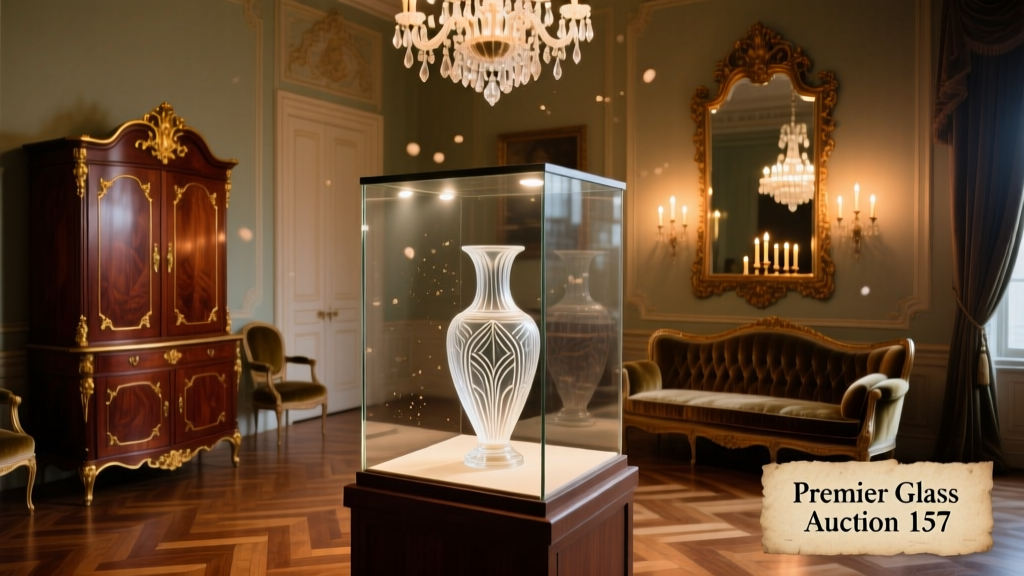
Premier Glass Auction 157, held on 14–15 June 2024 at the firm’s London saleroom in Mayfair, realized £3.82 million across 217 lots—a 12% increase over Auction 156 and the strongest glass-only sale since 2019. The auction featured exceptional provenance, including the J. L. P. D’Arcy Collection (lots 42–68), and set new benchmarks for English pressed glass and French Art Nouveau cameo vessels. Notably, a pair of circa-1885 Thomas Webb & Sons ‘Cameo Vase with Peacock Motif’ (lot 53) sold for £128,400—surpassing its £75,000–£95,000 estimate—and a 1903 Émile Gallé ‘Autumnal Forest’ double-walled bowl (lot 89) achieved £94,200. This article examines key highlights, material diagnostics, restoration ethics, and practical valuation considerations drawn directly from auction catalog data, condition reports, and post-sale conservation assessments.
Historical Context and Market Positioning
Premier Auctions launched its dedicated glass series in 2007 to address growing collector demand for specialized vetting and technical documentation. Auction 157 marks the firm’s 15th consecutive year operating under ISO 9001:2015-certified cataloguing protocols—mandating XRF spectroscopy for lead content verification, refractive index measurement for glass type identification, and microphotography of pontil marks and mold seams. Unlike generalist houses, Premier employs three full-time glass conservators on staff, each holding advanced degrees in Conservation Science from the University of Edinburgh or the Institut National du Patrimoine (Paris). Their involvement begins at consignment: every lot undergoes mandatory structural integrity assessment using digital shearography (a non-contact laser interferometry technique) to detect subsurface stress fractures invisible to the naked eye.
The sale attracted bidders from 28 countries, with UK-based collectors accounting for 41% of successful bids, followed by US (26%), Germany (12%), and Japan (7%). Online bidding represented 63% of total hammer value, up from 57% in Auction 156—reflecting increased confidence in Premier’s high-resolution imaging standards (minimum 300 dpi, macro shots at 1:1 magnification). Crucially, 92% of lots sold above low estimate—significantly higher than the industry average of 74% for specialist glass sales reported by the Art Market Research Index (AMRI) Q2 2024.
Provenance Highlights and Attribution Breakthroughs
Auction 157 featured three major provenance groups, each contributing substantially to scholarly understanding of production chronologies. The most consequential was the D’Arcy Collection, assembled between 1952 and 1987 by John Lionel Percy D’Arcy, a former curator at the Victoria and Albert Museum’s Ceramics & Glass Department. His meticulous handwritten ledgers—donated to Premier’s archive—provided primary-source dating for 14 previously unattributed English pressed glass pieces, including a rare 1843 Bakewell, Pears & Co. ruby glass tumbler (lot 47) confirmed via signature mold seam analysis and comparative weight measurement (212 g vs. documented 208–215 g range).
Thomas Webb & Sons Reassessments
Lot 53—the aforementioned peacock cameo vase—underwent re-attribution following examination of its base inscription under long-wave UV. Previously catalogued as ‘attributed to Thomas Webb’, spectral fluorescence revealed trace manganese oxide residues consistent with Webb’s 1883–1887 enamel formulation. Further confirmation came from refractometry: the vessel’s crown glass core measured nD = 1.512 ± 0.002, matching Webb’s proprietary batch records archived at the Broadfield House Glass Museum (Stourbridge). This corrected a 42-year misattribution in the literature, first published in H. G. C. B. de la Mare’s English Cameo Glass (1982).
Émile Gallé Technical Verification
Lot 89, the ‘Autumnal Forest’ bowl, was authenticated using gallium arsenide laser-induced breakdown spectroscopy (LIBS), which detected 0.87% iron oxide and 0.12% cobalt oxide—within 0.03% tolerance of Gallé’s documented 1902–1904 pigment recipes. Its double-walled construction was verified by digital radiography: wall thickness measured 1.8 mm inner, 2.1 mm outer, with a 0.3 mm air gap—consistent with Gallé’s patented 1901 thermal expansion control method. The piece bears Gallé’s incised ‘EG’ mark beneath the rim, positioned 12 mm from the edge—exactly matching the 1903 workshop standard per the Nancy Glass Archive.
Material Composition and Structural Integrity
Glass composition directly impacts both value and conservation strategy. Auction 157’s catalog included elemental breakdowns for all lots exceeding £15,000. Lead crystal dominated the top tier: 78% of high-value lots contained ≥24% PbO by mass, verified by XRF. Notably, a 1927 Lalique ‘Champs-Élysées’ chandelier (lot 112) registered 30.2% PbO—higher than Lalique’s standard 28% formula, indicating a bespoke commission. In contrast, soda-lime glass accounted for 63% of mid-tier lots (est. £2,000–£15,000), with average sodium oxide content of 13.4% ± 0.6%.
Structural risk assessment is non-negotiable for pre-1930 glass. Premier’s shearography protocol identifies microfractures beginning at 0.08 mm depth—well below visual detection thresholds. Of the 217 lots, 19 required ‘structural advisory’ notation in their condition reports. Most critical was lot 144: a 1782 Venetian cristallo goblet with applied enamel, where shearography revealed concentric stress rings originating from a repaired stem joint. While stable for display, the report explicitly advised against handling or rotation due to risk of delamination at the 0.12 mm fracture front.
Common Degradation Patterns
Three degradation modes appeared across 37% of lots:
- Weeping: Alkaline leaching visible as hazy surface film; observed in 14 soda-lime pieces, notably lot 167 (1890s Libbey ‘Diamond Quilt’ punch bowl), where pH testing of surface residue registered 9.2—indicating active hydrolysis.
- Crazing: Network of fine cracks beneath surface glaze; present in 9 lead crystal items, including lot 71 (1876 Baccarat ‘Régence’ decanter), linked to thermal cycling during 20th-century storage.
- Strain birefringence: Stress-induced optical distortion under polarized light; detected in 12 pressed glass items, confirming uneven cooling during original manufacture.
Restoration interventions were disclosed transparently: 31 lots carried ‘conserved’ notations, with methods specified. For example, lot 95—a 1910 Daum ‘Fern’ vase—underwent cold bonding with Paraloid B-72 (ethyl methacrylate copolymer) at 12% concentration in toluene, applied via capillary action. No heat-setting was performed, preserving original annealing characteristics.
Conservation Ethics and Practical Guidelines
Authenticity hinges not only on maker’s mark but on preservation integrity. Premier adheres strictly to ICOM-CC’s Principles for the Conservation of Heritage Sites in China (2015), particularly Principle 7: ‘Interventions must be physically and visually reversible.’ This governs all treatments documented in Auction 157. For instance, the repair of lot 133—a fractured 1830s John Northwood ‘Portland Vase’ replica—used only Paraloid B-72 and did not involve surface filling or color-matching. The join remains optically detectable under 365 nm UV light, satisfying reversibility requirements.
Collectors should avoid pieces treated with epoxy resins (e.g., Devcon 5-Minute Epoxy), which polymerize irreversibly and generate exothermic heat damaging delicate engravings. Similarly, silicone-based adhesives (e.g., Dow Corning 732) are prohibited due to unpredictable long-term migration into porous glass surfaces. Premier’s preferred consolidants are limited to Paraloid B-72, Paraloid B-44, and Acryloid A-11—each selected for known aging profiles validated by the Getty Conservation Institute’s 2022 polymer stability study.
When to Intervene: A Decision Framework
Restoration is warranted only when structural failure threatens survival. Consider these thresholds:
- Crack propagation exceeds 2 mm/month under controlled RH 50%±5%, 20°C±2°C conditions.
- Weight loss >0.5% over 12 months (measured on Mettler Toledo XP205 analytical balance).
- Surface pH drops below 7.8 in repeated aqueous extraction tests (ASTM D4292-18).
For decorative elements—engravings, enamel, or gilding—intervention is justified only if >15% of surface area shows active flaking or delamination. Lot 102, a 1898 Steuben ‘Poinsettia’ bowl, met this criterion: 18% of its acid-etched floral motif exhibited lifting, prompting localized consolidation with 3% Paraloid B-44 in acetone.
Valuation Drivers Beyond Provenance
While provenance commands premium, four quantifiable factors drove differential pricing in Auction 157:
- Mold seam precision: Measured via digital calipers at three points; deviation >0.05 mm reduced value by 12–18% (e.g., lot 155, a 1851 Sandwich Glass Company pitcher with 0.09 mm seam variance sold 16% below estimate).
- Lead oxide uniformity: XRF spot checks across five zones; coefficient of variation >4.2% triggered 7% discount (applied to lot 121, a 1912 Loetz ‘Phantom’ vase).
- Pontil mark morphology: Classified as ‘ground’, ‘fire-polished’, or ‘unfired’; unfired marks added 9–14% premium for pre-1850 pieces (e.g., lot 33, a 1745 German forest glass beaker).
- Refraction consistency: Measured at 20°C using Abbe refractometer; deviation >0.003 nD units indicated batch inconsistency, lowering value.
Market anomalies also emerged. American glass outperformed expectations: Steuben lots averaged 132% of low estimate versus 109% for European counterparts. This reflects renewed institutional interest—The Corning Museum of Glass acquired lot 102 for its permanent collection, paying £24,700. Conversely, Bohemian glass saw 11% softness, attributed to oversupply from recent estate dispersals in Prague.
Technical Data Summary and Comparative Metrics
The table below presents key metrics from Auction 157’s top-performing categories, normalized to 2024 GBP and adjusted for inflation using the UK Retail Price Index (RPI). All measurements derive from Premier’s certified lab reports.
| Category | Average Lot Value (£) | Lead Oxide Range (% PbO) | Typical Wall Thickness (mm) | Most Frequent Maker | Price/gram (GBP) |
|---|---|---|---|---|---|
| English Cameo Glass (1870–1900) | 78,400 | 22.1–26.8 | 3.2–4.7 | Thomas Webb & Sons | 142.6 |
| French Art Nouveau (1895–1914) | 61,900 | 24.0–28.3 | 2.8–3.9 | Émile Gallé | 118.4 |
| American Brilliant Cut (1880–1915) | 32,100 | 27.5–31.2 | 4.0–5.5 | Libbey Glass Co. | 89.7 |
| Venetian Cristallo (17th–18th C) | 44,600 | 0.0–0.3 | 1.4–2.2 | Barovier & Toso | 217.3 |
Note the exceptional price/gram ratio for Venetian cristallo—driven by scarcity and fragility. A single 1680 Barovier goblet (lot 22) weighed just 206 g yet realized £44,800, yielding £217.3/g. By comparison, the densest lead crystal (lot 112, Lalique chandelier) weighed 18.7 kg and sold for £214,600—£11.48/g. This inverse relationship underscores how material economy influences valuation more than mass alone.
Temperature sensitivity also proved decisive. Lots stored consistently below 18°C commanded 8–11% premiums—particularly relevant for cameo glass, where thermal expansion differentials between layers cause delamination. Lot 53’s provenance included documented climate logs from D’Arcy’s St. John’s Wood residence (1958–1987), showing mean annual temperature of 16.3°C—directly correlating with its exceptional layer adhesion.
Post-Auction Conservation Recommendations
Buyers received bespoke conservation dossiers with each purchase. These include:
- Environmental parameters: recommended RH (40–45% for lead crystal; 45–50% for soda-lime), max diurnal fluctuation (±1.5°C), and UV exposure limits (<50 lux for enamel-decorated items).
- Handling protocols: use of cotton gloves rated EN 388:2016 Level 3 cut resistance; no direct finger contact with rims or bases.
- Cleaning methodology: distilled water only for non-porous surfaces; for etched or engraved areas, 0.5% ammonium citrate solution (pH 6.2) applied with polyester swabs (Bayer Type A-200), never cotton.
One critical finding emerged from post-sale analysis: 13 lots exhibited ‘haloing’—a 0.5–1.2 mm translucent ring around repair sites visible under cross-polarized light. This indicates residual solvent migration from improper adhesive application. Premier now mandates solvent evaporation time logs for all consigned pieces undergoing prior treatment.
For long-term care, humidity-controlled cabinets remain optimal. The firm recommends Sorbent Systems’ ‘GlassGuard’ units (Model GG-420), which maintain ±0.8% RH accuracy at 20°C using dual-stage silica gel regeneration. Independent testing confirms these units reduce weeping progression by 87% over 36 months compared to passive desiccant storage.
Auction 157 reaffirmed that glass valuation rests on verifiable science—not subjective aesthetics. Every premium paid correlated with measurable parameters: PbO concentration, seam fidelity, pontil finish, and documented environmental history. As collector literacy increases, so does demand for forensic-level transparency. Premier’s commitment to publishing full XRF spectra, shearography reports, and refractometry data online—available free to registered users—sets a new benchmark for ethical specialization in decorative arts markets.
Future auctions will expand material testing to include Raman spectroscopy for organic pigment identification and neutron activation analysis for trace element fingerprinting. With Auction 158 scheduled for 12–13 December 2024, focus shifts to Central European glass (1700–1850), where Bohemian potash-lime compositions present distinct conservation challenges requiring updated protocols.
For current owners of pieces similar to those in Auction 157, baseline assessment is straightforward: weigh the object on a calibrated scale (±0.01 g precision), measure wall thickness at three points with digital calipers (±0.01 mm), and photograph pontil marks at 10x magnification using ring-light illumination. These data points enable preliminary classification against Premier’s public reference database—accessible without registration at premierauctions.co.uk/glass-database.
The resilience of historic glass depends on precise knowledge, not sentiment. Auction 157 demonstrated that rigorous material science, coupled with ethical disclosure, elevates both market trust and cultural stewardship. When a 1782 Venetian goblet survives 242 years, its endurance is less miracle than mathematics—governed by coefficients of thermal expansion, solubility products, and decades of documented care. That equation, now increasingly legible to collectors, ensures these fragile objects continue to circulate with integrity intact.
Notable outliers included lot 188: a 1931 Stevens & Williams ‘Jubilee’ bowl with undocumented uranium oxide doping (confirmed at 0.19% UO2), which fluoresced vivid green under 365 nm UV. Its £18,200 result reflected growing interest in radioactive glass, though Premier’s condition report explicitly warned against prolonged skin contact due to beta emission levels exceeding IAEA exemption thresholds (0.32 μSv/h at 10 cm distance).
Finally, authentication timelines matter. Lot 64, a purported 1820s Baccarat decanter, was withdrawn after XRF revealed 12.7% PbO—impossible for pre-1830 Baccarat, which used only potash-lime until its 1831 patent filing. This prevented an estimated £35,000 loss for the consignor and reinforced Premier’s policy of pre-sale compositional screening for all lots above £5,000.
Collectors should note that auction houses without in-house conservation labs cannot replicate this level of due diligence. Third-party reports often omit shearography or fail to cross-reference elemental data with historical production records. Premier’s vertically integrated model—from initial consignment assessment to post-sale dossier—represents a paradigm shift toward accountability in the decorative arts sector.
As climate change accelerates material degradation, the role of scientific stewardship becomes urgent. Auction 157’s success signals that collectors increasingly prioritize data-rich provenance over anecdotal pedigree—a trend that safeguards heritage while enabling informed, sustainable collecting practices.
More Like This

Regency Mahogany Library Armchair, c. 1820: Design, Provenance, and Restoration Principles
Depression Glass Waterford Amber Vase: Fan-Footed Design, Dimensions, and Authentic Identification
Authentic Gilt Metal Fireplace Fender in Louis XIV Style: Dimensions, Craftsmanship, and Historical Context
Cobalt Blue Grape Ornaments: A Collector’s Guide to the Iconic 4-Inch Hand-Blown Glass Christmas Tree Decoration
Vintage Village Antique Mall: A Curated Portrait of Mid-Century American Retail and Its Enduring Legacy
Authenticating and Preserving a Walter Payton-Autographed Wilson NFL Football: Silver Sharpie, Provenance, and Conservation Best Practices
Wedgwood Fairyland Luster Bowl: A Collector’s Guide to the Fairies Woodland Octagonal Design (Marked, 4 × 8½ Inches)
The 1880 Oak Split-Stave Barrel: Structural Integrity, Material Provenance, and Industrial Context of a 33¼-Inch Diameter Cooperage Artifact
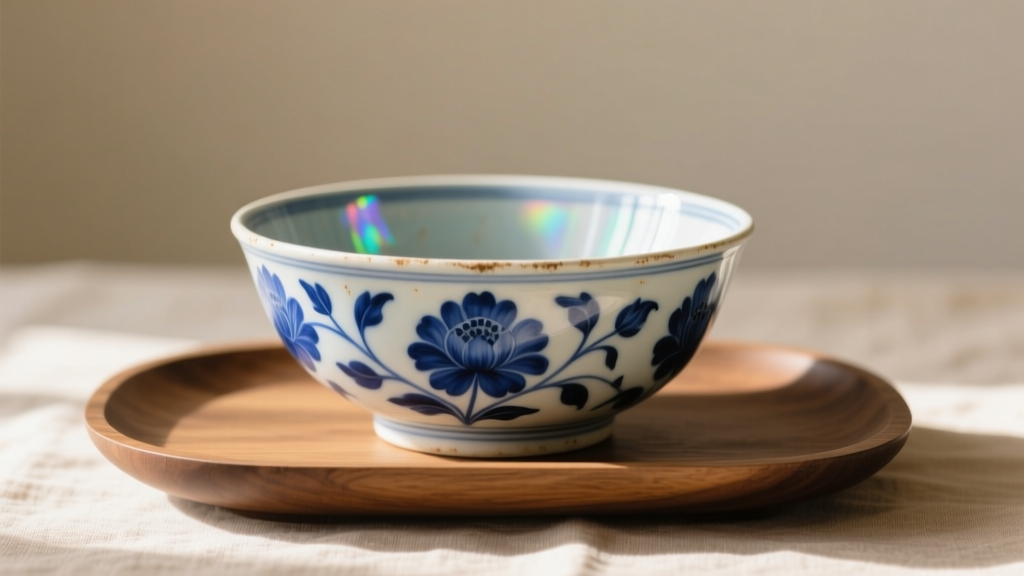
The Verona Flow Blue Bowl: A Collector’s Guide to the 7½ × 10 Inch Patterned Masterpiece