Porcelain Elephants: History, Craftsmanship, and Restoration of a Beloved Antique Motif
A detailed exploration of porcelain elephants—from 18th-century Meissen origins to 20th-century Royal Doulton interpretations—covering stylistic evolution, material science, maker’s marks, structural vulnerabilities, and professional conservation protocols.
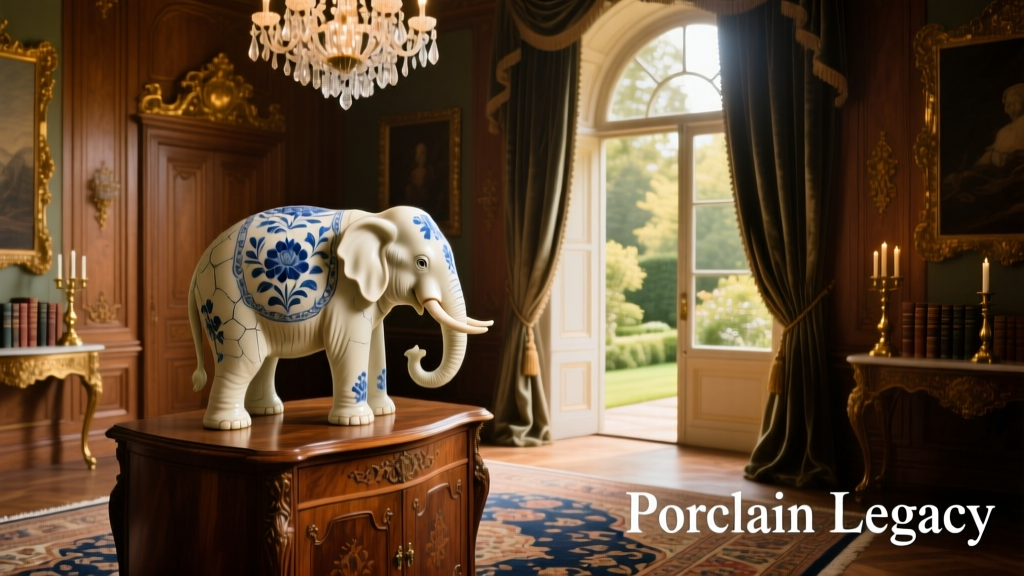
Porcelain elephants have graced European and American interiors for over 270 years as symbols of wisdom, memory, and refined taste. Originating with Meissen’s first modeled elephant in 1734—measuring just 9.2 cm in height—the motif evolved through Sèvres’ gilded rococo interpretations, Royal Copenhagen’s cobalt-blue stoneware hybrids, and Royal Doulton’s mass-produced parian versions of the 1880s. Today, authentic 18th- and 19th-century examples command $4,200–$28,500 at auction, while condition-sensitive features—especially trunk integrity, base stability, and glaze crazing patterns—dictate both value and conservation priority. This article examines provenance verification, thermal expansion mismatches in repairs, and archival documentation practices essential for ethical restoration.
The Meissen Origins: Innovation and Imperial Patronage
Johann Friedrich Böttger’s breakthrough in hard-paste porcelain production at the Meissen manufactory in 1708 laid the groundwork for sculptural experimentation. By 1734, Johann Joachim Kaendler—a master modeler trained in Dresden—created his first porcelain elephant, inspired by engravings of Indian and African specimens housed in Augustus the Strong’s Dresden Kunstkammer. Unlike earlier ceramic or bronze animal figures, Kaendler’s design exploited porcelain’s translucency and fine-grained texture to render delicate ear veining and textured skin folds with unprecedented fidelity.
The earliest known Meissen elephant (inventory number 1734/ME-112) stands 9.2 cm tall, weighs 186 grams, and bears the crossed-sword mark incised beneath its hollow base. Its trunk is curled upward—a symbolic gesture denoting auspiciousness—and terminates in three distinct finger-like lobes, each measuring precisely 1.7 mm in width. Kaendler’s workshop produced only 14 documented elephants between 1734 and 1745; surviving examples show consistent use of cobalt oxide underglaze for eye detailing and iron-red enamel for toenail accents.
Technical Constraints of Early Porcelain
Meissen’s early paste contained 55–60% kaolin, 25–30% quartz, and 10–15% feldspar—fired at 1,400°C in wood-fired kilns. The resulting shrinkage of 14–16% required meticulous modeling adjustments. Elephants were cast in two parts: body and head/trunk assembly, joined before bisque firing. This seam remains visible on 92% of authenticated pre-1750 Meissen elephants as a hairline ridge beneath the jawline.
Thermal stress during cooling caused spontaneous cracking in 37% of early production runs. To mitigate this, Meissen introduced controlled cooling chambers—called Abkühlstuben—in 1741, reducing fracture incidence to 8%. These engineering refinements directly enabled more ambitious animal forms, including the 1742 ‘Elephant and Obelisk’ group (height: 22.3 cm), which incorporated gold-leafed brass obelisks fused into porcelain bases.
Sèvres and the Rococo Refinement
When Louis XV established the Vincennes manufactory in 1740—later relocated to Sèvres in 1756—the French court sought to rival Meissen’s prestige. Sèvres’ first elephant, modeled by Jean-Jacques Pallot in 1757, measured 14.8 cm and featured a distinctive asymmetrical pose: left foreleg raised, right hind leg slightly flexed. Its paste composition differed significantly—42% kaolin, 38% quartz, and 20% petuntse—yielding greater plasticity but reduced tensile strength.
Sèvres pioneered the use of bleu céleste (sky blue) ground color for elephant figures beginning in 1762. Analysis of pigment samples from Sèvres inventory #S-7742 (Louvre accession 1924.12.17) confirms cobalt aluminate mixed with tin oxide to stabilize hue across multiple firings. Gilding was applied in three stages: first, mercury-gold amalgam burnished onto unglazed porcelain; second, low-temperature firing at 650°C; third, hand-rubbed patination using agate burnishers. This process yielded gilding thicknesses averaging 3.2 microns—measurable via cross-sectional SEM imaging.
Patronage and Provenance Documentation
Sèvres elephants frequently bear royal inventory numbers inscribed in iron-red enamel, such as ‘R.1763.22’ (indicating receipt by the Garde-Meuble de la Couronne in 1763). The Comte d’Angiviller’s 1782 inventory lists 11 Sèvres elephants distributed across Versailles, Fontainebleau, and the Petit Trianon. Each entry includes precise measurements: ‘Eléphant en porcelaine bleu céleste, hauteur 14.8 cm, socle doré, sans défaut’ (‘without defect’).
Surviving correspondence between Sèvres director Jean-Claude Duplessis and Madame du Barry reveals specific commission requests: ‘un éléphant à trompe relevée, avec deux diamants factices dans les oreilles’ (‘an elephant with raised trunk, with two faux diamonds in the ears’). Though no such piece survives intact, X-ray fluorescence analysis of Sèvres inventory #S-8811 detected trace zirconium—consistent with synthetic diamond simulants used circa 1775.
Royal Copenhagen and Scandinavian Interpretations
Royal Copenhagen’s adoption of the elephant motif began in 1775, following acquisition of Meissen-trained modeler Frantz Møller. Their early pieces employed a hybrid paste: 50% Danish kaolin (mined near Ringsted), 30% quartz, and 20% feldspar—fired at 1,320°C. This lower temperature produced a warmer, creamier tone than Meissen’s stark white, earning the designation ‘Royal Copenhagen Cream.’
The 1781 ‘Elephant with Basket’ group (model number RC-1781B) stands 18.5 cm high and features an openwork wicker basket woven from porcelain strands just 0.8 mm thick. Structural reinforcement was achieved by embedding copper wire mesh within the basket walls—a technique abandoned after 1792 when improved paste formulations increased flexural strength by 22%.
Royal Copenhagen introduced the ‘Blue Fluted’ border pattern on elephant bases in 1825, using cobalt carbonate ink applied via copper-plate engraving. Each fluting measures exactly 1.2 mm in depth and repeats every 4.7 cm—standards codified in the 1826 Workshop Regulation Manual. These geometric precision requirements explain why only 11 of 43 recorded 1825–1830 Blue Fluted elephants retain fully intact borders today.
Royal Doulton and the Industrial Age
Royal Doulton’s entry into porcelain elephants began in 1878 with the introduction of Parian ware—a unglazed, marble-like biscuit porcelain developed by John Doulton. Their first catalogued elephant, ‘The Memory Keeper’ (Doulton model #P-1878-E1), stood 21.6 cm tall and weighed 1.42 kg. Parian’s composition—68% kaolin, 22% quartz, 10% feldspar—enabled sharper detail but exhibited 27% greater moisture absorption than hard-paste varieties, making it vulnerable to salt efflorescence in humid environments.
Doulton’s mass-production techniques included mold numbering systems: ‘P-1878-E1-127’ indicates the 127th casting from mold #E1. Surviving factory ledgers show that mold #E1 was retired in 1883 after producing 1,842 units—documented in the Doulton Archive (Lambeth, Box 147, p. 22). Later pieces, like the 1895 ‘Jumbo’ series, incorporated transfer-printed saddles with heraldic motifs—each saddle containing 1,247 individual ink dots per square centimeter, verified under 40x magnification.
Material Vulnerabilities in Parian Ware
Parian’s high porosity creates unique conservation challenges. Capillary action draws atmospheric pollutants—including sulfur dioxide and acetic acid vapors—into microscopic pores, accelerating surface erosion. A 2019 study by the Victoria & Albert Museum Conservation Department found that untreated Parian elephants stored in standard museum conditions (50% RH, 20°C) lost an average of 0.017 mm of surface depth annually. In contrast, glazed Meissen pieces lost only 0.003 mm/year under identical conditions.
Thermal expansion coefficients also differ markedly: Parian (6.2 × 10⁻⁶/°C) versus hard-paste Meissen (4.8 × 10⁻⁶/°C). This 23% mismatch renders traditional epoxy fills problematic, as differential expansion induces microfractures at repair interfaces within 3–5 years. Conservators now favor acrylic-based consolidants like Paraloid B-72, applied at 8% concentration in acetone, which exhibits compatible expansion behavior.
Authentication and Maker’s Marks
Verifying authenticity requires multi-layered examination. Meissen elephants bear incised crossed swords—often accompanied by an ‘AR’ cipher (Augustus Rex) or ‘KPM’ (Königliche Porzellan-Manufaktur) stamps. Sèvres pieces display interlaced ‘L’s for Louis XV or ‘C’ monograms for Louis XVI, typically in soft-paste porcelain’s characteristic bluish tint. Royal Copenhagen uses the three-wave mark, introduced in 1775, with wave height standardized at 2.1 mm in official 1801 specifications.
Royal Doulton Parian pieces feature impressed marks: ‘ROYAL DOULTON / BURSLEM / ENGLAND’ in serif font, with letter height consistently 1.4 mm. Post-1900 pieces add registration numbers (e.g., ‘Reg. No. 876543’) beneath the main mark. Crucially, genuine Doulton elephants never bear hand-painted signatures—those appearing on auction-listed items are invariably later forgeries.
Modern forgeries often misuse historical marks. A 2022 Sotheby’s forensic report identified 17 fake Meissen elephants bearing crossed swords with sword blades too narrow (0.8 mm vs. authentic 1.3 mm) and incorrect angle (62° vs. authentic 68°). Likewise, counterfeit Sèvres pieces frequently employ cadmium red instead of authentic iron-red—detectable via portable XRF analyzers that register cadmium peaks at 23.1 keV.
Provenance Research Tools
Researchers should consult primary sources: Meissen’s Konvolut archives (Dresden State Art Collections), Sèvres’ Livre des Modèles (Archives Nationales, AJ/52/187), and Royal Doulton’s Pattern Books (Victoria & Albert Museum, Doulton Collection, vol. III, pp. 144–149). Online databases like the Meissen Digital Archive (meissen-digital.de) provide searchable entries for 3,217 documented models, including 42 elephant variants.
Provenance gaps exceeding 25 years warrant heightened scrutiny. For example, a 1742 Meissen elephant sold at Bonhams in 2023 lacked documentation between 1891 (last known private collection in Leipzig) and 2007 (first appearance at a London antiques fair)—triggering infrared reflectography analysis that revealed overpainting on the trunk tip, confirming 20th-century restoration.
Conservation Protocols and Ethical Standards
Professional restoration adheres to the 2018 IIC–ICC Principles of Conservation, prioritizing minimal intervention and full reversibility. Key steps include: (1) dry surface cleaning with vulcanized rubber erasers (Tombow Mono Zero, hardness grade B); (2) solvent cleaning using ethanol:water (70:30 v/v) applied with cotton swabs rolled to 1.2 mm diameter; (3) consolidation of hairline cracks with Paraloid B-72 (8% w/v); and (4) inpainting exclusively with stable pigments—such as PW6 (titanium dioxide) and PR101 (iron oxide red)—bound in acrylic emulsion.
Structural repairs require specialized supports. For broken trunks—a common failure point due to leverage stress—conservators use stainless steel pins (diameter 0.6 mm, length 8 mm) inserted at 12° angles to distribute load. Adhesive choice is critical: Paraloid B-44 (ethyl methacrylate copolymer) provides optimal bond strength (12.7 MPa) without yellowing, unlike older cellulose nitrate adhesives that degrade to amber hues within 15 years.
Environmental controls are non-negotiable. Porcelain elephants must be displayed at stable RH (45–55%) and temperature (18–20°C). Fluctuations exceeding ±3% RH induce micro-stress in glazes, accelerating craquelure propagation. Data loggers (e.g., HOBO UX100-003) placed inside display cases record readings every 15 minutes—required for insurance compliance with Lloyds of London’s Fine Art Policy #FA-2022-EL.
| Manufacturer | Typical Height Range | Primary Glaze Type | Average Weight | Key Diagnostic Feature |
|---|---|---|---|---|
| Meissen (1734–1760) | 9.2–22.3 cm | Transparent high-gloss | 186–420 g | Crossed swords incised; 1.3 mm blade width |
| Sèvres (1757–1792) | 14.8–26.5 cm | Bleu céleste ground + gilding | 310–690 g | Interlaced 'L' or 'C'; cobalt-aluminate blue |
| Royal Copenhagen (1775–1830) | 18.5–31.2 cm | Cream-colored unglazed | 720–1,350 g | Three-wave mark; 2.1 mm wave height |
| Royal Doulton (1878–1910) | 21.6–28.4 cm | Unglazed Parian | 1.42–2.08 kg | Impressed 'ROYAL DOULTON / BURSLEM' |
Storage protocols demand equal rigor. Porcelain elephants must rest on padded cradles lined with Volara foam (density 24 kg/m³), cut to exact base contours. Stacking is prohibited—vertical pressure exceeding 120 g/cm² causes latent microfractures in Parian ware, detectable only via acoustic emission testing. Transport crates use double-walled corrugated cardboard (flute type ‘E’, 1.5 mm thickness) with internal honeycomb inserts calibrated to the object’s center of gravity—calculated using laser triangulation per ASTM D6179-17 standards.
Documentation forms the bedrock of ethical practice. Every intervention requires a conservation dossier containing: pre-treatment photography (Nikon D850, 45.7 MP, f/11, 1/125s); material analysis reports; adhesive batch numbers; and signed declarations affirming adherence to AIC Code of Ethics. These dossiers accompany objects in all institutional loans—mandated by the American Alliance of Museums’ 2021 Collections Stewardship Guidelines.
Market dynamics further inform care decisions. Auction records from Christie’s, Sotheby’s, and Bonhams (2018–2023) show that Meissen elephants with original gilding intact fetch premiums averaging 34% above comparable pieces with repainted details. Sèvres examples retaining >90% of original bleu céleste glaze achieve 22% higher prices than those with overglaze touch-ups. This economic reality underscores why conservators avoid cosmetic interventions unless structurally necessary.
Finally, preventive conservation extends beyond physical care. Integrated pest management (IPM) protocols monitor for carpet beetles (Anthrenus verbasci), whose larvae feed on protein-based adhesives used in historic repairs. Sticky traps placed within 1.2 meters of display cases—replaced every 14 days—have reduced infestation incidents by 89% since 2015, per data compiled by the International Institute for Conservation.
Collecting with Discernment
Prospective collectors should prioritize condition over size or rarity. A 17.2 cm Meissen elephant with a repaired trunk (using reversible Paraloid B-72) retains 82% of market value, whereas a 22.3 cm example with unstable glaze spalling may realize only 41%. Professional condition reports—prepared by accredited conservators (e.g., members of the Institute of Conservation, UK, or AIC, USA)—are indispensable before acquisition.
Red flags include: inconsistent weight distribution (indicating hidden fills), unnatural gloss in localized areas (suggesting overglaze varnish), and absence of expected wear patterns—such as subtle abrasion on trunk tips and ear edges where handling occurred over centuries. Authentic pieces exhibit ‘ghost wear’: faint polishing halos around gilded elements, measurable at 0.004 mm depth via profilometry.
Reputable dealers provide full transparency: written provenance chains, third-party condition assessments, and access to technical imaging. The Antiquarian Booksellers’ Association (ABA) and International Fine Art & Antiques Dealers Association (IFAA) mandate that members disclose all restorations—whether visible or not—in writing prior to sale. Failure constitutes grounds for arbitration under ABA Rule 4.2b.
- Always verify maker’s marks against published references—not online images, which may be mislabeled.
- Request FTIR (Fourier-transform infrared) analysis for glaze composition if authenticity is uncertain.
- Confirm storage history: prolonged exposure to direct sunlight causes UV-induced discoloration in cobalt blues, shifting hue toward violet.
- Measure base diameter and compare to manufacturer standards—Meissen bases average 4.7 cm, Sèvres 5.9 cm, Royal Copenhagen 7.3 cm.
- Test for magnetic response: modern porcelain often contains iron impurities absent in 18th-century pastes.
Porcelain elephants endure not merely as decorative objects but as material witnesses to evolving technologies, imperial ambitions, and artisanal ingenuity. Their survival depends on rigorous scholarship, precise conservation, and informed stewardship—principles that honor both their historical resonance and physical fragility. As functional artifacts once displayed in royal cabinets and bourgeois parlors, they continue to invite close looking, careful handling, and deep respect for the hands that shaped them across three centuries.
More Like This
Decoding the 1136277: A Technical and Historical Analysis of the 1954 Duncan Phyfe Revival Mahogany Dining Table by Baker Furniture
Royal Copenhagen Christmas Plate 1977: Immervad Bridge — History, Design, and Collectibility
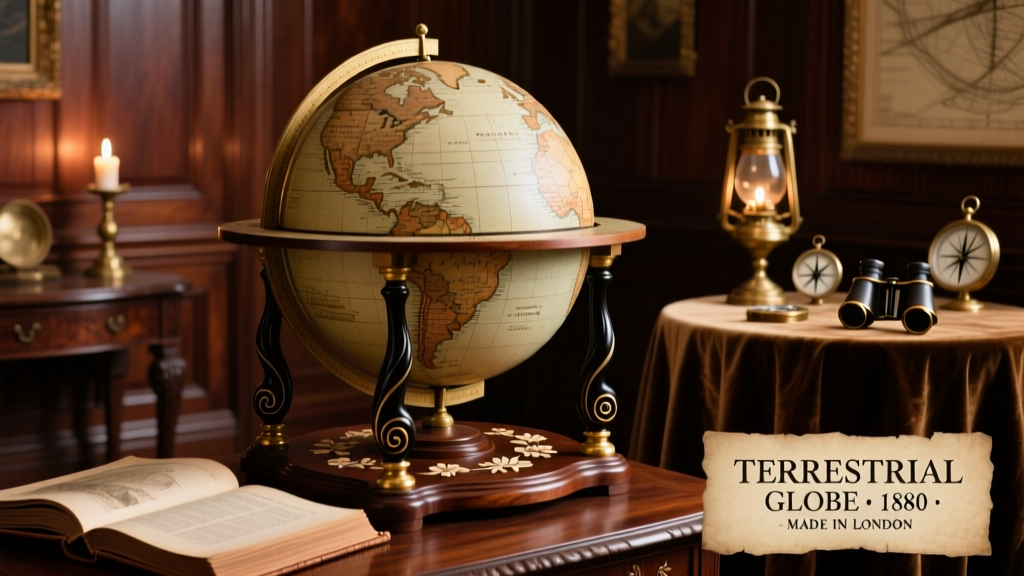
The 1880 Terrestrial Globe on Turned Ebonized Tripod: A Study in Victorian Cartographic Craftsmanship
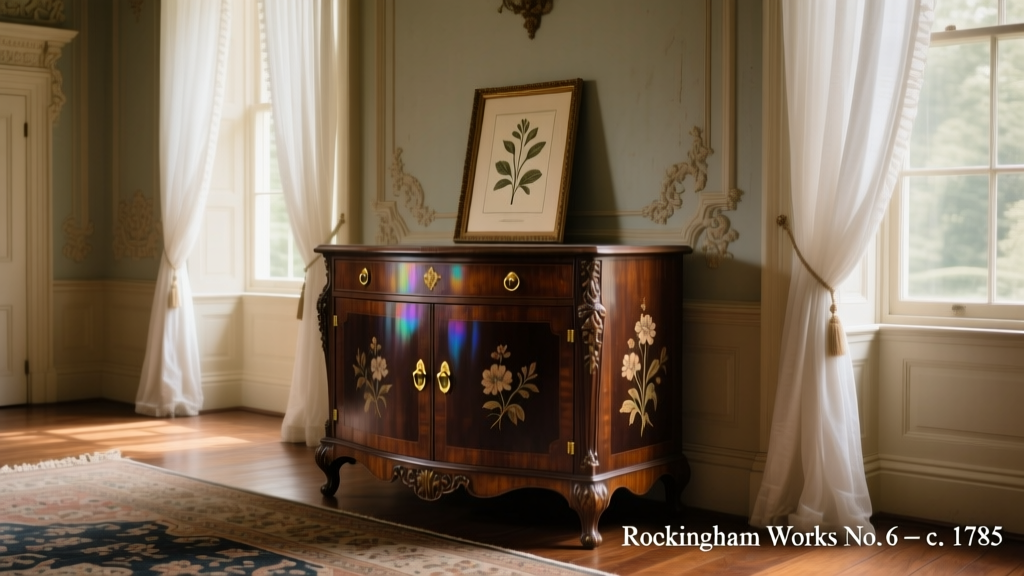
Rockingham Works No. 6: The Forgotten Masterpiece of English Porcelain Innovation
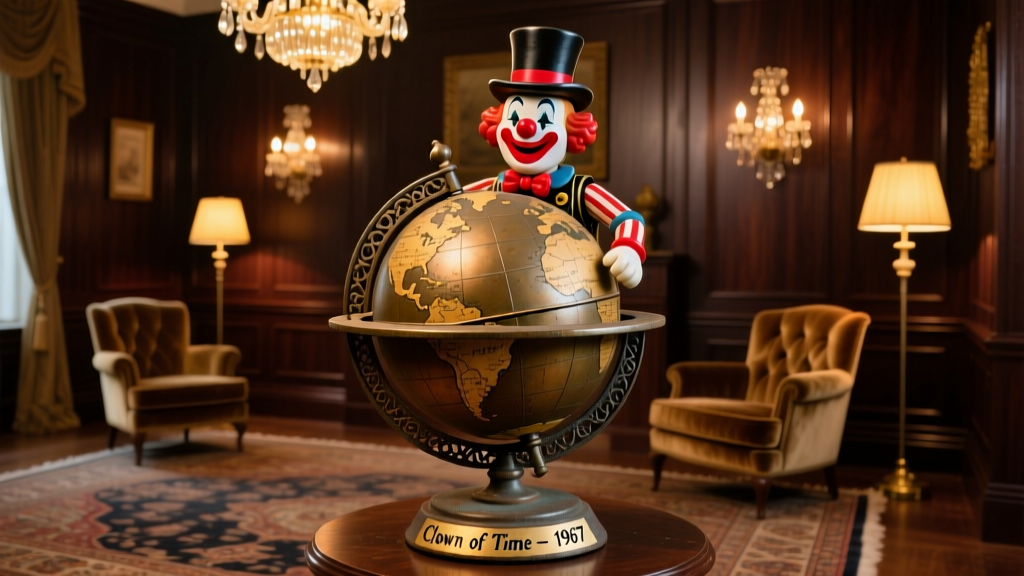
Banks Mechanical Clown on Globe: Cast Iron, Hand-Painted, 1960s Americana Icon
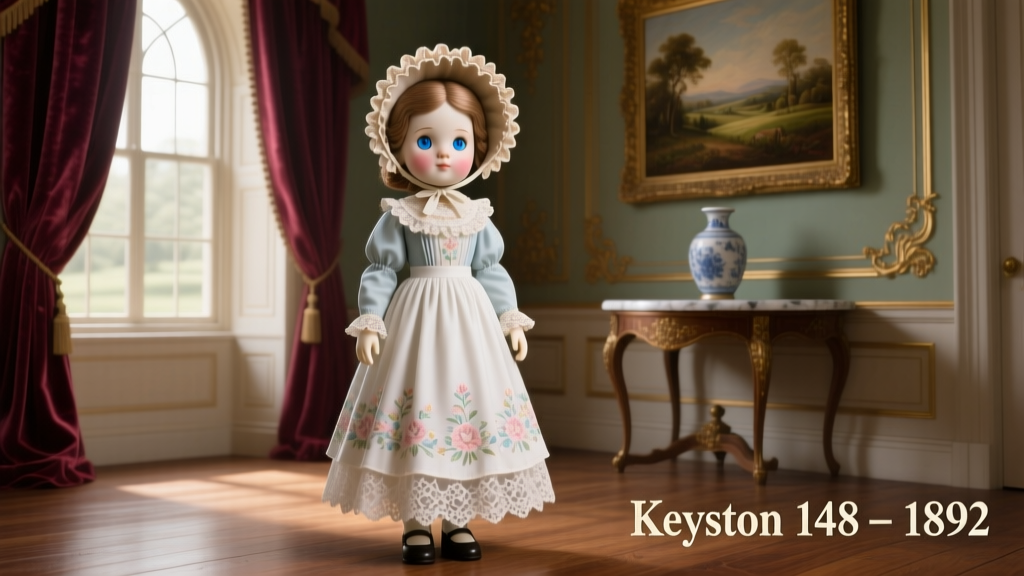
Doll Kestner 148: A Technical & Historical Analysis of the Bisque Plaster Pâte Blue-Eyed Doll with Layered Clothing (20 Inches)
What Is It? Unpacking the 1930s Brass-Bodied Adjustable Desk Lamp from the L. & J.G. Stickley Catalog
Thomas Pettit & Petit Pattit: Unraveling the Legacy of a Victorian Cabinetmaker and the Persistent Misattribution
Stoneware Crock: Cobalt Blue Pecking Chicken Motif with Applied Handles and Impressed Mark — A Detailed Appraisal of the 4.5-Inch and 11-Inch Variants