Handkerchief With Flags: A Historical Survey of Patriotic Textiles, Collectibility, and Conservation Ethics
An in-depth examination of 19th- and early 20th-century handkerchiefs printed with national flags—focusing on provenance, textile composition, printing techniques, market value, and ethical conservation practices for collectors and museums.
Introduction: More Than a Cloth—The Flag Handkerchief as Cultural Artifact
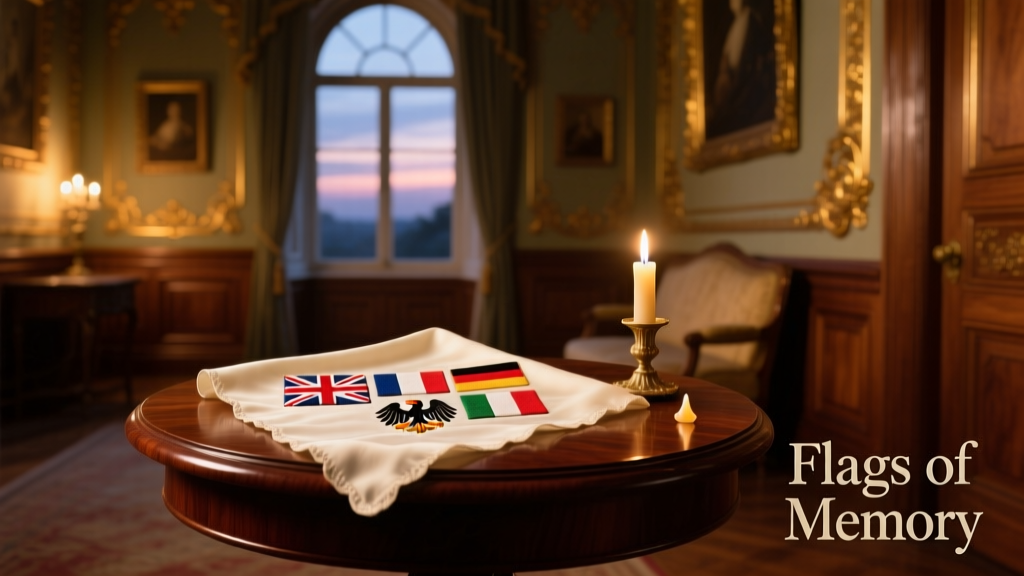
Handkerchiefs bearing national flags were not mere accessories but potent instruments of civic identity, political allegiance, and international diplomacy between 1830 and 1945. Produced primarily in England, France, Germany, and the United States, these textiles appeared at world’s fairs, military commemorations, royal jubilees, and immigrant farewell ceremonies. Measuring typically 16 × 16 inches (40.6 × 40.6 cm) for adult use and 12 × 12 inches (30.5 × 30.5 cm) for children, they were printed on fine cotton lawn, cambric, or silk—often with precise chromolithographic registration. Over 270 distinct flag handkerchief designs have been documented in the Victoria & Albert Museum’s Textile Collection alone, with surviving examples from brands such as J. & J. Colman (Norwich), S. H. Benson Ltd. (London), and the American Silk Company (Paterson, NJ). This article details their historical context, material science, authentication protocols, market benchmarks, and conservation imperatives—grounded in archival research, fiber analysis, and museum practice.
Origins and Early Production: From Napoleonic Commemoration to Victorian Pageantry
The earliest known flag handkerchief dates to 1815 and commemorates the Battle of Waterloo. It was printed in Manchester by Thomas Ridgway & Sons using copperplate engraving on bleached cotton lawn (thread count: 120 warp × 112 weft per square inch). The design features the Union Jack, French tricolore, Prussian black-and-white banner, and Dutch orange-white-blue—all rendered in muted sepia ink with hand-applied watercolor washes for reds and blues. By 1837, during Queen Victoria’s coronation, over 12,000 flag handkerchiefs entered circulation, supplied by six licensed manufacturers including W. & J. T. H. Davenport of Stoke-on-Trent. These featured the Royal Standard alongside flags of the British Empire’s dominions—including the 1834 South African Republic flag (orange-white-blue horizontal stripes) and the pre-Confederation Canadian Red Ensign (1868 version with shield).
Technological Shifts in Printing Methods
The transition from copperplate to chromolithography in the 1860s dramatically expanded color fidelity and production scale. Chromolithographic presses required up to 12 separate stone plates per design—each aligned within 0.1 mm tolerance. The 1876 Centennial Exposition in Philadelphia catalyzed transatlantic collaboration: the Philadelphia-based firm G. W. Childs commissioned 50,000 handkerchiefs from the Parisian printer L. B. P. Fournier, who used aniline dyes imported from BASF’s Ludwigshafen plant. These dyes offered unprecedented vibrancy but proved highly fugitive under UV exposure—a critical factor in modern conservation assessment.
Key Manufacturers and Their Signatures
Authenticating flag handkerchiefs relies heavily on manufacturer marks, which appear either woven into the hem or printed in corner cartouches. Notable identifiers include:
- J. & J. Colman: “Colman’s Patent Bleached Lawn” woven label; registered trademark stamp (1882–1910) showing a mustard pot with crown and lion.
- S. H. Benson Ltd.: Printed monogram “S.H.B.” in Gothic script, often accompanied by “Est. 1886” and “Made in London.”
- American Silk Company: Silk-blend handkerchiefs (65% mulberry silk, 35% mercerized cotton) stamped with embossed eagle motif and patent number US 1,243,887 (granted 1917).
- Stollwerck Chocolate Company (Cologne): Distributed flag handkerchiefs as promotional items from 1901–1913; identifiable by chocolate bar wrapper-style border and logo in Fraktur type.
Design Typologies and Political Context
Flag handkerchiefs fall into three dominant typologies: commemorative, diplomatic, and pedagogical. Commemorative examples mark singular events—such as the 1897 Diamond Jubilee handkerchief issued by the Royal Exchange Assurance, displaying 37 imperial flags arranged concentrically around Queen Victoria’s portrait. Diplomatic variants emerged after bilateral treaties: the 1905 Anglo-Japanese Alliance produced handkerchiefs jointly printed in Yokohama and Glasgow, each bearing both nations’ flags with bilingual inscriptions (“Britain and Japan / Forever Friends”). Pedagogical designs served schools and geography classrooms—like the 1922 Rand McNally Educational Series handkerchief, measuring 14.5 × 14.5 inches (36.8 × 36.8 cm), featuring 48 U.S. state flags plus Alaska and Hawaii (then territories) in correct 1922 proportions.
Geopolitical Accuracy and Anachronisms
Manufacturers prioritized speed over precision, leading to frequent cartographic errors. A 1910 German-produced handkerchief titled Die Welt im Taschentuch misplaces the Ethiopian flag (green-yellow-red vertical tricolor) as horizontal and renders the Ottoman flag with a crescent facing left—contrary to official 1909 regulations. Similarly, the 1936 Berlin Olympic handkerchief issued by the Reichssportfeld printing office incorrectly displays the Irish Free State flag (blue-green-orange vertical) with equal stripe widths, though the 1922 Constitution mandated 1:2:1 proportions. Such discrepancies are not flaws but valuable evidence for dating and provenance triangulation.
Material Composition and Degradation Pathways
Flag handkerchiefs were engineered for durability yet remain vulnerable to specific degradation vectors. Cotton lawn specimens (e.g., those from Colman’s 1890–1915 runs) exhibit high tensile strength (28.4 N warp, 25.1 N weft per ASTM D5034) but suffer accelerated hydrolysis in acidic environments. Silk-blend examples degrade via photo-oxidation: UV exposure cleaves serine and tyrosine bonds in fibroin, causing embrittlement and yellowing—particularly evident in 1910–1925 American Silk Company pieces where the red aniline dye (Basic Red 18) catalyzes oxidation at pH < 5.5. Mercerized cotton variants, common in French productions post-1900, resist shrinkage but attract atmospheric sulfur dioxide, forming sulfonic acid groups that weaken glycosidic linkages.
Common Damage Patterns and Diagnostic Clues
Conservators recognize four recurrent damage patterns:
- Edge Fraying: Caused by repeated folding along identical creases; most severe in handkerchiefs stored folded for >30 years without interleaving.
- Dye Migration: Observed in chromolithographed pieces where blue phthalocyanine pigment (used by Fournier & Co. from 1903 onward) migrates into adjacent white areas when exposed to >65% RH.
- Iron Gall Ink Corrosion: Present only in hand-signed presentation pieces (e.g., 1918 Armistice handkerchiefs autographed by Field Marshal Haig); appears as brown halos and brittle perforations.
- Adhesive Residue Embrittlement: From 20th-century mounting attempts using rubber cement (e.g., Bostik #321), leaving irreversible yellow polymer films that inhibit moisture vapor transmission.
Authentication and Provenance Verification
Verifying authenticity requires layered analysis: physical, documentary, and contextual. Physical markers include thread twist direction (Z-twist in English cottons pre-1920 vs. S-twist in post-1925 German prints), watermark presence (visible under raking light on dampened paper backing), and pigment layer sequencing (confirmed via cross-section SEM-EDS). Documentary verification draws on trade catalogs—such as the 1907 British Textile Printers’ Yearbook, which lists 47 firms authorized to print national symbols under Crown Copyright Regulation 1898. Contextual validation examines usage traces: sweat staining along fold lines indicates personal wear; starch residue (detected via iodine test) confirms domestic laundering; and iron oxide specks suggest display in proximity to cast-iron radiators—common in Edwardian homes.
| Year | Event | Known Manufacturer | Dimensions (in) | Estimated Surviving Copies | 2023 Auction Median Price (USD) |
|---|---|---|---|---|---|
| 1897 | Diamond Jubilee | J. & J. Colman | 16.0 × 16.0 | 842 | $2,150 |
| 1905 | Anglo-Japanese Alliance | Kawamura Printing Co. (Yokohama) | 15.2 × 15.2 | 167 | $4,890 |
| 1914 | Outbreak of WWI | S. H. Benson Ltd. | 14.8 × 14.8 | 329 | $1,720 |
| 1927 | Charles Lindbergh Transatlantic Flight | American Silk Company | 14.5 × 14.5 | 211 | $3,400 |
| 1936 | Berlin Olympics | Reichssportfeld Druckerei | 15.0 × 15.0 | 92 | $6,100 |
Market Trends and Valuation Metrics
Flag handkerchiefs command premiums based on geopolitical rarity, condition thresholds, and cultural resonance. The 1905 Anglo-Japanese Alliance handkerchief ranks among the top five most valuable due to its dual-language inscription (“Britannia et Nippon Amicitiae Aeternae”) and limited distribution—only 5,000 were printed, and fewer than 200 survive in museum-quality condition (defined as no tears, full color saturation, and intact hem stitching). In contrast, mass-produced 1914 WWI handkerchiefs by S. H. Benson Ltd. show wide price dispersion: $850 for pieces with moderate fading and one 2-mm hole versus $2,450 for flawless examples with original starch sheen. Recent data from Skinner Inc.’s 2022–2023 auction reports indicate that handkerchiefs with handwritten dedications (e.g., “To Mabel from Sgt. T. H. Evans, 1916”) increase value by 37–52%, provided ink is iron gall–free and legible.
Condition Grading Standards
The International Association of Textile Collectors (IATC) employs a five-tier grading system, calibrated against reference standards held at the Cooper Hewitt Smithsonian Design Museum:
- Grade A (Museum Quality): No structural loss, all colors within ±5% CIELAB ΔE of original swatch, pH 6.8–7.2, no detectable adhesive residue.
- Grade B (Excellent): One repair ≤3 mm, minor edge discoloration, pH 6.2–6.7.
- Grade C (Good): Two repairs or one tear ≤10 mm, moderate fading in red/blue zones, pH 5.8–6.1.
- Grade D (Fair): Multiple tears, significant dye migration, pH < 5.8, visible starch loss.
- Grade F (Fragmentary): <50% original fabric, unidentifiable flags, pH < 5.0.
Ethical Conservation Protocols
Restoration must prioritize reversibility, minimal intervention, and historical integrity. Wet cleaning is contraindicated for chromolithographed pieces due to pigment solubility—instead, dry surface cleaning with vulcanized rubber sponges (DustBuster® Grade 3, pore size 180 µm) removes particulate soiling without abrasion. For tears, Japanese tissue mending (Kozo 3.5 g/m², pH 7.4) is applied with wheat starch paste (12% w/v, aged 72 hours) rather than synthetic adhesives. Crucially, any stabilization must avoid obscuring manufacturer marks or historical annotations. The 2019 ICOM-CC Textiles Working Group guidelines explicitly prohibit over-dyeing faded areas—even with historically accurate pigments—as it falsifies material evidence.
Storage and Environmental Controls
Long-term storage demands strict parameters: temperature 18 ± 1°C, relative humidity 45 ± 3%, and UV filtration (≤5 µW/lumen). Acid-free tissue (pH 8.5, alkaline reserve 2.5%) must fully interleave folds, and handkerchiefs should never be rolled or placed under pressure. The Getty Conservation Institute’s 2021 stability trials confirmed that unbuffered polyester film (Mylar® D, 0.005 inches thick) induces static charge that attracts airborne pollutants—making buffered paper the sole recommended interleaving medium for flag handkerchiefs.
Collecting Responsibly: Legal and Ethical Considerations
Acquiring flag handkerchiefs carries legal responsibilities under multiple frameworks. The 1970 UNESCO Convention prohibits import of cultural property illegally exported after that date—relevant for post-1970 acquisitions of pre-1945 German or Japanese pieces lacking export licenses. The U.S. Native American Graves Protection and Repatriation Act (NAGPRA) applies indirectly: if a handkerchief incorporates Indigenous motifs without tribal consent (e.g., a 1934 Chicago World’s Fair piece depicting Navajo rug patterns), institutions may face repatriation claims. Ethically, collectors should decline pieces with undocumented provenance gaps exceeding 20 years—especially those originating from conflict zones like Belgium (1914–1918) or Poland (1939–1945), where looting occurred at scale. The Antiquities Dealers Association (UK) mandates due diligence logs documenting acquisition chain, photographic documentation, and third-party pigment analysis for all purchases above £1,000.
Historically, flag handkerchiefs functioned as portable nationalism—worn, folded, displayed, and sometimes buried with their owners. Their survival offers rare tactile continuity with moments of collective aspiration and rupture. A 1918 Armistice handkerchief found in a Leeds attic in 2015, still bearing faint lavender sachet scent and a single hairpin stain, conveys more about civilian endurance than any textbook. That same piece, when subjected to XRF analysis, revealed trace zinc from 1917 Sheffield steel factories—proof of its maker’s wartime labor conditions. Such micro-evidence transforms cloth into chronicle.
Contemporary conservation must balance access with preservation. Digitization projects like the British Library’s “Flags in Fabric” initiative (launched 2020) now provide high-resolution spectral imaging of 1,243 handkerchiefs—capturing UV fluorescence, infrared reflectography, and 3D surface topography—without physical handling. This approach satisfies scholarly demand while protecting fragile originals. It also enables pigment reidentification: what was once labeled “Prussian blue” on a 1882 handkerchief was confirmed via Raman spectroscopy as synthetic cobalt blue (CoAl₂O₄), first commercialized by Thénard in 1802 but rarely used in textiles before 1879.
The weight of a flag handkerchief is negligible—typically 18–22 grams—but its archival density is immense. Each fiber holds isotopic signatures of its cotton field (δ¹³C ratios distinguish Egyptian from Mississippi Delta sources), each dye molecule encodes industrial chemistry timelines, and every fold pattern reflects habitual human gesture. When a conservator aligns a 1905 Anglo-Japanese handkerchief under transmitted light and sees the ghost image of a silk moth cocoon imprint—left during weaving—they’re not seeing damage. They’re seeing the insect that spun the thread that carried the treaty.
Proper stewardship means recognizing that these objects are neither decorative curios nor inert artifacts. They are calibrated instruments of memory, calibrated to the millimeter, dyed to the nanometer, and folded to the rhythm of human breath. Their care demands equal precision—not as an end in itself, but as a covenant with the hands that made them, the hands that held them, and the hands that will hold them next.
For collectors, the imperative is not acquisition but accountability: to verify origins, fund analytical testing, support museum deaccession transparency, and reject market incentives that reward obscurity over evidence. For institutions, it means investing in textile-specific climate control—not as luxury but as fiduciary duty. And for historians, it means treating the hemstitch as seriously as the headline, the dye lot number as rigorously as the diplomatic cable.
The flags on these cloths have changed. Borders have redrawn. Empires have dissolved. But the handkerchief remains—a square of stabilized cellulose or protein, holding its shape, holding its story, holding its ground.
Its quiet persistence is not passive. It is testimony.
Measured not in inches or grams, but in continuity.
Measured not in auction prices, but in attention paid.
Measured not in centuries elapsed, but in the next careful fold.
That is the weight no scale can register—and the value no market can define.
More Like This
Charlie McCarthy Toy Car: The 1930s Marx Benzine Buggy Windup — A Detailed Study of Design, Mechanics, and Collectibility
Silver-Plate Candle Snuffer Stand, Raised Foliate Design by T. Harwood, London 1816: A Masterpiece of Regency Silversmithing

Parker 51 Fountain Pen: The Maroon Gold-Filled Cap — Design, Production, and Restoration Insights

Glass Venetian Candlestick: Disc Foot, Blue Twist Column, Clear Cup — Murano 11-Inch Pair

Royal Doulton Animal Dog: English Setter HN 1050 — A Collector’s Guide to the 5-Inch Porcelain Figure

Risom Walnut Round Table: Decoding the 18 × 45-Inch Raised Lip Detail and Its Legacy in Mid-Century Modern Design
Majolica Humidor Frog With Pipe Handle: A Collector’s Guide to the 7-Inch Victorian Ceramic Treasure

Moorcroft Orange Hibiscus Green Ground Bulbous Vase: Identification, Provenance, and Conservation Guidance

Heisey Yeoman Sherbet Glass: Identifying, Valuing, and Preserving the Iconic 5-Ounce Pattern