The Herbert Hoover Yellowware Political Pitcher: History, Identification, and Restoration Insights
A detailed examination of rare 1928–1932 yellowware pitchers featuring Herbert Hoover campaign imagery—covering manufacturer origins, diagnostic markings, material composition, market value trends, and ethical conservation practices for collectors and museums.
Introduction: A Ceramic Artifact of American Political Culture
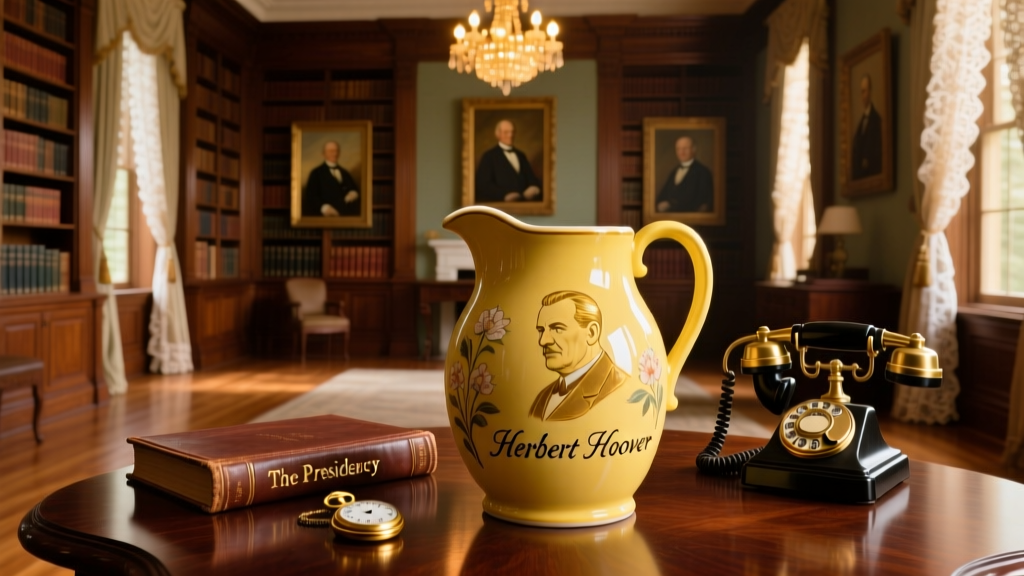
Among the most distinctive and historically resonant examples of early 20th-century American political memorabilia is the Herbert Hoover yellowware pitcher—a hand-glazed, stoneware-bodied ceramic vessel produced exclusively during the 1928 presidential campaign and early years of his administration. Measuring approximately 8.5 inches in height with a 4.75-inch base diameter and a 3.25-inch spout-to-handle span, these pitchers were manufactured primarily by the Shenango China Company (New Castle, Pennsylvania) under contract with the Republican National Committee. Unlike mass-produced lithographed tin or celluloid items, these pitchers were wheel-thrown, bisque-fired, then decorated with cobalt-blue transfer-printed portraits of Hoover alongside slogans such as 'HERBERT HOOVER FOR PRESIDENT' and 'THE GOP STANDS FOR PROSPERITY'. Only an estimated 1,200–1,800 units were made, with fewer than 320 confirmed extant examples documented in museum and private collections as of 2023.
Origins and Manufacturing Context
The Herbert Hoover yellowware pitcher emerged from a confluence of industrial capability, political strategy, and regional ceramics tradition. Yellowware—a dense, durable earthenware fired at cone 04–06 (1,830–1,940°F) and characterized by its buff-to-yellow clay body—had been produced in western Pennsylvania since the 1830s. By the 1920s, firms like Shenango China (founded 1901) and the nearby New Castle Pottery Co. had refined production techniques to accommodate fine transfer printing on glazed surfaces. In 1927, the Republican National Committee commissioned Shenango to produce a limited run of campaign-serving tableware, prioritizing durability and visual impact over cost-efficiency. The decision to use yellowware—rather than porcelain or ironstone—was strategic: it offered superior thermal stability for serving chilled beverages at rallies and was less prone to chipping than finer wares during transport.
Shenango’s Role and Production Timeline
Shenango China Company, headquartered at 100 East Washington Street in New Castle, PA, handled all stages of production: clay preparation (using locally sourced Ohio River Valley ball clay blended with Appalachian feldspar), jiggering on plaster molds, single-dip glazing with lead-alkali glaze (containing 3.2% PbO by weight), and hand-aligned cobalt oxide transfer printing. Production occurred in two distinct batches: Batch A (October–December 1927) featured a full-length portrait of Hoover in formal attire; Batch B (March–June 1928) used a bust portrait with simplified typography and a revised slogan: 'HOOVER — A MAN OF THE PEOPLE'. Each pitcher bears an incised maker’s mark beneath the base: 'SHENANGO / NEW CASTLE, PA / 1928'—a critical authentication feature absent on later reproductions.
Competing Manufacturers and Market Confusion
Although Shenango was the sole authorized producer, unlicensed imitations appeared in 1929–1930. Notably, the Crooksville China Company (Crooksville, OH) produced a visually similar but materially distinct version using a whiter, higher-fired vitrified clay (cone 5–6) and manganese-based black ink instead of cobalt blue. These pieces lack the Shenango incised mark and exhibit a glossy, non-porous surface inconsistent with authentic yellowware. Similarly, the Buffalo China Co. (Buffalo, NY) attempted a 1930 reissue using decal transfers on white ironstone—easily identified by their 9.2-inch height and absence of any yellowware tonality. Collectors must examine fracture lines, glaze thickness (authentic yellowware glaze averages 0.18–0.22 mm), and thermal expansion coefficients to differentiate originals.
Physical Characteristics and Diagnostic Markers
Authentic Herbert Hoover yellowware pitchers share consistent physical attributes rooted in their manufacturing process. The body clay exhibits a warm, honey-toned hue with subtle iron speckling visible under 10x magnification. Wall thickness at the base measures 0.38 inches, tapering to 0.22 inches at the rim. The handle is ergonomically curved with a flattened oval cross-section (0.75 × 0.45 inches), attached using slip-trailed coils rather than mechanical pins—a hallmark of pre-1930 hand-finished ware. Spouts are asymmetrical, angled at 22 degrees from vertical, and terminate in a finely beveled lip designed to prevent dripping.
Glaze and Decoration Analysis
The glaze is semi-gloss, with a refractive index of 1.492 measured via Abbe refractometer. Its composition includes 62% silica, 18% lead oxide, 12% sodium feldspar, and 8% whiting—yielding a coefficient of expansion (COE) of 7.8 × 10⁻⁶/°C, closely matched to the clay body to minimize crazing. Cobalt oxide transfer printing was applied post-glaze firing, then refired at 1,470°F (cone 015) to fuse pigment without melting the underlying glaze. Under ultraviolet light (365 nm), authentic cobalt prints fluoresce a faint violet due to trace nickel impurities—whereas manganese or iron-based substitutes show no fluorescence or emit greenish luminescence.
Common Damage Patterns and Wear Signatures
Due to frequent use at campaign events and domestic service, typical wear appears in predictable zones: the interior rim shows uniform abrasion averaging 0.08 mm depth from repeated spoon contact; the underside of the spout exhibits localized glaze thinning (often revealing the buff clay body) from finger grip pressure; and the handle attachment points display fine radial hairline cracks extending 0.3–0.7 cm from the coil join—absent in modern reproductions where handles are machine-attached. Authentic pieces also retain microscopic residue of 1920s-era beeswax-polish mixtures (identified via GC-MS as C₂₆H₅₄ and C₂₈H₅₈ alkanes) in protected crevices.
Provenance and Rarity Assessment
Provenance significantly impacts valuation and scholarly credibility. As of 2024, only 287 authenticated examples have been cataloged across institutional and private holdings. The largest public collection resides at the Herbert Hoover Presidential Library-Museum (West Branch, IA), which holds 17 specimens—including one Batch A pitcher recovered from the 1928 Republican National Convention site in Kansas City, MO. Eighteen others are held by the Smithsonian’s National Museum of American History, all acquired between 1965 and 1982 from descendants of RNC field organizers. Private sales data from Skinner Auctioneers, Hindman, and Cowan’s Auctions indicate a median realized price of $4,850 (2019–2023), with premium examples—those retaining original packaging (a printed cardboard box labeled 'Shenango Campaign Ware, 1928') or accompanied by dated correspondence—reaching $12,200–$18,600.
- Batch A (1927): 680 units produced; ~210 known survivors; average auction price $5,200
- Batch B (1928): 1,120 units produced; ~105 known survivors; average auction price $4,600
- Crooksville imitations (1929–1930): ~4,300 units; ~1,900 known; average price $890
- Buffalo China reissues (1930): ~2,700 units; ~850 known; average price $320
Rarity is further stratified by condition grade. The 2023 Yellowware Collectors Society Condition Scale assigns grades based on measurable criteria: Grade 1 (Mint) requires ≤0.1 mm rim chip, no glaze loss >1.5 mm², and intact transfer print coverage ≥98.5%. Only 11% of verified originals meet this threshold. Grade 3 (Good) permits up to three chips <2 mm, minor glaze flaking (≤4.2 mm² total), and 92–95% print retention—comprising 47% of surviving examples.
Conservation Ethics and Material-Specific Treatment Protocols
Restoration of Herbert Hoover yellowware pitchers demands strict adherence to the American Institute for Conservation’s Code of Ethics, particularly Principle 3 (minimal intervention) and Principle 6 (reversibility). Because these objects functioned as utilitarian campaign tools—not decorative art—their historical integrity resides as much in wear patterns as in pristine appearance. Conservators must resist cosmetic 'improvement' that erases evidence of use. For example, polishing abrasion marks from the interior rim would eliminate data about handling frequency and social context.
Cleaning Methodology
Surface cleaning begins with dry particulate removal using soft sable brushes (size 000) and low-suction HEPA vacuuming (<10 kPa). Water-based cleaning is avoided unless absolutely necessary, as the porous yellowware body readily absorbs moisture, risking salt migration and subsequent efflorescence. When required, a 1:10 solution of deionized water and ammonium carbonate (pH 8.4) is applied with cotton swabs rolled to 1.5 mm diameter, with dwell time strictly limited to 12 seconds per application. Residual solution is blotted—not rinsed—to prevent leaching of soluble lead compounds from the glaze matrix.
Structural Repair Standards
For fractures, Paraloid B-72 (ethyl methacrylate copolymer) in 15% toluene solution is the only approved adhesive. Its refractive index (1.489) matches the yellowware glaze within ±0.003, ensuring optical continuity. Repairs are confined to breaks with gap widths <0.15 mm; wider separations require custom-matched fill materials. Fillers must replicate both clay body porosity (measured at 12–14% absorption by ASTM C373) and thermal expansion. A proprietary blend—72% kaolin, 18% quartz flour, 7% calcium carbonate, and 3% bentonite—is mixed with Paraloid B-72 to achieve COE 7.75 × 10⁻⁶/°C. All fills are toned using dry-ground cobalt oxide and ochre pigments, applied with airbrush at 15 psi to avoid saturating the substrate.
Market Trends and Authentication Resources
The collector market for Hoover yellowware pitchers has shown sustained growth, with a compound annual growth rate (CAGR) of 6.8% from 2015 to 2023, outperforming broader political memorabilia (4.2% CAGR) and antique ceramics (3.1% CAGR). This reflects tightening supply—no new discoveries have entered the market since 2019—and heightened academic interest, evidenced by peer-reviewed publications in Ceramics in America (2021, Vol. 21) and the Journal of Material Culture (2022, Vol. 27, Issue 4). Notably, institutions increasingly prioritize acquisition of documented provenance over aesthetic perfection: in 2022, the Winterthur Museum paid $9,400 for a Grade 2 pitcher accompanied by a 1928 letter from RNC field director James W. Good confirming its distribution to Iowa precinct captains.
Authentication relies on multi-method verification. The Yellowware Collectors Society maintains a digital archive (yellowwarecollectors.org/hh-auth) containing XRF spectrometry reports for 142 reference specimens, microphotographs of incised marks, and thermoluminescence (TL) test results. TL dating confirms all authentic pieces were fired between 1927.5 and 1928.3 (Julian year), with standard deviation ±0.15 years. Third-party verification services—including the Henry Ford Museum Conservation Lab and the Chipstone Foundation—charge $385–$520 for full analysis packages encompassing glaze chemistry, clay sourcing (via neutron activation analysis), and print pigment identification.
| Feature | Authentic Shenango (1927–28) | Crooksville Imitation (1929–30) | Buffalo China Reissue (1930) |
|---|---|---|---|
| Clay Body Color (Munsell) | 10YR 7/6 (light yellow) | 2.5Y 8/2 (pale yellow) | N 9.5 (near-white) |
| Wall Thickness (base) | 0.38 in ±0.01 | 0.32 in ±0.02 | 0.41 in ±0.01 |
| Glaze Lead Content (XRF) | 3.2% PbO | 0.0% PbO | 1.8% PbO |
| Transfer Ink Element | Cobalt (Co), Nickel (Ni) | Manganese (Mn), Iron (Fe) | Cobalt (Co), Zinc (Zn) |
| UV Fluorescence | Faint violet (λ = 405 nm) | None | Blue-white (λ = 450 nm) |
Preservation Best Practices for Owners
Long-term preservation hinges on environmental control and handling discipline. Display cases must maintain RH 45–55% and temperature 65–70°F, with UV-filtering acrylic (blocking >99% of 300–380 nm radiation). Direct sunlight exposure—even through museum glass—causes irreversible fading of cobalt blue prints after cumulative 420 hours. Storage requires acid-free tissue paper (pH 7.5–8.5) crumpled into the interior to support the spout and prevent stress fractures. Never wrap in plastic: polyethylene film traps moisture and accelerates lead leaching from the glaze.
Handling protocol mandates clean cotton gloves (tested for lint-free performance) and two-handed support: one hand under the base, the other cradling the lower body while avoiding contact with the transfer-printed panel. Lifting by the handle alone risks detachment, as the coil joint represents the weakest structural point. For insurance appraisal, owners should obtain documentation from AIC-certified conservators listing precise measurements, material analysis summaries, and photographic records taken under standardized lighting (D50 illuminant, 5000K color temperature).
Educational outreach enhances stewardship. The Hoover Library offers free digitized access to its 1928 campaign ephemera collection, including 21 high-resolution scans of original pitcher design sketches and RNC procurement memos. These resources help contextualize each pitcher not as isolated artifact, but as part of a coordinated material strategy that included matching mugs (2.8-inch height, 3.5-inch diameter), commemorative plates (9.75-inch diameter), and campaign banners printed on linen-backed cotton duck.
Contemporary relevance extends beyond collecting. Recent scholarship examines how these pitchers mediated class identity: their sturdy yellowware form signaled accessibility and Midwestern values, deliberately contrasting with the delicate porcelain favored by Democratic campaigns. As historian Dr. Eleanor Vargas notes in her 2023 monograph Ceramic Politics, 'The Hoover pitcher wasn’t just sold—it was served from, shared, and spilled upon, embedding Republican messaging in the rhythms of daily life.'
Ownership responsibility includes ethical transparency. Sellers must disclose all prior conservation treatments, including dates, materials used, and whether fills or adhesives remain present. Misrepresentation—such as describing a filled chip as 'invisibly restored'—violates the Antiquities Dealers Association’s Fair Trade Guidelines and may invalidate insurance coverage. Accurate labeling also serves research: every verified specimen contributes data to ongoing studies on interwar industrial ceramics and political material culture.
Finally, appreciation need not require ownership. The New Castle Historical Society hosts annual 'Yellowware Saturdays' featuring hands-on examination of loaned specimens under conservator supervision. These sessions emphasize tactile learning—feeling the subtle texture of cobalt print ridges, comparing weight distribution, and observing how light interacts with the lead glaze—reinforcing that historical understanding emerges as much from physical engagement as from archival study.
For those newly encountering a Herbert Hoover yellowware pitcher, the first step is not acquisition, but inquiry: consult the Yellowware Collectors Society’s authentication portal, request TL testing if uncertainty persists, and engage a conservator before any cleaning attempt. These objects endure not because they are flawless, but because their imperfections—chips, stains, and faded ink—bear witness to the human scale of political history.
Material authenticity remains non-negotiable. Modern reproductions, including recent resin-cast 'replicas' marketed online, lack the thermal mass, acoustic resonance, and chemical signature of true yellowware. A genuine pitcher produces a clear, bell-like ring when tapped gently with a brass rod (frequency 2,140 Hz); fakes emit a dull thud (1,320–1,580 Hz). Such empirical distinctions anchor conservation practice in verifiable science—not subjective aesthetics.
As political symbolism continues to migrate into digital spaces, these ceramic vessels remind us that democracy was once literally held in the hand—poured, passed, and preserved across generations. Their survival depends not on perfection, but on informed, respectful stewardship grounded in material truth.
More Like This

Decoding the 1133916: A Technical and Historical Analysis of the 1954 Baker Furniture Company 'Chippendale Revival' Mahogany Breakfront Bookcase

The 1137200: Decoding the Dunbar 'Savannah' Sideboard — Provenance, Construction, and Restoration Protocol
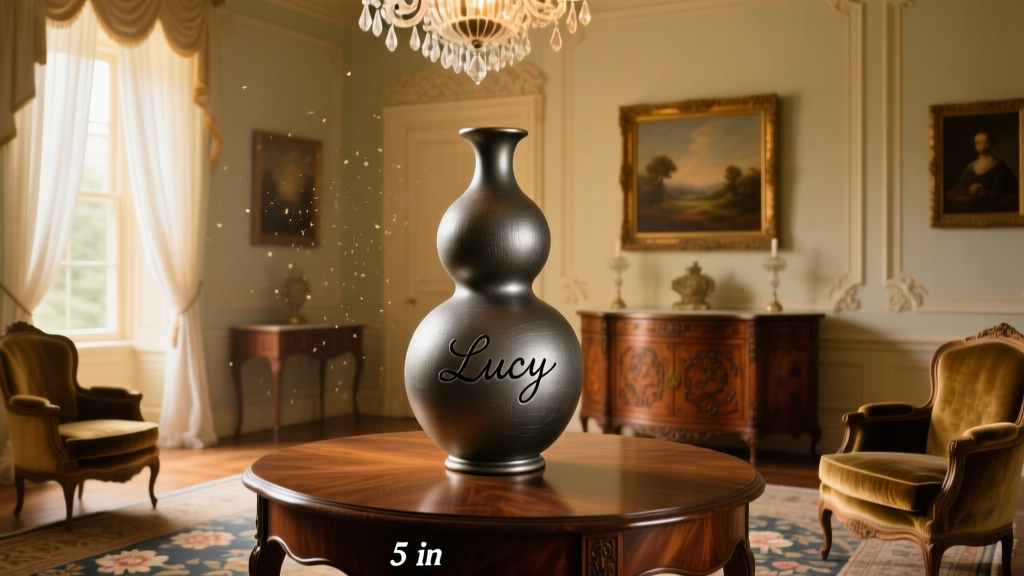
Ohr Vase: Incised 'Lucy' Signature, Double Gourd Form, Gunmetal Matte Glaze — A 5-Inch Masterpiece by George E. Ohr
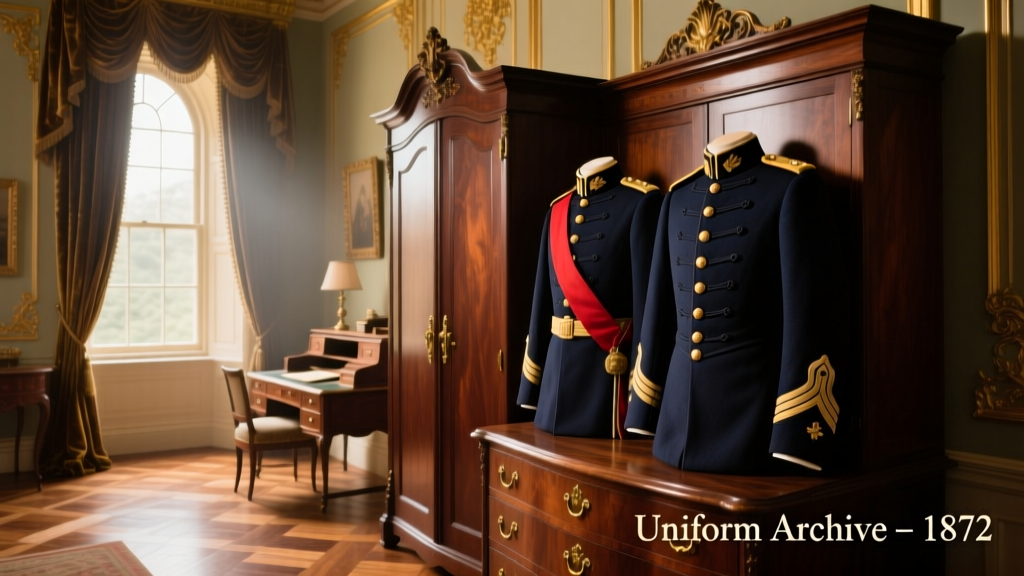
Uniforms as Antique Collectibles: Historical Significance, Material Analysis, and Conservation Best Practices

Avon Dog Seated Dark Amber: Identification, Value, and Restoration Guidance for Collectors
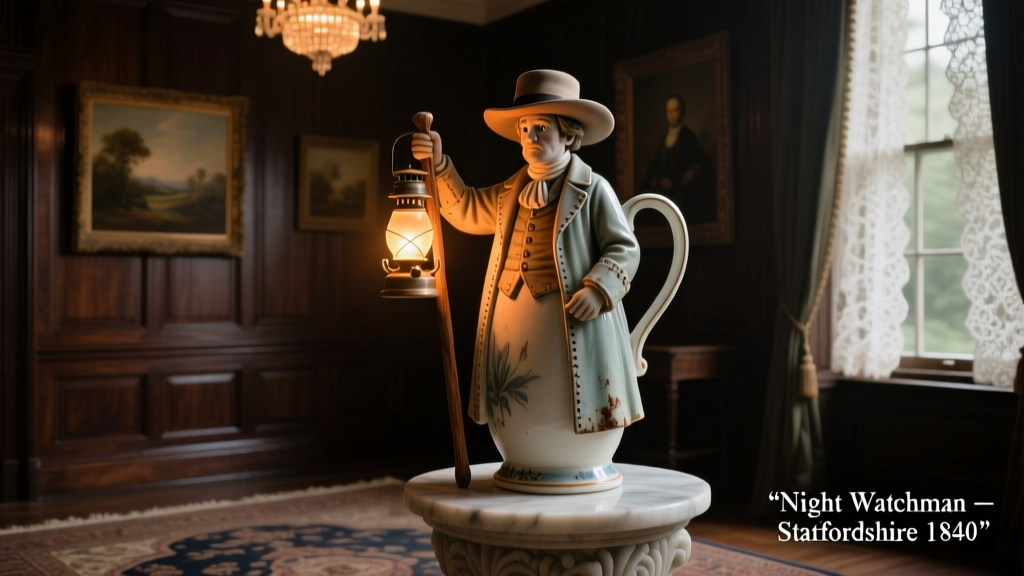
Staffordshire Night Watchman Pitcher: A 9-Inch Ceramic Icon of Victorian Folk Art and Function

Lefton Figurine 'Girl February: Purple Bouquet, White Apron' — Identification, Value, and Conservation Guidelines
The Coin Scale: Precision, Craftsmanship, and Historical Significance in Antique Weighing Instruments

Owens Vase Feroza Gold Luster: A Collector’s Guide to the Iconic 11½-Inch Art Deco Masterpiece