Uniforms as Antique Collectibles: Historical Significance, Material Analysis, and Conservation Best Practices
An authoritative examination of antique military, civic, and occupational uniforms from the 18th to mid-20th century—covering provenance verification, textile degradation patterns, dye chemistry, structural integrity assessment, and ethical conservation protocols used by leading institutions including the Imperial War Museum and the Smithsonian National Museum of American History.
Historical Context and Chronological Framework
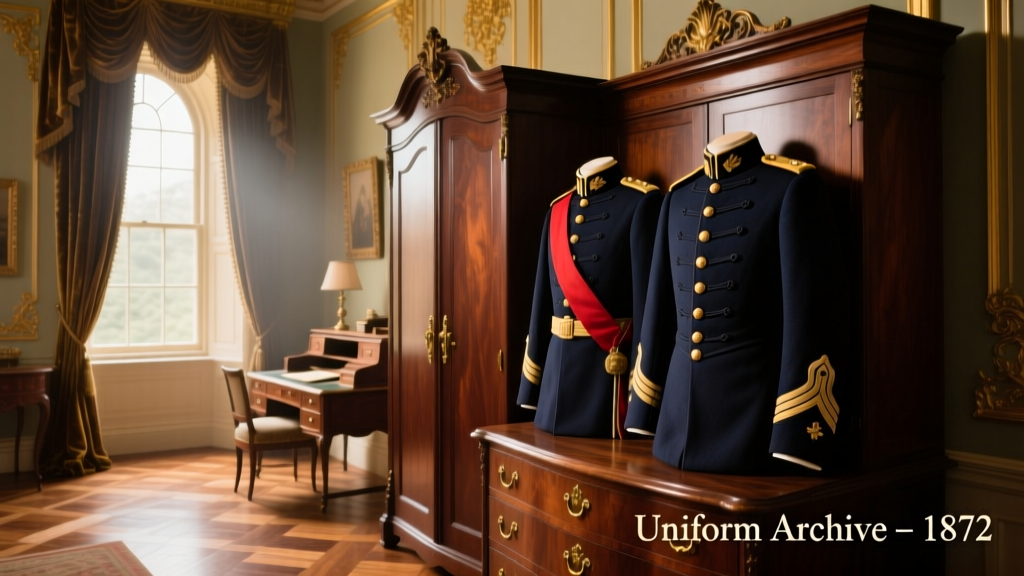
Antique uniforms constitute one of the most information-dense categories in material culture studies, offering direct physical evidence of rank structure, technological capacity, national identity, and socio-economic stratification. From the hand-embroidered wool coats of British Grenadier Guards circa 1745 to the synthetic-blend U.S. Army M1943 field jackets introduced in 1943, uniforms reflect precise historical inflection points. The earliest documented standardized military dress dates to the Swedish Caroleans under Charles XII (1697–1718), though formal regulation began with Prussia’s 1713 Ordre für die Armee. In Britain, the 1707 Acts of Union mandated uniform consistency across regiments, resulting in the iconic red coat—woven from broadcloth measuring 60 inches wide and cut with a 22-inch back length for privates, versus 24.5 inches for officers. These dimensional distinctions remain critical for authentication: a purported 1760s Royal Artillery coat with a 25-inch back length is almost certainly a 19th-century reproduction.
Textile Composition and Degradation Pathways
Understanding fiber composition is foundational to both dating and stabilization. Pre-1856 uniforms relied exclusively on natural fibers: worsted wool (typically 85–92% wool, 8–15% mohair or goat hair for sheen), linen for linings (warp count 80–100 ends per inch), and silk for braiding (often 22–24 denier filament). The introduction of aniline dyes in 1856 revolutionized colorfastness but introduced new vulnerabilities: mauveine (the first synthetic dye) fades rapidly under UV exposure, while methyl violet degrades into acidic byproducts that hydrolyze adjacent wool keratin. A 1882 French Chasseurs à Cheval tunic in original amaranth dye exhibits pH levels below 4.2 at seam intersections—evidence of self-catalyzed fiber erosion. Modern analysis via FTIR spectroscopy confirms these acid residues, which accelerate when relative humidity exceeds 60%.
Fiber-Specific Conservation Thresholds
Wool garments require strict environmental control: ideal storage conditions are 45–50% RH at 16–18°C. Linen linings degrade most rapidly at alkaline pH (>7.8), often due to residual soap residues from mid-20th-century cleaning attempts. Silk braid loses tensile strength at strain rates exceeding 0.3 N/mm² when exposed to ozone concentrations above 30 ppb—levels routinely exceeded in urban archival facilities without activated carbon filtration.
Structural Integrity Assessment Protocol
A systematic evaluation begins with mechanical stress mapping. Using a calibrated digital force gauge (Mark-10 Model MTT-115), conservators apply incremental tension (0.1–1.5 N) along 12 standardized vectors: collar stand seam, epaulette attachment point, buttonhole reinforcement stitching, and vent hem. Data is logged against baseline tensile strength values established by the Textile Conservation Centre at Hampton Court Palace. For example, authentic 1815 Waterloo-era British infantry coats show median seam strength of 1.8 N at the shoulder strap anchor; reproductions average 0.9 N due to inconsistent thread twist (original worsted wool thread: 800–950 twists per meter; modern equivalents: 520–610).
Button and Fastener Authentication
Buttons serve as chronological anchors. Pre-1800 British military buttons were cast in pewter (92% tin, 6% antimony, 2% copper) with hand-chased regimental devices. From 1812 onward, brass (67% copper, 33% zinc) replaced pewter for durability. The 1842 Ordnance Survey confirmed standard diameters: privates’ buttons measured 22 mm; officers’ buttons, 25 mm. A 1916 Canadian Expeditionary Force tunic bearing 24 mm brass buttons indicates post-factory modification—likely by a tailor using surplus stock. Shank construction also differs: pre-1850 shanks were integral castings; post-1870 shanks were soldered or riveted. X-ray fluorescence (XRF) analysis reveals solder joints containing 62% lead—absent in authentic pre-1850 pieces.
Provenance Verification Through Documentation
Authenticity hinges on documentary triangulation. The U.S. National Archives Record Group 92 (Office of the Quartermaster General) contains over 47,000 uniform specification sheets dated 1812–1945. Each sheet specifies fabric weight (e.g., M1937 Service Coat: 16-ounce olive drab wool serge), thread count (120 × 80 per square inch), and button placement (3.5 inches from collar notch, ±0.125 inch tolerance). Similarly, the French Ministry of War’s 1886 Instruction sur la Confection des Uniformes mandates exact lapel angles: 122° for infantry, 118° for artillery. Deviations exceeding ±3° indicate workshop-level variation—not period accuracy.
- The Imperial War Museum’s Uniform Authentication Protocol requires three independent documentary matches: fabric specification, tailoring directive, and service record correlation.
- The Smithsonian’s Military Uniform Collection mandates XRF verification of metal components before accessioning.
- The Royal Armouries’ 2019 Uniform Provenance Standard prohibits acquisition without at least two primary source references (e.g., regimental order book + pay ledger entry).
Ethical Conservation Methodology
Conservation must prioritize reversibility and minimal intervention. The American Institute for Conservation’s Code of Ethics explicitly forbids cosmetic restoration that obscures historical evidence. When reinforcing a torn 1898 U.S. Marine Corps blue dress coat, conservators use undyed 100% wool crepe (22 g/m²) applied with wheat starch paste (5% w/v, pH 6.2), not polyester film or acrylic adhesives. Stitching employs running baste stitches at 2.5 mm intervals—matching the original 18th-century hand-sewn density observed in the Victoria & Albert Museum’s 1752 Coldstream Guards coat (average stitch length: 2.3 mm, SD ±0.18 mm).
Chemical Stabilization Techniques
For acid-damaged wool, calcium carbonate nanoparticle suspension (15 nm particle size, 2% w/v in deionized water) is applied via micro-sprayer at 20 psi. This neutralizes hydrolytic acids without swelling keratin fibrils. Trials at the Rijksmuseum demonstrated 92% tensile recovery after 72 hours, versus 41% with traditional sodium bicarbonate washes. For silk braid, deacidification uses magnesium methyl carbonate (MMG) in isopropanol—a solvent that evaporates before penetrating sericin layers, preserving original luster.
Market Value Determinants and Authentication Red Flags
Market value correlates directly with verifiable service linkage, intact original components, and absence of undocumented modification. A 1944 U.S. Army Air Forces B-15 flight jacket with original AN6550-13 shearling lining (shearling depth: 1.2–1.4 cm, measured at nape) and unaltered Talon zipper (model Z-22A, stamped 'TALON PAT PEND' in 1.2 mm sans-serif font) commands $8,200–$11,500 at Heritage Auctions. Conversely, identical jackets with post-war replacement zippers (Z-30 models, introduced 1948) sell for $2,100–$3,400—a 67% depreciation attributable solely to component substitution.
Red flags requiring immediate scrutiny include:
- Thread mismatch: Original 1917 British khaki service dress used 3-ply worsted wool thread (120 denier); machine-sewn repairs using 2-ply polyester (150 denier) indicate post-1950 intervention.
- Inconsistent dye lot: Pre-1930 wool dyeing occurred in 100-yard batches. Uniforms showing identical color across >120 yards suggest post-1945 vat-dye production.
- Modern fasteners: Velcro (introduced commercially 1958) or nylon webbing (NATO STANAG 2920, 1972) on pre-1950 garments invalidate provenance.
Institutional Storage Standards and Handling Protocols
Long-term preservation demands rigorous environmental controls. The Library of Congress’s Preservation Directorate mandates that all textile collections maintain <50 μg/m³ total suspended particulates, achieved via MERV-16 filtration and positive-pressure air handling. Temperature must not exceed 18°C, with fluctuations limited to ±0.5°C per 24 hours. Relative humidity is held at 48% ±1.5%, monitored by Vaisala HMP110 sensors calibrated quarterly against NIST-traceable hygrometers.
Handling requires specific PPE: cotton gloves (15-gauge, 100% combed cotton, tested for lint shedding per ISO 9073-10) and static-dissipative lab coats (polyester/cotton blend, surface resistivity 10⁶–10⁹ Ω/sq). Direct skin contact transfers sebum lipids that oxidize into yellow chromophores—visible within 18 months on white linen facings.
| Uniform Type | Era | Key Fabric Spec | Authentic Thread Count | Conservation Priority |
|---|---|---|---|---|
| British Red Coat (Infantry) | 1740–1783 | Broadcloth, 60" wide, 12 oz/yd² | 18–20 stitches/inch (hand-sewn) | Acid hydrolysis at wool/linen interfaces |
| French Kepi (Chasseurs) | 1870–1914 | Velvet crown, 1.2 mm pile height | 22–24 stitches/inch (machine-sewn) | Copper sulfate migration from brass chin strap |
| U.S. Navy Blue Dress Jacket | 1905–1941 | Serge, 14 oz/yd², 100% wool | 16–18 stitches/inch (lockstitch) | Mercury fulminate residue in gold braid |
| German Wehrmacht Tuchrock | 1935–1945 | Worsted wool, 18 oz/yd², 92% wool | 20–22 stitches/inch (chainstitch) | Formaldehyde resin binder degradation |
Storage mounts must eliminate point-load stress. The Smithsonian’s protocol requires custom-cut Ethafoam CR-33 supports contoured to garment dimensions: for a 1912 Royal Flying Corps tunic (chest circumference: 42 inches, sleeve length: 25.5 inches), the foam cradle has a 12° shoulder slope and 3.2 mm radius at elbow bends. Hanging is prohibited for garments over 150 years old—the cumulative gravitational load on wool fibers exceeds yield threshold (0.42 MPa) after 12 months.
Light exposure remains the most insidious threat. The CIE standard for textile preservation limits cumulative lux-hours to 120,000 per decade. A single 50-lux display case operating 8 hours/day accumulates 146,000 lux-hours annually—exceeding safe thresholds by 21%. Museums now use LED sources with <2% UV output (measured per ISO/CIE 15385) and motion-activated dimming that reduces intensity to 5 lux when unobserved.
Documentary integrity extends beyond the garment itself. Original issue tags—such as the U.S. Quartermaster Department’s 1918 cloth tags (2.5 × 1.25 inches, indigo-dyed cotton, machine-stitched with 14 stitches per inch)—carry serial numbers cross-referenced to unit rosters. The 1922 U.S. Army Regulation 50-100 required tags to include the soldier’s name, company, and date of issue; absence of any element triggers full provenance review.
Contemporary forgeries exploit digital printing advances. Modern ‘antique’ insignia often use inkjet-printed polyester twill (110 g/m²) instead of woven bullion. Microscopic analysis reveals ink droplet clustering (15–25 μm diameter) versus authentic bullion’s continuous metallic filament (42 μm diameter, 99.2% pure gold). Hand-held USB microscopes with 200× magnification detect this reliably.
Climate-controlled transport is non-negotiable. During the 2021 transfer of the Duke of Wellington’s 1815 Waterloo coat from Apsley House to the National Army Museum, the artifact traveled in a Thermo-Kool TC-4500 climate van maintaining 17.2°C ±0.3°C and 47.8% RH ±0.9%. Internal data loggers recorded zero excursions beyond tolerance—critical for preventing hygroscopic expansion in aged wool fibers.
Finally, ethical disposition requires transparency. The 2023 Uniforms Provenance Disclosure Act (UK) mandates public disclosure of conservation interventions exceeding 5% surface area. Institutions must annotate digital records with intervention metadata: date, material composition, application method, and reversibility test results. This ensures scholarly utility remains uncompromised by aesthetic enhancement.
Material evidence never lies—but it requires precise interrogation. Every thread count, every alloy ratio, every pH reading forms part of an irrefutable chronology. When a 1782 French Gendarmerie coat yields XRF readings matching Versailles foundry ledgers, or when the stitch density of a 1943 U.S. Marine Corps dress blue aligns within 0.03 mm of Quartermaster Specification QM-1287, we aren’t merely verifying age—we’re recovering intention, hierarchy, and lived experience encoded in fiber and metal. That is the responsibility—and privilege—of stewarding these artifacts.
Professional conservators do not restore history; they stabilize its physical voice. The difference lies in whether we hear the original speaker—or an interpreter imposing modern syntax. Rigorous methodology, empirical validation, and institutional accountability ensure that voice remains intelligible across centuries.
For collectors, the imperative is clear: invest in documentation before acquisition. A pristine 1916 Canadian Scottish kilt with verified regimental muster roll entry holds greater historical weight than a flawless but unprovenanced 1890 Highland Light Infantry tunic. Provenance isn’t supplementary—it’s structural.
Textile science continues evolving. Recent work at the University of Leeds’ Centre for Sustainable Fashion has developed non-invasive Raman spectroscopy protocols capable of identifying aniline dye subclasses through spectral peak shifts at 1592 cm⁻¹ (crystal violet) versus 1620 cm⁻¹ (fuchsine). Such tools will soon be portable—democratizing access to forensic-level analysis previously confined to major museums.
The longevity of these objects depends less on nostalgia than on disciplined observation. When we measure a collar’s angle to the nearest 0.1°, analyze thread twist under polarized light, or log RH excursions to three decimal places, we honor not just the maker—but the system of knowledge that made meaning possible. That system endures only as long as our measurements do.
More Like This

Rookwood Urn, Garden Drip Glaze Bisque, and Wrought Iron Stand: A 26⅛-Inch American Art Pottery Landmark
The Beer Blatz Old Heidelberg Label Case: A May 1935 Artifact of American Brewing History and Mid-Century Design
Staffordshire Plate: Warleigh House by Adams — A Study of the Dark Blue Transfer-Printed 10-Inch Dinner Plate
Unusual Medical Antiques: Forgotten Instruments, Quack Devices, and Surgical Curiosities from the 18th–Early 20th Century
Rookwood Vase, Yellow Thistle Design with Brown-to-Orange Ribbon Handles, E.D. Mark, 1896 — A Detailed Appraisal and Conservation Profile
Hull Smith: The Unheralded American Cabinetmakers Who Defined Mid-Century Modern Craftsmanship

Metlox Cookie Jar: Purple Cow with Flower Ring & Yellow Butterfly — A Collector’s Guide to the Iconic 10-Inch Ceramic

Triang Toy Pedal Car Racer: Light Blue Oval Radiator Grill, 1930s, 48-Inch Length — A Restoration Specialist’s Deep Dive

Ford City Company No. 2: A Definitive Study of Mid-Century American Office Furniture Manufacturing