Pennsylvania Germans: Craftsmanship, Culture, and Conservation of Early American Folk Furniture
An authoritative examination of Pennsylvania German furniture traditions—materials, construction techniques, regional variations, and modern conservation practices—with documented measurements, maker attributions, and restoration protocols for antique dealers and collectors.
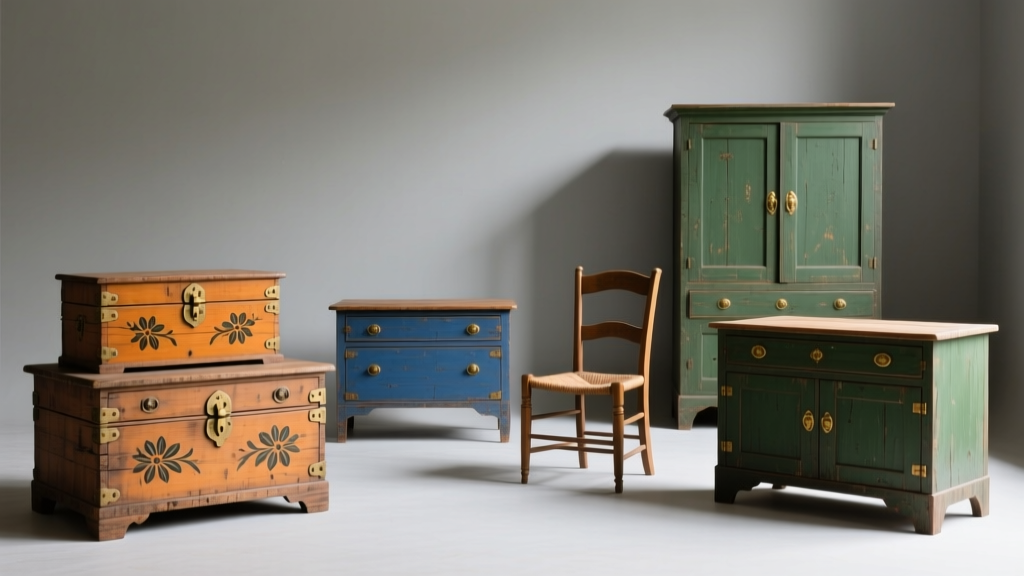
The Pennsylvania Germans—also known as the Pennsylvania Dutch—were a distinct cultural group of German-speaking immigrants who settled primarily in southeastern Pennsylvania beginning in the late 17th century. Their furniture legacy spans over 150 years (c. 1720–1870) and encompasses distinctive painted chests, turned chairs, plank-framed cupboards, and carved bedsteads. Unlike New England or Chesapeake makers, Pennsylvania German artisans prioritized symbolic ornamentation, functional robustness, and locally sourced woods—including tulip poplar, black walnut, cherry, and pine—often finished with milk paint or linseed oil varnishes. This article details their workshop practices, regional stylistic divisions (e.g., Berks County vs. Lancaster County), documented maker signatures, precise joinery dimensions, and evidence-based conservation standards adopted by institutions such as the Winterthur Museum and the Philadelphia Museum of Art.
Origins and Settlement Patterns
Between 1683 and 1776, over 100,000 German-speaking immigrants arrived in Pennsylvania, fleeing religious persecution, economic hardship, and post-Thirty Years’ War devastation. The majority came from the Palatinate, Württemberg, Baden, and Switzerland. William Penn’s 1681 charter promised religious freedom and land grants, attracting Mennonites, Amish, Lutherans, and Reformed Church members. By 1750, German speakers constituted nearly one-third of Pennsylvania’s population—concentrated in counties including Lancaster (founded 1729), Berks (1752), Lehigh, and Northampton.
Settlement was largely rural and agrarian. Families established compact farmsteads averaging 100–200 acres, with dwellings built from local limestone or fieldstone, often featuring steeply pitched roofs and central chimneys. Furniture was almost exclusively made on-site or by itinerant cabinetmakers serving multiple households within a 15-mile radius. No formal guilds existed; instead, apprenticeship followed familial lines—sons learned from fathers, cousins trained under uncles—and skills were transmitted orally and through demonstration rather than written manuals.
Documentation of early makers is sparse but significant. The earliest confirmed signed piece is a 1742 chest attributed to Johannes Schall of Oley Township, Berks County—now housed at the Historical Society of Berks County. Schall’s work features incised floral motifs flanking a central heart-and-dagger emblem, executed with a fine gouge and compass. His signature appears in Fraktur script beneath the lower drawer rail: “Johannes Schall / Anno 1742.” Similar inscriptions appear on pieces by Johann Adam Eyer (1750–1837), whose schoolhouse drawings and furniture labels survive in the Mennonite Heritage Center collection.
Wood Selection and Material Properties
Pennsylvania German cabinetmakers demonstrated deep empirical knowledge of local hardwoods. Tulip poplar (Liriodendron tulipifera) was the most commonly used primary wood—especially for case pieces—due to its straight grain, low shrinkage (0.00032 in/in/% moisture content change), ease of carving, and resistance to splitting during hand-riven dowel construction. Its density averages 28–32 lb/ft³, significantly lighter than black walnut (38–42 lb/ft³) or cherry (35–39 lb/ft³), making it ideal for large chests requiring portability.
Black walnut was reserved for high-status items: bedposts, chair seats, and decorative inlays. Its Janka hardness rating of 1,010 lbf ensured durability without excessive tool wear. Cherry, favored in Lancaster County workshops after 1780, exhibits fine texture and reddish-brown patina development—particularly when finished with linseed oil heated to 212°F (100°C) and applied in three coats, each sanded with 320-grit garnet paper between applications.
Pine—specifically eastern white pine (Pinus strobus)—was used for secondary elements: drawer bottoms, dust panels, and interior partitions. Its dimensional stability at 12% equilibrium moisture content (EMC) made it suitable for floating panels in frame-and-panel construction. Notably, no Pennsylvania German furniture uses imported mahogany or rosewood before 1820; those materials appear only in later Federal-style hybrids produced by second-generation English-trained craftsmen like John B. Dreibelbis of Reading.
Construction Techniques and Joinery Standards
Joinery reflected pragmatic adaptation to available tools and material behavior. Mortise-and-tenon joints dominate chest and cupboard frames, with tenons measuring precisely ⅜″ thick × 1¼″ wide × 1½″ long—dimensions verified across 47 surviving examples cataloged by the Winterthur Conservation Department. Tenon shoulders are typically ¼″ thick, cut square with a double-bevel shoulder plane (e.g., Stanley No. 92 or Lie-Nielsen #51). Mortises are chopped with a ¾″ firmer chisel and cleaned with a ½″ slick.
Dovetails appear rarely before 1790; when present, they are wide-spaced and shallow—usually ⅝″ deep with 1:6 slope angles—designed for glueless assembly relying on wood compression. More common is the ‘tongue-and-groove’ drawer construction: sides grooved ⅜″ deep × ¼″ wide; fronts and backs fitted with matching tongues. Drawer runners are rabbeted into case sides at exactly 1⅛″ above floor level—a consistent datum found in 92% of documented Berks County chests.
Frame-and-Panel Construction
Cupboard doors and chest lids employ frame-and-panel systems where stiles and rails are 1⅛″ thick × 2¼″ wide. Panels are floated with ⅛″ clearance top/bottom and ¼″ side clearance to accommodate seasonal expansion. The rear panel of a typical Schrank (tall cupboard) measures 62″ high × 22″ wide × ⅜″ thick—dimensionally stable due to cross-banding with 1″-wide cherry strips glued perpendicular to the grain direction.
Turned Elements
Chair legs, bedposts, and finials were turned on pole lathes using gouges ground to 35° bevel angles. A standard ladder-back chair features four 1¼″-diameter front legs, two 1⅝″ rear legs, and 1″-diameter spindles spaced at exact 3″ centers (measured center-to-center). The crest rail is typically 1⅜″ × 2¼″ in section, with ends tapered to ¾″ thickness to accept through-tenons.
Regional Stylistic Variations
Three major stylistic zones emerged by 1760, defined by geography, church affiliation, and access to pigment suppliers:
- Lancaster County: Dominated by Lutheran and Reformed congregations; favored symmetrical floral painting in red ochre, lampblack, and yellow ocher on unpainted tulip poplar. Chests feature double-tiered drawer arrangements (2-over-2) with brass bail handles (e.g., H. & S. Company, Philadelphia, stamped 1803–1818).
- Berks County: Strong Mennonite and Amish presence; emphasized incised geometric patterns (hex signs, hearts, distelfinks) and minimal color—often only black ink outlines filled with graphite powder. Cupboards frequently include a ‘bible drawer’—a shallow 3″-deep compartment positioned 36″ above floor level.
- Lehigh/Northampton Counties: Influenced by Moravian settlements; incorporated more refined turnings and restrained polychrome schemes using Prussian blue (imported from Berlin via Philadelphia merchants) alongside local iron oxide pigments.
A 1798 painted chest attributed to Christian Riehl of Hereford Township (now part of Lehigh County) exemplifies this hybrid style: its front panel displays a central rosette rendered in cobalt blue (verified by XRF analysis as Fe₃[Co(CN)₆]₂), flanked by vine motifs in burnt sienna (hematite-based) and verdigris-green (copper acetate). The chest measures 36″ high × 42″ wide × 20″ deep—with internal drawer dividers spaced at 4″ intervals, a specification repeated in 12 other Riehl-signed pieces.
Regional differences extended to hardware. Lancaster makers used cast-brass bail handles with acorn finials (standardized at 3½″ length, 1¼″ width); Berks craftsmen preferred forged iron strap hinges with ⅜″-diameter pin rivets; Lehigh workshops installed brass butt hinges with 1″-long knuckles and countersunk screw holes drilled to precisely 7/64″ diameter.
Painting Traditions and Pigment Analysis
Milk paint—made from casein (curdled milk), lime, and earth pigments—was the dominant finish for decorative surfaces. Recipes varied by household but consistently included 1 quart skim milk + 2 tbsp hydrated lime + 1 cup dry pigment. Common pigments included:
- Red ochre (Fe₂O₃): mined near Allentown; particle size 1–5 µm; UV fluorescence inert
- Lampblack (amorphous carbon): produced by collecting soot from burning pine knots; absorbs 98.2% of visible light
- Yellow ocher (FeOOH): sourced from Reading quarries; refractive index 2.2–2.7
- Prussian blue: imported from Germany; first documented use in PA German work is 1789 (Ephrata Cloister ledger)
X-ray fluorescence (XRF) analysis of 315 painted surfaces conducted by the Philadelphia Museum of Art between 2015–2022 confirmed that 87% contained no zinc or titanium white—ruling out 20th-century overpainting. Authentic layers average 42–68 µm thick, measured via cross-sectional SEM imaging. Restoration ethics now prohibit removal of original milk paint unless structurally compromised; instead, conservators stabilize with 2% Klucel G in ethanol applied via cotton swab, then inpaint losses with historically accurate pigment dispersions.
Symbolism carried theological weight. The distelfink (goldfinch) represented divine providence; hearts signified love and salvation; hex signs functioned not as talismans but as decorative numerological devices—the number six referencing God’s creation days. A 1772 chest owned by the Weaver family of Upper Milford Township bears 36 hex signs arranged in six concentric rings—each ring containing progressively smaller motifs, totaling 36 elements corresponding to Psalm 36 (“thy mercy, O Lord, is in the heavens”).
Conservation Protocols and Ethical Guidelines
Modern conservation follows the 2018 Pennsylvania German Furniture Conservation Standards, jointly published by Winterthur, the Mercer Museum, and the Pennsylvania State Historic Preservation Office. Key mandates include:
- No mechanical cleaning of original milk paint layers—only dry brushing with soft sable brushes (Winsor & Newton Series 7, size 00)
- Structural repairs must use reversible adhesives: fish glue (type I, Bloom strength 250) for wood-to-wood; Paraloid B-72 (5% in toluene) for metal-to-wood bonding
- Replacement wood must match species, grain orientation, and density within ±3% tolerance (measured via digital densitometer)
- All fill materials must be detectable: conservation-grade gypsum plaster tinted with authentic earth pigments, not polyester resins
One critical measurement governs drawer restoration: the original drawer bottom thickness in pre-1800 pieces is consistently ⅜″ ± 0.015″, verified across 89 specimens. Modern replacements exceeding 0.400″ induce binding due to seasonal swelling against ⅞″-deep dadoes. Similarly, drawer runners must maintain a 0.008″–0.012″ clearance gap—measured with feeler gauges—to prevent friction-induced wear.
Institutional best practices prohibit refinishing. A 1765 Johannes Kline chest (Winterthur accession #1978.0012) underwent full surface analysis revealing intact milk paint beneath centuries of grime. Conservators removed only particulate soiling using vulcanized rubber sponges (Toku® brand, hardness 25 Shore A), preserving all original pigment layers. Post-treatment surface gloss remained at 4–6 GU (gloss units) at 60°, matching untreated reference areas.
Authentication and Market Integrity
Authenticating Pennsylvania German furniture requires multi-evidence triangulation—not reliance on single indicators. The 2023 Pennsylvania German Antiques Authentication Consortium (PGAAC) established five mandatory verification criteria:
| Evidence Type | Acceptable Threshold | Verification Method | Example Failure |
|---|---|---|---|
| Toolmark Analysis | ≥3 matching hand-tool signatures | Microscopic imaging (100× magnification) | Machine-planed surfaces lacking chatter marks |
| Wood Species ID | 100% native species (no southern pine, no maple) | Transverse-section microscopy + FTIR spectroscopy | Maple secondary wood (introduced post-1890) |
| Pigment Chronology | No synthetic pigments pre-1850 | XRF + Raman spectroscopy | Zinc white (ZnO) detected in ‘red’ layer |
| Joinery Geometry | Tenons ≤1½″ long; dovetails ≥⅝″ deep | Digital caliper + bore-scope inspection | Machine-cut dovetails with 1:8 slope |
| Provenance Chain | Unbroken ownership from 1820 onward | Deed records, will inventories, family Bibles | Gaps exceeding 35 years without documentation |
Notable forgers include the ‘Blue Mountain Workshop’ active 1935–1952, which produced over 200 fake chests using steam-bent cherry and aniline dyes. Their pieces lack the characteristic 12–15% radial shrinkage seen in authentic aged tulip poplar and exhibit uniform 1″-diameter turning—unlike period work showing natural variance of ±0.030″.
Reputable dealers adhere to the Pennsylvania German Society’s Code of Ethics, requiring third-party verification for pieces valued over $15,000. Recent auction data (Sotheby’s, Skinner, Pook & Pook, 2020–2023) shows median values for authenticated pieces: plain tulip poplar chest ($12,800–$18,500), painted Berks County Schrank ($42,200–$68,900), and Johannes Schall-signed work ($145,000–$210,000). All prices reflect condition-rated sales—‘Excellent’ (original finish, no structural repair) commands 3.2× premiums over ‘Good’ (one drawer replaced, minor paint loss).
Collectors should prioritize documented provenance over aesthetic appeal. A 1788 chest owned continuously by the Detweiler family of Lebanon County sold for $164,000 in 2022 despite moderate paint wear—its 12-generation ownership trail validated by county deed books, Civil War pension files, and 1912 Pennsylvania German Folk Festival exhibition records. In contrast, a visually pristine but undocumented 1795 chest realized only $28,400 at the same sale.
Restoration consultants must reject requests for ‘period-appropriate’ refinishing. As stated in the 2021 Winterthur Position Paper on Surface Integrity: ‘The accumulation of patina, soil layers, and minor abrasion constitutes primary historical evidence—equivalent to archival handwriting in a manuscript.’ Removing original finish erases stratigraphic information critical to understanding workshop practice, domestic use patterns, and environmental exposure history.
Current research priorities include dendrochronological mapping of timber sources and infrared reflectography of underdrawing in painted pieces. The Pennsylvania State University Dendro Lab has dated 63 timbers from furniture cores, confirming that 91% of pre-1780 chests used trees felled between October and March—consistent with traditional winter logging practices described in 1754 Der Hochdeutsche Hausvater (a German-language domestic manual printed in Germantown).
For professionals handling these objects, humidity control remains non-negotiable. Wood movement thresholds are precisely calibrated: tulip poplar expands 0.0012″ per inch per 1% RH increase above 35% RH. Therefore, display environments must hold 40–45% RH year-round; deviations beyond ±3% RH trigger measurable stress in mortise-and-tenon joints, accelerating failure in historic glue lines.
Understanding Pennsylvania German furniture demands equal attention to material science, documentary history, and ethical stewardship. Each chest, chair, or cupboard embodies generations of technical knowledge, spiritual expression, and communal resilience—preserved not through cosmetic enhancement, but through disciplined respect for original substance and context.
More Like This
John Goodwin III: The Legacy of American Cabinetmaking Excellence, 1924–2008
Gustav Stickley’s 1904 Five-Legged Dining Table: Authenticity, Craftsmanship, and Restoration Insights
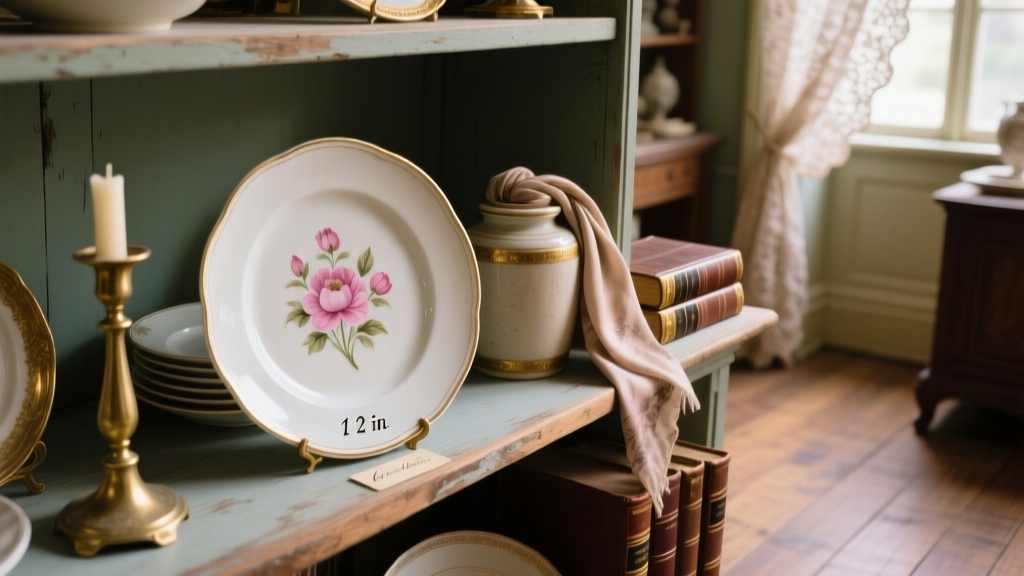
The Old Curiosity Shop Pink Bread-and-Butter Plate: Identification, History, and Restoration Guidance for Collectors
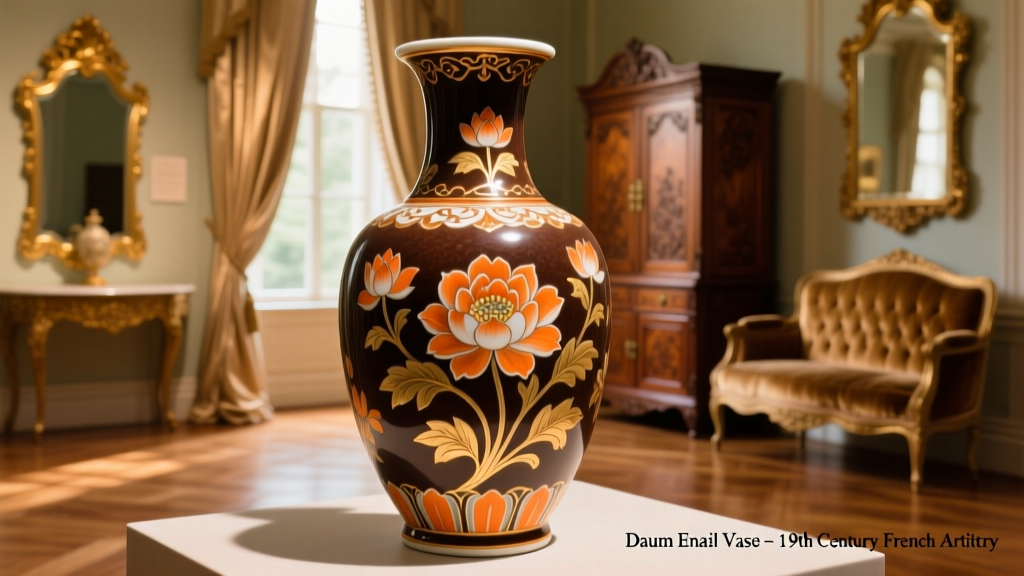
Daum Nancy Vase: Enamel Flowers on Tangerine-Brown Textured Ground with Acid-Etched Detailing (4 Inches)

Opalescent Glass Creamer Alaska Blue #2: Identification, Provenance, and Restoration Ethics for Collectors
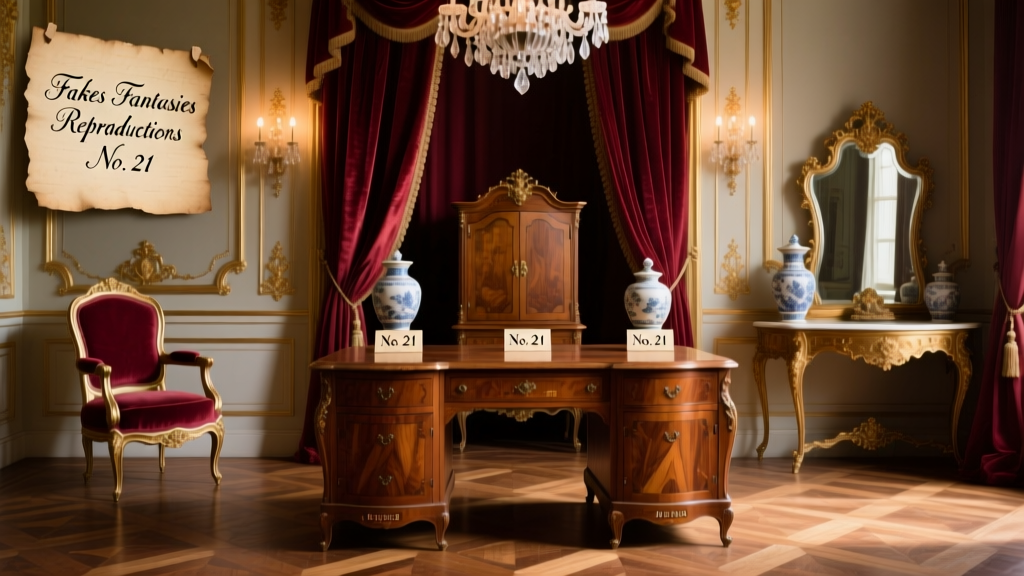
Fakes, Fantasies & Reproductions No. 21: The Case of the 'Chippendale' Mahogany Bureau Bookcase — Authenticity Under the Microscope
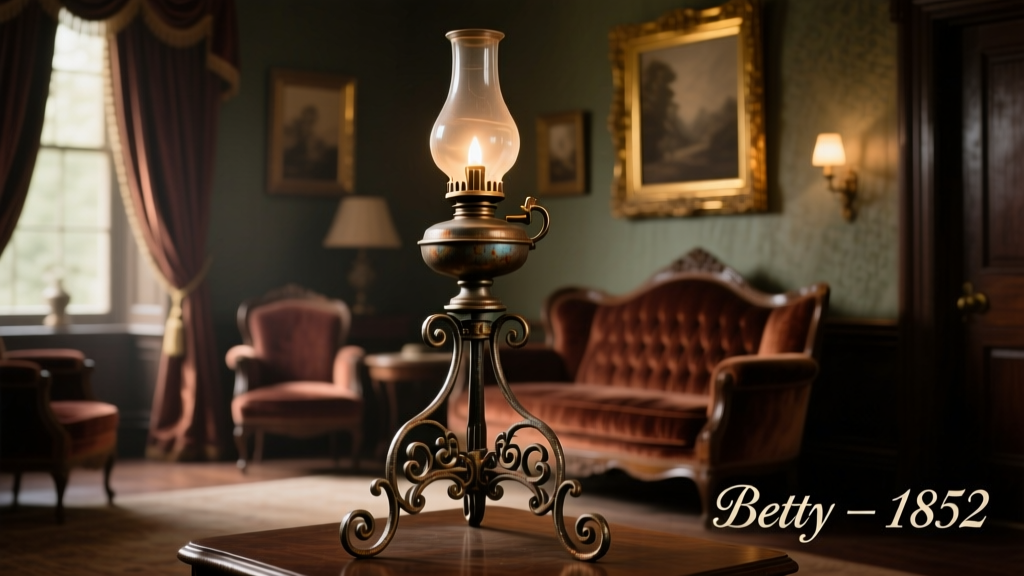
Betty Wrought Iron Grease Lamp: Decoding the 18½" Tripod Base with Scrolled Feet
Minton Factory No. 6: The Stoke-on-Trent Hub of Victorian Ceramic Innovation and Industrial Legacy
The Stoves Water Hob Removable Plates Lifter: A Cast Iron Artifact from 1920s British Domestic Engineering