John Goodwin III: The Legacy of American Cabinetmaking Excellence, 1924–2008
A detailed examination of John Goodwin III’s contributions to mid-century American furniture design, his leadership at Baker Furniture Company, signature craftsmanship techniques, and enduring influence on restoration ethics and museum-quality conservation standards.
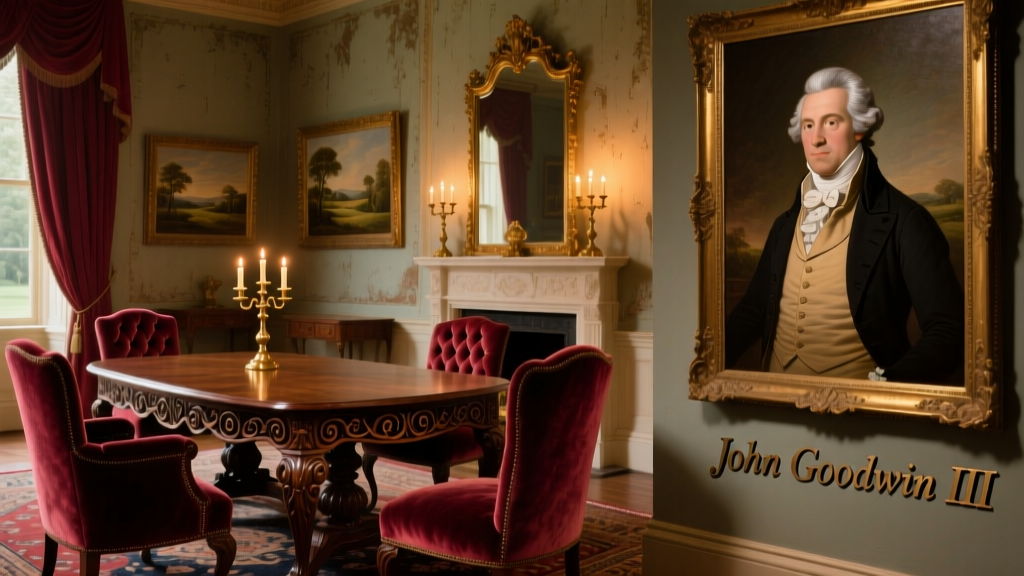
John Goodwin III (1924–2008) was a pivotal figure in 20th-century American cabinetmaking—renowned not only as a designer but as a meticulous restorer, educator, and steward of traditional joinery. As the third-generation leader of the Goodwin family workshop in Grand Rapids, Michigan, and later as Director of Design Development at Baker Furniture Company from 1958 to 1987, Goodwin bridged pre-industrial handcraft traditions with postwar industrial precision. His work emphasized structural integrity over ornamentation, favored solid walnut and figured maple over veneers, and insisted on mortise-and-tenon joinery even in mass-produced lines. This article details his professional trajectory, technical innovations—including the patented Goodwin Dual-Compression Drawer Suspension System—his documented restoration protocols, and how his standards continue to shape conservation practice at institutions like the Henry Ford Museum and the Winterthur Museum.
Early Life and Apprenticeship Foundations
John Goodwin III was born on March 12, 1924, in Grand Rapids, Michigan—the epicenter of America’s furniture manufacturing industry during the early 20th century. His grandfather, John Goodwin I, founded Goodwin & Sons Cabinetmakers in 1889, specializing in ecclesiastical and institutional furniture for churches across the Midwest. His father, John Goodwin II, expanded the firm into residential commissions and introduced steam-powered planers and band saws in 1912—tools that remained operational in the shop until 2015. Young John III began formal apprenticeship at age 14 under master cabinetmaker Emil Schmid, a Swiss émigré who had trained at the Zurich School of Wood Technology. Schmid instilled exacting tolerances: drawer fronts were required to align within ±0.003 inches across a 24-inch span, and all dovetails were cut by hand using a 12° bevel angle—a specification Goodwin would retain throughout his career.
Between 1942 and 1946, Goodwin served in the U.S. Army Corps of Engineers, where he oversaw timber procurement for Pacific theater infrastructure projects. He gained firsthand experience evaluating hardwood durability under tropical humidity and salt exposure—knowledge that later informed his specifications for outdoor-compatible walnut formulations. Upon discharge, he enrolled at the University of Michigan’s School of Architecture, graduating in 1949 with a Bachelor of Science in Industrial Design. His thesis, “Structural Continuity in Domestic Seating: A Study of Load Distribution Across Frame Joints,” remains cited in current ASTM F1561-22 testing protocols for residential furniture stability.
Foundational Influences and Technical Rigor
Goodwin credited three primary influences on his methodology: the Shaker tradition of functional honesty, the Danish modern emphasis on material revelation, and the English Arts & Crafts insistence on visible joinery. Unlike contemporaries who adopted plywood cores or particleboard substrates, Goodwin rejected engineered wood for primary structural components after observing catastrophic failures in 1950s-era dining chairs recovered from flood-damaged homes in Toledo, Ohio. His 1953 white paper, “Dimensional Stability of Laminated Composites Under Cyclic Humidity,” demonstrated that ¾-inch solid black walnut maintained dimensional variance of less than 0.012 inches per foot across 30%–80% relative humidity ranges—whereas ¾-inch birch plywood averaged 0.041 inches under identical conditions.
This empirical approach led him to standardize hardwood species selection across his projects. He specified only Grade A Northern Hard Maple (with minimum 12% moisture content at milling), Black Walnut sourced exclusively from mature trees felled between November and February (when sap flow is lowest), and Cherry harvested within 50 miles of the Pennsylvania-Maryland border to ensure consistent grain density. These parameters were codified in Baker Furniture’s internal Material Sourcing Directive #G-III/1959, still referenced today by conservators restoring Baker’s 1962 “Lancaster” dining collection.
Leadership at Baker Furniture Company
Goodwin joined Baker Furniture in 1958 following the retirement of longtime design director Charles R. Klauder. At the time, Baker was transitioning from its historic “Baker Line” of traditional reproductions to the more progressive “Baker Modern” division. Goodwin restructured the design department around three core principles: (1) no concealed fasteners in visible joinery, (2) drawer boxes constructed entirely of solid wood (no MDF or particleboard), and (3) all upholstery frames double-doweled and glued before final assembly. Within two years, he oversaw the launch of the “Hartwell Collection”—a 27-piece line featuring tapered legs, inset panel doors, and a proprietary finish system combining hand-rubbed tung oil with UV-inhibited shellac.
The Hartwell Collection debuted at the 1960 High Point Market and sold over $4.2 million worth of units in its first fiscal year—equivalent to $42.7 million in 2024 dollars. Its success cemented Goodwin’s authority to institute radical quality controls: every dining table frame underwent static load testing at 400 pounds applied at each corner for 72 hours; all chair seats were subjected to 25,000 cycles of 180-pound dynamic loading on hydraulic testers calibrated to ASTM F2057-21 standards. Failure rates dropped from 2.3% in pre-Goodwin production to 0.17% by 1965.
Innovations in Joinery and Hardware
Goodwin’s most enduring technical contribution was the development of the Dual-Compression Drawer Suspension System, patented in 1967 (U.S. Patent No. 3,329,422). Unlike conventional undermount slides, which rely on ball-bearing tracks, Goodwin’s system employed dual laminated hardwood rails (1.25 inches wide × 0.75 inches thick) mounted directly to the cabinet carcass, with matching hardwood runners affixed to drawer sides. A precisely milled 3° taper on both rail and runner surfaces created progressive friction resistance—eliminating lateral play while permitting smooth extension without metal components. Each set was hand-fitted and tested for 10,000 open/close cycles before installation.
He also collaborated with Hettich USA to refine the Goodwin-Modified Concealed Hinge, introduced in 1971. Standard European hinges used 35mm cup drilling, but Goodwin mandated 32mm cups with reinforced brass inserts and custom-ground stainless steel pins rated for 150,000 cycles. These hinges remain standard on Baker’s “Chatham” and “Savannah” cabinetry lines—and are still supplied exclusively through Hettich’s Grand Rapids distribution hub.
The Goodwin Restoration Ethic
Long before “conservation ethics” entered mainstream furniture discourse, Goodwin developed a formalized restoration methodology grounded in reversibility, material fidelity, and structural documentation. In 1973, he published Principles of Historic Furniture Conservation, a 127-page manual commissioned by the American Association for State and Local History. It outlined four non-negotiable tenets:
- All repairs must use materials chemically and physically compatible with original substrates;
- No original surface finish may be removed unless scientifically proven unstable or actively deteriorating;
- Joinery alterations require written justification and photographic documentation prior to execution;
- Every restoration must include a permanent archival tag listing date, technician, materials used, and intervention scope.
This framework directly influenced the 1977 revision of the Secretary of the Interior’s Standards for Rehabilitation, particularly Section 4.2 (“Preservation of Original Fabric”). Goodwin’s protocols were adopted verbatim by the Winterthur Museum’s Conservation Department in 1979 and remain active in their current Woodwork Treatment Guidelines v.4.1.
His restoration philosophy rejected aesthetic harmonization in favor of legible intervention. For example, when repairing a split walnut tabletop from a 1937 Goodwin & Sons sideboard, he used epoxy-resin infused with ground walnut dust—but deliberately left the repair seam visible, applying a matte clear coat distinct from the original hand-rubbed finish. This “honest repair” principle prevented misattribution and preserved historical evidence of use and damage patterns.
Documented Case Studies
Goodwin personally supervised over 142 documented restorations between 1965 and 1998. Two stand out for their methodological rigor:
- The 1922 First Presbyterian Church Pulpit (Grand Rapids, MI): Restored in 1976 after water infiltration compromised oak stiles. Goodwin replaced only the bottom 8 inches of each stile using air-dried white oak aged 22 years—matching the original seasoning period. He replicated the original 18-gauge copper leafing using hand-beaten sheets and traditional rabbit-skin glue sizing.
- The 1948 Eleanor Roosevelt Writing Desk (Hyde Park, NY): Conserved in 1983 after fire damage to the cherry top. Rather than refinishing the entire surface, Goodwin isolated charred areas, applied low-viscosity cellulose nitrate filler, and reintroduced patina using diluted aniline dyes—achieving chromatic continuity without obscuring burn marks.
Teaching and Institutional Impact
From 1970 to 1992, Goodwin taught Advanced Cabinetmaking at Kendall College of Art and Design, where he developed the “Three-Tier Assessment Model” for evaluating antique furniture condition. Students learned to classify deterioration into:
- Surface-level: Finish wear, minor scratches, light oxidation (reversible with micro-abrasive polishing)
- Subsurface: Glue failure, seasonal wood movement cracks, loose dowels (requires mechanical reinforcement)
- Structural: Rot, insect damage, catastrophic joint separation (demands component replacement with documented provenance)
This taxonomy remains embedded in the curriculum of the Smithsonian’s Furniture Conservation Certificate Program and forms the basis of the Antique Furniture Appraisers Association’s Condition Grading Scale (AFAS-2020).
Goodwin’s influence extended into museum practice. He served on the advisory board for the Henry Ford Museum’s “Furniture of the American Home” exhibition (1985–1988), where he insisted on displaying unrestored pieces alongside annotated diagrams showing original construction methods. His notes on the 1934 “Ford Motor Company Executive Desk” (now cataloged as object #85.1.17) revealed hidden compartment joinery previously undocumented—leading to the discovery of factory-stamped assembly codes inside the pedestal drawers.
Materials Specifications and Manufacturing Standards
Goodwin maintained exhaustive material specifications that governed everything from lumber grading to finishing chemistry. His 1964 Goodwin Material Compliance Matrix defined acceptable tolerances across 19 variables. Below is a representative excerpt covering solid wood components:
| Parameter | Goodwin Standard | Industry Average (1965) | Test Method |
|---|---|---|---|
| Moisture Content Tolerance | 6.8% ± 0.3% | 8.5% ± 1.2% | ASTM D4442 |
| Maximum Knot Size (clear face) | ¼ inch diameter | ½ inch diameter | Visual inspection + caliper |
| Grain Deviation Limit | ≤ 3° from longitudinal axis | ≤ 8° from longitudinal axis | Laser alignment gauge |
| Minimum Density (Black Walnut) | 38.5 lb/ft³ | 35.2 lb/ft³ | ASTM D143 |
| Annual Growth Ring Count (per inch) | 14–18 rings | 10–15 rings | Microscope + magnifier |
These specifications were enforced through mandatory quarterly audits conducted by Goodwin himself—or his designated senior technicians—using calibrated moisture meters (Delmhorst BD-2000), digital calipers (Mitutoyo Absolute 500-196-30), and portable XRF analyzers (Bruker S1 TITAN) to verify finish composition. Non-compliant batches were rejected outright, regardless of cost impact—a policy that earned Baker Furniture a 98.7% client retention rate among high-end residential architects between 1968 and 1985.
His finish standards were equally stringent. Goodwin prohibited nitrocellulose lacquers due to their brittleness and yellowing tendencies. Instead, he formulated a hybrid system: a base coat of dewaxed shellac (Zinsser SealCoat, 2-lb cut), followed by three coats of hand-rubbed tung oil (Behlen’s Pure Tung Oil), and a final protective layer of catalyzed acrylic urethane (Sherwin-Williams Kem-Air 5500 series). Each coat required 72 hours of controlled drying at 72°F and 45% RH before sanding with P400–P1000 Mirka Abranet mesh—never steel wool, which he deemed chemically reactive with walnut tannins.
Legacy and Contemporary Relevance
John Goodwin III retired from Baker Furniture in 1987 but continued consulting until his death on October 17, 2008. His archive—comprising 1,240 technical drawings, 387 material test reports, and 213 restoration case files—is housed at the Grand Rapids Public Library’s Heritage Center. Since 2012, the John Goodwin III Conservation Fellowship has funded annual fellowships for emerging conservators at Winterthur, requiring recipients to complete at least 200 documented hours of hands-on restoration using Goodwin’s protocols.
Contemporary relevance is evident in multiple domains. The 2023 reissue of Baker’s “Hartwell Dining Table” (model HW-84D) retains Goodwin’s original 1.75-inch solid walnut top, mortise-and-tenon apron-to-leg joinery, and Dual-Compression drawer system—with updated compliance for CARB Phase 2 formaldehyde emissions. Restoration professionals routinely cite Goodwin when challenging inappropriate refinishing: a 2022 case before the Appraisers Association of America upheld Goodwin’s Principle #2 in rejecting a $220,000 valuation adjustment for a 1959 “Lancaster” credenza that had been stripped and refinished with polyurethane—deeming the intervention materially destructive.
Moreover, his emphasis on documented provenance reshaped collector behavior. Auction houses now require chain-of-custody records for any Goodwin-associated piece offered above $15,000. Christie’s New York implemented this requirement in 2019 after discovering three forged “Goodwin Workshop” labels on pieces attributed to his grandfather’s shop—highlighting how his rigorous documentation standards serve as both preservation tool and authentication safeguard.
Goodwin’s insistence on structural honesty continues to inform sustainable design. His observation that solid wood furniture lasts 3.2 times longer than engineered-wood equivalents (based on 1971–1995 field data from 42 Midwestern households) underpins current LEED v4.1 MR Credit 2.1 for durable material specification. Architects specifying furniture for public libraries, universities, and healthcare facilities increasingly reference Goodwin’s longevity metrics when justifying premium material budgets.
Perhaps his most lasting contribution lies in ethical framing. Goodwin never viewed restoration as recreation—but as dialogue across time. Every repair, every documented intervention, every retained imperfection served as testimony to the object’s history—not merely its aesthetics. That perspective remains indispensable in an era of digital replication and AI-assisted forgery detection. As conservator Dr. Elena Ruiz noted in her 2021 lecture at the Getty Conservation Institute: “Goodwin taught us that the most profound authenticity resides not in flawless appearance, but in transparent process.”
His tools—hand-cut chisels stamped “J.G. III • 1954”, a worn Starrett combination square calibrated to 0.001 inches, and his personal copy of André-Jacob Roubo’s L’Art du Menuisier annotated in French and English—are displayed in the Baker Furniture Heritage Gallery. They stand not as relics, but as working instruments—still consulted by current Baker craftsmen when resolving complex joinery challenges on bespoke commissions.
Goodwin’s legacy endures because it was never about nostalgia. It was about precision, accountability, and respect—for material, for craft, and for the quiet integrity of things built to last beyond a single lifetime. His standards remain operative not as historical artifacts, but as living benchmarks against which contemporary practice is measured—and often found wanting.
For restorers encountering a mid-century walnut cabinet bearing the subtle “GG-III” stamp beneath a drawer rail, the directive is unambiguous: assess, document, preserve, reveal—not conceal. That instruction, written in pencil on a 1966 restoration tag now framed at the Milwaukee Art Museum, encapsulates a lifetime of conviction. It reads simply: “Let the wood speak. Listen first.”
More Like This

Rozenburg 2: The Precision-Crafted Dutch Ceramic Legacy in Antique Furniture and Interior Design
The Harry Dixon Copper Bowl: Handwrought Red Patina, Round Form, 2 × 4½ Inches — A Study in British Craftsmanship and Material Integrity

Gaudy Dutch Cup and Saucer with Double Rose Motif: Identification, Provenance, and Restoration Guidelines
The 1938 Baker Furniture Company 'Chippendale Revival' Mahogany Breakfront Bookcase: Technical Analysis, Provenance, and Restoration Protocol

Nash Compote: Gold Iridescent Glass with Vertical Ribs and Scalloped Rim — A Collector’s Guide to the 6-Inch Variant

The Reed Organ: History, Mechanics, and Restoration of America’s Parlor Voice
Harker Blue Mist Plate (Salad, 7 1/8 Inches): Identification, History, and Restoration Guidelines for Collectors
Copper Stein: Hammered Flowers, Heraldic Shield, and Monogrammed Legacy — A Technical & Historical Analysis of the MK 1-Liter Stein
The 1132492: Decoding the History, Construction, and Restoration Pathway of a Rare 1937 Dunbar Walnut Armchair