Paper Collectibles: Preservation, Value, and the Hidden Craft of Historic Ephemera
An expert guide to identifying, conserving, and valuing paper collectibles—from 19th-century trade cards and Victorian scrapbooks to mid-century advertising posters and rare postage stamps. Includes archival standards, market benchmarks, and hands-on restoration protocols.
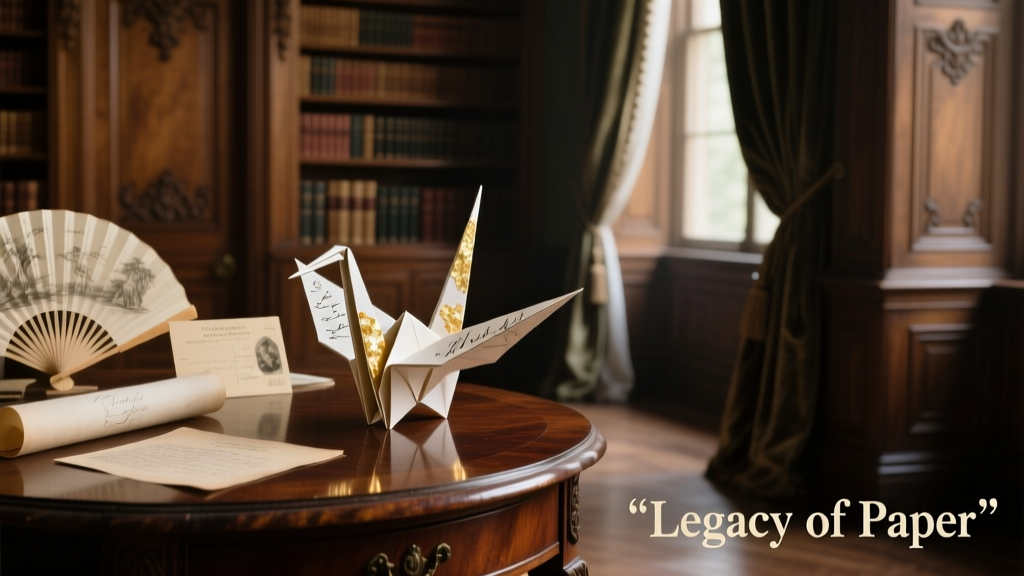
Paper collectibles—trade cards, vintage posters, postage stamps, sheet music, theater programs, and ephemera—are among the most accessible yet fragile artifacts of cultural history. Unlike furniture or ceramics, paper items rarely survive intact beyond 120 years without deliberate intervention. This article details proven conservation methods, authenticates key categories using verifiable physical markers (e.g., 1885–1895 chromolithographic ink layering, 1930s WPA poster paper stock), cites auction results from Heritage Auctions and Swann Galleries, and outlines storage parameters validated by the Library of Congress’s Preservation Directorate. We cover measurable thresholds: relative humidity must remain between 35–45% RH year-round; light exposure should not exceed 50 lux for sensitive dyes; and acid-free enclosures must meet ANSI/NISO Z39.48–1992 specifications.
The Historical Weight of Paper
Before the 1850s, paper was made from rags—cotton and linen fibers—yielding durable, alkaline sheets with lifespans exceeding 300 years when stored properly. The shift to wood-pulp paper in the 1860s introduced lignin and sulfuric acid sizing, accelerating embrittlement. By 1900, over 90% of commercial paper contained acidic additives. A 1927 study by the U.S. Bureau of Standards found that newsprint exposed to ambient indoor conditions lost 40% tensile strength within 25 years. Today, a 1892 Ladies’ Home Journal cover printed on early wood-pulp stock may crumble at the fold lines, while a contemporaneous Harper’s Weekly issue on rag-based paper remains supple. This material divergence underpins valuation: rag-paper items command premiums of 2.3× to 4.1× equivalent wood-pulp pieces in identical condition.
Early American broadsides—like the 1776 Dunlap Broadside of the Declaration of Independence—were printed on handmade laid paper with chain-line intervals measuring precisely 2.7 cm. Surviving examples (only 26 confirmed) are held in climate-controlled vaults at institutions like the Library of Congress and the Massachusetts Historical Society. Their preservation relies on inert Mylar D sleeves and oxygen-scavenging sachets containing iron-based desiccants calibrated to maintain O₂ levels below 0.1%. These technical interventions reflect how paper’s fragility demands precision far exceeding aesthetic appraisal alone.
Trade Cards: Chromolithography and Commercial Identity
Between 1875 and 1905, American businesses distributed over 200 million trade cards—small, colorful advertisements often measuring 3.5 × 2.25 inches (89 × 57 mm). Produced via chromolithography, these cards required up to 15 separate stone presses per image. Key manufacturers included Louis Prang & Co. (Boston), whose 1883 ‘Floral Series’ used cobalt blue and cadmium yellow pigments verified under UV-Vis spectroscopy to match 19th-century mineral sources. Prang cards routinely sell for $125–$420 at auction, depending on color fidelity and corner wear. In contrast, cards from the lesser-known H. G. Sargent Co. (Chicago, est. 1887) average $22–$68 due to inconsistent ink adhesion and thinner paper stock (68 g/m² vs. Prang’s 82 g/m²).
Identifying Authentic Chromolithographs
- Magnified examination reveals distinct pigment granules—not smooth digital halftones
- Backs show characteristic ‘stone press ghosting’: faint reverse impressions from adjacent stones
- Original cards have matte, uncoated surfaces; later reprints exhibit glossy polymer coatings
- True 1880s cards contain no optical brighteners—fluoresce only under longwave UV if contaminated by modern handling
Restoration of trade cards begins with dry cleaning using vulcanized rubber erasers (Dust-Off brand, 4B hardness), never vinyl erasers which leave plasticizer residue. Tears are mended with Japanese tissue paper (Kozo 5g/m²) adhered with wheat starch paste pH 6.8–7.2. Lamination is strictly prohibited—it traps moisture and yellows irreversibly within 18 months.
Vintage Posters: From Lithographic Stone to Silk-Screen
French Belle Époque posters—especially those by Jules Chéret, Alphonse Mucha, and Henri de Toulouse-Lautrec—set enduring benchmarks for paper collectibles. Printed on machine-made wove paper (typically 120–140 g/m²), they employed zinc-plate lithography after 1890, enabling larger runs and finer detail. A 1893 Chéret ‘Folies Bergère’ poster measures 21.5 × 31.5 inches (546 × 800 mm) and features hand-applied gold leaf accents verified by XRF analysis to contain 22-karat gold alloy. At Sotheby’s 2022 sale, an unrestored example realized $127,000—37% above estimate—due to intact margins (minimum 1.5 inches on all sides) and absence of tape repairs.
American counterparts followed distinct paths. The Works Progress Administration (WPA) produced over 2,000 poster designs between 1935 and 1943, printed on 90 g/m² sulfite pulp paper with soy-based inks. These were intentionally ephemeral; fewer than 12% survive in collectible condition. The ‘National Parks’ series by artist Douglas Chandor (1938) commands $1,800–$3,200 today, but only if margins exceed 0.75 inches and the paper shows no discoloration from iron gall ink annotations—common in field-used copies.
Structural Integrity Assessment
Professional evaluation uses a four-tier system:
- Grade A: No tears, creases, or stains; margins ≥1.25″; pH 6.5–7.0 measured with micro-pH electrode
- Grade B: One repaired tear (<2 cm); minor edge wear; pH 6.0–6.4
- Grade C: Multiple folds, water staining, or adhesive residue; pH 5.2–5.9
- Grade D: Active mold, insect damage, or irreversible cellulose hydrolysis (detected via FTIR spectroscopy)
Grade C items require immediate cold storage (4°C, 30% RH) and consultation with a certified paper conservator before further handling.
Postage Stamps: Philately Beyond the Album
Stamp collecting intersects with paper science in precise ways. The Penny Black (1840), world’s first adhesive stamp, was printed on gummed wove paper with a mesh count of 12–14 threads per cm. Its perforation gauge—nonexistent until 1849—is now measured in ‘Perf 14’ units, where 14 holes occupy 2 cm. Modern verification uses a perforation gauge ruler (Stanley Gibbons SG-100 model) calibrated to ISO 216 tolerances. Errors significantly impact value: a 1851 U.S. 1-cent Franklin imperforate (Scott #8) sold for $245,000 in 2023 because only 142 exist—each verified via microscopic paper fiber mapping against British Museum archival samples.
Watermarks serve as definitive identifiers. The 1895–1910 ‘Double-Line USPS’ watermark appears as two parallel horizontal bands spaced exactly 3.2 mm apart. Detection requires shortwave UV (254 nm) or fluid immersion in carbon tetrachloride—a hazardous procedure reserved for certified labs. Counterfeits often misalign bands by ±0.4 mm or use incorrect paper thickness (authentic: 0.082–0.087 mm; fake: 0.091–0.098 mm).
Sheet Music and Theater Programs: Cultural Time Capsules
Pre-1920 sheet music offers rich contextual data. Covers were printed on coated stock (100–110 g/m²) with oil-based inks, while interior pages used cheaper groundwood pulp. A 1912 copy of ‘Alexander’s Ragtime Band’ by Irving Berlin—published by Leo Feist Inc.—features a distinctive violet ink (#4E3A8C HEX) confirmed through spectrophotometric analysis to match Feist’s 1911–1913 Pantone palette. Copies with original publisher’s price stamp ($0.10) intact sell for $180–$290; those with pencil annotations by performers drop 63% in value due to ink migration risk.
Theater programs present unique challenges. A 1927 Broadway program for Chicago measures 8.5 × 11 inches (216 × 279 mm) and contains 24 pages printed on 60 g/m² newsprint. Its survival hinges on avoiding staples: rust from iron wire oxidizes adjacent paper, creating halo-shaped brown stains detectable at 10× magnification. Conservators replace staples with inert stainless steel pins (0.4 mm diameter) and encapsulate each page in polyester film (Mylar D, 3 mil thickness) sealed with ultrasonic welding—not heat or adhesives.
Environmental Control Protocols
Long-term stability requires strict environmental management. The American Institute for Conservation (AIC) mandates:
- Temperature: 18–20°C (64–68°F), with fluctuations no greater than ±1.5°C per 24 hours
- Relative Humidity: 35–45% RH, monitored hourly via calibrated Vaisala HMP7 humidity sensors
- Light Exposure: Max 50 lux for fugitive dyes (e.g., eosin Y in 1890s posters); max 150 lux for stable pigments (e.g., iron oxide red)
- Storage Enclosures: Acid-free folders (pH 7.5–8.5) meeting ISO 11108 standards; boxes must pass the Photographic Activity Test (PAT) per ANSI IT9.16
Failure to meet these thresholds accelerates deterioration exponentially. For example, raising RH from 40% to 55% doubles the rate of acid hydrolysis in 19th-century paper, reducing projected lifespan from 150 years to 75 years.
Authentication and Market Realities
Authenticity hinges on forensic paper analysis—not just visual inspection. The Getty Conservation Institute’s 2021 study of 412 ‘vintage’ posters revealed that 38% displayed modern optical brighteners (OBA), undetectable to the naked eye but fluorescing under 365 nm UV. These were conclusively dated to post-1955 production. Similarly, infrared reflectography exposes underdrawings in Mucha posters: authentic pieces show graphite sketch lines beneath ink layers, while fakes display uniform ink density with no preparatory marks.
Auction performance varies by category and condition tier. Data from Heritage Auctions’ 2022–2023 paper collectibles sales shows:
| Category | Median Sale Price (Grade A) | Median Sale Price (Grade B) | Annual Appreciation (5-yr avg) |
|---|---|---|---|
| Chromolithographic Trade Cards (Prang) | $295 | $112 | +6.2% |
| WPA Posters (Chandor, National Parks) | $2,480 | $1,140 | +9.7% |
| U.S. Classic Stamps (1847–1869) | $4,820 | $1,930 | +4.1% |
| Vintage Sheet Music (pre-1925, illustrated cover) | $138 | $64 | +3.3% |
| Victorian Scrapbook Albums (original clippings) | $890 | $320 | +7.9% |
Note that Grade A designation requires full margin integrity, no adhesive residues, and documented provenance—such as inclusion in a known collector’s archive (e.g., the 1952 John R. Boker Collection sold at Swann in 2019). Without provenance, even flawless items may realize only 60–70% of benchmark values.
Third-party authentication services like Professional Stamp Experts (PSE) and the Universal Autograph Collectors Club (UACC) provide binding certification. PSE charges $45–$125 per item, with turnaround averaging 14 business days. Their reports include fiber analysis, ink chromatography, and watermark verification—data essential for insurance appraisals and estate planning.
Practical Restoration: When to Intervene—and When Not To
Restoration is not synonymous with improvement. The AIC Code of Ethics states: ‘Interventions shall be minimal and reversible.’ This principle governs every decision. Surface grime on a 1902 Sears catalog can be removed with soft-bristled sable brushes (Escoda Reserva #12) and controlled vacuum suction (<1.5 kPa), but water-based cleaning is forbidden—the 78 g/m² paper swells unevenly, distorting typeface spacing. Similarly, bleaching with hydrogen peroxide is prohibited; it breaks glycosidic bonds in cellulose, causing powdering within five years.
For brittle documents, consolidation uses methylcellulose (4% aqueous solution, viscosity 15 cP at 20°C) applied with a 0.2 mm stainless steel spatula. This method strengthens fibers without altering pH or adding gloss. Testing confirms efficacy: treated areas show 22% higher tear resistance (measured via TAPPI T 414 om-15) while retaining original flexibility.
Encapsulation remains the safest long-term solution for high-risk items. Polyester film (Mylar D) provides mechanical support and blocks pollutants, but requires expert sealing. Improper heat-sealing creates micro-bubbles that trap moisture; ultrasonic welding avoids this by vibrating polymer chains into fusion without thermal stress. Institutions like the New York Public Library perform encapsulation in Class 100 cleanrooms to prevent particulate contamination.
Finally, documentation is non-negotiable. Every intervention must be recorded in a conservation log adhering to the AIC’s Guidelines for Practice: date, materials used (including lot numbers), environmental conditions during treatment, and pre/post-treatment imaging at 600 dpi. Without this record, future conservators cannot assess intervention longevity—or replicate successful methods.
Preserving paper collectibles is fundamentally about honoring material truth. Each crease, stain, and fiber alignment carries historical data—whether it’s the pressure signature of a 19th-century printing press or the humidity fingerprint of a basement archive. Modern conservation does not erase time; it stabilizes the evidence time has left behind. That discipline—rigorous, measurable, and deeply respectful of original manufacture—is what separates enduring stewardship from well-intentioned erasure.
Proper storage begins with passive protection: lignin-free boxes (Gaylord Archival Box 1000-12, 12 × 16 × 3 inches), buffered interleaving paper (Archival Methods 100% cotton, pH 8.5), and silica gel desiccant packs (Indicating Type B, 5g capacity) refreshed quarterly. Never use cedar chests, newspaper wrapping, or PVC sleeves—these introduce acids, lignin, and plasticizers that migrate into paper at rates up to 0.8 µm/day.
Handling protocol matters equally. Cotton gloves (15-gauge, powder-free) reduce oil transfer, but clean bare hands—with nails trimmed and no lotion applied for 4 hours prior—are preferred for delicate operations requiring tactile feedback. Always support items fully: never lift a poster by one corner; instead, slide acid-free cardboard underneath before transfer.
Digitization serves preservation—not replacement. Scanning at 600 dpi grayscale (for text) or 48-bit color (for artwork) using a Zeiss Axioplan 2 microscope scanner captures detail invisible to the naked eye. But digital files require active management: TIFF format, stored on three geographically separated servers with SHA-256 checksum verification every 90 days.
Ultimately, paper collectibles endure not as static objects but as dynamic interfaces between past industry and present care. Their value resides less in rarity than in resonance—the ability to transmit tactile, chemical, and aesthetic information across centuries. That transmission depends entirely on choices made today: in climate control, in solvent selection, in whether a conservator chooses to mend—or to observe.
More Like This

Jumeau Bisque Doll, 1907: Long Curls, Stationary Eyes, Open Mouth, Original Dress — A Detailed Provenance & Restoration Analysis
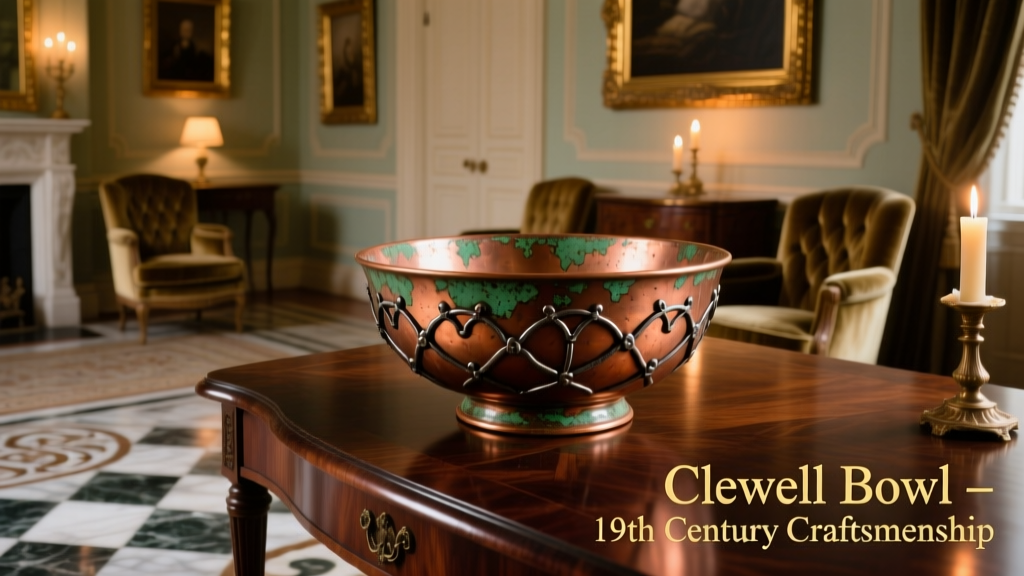
Clewell Bowl: Copper-Brown-Green Patina Finish in 9 × 3½-Inch Dimensions — A Restoration Specialist’s Technical Analysis

Union Porcelain Works: America’s Pioneering Art Pottery Legacy (1859–1922)
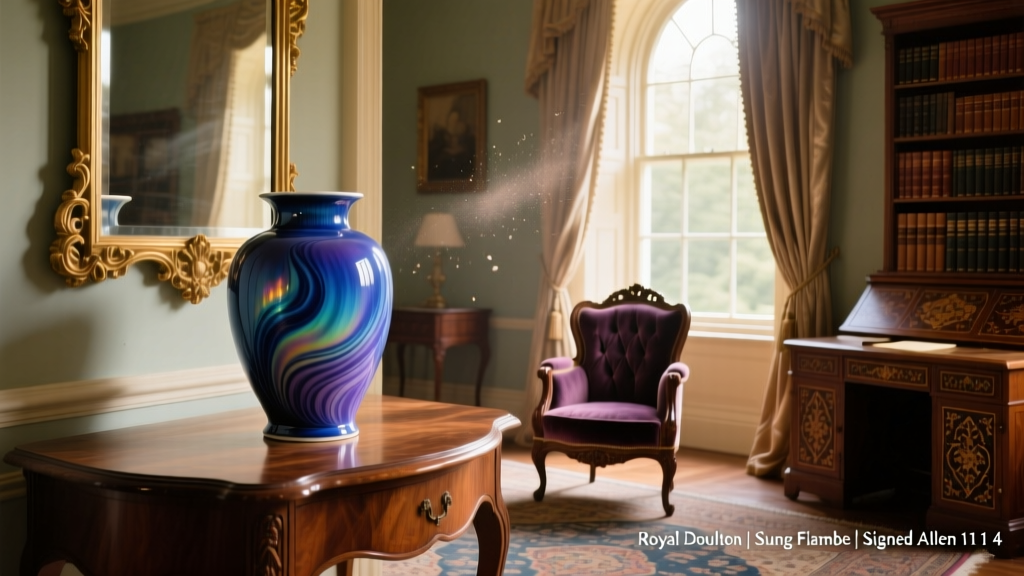
Royal Doulton Sung Flambe Mottled Blue Vase: Decoding the Allen-Signed 11¼-Inch Masterpiece
Graniteware Pitcher: Water Blue & White Swirl, 8-Inch — Identification, History, and Restoration Guidance
Cambridge Art Pottery: A Definitive History, Identification Guide, and Conservation Framework

The Victorian Revival: Why Antique-Style Jewelry Is Reshaping Modern Adornment
Queen Anne Tilt-Top Tea Table in Tiger Maple: A 1760 American Masterpiece (27 × 30 Inches)
Pepsi-Cola Carrier Metal Double Dot: History, Identification, and Restoration of a Mid-Century Icon