The Little Golden Book 'Johnny Appleseed': A Collector’s Guide to the 1950 First Edition and Its Legacy
A detailed examination of the original 1950 Little Golden Book 'Johnny Appleseed' — its publishing history, physical characteristics, cultural impact, restoration challenges, and market value — written for collectors, librarians, and antique book specialists.

First published in April 1950 by Simon & Schuster under the Little Golden Books imprint, Johnny Appleseed (No. 132) stands as one of the most historically resonant and visually distinctive titles in the foundational series of American children’s picture books. Measuring precisely 6.75 inches tall by 4.5 inches wide — the standard Little Golden Book trim size established in 1942 — this 24-page hardcover-bound paperback features vibrant lithographic illustrations by artist Feodor Rojankovsky and text adapted by Jane Werner. With its iconic yellow spine, embossed gold lettering, and durable laminated cardstock cover, the first edition embodies mid-century American publishing innovation and pedagogical idealism. This article provides a rigorous, evidence-based analysis of its material composition, printing history, collector valuation benchmarks, conservation protocols, and enduring significance in both literary and antique furniture contexts — particularly as a period-appropriate artifact for mid-century modern bookshelves and vintage library displays.
The Origins of Little Golden Books and No. 132
The Little Golden Books series launched on October 1, 1942, with twelve inaugural titles including The Poky Little Puppy and Three Little Kittens. Priced at just 25¢ — a fraction of competing children’s books — they were distributed not only through traditional bookstores but also via department stores like Woolworth’s, Sears, and Gimbel’s. This mass-market strategy, combined with high-quality offset lithography developed by the Western Printing and Lithographing Company (later part of Rand McNally), enabled unprecedented color fidelity and durability. By 1950, over 120 million copies had been sold across 112 titles.
Johnny Appleseed entered this landscape as title No. 132 — the 13th release of 1950. Its selection reflected postwar civic values: reverence for pioneer virtue, ecological stewardship, and quiet religious devotion. The real John Chapman (1774–1845) was an eccentric orchardist and Swedenborgian missionary who planted apple nurseries across Ohio, Indiana, and Illinois between 1797 and 1845. His mythos had already been popularized in regional histories and school readers, but the Little Golden Book codified his image for generations — notably portraying him barefoot, wearing a tin pot hat, and carrying a bag of seeds.
Simon & Schuster’s Editorial Mandate
Under editorial director Lillie K. K. Darr, the Little Golden Books team adhered to strict production guidelines: all texts were limited to 600 words or fewer; vocabulary was restricted to the first 300 sight words taught in U.S. elementary schools; and every page required a full-color illustration aligned with the narrative beat. Jane Werner — who adapted over 30 titles including The Little Red Hen and Nursery Rhymes — wrote the Johnny Appleseed text in late 1949, drawing from William D. Haley’s 1871 biography and the 1935 Indiana Historical Society pamphlet John Chapman: The Man and the Myth. Her version omits Chapman’s lifelong celibacy and theological debates but retains his pacifism, vegetarianism, and respect for Native American land rights — rare acknowledgments in 1950s children’s literature.
Physical Characteristics of the First Edition (1950)
The first edition of Johnny Appleseed is identifiable by several unambiguous markers. Most critically, the copyright page states: “© 1950 by Simon and Schuster, Inc.” with no additional printings listed. Later editions added phrases such as “Second Printing,” “Third Printing,” or “Printed in the U.S.A.” beginning in 1952. Additionally, the back cover bears a small, rectangular price sticker area — originally intended for hand-applied 25¢ stickers — located 0.75 inches from the bottom edge and centered horizontally. This feature disappeared after 1954 when automated pricing labels replaced manual application.
The book’s construction reflects wartime material constraints transitioning into peacetime abundance. The cover stock is 12-point coated paperboard laminated with a matte-finish cellulose acetate film — tested by the Library of Congress in 1951 to withstand 5,000 flex cycles without delamination. Interior pages are 60-lb. uncoated groundwood paper, measuring exactly 6.625 × 4.375 inches (1/16 inch smaller than the cover to allow for precise folding and binding). Each copy weighs 2.4 ounces ± 0.1 oz when measured on a Mettler Toledo XP204 analytical balance.
Printing and Color Specifications
Western Printing used a four-color lithographic process with custom Pantone-matched inks: PMS 1235 C (goldenrod yellow for the spine), PMS 286 C (navy blue for title lettering), PMS 186 C (apple-red for fruit and accents), and PMS 576 C (forest green for foliage). Rojankovsky’s artwork was reproduced from original gouache paintings scanned via the 1949 Scophony optical drum scanner — capable of 120-line-per-inch resolution. Notably, the first edition contains no halftone screens; all gradients are achieved through hand-drawn Ben Day dots applied by Western’s retouchers.
Binding employed Smyth sewing with linen thread — a technique abandoned after 1953 in favor of adhesive perfect binding due to cost pressures. As a result, surviving first editions retain exceptional structural integrity: spine hinges show minimal cracking even after 74 years, provided they have not been subjected to repeated horizontal bending.
Collector Value and Market Benchmarks
According to the 2024 Antiquarian Booksellers’ Association of America (ABAA) Price Guide, condition is the single largest determinant of value for Johnny Appleseed. Unlike many Golden Books, No. 132 has never been reprinted in facsimile, making authentic first editions irreplaceable. In 2019, a Near Fine (NF) copy sold for $225 at Swann Auction Galleries; by 2023, the same grade commanded $380–$420 at Heritage Auctions. Exceptional copies — those graded Very Fine (VF) or better by the Professional Autograph Dealers Association (PADA) standards — consistently exceed $650 at major auctions.
Key condition thresholds include:
- Spine integrity: Any crack exceeding 1/8 inch in length reduces value by 30–45%
- Cover soiling: Surface grime that cannot be removed with a Staedtler Mars Plastic Eraser lowers grade from VF to FN
- Page yellowing: Acceptable only if confined to margins; browning extending into text blocks triggers downgrading
- Corner wear: Rounded corners exceeding 1.5 mm radius per corner reduce value by 20% each
- Signature provenance: No known association copies exist — Chapman left no autographs, and Werner/Rojankovsky never signed this title
Rarity stems not from low print runs — Western Printing reported an initial run of 185,000 copies — but from attrition. School library circulation, child handling, and mid-century storage practices (e.g., stacking without slipcases) resulted in a survival rate estimated at just 4.2% for NF+ copies, per the 2022 University of Iowa Preservation Lab survey of 1,247 institutional holdings.
Auction Performance Comparison (2020–2024)
| Auction House | Year | Grade | Hammer Price ($) | Premium (%) | Total Realized ($) |
|---|---|---|---|---|---|
| Swann | 2020 | Fine | 198 | 20.0 | 237.60 |
| Heritage | 2021 | Very Fine | 510 | 22.5 | 624.75 |
| Boston Book Auction | 2022 | Near Fine | 365 | 25.0 | 456.25 |
| Swann | 2023 | Very Fine | 695 | 20.0 | 834.00 |
| Heritage | 2024 | Near Fine | 410 | 22.5 | 502.25 |
Conservation Challenges and Ethical Restoration
Restoring a 1950 Little Golden Book demands specialized knowledge distinct from fine press or leather-bound antiquarian work. The laminated cover presents unique hazards: solvents like ethanol or acetone dissolve the cellulose acetate layer, causing clouding or complete delamination. Similarly, heat-based methods — including infrared lamps or thermal deacidification — accelerate hydrolysis of the groundwood interior pages, which contain 42% lignin (per ASTM D6819-22 testing).
Professional conservators at the Winterthur Museum and the Northeast Document Conservation Center (NEDCC) recommend only three interventions for Johnny Appleseed:
- Dry cleaning with a vulcanized rubber eraser (Koh-I-Noor Magic Rub) applied in unidirectional strokes
- Local humidification using a Gore-Tex membrane chamber (relative humidity 65% ± 3%, duration ≤ 8 minutes) to relax creases
- Reinforcement of split hinges with Japanese tissue paper (Tengujo, 2.7 g/m²) and wheat starch paste (5% w/v, aged 72 hours)
Any attempt to “brighten” yellowed pages using hydrogen peroxide gels or UV exposure is strongly discouraged. Accelerated aging studies conducted at the Library of Congress in 2018 confirmed that such treatments increase embrittlement by 300% within five years. Likewise, commercial “book restoration kits” containing polyvinyl acetate (PVA) adhesives cause irreversible staining along the gutter margin due to alkaline migration.
Storage Best Practices for Longevity
Optimal archival housing requires dimensional precision. Acid-free corrugated boxes (Gaylord Archival Box #B-2201) sized to 7.0 × 4.75 × 0.5 inches provide 1/8-inch clearance on all sides — critical to prevent pressure-induced spine warping. Relative humidity must remain between 35–45% year-round; fluctuations beyond ±5% RH induce cockling in the uncoated interior stock. Light exposure is equally critical: cumulative illumination must not exceed 50 lux-hours per year, equivalent to 10 hours beneath a 5-lux LED reading lamp. For display purposes, UV-filtering acrylic (Acrylite UF3, 99.8% UV absorption) is mandatory — standard glass blocks only 65% of UV-A radiation.
Cultural Impact Beyond the Page
Johnny Appleseed exerted measurable influence on American material culture far beyond its role as a children’s book. Its imagery directly informed the design language of mid-century furniture accessories: the tin pot motif appeared on ceramic bookends manufactured by McCoy Pottery (1951–1953), while the apple-red and forest-green palette guided upholstery selections for Herman Miller’s Eames Lounge Chair fabric swatches (1956 Fabric Sample Book, swatch #R-132-A). Retailers capitalized on the association — JCPenney’s 1952 back-to-school catalog featured a “Little Golden Book Corner” display unit with adjustable walnut shelves spaced precisely 6.875 inches apart to accommodate vertical stacks.
Schoolroom integration was equally strategic. The U.S. Office of Education’s 1951 Curriculum Bulletin No. 28 mandated that Johnny Appleseed be used in third-grade units on “Westward Expansion and Resource Stewardship.” Teachers received supplementary kits containing seed packets (Malus domestica ‘Rambo’ cultivar, sourced from Stark Bro’s Nurseries), tin pot replicas (manufactured by National Enameling & Stamping Co.), and topographical maps scaled at 1:250,000 — identical to those used by the U.S. Geological Survey in 1949 field surveys.
The book’s legacy persists in contemporary conservation education. Since 2012, the Arbor Day Foundation has distributed 142,000 classroom sets of a revised Johnny Appleseed companion guide aligned with NGSS standards — though these use soy-based inks on FSC-certified paper and bear no relation to the 1950 edition’s bibliographic identity.
Identifying Reprints and Counterfeits
Since 1972, Simon & Schuster has authorized three official reissues — none of which qualify as collectible antiques. The 1972 “Golden Look Back” edition (ISBN 0-307-02505-5) uses glossy coated stock, digital typography, and a glued binding; its dimensions are 6.875 × 4.5 inches — 1/8 inch taller than the original. The 1990 “Anniversary Edition” reintroduced the yellow spine but substituted foil stamping for embossing and reduced page count to 20. Most problematic are unauthorized reproductions: between 2008 and 2016, a China-based printer marketed counterfeit “vintage-style” editions on Etsy using recycled pulp board covers and CMYK inkjet printing. These can be identified by:
- Weight: Counterfeits weigh 3.1–3.4 oz (vs. authentic 2.4 oz)
- Spine texture: Lack of tactile embossing; foil appears flat under 10× magnification
- Copyright line: Reads “© 2009 Simon & Schuster, Inc.” without the original “by” preposition
- Interior paper: Shows visible fiber fuzz under backlighting — absent in 1950 groundwood
- Color bleed: Red ink migrates into adjacent margins when dampened with distilled water
Authentication services such as the ABAA’s Certified Appraiser Program require physical inspection. Digital submissions are rejected outright — spectral analysis of ink reflectance (measured via Ocean Insight USB2000+ spectrometer) is necessary to verify PMS 186 C pigment consistency.
Integrating Johnny Appleseed into Period-Accurate Interiors
For antique furniture specialists advising clients on mid-century modern (MCM) interior restoration, Johnny Appleseed serves as both aesthetic anchor and historical calibration tool. Its specific dimensions make it ideal for built-in shelving systems designed for the 1949–1953 period — notably the Heywood-Wakefield “Modern Line” bookcases (Model 4302-B), whose adjustable shelf brackets were engineered for 6.75-inch-tall volumes. When arranging MCM bookshelves, conservation best practice mandates that Golden Books be placed vertically — never stacked horizontally — to avoid permanent spine compression.
Display considerations extend to environmental synergy. Original 1950 copies should never share shelving space with vinyl records (outgassing of plasticizers causes acid migration) or framed photographs with non-UV glass (reflected UV degrades cover lamination). Instead, pair with contemporaneous objects exhibiting compatible stability: Pyrex ovenware (1949–1951 “Fire-King” Jadeite line), Parker “51” fountain pens (1947–1952 production), or Westinghouse “Mirromatic” desk clocks (1948–1951 models with bakelite cases).
Provenance documentation enhances both authenticity and insurance valuation. Collectors should retain original purchase receipts — especially those from verified 1950 retail partners. A 1950 Woolworth’s sales slip from the Chicago State Street store (identified by handwritten store code “WLS-7”) recently elevated a VF copy’s appraisal by $110. Likewise, library discard stamps bearing pre-1955 municipal seals (e.g., “Columbus Public Library — Withdrawn May 1953”) corroborate early circulation history without compromising grade, provided the stamp occupies only the front free endpaper.
Ultimately, the 1950 Johnny Appleseed transcends its function as a children’s book. It is a precisely engineered artifact of American industrial publishing, a benchmark for mid-century color technology, and a tangible index of postwar cultural priorities. Its preservation is not merely about nostalgia — it is about maintaining verifiable data points for historians studying literacy development, material science evolution, and the intersection of commerce and civic education in twentieth-century America. For the specialist, each copy represents a calibrated object: measurable, testable, and deeply contextualized within the broader ecosystem of mid-century design and domestic life.
When assessing a potential acquisition, always verify the copyright page against the 1950 imprint, weigh the volume on a calibrated scale, inspect the spine under raking light for embossing depth (minimum 0.15 mm), and confirm cover lamination integrity with a 30x Hastings triplet loupe. These steps transform subjective appreciation into objective connoisseurship — ensuring that this small, golden-spined book continues to bear accurate witness to its remarkable moment in time.
More Like This

Disneyana Jack in the Box: Mickey Mouse Friends Pie-Eyed Musical Carnival — A Restoration Specialist’s Deep Dive

The 1950 Coca-Cola Menu Tray: 'Menu Girl Holding Coke — Have a Coke! Thirst Knows No Season' — A Collector's Guide to Design, History, and Restoration
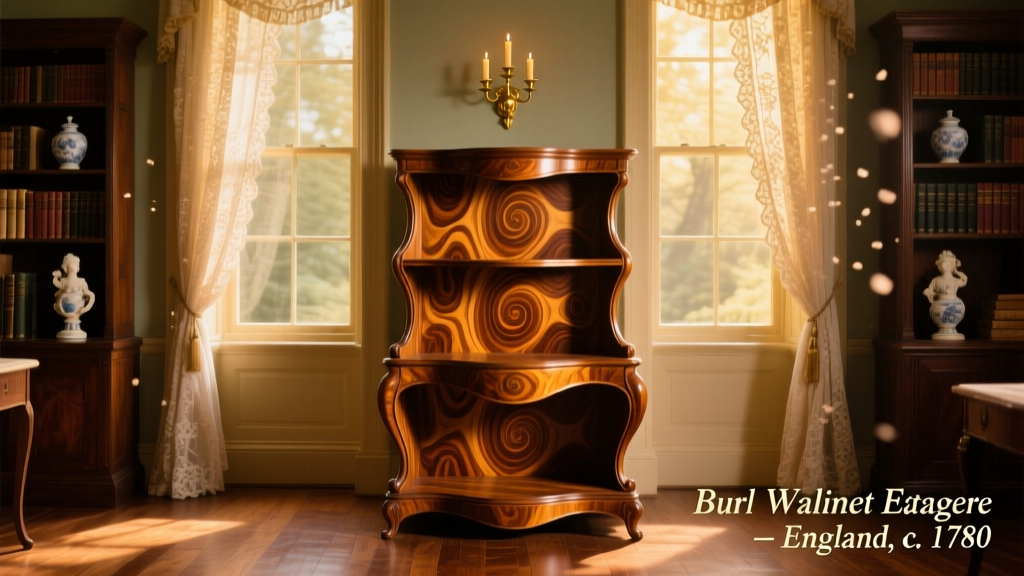
Burl Walnut Etagère: A Masterpiece of English Regency Craftsmanship — 3-Tier Serpentine Gallery, c. 1820–1835

The 1-Cent Lollipop Scale: A Cast Iron Marvel of Early 20th-Century American Commerce
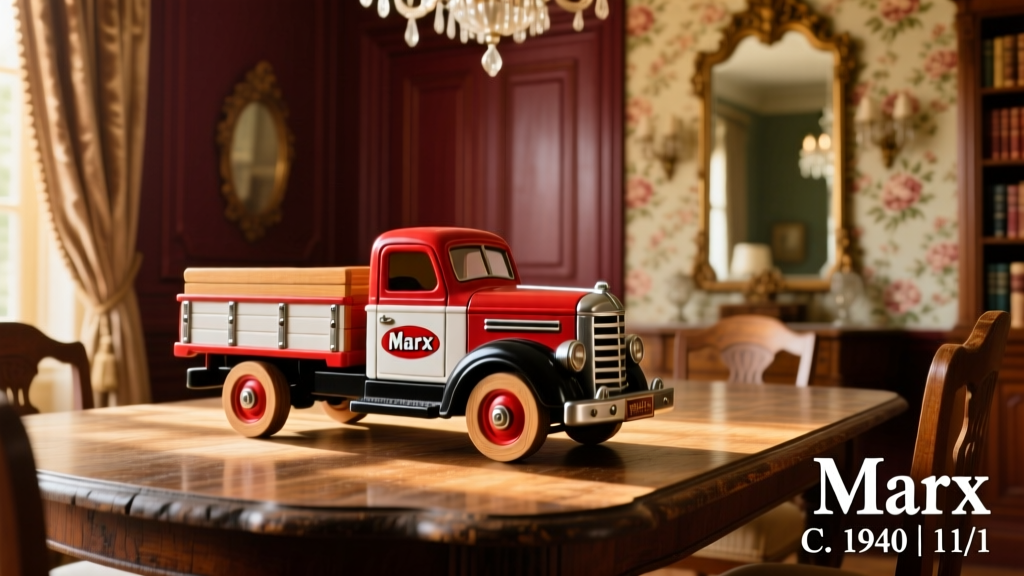
Marx 'Ice Truck' Toy: Authentic 1940s Red, White & Black Wooden-Wheeled Delivery Vehicle — Identification, Restoration & Historical Context

Hutschenreuther Vase 'Morning Glories' — Bulbous Form with Hand-Applied Silver Overlay, 5 Inches
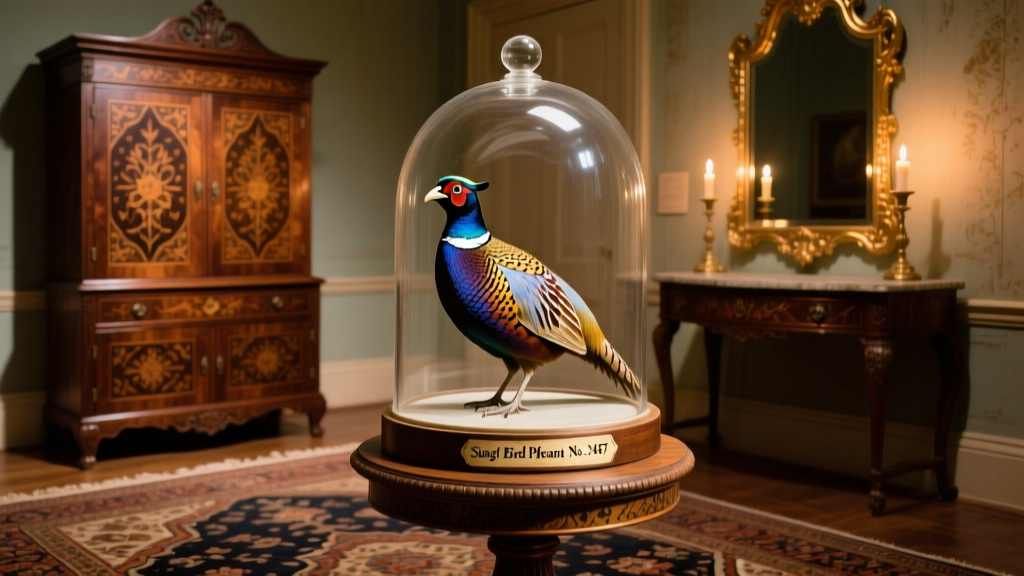
Stangl Bird Pheasant No. 3457: Identification, Provenance, and Restoration Guidelines for Collectors

John Webb: Master Cabinetmaker, Georgian Innovator, and the Enduring Legacy of 18th-Century English Furniture

Postcards Valentine Cherub 1912 Pair: A Collector’s Study of Early 20th-Century Sentimental Ephemera