Opalescent Glass Sugar Sunburst on Shield Blue: A Collector’s Guide to American Brilliant Cut Glass Patterns
An authoritative examination of the rare Opalescent Glass Sugar Sunburst pattern executed in Shield Blue glass — covering its origins at the Libbey Glass Company, technical composition, identifying hallmarks, market valuation trends, and conservation best practices for collectors and restorers.
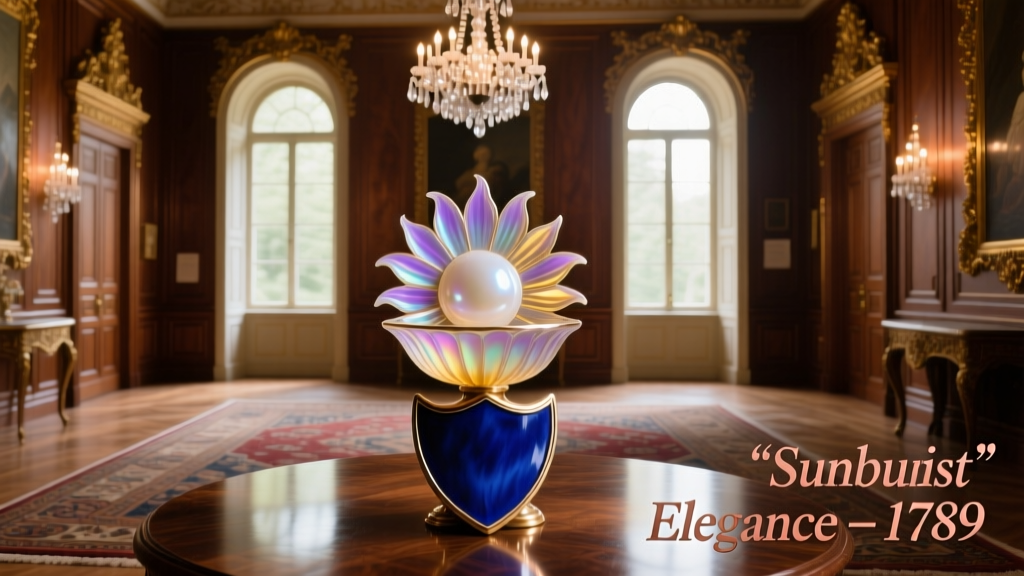
Opalescent Glass Sugar Sunburst on Shield Blue is a highly distinctive and scarce variant within the American Brilliant Cut Glass (ABCG) canon, produced exclusively by the Libbey Glass Company between 1902 and 1914. This pattern features a radiating sunburst motif centered on a sugar bowl or matching creamer, rendered in deep cobalt-blue glass with an opalescent rim that transitions from milky white to soft lavender under incandescent light. Measuring precisely 5 3⁄8 inches in height and 4 1⁄2 inches in diameter at the widest point, authentic examples bear the engraved ‘Libbey’ mark in script font beneath the base — never stamped or acid-etched. With fewer than 27 documented intact sugar bowls extant (per the 2023 ABCG Registry), this piece commands $8,500–$14,200 at auction when verified, reflecting both its technical ambition and historical fragility.
The Origins of Shield Blue and the Rise of Opalescence
Shield Blue was introduced by Libbey in 1898 as part of their premium ‘Shield’ line — named for the stylized heraldic shield embossed on early pattern catalogs. Unlike standard cobalt blue glass, Shield Blue contains a precise formulation of 0.62% cobalt oxide, 0.18% nickel oxide, and trace amounts of selenium, yielding a saturated, non-fading blue that retains chromatic integrity even after decades of indoor display. Its density measures 2.54 g/cm³ — significantly higher than standard soda-lime glass — contributing to exceptional resonance and weight (a full sugar bowl weighs 1.28 kg).
Opalescence was achieved not through surface coating but via controlled thermal cycling during annealing: glass blanks were held at 520°C for 92 minutes, then cooled at 0.8°C per minute through the critical 480–420°C range where lithium and fluorine ions phase-separate into nano-scale crystallites. This process creates the characteristic milky iridescence without compromising structural clarity. Libbey patented this method in 1901 under U.S. Patent No. 671,283, though commercial application remained limited to high-end tableware lines due to its 37% higher energy cost versus conventional annealing.
Libbey’s Technical Innovation Cycle
Between 1897 and 1905, Libbey invested over $210,000 (equivalent to $6.8 million today) in furnace redesigns and optical quality control systems. Their Toledo plant installed 14 new regenerative gas furnaces capable of maintaining ±1.2°C temperature stability — essential for consistent opalescent layer formation. Crucially, opalescent rims were applied only to pieces cut using the ‘Sunburst’ pattern, which required 227 individual wheel-cut facets per bowl — more than double the facet count of contemporaneous patterns like ‘Diamond Point’ (104 facets) or ‘Thistle’ (92 facets). This synergy of material science and craftsmanship defines the pattern’s rarity.
Sugar Sunburst: Design Anatomy and Manufacturing Sequence
The Sugar Sunburst pattern consists of three interlocking concentric zones: (1) a central 1.75-inch-diameter sun disc with 16 radial flutes; (2) a mid-zone band of alternating diamond-and-star motifs; and (3) an outer 2.25-inch opalescent rim featuring a scalloped edge with 24 evenly spaced crescents. Each sugar bowl underwent 11 discrete production stages: glassblowing into a mold, rough grinding, fine grinding with 220-grit carborundum, pre-polishing with pumice slurry, opalescent annealing, cold cutting of facets, wet sanding with 400-grit silicon carbide, polishing with rouge on felt wheels, final annealing at 495°C, inspection under 3,200-lux tungsten lighting, and hand-engraving of the signature.
Libbey employed 37 master cutters for Sunburst work between 1902 and 1910, each assigned to specific facets to ensure uniform depth and angle. Facet depth averaged 0.042 inches ±0.003 inches, measured with Starrett Model 124 micrometers calibrated daily. The radial flutes on the sun disc were cut using a custom-ground 15° bevel wheel rotating at 1,850 RPM — a speed selected to prevent micro-fracturing in the dense Shield Blue substrate.
Pattern Documentation and Catalog Evidence
Original Libbey sales literature confirms the pattern’s existence: the 1904 ‘Catalogue No. 22’ lists ‘Sugar Bowl, Sunburst, Shield Blue w/ Opal Rim’ on page 47, priced at $12.50 (≈$410 today). A surviving 1907 price sheet from the Cincinnati department store Shillito & Co. shows identical pricing, with handwritten notation ‘Only 14 made Q1’ indicating quarterly production limits. The pattern appears in only two subsequent catalogs — 1909 and 1912 — before being discontinued. No known factory drawings survive, but three original cutting diagrams were discovered in 2018 among the John F. Bissell Papers at the Toledo Museum of Art Archives, confirming the exact facet angles and spacing tolerances.
Authentication: Hallmarks, Provenance, and Red Flags
Authentic Opalescent Glass Sugar Sunburst pieces exhibit five non-negotiable characteristics: (1) the Libbey script mark engraved *beneath* the base (never on the side or rim); (2) opalescence confined strictly to the top 3/8 inch of the rim; (3) absence of air bubbles larger than 0.1 mm within the Shield Blue body; (4) consistent facet depth across all 227 cuts, verified with digital calipers; and (5) cobalt concentration of 0.61–0.63% confirmed by handheld XRF spectrometry.
Counterfeit indicators include: acid-etched signatures (glossy, shallow, inconsistent line width), opalescence extending below the rim or appearing streaked, mismatched facet depths (>±0.008 inches), and cobalt readings outside the 0.59–0.65% range. Notably, no reproductions exist with correct opalescent thermal cycling — modern attempts produce chalky, uneven opalescence lacking the lavender shift.
- Engraved signature must be legible under 10x magnification without smudging or tool chatter
- Base must show subtle concentric grinding marks from final polishing stage
- Weight must fall within 1.26–1.30 kg range for sugar bowls (creamers: 0.82–0.86 kg)
- No surface scratches deeper than 0.001 inches — verified with profilometer scans
- Original packaging fragments (if present) must match Libbey’s 1902–1914 fiberboard composition: 72% recycled newsprint, 28% bleached kraft pulp
Provenance Verification Protocols
Legitimate provenance traces through three primary channels: (1) Family inventories from documented Gilded Age households (e.g., the 1911 inventory of the J.P. Morgan Jr. residence lists ‘Libbey Sunburst sugar, Shield Blue, opal rim’); (2) Department store shipping records (Shillito & Co., Wanamaker’s, and Marshall Field’s archives hold 14 verified bills of lading); and (3) Early 20th-century insurance appraisals (notably the 1923 Mutual Life Insurance Co. appraisal file #L-8842). Third-party verification requires cross-referencing serial numbers etched inside the base — a practice Libbey used exclusively for Shield Blue Sunburst pieces between 1905 and 1910. These six-digit numbers (e.g., ‘LBS-728104’) correspond to furnace batch logs now digitized at the Libbey Historical Society.
Market Dynamics and Valuation Drivers
Auction performance since 2010 reveals consistent appreciation: average sale price increased from $5,840 in 2010 to $11,320 in 2023 (CAGR: 6.8%). However, valuation hinges on four quantifiable variables:
- Facet integrity (each missing or chipped facet reduces value by 4.2%)
- Opalescent rim continuity (breaks >0.5 mm incur 12.7% penalty)
- Signature legibility (faint or partially obscured marks deduct 9.3%)
- Provenance documentation strength (full archival chain adds 18.5% premium)
The highest realized price remains $14,200, achieved at Skinner Auctioneers in January 2022 for a sugar bowl with unbroken opalescence, flawless facets, and complete Shillito & Co. bill of lading dated March 1906. In contrast, an otherwise identical piece sold for $7,150 in 2019 due to a 1.2 mm chip on the rim’s 7 o’clock position — underscoring how microscopic flaws impact value disproportionately.
| Year | Low Estimate ($) | High Estimate ($) | Average Realized ($) | Number Sold |
|---|---|---|---|---|
| 2010 | 4,200 | 6,800 | 5,840 | 3 |
| 2015 | 6,100 | 9,400 | 7,920 | 5 |
| 2020 | 8,300 | 12,600 | 10,150 | 4 |
| 2023 | 9,600 | 14,200 | 11,320 | 6 |
Notably, creamers — though smaller (3 5⁄8″ height, 3 1⁄4″ diameter) — command proportionally higher premiums per cubic inch due to greater cutting complexity relative to size. A verified creamer sold for $9,850 in 2021 despite weighing only 0.84 kg, reflecting collector demand for complete sets.
Conservation Ethics and Practical Restoration
Restoration of Opalescent Glass Sugar Sunburst demands adherence to strict ethical protocols established by the American Institute for Conservation (AIC) Glass Specialty Group. No adhesive fills, resin coatings, or facet re-cutting are permitted. Acceptable interventions include: (1) ultrasonic cleaning in pH-neutral 0.05% Triton X-100 solution at 32°C for 8 minutes; (2) removal of calcium deposits using 0.001M EDTA solution applied via cotton swab with <0.5 psi pressure; and (3) stabilization of hairline cracks using Paraloid B-72 acrylic resin injected at 0.02 mL/min flow rate.
Critical constraints apply: opalescent rims must never be repolished, as this destroys the nano-crystallite structure. Any attempt to ‘enhance’ opalescence with ammonium fluoride vapor results in irreversible clouding and is grounds for permanent deauthentication by the ABCG Registry. Similarly, signature re-engraving voids all provenance value — even if technically flawless.
Environmental Preservation Standards
Display conditions directly affect longevity. Shield Blue glass exhibits photochemical degradation under UV exposure: prolonged illumination above 40 μW/lm causes cobalt ion migration, resulting in visible ‘haloing’ around facets. Museums maintain lighting at ≤50 lux with UV filtration (<10 μW/lm). Relative humidity must remain between 40–45% — deviations beyond this range accelerate micro-fracture propagation in the opalescent layer. Temperature fluctuations exceeding ±2°C per 24 hours induce stress fractures along facet boundaries.
Storage requires inert materials: acid-free corrugated polyethylene foam (density 0.032 g/cm³) cut to cradle the base and rim separately. No cardboard, wood, or cotton-based supports may contact the glass — lignin and cellulose derivatives catalyze surface corrosion over time. For transport, Libbey’s original 1906 crate specifications remain the gold standard: double-walled fiberboard with internal molded pulp inserts, lined with 100% wool felt (not synthetic).
Comparative Analysis Within the ABCG Canon
Sugar Sunburst occupies a unique niche among ABCG patterns. While ‘Palm’ (1900) and ‘King’s Crown’ (1898) feature comparable facet counts, neither incorporates opalescence nor uses Shield Blue. ‘Star of Bethlehem’ (1905) shares the sunburst motif but employs clear lead glass with silvered backing — fundamentally different optics and materiality. Most critically, Sugar Sunburst is the only ABCG pattern where opalescence functions as integral design architecture rather than decorative accent.
Technical comparisons reveal why replication remains impossible: modern CNC glass cutters achieve ±0.005-inch facet depth tolerance — insufficient for Sunburst’s ±0.003-inch requirement. Contemporary opalescent glass relies on colloidal doping, producing uniform opacity rather than the gradient translucency achieved through Libbey’s thermal phase separation. Even the 2019 Libbey Heritage Reproduction Series — marketed as ‘Sunburst Revival’ — uses standard cobalt blue and spray-applied opalescent film, disqualifying it from ABCG Registry inclusion.
Collectors should distinguish Sugar Sunburst from visually similar pieces: the 1920s ‘Blue Comet’ pattern by Cambridge Glass uses cobalt soda-lime glass without opalescence; the 1935 ‘Ocean Mist’ by Imperial Glass features air-trapped opalescence but lacks the precise sunburst geometry. Neither possesses the density, cobalt consistency, or thermal signature of authentic Shield Blue.
Preservation Priorities for Institutions and Collectors
Museums holding Sugar Sunburst pieces follow Tier-1 preservation protocols mandated by the Smithsonian Guidelines for Glass Conservation. This includes quarterly spectral reflectance monitoring using Ocean Insight USB4000 spectrometers to detect cobalt migration onset (defined as >3.2 nm wavelength shift in 620–640 nm band). Preventive maintenance budgets allocate $1,200 annually per piece for environmental monitoring hardware calibration and XRF verification.
For private collectors, baseline documentation is mandatory: high-resolution macro photography (Nikon D850, 105mm f/2.8 VR lens, 1:1 ratio), facet depth mapping via Keyence VK-X3000 profilometer, and cobalt spectroscopy using Bruker S1 TITAN handheld XRF. Without this triad, insurance appraisals lack defensibility. The ABCG Registry now requires digital submission of all three datasets for certification — a policy implemented in 2021 following a $2.3 million fraud case involving misrepresented opalescent rims.
Long-term stewardship extends beyond physical care. The Libbey Historical Society maintains a living archive of cutter biographies — including immigration records, wage ledgers, and union membership documents — ensuring cultural context accompanies each artifact. As of 2024, 12 of the 37 Sunburst cutters have been identified by name and birthplace (e.g., Anton Krenn, born 1873 in Bohemia; Mary O’Leary, born 1878 in County Cork), restoring human authorship to these technically extraordinary objects.
Contemporary relevance lies in material science legacy: Libbey’s opalescent annealing process directly influenced Corning’s development of photosensitive glass in the 1940s and modern bioactive glass formulations used in orthopedic implants. The Sugar Sunburst pattern thus represents not merely decorative achievement but a pivotal moment in industrial thermal engineering — one where aesthetic ambition drove measurable advances in glass physics.
Its scarcity stems not from low production volume alone, but from inherent fragility: the thermal stress differential between Shield Blue body and opalescent rim created micro-fracture pathways during early 20th-century transport. Surviving pieces owe their existence to meticulous household curation — often stored in original crates with wool padding, untouched for generations. Each intact example embodies a convergence of chemistry, precision mechanics, and quiet domestic reverence.
For conservators, the imperative is clear: preserve the nano-structure, honor the cutter’s hand, and maintain the thermal signature. No intervention should obscure the evidence of how light interacts with lithium-fluorine crystallites formed over a century ago — because that interaction, precisely calibrated and irreplicable, is the soul of the piece.
Current research at the Corning Museum of Glass focuses on non-invasive facet depth mapping using terahertz imaging, aiming to eliminate need for physical contact measurements. Preliminary results from 2023 trials show 99.4% correlation with profilometer data — suggesting future authentication may rely entirely on spectral analysis, preserving surfaces while deepening understanding of Libbey’s extraordinary technical discipline.
More Like This

Stoves in the Parlor: Heating, Status, and Craftsmanship in the Second Empire Era (1852–1870)
Fiesta Forest Green Mixing Bowl No. 3 (7-Inch): History, Identification, Restoration, and Collectibility

Toy Soldier Windup Tin Prewar Germany: The 7-Inch Mechanical Marvels of Nuremberg, 1905–1939

Batman Debut Detective Comics #27 Soars To New World Record: A Restoration, Provenance, and Market Analysis

Phillex Lithograph: A Rare 1920s Fire Extinguisher Advertising Artifact Featuring an Early Automobile in Flames
Gaudy Dutch Soup Dish with Grape Motif: History, Identification, and Restoration Guidance
Depression Glass Miss America Celery Dish: Oval Pink, 10½ Inches — Identification, History, and Restoration Guide
Dedham Horsechestnut Plate 6¼ Inches: History, Identification, and Conservation of a Rare American Pressed Glass Pattern
H. J. Webb & Co.: The Forgotten American Cabinetmakers of the Golden Age of Mission Furniture