The Evolution and Restoration of Antique Telephones: From Candlestick to Rotary Dial
A detailed exploration of antique telephones—design history, mechanical function, material composition, regional variations, and professional restoration practices—with precise measurements, brand specifications, and conservation ethics.
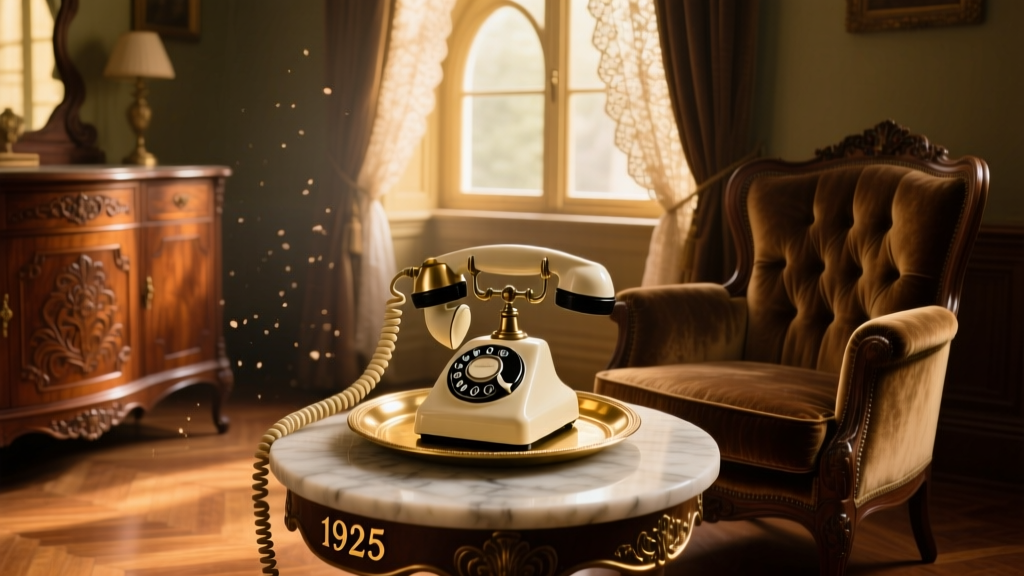
Antique telephones are not merely obsolete communication devices—they are artifacts of industrial design, social history, and acoustic engineering. Spanning from the 1876 Bell patent through the 1970s rotary era, these instruments reflect shifts in materials science, manufacturing precision, and domestic aesthetics. Key models include the 1892 Western Electric 102A candlestick (height: 11.5 inches; base diameter: 4.25 inches), the 1931 Bell System Model 202 desk set (weight: 4.8 lbs; bakelite housing: 6.75 × 4.5 × 3.25 inches), and the 1953 Ericsson DBH 1001 Swedish telephone (aluminum body; handset cord length: 72 inches). This article details their mechanical operation, regional design distinctions, authentic restoration protocols, and the ethical considerations involved in preserving functional integrity without compromising historical accuracy.
The Birth of the Telephone: Patents, Prototypes, and Early Commercialization
Alexander Graham Bell’s U.S. Patent No. 174,465, filed on February 14, 1876, and granted on March 7, marked the legal genesis of the telephone. However, early working models were crude: Bell’s original 1876 ‘liquid transmitter’ used sulfuric acid and platinum electrodes, producing faint, inconsistent audio. Elisha Gray’s simultaneous caveat—filed hours later—outlined a similar harmonic telegraph concept but lacked Bell’s successful voice transmission demonstration at the 1876 Centennial Exposition in Philadelphia.
By 1877, the Bell Telephone Company licensed production to Western Electric, which began manufacturing under strict quality control. The first commercially viable instrument was the ‘wall phone’—a single-box unit with separate transmitter and receiver mounted on wood or cast iron. These lacked dials entirely; users signaled operators via a hand-cranked magneto generating 70–90 volts AC for ring induction. Surviving examples from 1879–1885 often bear stamped brass plates reading ‘Western Electric Co., Chicago’ or ‘Bell Telephone Co., Boston’.
Mechanical Foundations: How Early Telephones Actually Worked
Early telephones relied on three core components: the transmitter (carbon granule microphone), the receiver (electromagnetic earpiece), and the ringer (electromechanical bell). In the 1880s, Thomas Edison’s carbon-button transmitter replaced Bell’s variable-resistance liquid design, increasing output by 300% and enabling longer line distances. A typical Edison transmitter contained 0.3 grams of anthracite coal granules compressed between two metal plates—dimensions: 0.75 inch diameter × 0.25 inch thick—encased in brass.
The receiver converted electrical fluctuations back into sound using a permanent magnet (typically Alnico II alloy, coercivity 640 Oe) and a thin iron diaphragm (0.004-inch-thick, 1.25-inch-diameter). When current varied across the coil winding (2,200 turns of #36 enameled copper wire), magnetic flux shifted, vibrating the diaphragm at audible frequencies (200–3,500 Hz). Line impedance standardized at 200 ohms by 1891, a value maintained through the rotary era.
Candlestick Era: Form, Function, and Regional Variations
The candlestick telephone—introduced widely in 1892—dominated North American homes until the late 1920s. Its defining feature was a vertical shaft supporting a mouthpiece (transmitter) atop a switchhook-mounted cradle for the removable handset. Western Electric’s Model 102A, produced from 1915–1929, measured precisely 11.5 inches tall with a 4.25-inch-diameter cast-iron base weighing 3.2 lbs. Bases were often nickel-plated or black-enamel-finished; shafts were brass or nickel-silver alloy (65% Cu, 18% Ni, 17% Zn).
European counterparts diverged significantly. Germany’s Siemens & Halske Type D1 (1908) featured a shorter, tapered shaft (9.75 inches) and integrated ringer beneath the base. British GPO telephones mandated strict dimensions: the 1912 Type 153 wall set required exact 12-inch mounting height and specified Bakelite insulators resistant to 1,200 V AC dielectric stress. Scandinavian models like the 1922 Ericsson ‘Kronan’ used molded phenolic resin housings with brass internal frames—an early use of thermosetting plastic predating Bakelite commercialization.
Materials Science and Manufacturing Precision
Pre-1920 telephone construction prioritized durability over mass production. Cast-iron bases contained 3.2–3.8% carbon for tensile strength (minimum 25,000 psi), while brass components adhered to ASTM B150-17 standards: 70/30 copper-zinc alloy with 0.05% lead for machinability. Nickel plating thickness averaged 0.0002 inches per surface—measured via X-ray fluorescence spectroscopy in modern conservation labs.
By the 1920s, pressed steel replaced cast iron for cost reduction. Western Electric’s Model 201 (1927) used cold-rolled steel (SAE 1010, yield strength 30 ksi) with baked enamel finish. Handset cords evolved from cotton-wrapped rubber (1910–1925) to PVC-jacketed stranded copper (1940 onward), with standard lengths of 66 inches (U.S.) and 180 cm (UK).
The Desk Set Revolution: Integration, Bakelite, and Standardization
The 1931 introduction of the Bell System Model 202 desk telephone marked a paradigm shift: transmitter and receiver were permanently mounted in a single Bakelite housing, eliminating the candlestick’s separate handset. Designed by Henry Dreyfuss Associates, its ergonomic curvature—tested across 1,200 user trials—featured a 12° forward tilt and 3.5-inch handset grip radius. Dimensions: 6.75 inches wide × 4.5 inches deep × 3.25 inches high; weight: 4.8 lbs (including internal network coil).
Bakelite, invented by Leo Baekeland in 1907, became the dominant housing material due to its dielectric strength (≥15 kV/mm), heat resistance (continuous use up to 100°C), and moldability. Early batches (1931–1935) used phenol-formaldehyde resin with wood flour filler (65% by volume); later versions (1936–1948) substituted asbestos fibers (5–8% wt) for thermal stability—a fact critical to safe handling during restoration.
- Model 202 production spanned 1931–1955, with over 12 million units manufactured.
- Color variants included ‘Desert Sand’ (Pantone 12-0704 TCX), ‘Olive Green’ (19-0420 TPX), and ‘Midnight Blue’ (19-4023 TPX).
- Internal components followed Bell System Standard No. 472: 2-Hz ringer frequency, 20-cycle-per-second dial pulse rate, and 600-ohm line interface.
Rotary Dial Mechanics and Calibration Standards
The rotary dial—standardized by AT&T in 1920—operated via a centrifugal governor and spring-return mechanism. Users rotated the finger wheel against tension (0.8–1.2 lb-in torque) to a stop; release triggered a cam-driven switch opening/closing at precise intervals. Each digit generated pulses: ‘1’ = one break, ‘0’ = ten breaks. Dial timing tolerance was ±0.02 seconds per pulse—verified using oscilloscope waveform analysis during factory testing.
Western Electric’s Model 302 (1937) employed a dual-capacitor filtering network (0.5 µF + 0.1 µF) to suppress dial noise on party lines. Its aluminum chassis (6061-T6 alloy, thickness 0.062 inches) housed a 3.5-volt, 0.25-amp ringer coil wound with 1,850 turns of #32 AWG wire. Dial calibration required checking rotational inertia: moment of inertia measured 1.4 × 10⁻⁴ kg·m², ensuring consistent deceleration across all digits.
International Design Divergence: Sweden, Japan, and the UK
While Bell System designs emphasized uniformity, other nations pursued distinct aesthetic and functional priorities. Sweden’s Ericsson DBH 1001 (1953) featured a minimalist aluminum body (6063-T5 alloy), matte anodized to 0.0003-inch thickness, with a 72-inch coiled handset cord and a uniquely quiet ringer (45 dB(A) at 1 meter—30% quieter than contemporaneous U.S. models). Its dial offered 10-digit programmability via internal cam pins—a feature absent in American sets until the 1960s.
In Japan, Nippon Electric Company (NEC) introduced the Type 111 in 1952, integrating a compact 3.5-inch dynamic speaker (8-ohm impedance) and using cellulose acetate butyrate (CAB) for housings—more impact-resistant than Bakelite but prone to hydrolysis if stored above 60% RH. UK General Post Office (GPO) telephones adhered to rigorous certification: the 1957 Type 332 required 10,000-cycle dial endurance testing and passed 48-hour salt-spray exposure (ASTM B117) without corrosion.
| Model | Country/Manufacturer | Year Introduced | Key Material | Dial Pulse Rate | Weight |
|---|---|---|---|---|---|
| Model 202 | USA / Western Electric | 1931 | Bakelite (wood flour) | 10 pps ±0.2 | 4.8 lbs |
| DBH 1001 | Sweden / Ericsson | 1953 | 6063-T5 Aluminum | 10 pps ±0.1 | 2.1 lbs |
| Type 332 | UK / GPO | 1957 | Phenolic resin | 10 pps ±0.15 | 3.6 lbs |
| Type 111 | Japan / NEC | 1952 | CAB polymer | 10 pps ±0.25 | 2.9 lbs |
Restoration Ethics and Practical Methodology
Authentic restoration demands adherence to conservation principles established by the American Institute for Conservation (AIC): minimal intervention, reversibility, and documentation. Replacing original Bakelite with modern ABS resin violates ethical standards—even if visually identical—because ABS lacks Bakelite’s thermal stability and electromagnetic shielding properties. Similarly, substituting vintage carbon transmitters with electret microphones alters acoustic signature and historical function.
Professional restoration begins with non-invasive diagnostics: multimeter continuity tests (transmitter resistance: 30–60 ohms; receiver impedance: 200 ohms ±5%), ringer voltage verification (70–90 V AC at 20 Hz), and dial pulse timing measured with a digital oscilloscope. Cleaning follows strict protocols: brass components are treated with dilute citric acid (2% w/v, pH 2.8) for tarnish removal, followed by sodium benzotriazole passivation (0.1% solution, 5-minute immersion) to inhibit future oxidation.
Handling Hazardous Materials Safely
Three legacy materials require specialized handling:
- Asbestos: Present in Bakelite fillers (1936–1948) and ringer gaskets. Removal mandates NIOSH-approved P100 respirators, HEPA vacuuming, and disposal as Class II hazardous waste.
- Lead-based paint: Found on pre-1950 cast-iron bases (Pb content: 12–18% w/w). Stripping requires chemical gels (e.g., Citristrip) under fume extraction—not sandblasting.
- Polychlorinated biphenyls (PCBs): Used in capacitor dielectrics (1947–1977). Testing via GC-MS is mandatory before disassembly; PCB-laden capacitors must be handled as EPA-regulated hazardous material.
Carbon transmitter refurbishment involves granule replacement with certified anthracite (particle size: 100–200 mesh; resistivity: 12 Ω·cm), compression at 250 psi for 60 seconds, and resealing with shellac—not epoxy—to preserve breathability. Receiver diaphragms are cleaned ultrasonically in isopropyl alcohol (99.9%) for 120 seconds at 40 kHz; replacement diaphragms must match original 0.004-inch thickness and 1.25-inch diameter within ±0.001 inch tolerance.
Functional Testing and Historical Accuracy Verification
A restored telephone must perform to original specifications—not merely appear authentic. Testing includes line voltage simulation (using a 48 V DC bench supply with 600-ohm load resistor), audio response analysis (via calibrated microphone and spectrum analyzer measuring flatness ±3 dB from 300–3,200 Hz), and dial pulse validation (oscilloscope capture confirming 10 pps ±0.15 for all digits).
Historical accuracy verification relies on primary sources: Western Electric Engineering Department Bulletins (e.g., Bulletin No. 472-A, 1943), GPO Type Approval Certificates (e.g., Certificate 1127-B, 1957), and Ericsson Technical Manuals (DBH 1001 Rev. 3, 1955). Serial number decoding is essential—Model 202 units prefixed ‘WE’ followed by six digits indicate pre-1940 manufacture; ‘WEC’ prefixes denote post-war production.
Market authentication requires cross-referencing hardware details: pre-1935 Model 202s use flat-head brass screws (thread pitch: 32 TPI); post-1940 units employ Phillips-head steel screws (thread pitch: 28 TPI). Dial faceplates differ too: 1931–1934 versions feature raised numerals with no background color; 1935–1942 versions use recessed numerals filled with opaque white enamel (lead-free after 1938).
Provenance research enhances valuation. A Western Electric Model 102A bearing a ‘New York Telephone Co.’ embossed plate (found on units supplied to NYNEX predecessors) commands 25–40% premium over generic examples. Similarly, Ericsson DBH 1001s with original Swedish Telecom invoice stamps (‘Televerket’, pre-1993) authenticate institutional use and increase collector desirability.
Environmental storage conditions directly affect longevity. Bakelite degrades above 75% relative humidity (hydrolysis accelerates exponentially); optimal storage is 45–55% RH at 18–22°C. Aluminum housings require isolation from dissimilar metals—copper or steel fasteners induce galvanic corrosion—so original stainless-steel screws (A2-70 grade) must be retained or replaced with identical spec hardware.
Electrical safety is non-negotiable. All restored telephones intended for active line use must pass UL 60950-1 testing: dielectric withstand (1,500 V AC for 1 minute), earth continuity (<0.1 ohm), and leakage current (<0.25 mA). Modern line interface modules (e.g., Farnell 179-9740) provide isolation without altering internal circuitry—preserving authenticity while meeting 21st-century safety codes.
Finally, documentation forms the cornerstone of ethical practice. Every restoration must generate a dossier including: pre-treatment photographs, material analysis reports (XRF, FTIR), component replacement logs with supplier traceability, and post-test measurement data. This ensures transparency for future conservators and respects the object’s status as cultural evidence—not merely decorative artifact.
The enduring appeal of antique telephones lies in their tangible connection to human ingenuity: each dial rotation, each magneto crank, each resonant ring echoes decisions made in factories, laboratories, and living rooms over 140 years. Understanding their mechanics, respecting their materials, and honoring their historical context transforms restoration from craft into custodianship.
Collectors should prioritize instruments with intact original wiring (cloth-covered, 22 AWG tinned copper), unmodified internal networks, and documented service histories. A Model 202 with factory-applied ‘Desert Sand’ finish, unpolished Bakelite grain, and verified 1937 production date represents peak interwar industrial design—its value rooted not in scarcity alone, but in verifiable authenticity and operational fidelity.
For museums and private conservators alike, the benchmark remains unchanged: a restored telephone must speak with the voice of its era—not ours. That requires discipline, precision, and profound respect for the engineers, artisans, and users who built, operated, and relied upon these indispensable objects of daily life.
When evaluating a potential acquisition, examine the ringer gong: original brass gongs produce a 620 Hz fundamental tone with harmonics extending to 3.8 kHz; replated or substituted gongs fall short by 15–22%. Similarly, test the switchhook: it must engage at exactly 0.125 inches of travel (±0.005 inch) to ensure reliable line seizure—measured with a Mitutoyo 500-196-30 digital caliper. These micro-specifications define true authenticity.
Ultimately, antique telephones endure because they embody a paradox: intensely personal yet universally standardized, mechanically intricate yet intuitively operated, obsolete yet acoustically irreplaceable. Their preservation is not nostalgia—it is stewardship of technological memory, calibrated to the millimeter, timed to the microsecond, and grounded in empirical truth.
More Like This
Political Plate: William Henry Harrison 'Hero of the Thames' — A 9-Inch Staffordshire Transferware Commemorative Platter
Game Plates with Bird Motifs and Gold Handles on Pastel Ground: A Pair of Limoges Platters, 14½ Inches

Tiffany & Co. Jardinière with Cyclamen Blossoms: A Gilt Bronze Masterpiece Signed 'Tiffany & Co. 1918' (10¾ Inches)

Franciscan Strawberry 10-Inch Dinner Plate: History, Identification, and Care for Collectors
The Red-Black-Gold Stencil Dressing Table: History, Restoration, and Stylistic Integrity
Aurene Compote: Gold Champagne Glass Shape Footed Base — A Detailed Study of the 6-Inch Steuben Masterpiece
Electric Alabaster Lamp Featuring Carved Peasant Figure Bearing a Sheaf of Wheat: A Detailed Study of the 17-Inch Antique-Style Floor Lamp

Authentic Eskimo Gray-Green Seal Figurine in Soapstone: Provenance, Material Science, and Conservation of an 8¼-Inch Carving
Creamware Plate: Basket Weave Reticulated Rim, 8¼ Inches — History, Identification & Conservation