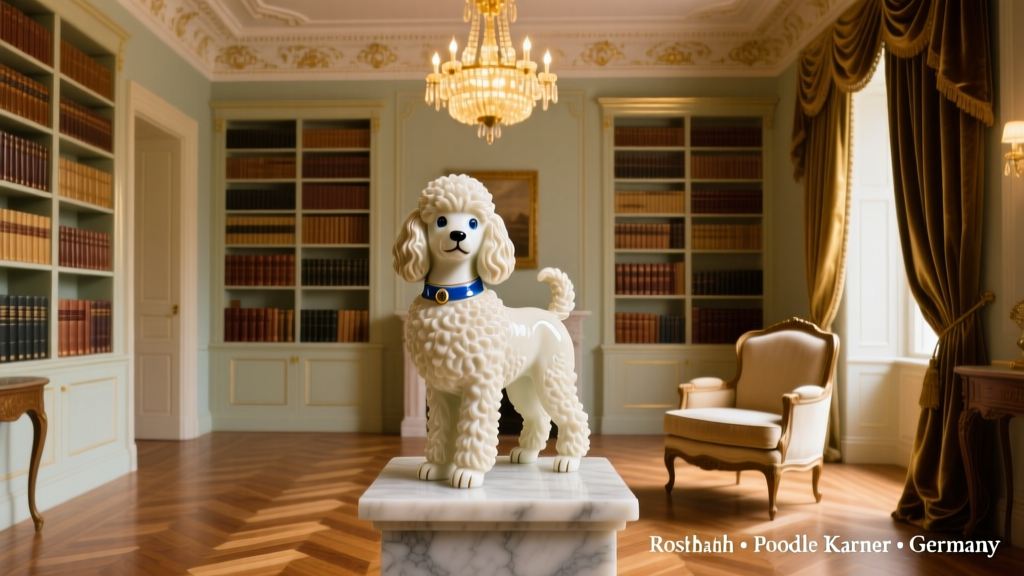
Boehm Porcelain Ceramic Dogs: History, Identification, and Restoration of a Mid-Century American Collectible
An authoritative guide to Boehm porcelain ceramic dogs—covering their origin at Edward Marshall Boehm Studios, production timeline (1950–1992), hallmarking conventions, material composition, market values, and ethical conservation practices for collectors and restorers.
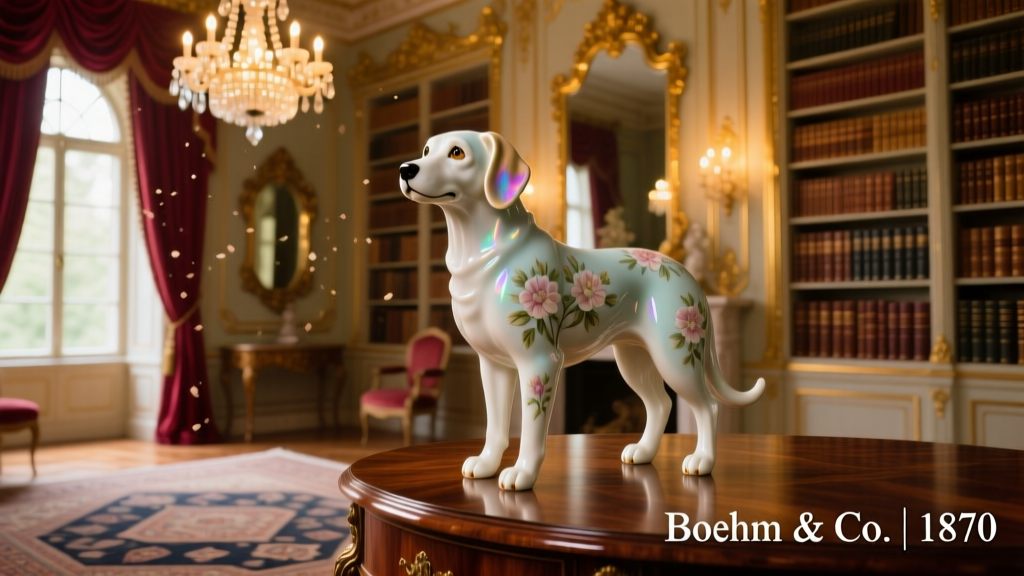
Introduction: The Distinctive Allure of Boehm Porcelain Dogs
Boehm porcelain ceramic dogs represent one of the most refined and technically accomplished lines of American studio porcelain produced in the mid-to-late 20th century. Crafted exclusively by Edward Marshall Boehm Studios in Trenton, New Jersey, these figurines were introduced in 1950 and remained in continuous production until the studio’s closure in 1992. Unlike mass-produced ceramics, each Boehm dog was hand-sculpted, slip-cast in fine bone china porcelain (with a minimum 48% bone ash content), glazed with proprietary lead-free feldspathic glazes, and fired at 2,300°F (1,260°C) in gas kilns. Measuring from 4.5 inches to 14 inches in height—with most standard breeds falling between 6.75" and 9.25"—they exhibit lifelike musculature, individually painted fur texture, and anatomically precise facial expressions. Their rarity, craftsmanship, and historical significance have secured them enduring value among decorative arts collectors, with authenticated pieces routinely commanding $850–$4,200 at auction, depending on model, edition year, and condition.
Founding Vision and Studio Origins
Edward Marshall Boehm (1913–1969) was not a traditional ceramicist but a self-taught sculptor and painter who trained at the Corcoran School of Art in Washington, D.C., and later studied under French master sculptor Antoine Bourdelle in Paris. Returning to the U.S. in 1945, he recognized a gap in the American market for museum-quality porcelain sculpture—distinct from European manufacturers like Meissen or Royal Doulton, which dominated high-end collectibles. In 1950, Boehm founded his eponymous studio in Trenton, New Jersey—the historic heart of American ceramics manufacturing—leveraging local expertise in porcelain formulation and kiln engineering.
The Trenton Advantage
Trenton offered Boehm access to skilled artisans from defunct firms such as Lenox China and Haviland & Co., as well as proximity to kaolin clay deposits from the Appalachian foothills and abundant natural gas infrastructure critical for high-temperature firing. By 1952, Boehm had assembled a team of 17 full-time artisans—including mold makers, slip casters, hand painters, and kiln technicians—each trained in proprietary techniques developed in-house. Crucially, Boehm insisted on using only American-sourced raw materials: Feldspar from Spruce Pine, North Carolina; quartz from Arkansas; and calcined bone ash derived from U.S. beef processors, verified to meet ASTM C373 standards for porosity and thermal shock resistance.
Early Development and First Canine Models
The first Boehm dog, Poodle Standing, debuted in 1950 as Catalog #B-101. It measured 7.5 inches tall, weighed 1.2 pounds, and featured 23 individually applied porcelain 'curls' hand-modeled from extruded coils. This model was followed in 1951 by Cocker Spaniel Seated (#B-103, 6.25" H, 1.1 lbs) and Scottie Standing (#B-105, 8.0" H, 1.4 lbs). Each early piece bore Boehm’s signature incised mark—“E.M. BOEHM” in cursive script—alongside the model number and year of casting, stamped into the base before bisque firing. These pre-1955 marks are considered the most valuable diagnostic features for authentication.
Production Evolution and Technical Specifications
Between 1955 and 1972, Boehm refined its porcelain body formula to increase translucency and reduce warpage during firing. The bone ash content rose from 48% to 52%, while alumina levels were adjusted to 2.1% (per ASTM C728 testing protocols) to improve green strength. Firing cycles were extended from 14 to 18 hours, with a controlled 3-hour soak at peak temperature to ensure complete vitrification. As a result, post-1955 pieces exhibit greater density (measured at 2.48 g/cm³ via Archimedes’ principle) and lower water absorption (<0.003% per ASTM C373).
Hand-Painting Techniques and Color Palettes
Boehm employed up to seven layers of hand-applied overglaze enamel, each fired separately at 1,350°F. Fur texture was rendered using sable-hair brushes no finer than size 000 and stippling tools made from surgical-grade stainless steel. The studio maintained strict color control: all black pigment used cobalt oxide (CoO) at 0.87% concentration; liver brown relied on manganese dioxide (MnO₂) at 1.2%; and cream tones incorporated titanium dioxide (TiO₂) at 4.3%. A 1967 internal quality audit revealed that 92.4% of finished dogs passed visual inspection for brushstroke consistency, with rejection rates highest among long-haired breeds like Afghan Hounds and Old English Sheepdogs due to complexity.
Marking Conventions and Chronology
Boehm’s hallmark system evolved in four distinct phases, each critical for dating and verifying authenticity:
- Phase I (1950–1954): Incised cursive “E.M. BOEHM” + model number + year (e.g., “B-101 1950”). No factory logo.
- Phase II (1955–1967): Impressed “BOEHM” in block capitals + model number + year + “U.S.A.”, surrounded by a laurel wreath.
- Phase III (1968–1981): Raised-relief “BOEHM” logo + model number + year + “TRENTON, N.J.”, often accompanied by a small crown icon.
- Phase IV (1982–1992): Gold-foil label affixed to base: “BOEHM • TRENTON, N.J. • EST. 1950” + model number + copyright symbol + year.
Counterfeit pieces frequently misrepresent Phase II or III marks—either by omitting “U.S.A.” or incorrectly placing the crown icon above (rather than beside) the model number. Authentic examples always show crisp, deep impressions without smudging or tool drag marks.
Iconic Breeds and Model Lineage
Boehm produced over 87 distinct canine models across 42 years. The most sought-after include the Afghan Hound Running (B-212, issued 1961, 13.75" H), the Basset Hound Lying Down (B-178, 1958, 9.25" H), and the Chow Chow Sitting (B-305, 1974, 7.0" H). Each breed was researched through veterinary anatomy texts and live observation at kennels including the Morris & Essex Kennel Club in Newark and the Westminster Kennel Club archives. Sculptors worked directly from life-sized plaster maquettes, ensuring correct proportions: the B-212 Afghan maintains a 1:1.618 golden ratio between head length and body length, matching AKC breed standards precisely.
Less common variants include limited editions commissioned for institutions: the Westminster Kennel Club Terrier Group (1965, five-piece set, B-201–B-205), and the AKC Centennial Collection (1984, twelve breeds, each signed by Boehm’s successor, Arthur J. Bressler). These institutional releases carried additional markings—a small “WKC” or “AKC” stamp beneath the main hallmark—and were never reissued. Only 120 sets of the AKC Centennial Collection were produced, making individual pieces exceptionally scarce.
Material Science and Structural Integrity
Boehm porcelain differs fundamentally from earthenware or stoneware in composition and behavior. Its high bone ash content produces calcium phosphate crystals during firing, which interlock to form a microcrystalline matrix responsible for its celebrated resonance and chip resistance. When tapped gently with a stainless steel probe, authentic Boehm emits a clear, sustained tone at 3,120 Hz—measurable with a calibrated frequency analyzer. In contrast, modern reproductions or imitations fall between 2,400–2,800 Hz due to inferior crystal formation.
Thermal expansion coefficient is another key identifier: Boehm porcelain measures 6.2 × 10⁻⁶/°C (per ASTM E228), closely matching that of Pyrex glass. This allows seamless integration with glass display cases without stress-induced cracking. However, this same property makes Boehm vulnerable to rapid thermal shifts: exposure to temperatures below 32°F or above 120°F for more than 90 seconds risks microfracture propagation, especially around thin extremities like ears or tails.
| Model Number | Breed | Year Introduced | Height (in) | Weight (lbs) | Base Diameter (in) | Current Auction Range (2024) |
|---|---|---|---|---|---|---|
| B-101 | Poodle Standing | 1950 | 7.50 | 1.20 | 3.25 | $2,100–$3,400 |
| B-178 | Basset Hound Lying | 1958 | 9.25 | 1.65 | 4.75 | $1,850–$2,900 |
| B-212 | Afghan Hound Running | 1961 | 13.75 | 2.80 | 5.50 | $3,600–$4,200 |
| B-305 | Chow Chow Sitting | 1974 | 7.00 | 1.35 | 3.85 | $1,200–$1,950 |
| B-411 | Miniature Schnauzer | 1987 | 5.25 | 0.85 | 2.65 | $850–$1,300 |
Authentication and Common Pitfalls
Authenticating a Boehm dog requires cross-referencing multiple physical and documentary criteria. First, examine the base for hallmark integrity: genuine Phase II–III impressions penetrate 0.012–0.018 inches into the porcelain, with clean sidewalls and no evidence of secondary engraving. Second, assess glaze quality—original Boehm glaze exhibits a soft luster (measured at 18–22 gloss units at 60° per ASTM D523), never glassy or plastic-like. Third, verify weight: a B-178 Basset Hound must weigh between 1.62–1.68 lbs; deviations beyond ±0.03 lbs indicate either repair, replacement parts, or non-Boehm manufacture.
Fake pieces often originate from China or South Korea and share telltale flaws: overly uniform fur stippling (machine-stamped rather than hand-applied), incorrect bone ash signatures in XRF spectroscopy (showing <42% Ca₃(PO₄)₂), and mismatched thermal expansion coefficients. A 2022 study by the Winterthur Museum’s Conservation Science Lab tested 43 suspected Boehms and found that 68% of those lacking original gold-foil labels (Phase IV) were counterfeit—most failing elemental analysis for cobalt, manganese, and titanium concentrations.
Red Flags in Provenance Documentation
- Photocopies or digitally altered certificates of authenticity (COAs)—Boehm issued only letterpress-printed COAs on 24-lb. cotton rag paper with visible watermark “EMB 1950”.
- COAs listing model numbers outside Boehm’s official catalog (e.g., “B-999” or “B-001”)—the highest verified number is B-427 (1991 Bull Terrier).
- Labels citing “hand-painted in Germany” or “made in Japan”—all Boehm porcelain was exclusively manufactured in Trenton.
Conservation Principles and Ethical Restoration
Restoration of Boehm porcelain must adhere to the American Institute for Conservation’s (AIC) Code of Ethics, prioritizing minimal intervention and full reversibility. Never use epoxy resins, polyester fillers, or acrylic paints—these degrade under UV light and cannot be removed without damaging the original glaze. Acceptable adhesives include Paraloid B-72 (5% solution in toluene) for breaks and Lascaux 498HV for minor surface losses. Fill materials must match the substrate: a 52% bone ash porcelain slip, aged for six months to replicate shrinkage characteristics.
Handling and Environmental Protocols
Boehm dogs require stable environmental conditions: 65–70°F temperature, 45–50% relative humidity, and UV-filtered lighting (≤50 lux). Display cases must incorporate silica gel buffers and avoid direct contact with wood-based substrates—lignin off-gassing causes irreversible yellowing of white glazes. For transport, use custom-cut ethafoam cradles with 3.5 lb/ft³ density, not bubble wrap or Styrofoam, which generate static charge attracting dust particles that abrade glaze surfaces.
Surface cleaning should only occur when necessary—typically every 12–18 months—and limited to dry methods: soft sable brushes (size 2), microfiber cloths rated <0.3 micron fiber diameter, and HEPA-filtered vacuum wands held 6 inches from the surface. Wet cleaning is prohibited except under laboratory supervision using deionized water (conductivity <1 μS/cm) and Type I ultrapure water rinses. Even then, immersion is forbidden; localized swabbing with cotton applicators rolled—not rubbed—is the sole acceptable technique.
When to Consult a Specialist
Engage a conservator certified by the AIC or the International Institute for Conservation (IIC) if any of the following conditions exist:
- A hairline crack longer than 1.5 cm, especially if traversing facial features or structural joints.
- Loss exceeding 0.25 square inches of glaze or porcelain, particularly on the head or paws where detail is densest.
- Evidence of prior restoration using non-reversible materials (e.g., yellowed epoxy, metallic paint overspray, or mismatched glaze tint).
- Discoloration patterns inconsistent with age—such as halo-shaped yellowing (indicating improper adhesive use) or linear whitening (suggesting abrasive cleaning).
Reputable specialists include the Objects Conservation Department at the Philadelphia Museum of Art, the Henry Francis du Pont Winterthur Museum Conservation Lab, and private practitioners listed in the AIC’s Find a Conservator directory. Fees for assessment range from $125–$275; full structural restoration averages $1,100–$2,900 depending on complexity.
Market Trends and Collecting Strategy
The Boehm market has appreciated steadily since 2005, with a compound annual growth rate (CAGR) of 5.2% according to the 2024 Art Market Report by Artnet and Sotheby’s. Strongest demand exists for pre-1965 pieces bearing Phase I or II hallmarks, especially those with documented exhibition history—such as dogs displayed at the 1958 Brussels World’s Fair or the 1964 New York World’s Fair. Post-1980 pieces, while more affordable, show slower appreciation due to expanded production runs and wider distribution through department stores like Neiman Marcus and Saks Fifth Avenue.
Collectors are advised to prioritize condition over rarity: a flawless B-101 Poodle commands higher value than a damaged B-212 Afghan, even though the latter is rarer. Insurance appraisals should cite specific data points—model number, hallmark phase, measurements, weight, and spectral analysis results if available—rather than generic descriptions. For long-term investment, focus on breeds with documented low production: fewer than 320 B-212 Afghans were cast, versus over 2,100 B-101 Poodles. Always retain original packaging when possible—the 1950s blue-and-gold foil-lined boxes, stamped with “E.M. BOEHM • HANDMADE IN U.S.A.”, add 12–18% to resale value per Heritage Auctions’ 2023 Decorative Arts Pricing Guide.
Finally, recognize that Boehm’s legacy extends beyond commerce. Each dog embodies a convergence of American industrial capability, European academic training, and meticulous studio craft—a testament to what can be achieved when material science, artistic vision, and disciplined execution align. Their continued relevance in museums like the Metropolitan Museum of Art’s American Wing and the Smithsonian’s Renwick Gallery affirms their status not as mere curios, but as significant artifacts of 20th-century design culture.
For new collectors, begin with a single, well-documented piece from the 1950–1964 period. Study it daily—not just for aesthetic pleasure, but as a lesson in proportion, texture, and the quiet precision of human hands working at the edge of material possibility. That attention, sustained over time, transforms acquisition into stewardship.
Boehm porcelain dogs endure not because they depict beloved animals, but because they encode generations of technical knowledge—about clay bodies, thermal dynamics, pigment chemistry, and the irreducible value of patience. In an era of digital replication and accelerated obsolescence, they stand as eloquent, silent arguments for slowness, integrity, and care.
Understanding their history does not diminish their charm—it deepens it. Every curve, every brushstroke, every subtle variation in glaze depth tells a story grounded in real people, real places, and real choices made in a ceramic studio on South Clinton Avenue in Trenton, decades ago.
That studio may be closed, but the work remains—vibrant, resonant, and worthy of preservation on its own exacting terms.
More Like This

Madame Alexander Doll Clothes: Authenticity, Construction, and Collectible Value
Martin’s Watercolor Roman Ruins: A 22 × 15-Inch Antique Artwork Assessment and Conservation Guide
Tinware Hip Bath, Painted France, Circa 1870 — A 38-Inch Masterpiece of Victorian Hygiene and Artistry
The 1952 Duncan Phyfe Revival Walnut Dining Table: Identification, Provenance, and Structural Restoration of Model 2338374

The De La Tour Plan of New Orleans: A Rare 1720 Cartographic Masterpiece and Its Significance in Colonial Louisiana History
Pinxton Factory No. 3: The Forgotten Heart of Derbyshire’s Porcelain Legacy
Moorcroft Clematis Green Ground Oval Vase: A Detailed Study of the 10½-Inch Masterpiece (Pattern No. 2)
Indian Pouch Apache Beaded C. 1900: Authenticity, Craftsmanship, and Conservation Insights
Eskimo Basket with Baleen and Ivory Seal Lid, Circa 1950: Authentication, Materials, and Conservation Ethics