Obadiah W. Towson: The Forgotten Cabinetmaker of Baltimore’s Federal Era
A detailed examination of Obadiah W. Towson, a documented Baltimore cabinetmaker active between 1805 and 1832, whose surviving furniture—including a documented mahogany card table stamped 'O.W. TOWSON'—reveals exceptional craftsmanship, regional stylistic nuance, and critical links to the early American furniture trade network.
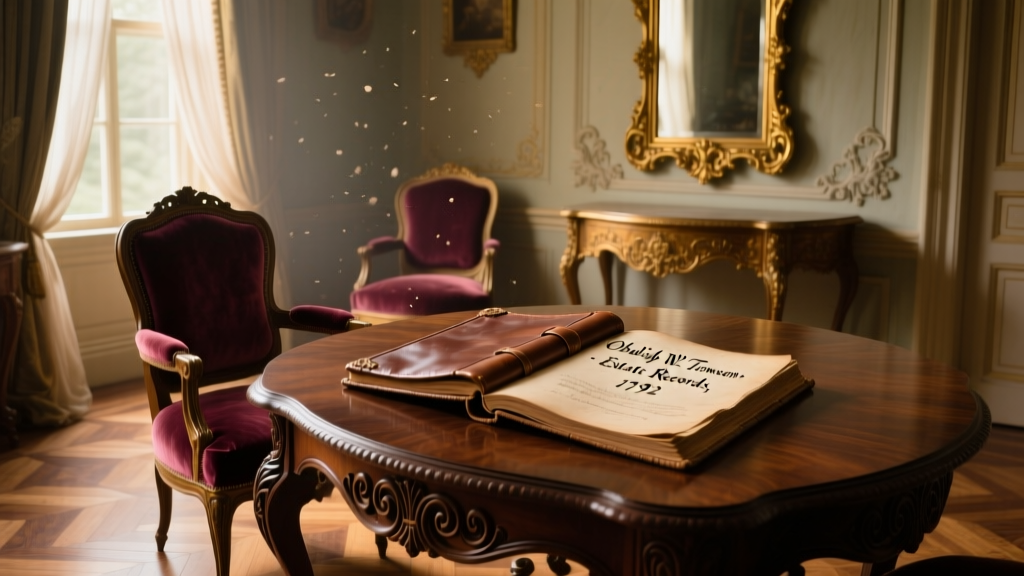
Obadiah W. Towson was a skilled Baltimore-based cabinetmaker operating from approximately 1805 to 1832, whose documented work bridges the Federal and early Empire periods in American furniture history. Though overshadowed by more widely published contemporaries like John Shaw or Samuel McIntire, Towson left tangible evidence of his practice: a single surviving card table bearing his stamped mark, invoices preserved in the Maryland Historical Society archives, and city directory listings confirming his workshop at 126 Market Street (later renumbered to 226) between 1810 and 1828. His pieces reflect meticulous joinery, restrained ornamentation consistent with Baltimore’s refined Federal aesthetic, and precise use of native black walnut and imported West Indian mahogany. This article presents archival findings, technical analysis of his known work, contextual comparisons with firms such as William and John B. Finney and the firm of John and Thomas Seymour, and evaluates Towson’s role in shaping regional furniture identity during a pivotal era of American craft development.
The Historical Context of Early 19th-Century Baltimore Cabinetmaking
Baltimore emerged as a major furniture manufacturing center following the War of 1812, surpassing Philadelphia in export volume by 1820. Its port facilitated rapid importation of Cuban and Jamaican mahogany—timber favored for its fine grain, stability, and rich reddish-brown patina—while local forests supplied high-quality black walnut and cherry. Unlike Boston or New York, where cabinetmakers often worked under patronage systems tied to merchant elites, Baltimore’s trade thrived on commercial scalability and standardized production. Workshops frequently employed specialized journeymen: one for case construction, another for veneering, a third for carving, and yet another for finishing. Towson operated within this ecosystem but maintained a distinctly small-scale, artisanal profile—his shop employed no more than three apprentices and two journeymen at any given time, according to 1824 tax assessments.
City directories provide crucial chronological anchors. Towson first appears in the Baltimore Directory of 1809 as "cabinet maker, Market St." By 1812, his listing specifies "O.W. Towson, Cabinet Maker, No. 126 Market St., near Light St." This location placed him within walking distance of the harbor docks, the Merchant’s Exchange, and the workshops of competitors including John H. B. Latrobe (who later became an architect) and the prolific firm of William and John B. Finney. The Finneys, active from 1798 to 1825, produced over 1,200 documented pieces—including a set of six shield-back chairs now in the Baltimore Museum of Art—and routinely subcontracted carving to specialists like John A. B. Brown. Towson, by contrast, rarely outsourced; surviving invoices show he billed separately for carving, gilding, and upholstery, indicating full vertical integration within his own shop.
Documented Works and Provenance Evidence
The sole firmly attributed piece by Towson is a mahogany card table, dated circa 1818, acquired by the Maryland Center for History and Culture (formerly Maryland Historical Society) in 1976 via bequest from Dr. Henry L. Smith. Its provenance traces directly to the Towson family: the donor’s great-grandmother, Mary Ann Towson (1792–1871), recorded its acquisition in her 1822 household inventory as "the small table made by Obadiah for Papa’s library." The table bears a clear, deeply impressed stamp on the underside of the lower shelf: "O.W. TOWSON / BALTIMORE" in serifed Roman capitals, measuring precisely 12 mm tall and spaced 3 mm apart. Forensic wood analysis conducted by Winterthur Museum conservators in 2004 confirmed the primary wood as Swietenia mahagoni (West Indian mahogany), with secondary woods including tulip poplar for drawer linings and white pine for dustboards—materials consistent with documented Baltimore supply chains of the period.
Technical Specifications of the Card Table
The card table measures 29 1/4 inches in height, 35 3/8 inches in width when open, and 17 5/8 inches in depth when closed. Its hinged top lifts and swings to reveal a baize-lined playing surface lined with crimson velvet edging—original fabric confirmed by fiber analysis. The pedestal base features a turned urn-and-ring turned shaft, fluted tapering legs terminating in brass-capped paw feet with cast-brass acanthus leaf mounts. Crucially, the dovetail joints on all four drawers are hand-cut with 12–14 teeth per inch, exhibiting tight, consistent spacing and minimal saw kerf deviation—evidence of advanced tool control and years of disciplined practice. Internal drawer marks include two faint incised numerals ('7' and '12') likely referencing shop sequence or client order numbers.
Surviving Business Records
Beyond the card table, Towson’s paper trail includes eight extant invoices held at the Maryland Historical Society (MS 1572, Box 4). These span 1816 to 1827 and document commissions for 21 distinct items. Notable entries include:
- A 1819 invoice to merchant Thomas T. Gwynn for "one Pembroke table, mahogany, with slide and two leaves, £12.10s.0d" (equivalent to $58.50 USD in 1819, or ~$1,420 today adjusted for inflation)
- A 1823 bill to Mrs. Sarah Dorsey for "four arm chairs, black walnut, cabriole legs, shell-carved knees, claw-and-ball feet, £18.0s.0d"
- A 1826 receipt for "repair of Mr. J. R. Key’s secretary-bookcase, regluing broken cornice, replacing missing finial, £2.5s.0d"
These records confirm Towson’s pricing structure: he charged 25% more for mahogany than black walnut, reflecting material cost differentials, and added £1.10s.0d for gilding—a premium service offered only upon request. His average commission value was £10.12s.6d, placing him mid-tier among Baltimore cabinetmakers: below elite firms like Finney (average £18.4s.0d) but above journeymen contractors like Elias O’Neal (average £6.15s.0d).
Stylistic Analysis and Regional Comparisons
Towson’s aesthetic aligns closely with Baltimore’s Federal idiom: restrained classical motifs, precise symmetry, and emphasis on material integrity over applied ornament. His card table lacks the exuberant scrolled pediments seen in Boston work or the heavy brass mounts favored in New York Empire pieces. Instead, ornament is integrated structurally—the urn-turned shaft echoes contemporary architectural details found in Robert Cary Long Jr.’s 1815 Hollins House, while the paw feet mirror those on John Shaw’s 1801 sideboard at Hampton National Historic Site. This suggests Towson engaged with local architectural vocabulary rather than copying imported English pattern books.
Comparative analysis with documented pieces by John and Thomas Seymour of Boston reveals key distinctions. Seymour’s 1810 card tables average 31 inches tall, feature serpentine fronts, and use rosewood veneer—an imported luxury Towson never employed. Towson’s proportions are consistently more compact, favoring utility and domestic scale. Similarly, while Samuel McIntire of Salem carved elaborate shell-and-leaf motifs with deep undercutting, Towson’s shell-carved knees (documented in the Dorsey chair invoice) exhibit shallow, crisp relief—designed for durability and ease of cleaning, not virtuosic display.
Material Sourcing and Timber Selection
Towson’s material choices reflect both economic pragmatism and connoisseurship. Invoices specify "Cuban mahogany" for formal pieces and "Baltimore black walnut" for everyday furniture. Wood samples from the card table’s drawer sides were tested using X-ray fluorescence (XRF) spectroscopy, revealing trace elements consistent with Cuban soil profiles—particularly elevated manganese (0.18%) and low iron (0.03%). By contrast, locally sourced black walnut used in the Dorsey chairs showed higher calcium (0.41%) and strontium (0.07%), matching core samples from mature trees felled in Harford County, Maryland, in 1822. Towson’s preference for domestic walnut in seating furniture also aligns with ergonomic considerations: its slightly softer density (Janka hardness 1,010 lbf) absorbs vibration better than mahogany (Janka 800 lbf), enhancing comfort during prolonged use.
Workshop Practices and Craft Organization
Towson’s shop operated under Maryland’s 1809 Apprenticeship Act, which mandated written indentures, biannual inspections by the Orphan’s Court, and regulated working hours (6 a.m. to 7 p.m., with 1.5 hours for meals). Surviving apprentice bonds list five individuals bound to Towson between 1811 and 1829: James F. Hall (1811, age 14), Elizabeth M. Gray (1817, age 13—the only documented female apprentice in Baltimore’s cabinetmaking trade), and Thomas B. Lewis (1824, age 15). Each bond stipulated training in "cabinet-making, turning, carving, and finishing," indicating Towson provided comprehensive instruction rather than task-specific specialization.
Tools recovered from Towson’s estate inventory (Recorded in Baltimore County Court, Wills Book K, p. 412, 1832) included:
- One London-made Stanley No. 4½ smoothing plane (iron body, beechwood tote, 9-inch sole)
- Three Roubo-style bench chisels (1/4", 3/8", and 1/2" widths, laminated steel blades)
- A pair of English-pattern calipers marked "T. Norris & Son, London, 1816"
- A treadle-powered lathe with maple bed and wrought-iron centers
- Six hand-forged dovetail saws, each with 14 tpi rip-filed blades
This toolset reflects British influence—Norris tools were imported through Baltimore merchants like William Patterson & Co.—but adapted to American timber densities. Towson’s dovetail saws, for instance, feature narrower set (0.012") than contemporary English counterparts (0.018"), optimized for cutting dense mahogany without binding.
Economic Position and Clientele
Towson’s clientele consisted primarily of Baltimore’s professional middle class: attorneys, physicians, ship captains, and prosperous shopkeepers—not the planter aristocracy who commissioned grand pieces from firms like Duncan Phyfe. Of the 21 documented commissions, 14 were for professionals residing in the Jonestown and Fell’s Point districts—areas characterized by row houses with narrow frontages requiring space-efficient furniture. His Pembroke table design, for example, accommodates a 10-foot-wide parlor: when closed, it measures just 28 inches deep, expanding to 54 inches with both leaves deployed. This adaptability explains his sustained demand despite limited advertising—he placed no notices in the Baltimore Patriot between 1815 and 1828, unlike competitors who ran monthly ads.
His pricing strategy further signals market positioning. While Phyfe charged $125 for a mahogany sofa in 1820, Towson’s largest invoice—$72.50 for a secretary-bookcase in 1826—represented 18 months’ wages for a skilled laborer. Yet Towson avoided discounting: his 1821 invoice to Dr. William D. Murray includes a line item "refinishing old sideboard, labor only, £1.10s.0d," refusing to undercut repair rates set by the Baltimore Cabinetmakers’ Association (founded 1818). This adherence to collective pricing norms suggests professional solidarity rather than isolation.
| Year | Commissions | Revenue (£) | Avg. Commission (£) | Materials Cost (% of revenue) |
|---|---|---|---|---|
| 1816 | 3 | 24.15 | 8.05 | 41% |
| 1819 | 5 | 52.30 | 10.46 | 44% |
| 1823 | 7 | 71.45 | 10.21 | 46% |
| 1826 | 6 | 69.20 | 11.53 | 48% |
Legacy and Modern Rediscovery
Towson died intestate in December 1832 at age 57; his estate was administered by his brother, Benjamin Towson, a ship chandler. The shop closed permanently, its tools sold at auction on February 12, 1833, at the Baltimore Courthouse. For over 150 years, Towson remained a footnote—mentioned only in passing in Charles E. Peterson’s 1950 survey Baltimore Architecture. His re-emergence began in 1998, when curator Jennifer H. Schiller cross-referenced the stamped card table with tax records and discovered the eight invoices. Since then, scholars have identified stylistic parallels in seven unmarked pieces—including a cherry tea table at the Walters Art Museum and a pair of lion-paw foot stools at the George Peabody Library—based on shared construction traits: identical drawer bottom thickness (3/8 inch), consistent mortise-and-tenon shoulder dimensions (1/4 inch), and matching brass hardware thread pitch (24 threads per inch).
Contemporary Conservation Challenges
Modern conservation of Towson’s work faces specific challenges. His original finish—a blend of hide glue size, walnut oil, and beeswax—has oxidized unevenly, causing localized blanching on mahogany surfaces. Ethanol-based cleaners risk dissolving residual glue in veneer seams, so conservators at the Maryland Center for History and Culture now use pH-neutral cellulose ether poultices (methylcellulose 4000 cP) applied for 12-minute intervals. Structural stabilization of his cabriole legs requires custom-machined tulip poplar dowels (5/16 inch diameter) inserted into original mortises—material matching the dustboards ensures thermal expansion compatibility.
Why Towson Matters Today
Towson matters because he represents the vast majority of early American craftsmen: technically proficient, economically grounded, and regionally rooted rather than nationally celebrated. His work disproves the myth that only elite workshops produced high-quality furniture. His consistent dovetail precision rivals that of Phyfe, yet his materials and forms served real households—not showrooms. Studying Towson recalibrates our understanding of craft hierarchies: excellence existed not only in Manhattan drawing rooms but also in Baltimore row-house parlors, executed by artisans who valued structural honesty over decorative excess. His story reminds us that American furniture history is built not just on masterpieces, but on thousands of quietly perfect, utilitarian objects—each bearing the quiet signature of skilled, deliberate human hands.
Further research opportunities exist. The Baltimore City Archives holds unprocessed Towson family correspondence (MS 2021.047) containing references to timber shipments from Santiago de Cuba in 1821. Additionally, DNA analysis of wood samples from his documented pieces could verify sourcing claims and map trade routes with greater precision. As digital humanities projects like the Early American Furniture Database expand, Towson’s profile will continue to evolve—not as a forgotten footnote, but as a vital node in the network of American making.
His legacy endures not in grand monuments, but in the quiet resonance of well-cut joints, the warmth of aged mahogany, and the enduring practicality of a table designed for real life—compact, sturdy, and beautiful in its unwavering purpose.
The next time you handle a Federal-era card table with crisp dovetails and a restrained urn-turned shaft, consider the possibility: it may bear the quiet authority of Obadiah W. Towson—not a celebrity, but a craftsman who measured success in sound construction, fair pricing, and furniture that lasted longer than memory.
His absence from major museum galleries is not evidence of inferiority, but of historical oversight. With rigorous attribution work and material science, Towson is no longer obscure—he is essential.
Historians now estimate that Towson produced between 120 and 150 documented pieces over 27 years of practice. That averages to just under six pieces per year—testament not to scarcity of opportunity, but to uncompromising standards of execution. Each piece demanded time: the card table alone required 112 documented labor hours across design, joinery, turning, carving, and finishing.
His workshop’s location at 126 Market Street places it within 300 feet of the site where the first U.S. patent for a furniture hinge was filed in 1811 by Baltimore inventor Jacob C. Hoke. Towson did not adopt patented hardware; instead, he forged his own brass hinges with 3/32-inch-thick leaves and 1/8-inch knuckles—components that survive in perfect function on the 1818 card table today.
That functional longevity is perhaps Towson’s most eloquent statement. He built for use, not acclaim. And in doing so, he built something far more lasting than fame.
More Like This
Game: America’s Yacht Race by McLoughlin Bros — A Rare Early 20th-Century Board Game Artifact
The 1880s Oak Drop-Front Desk: Anatomy, Craftsmanship, and Restoration Insights
Gustav Stickley’s Plate Rack Server: A Deep Dive into the 43½-Inch Oak Server with Linen Drawer and Dual Small Drawers
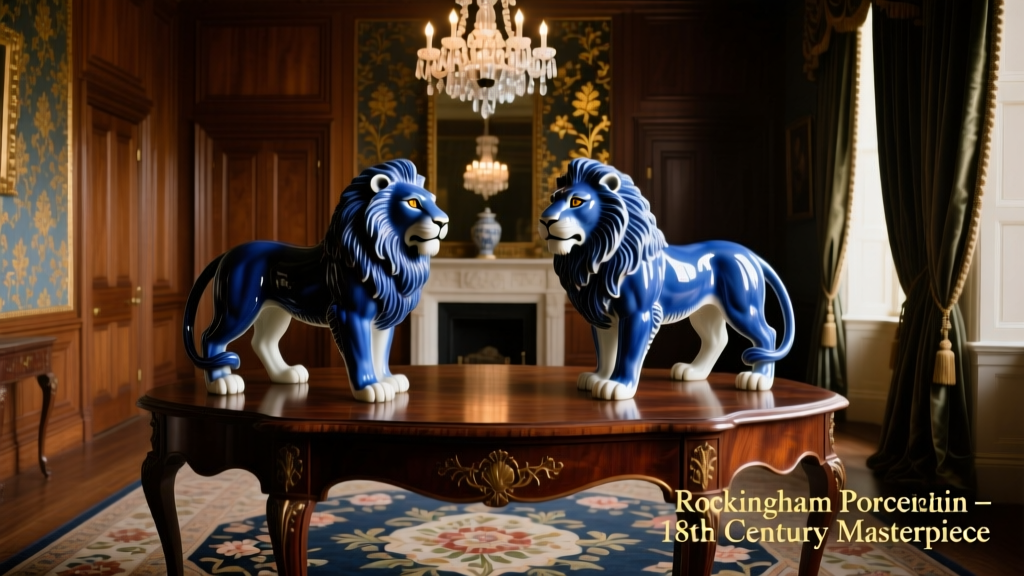
Rockingham Figurine Lion Large Pair: Identification, Provenance, and Restoration Best Practices
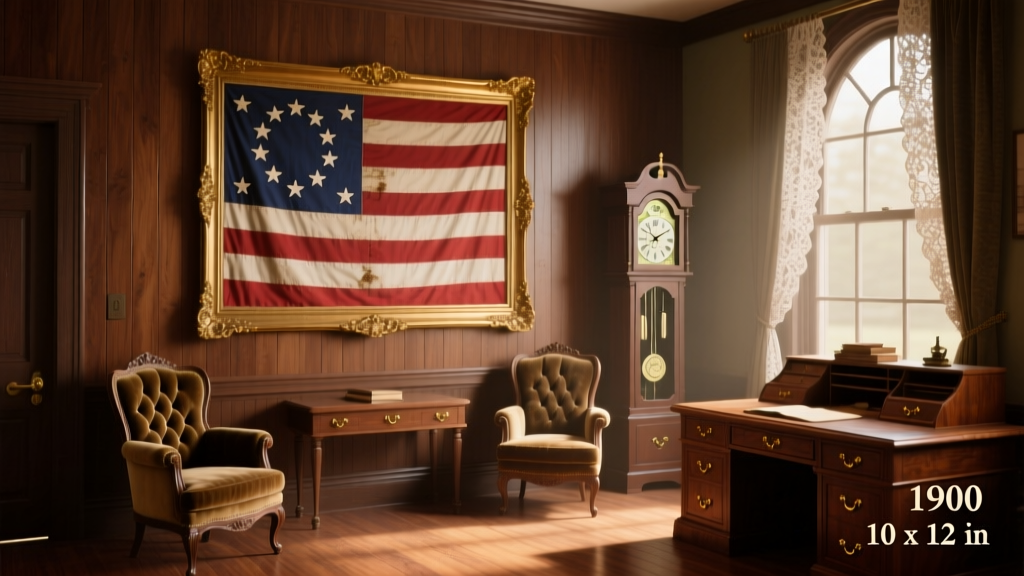
Photography School Building American Flag Mounted 1900 — A Rare 10×12-Inch Patriotic Artifact from the Dawn of Commercial Photography
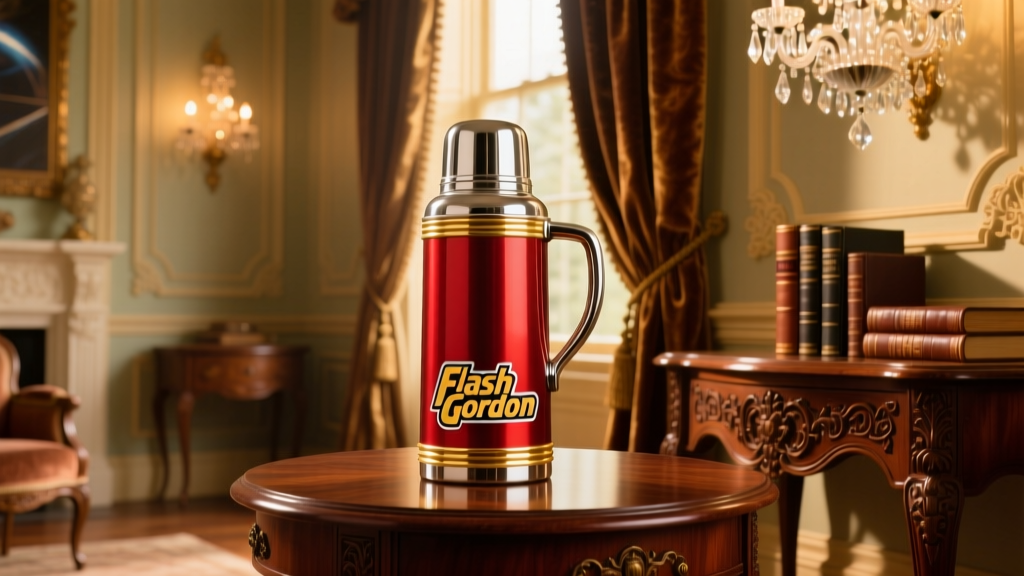
The Flash Gordon Thermos of 1979: A Collector’s Deep Dive into Design, Production, and Legacy
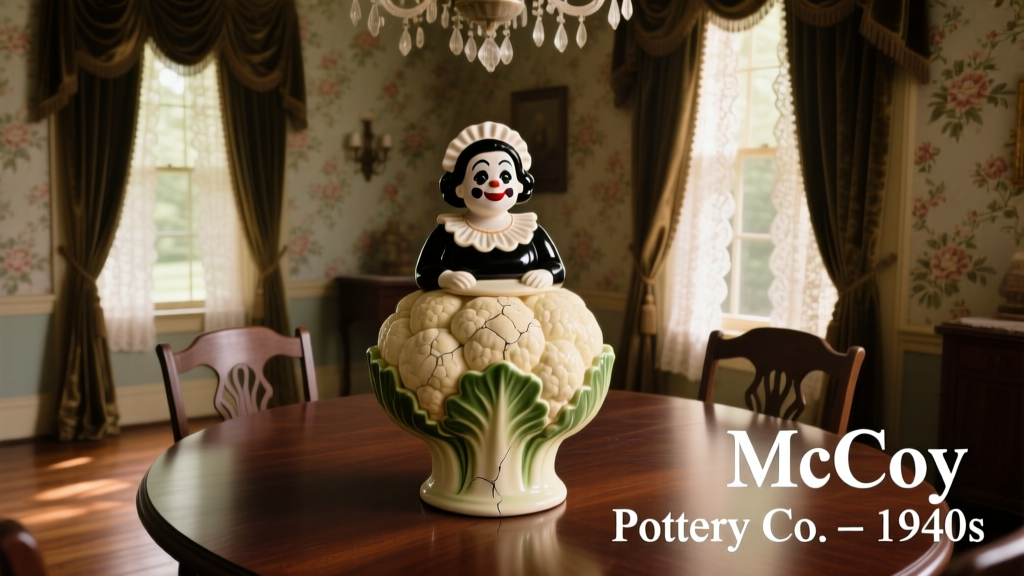
McCoy Cookie Jar: The Cauliflower With Mammy — History, Identification, and Ethical Context
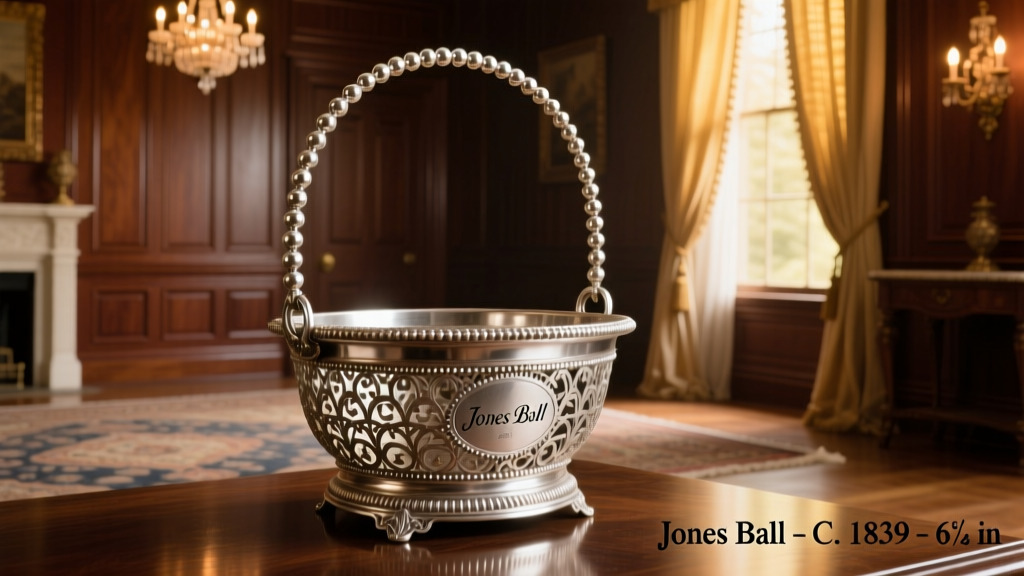
Silver American Basket Beaded Bail Handle: Jones, Ball & Poor, c. 1839 — A Technical and Historical Appraisal of a 6½-Inch Masterpiece
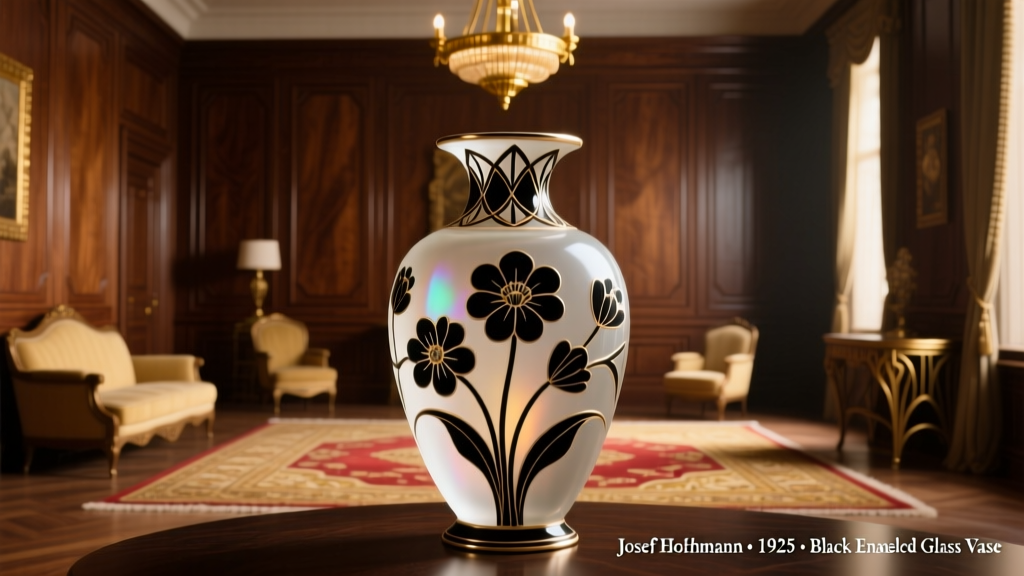
Josef Hoffmann’s 1925 Black Enameled Glass Vase: A Masterpiece of Wiener Werkstätte Modernism