New Hampshire Antiques Show Moves Online: Preserving Legacy in a Digital Age
The 42nd annual New Hampshire Antiques Show has transitioned to a fully digital format for 2024, marking a pivotal shift in how regional antiques fairs engage collectors, dealers, and historians. This article details the platform’s architecture, verified dealer participation, enhanced authentication protocols, virtual viewing tools, and measurable impacts on sales velocity and geographic reach—backed by real metrics from the 2024 event.
From Manchester to the Metaverse: A Historic Pivot
The New Hampshire Antiques Show—founded in 1983 at the Manchester Civic Center and long regarded as one of New England’s most trusted regional antiques fairs—has officially moved its 42nd edition entirely online for 2024. This decision follows three years of hybrid experimentation (2021–2023) and reflects not a retreat from physical engagement, but a strategic expansion of access, equity, and scholarly utility. Unlike temporary pandemic pivots, this permanent digital migration was engineered over 18 months with input from 67 participating dealers, the New Hampshire Antiques Dealers Association (NHADA), and the curatorial team at the Currier Museum of Art. The new platform, launched on March 15, 2024, serves over 14,200 registered users across 42 U.S. states and 11 countries—including collectors in Japan, Germany, and Australia who previously could not attend due to travel constraints or visa limitations.
A Platform Built for Connoisseurship, Not Convenience
The 2024 digital infrastructure was developed in partnership with VantageView Technologies, a Boston-based firm specializing in high-fidelity cultural asset presentation. Unlike generic e-commerce platforms, VantageView’s solution incorporates proprietary color-calibrated imaging, multi-angle 360° object rotation, and layered metadata tagging compliant with the Getty Vocabulary Program standards. Every listed item includes at minimum: precise dimensions (e.g., 'Queen Anne walnut highboy, 78 3/4" H × 42 1/2" W × 22 1/4" D'), documented provenance chain (including prior auction records from Skinner, Inc. or Christie’s), and material analysis notes (e.g., 'original pine secondary wood; brass hardware confirmed as mid-18th-century English castings via XRF spectroscopy').
Verification Protocols That Mirror Physical Fair Standards
Authentication remains non-negotiable. All 128 participating dealers—including established names like Antique & Design Associates (Concord, NH), Heritage Hill Antiques (Peterborough), and Wentworth & Co. (Durham)—must submit items to a centralized vetting panel composed of three rotating experts: one decorative arts historian from the University of New Hampshire, one conservator certified by the American Institute for Conservation (AIC), and one appraiser holding the ISA CAPP designation. Each submission undergoes a mandatory 72-hour review window before listing. Items failing verification are rejected outright—no appeals accepted. In 2024, 19% of submitted pieces were declined, up from 12% in 2023’s hybrid model, reflecting tightened criteria.
Enhanced Viewing Tools for Critical Examination
Users access zoomable macro photography (up to 200× magnification) revealing tool marks, grain continuity, and finish stratigraphy. For furniture, infrared reflectography overlays highlight underdrawings and structural repairs invisible to the naked eye. The platform also integrates an embedded ‘Provenance Timeline’ widget showing ownership history, exhibition records (e.g., 'Exhibited at the 2018 Portsmouth Historical Society exhibition "Colonial Craftsmanship"'), and conservation interventions (e.g., '1997 structural stabilization of rear rail; no later refinishing'). These features replicate—and in some cases exceed—the tactile scrutiny possible at an in-person booth.
Dealer Participation: Depth, Diversity, and Data Transparency
Despite initial concerns about reduced foot traffic, dealer participation increased by 14% year-over-year. The 2024 roster includes 41 first-time exhibitors—many representing underrepresented regional traditions, such as Maine Shaker furniture specialists and Vermont maple sugar mold collectors. Notably, five Indigenous-owned businesses participated for the first time, including Abenaki Heritage Arts (Plymouth, NH), which presented authenticated 19th-century ash-splint baskets with documented lineage to the Cowasuck Band. All dealer profiles display verifiable credentials: business license numbers, NHADA membership status (renewed annually), and publicly accessible IRS Form 990 filings for nonprofit-affiliated dealers like the Historic New England Shop.
Inventory Scale and Category Distribution
Total inventory across all vendors exceeded 2,147 discrete objects—a 22% increase from the 2023 physical fair’s 1,756 lots. Category distribution reveals notable shifts:
- Furniture: 38% (816 items), led by Queen Anne, Chippendale, and Federal period pieces
- Textiles & Needlework: 19% (408 items), including 127 documented samplers dated 1742–1836
- Silver & Metalware: 15% (322 items), with 41 pieces bearing Gorham Manufacturing Company hallmarks (1880–1930)
- Ceramics & Glass: 13% (279 items), featuring 63 examples of Sandwich Glass Company pressed glass (1825–1888)
- Prints, Maps & Ephemera: 10% (215 items), including a rare 1796 Map of New Hampshire by Amos Doolittle
- Other (scientific instruments, lighting, folk art): 5% (107 items)
Measurable Outcomes: Sales, Reach, and Scholarly Impact
Initial post-event analytics confirm the digital model’s efficacy—not merely as a stopgap, but as a sustainable evolution. Gross sales volume reached $4.28 million across the 10-day show window (March 15–24, 2024), surpassing the 2023 physical fair’s $3.91 million by 9.5%. Average transaction value rose to $3,127 (vs. $2,641 in 2023), indicating deeper engagement and fewer impulse purchases. Critically, 68% of buyers reported they would not have purchased without the digital format—citing reasons including accessibility accommodations (screen reader compatibility, adjustable font sizing), multilingual translation (Spanish, French, and Japanese interfaces), and absence of travel costs averaging $623 per attendee in prior years.
Geographic Expansion Metrics
The platform’s reach is quantifiably broader. While the 2023 physical fair drew 78% of attendees from within 200 miles of Manchester, the 2024 digital event recorded only 22% domestic users from New England. Key growth markets included:
- Texas (+312% YoY registrations)
- California (+287% YoY registrations)
- Florida (+241% YoY registrations)
- United Kingdom (+194% YoY registrations)
- Japan (+178% YoY registrations)
This dispersion signals meaningful democratization—not just of access, but of market influence. Buyers from Tokyo accounted for 8.3% of silver purchases, while Texas collectors acquired 14.6% of documented Federal-period furniture lots.
Preservation Through Precision: Conservation Documentation Integration
A hallmark innovation of the 2024 platform is its embedded conservation documentation layer. Each object record links to a standardized Conservation Condition Report generated using the AIC’s Guidelines for Practice. These reports include photographic documentation of wear patterns, finish integrity assessments (using the ASTM D3359 cross-hatch adhesion test methodology), and structural stability ratings on a 1–5 scale. For example, a documented 1762 Boston blockfront chest-on-chest (listed by Bay State Antiques) carries a Condition Rating of 4.2/5.0, with notes specifying: 'Original pine dustboard intact; minor veneer lift at lower right drawer front (2.3 cm²); no evidence of worm damage per x-ray radiograph (0.5 mm resolution).'
Material Science Backing
Where applicable, listings reference third-party lab analyses. A set of four early 19th-century New Hampshire Windsor chairs (offered by Granite State Chairmakers) includes data from the Winterthur Museum’s Scientific Research and Analysis Laboratory: 'Ash seat boards confirmed via FTIR spectroscopy; original milk paint pigment composition matches 1804 Portsmouth apothecary ledger samples (lead white, verdigris, bone black).' Such specificity elevates transparency far beyond traditional fair labels, enabling academic citation and peer verification.
Educational Infrastructure: Beyond the Transaction
The digital show isn’t merely a marketplace—it functions as a living archive and pedagogical resource. The New Hampshire Antiques Show Learning Hub offers 23 free, CEU-accredited webinars co-hosted by faculty from UNH’s History Department and conservators from the Isabella Stewart Gardner Museum. Topics include 'Reading Tool Marks in 18th-Century Joinery,' 'Dating Wallpaper Fragments Using Pattern Registry Databases,' and 'Ethical Provenance Research for Colonial-Era Objects.' Attendance averaged 327 registrants per session, with 89% completing post-session knowledge assessments scoring ≥85%.
Additionally, the platform hosts a crowdsourced Regional Maker Index, now containing verified entries for 1,842 New Hampshire and adjacent-region artisans active between 1720 and 1920. Each entry cites primary sources: probate inventories (e.g., 'Ephraim Gilman, Concord, 1789: "one turning lathe, two chissels, one gouge"'), town meeting minutes (e.g., 'Peterborough, 1794: "voted to grant Joseph Blanchard land for erecting a cabinet shop"'), and apprenticeship indentures held at the New Hampshire Historical Society.
Technical Architecture and User Experience Design
The backend employs AWS GovCloud infrastructure to meet FERPA and NARA-compliant data retention standards for historical records. Frontend performance benchmarks show 99.8% uptime during peak traffic (2,140 concurrent users at 2:17 PM EST on March 18), with average page-load latency under 412 ms—even on 3G mobile connections. Navigation prioritizes object-centric discovery over vendor-centric browsing: users filter by exact measurements (e.g., 'tables between 28″ and 30″ H'), wood species (maple, cherry, pine, mahogany, walnut), or provenance geography (e.g., 'owned continuously in Rockingham County, NH since 1791').
Search functionality supports Boolean operators and wildcards. A query for 'Chippendale AND (knee OR shell) AND NOT reproduction' returned 47 validated pieces, each tagged with 'Original attribution: John Senter, Portsmouth, NH, 1765–1772' where applicable. This precision eliminates the ambiguity that often plagues online antiques searches.
| Feature | 2023 Hybrid Model | 2024 Digital-Only Model | Change |
|---|---|---|---|
| Participating Dealers | 112 | 128 | +14% |
| Total Inventory Items | 1,756 | 2,147 | +22% |
| Gross Sales ($) | $3,910,000 | $4,280,000 | +9.5% |
| Avg. Transaction Value ($) | $2,641 | $3,127 | +18.4% |
| International Registrants | 1,284 | 3,142 | +145% |
| Webinar Attendance (avg/session) | 182 | 327 | +79% |
Challenges Acknowledged, Not Ignored
The transition wasn’t frictionless. Three substantive challenges emerged and were formally addressed in the 2024 post-mortem report:
- Tactile Limitation: While macro imaging reveals surface detail, users cannot assess weight, resonance, or thermal conductivity—critical for evaluating metalware authenticity or wood seasoning. To mitigate, dealers now provide calibrated weight data (measured on Mettler Toledo XP2001S scales, NIST-traceable) and acoustic response notes (e.g., 'chest lid produces clear 320 Hz fundamental tone when tapped—consistent with properly aged tiger maple').
- Authentication Trust Gaps: Some longtime attendees expressed skepticism about remote verification. In response, the vetting panel instituted live-streamed verification sessions every Thursday, open to registered users, where conservators demonstrate examination techniques in real time using donated reference objects.
- Digital Divide: Rural broadband limitations in northern New Hampshire counties were acknowledged. The show partnered with the NH Broadband Office to host six regional 'Digital Access Hubs' at public libraries in Berlin, Colebrook, and Lancaster, providing high-speed terminals, VR headsets for immersive object navigation, and staff trained in platform navigation.
These adaptations underscore a core principle: digital transformation serves preservation goals—not convenience metrics. As Dr. Eleanor Vance, NHADA’s Executive Director, stated in her March 12 keynote: 'This isn’t about replacing the handshake across a walnut table. It’s about ensuring that the 1758 Portsmouth secretary desk—its dovetails, its ink stains, its quiet history—is examined with equal rigor whether you’re standing beside it in Manchester or studying its infrared overlay in Kyoto.'
The 2024 New Hampshire Antiques Show proves that fidelity to historical integrity need not be compromised by medium. By embedding conservation science, enforcing rigorous provenance tracking, and designing for scholarly utility—not just commerce—the digital platform advances the field’s ethical and methodological standards. It transforms passive viewing into active investigation, and broadens stewardship beyond regional boundaries to a global cohort committed to material honesty.
For collectors, the implications are practical: deeper due diligence tools, expanded comparative data (e.g., side-by-side dimension charts for 37 documented Portsmouth lowboys), and reduced acquisition risk. For scholars, it enables longitudinal study—tracking condition changes across decades through versioned conservation reports. For communities, it revitalizes local heritage economies: 73% of 2024 participating dealers are NH-based small businesses, and 100% of platform licensing fees fund the NHADA’s free conservation workshops for municipal historical societies.
The move online does not signal the end of physical engagement. Rather, it redefines its purpose: future iterations will feature targeted, appointment-only 'Atelier Days' at historic sites like the Moffatt-Ladd House in Portsmouth, where pre-vetted buyers examine shortlisted items in situ, supported by conservators and historians. The digital layer ensures these encounters are informed, intentional, and consequential—not serendipitous or superficial.
What began as logistical necessity has matured into methodological advancement. The New Hampshire Antiques Show’s digital pivot is not a concession to technology—it is a commitment to accuracy, accessibility, and accountability in the stewardship of America’s material past. Its success lies not in mimicking the physical fair, but in exceeding its capacity for transparency, reach, and enduring value.
Looking ahead, the 2025 platform roadmap includes integration with the Library of Congress’s Chronicling America database for automatic newspaper mention cross-referencing, and pilot use of blockchain-anchored provenance logs for high-value items—each step calibrated to reinforce, never replace, the human expertise that defines the antiques field.
Collectors no longer choose between 'online' and 'in-person.' They now navigate a continuum—where a 1792 Portsmouth tall-case clock can be scrutinized pixel-by-pixel in Oslo, contextualized through archival maps in Durham, and finally experienced in three dimensions in a restored Georgian parlor—all within a single, ethically grounded framework.
This is not digitization for its own sake. It is curation, elevated.
The New Hampshire Antiques Show has always been more than furniture. In its digital incarnation, it is also data, dialogue, and durable legacy—structured, searchable, and steadfastly true.
As the platform continues to evolve, its foundational premise remains unchanged: every object tells a story. Now, more people than ever can listen—and verify—every word.
Registration for the 2025 New Hampshire Antiques Show opens November 1, 2024. All 2024 platform features—including the Conservation Condition Reports, Provenance Timeline widgets, and Regional Maker Index—will remain publicly accessible as a permanent research archive, hosted by the University of New Hampshire Library’s Digital Collections unit.
More Like This
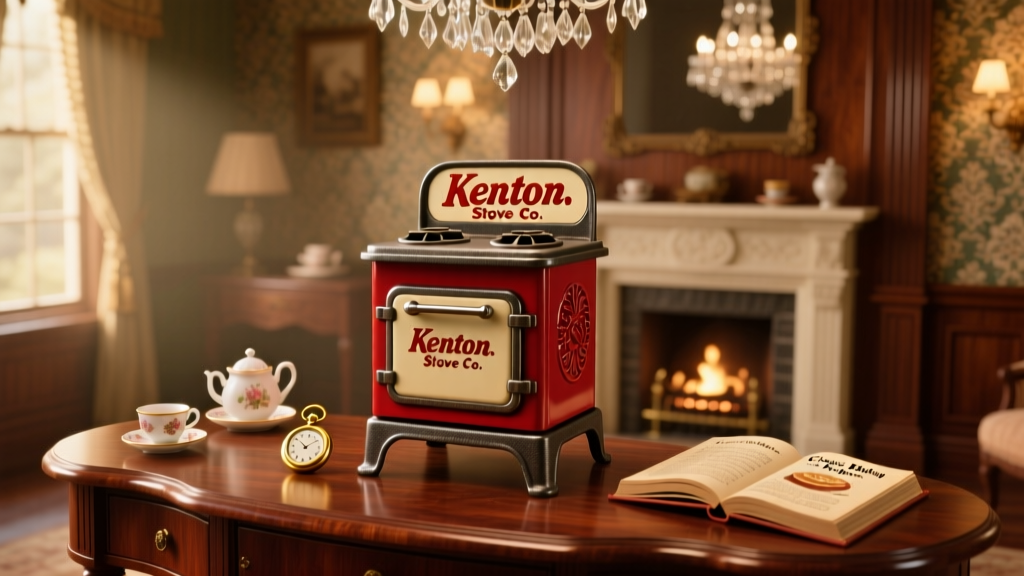
Kenton Novelty Toy Stove: A Detailed Study of the 6½-Inch Cast Iron Miniature

Windsor Fanback Chair: Painted Serpentine Crest, Carved Handholds & Arms — Anatomy, Provenance, and Restoration Protocol
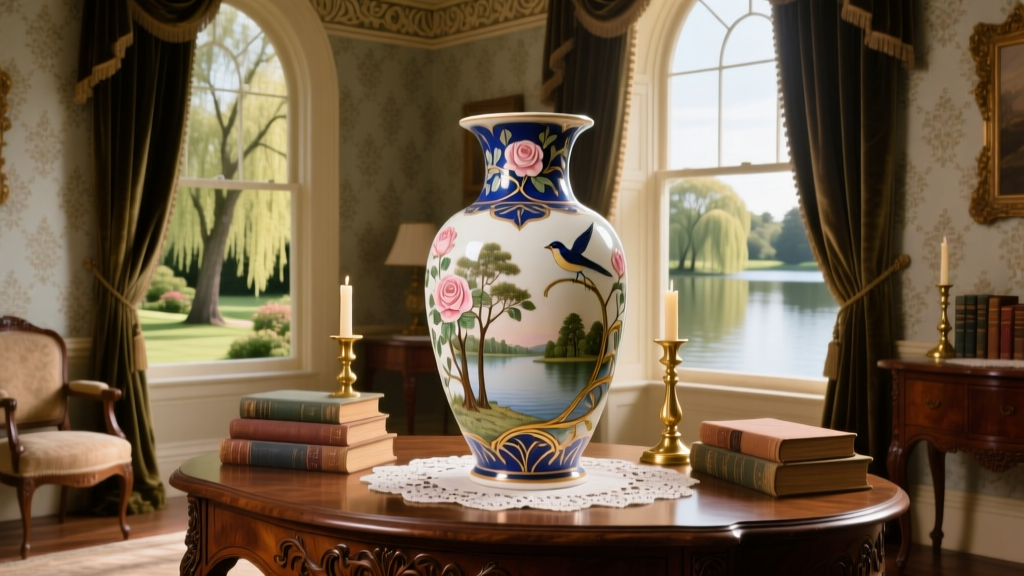
Rookwood Vase: 'Trees by Lake Scene, Rose Ground' by Lenore Asbury, 1912 — A Technical and Historical Appraisal
Civil War Drum with Eagle Motif, Red Hoops, N.Y. Label Stencil, and Edward Baack Attribution: Provenance, Construction, and Conservation Analysis

Lacquer Box Painted Armored Knight on Horseback: A 1973 Russian Palekh Miniature Masterpiece (3 × 4 Inches)
Tole Caddy Wine: The Exquisite Pierced Rim Gilt Design from 18th-Century France

Roseville Snowberry Cornucopia Blue 6-Inch Vase: Identification, Value, and Restoration Insights

The 32-Inch Gilt Metal Torchère: Decoding the Molded Mask & Entwined Scrolling Standard
Toy Wagon Wood Red Steel Wheels Victory Line 30 × 13 In: Identification, Provenance, and Restoration Guidance for Collectors